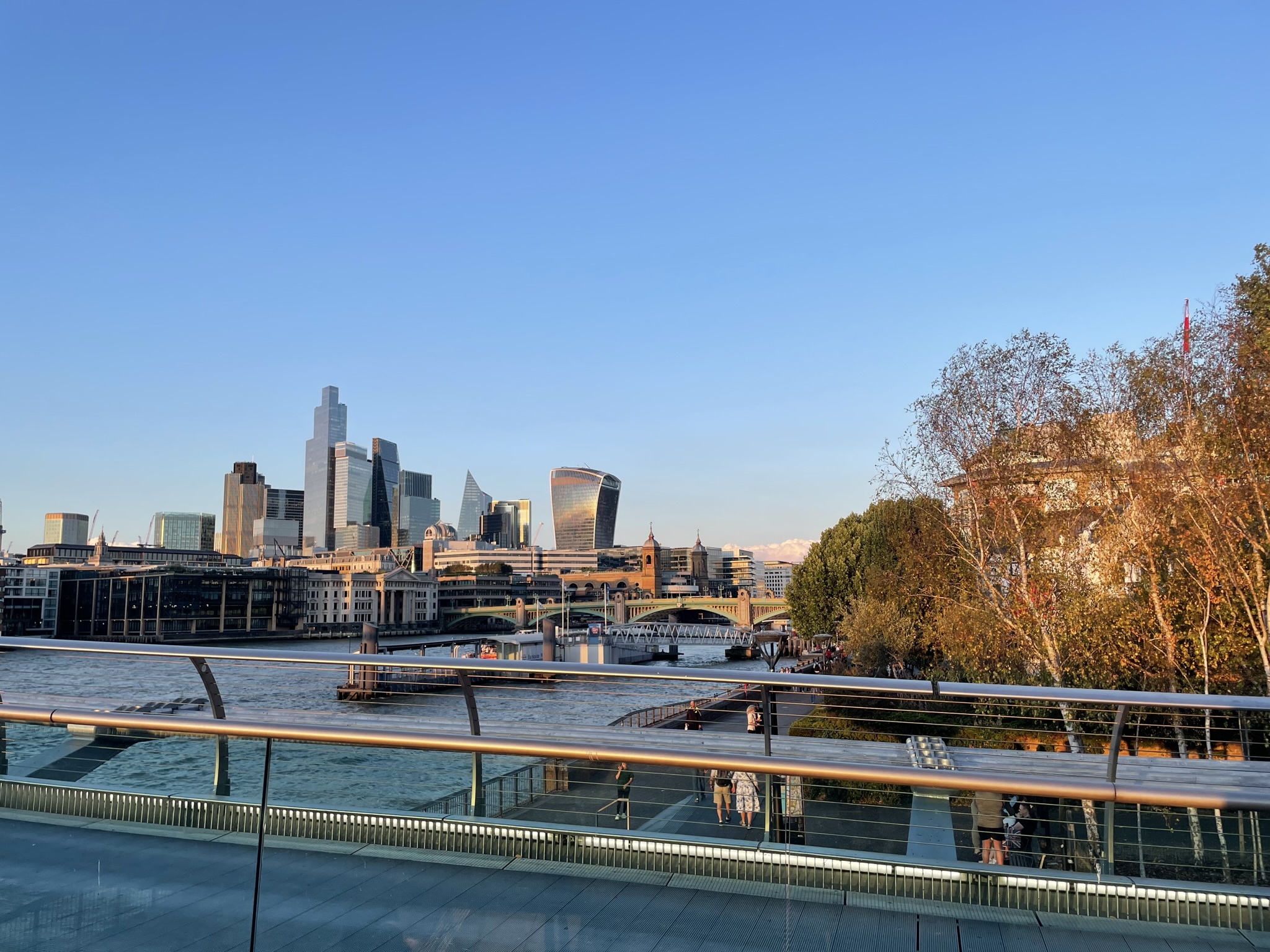
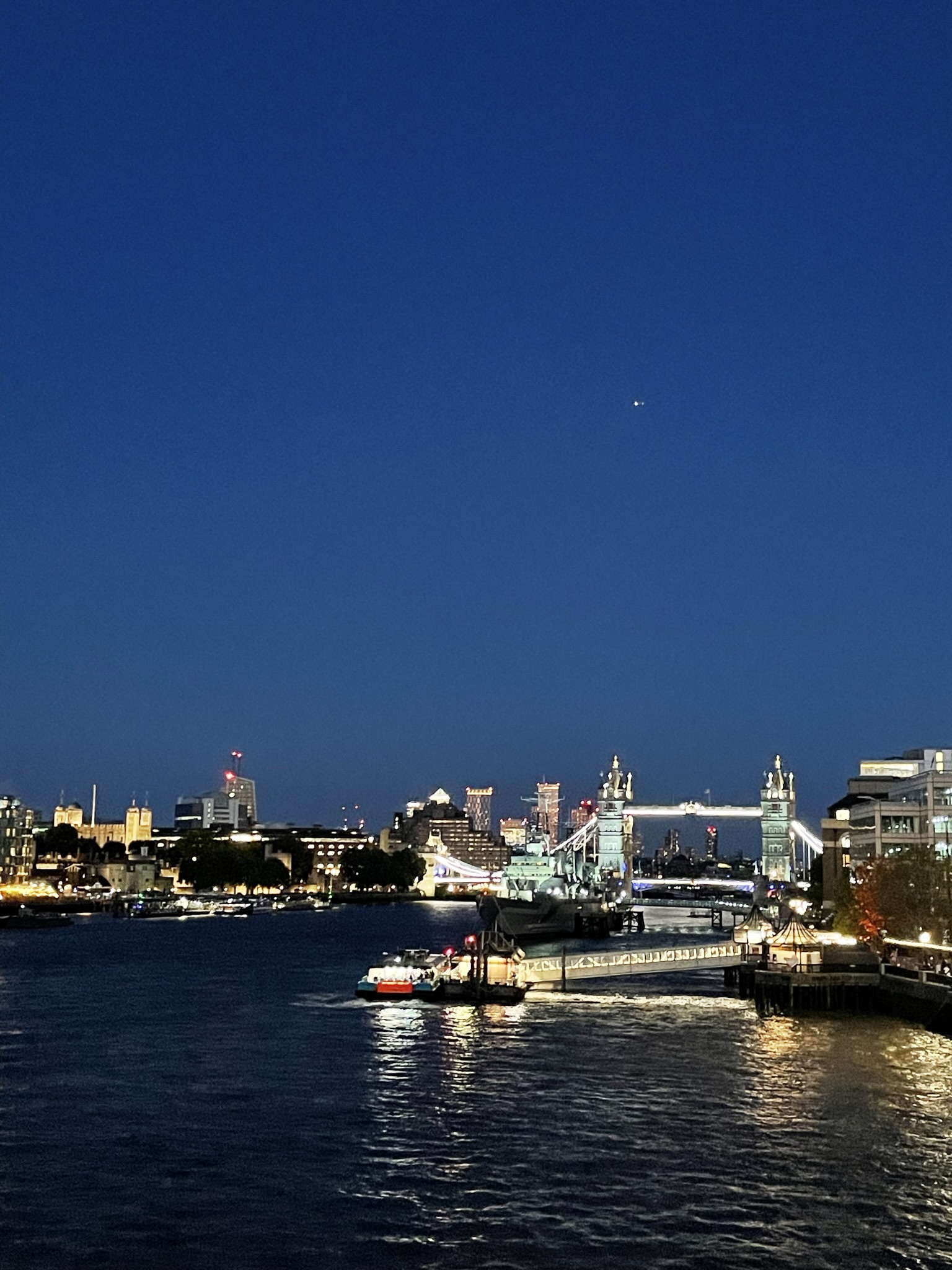
From Scotland, it was back in London. We stayed just north of the Tower of London and directly atop the Tower Hill tube station. The latter would be more relevant to us, a constant point of access to the rest of the sprawling British capital, whereas we did little more than look at the Tower (and associated Tower Bridge). Mornings were quickly marked by ritual, an outing to a branch of the ubiquitous Pret a Manger chain for coffee, tea, and maybe a snack. On my way one morning to a nearby outpost of Daunt Books (an entire downstairs basement of travel titles!) I took in the complex morning commute, a nonstop churn of double-decker buses, seemingly suicidal bicyclists and scooters, boxy black taxis, and a constant stream of people emerging on foot from the underground. The city nerd in me greatly enjoyed it all, trying to stay out of the way while taking pictures and scribbling little notes.
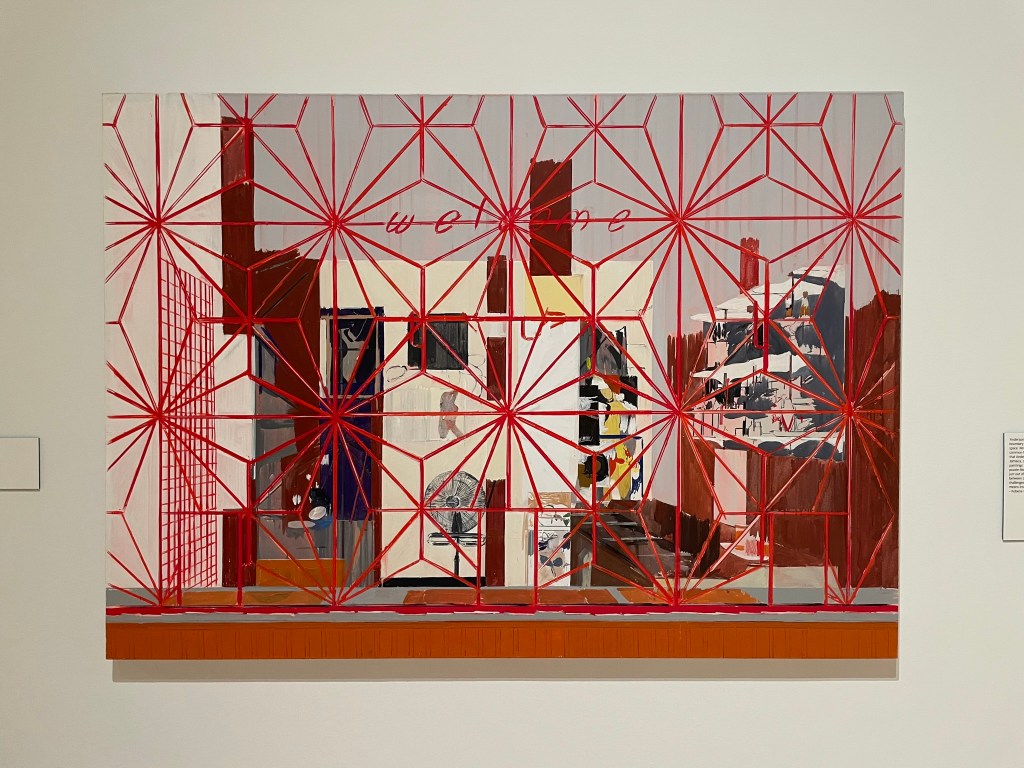
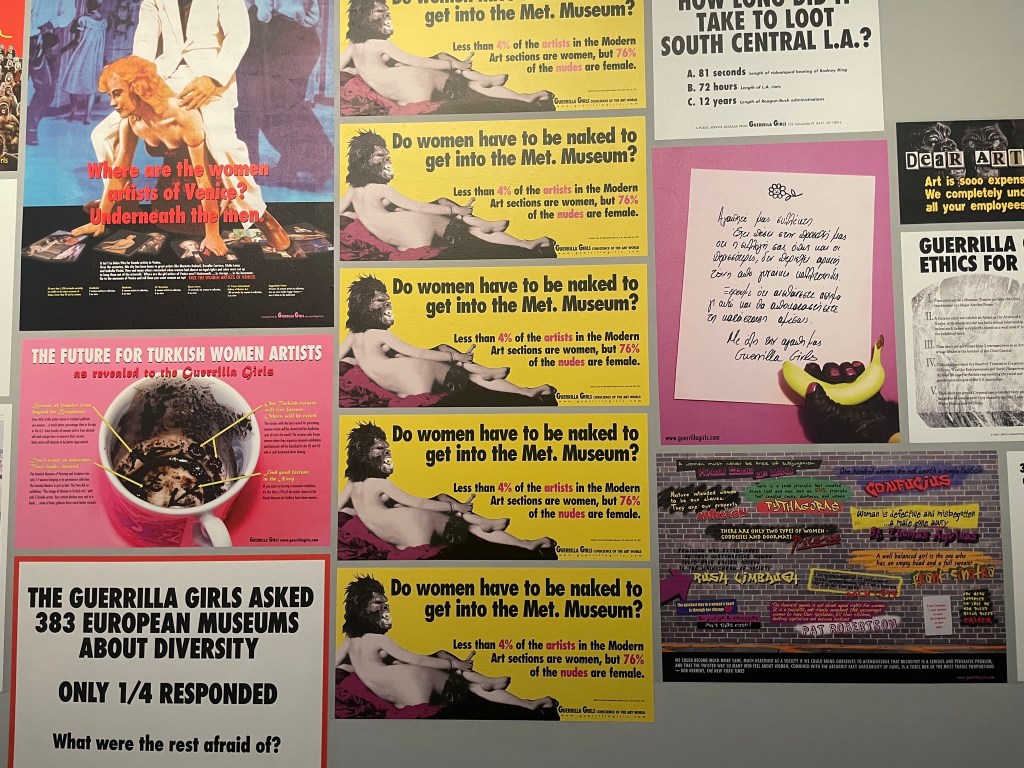
Believe it or not, we were not exclusively in London for transportation and planning tourism. It turns out London hosts quite a number of excellent museums. Highlights of our outings included the Tate Britain, specifically the featured show of Hurvin Anderson, a Black British painter whose work touches on memory, migration and identity and evokes a strong sense of place related to his Caribbean background. The Tate Modern was also enjoyable, though more for the overall collection and less any particular work or show. I learned, for the first time, about the Guerilla Girls. This group uses provoking, eye-catching visuals that skewer the ongoing gender disparity in the arts world. I was also a big fan of a contemporary piece by Cildo Meireles called “Babel”, a stack of radios arranged in a tower going up 40 feet and filling the whole room with a static hum.
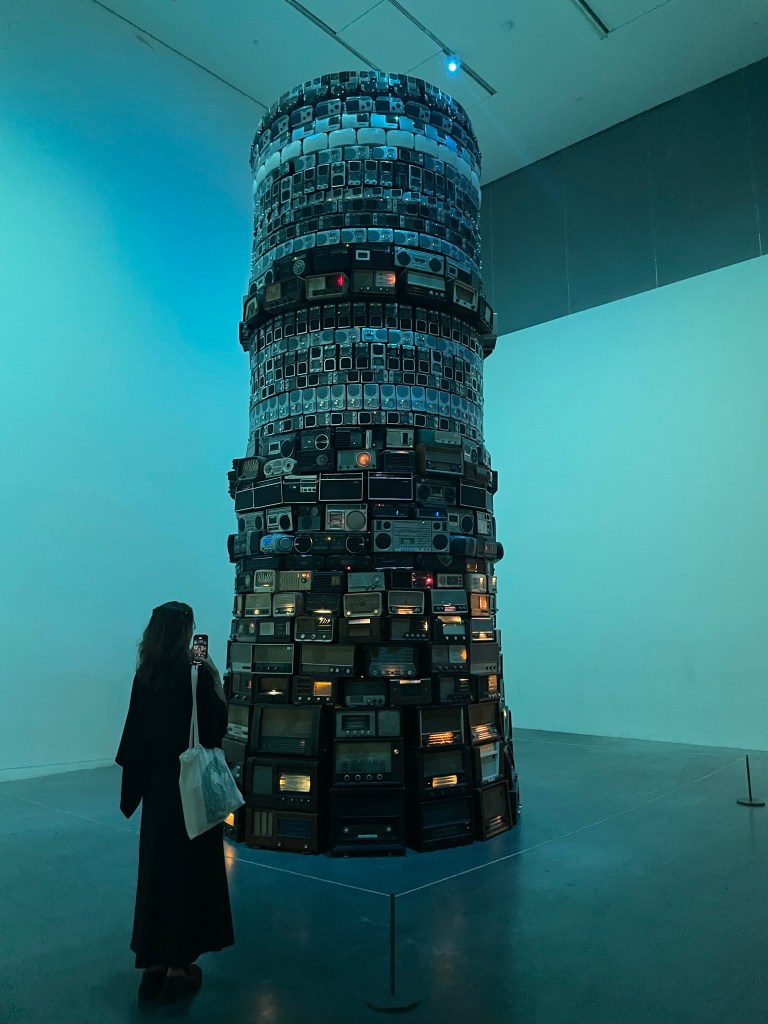
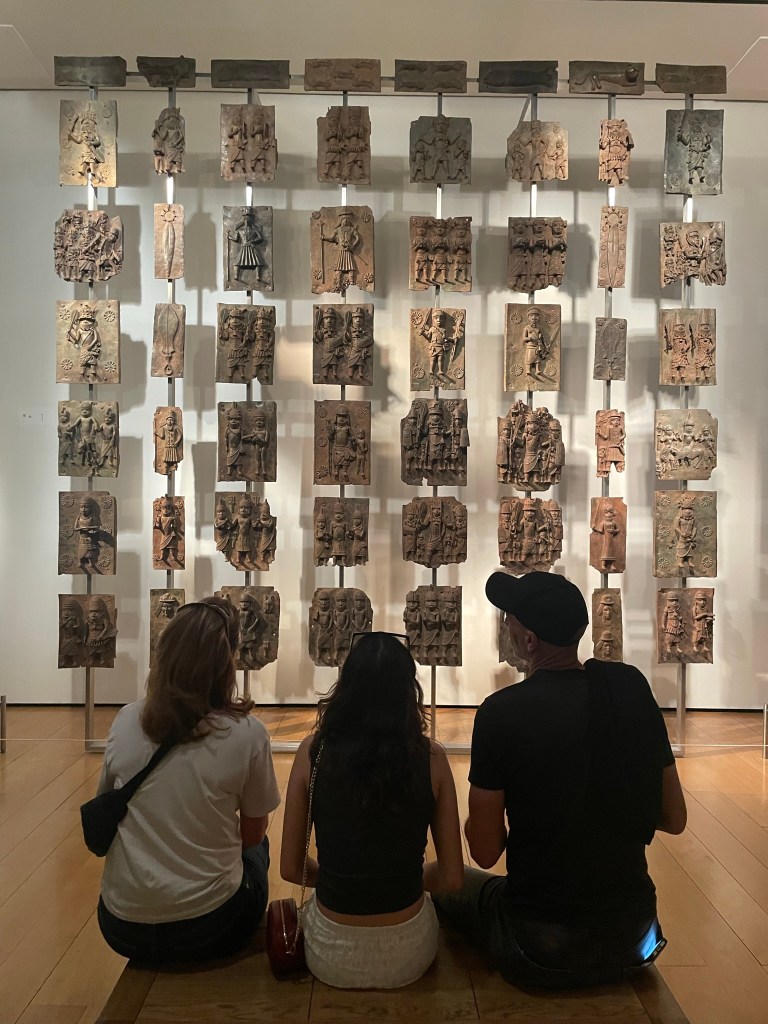
The Tate Modern was our first stop on the morning of Hannah’s 40th after a meandering walk along the Thames. From there it was over the river again to Quo Vadis, a century old institution in Soho, for lunch. Everything was excellent, and Hannah called out the nicoise salad for particular acclaim while my favourite was the smoked eel sandwich. Sated, we made our way to the British Museum. It was good we had fortified ourselves over lunch as the museum, while beautiful, had all the charm of a busy airport, uncomfortably crowded with people who seemingly had never left their homes before that moment. The sheer volume and quality in this collection of colonial spoils means there is absolutely something worthwhile to be found for the efforts. For me, this was a room with lintels and other decorative reliefs from Mayan temples along with the Benin Bronzes on display in the Africa gallery. Simply stunning.
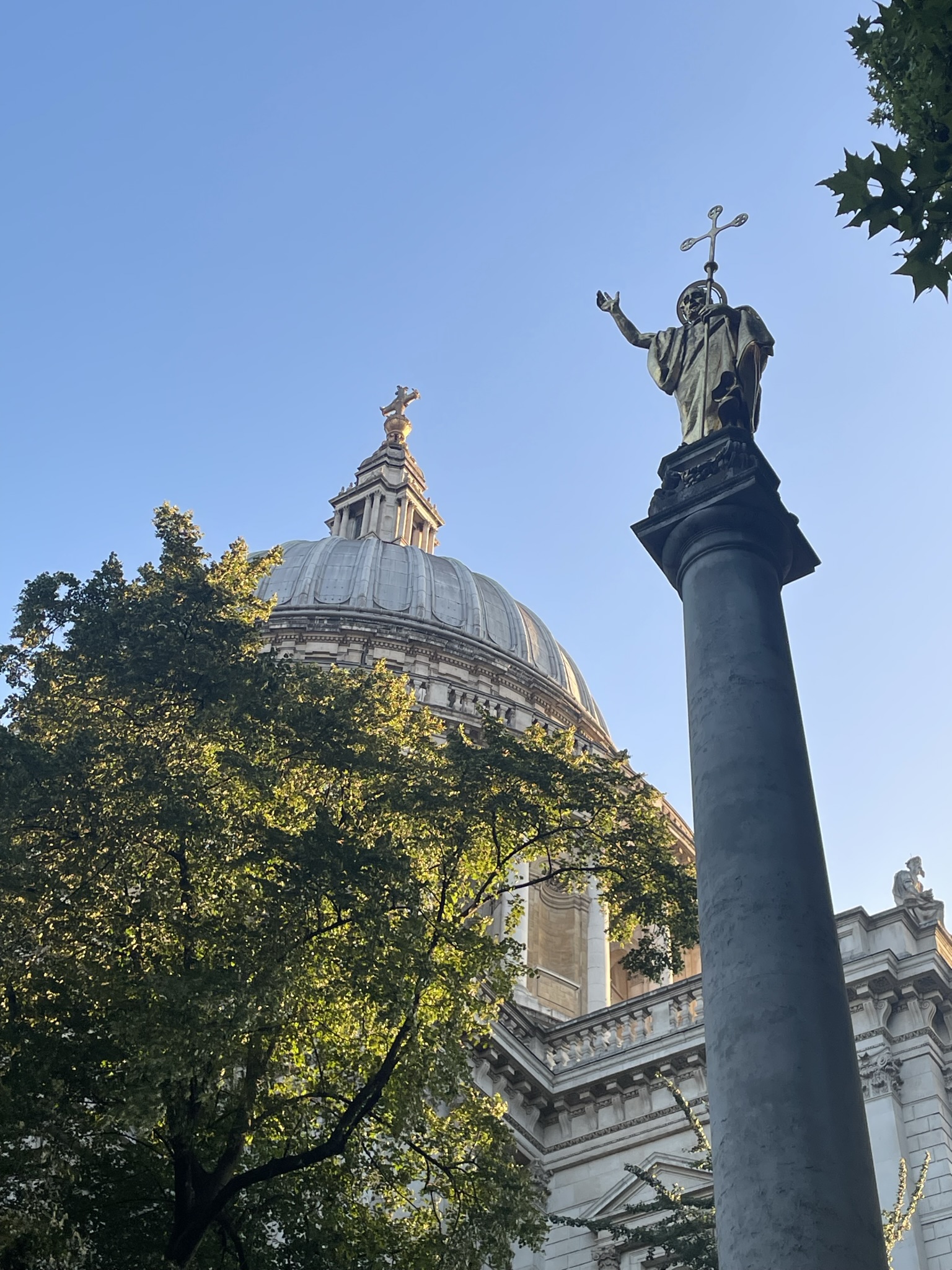
With some time to kill before a comedy show, we found ourselves in the National Gallery. Again, very few cities allow this sort of nearly effortless strolling between world-class sights and history, absolutely part of the ongoing charm of London. At the risk of being repetitive, the collection here was also amazing. Seems like this Rembrandt fellow was pretty good with a brush, and despite the crowds the 19th and 20th century rooms were great to peruse. A special shoutout to Van Gogh’s “Landscape with Plowman”, where Vincent likened his toil to the plowman caught on canvas. As a bonus there was a small exhibition of Ferdinand Georg Waldmuller, a 19th century Austrian with a talent for rendering breathtaking, often Alpine, landscapes. From here we were on to see Chris Parker, a Kiwi comedian, who had a high-energy, hilarious set. We wrapped the night with a late dinner at Rita’s, complete with a few standouts (beef tartare, ceviche, and cornbread) and a celebrity (Pedro Pascal) sighting. All in all it seemed like a great birthday for Han.
As is a household custom, we split off the next morning to indulge niche interests. For me, this meant heading east to Greenwich to check out the Cutty Sark, a 19th century tea clipper that survived long enough to be permanently drydocked and restored as a museum ship. The museum onboard is good overall, though a bit unsure of whether it is geared to adults or school groups. One dad was greatly enjoying himself, demonstrating his love for James Cameron’s Titanic by continually half-shouting “Iceberg, dead ahead” to the understandable horror of his teenage children. Sometimes it is better to be ignorant of the language. I rolled farther along to the Royal Maritime Museum, capping my wanderings through the various halls with the Battle of Trafalgar room, where Admiral Nelson’s coat and stockings hold place of pride, down to the torn shoulder stitching from the musket ball which felled the naval legend. Having clearly reached the day’s peak, I turned back to meet Hannah for lunch.
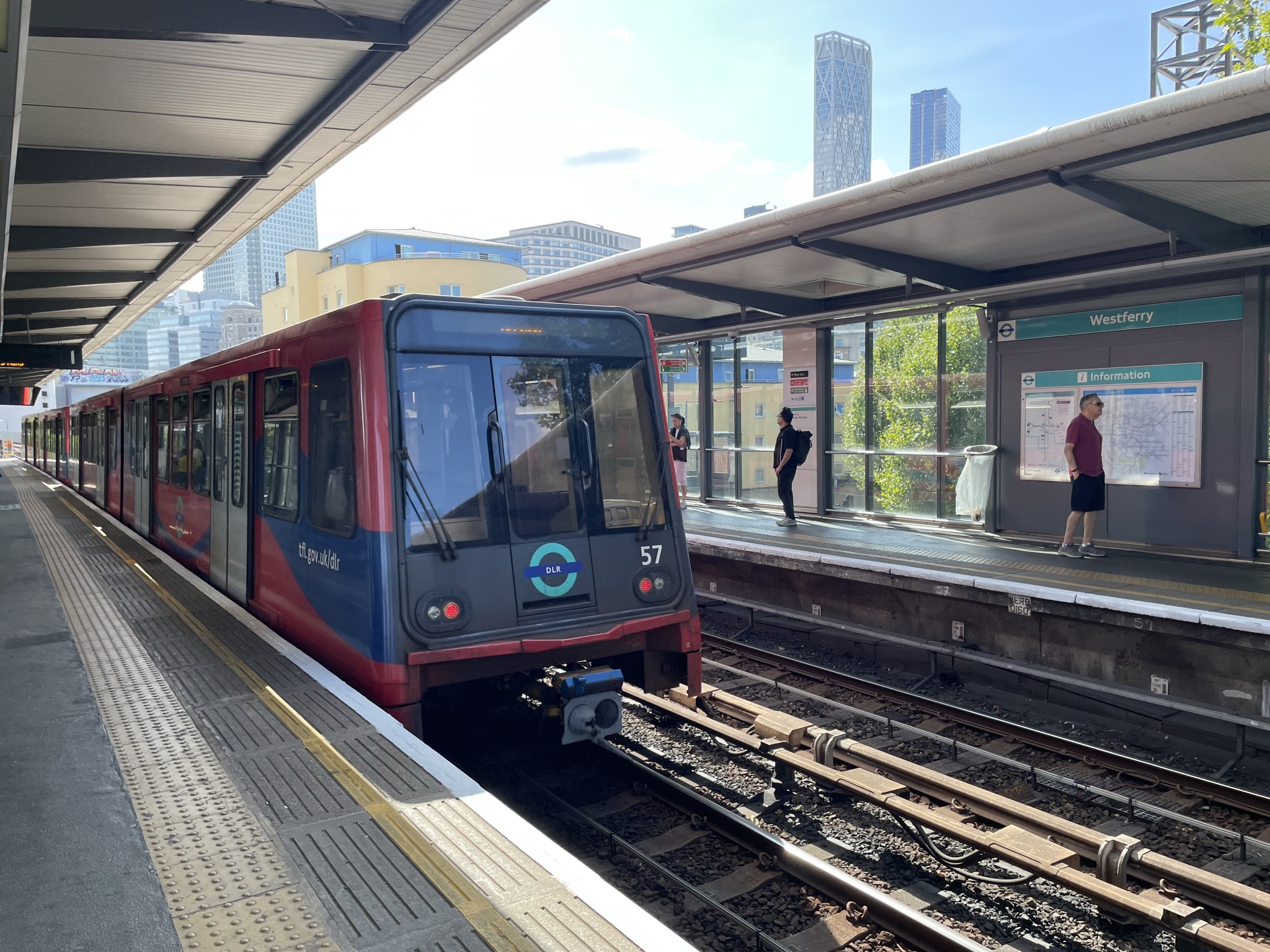
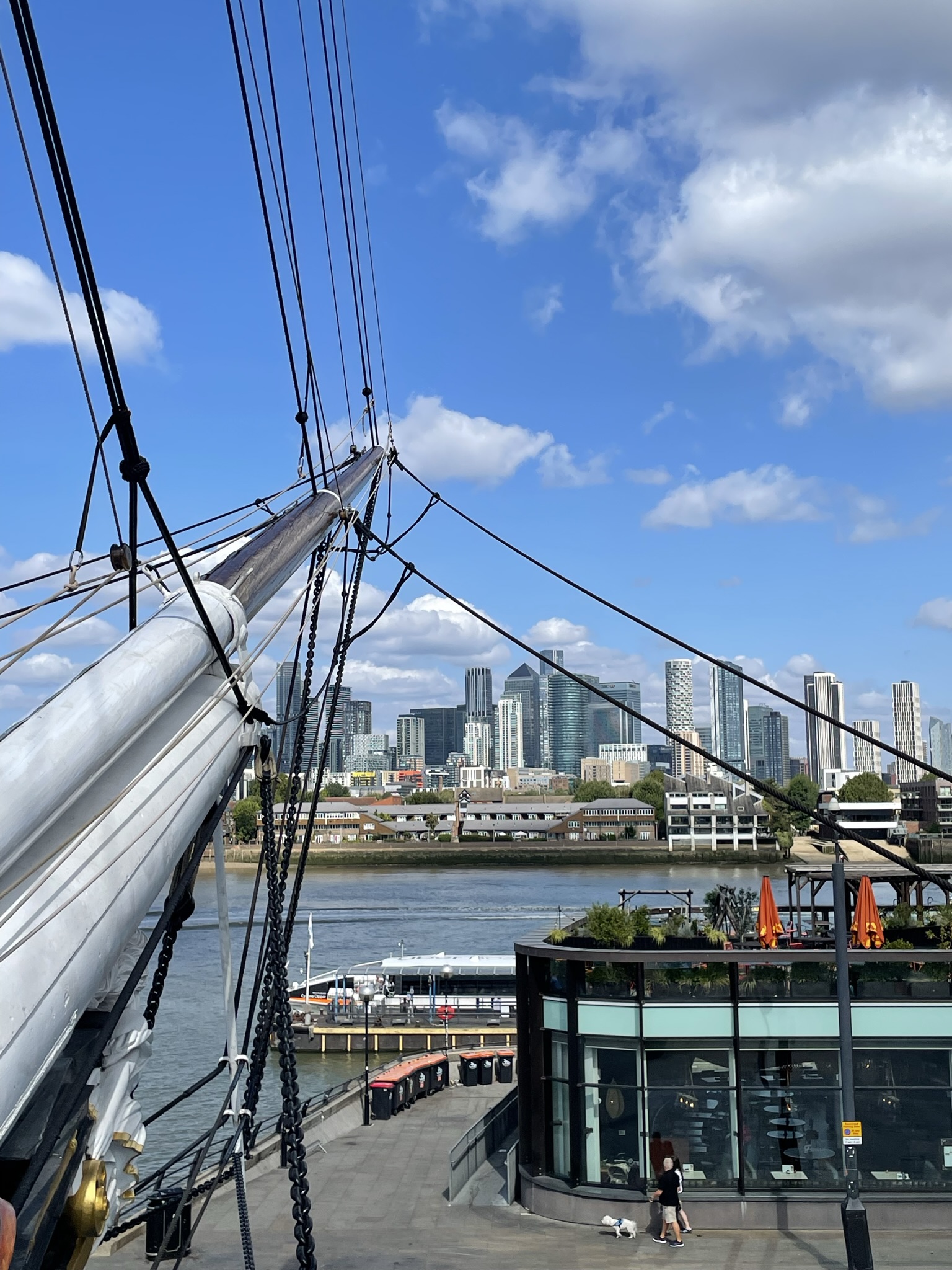
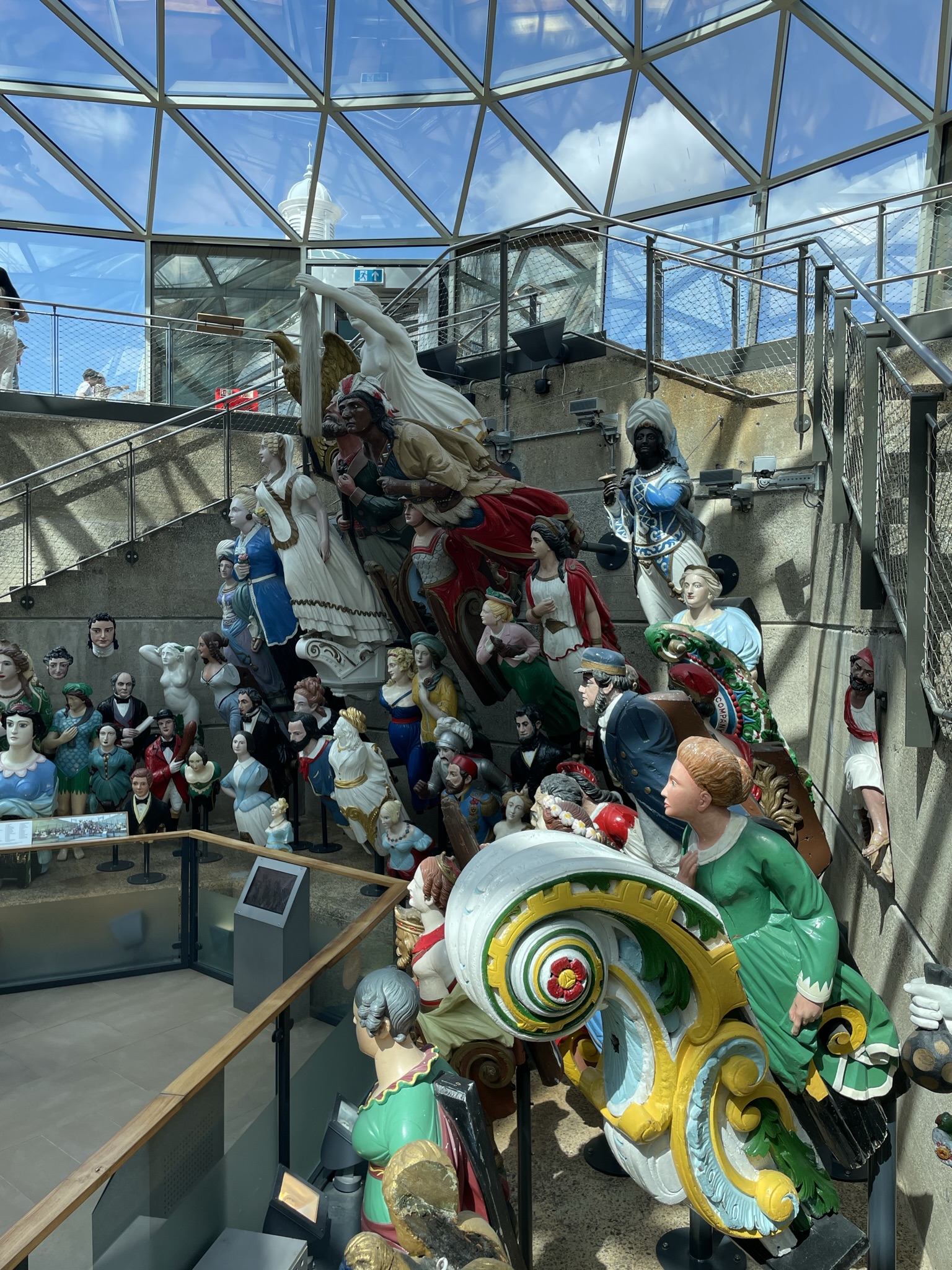
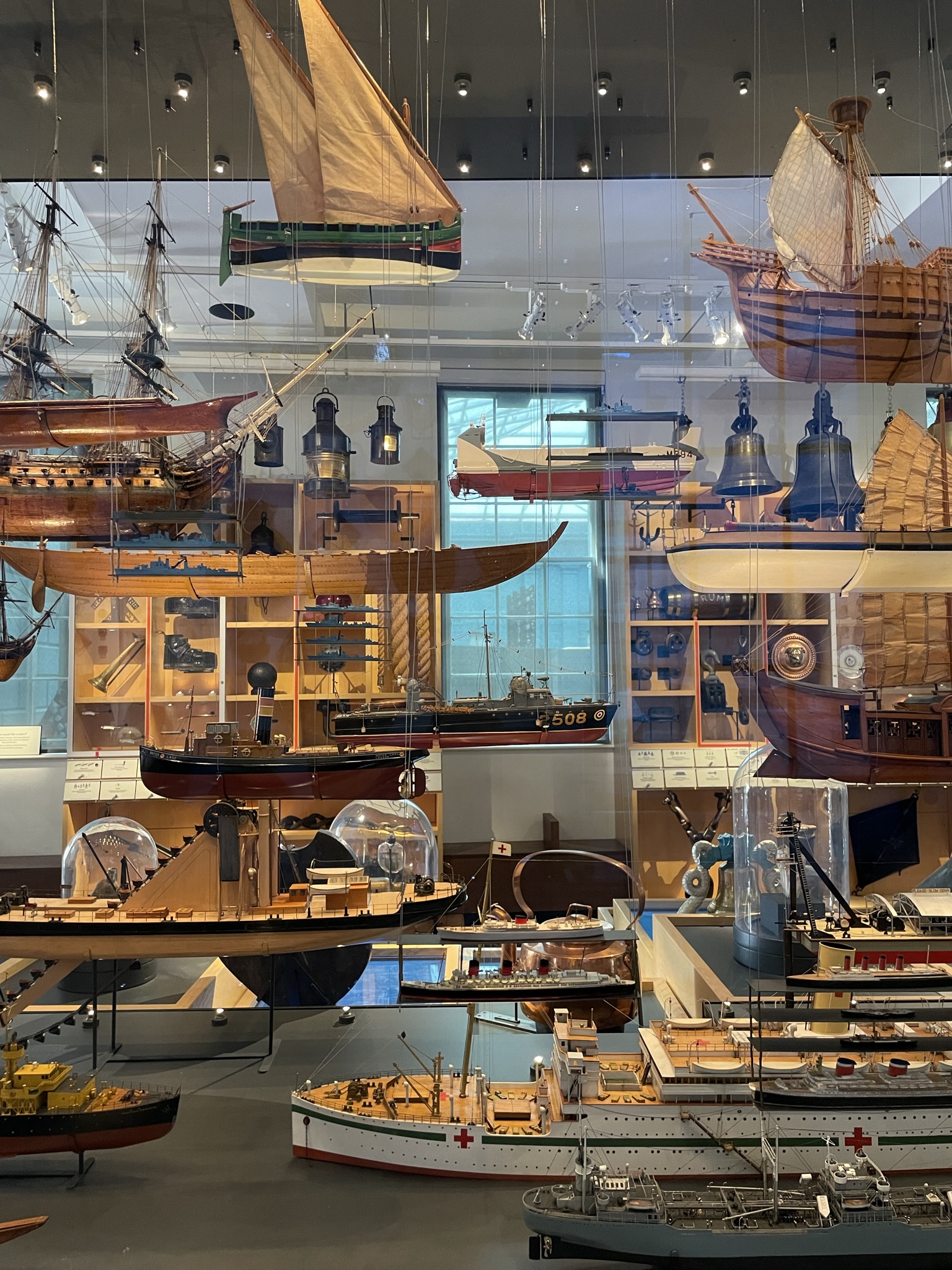
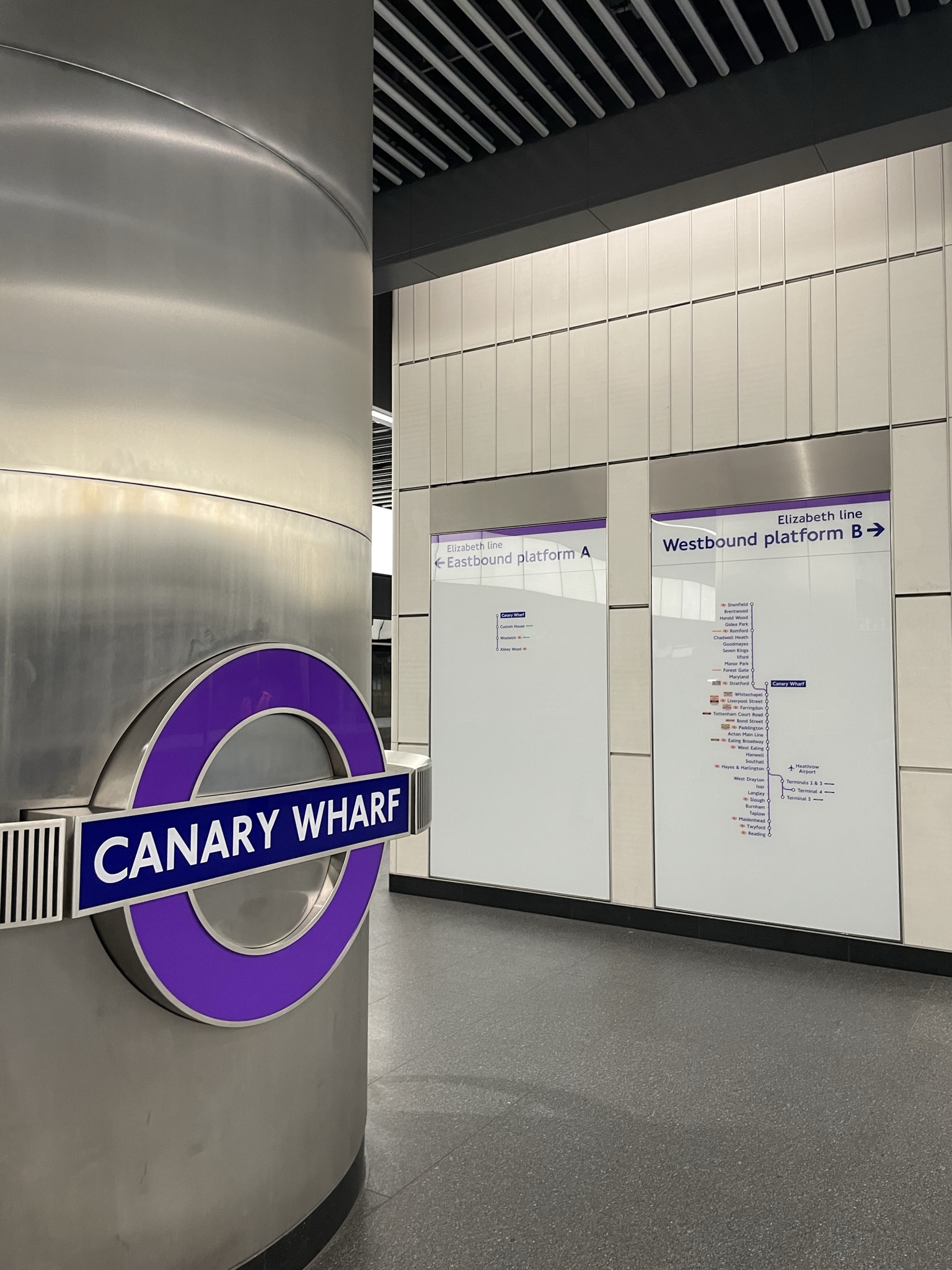
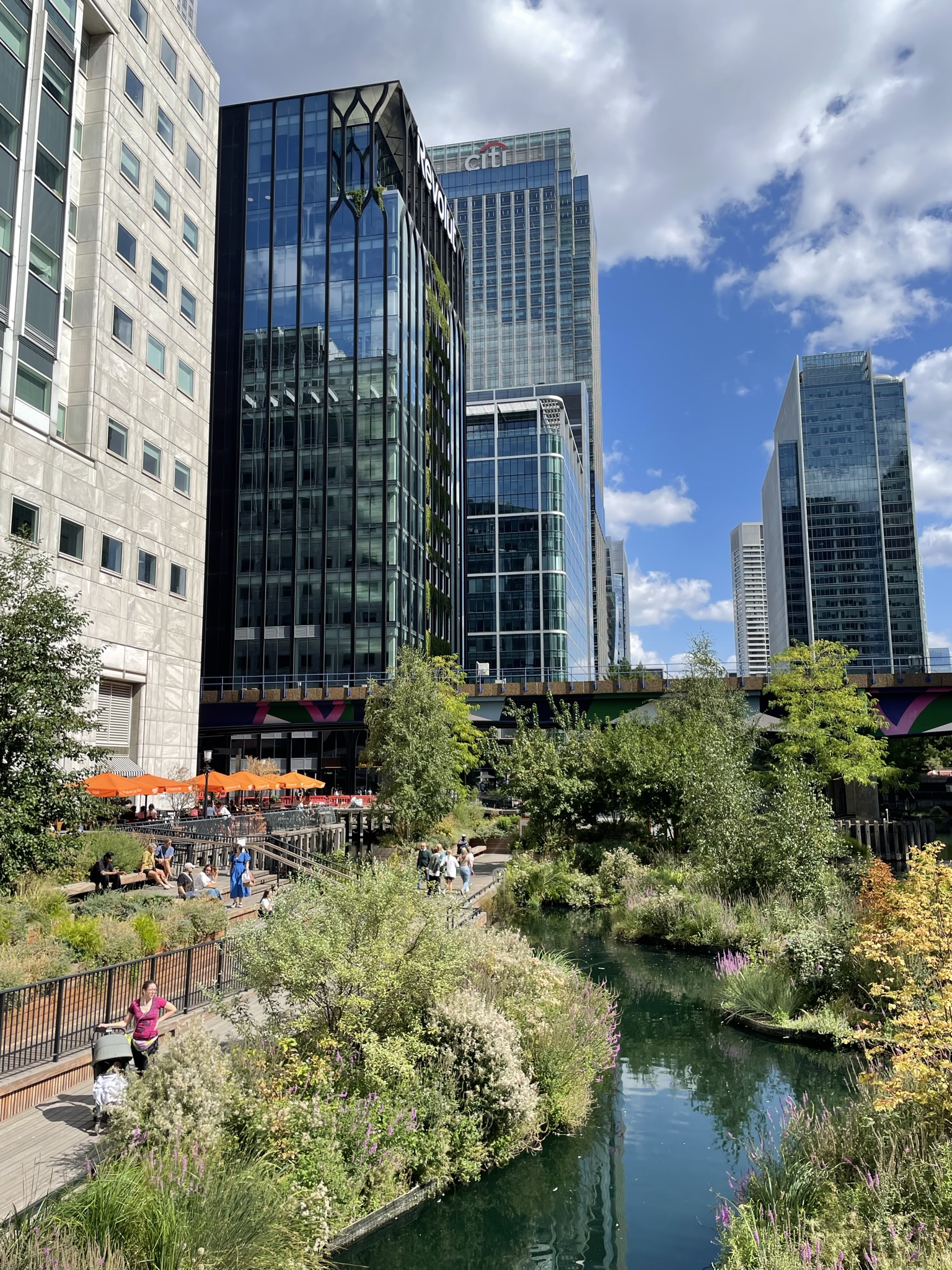
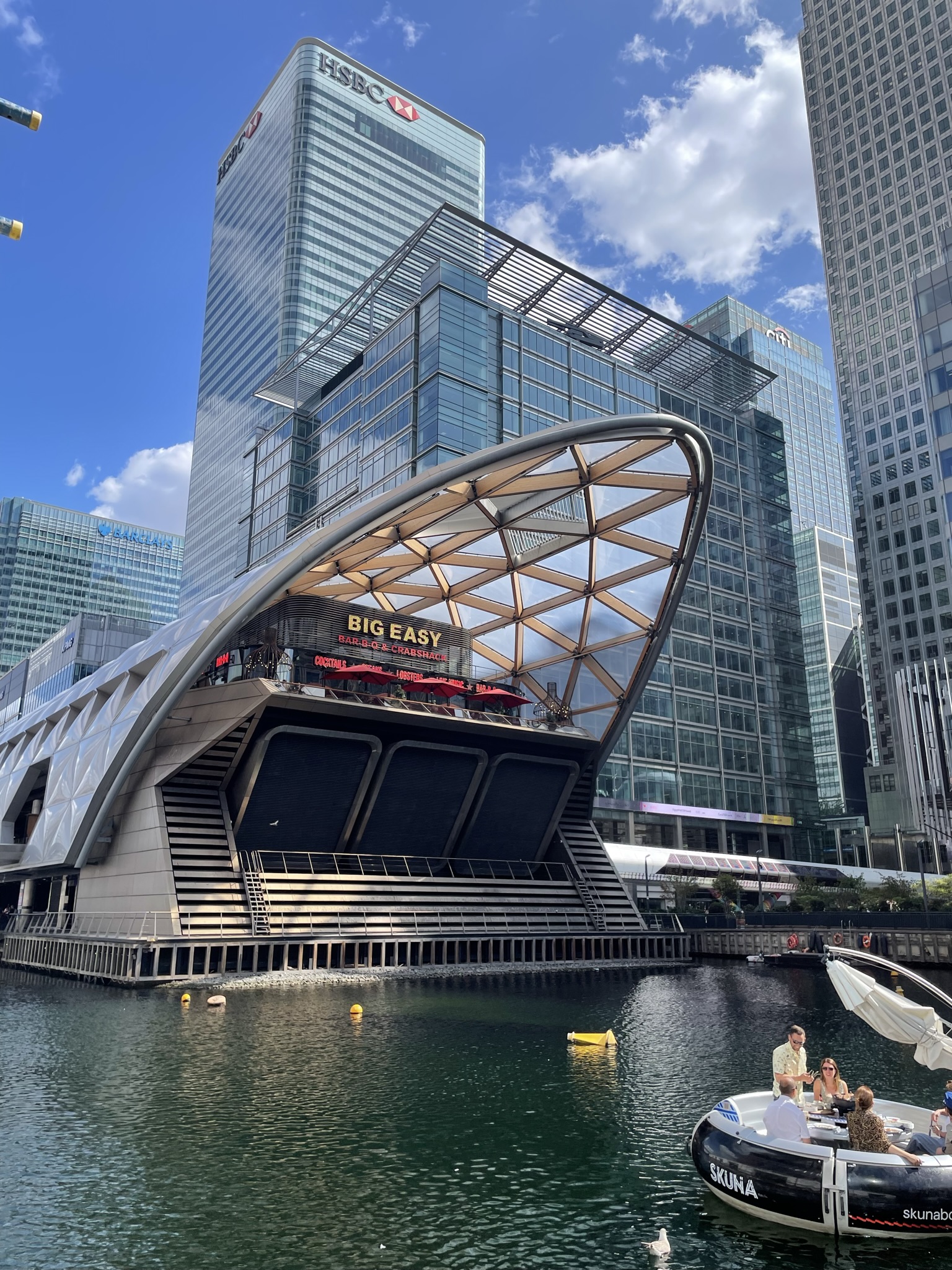
My journey included a stopover at the City Museum Docklands, which told the story of the commercial rebirth of the Docklands and development of Canary Wharf in amidst Thatcher’s post-industrial Britain. This has been overall successful, the area is a forest of skyscrapers, parks and water basins, pleasant in an anodyne sort of way. The whole area is sewn onto the fabric of London with the Docklands LRT trains, an automated, elevated rail system that is woefully undersized and oversubscribed now. It is also a bit meandering, and I swapped it out for the Elizabeth Line, the newest and fastest underground addition that whisked me to meet Hannah in 15 minutes flat from Docklands to the edges of Buckingham Palace. We treated ourselves to cocktails at Duke’s, the hotel bar that sets the standard for Hannah’s favourite, the martini. Our server mixed our drinks on a 1908 bar cart wheeled over to the table, recounting the history of the Sazerac (my order), the world’s earliest cocktail, originating in New Orleans at Peychaud’s pharmacy while he looked for a vehicle for his bitters.
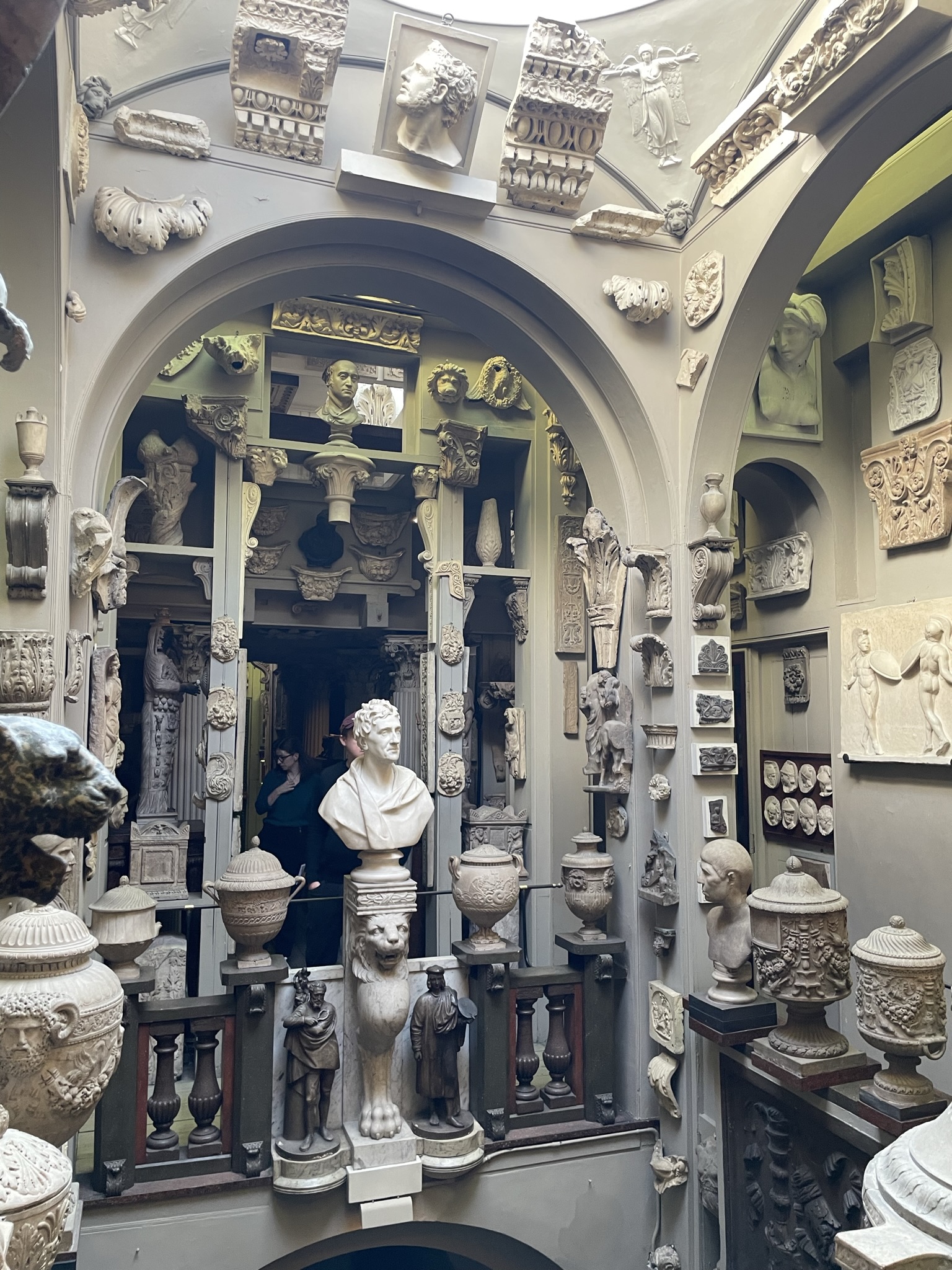
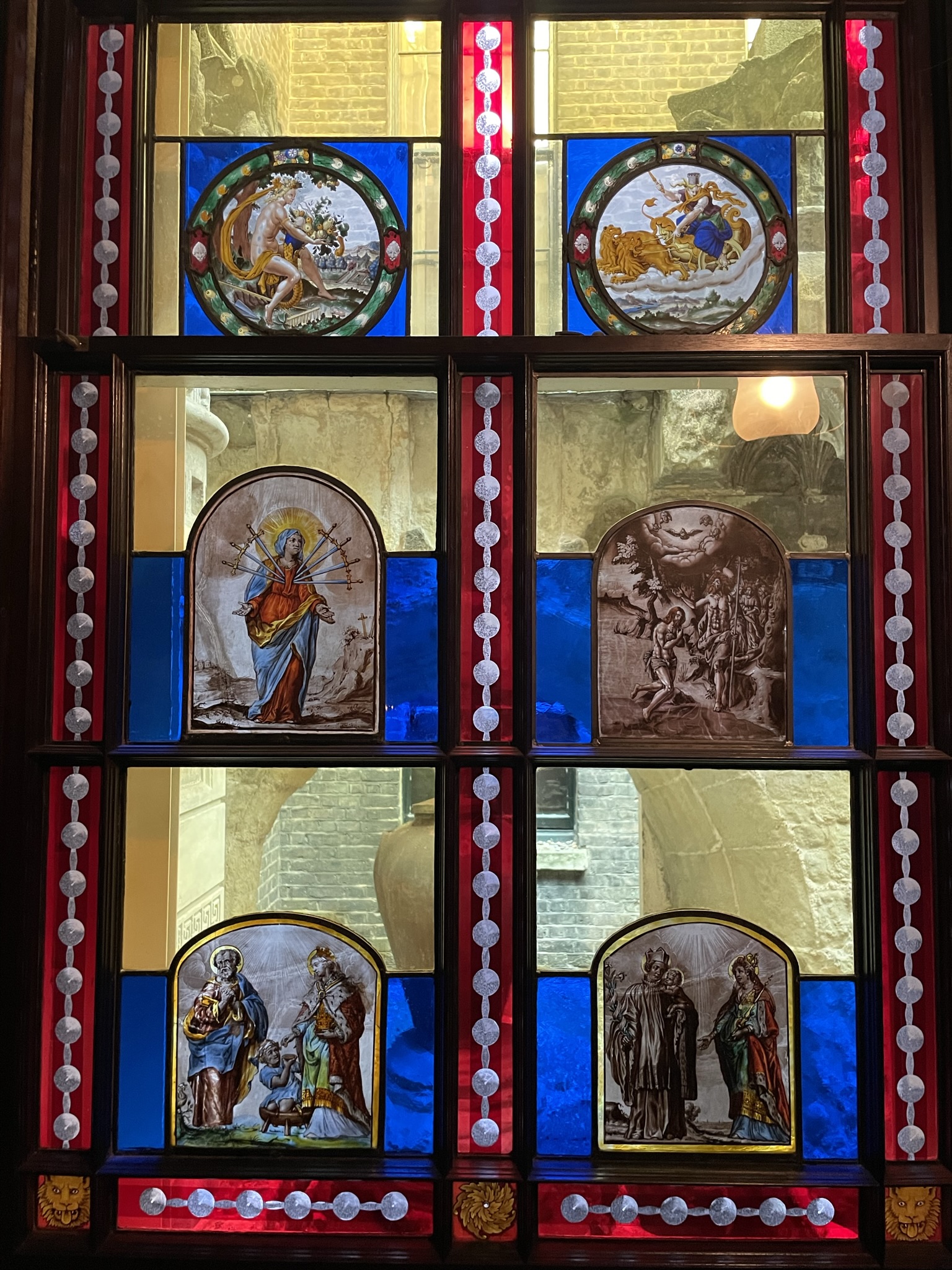
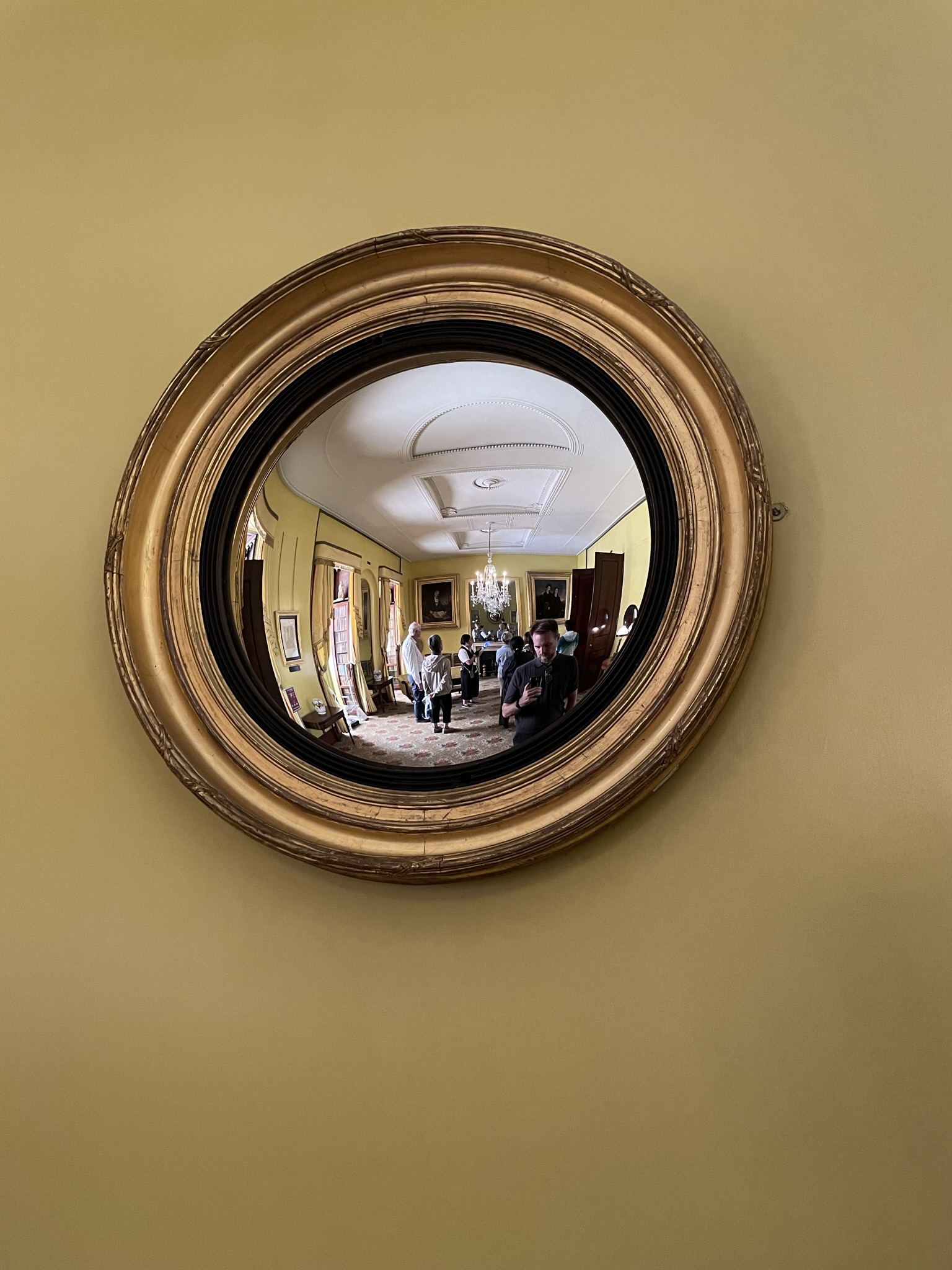
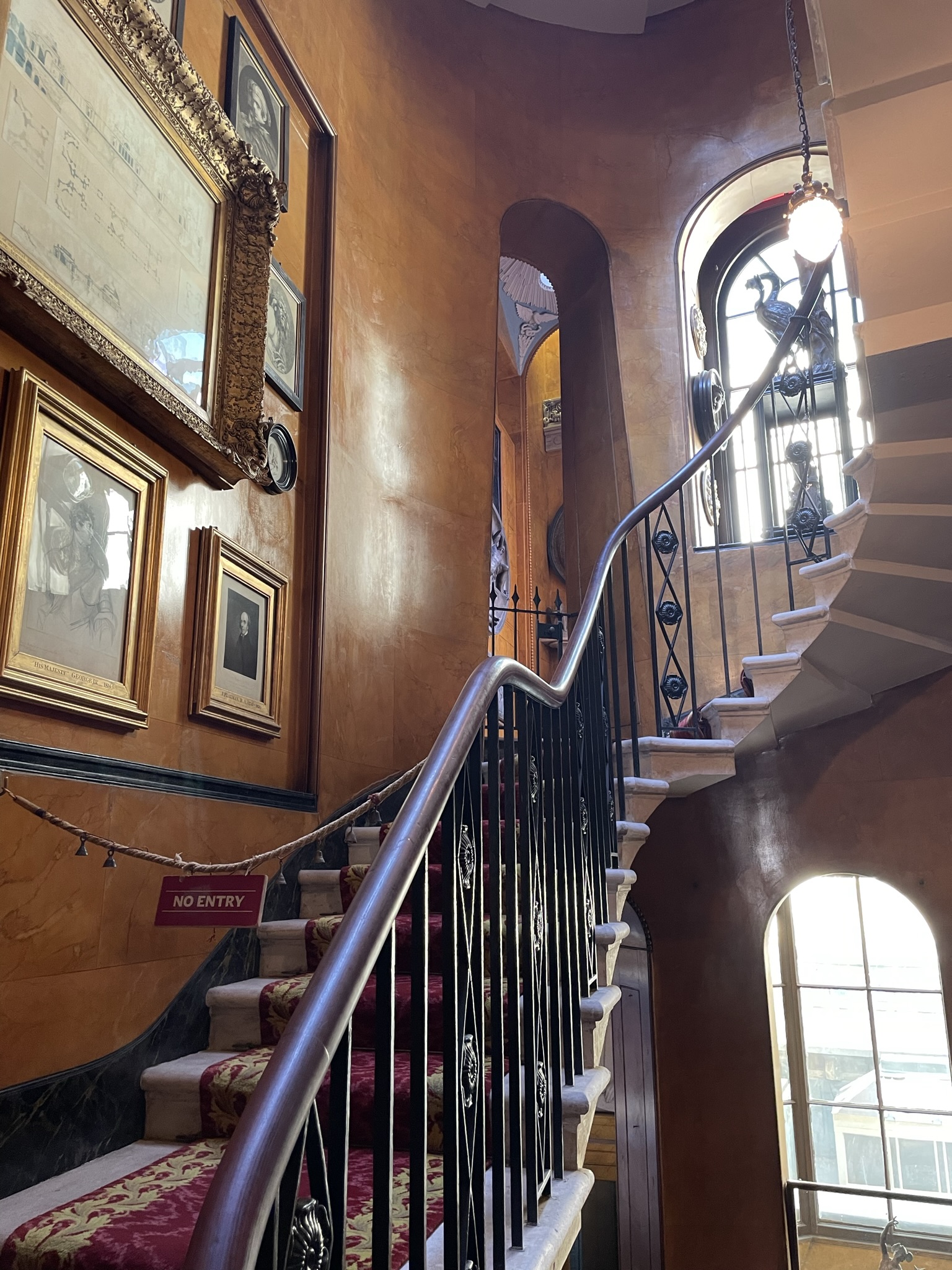
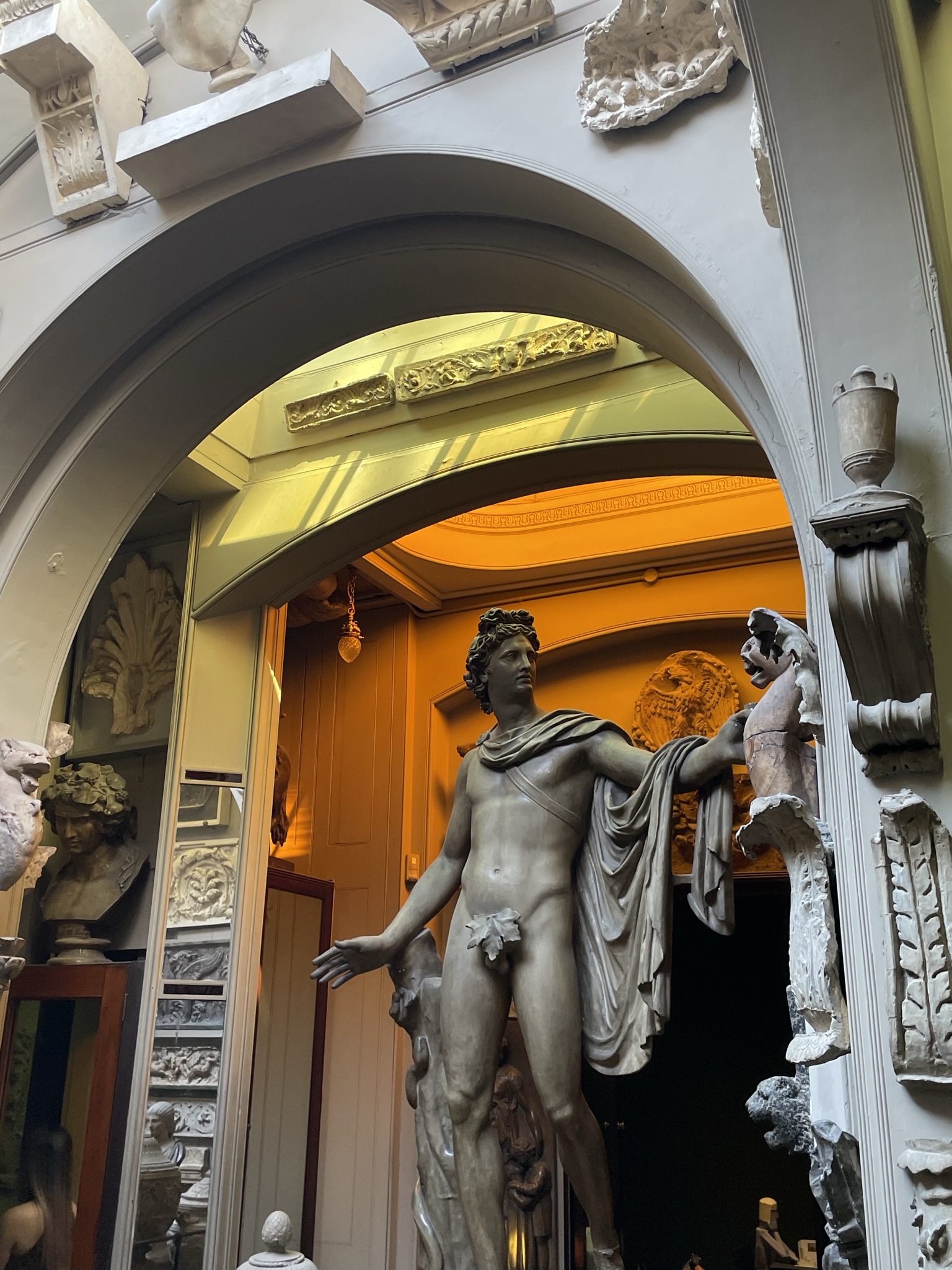
Last day brought us back in the morning to the Sir John Soane Gallery, a free house museum of an eclectic, wealthy Londoner of the early 20th century. Cobbled together from adjacent townhouses, the sprawling home is packed to the rafters with paintings, statuary, and an ancient Egyptian sarcophagus, complete with detailed hieroglyphics. Free, less the 15 or so minutes waiting in the sun as all the trees are on the far, Lincoln’s Inn Field end. My mind strayed to Dickens’ Bleak House, though the area seems far more stately now. Mr. Soane endowed the house as a free public museum in perpetuity, a grand gesture. The other great find of this last day was the Courtauld Gallery, with a small, stunning, and uncrowded crop of Impressionist works. It was remarkable to have the time to just sit and contemplate these amazing works – including Van Gogh’s haunting self portrait with a bandaged ear – with time and space. The Courtauld’s curators also enlightened me about the innovation of oil painting in the early 1400s, a major shift from an egg tempera (not tempura) which was a big change.
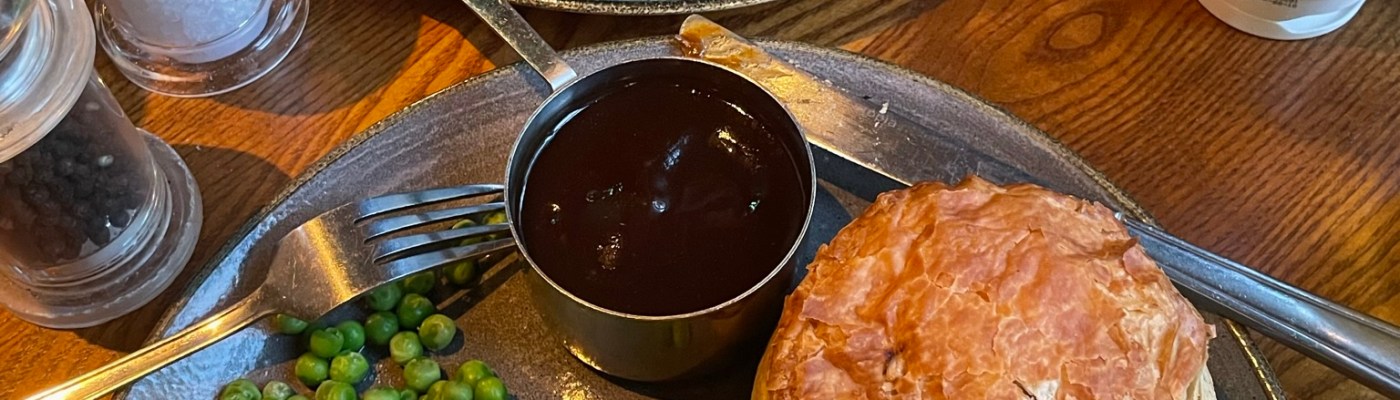
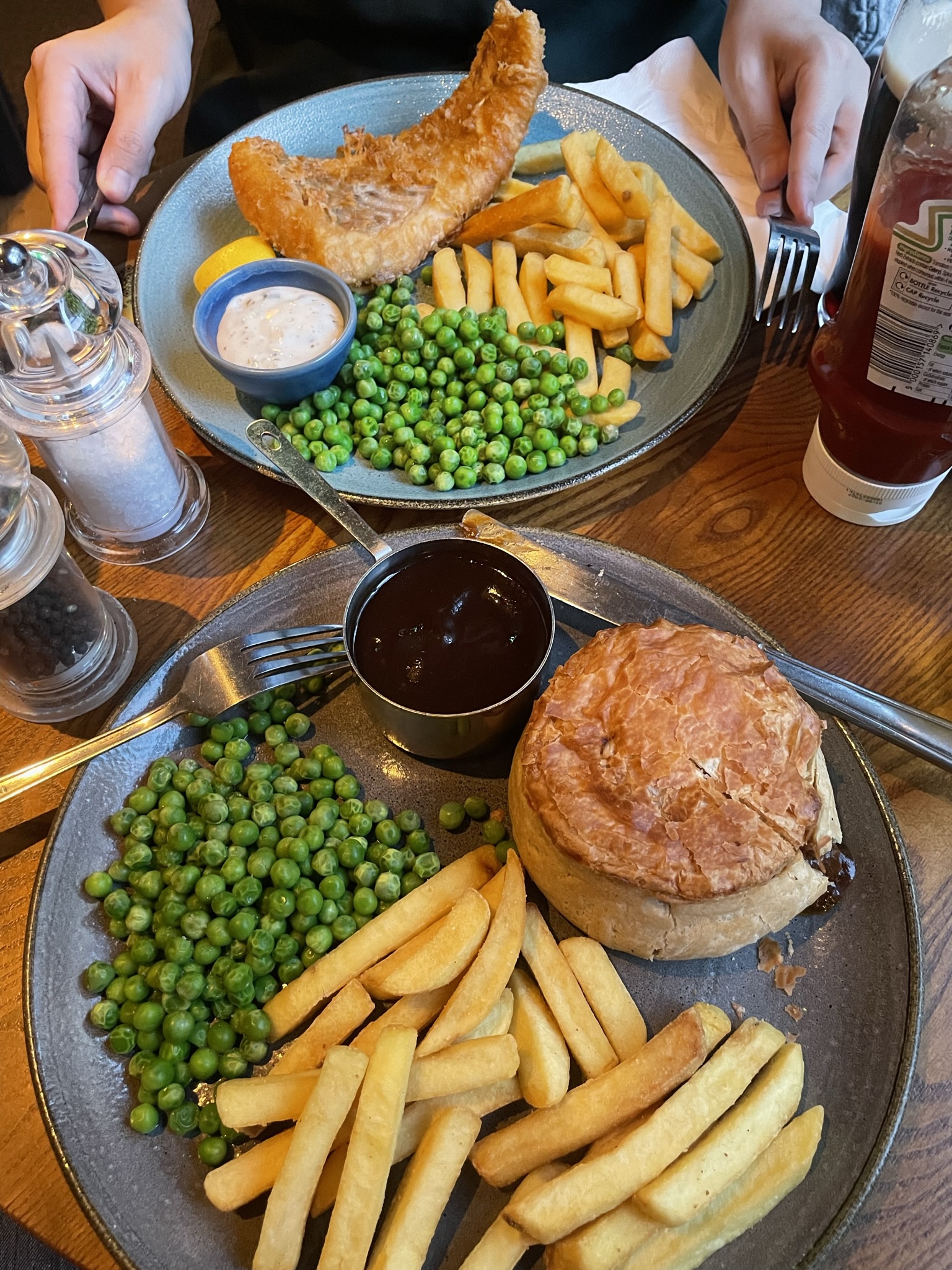
Throughout the trip we took moments to rest at pubs scattered about. Hardly novel, but an exceedingly pleasant way to pass the time and get a break in. This included the Red Lion Pub, one of dozens (hundreds?) in existence, and we quickly learned that pub fare is much the same across the city, though at least satisfying. I also opted, eventually, to lean into lukewarm, flat cask beers. They never quite won me over, but it felt like a reasonable concession to local practice. Above one pub was our last comedy show, my seventh of the trip, where we saw Kyla Cobbler perform. I was one of a handful of men in the audience and Ms. Cobbler spent time on crowd work, asking each couple questions. When I answered her question about my work, “town planner”, I was then asked what town I’ve planned. The answer, Vancouver, earned me the first and probably only round of applause I may ever receive in a professional capacity from the general public. Truly a career high point. I was already sold on London, but this didn’t hurt.
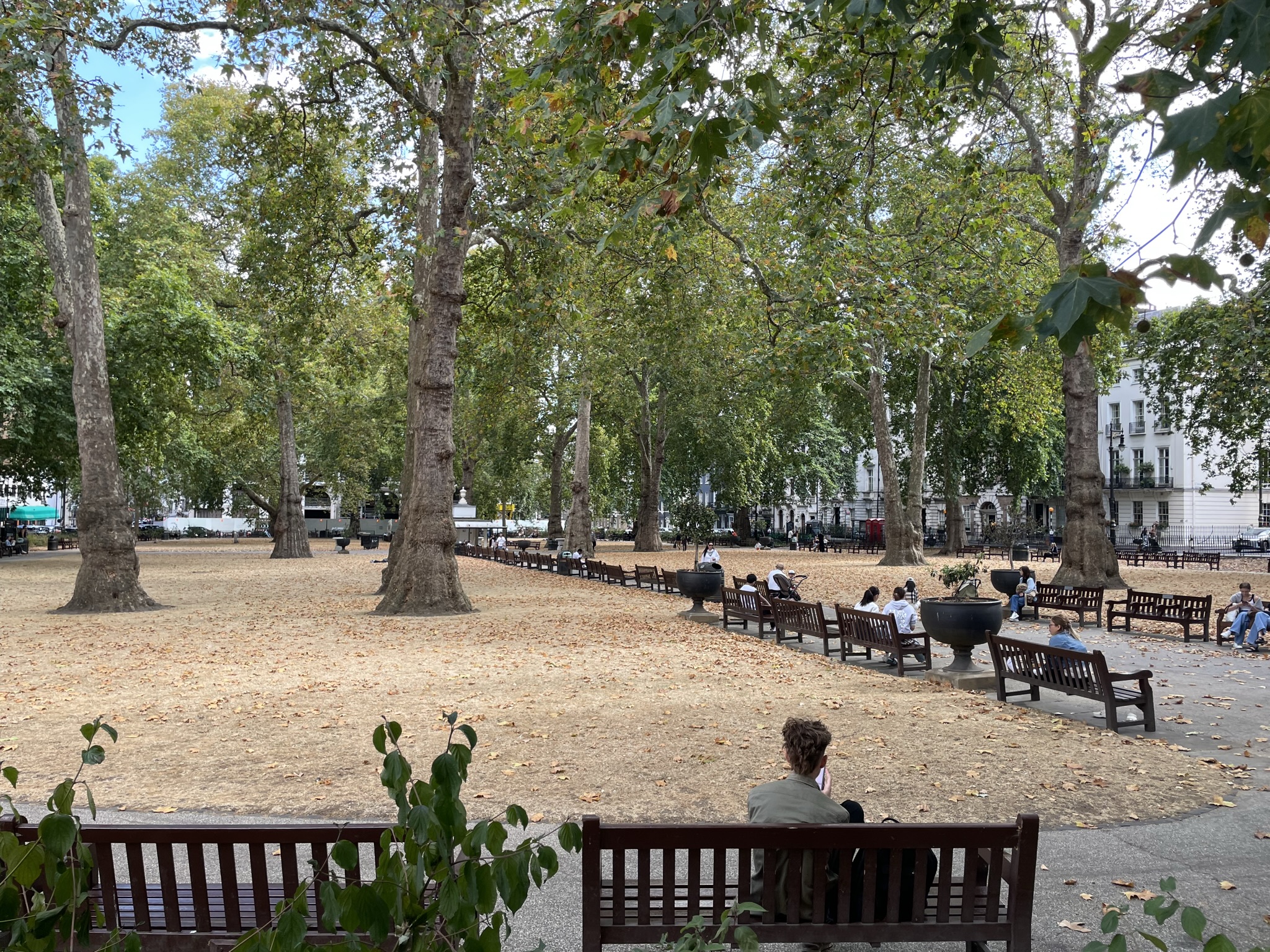
London is lovely. The city is diffuse, high streets everywhere, a nebulous expanse of villages and hamlets swallowed up over the centuries as the city spread amoeba-like, a growing organism sucking in the labour of the countryside, the resources of the empire, and luring people from all corners of the world with its opportunities. Some places feel hyperlocal, while in the central portions of the city it is busy, busy with people on all pavements, buses, bikes, and surprisingly few cars. The Thames winds through, views opening here and there from walkways and along bridges. From a few storeys up, the spread of London, the punctuation of church spires and skyscrapers in clusters, orientation on the horizon reminding you that you’re in a city of many millions. It’s simply grand.


Very nice, Zak. Almost thought I was there!
Love, Dad
Great read, Zak! I missed you by a week. Liam and I will be there Tuesday. I wish I had known you were going; I would have made suggestions. By the way, I’m looking forward to some cask ales myself. I am a fan.
I think egg tempura is really good too.