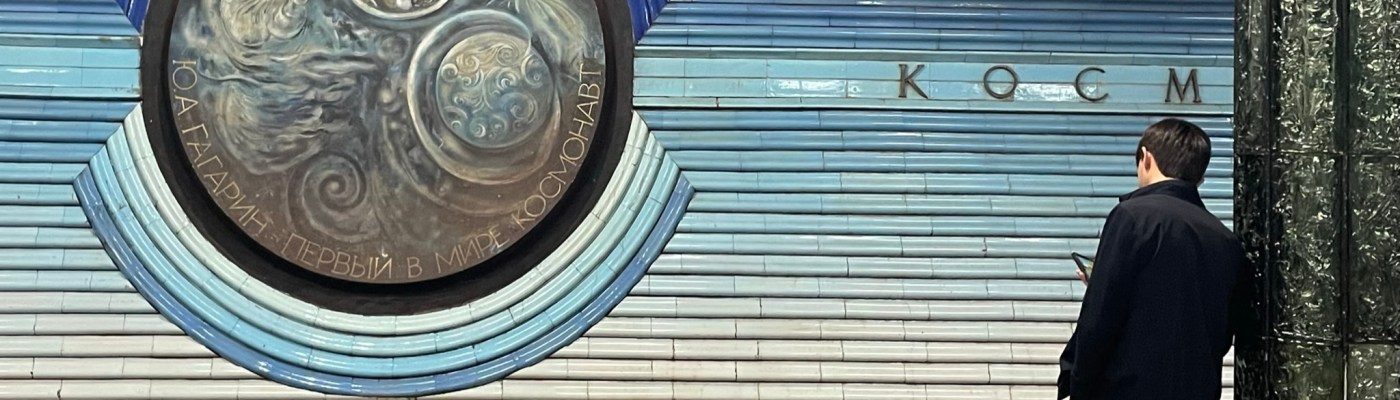
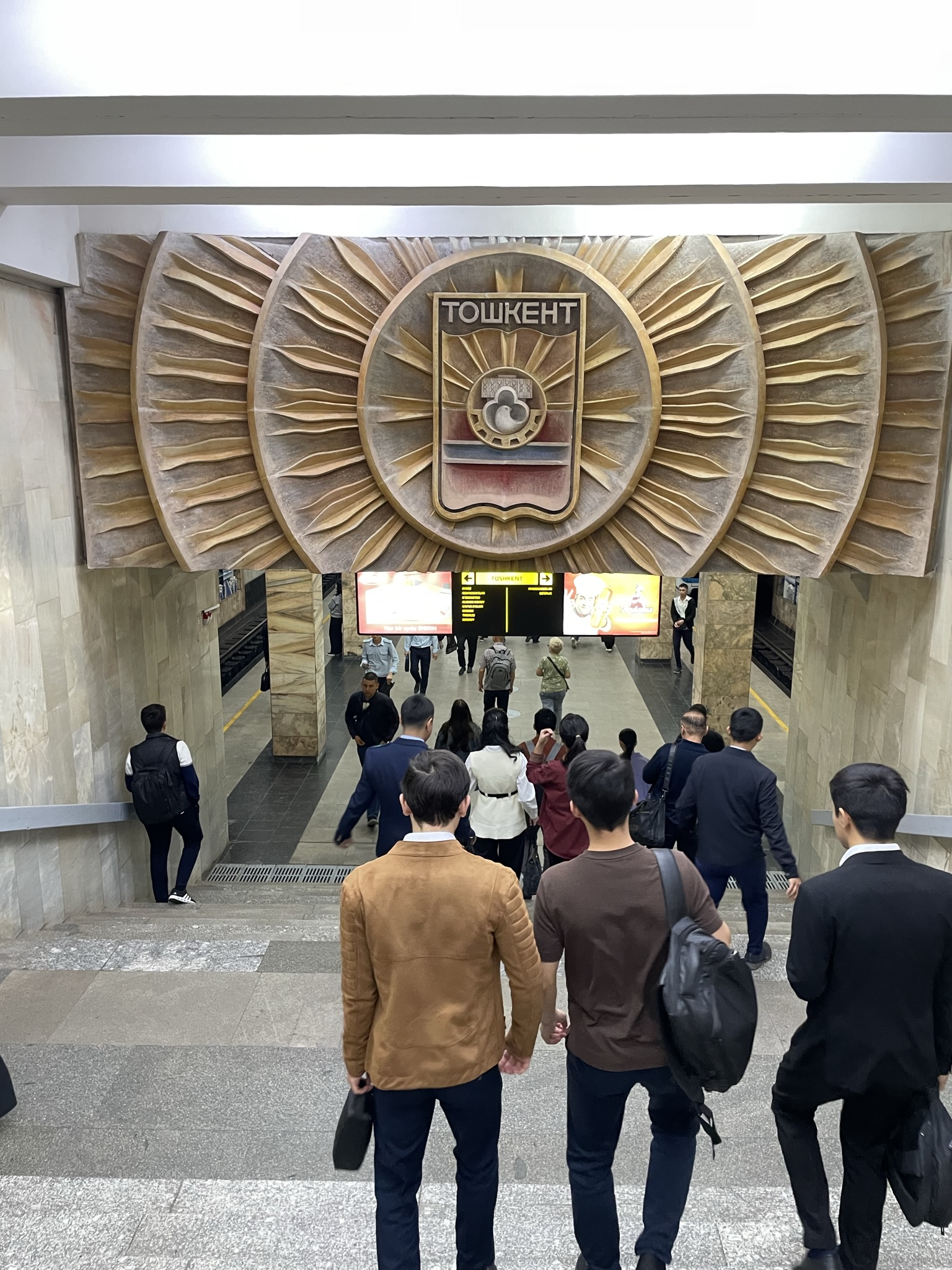
Out of Samarkand, the train tacked between irrigated farmlands and small cities, a constellation of settlements that skirted tantalizingly close to the Tajikistan border. At times, we were within a few hundred yards and I felt that itch to get in one more country, see one more place. Another time, another time. Today the focus was Tashkent, trading in the historic charms of the Silk Road cities for the bigger, brawnier, more modern metropolis. Tashkent doesn’t get much love in guidebooks, worth a couple of quick days perhaps while one adjusts to jetlag. One standout is the city’s Soviet-styled metro system, which was happily my first stop as I needed to make my way to the guesthouse before exploring. Underground, the metro passed through a half dozen stations, each teasing me with a glimpse of its unique architecture and art. More on this to come, but it was a promising start.
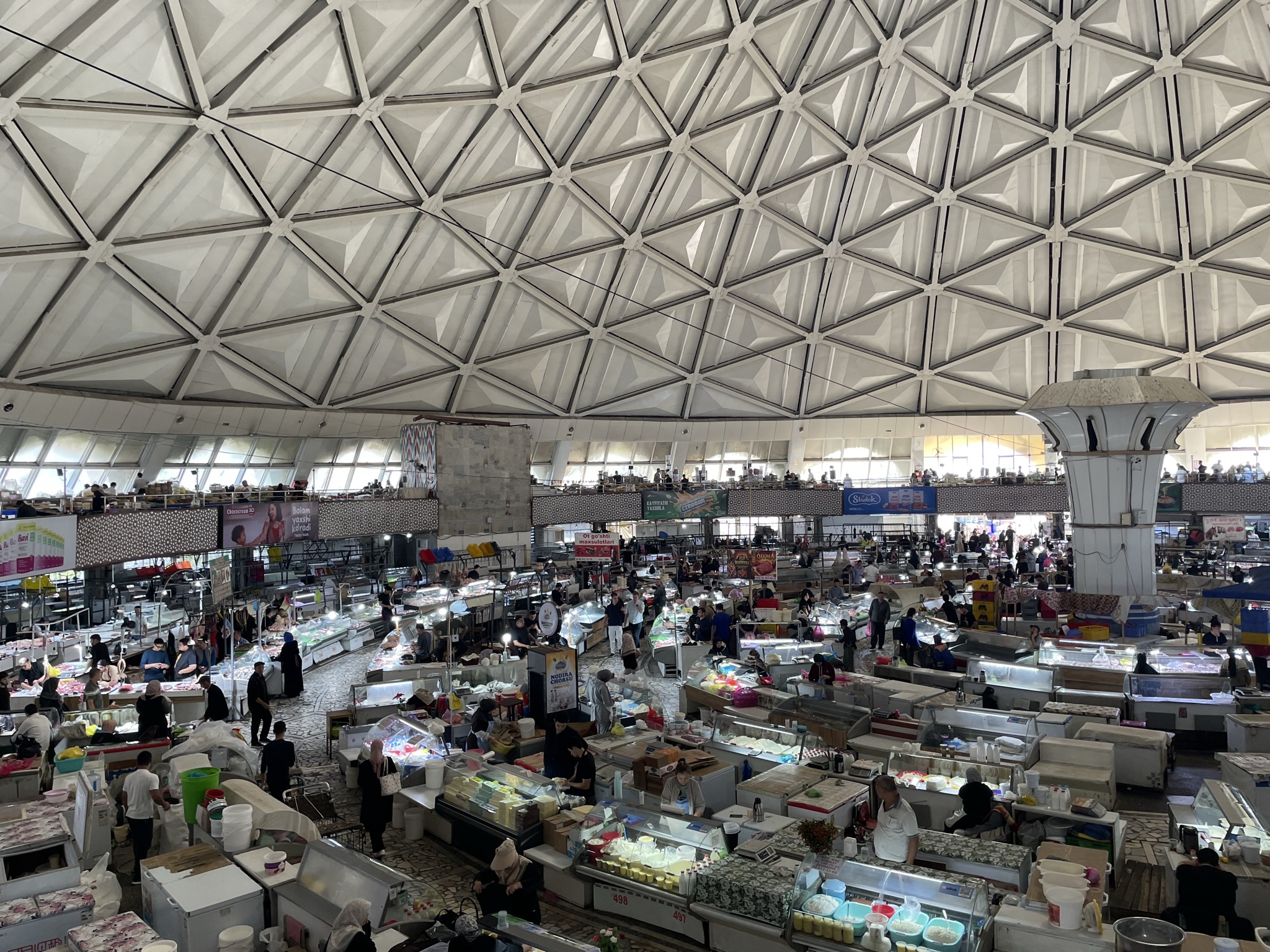
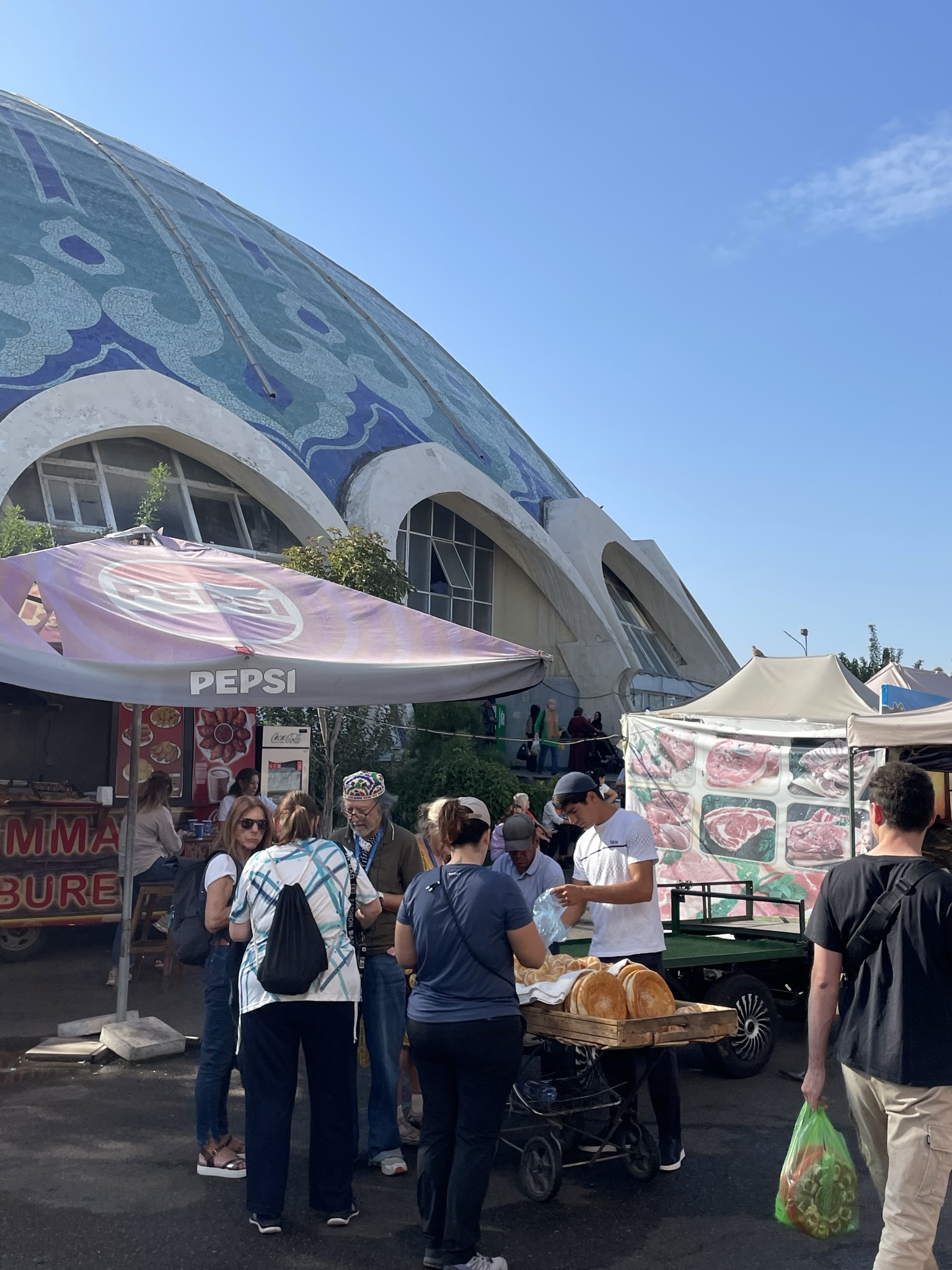
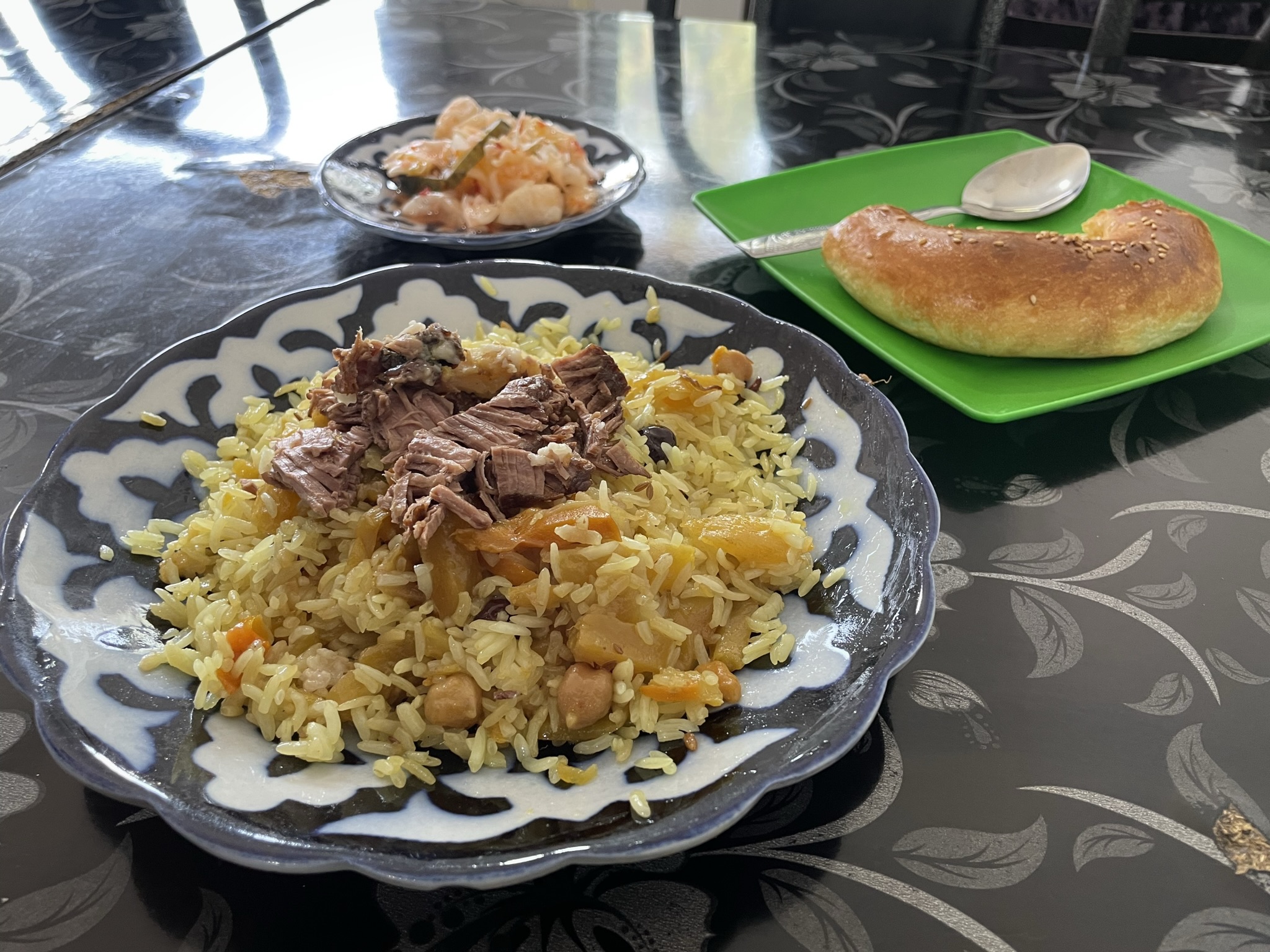
The guesthouse was down a quiet street a few minutes’ walk from Chorsu Bazaar, which centers around the dual poles of the metro station and the Soviet-era bazaar building. The latter is a low, wide dome supported without any central pillars, creating a cavernous interior marketplace with a real breadth and clustered with stalls selling day to day foods. It was quickly clear that this was a real, working market and not some leftover space assigned for the tourist trade, though the usual assortment of dried fruit and sweets vendors occupied the upper floor ring tracing the building’s edge. The bazaar has long since overgrown this market building however, extending in all cardinal directions in a maze of makeshift stalls and coopted and subdivided structures, each with it own commercial niche: clothes here, books there, meat in one place, fruit and produce in others. A central allee is crowded with giant steaming pans of plov with grills peppered between for shashlik, barbequed meat on skewers. It is a lively and always busy atmosphere, sellers open long into the dark evening hours to catch the last commuters making their way home.
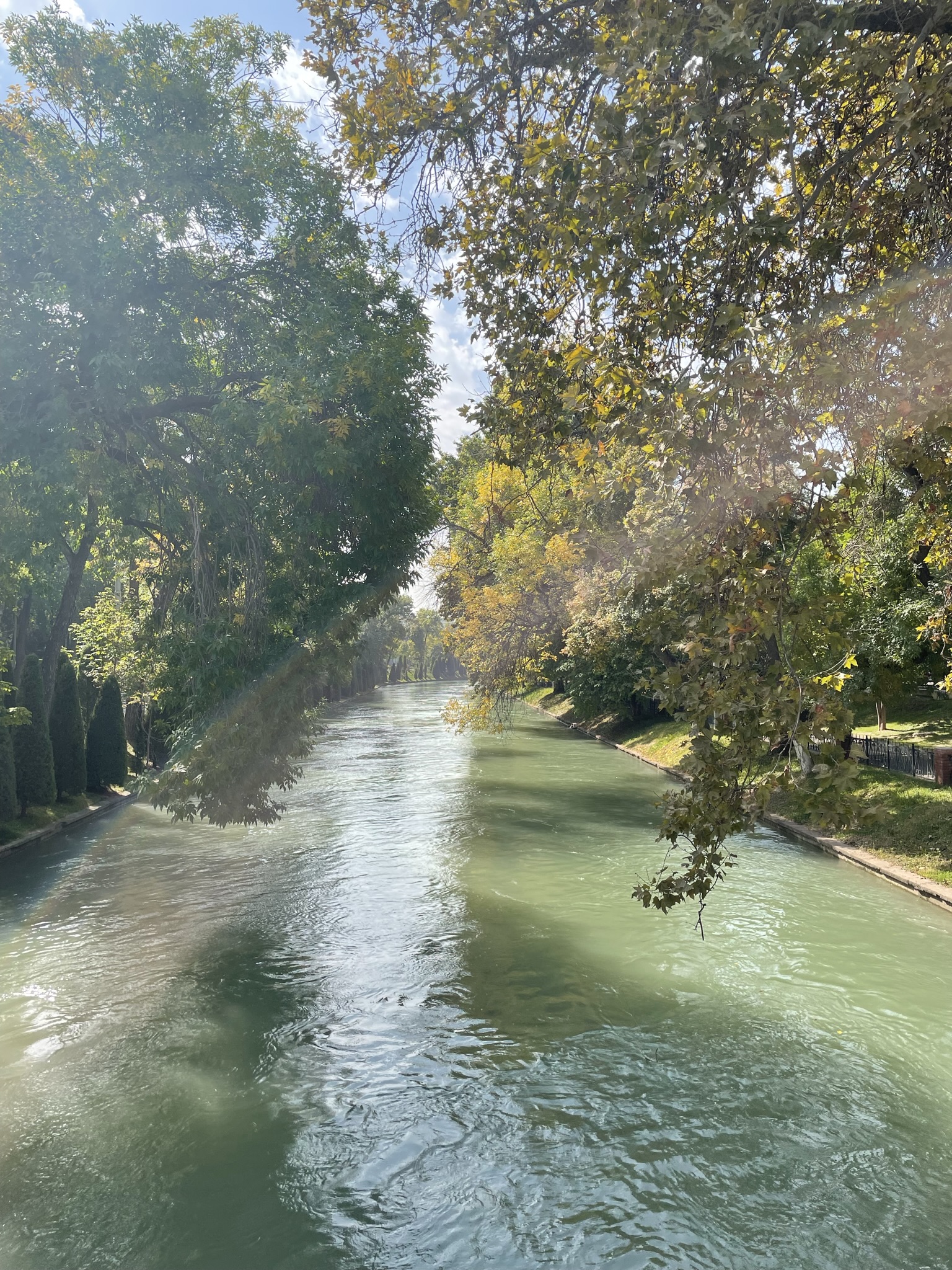
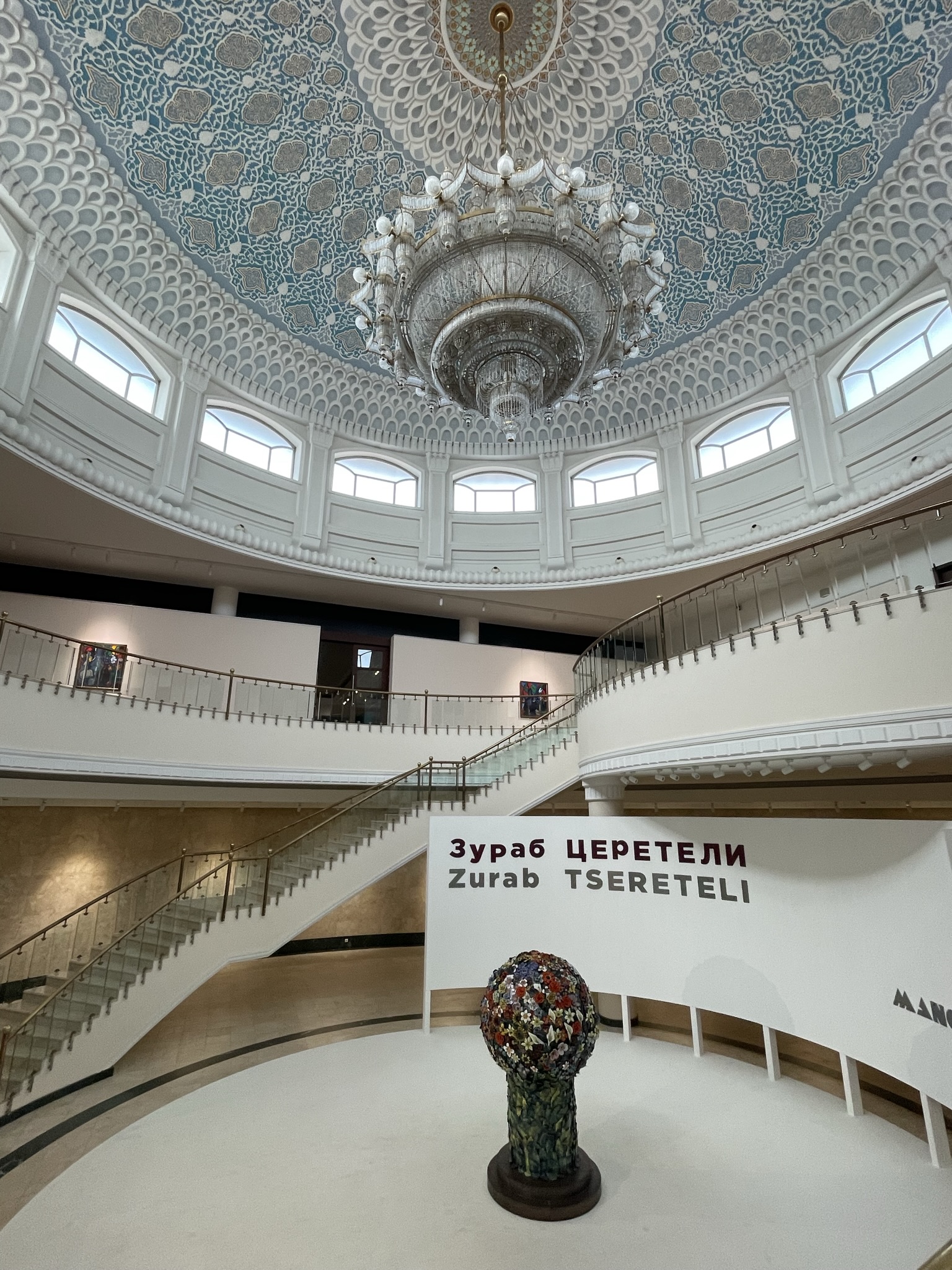
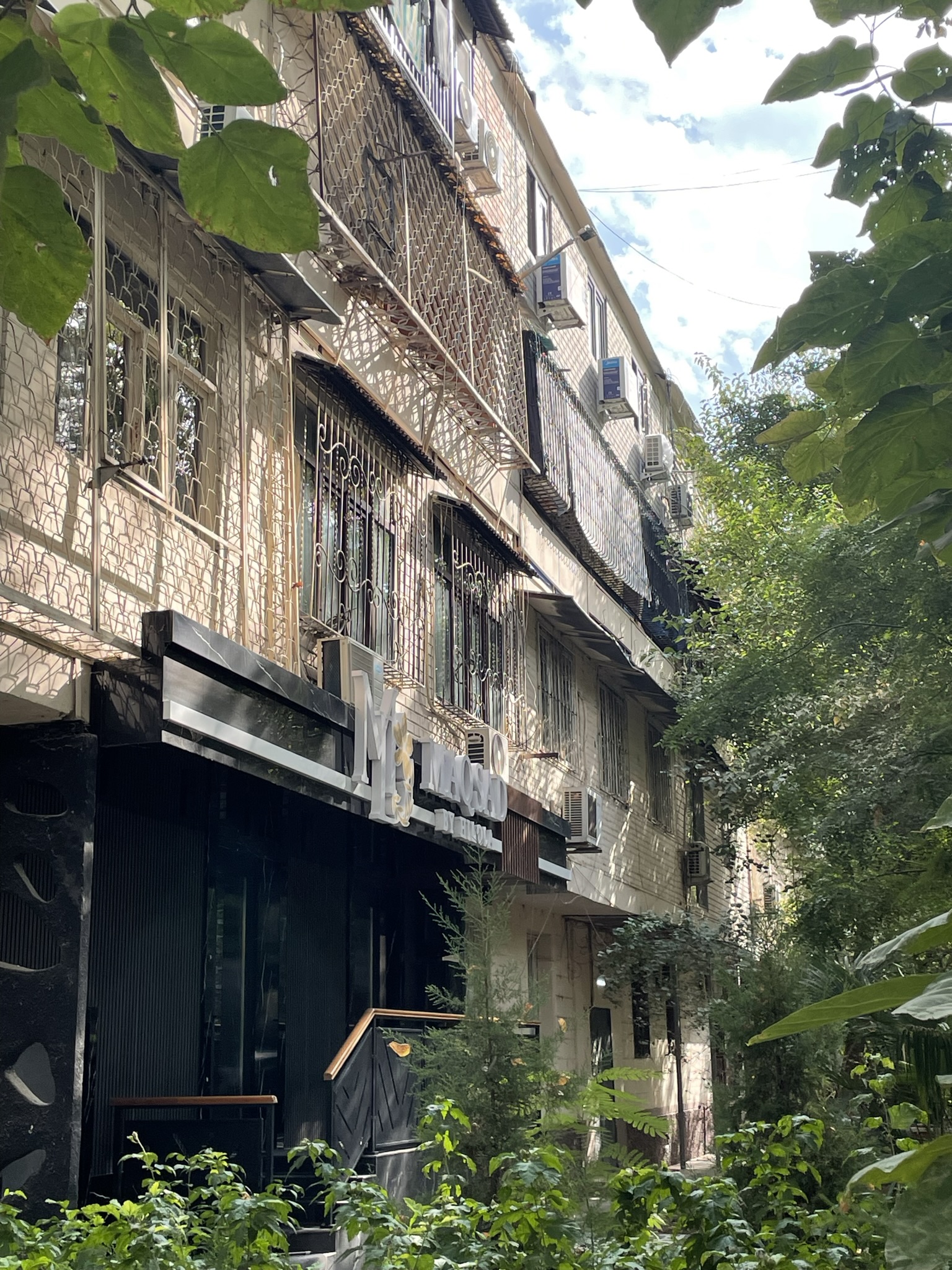
Beyond the bazaar, Tashkent stretches out, a burly city more than double the size of any others in the region. Wide roads cut recklessly through neighbourhoods full of stalinkas and khrushchevkas, many adorned with Soviet or contemporary Uzbekistan murals, others with large ads. It was favoured by the Tsarists as an administrative and logistics hub during the expansionist period of the late 19th century when Central Asia was brought into the Russian sphere of influence. Railways connected western Russia to then-Turkestan over the vast Eurasian steppe, and the Soviets maintained this during their reign. Traditional mahalla neighbourhoods abut more formal Soviet street grids, creating some jarring juxtapositions. Today it still appears to be growing, home to around 3 million people, dotted with more recent apartment complexes that punctuate the skyline. There is a lot of grit, contrasts and energy around Tashkent, all making for an interesting place to explore.
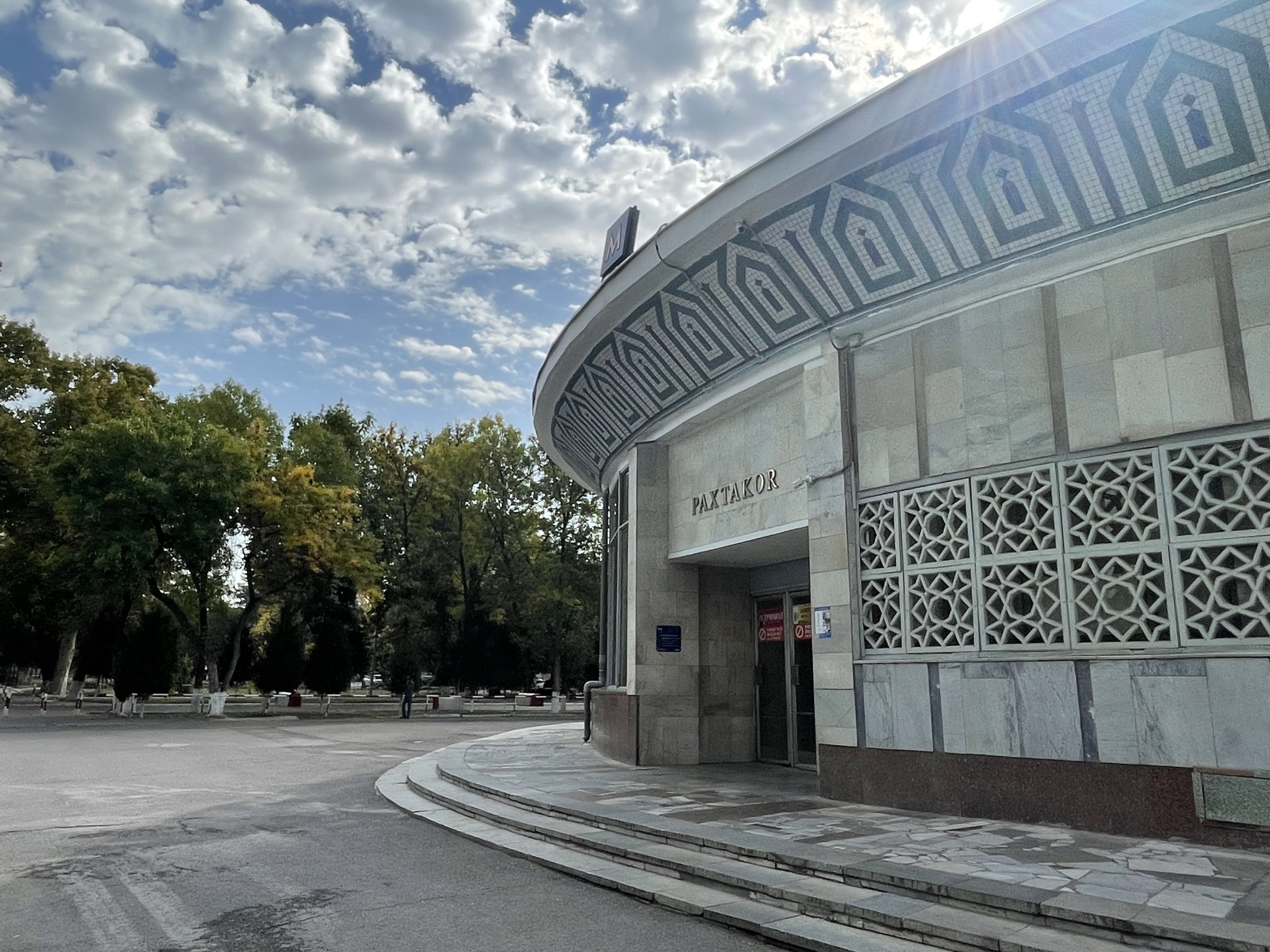
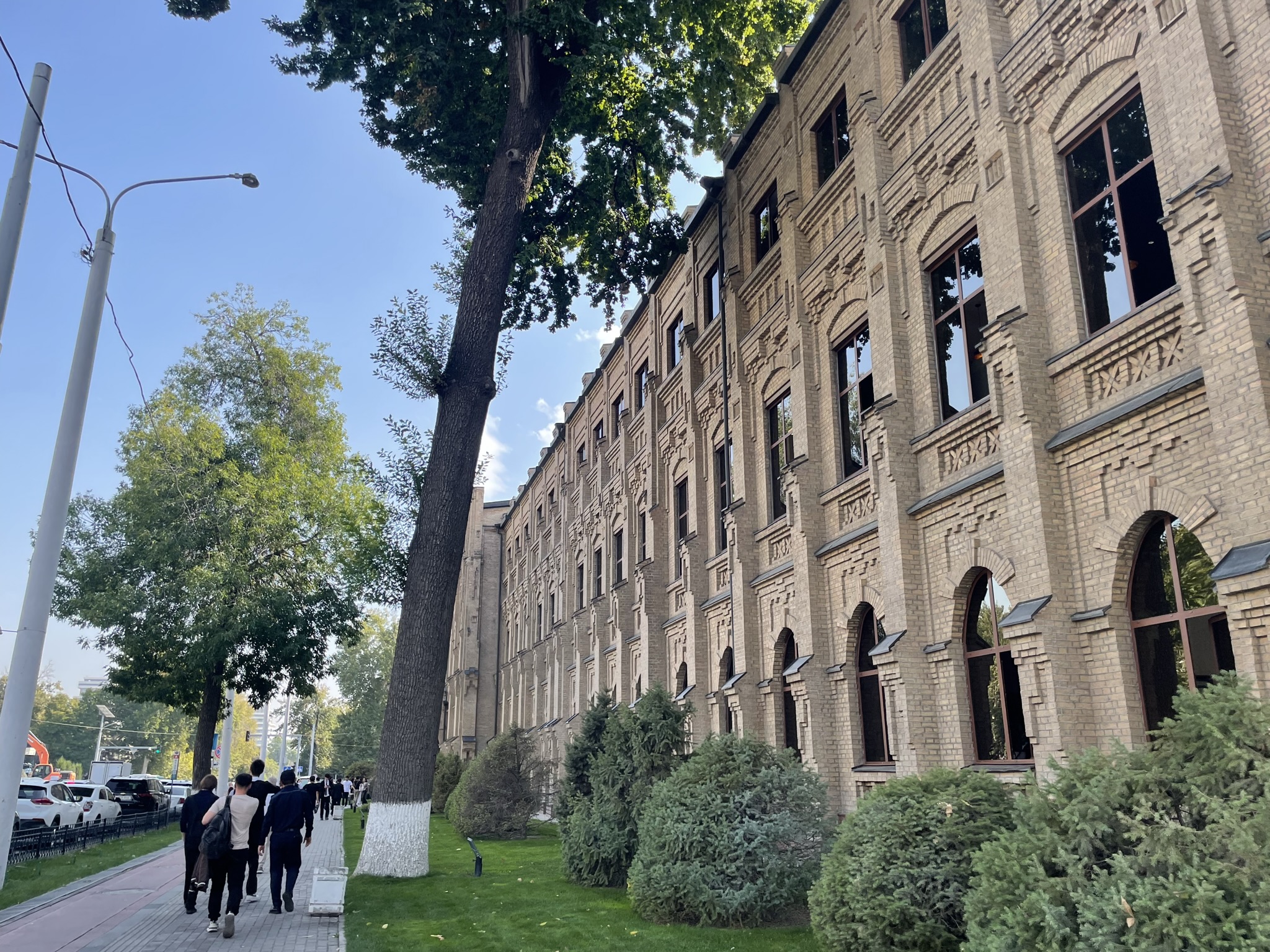
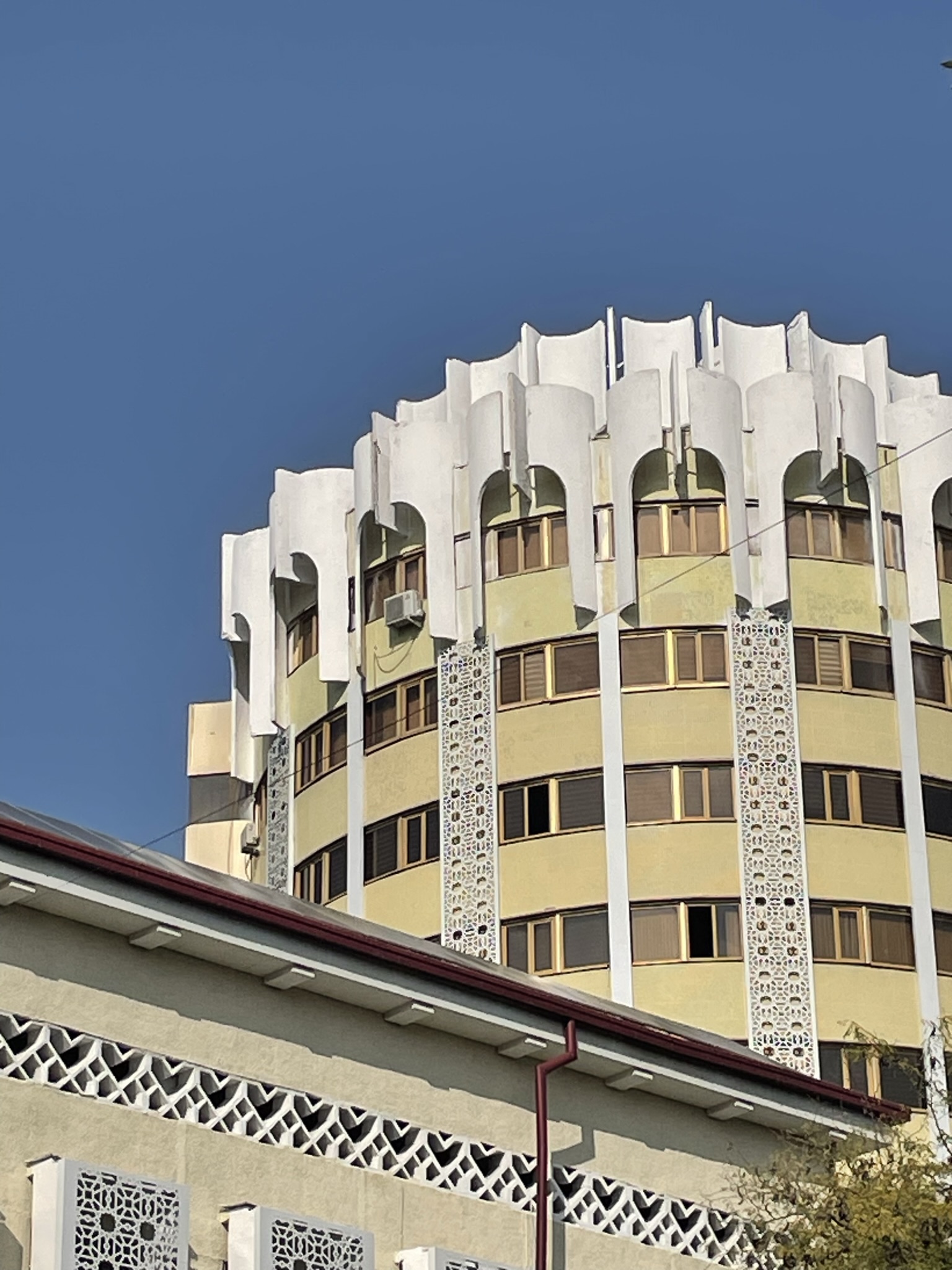
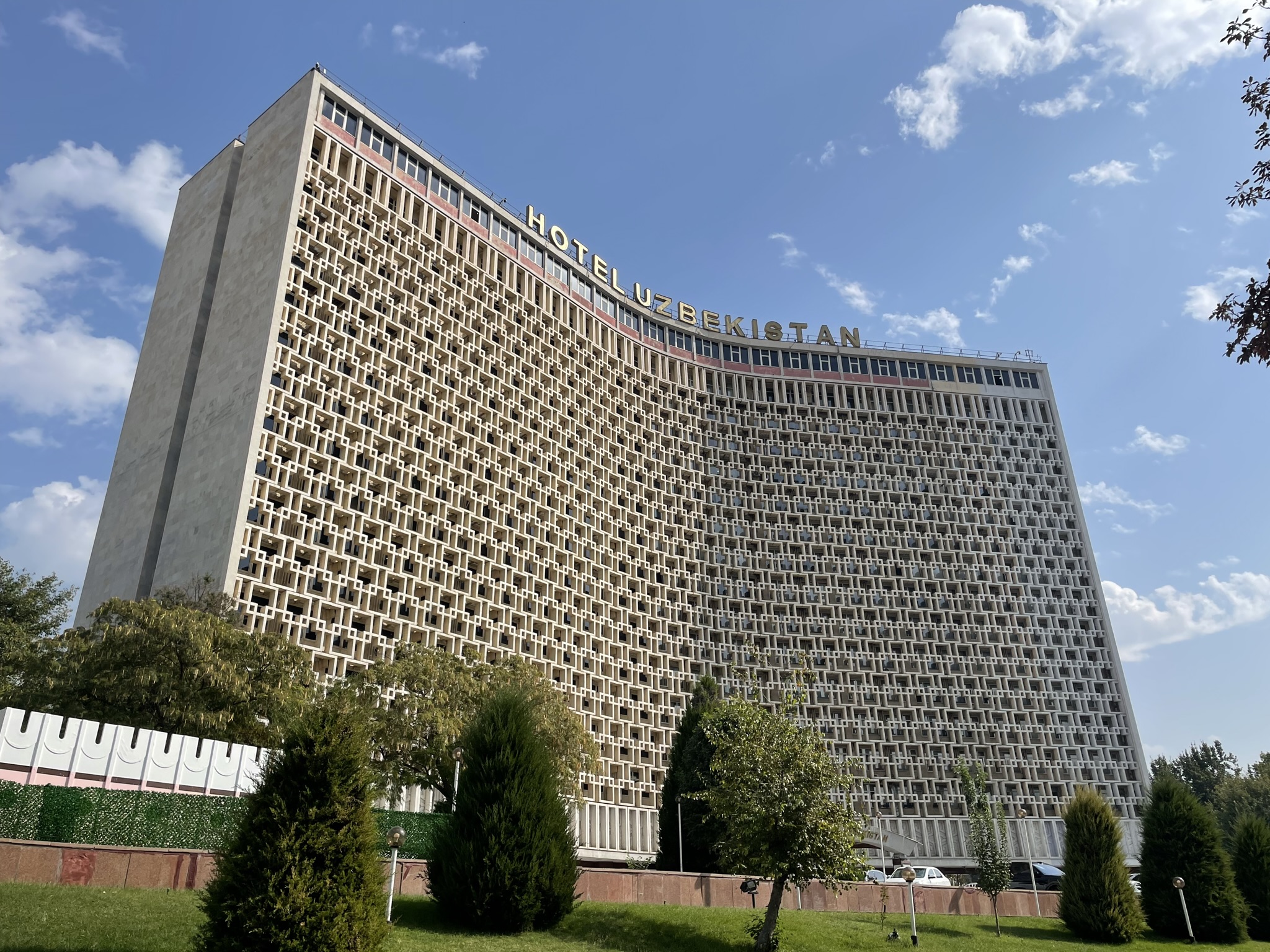
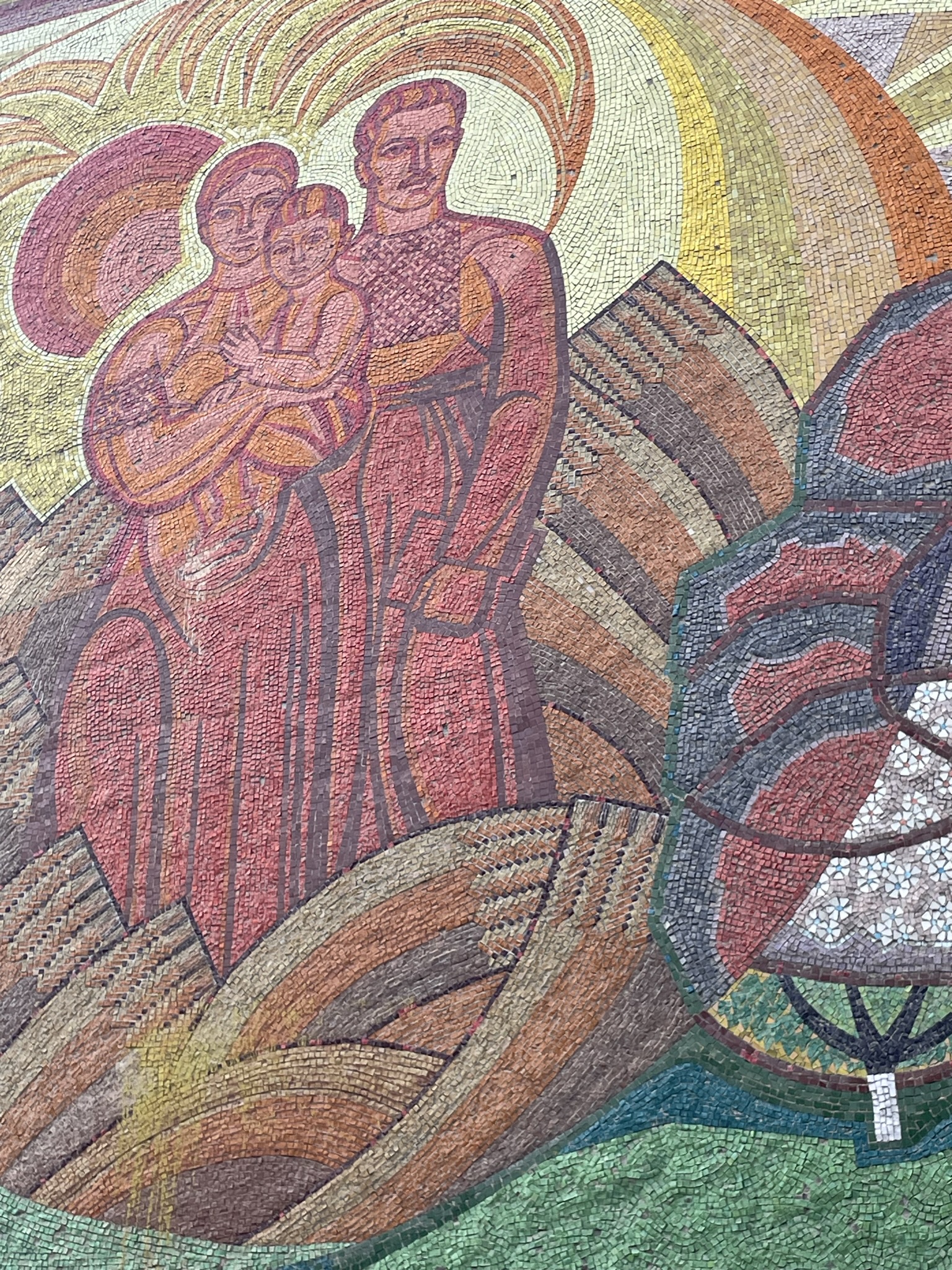
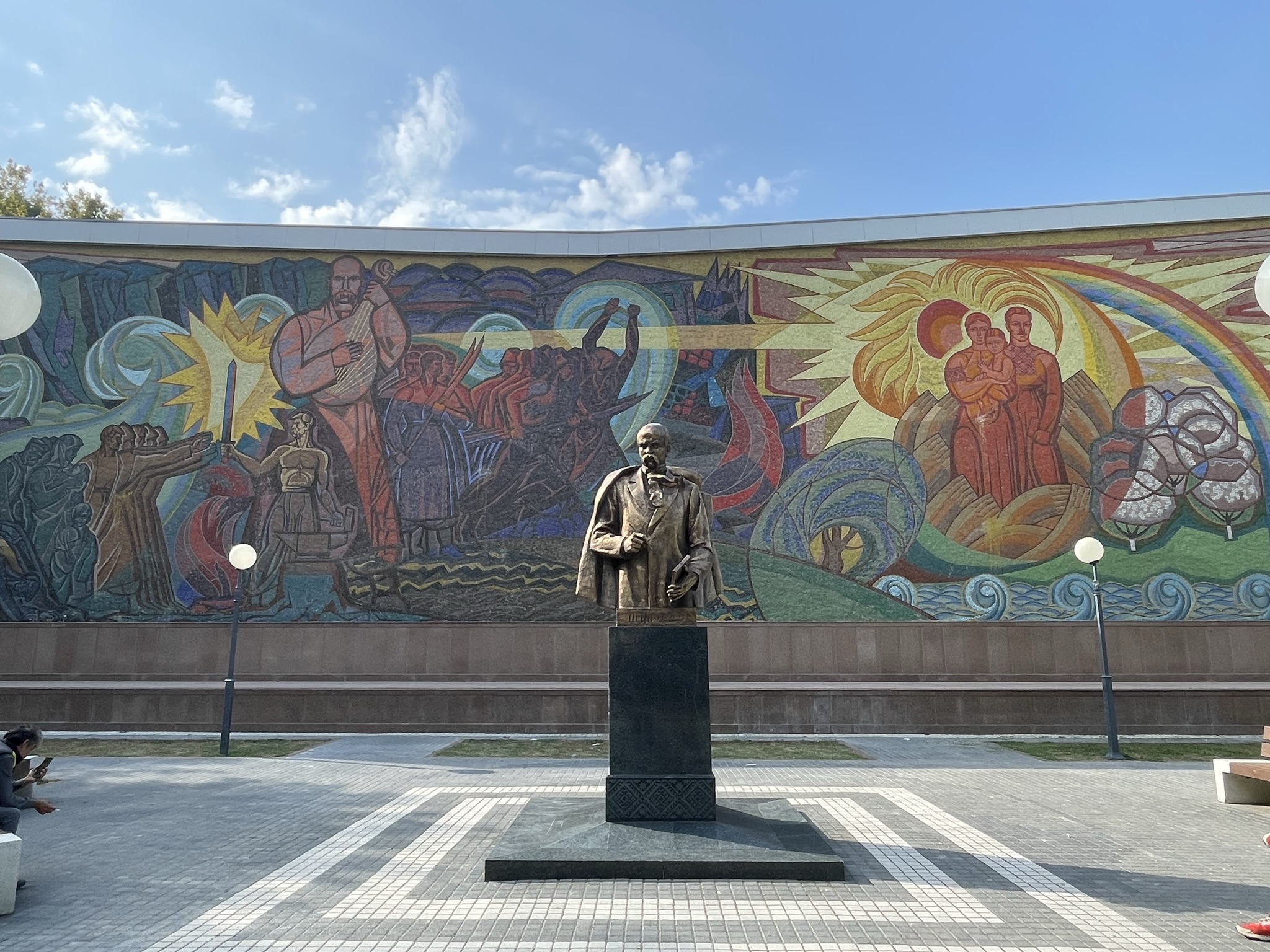
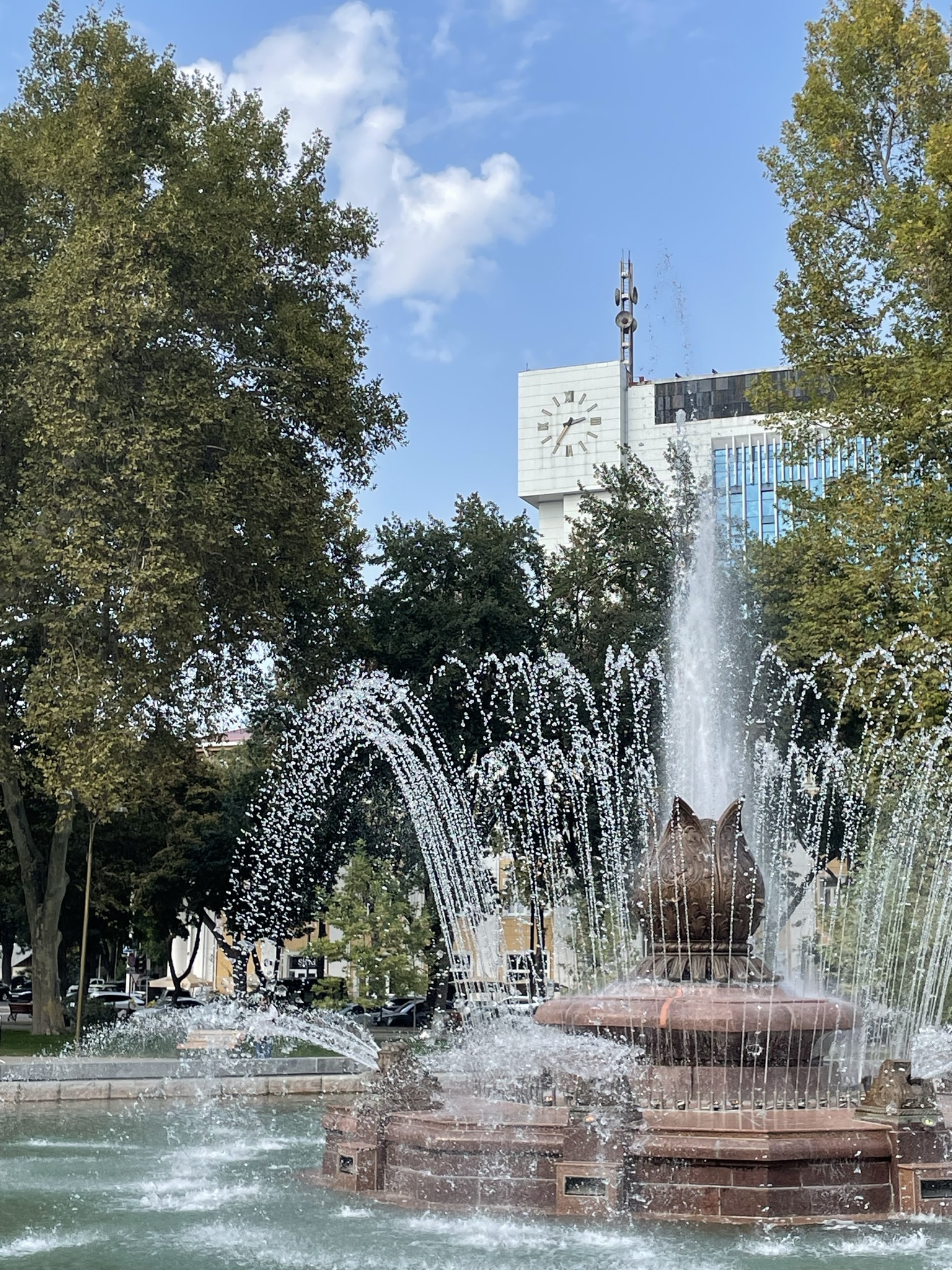
The formal centre of Tashkent is a Soviet creation, rebuilt following a devastating 1966 earthquake that leveled large swathes of the city. The arrangement is typical: a focal point around the revolution (today’s Amir Temur park, now repurposed for independence) with a large park with fountains and several monuments, including one to World War II soldiers, and a street grid filled with government offices and public buildings. Some favourites from this area were the State History Museum and the Hotel Uzbekistan, but in general there are a lot of nice green spaces and buildings very much reflective of architecture behind the Iron Curtain. There is a magnificent broad tile mosaic on a curving building front facing onto a plaza that I sat and looked at for at least 10 minutes.
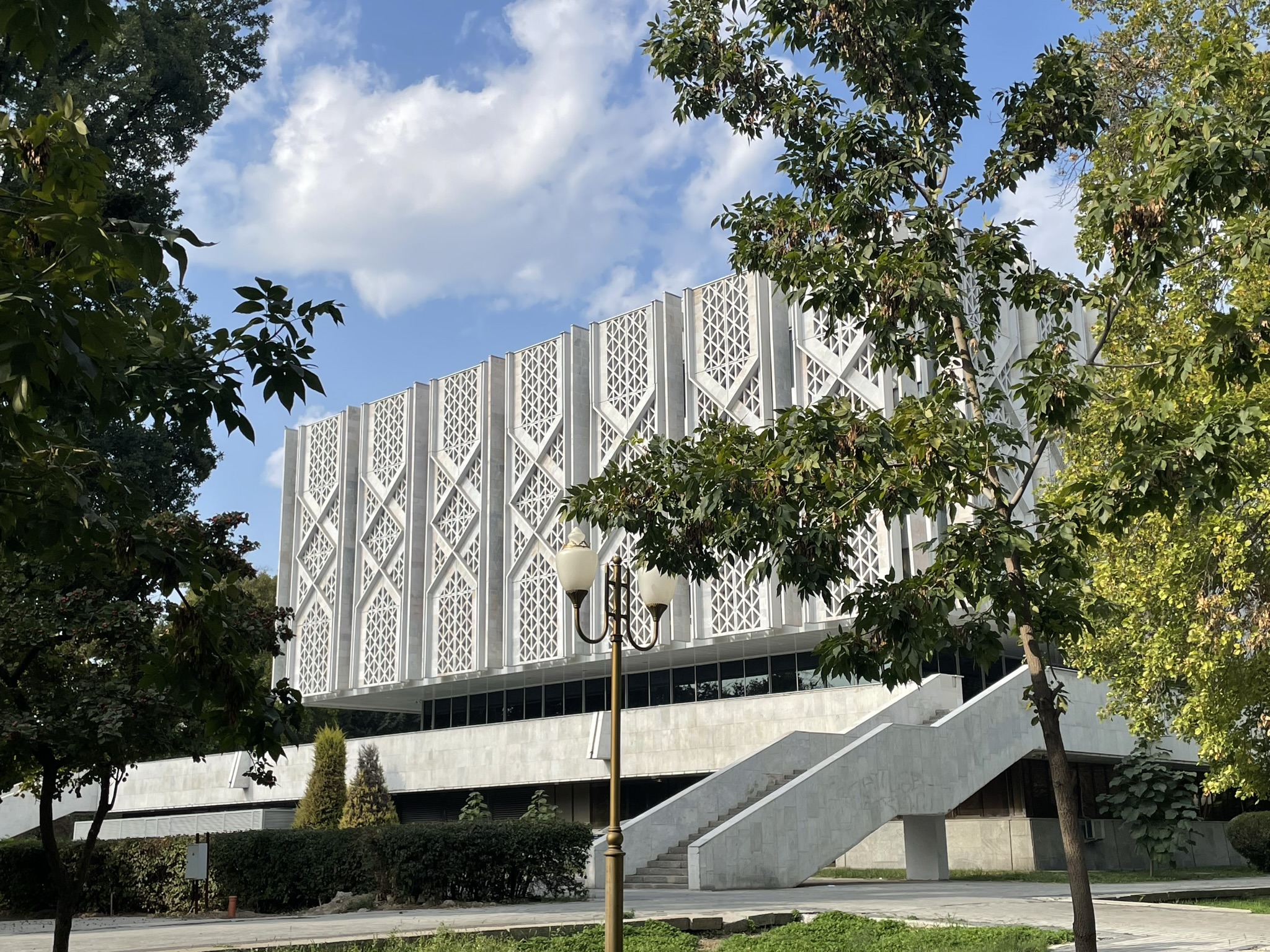
An earthquake is not the only pretext to re-invent a city, however. Contemporary Tashkent is the subject of major redevelopments. Dropped squarely west of the Soviet-built core is Tashkent City, a dully named but huge site with all the globalized accoutrements: apartment blocks, a shopping mall, and a spotless central park where fallen leaves are punctually swept up to improve the experience. It is nice but lifeless, all the more so when the previous mahalla neighbourhood was swept away to allow this generic brand of capitalism. Farther north, another mahalla neighbourhood was stripped to the bones to allow space for the enormous Hazrati Imam complex. This is another new build, with the Centre of Islamic Civilization hosting supposedly the world’s oldest page of the Koran. A cool artifact, but the steep entry fee coupled with the bulldozed neighbourhood put me off. A few older Islamic buildings remain, set adrift in a sea of purposelessly wide and empty squares, no trace of their fit into the old neighbourhood remaining, daily life safely walled away from the parking lot for tour buses. It all left me a bit cold.
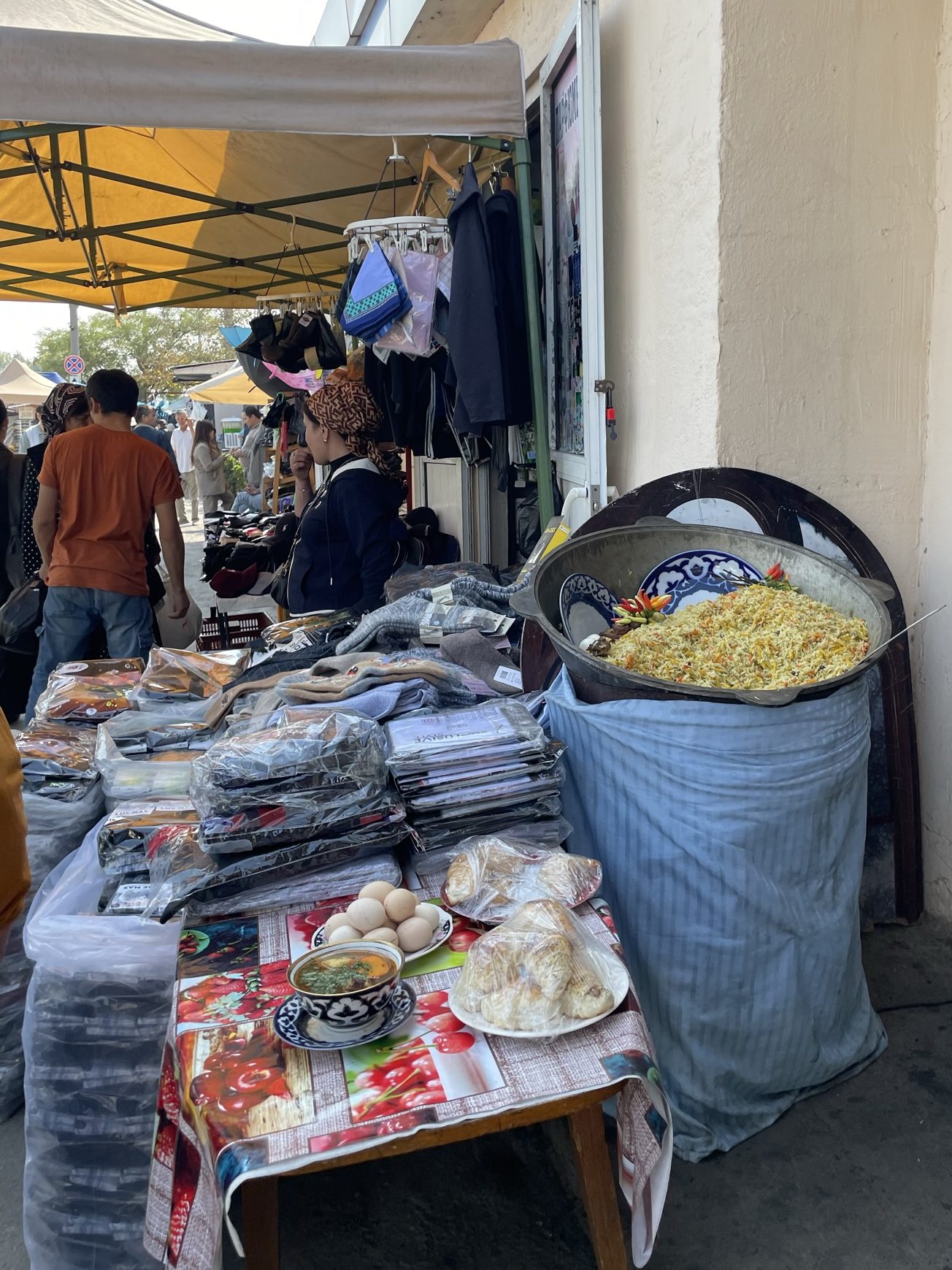
Far more lively was getting lost in the Yangiobod Bazaar. Located in a neglected industrial zone along Tashkent’s southern rim, the bazaar spills out between old warehouses and onto the surrounding sidewalks and streets. From the metro station, a constant flow of people disappear into the amorphous crowds, pressed between stands and small trucks laden with melons, fruits and seasonal produce and stalls hugging tight to the curb selling small household goods like brooms, clothes or phone cases. Small restaurants crowd the space, huge meter-wide woks filled with steaming plov or thick pieces of meat kebabs sending up their aroma. It is heady, lively, a place where I hesitated to stand still lest I slow down all the Uzbeks behind me going about their lives.
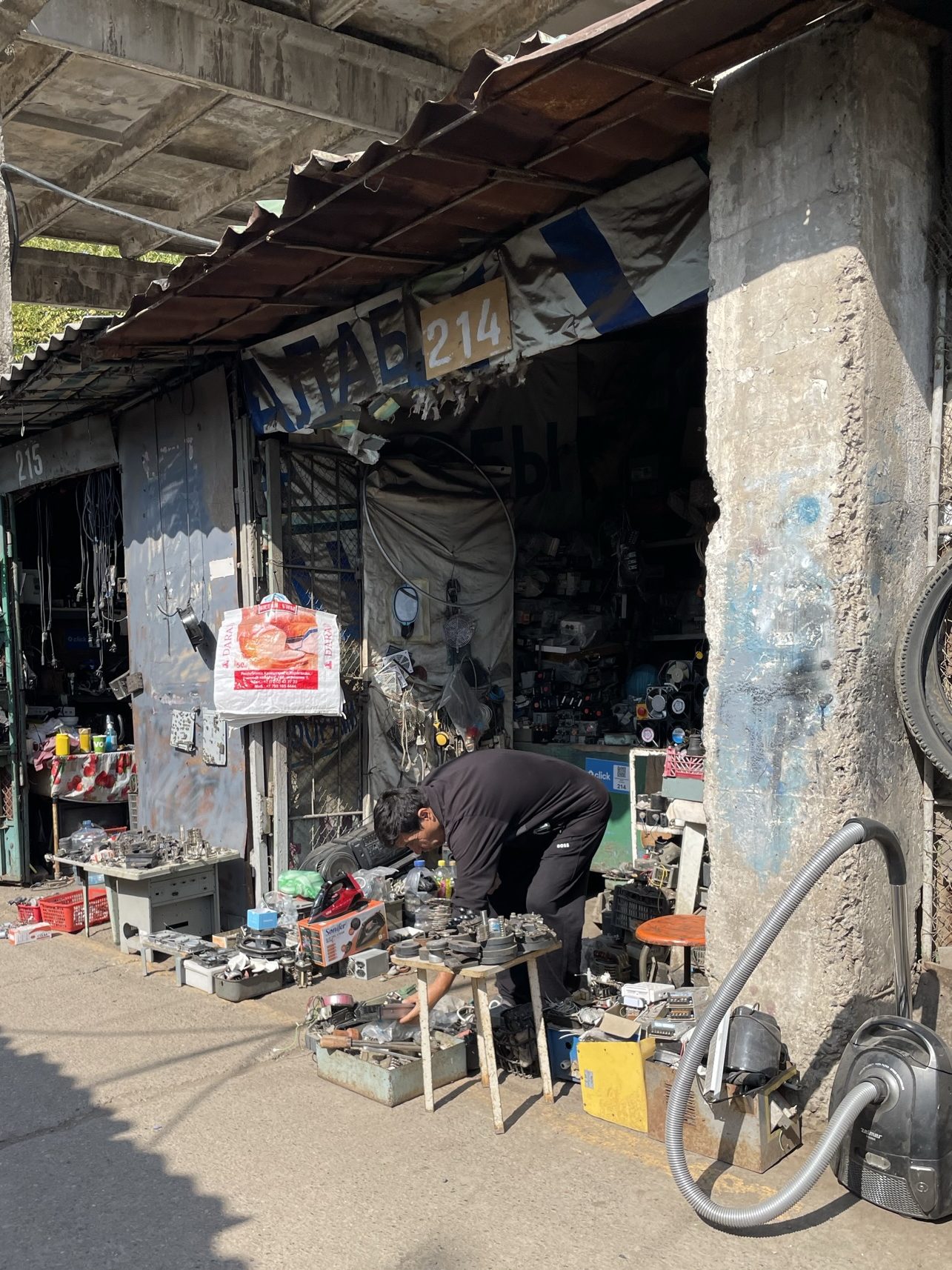
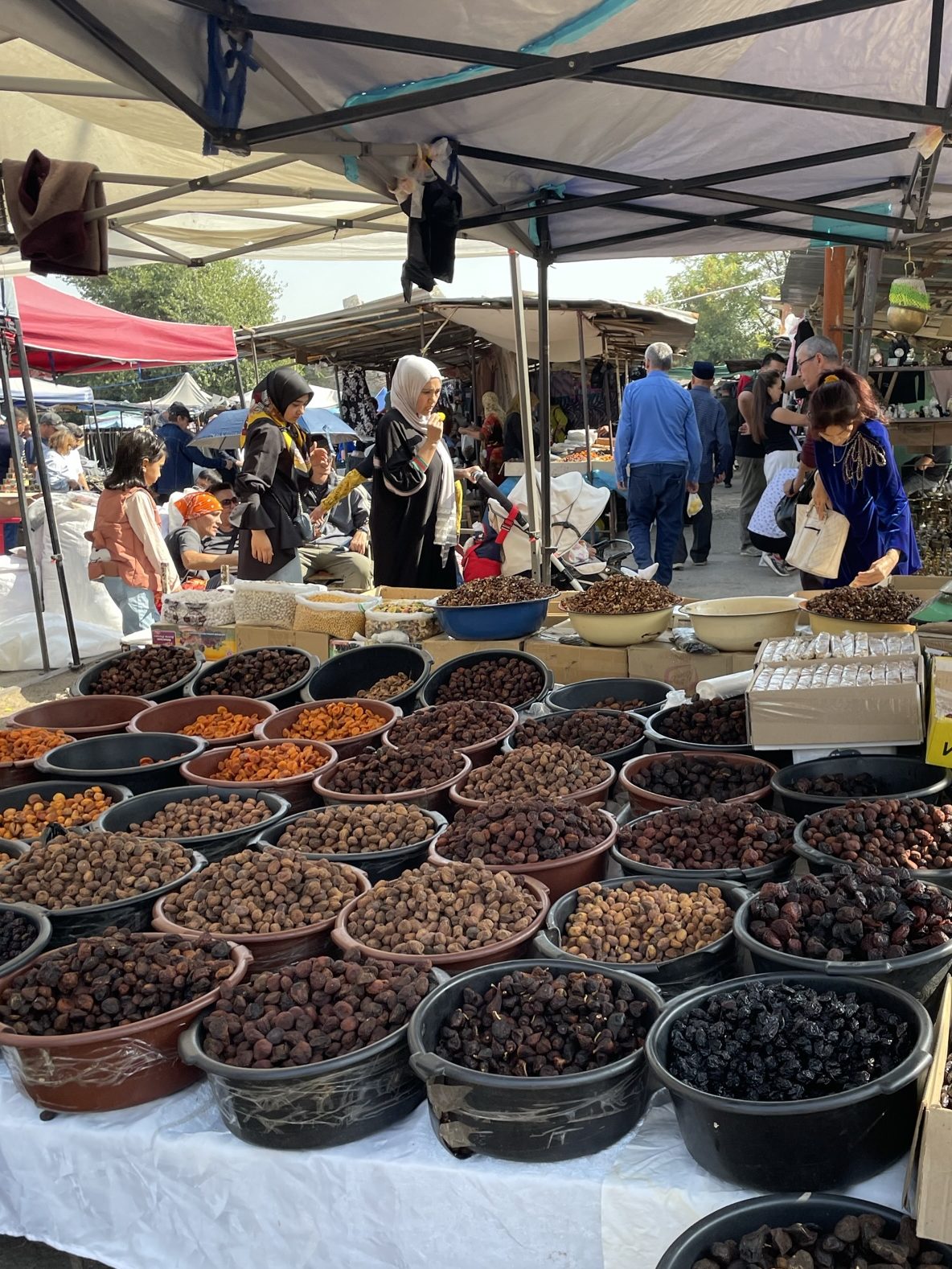
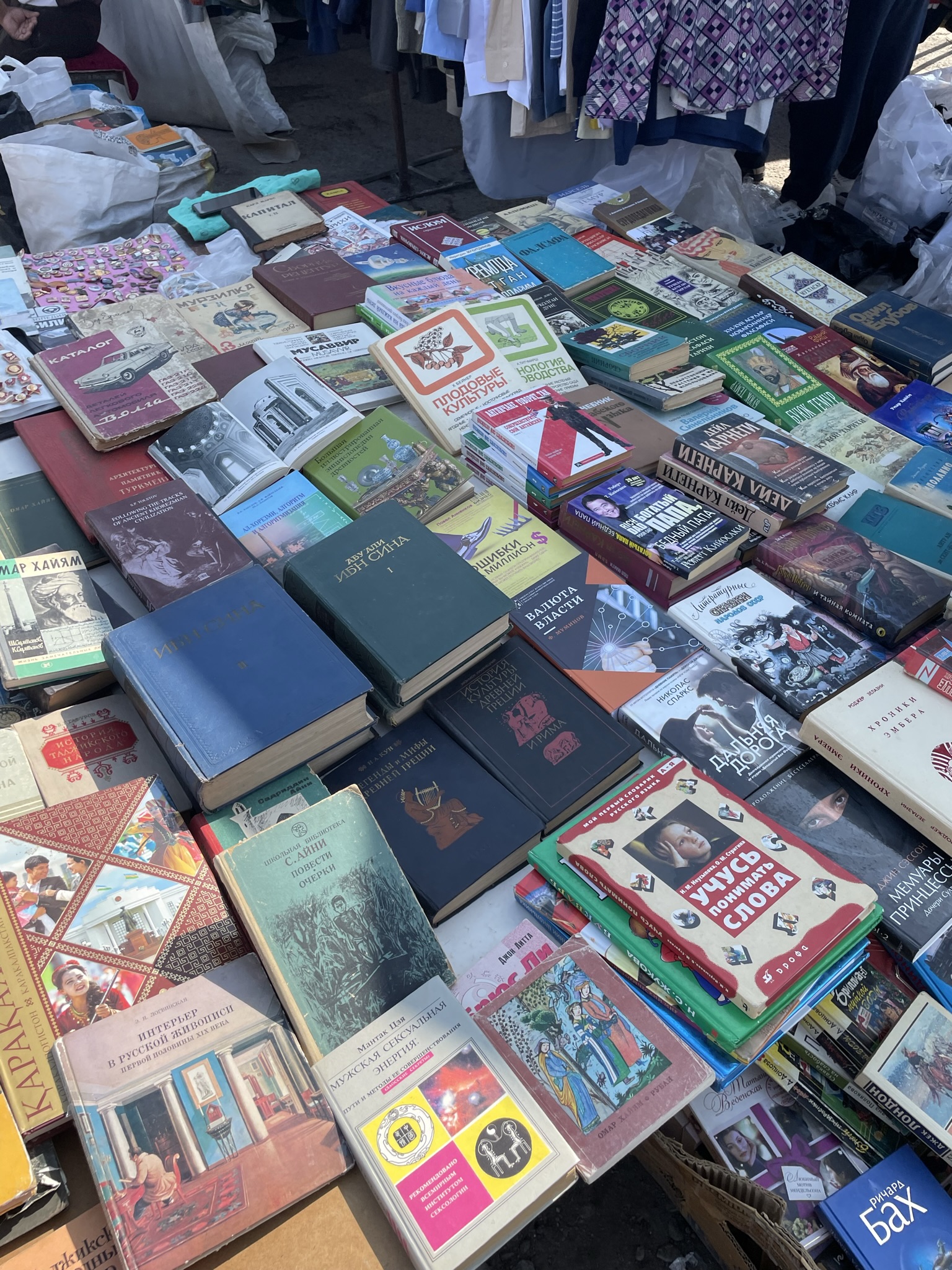
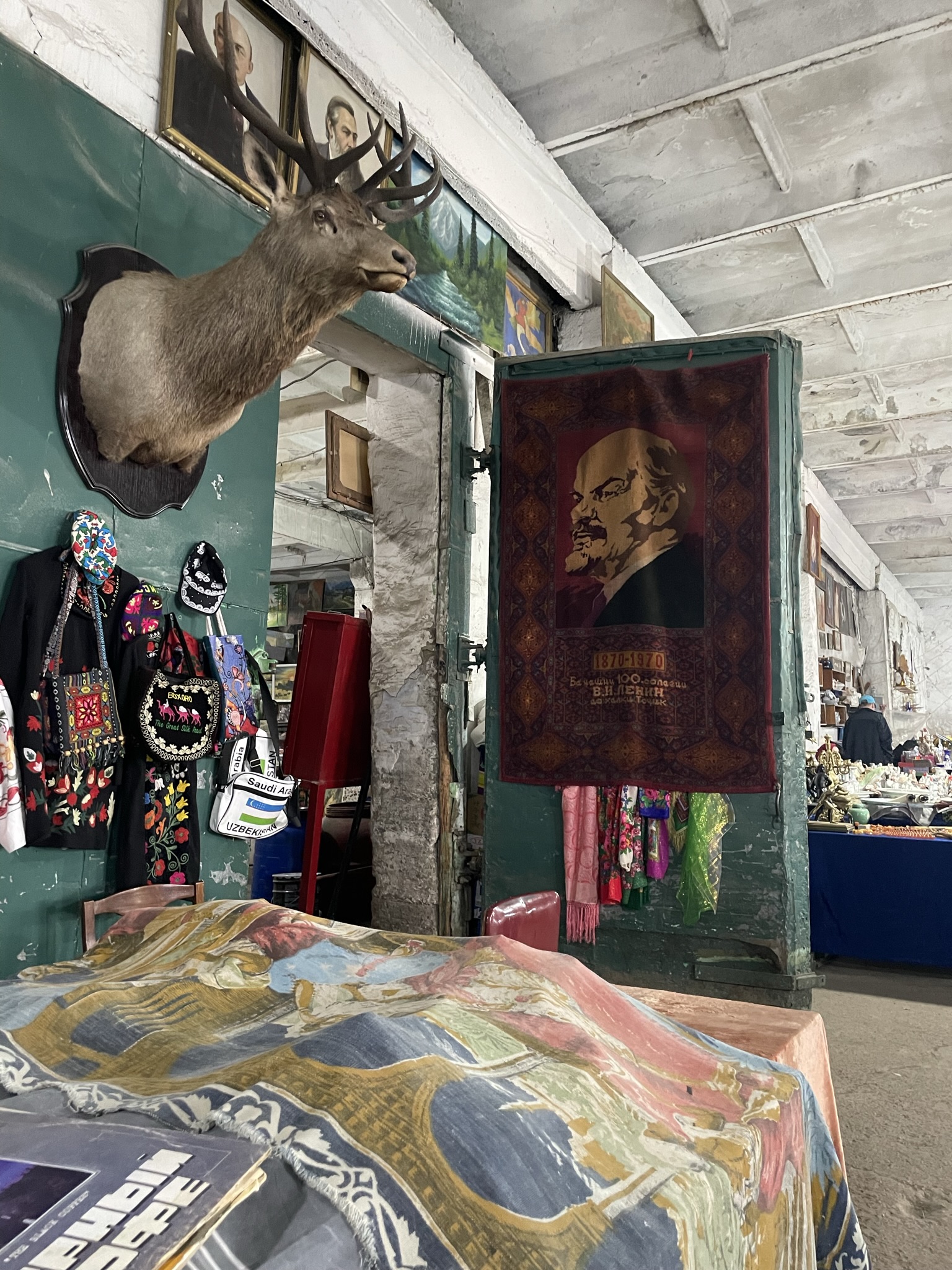
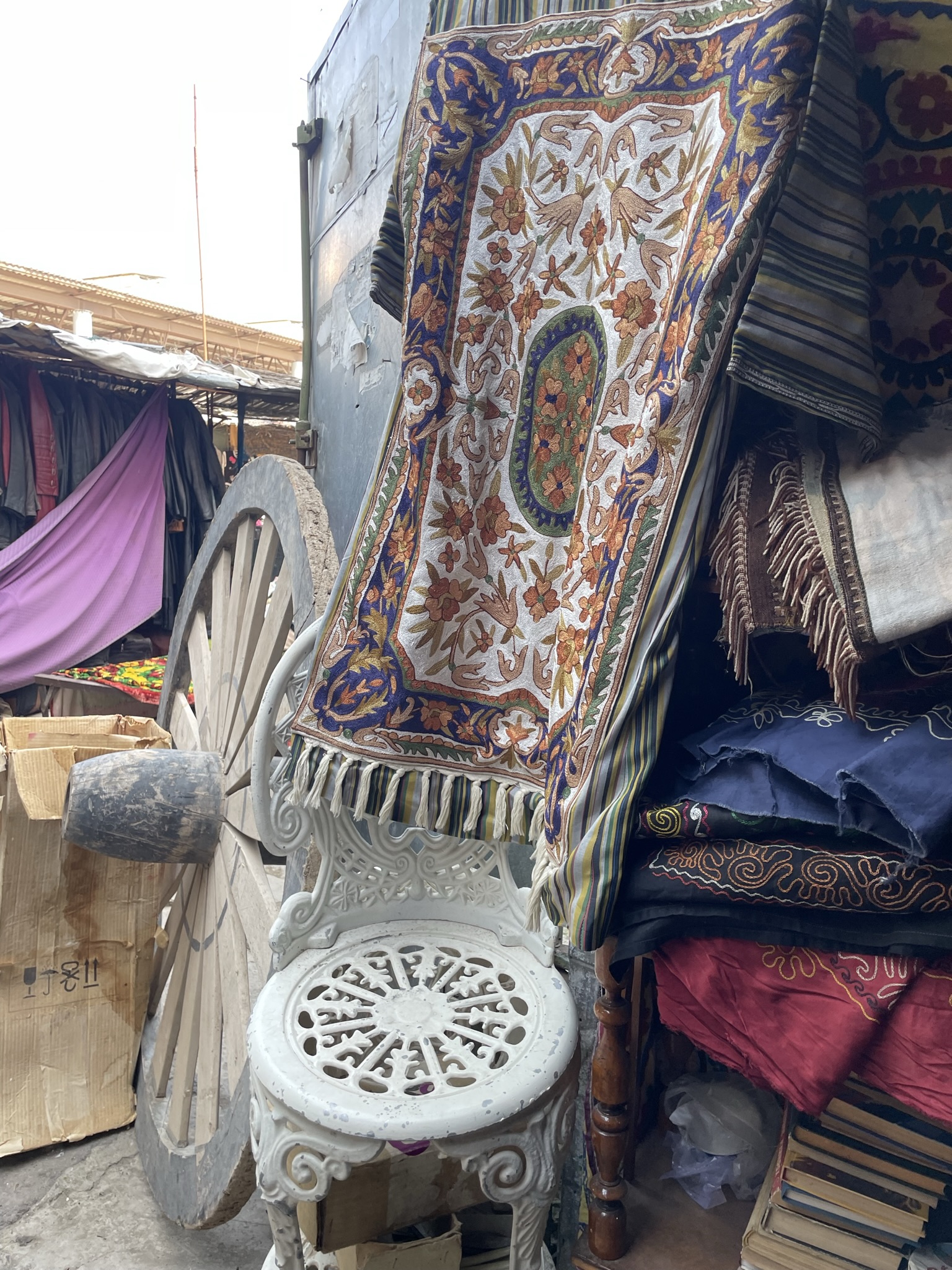
The market splits into a dizzying array of specialties. I found myself walking a length of tents and warehouses sheds, facing a seemingly endless supply of engines of varying sizes and uses along with other mechanical errata, power tools and spare parts. One dimly lit warehouse cast a multi-hued LED glow, closer inspection revealed this to be the section for home aquariums, accessories and fish. On the other end of the market, an old train shed was line with stacked cages filled with mostly chickens and turkeys and a staccato murmur of animal sounds. Rabbits sat calmly atop some cages and the smell of it all kept me moving at a quick pace. More inviting was the antiques section, stalls and another warehouse section given over to Soviet-era paraphernalia: rugs with Lenin’s likeness, boards stuffed full of medals, desktops busts, yellowing postcards, dog-eared hardcover books pointing to the bright future that was always just around the corner.
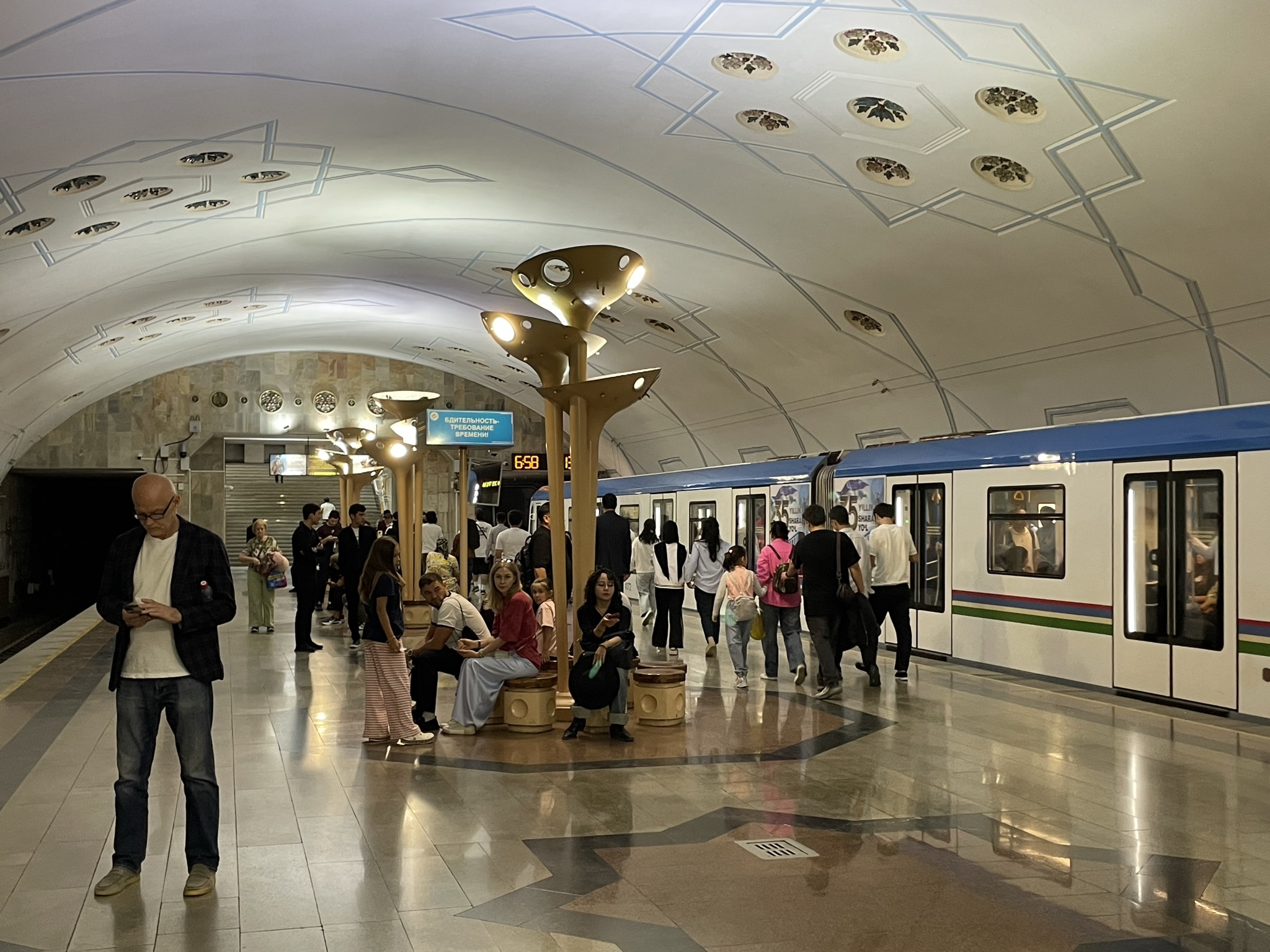
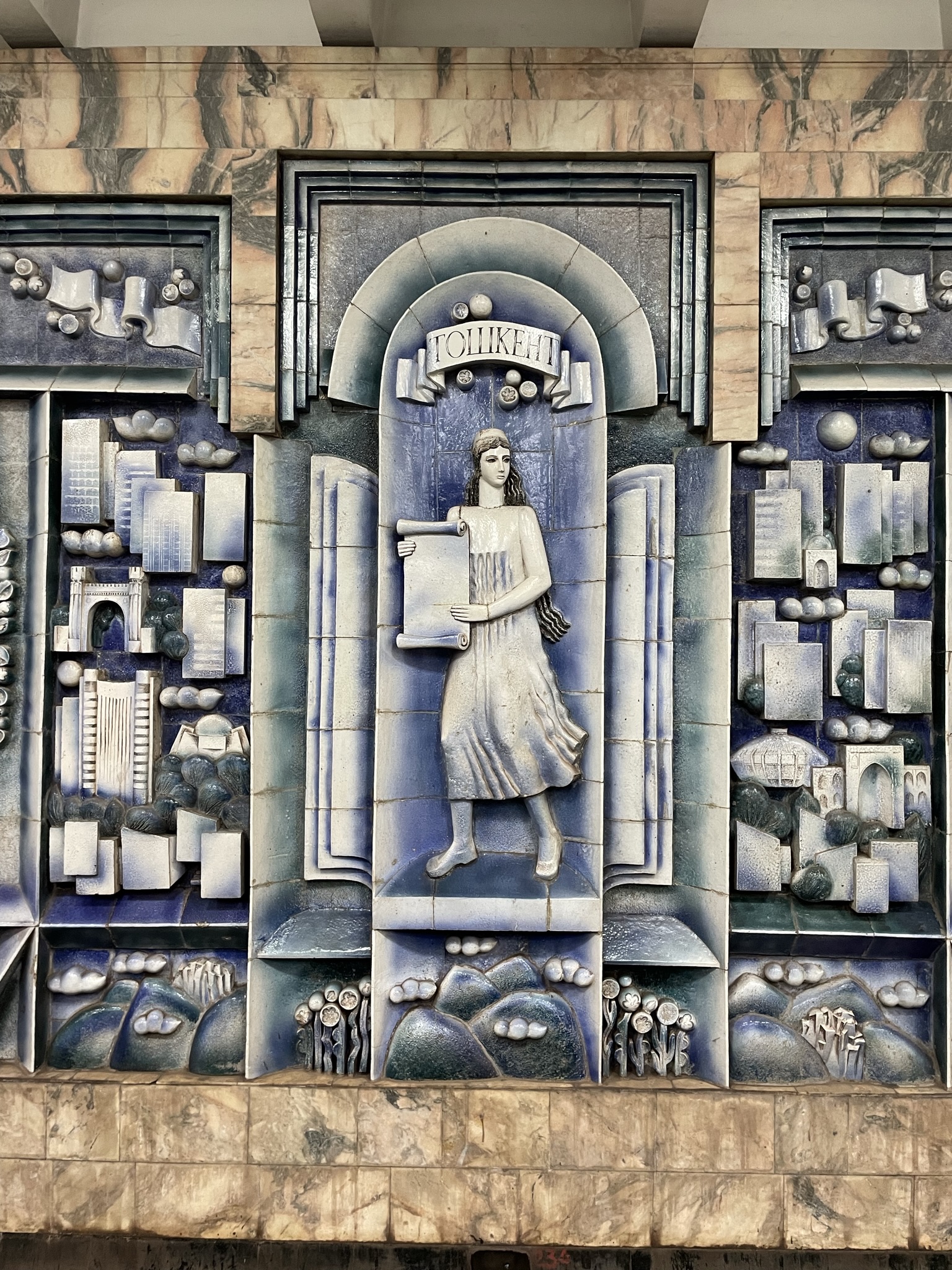
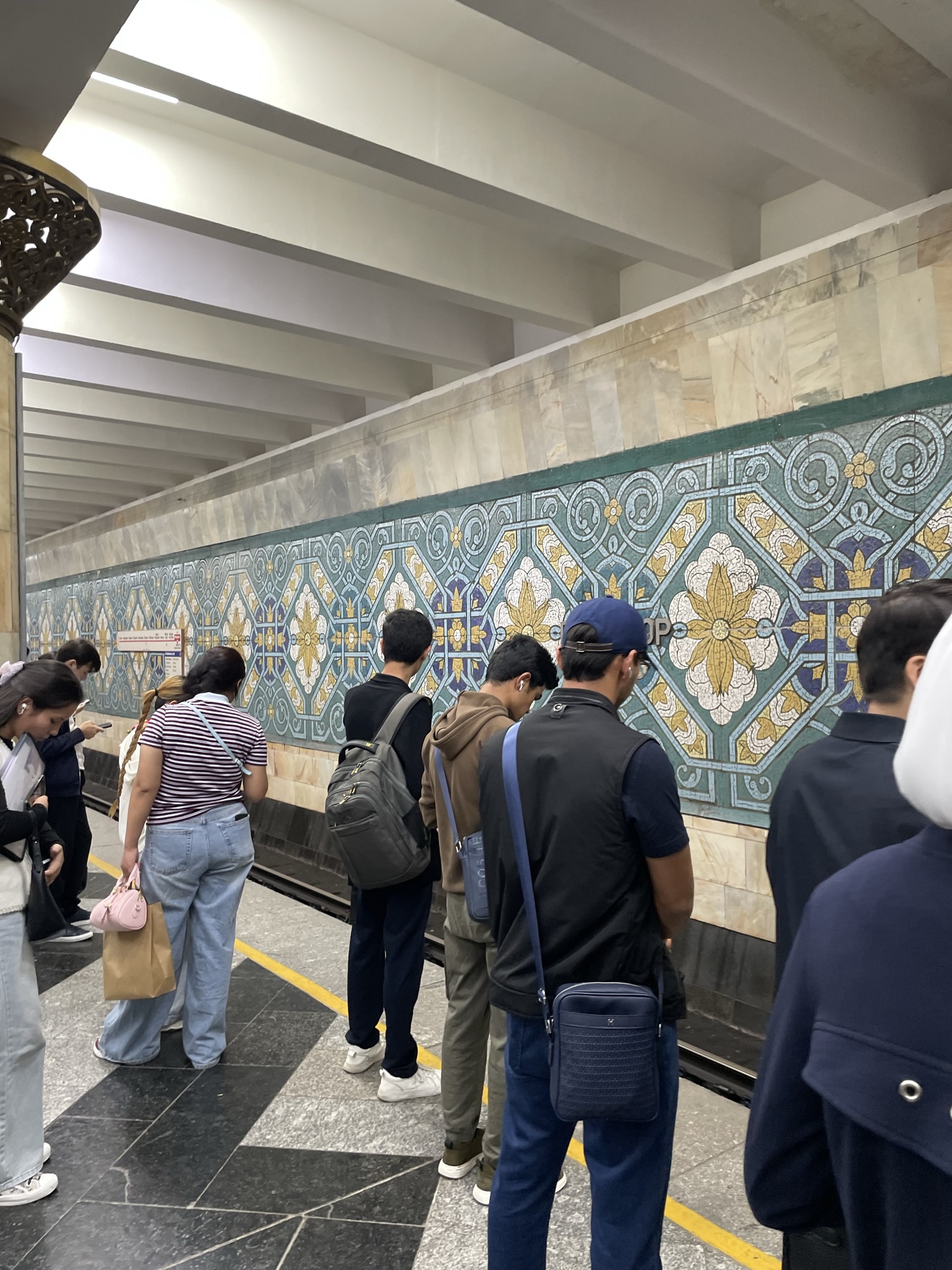
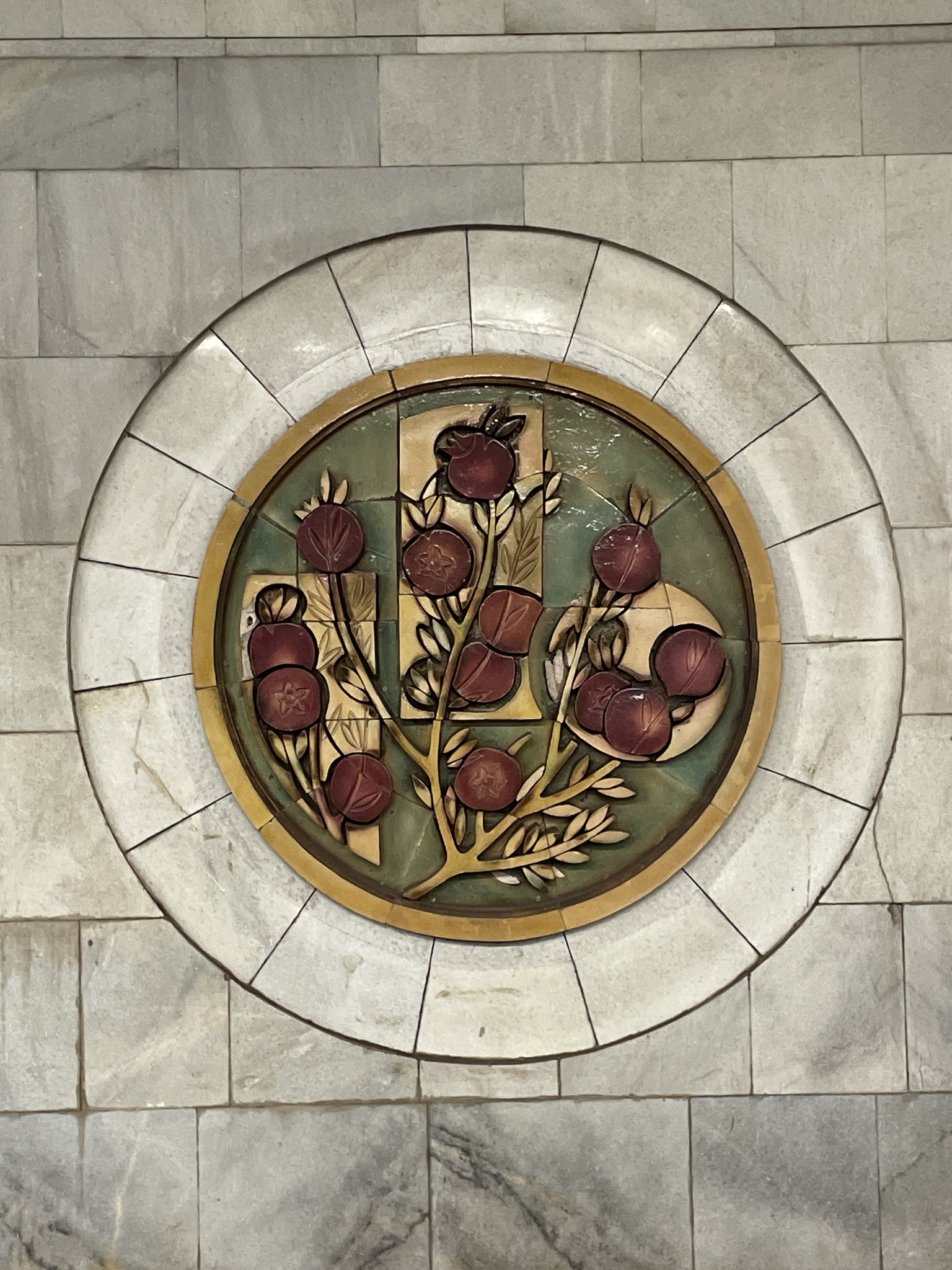
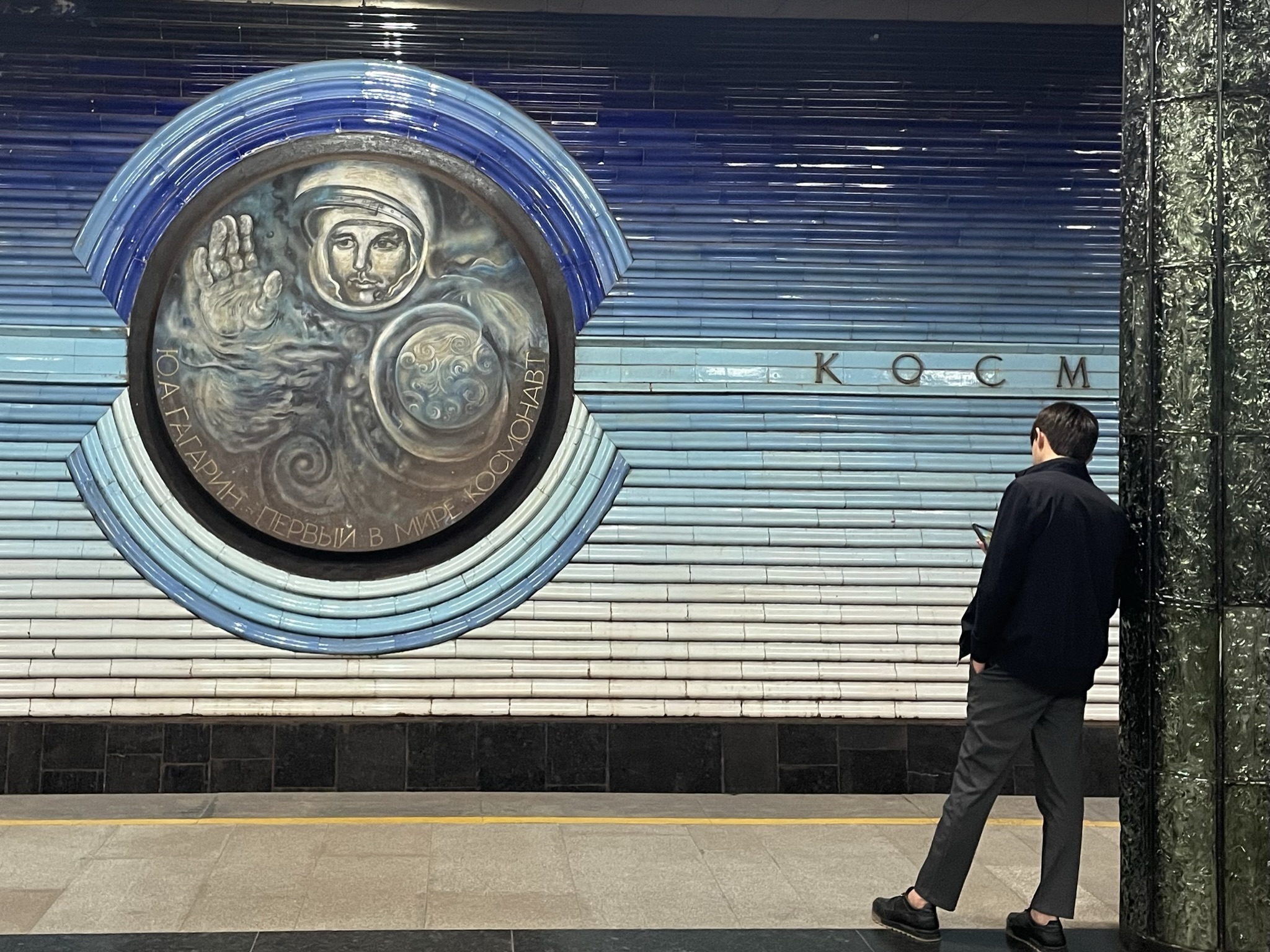
One aspect that the Soviets got right in Tashkent is the metro, a textbook example of thoughtfully-designed stations and a three-lined network converging on the core of the city in a triangle. Like many things, it was begun post-earthquake, opening in the 1970s and has continued to grow in the decades following. I’d been teased with a preview earlier, but took several hours one afternoon to just ride the system, stopping off where the stations looked appealing (which was often). Kosmonavtlar is the most iconic, a space-aged vision heralding the heroes like Yuri Gagarin and Valentina Tereshkova, first man and woman in the cosmos. Other stations point out Uzbek iconography, utilizing stylized bolls of cotton as decor or invoking the intellectual history of the Silk Road cities and the subtle lines of Islamic architecture. To those who know me, it will not come as a surprise that this was one of my favourite parts of the whole month.
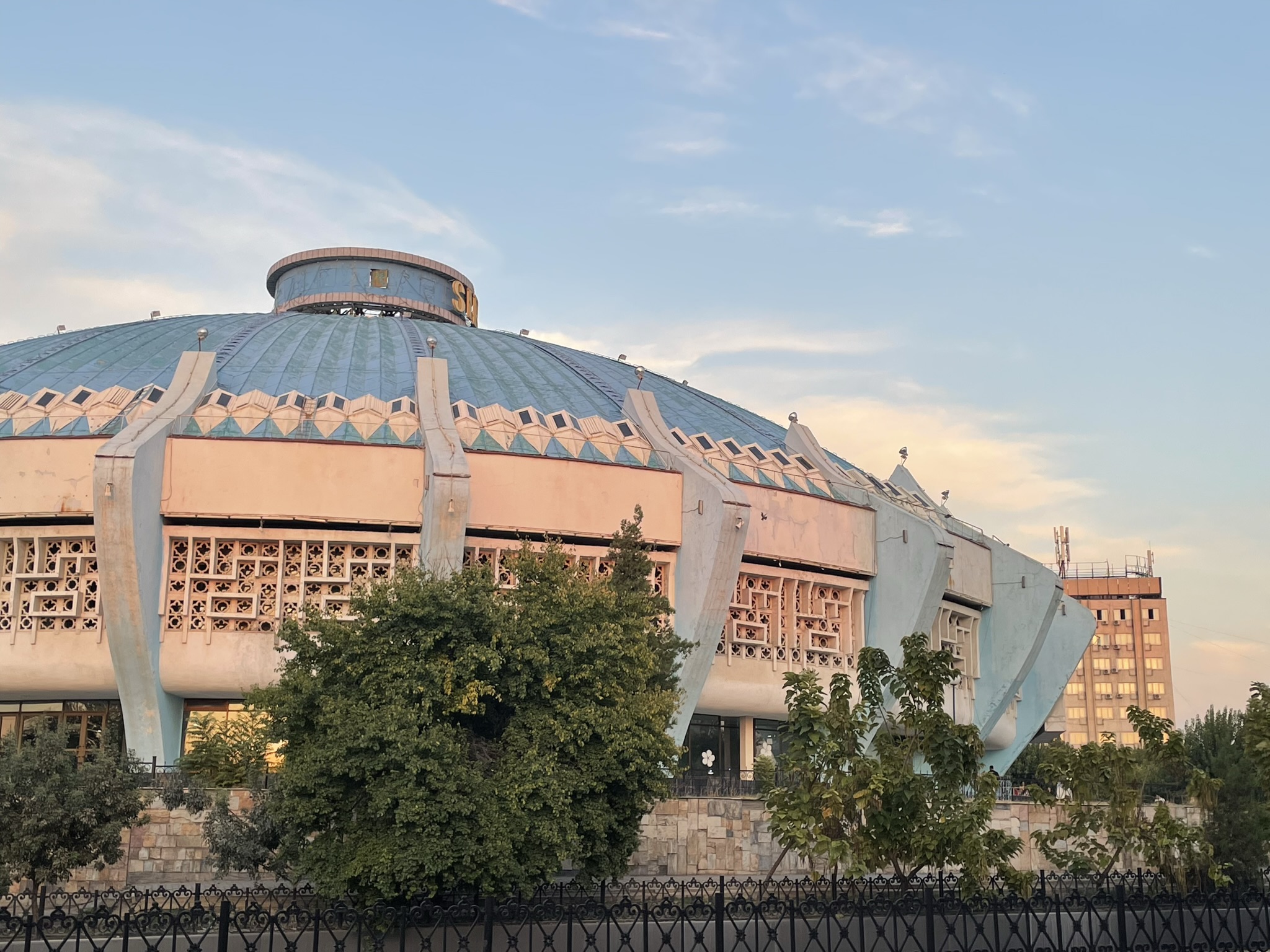
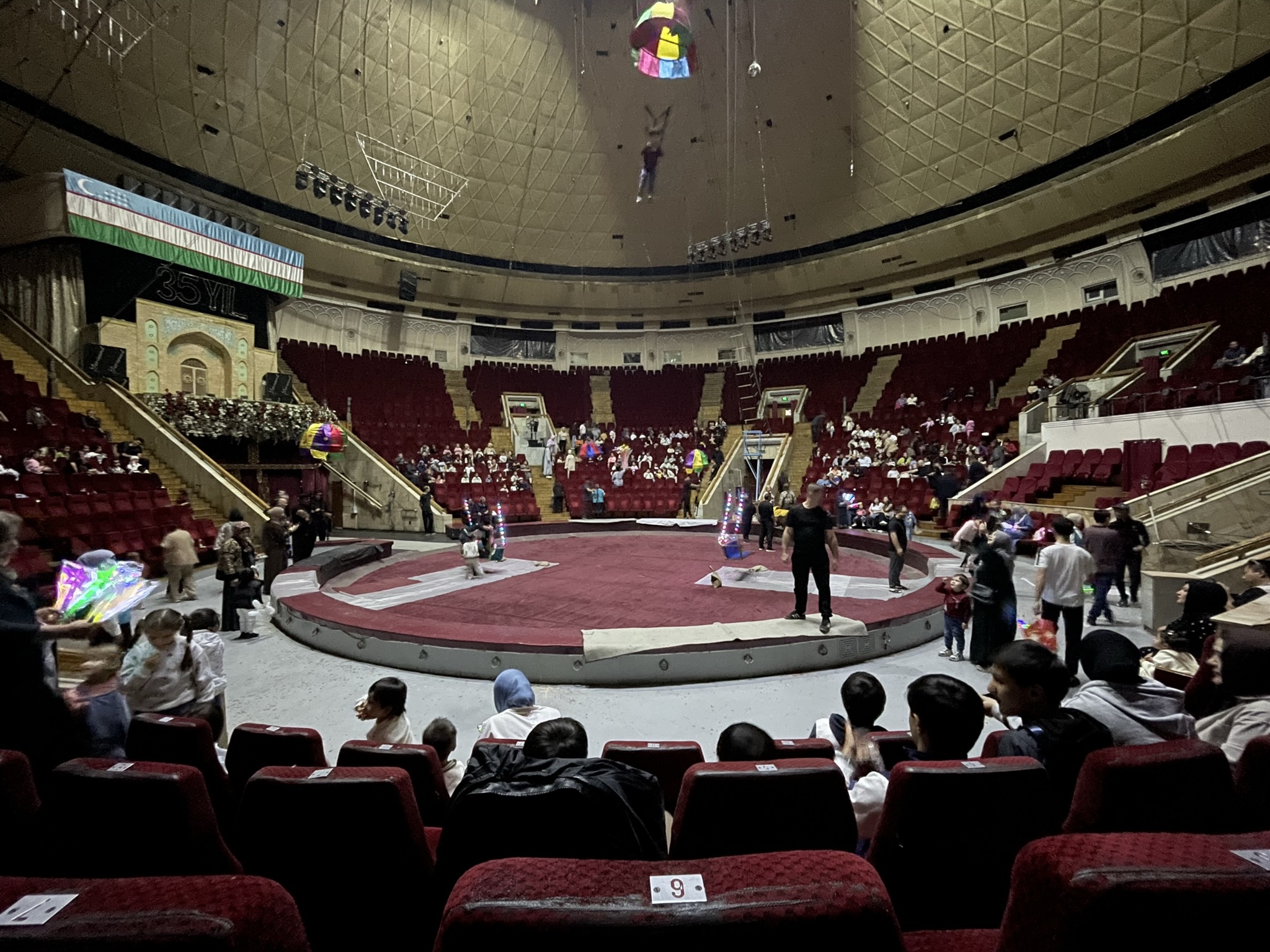
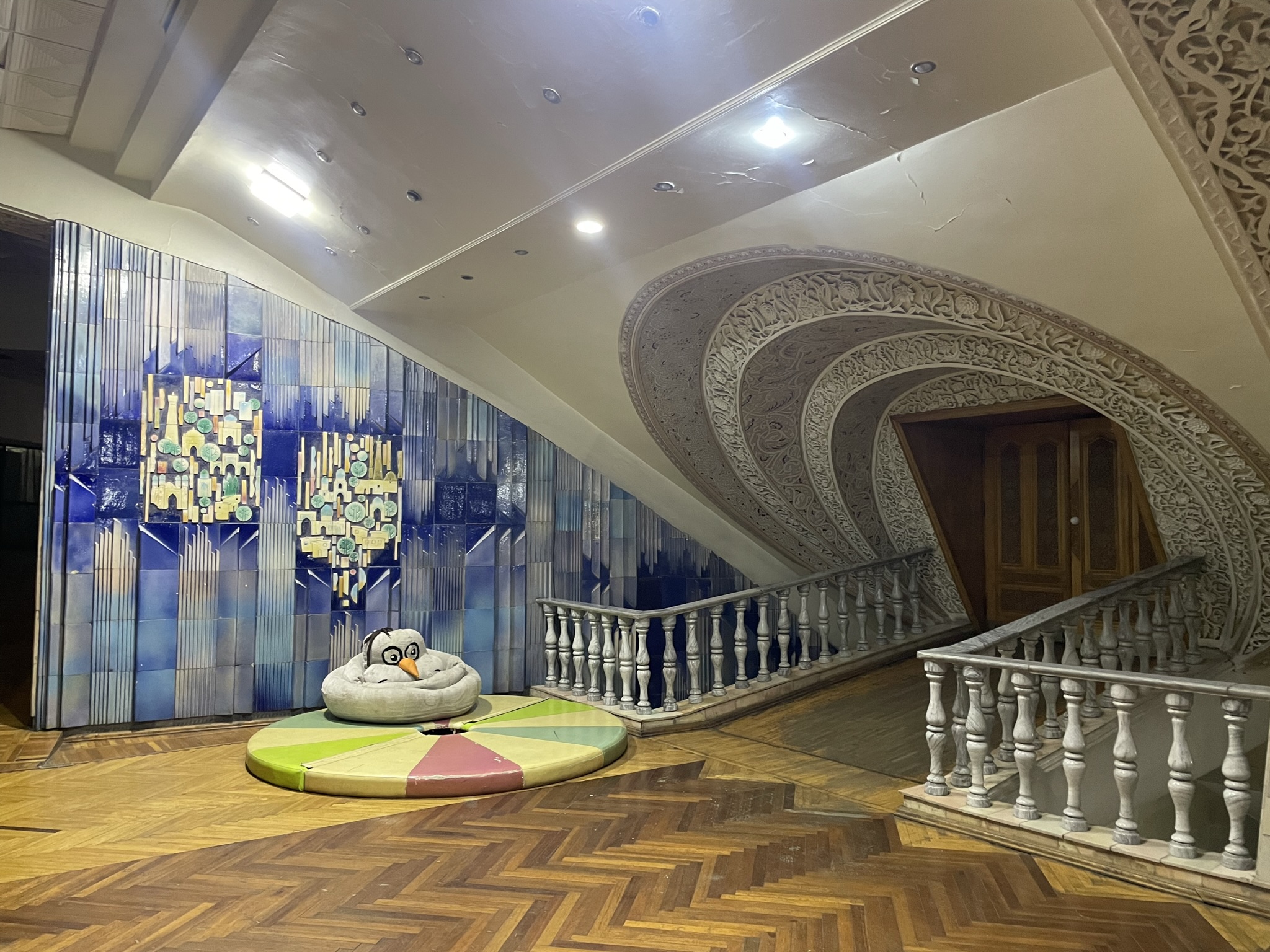
Completely unexpected was my night out at the Tashkent circus. Every big city seems to have one, a modernist flying saucer from the 1970s that for whatever reason the Soviet Union decided needed to be planted firmly in prime real estate, presumably some variant on bread and circuses for the masses. By the time I got to Tashkent, my curiosity was suitably piqued and I made the short trek from my guesthouse to take in the Saturday night show. I had no expectations, virtually no experience with circuses. Even online the information was conflicting: No live animals. Live animals. The animals are replaced with holograms. At least the holograms seemed unlikely, I realized quickly after entering the now-dated circus building. The sole central ring, perhaps 60 feet or so across, is surrounded by a low bowl of seats swarming with small children, all vibrating with excitement and sugar. My entire row practically vibrated throughout the show with their constant, pulling on the chairs and rarely sitting still.
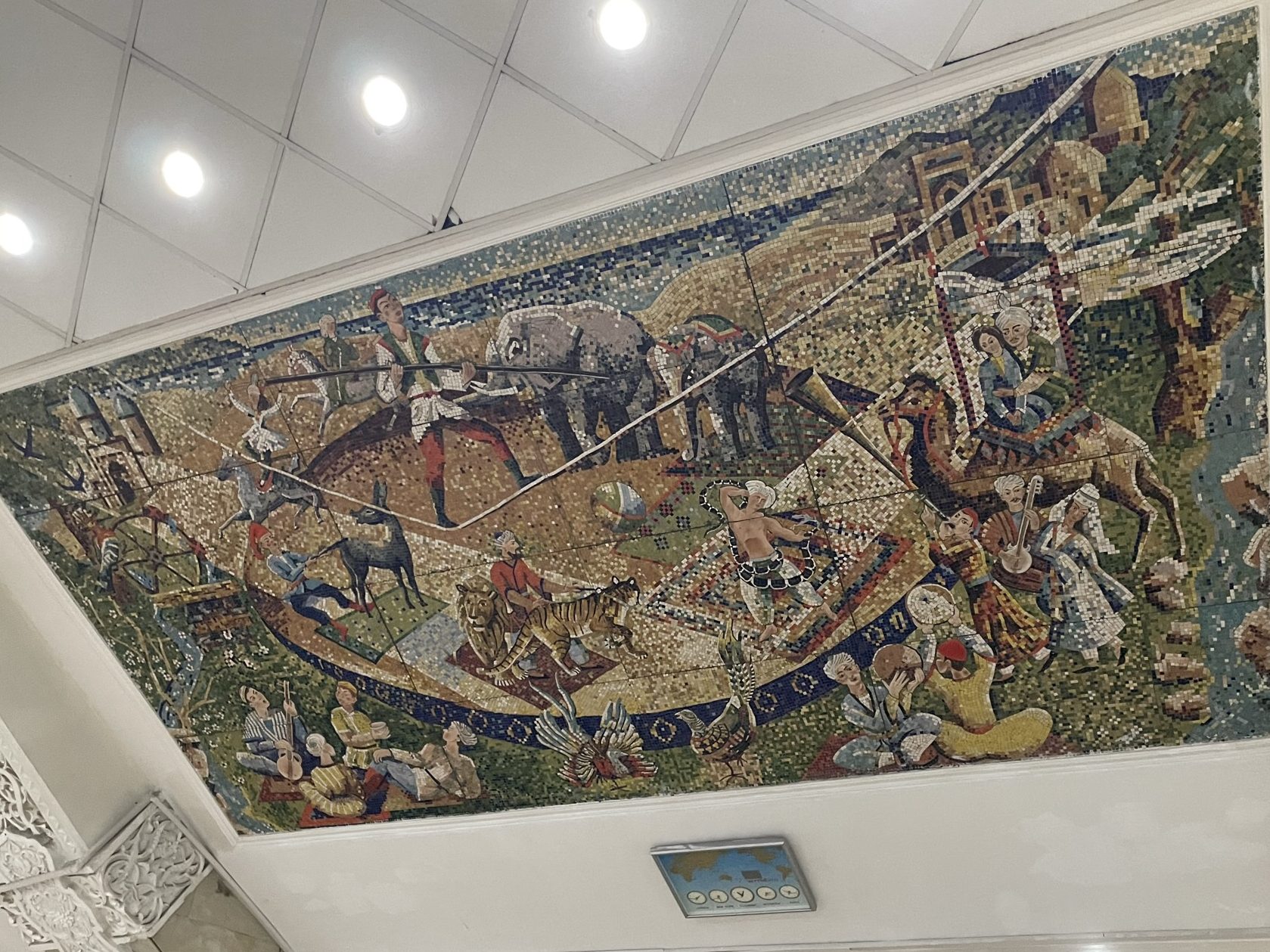
Prior to the start of the show, the ring itself was a free-for-all, with a few services on demand. A shaggy pony was available for slow trots around the inside, while benches attached to wires could accommodate an adult and a few kids, then carefully raised above the floor several meters for a slow swing. The most popular option was the harness on wires, a contraption seemingly devised of stitched together seatbelts where a burly middle-aged Slav would expertly secure a small child before launching them up in the air around 10 meters, literally sent spinning. The kids invariably squealed with delight as they flew back and forth. The performance itself, once it began, had all the usual pieces: jugglers, acrobats, clowns, tightrope walkers, and a fire-breathing strongman. There were animals, the most exotic perhaps being the monkeys or yaks, the least enthusiastic almost surely the goats, while the dogs seemed to enjoy themselves. A pair of women in sequined suits served as the joint masters of ceremony, switching off between Uzbek and Russian while a live band scored key moments.
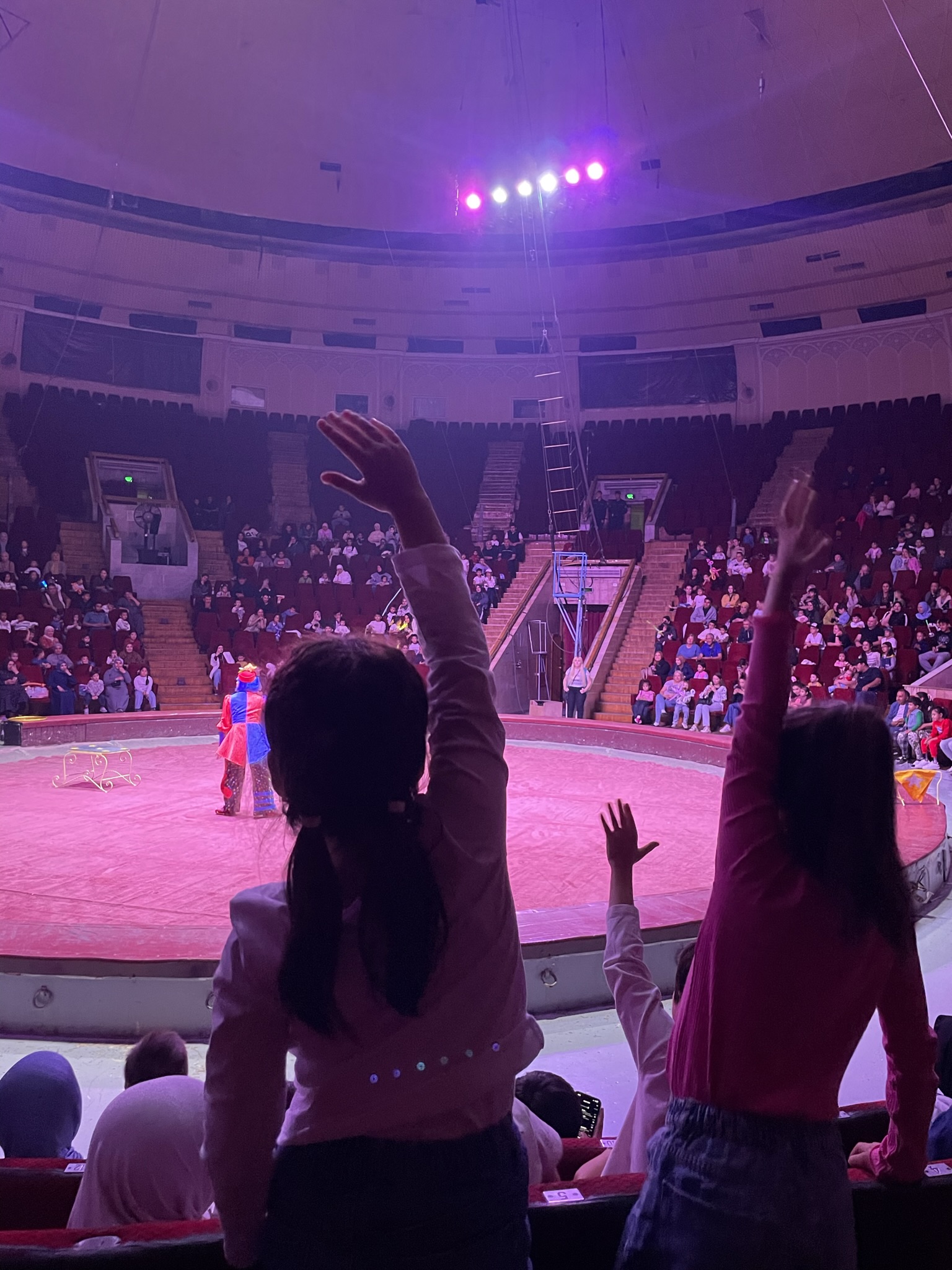
It was all a very weird, unexpected, and enjoyable evening. A nice reminder that not quite everything has been blasted over social media yet and that being in a place remains an irreplaceable experience. This was true of Central Asia as a whole. Like any trip, I came into with some expectations and a long list of ideas. By the end of the month on the road, I was refreshed, recharged, frankly ready for more and felt much lighter making my way back to Almaty, the Kazakh capital that bookended the journey.

