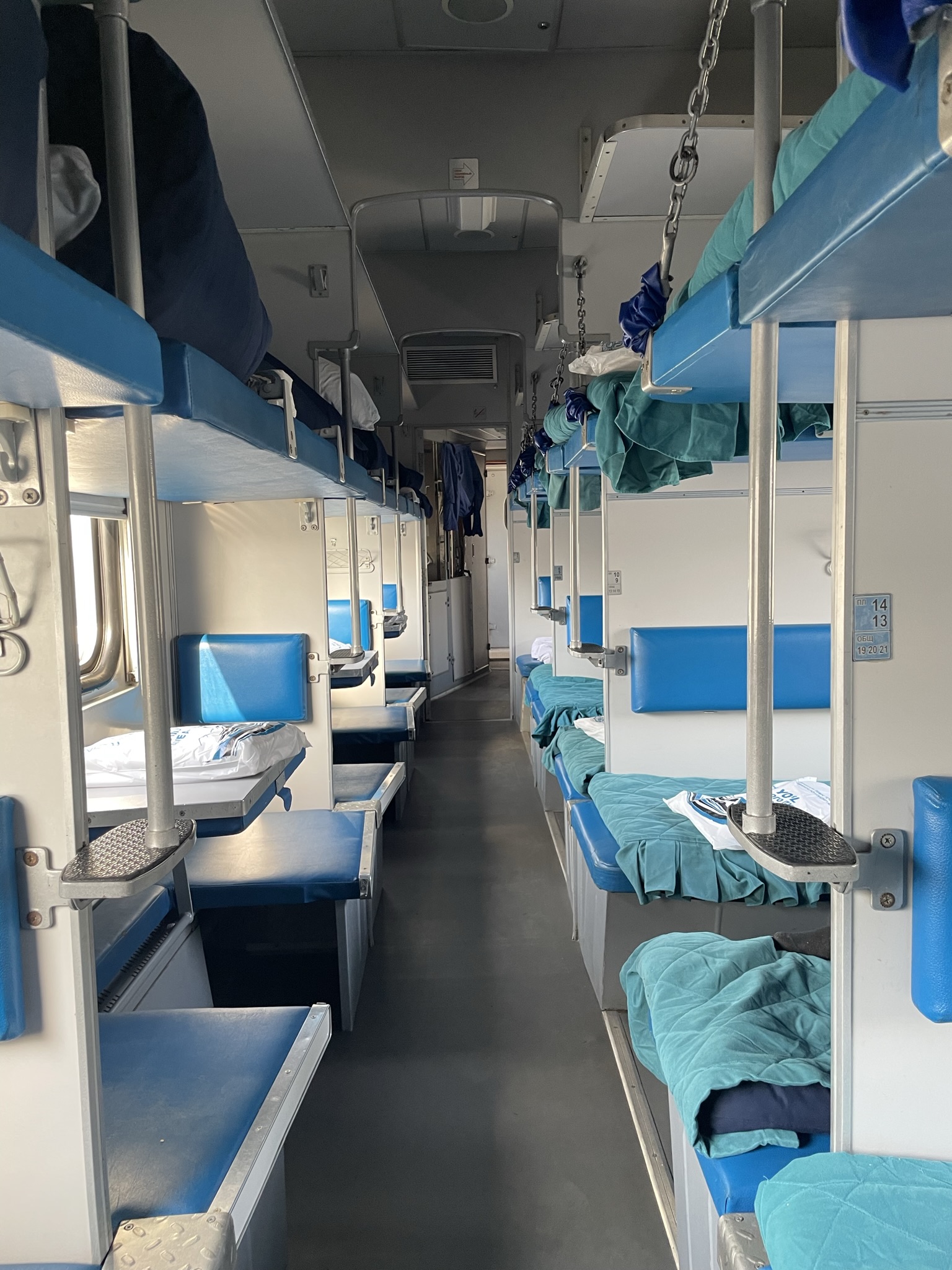
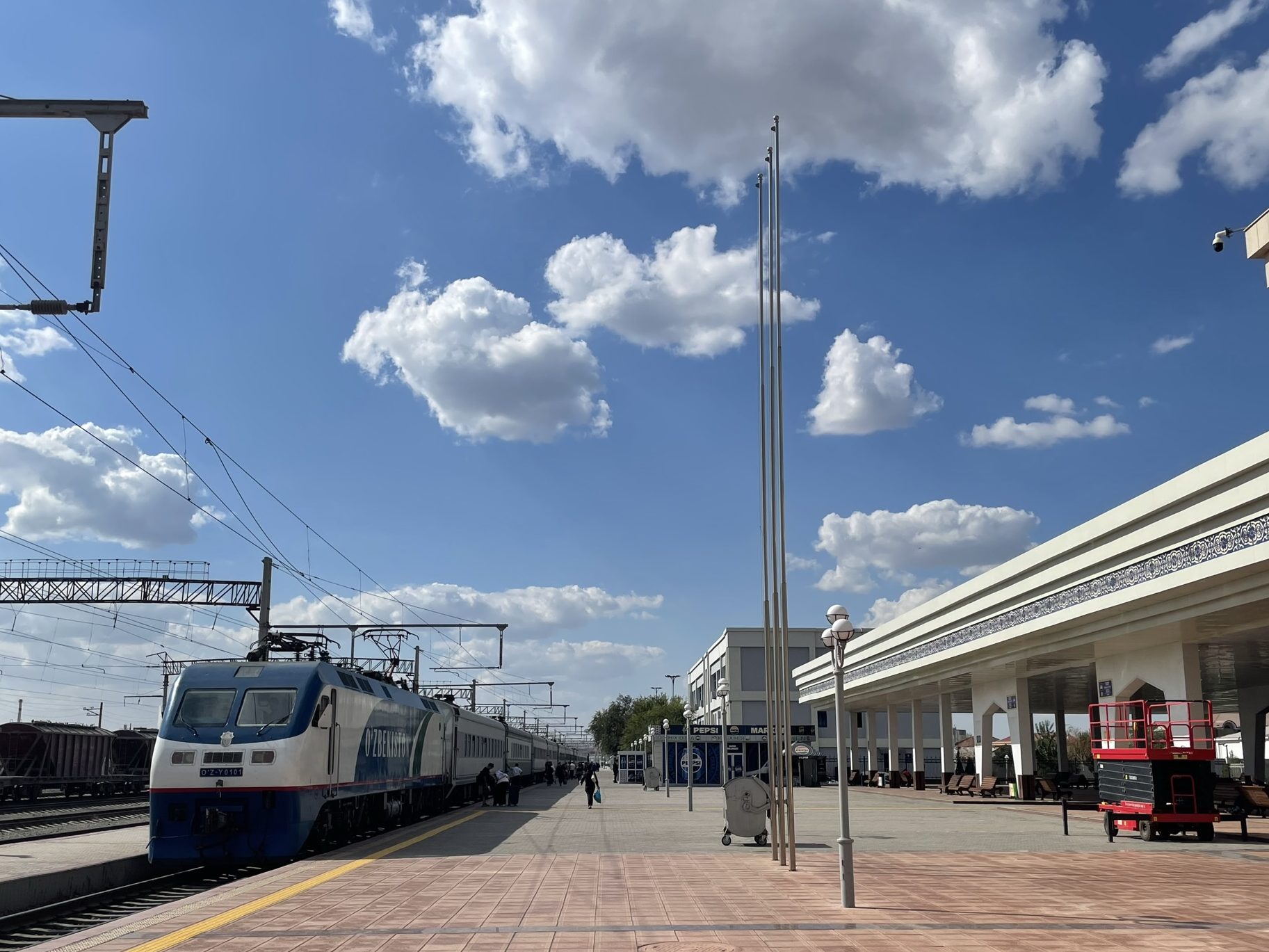
After departing Andijan, the train gradually filled as it crossed the densely populated Fergana Valley. We were bound for Khiva, on the opposite side of Uzbekistan, a country roughly the same size, shape, and population of California. The sleeping berths were open, a galley-style arrangement with double stacks of bunks that ensured any conversation or cell phone speaker within 30 feet was audible. My berth was too short to stretch out, the seats too cramped to sit up straight. A chill desert wind passed through the gaps in my window, pausing only at early morning halts when the air grew stifling with the sweat and snores of my fellow passengers. By the time I arrived in Khiva, my willpower was sapped and the taxi drivers carved me up with a merciless mark up.
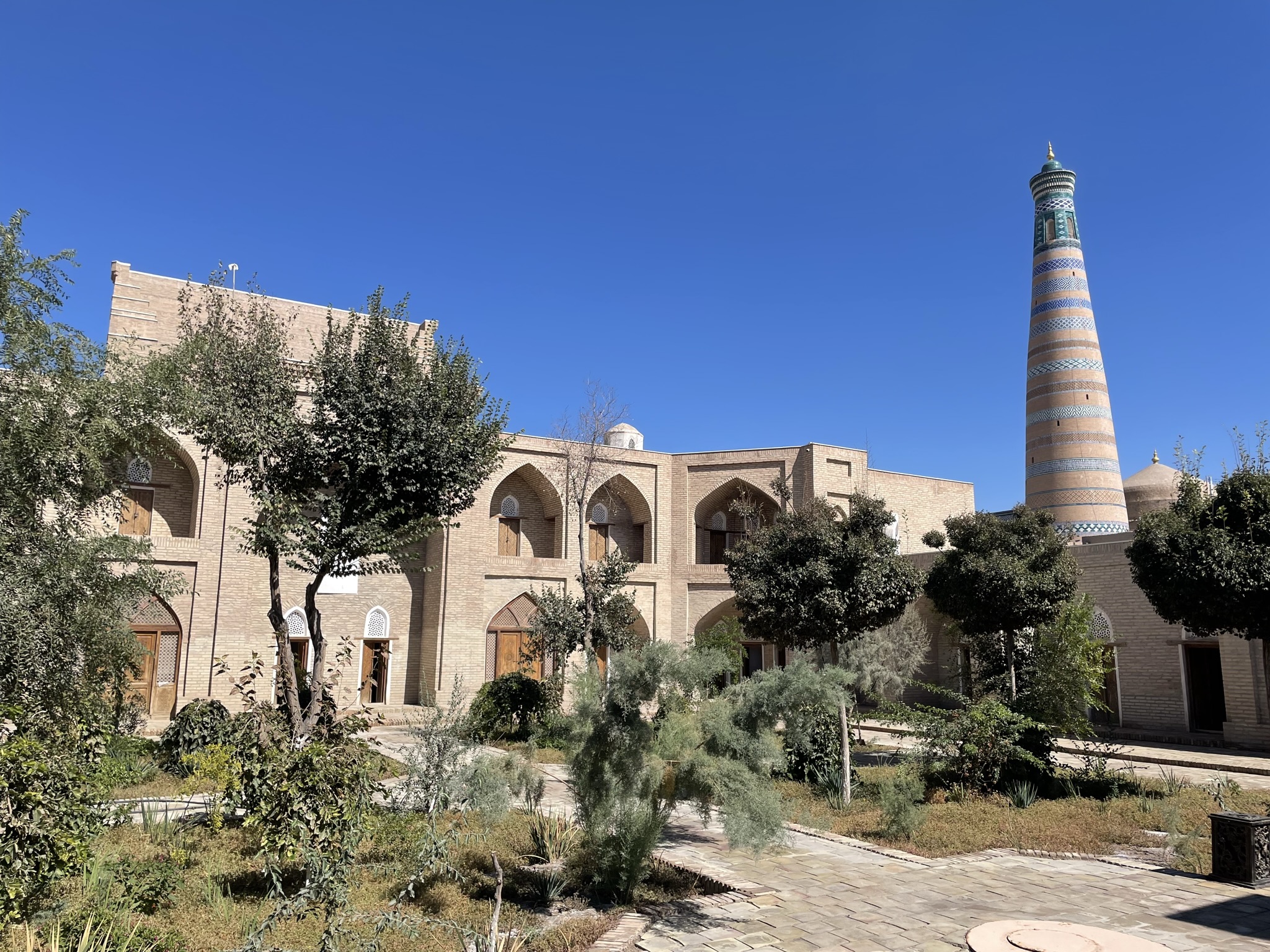
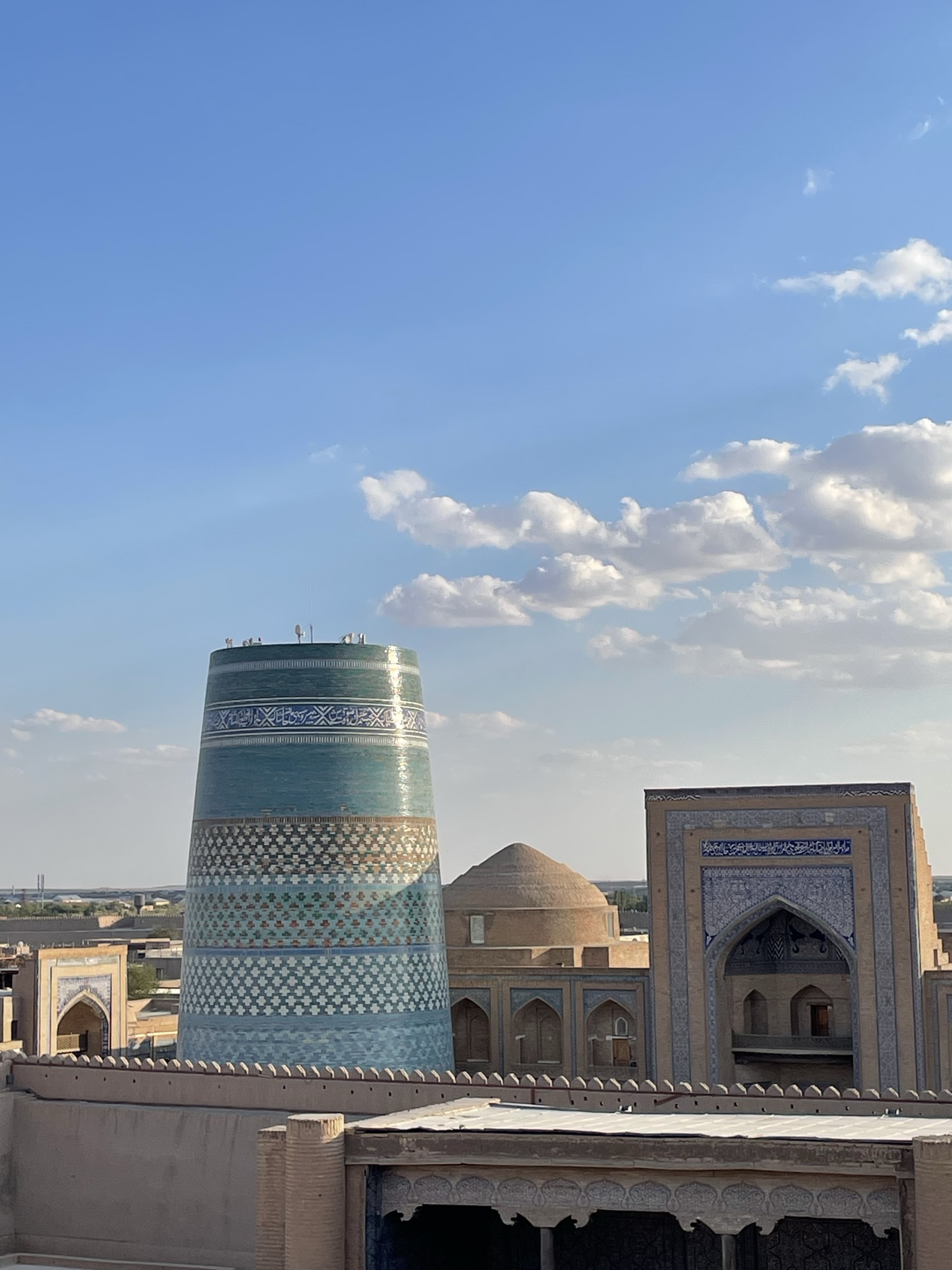
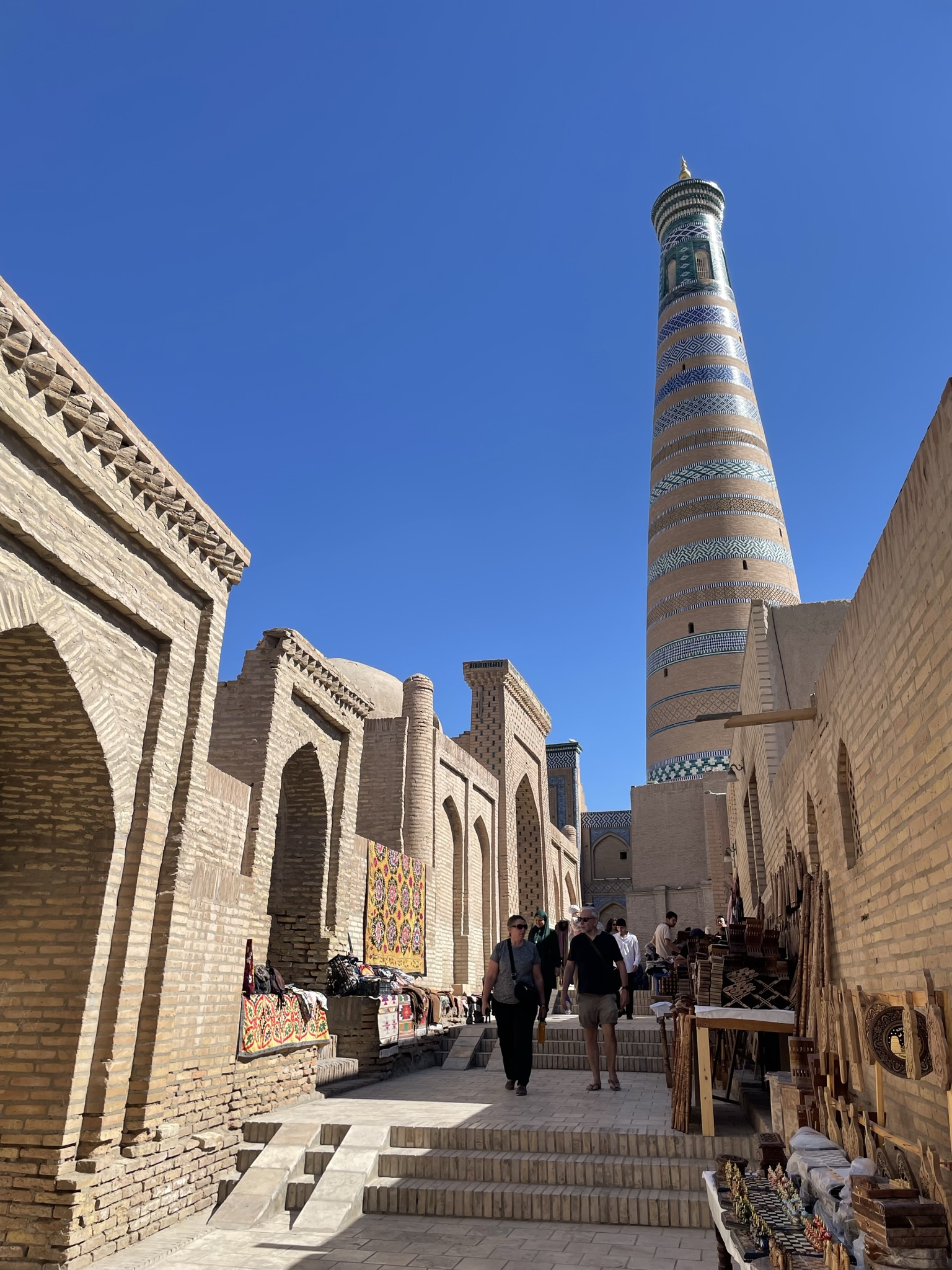
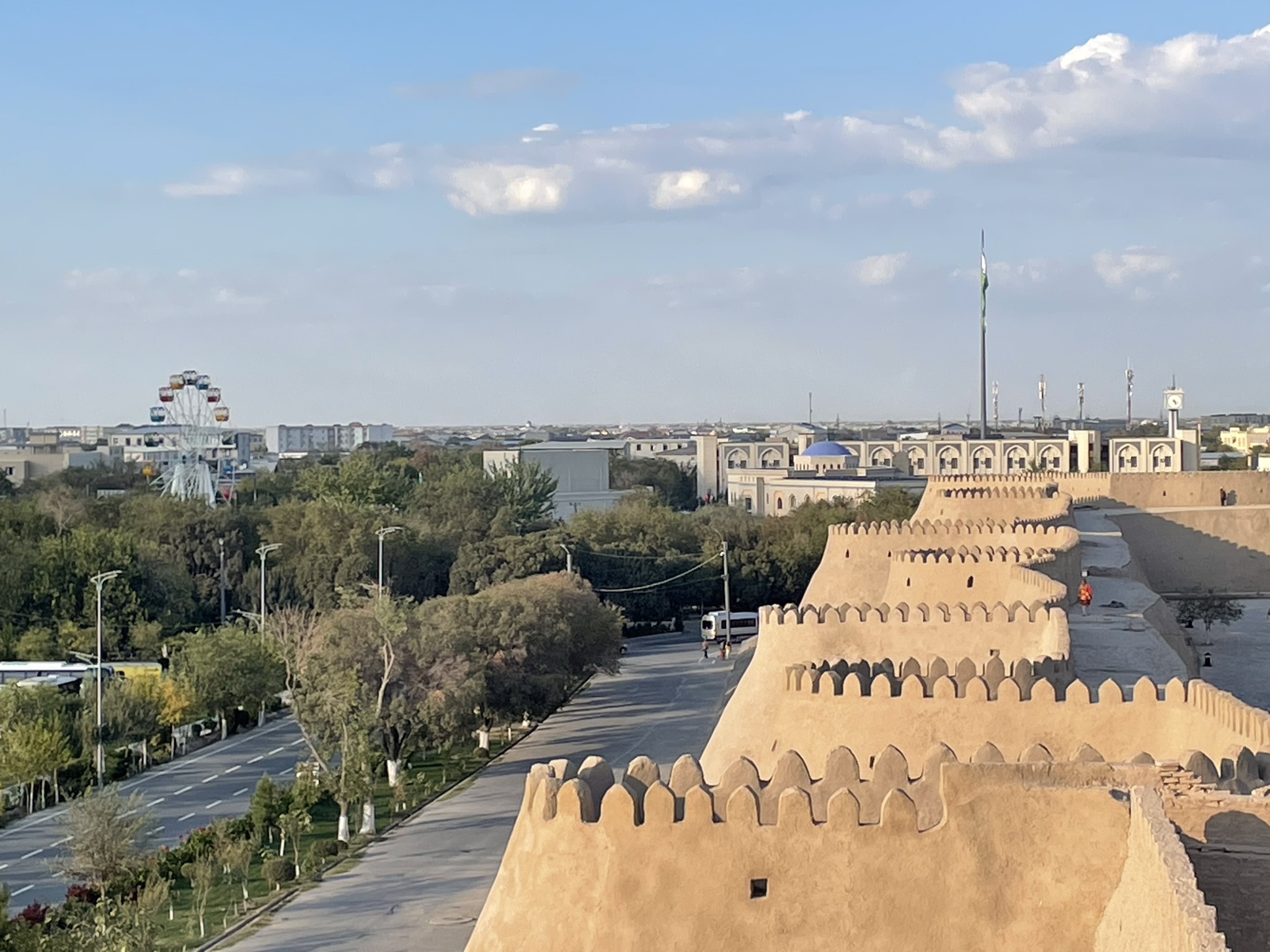
Khiva sits in an oasis in western Uzbekistan, a formerly independent khanate now absorbed in its reinvention as a tourist hub. The ichan qala, the old city, is still surrounded by its thick scalloped defensive walls. Trade remains the means of access, in this case a $30 ticket providing a buffet-style menu of the city’s sights over a two day window. It is ultimately a pretty reasonable deal and seems to be paired with significant restorations to the city centre. Cars are nearly banished, the narrow roads are laid with smooth, spotless stones, lined with polite vendors offering up all types of handicrafts without the hard sell and verbal harassment that can come with a tourist trap. And to my surprise, Khiva is thick with tourists: Chinese, Russians, Indians and many groups of European pensioners with earpieces, dutifully following guides from point to point. Backpackers like me float in the mix too, all contributing to the sense of a town overwhelmed, its postcard-perfect scenes feeling drained of vitality. Khiva has become an impressive museum piece, a preserved artifact.
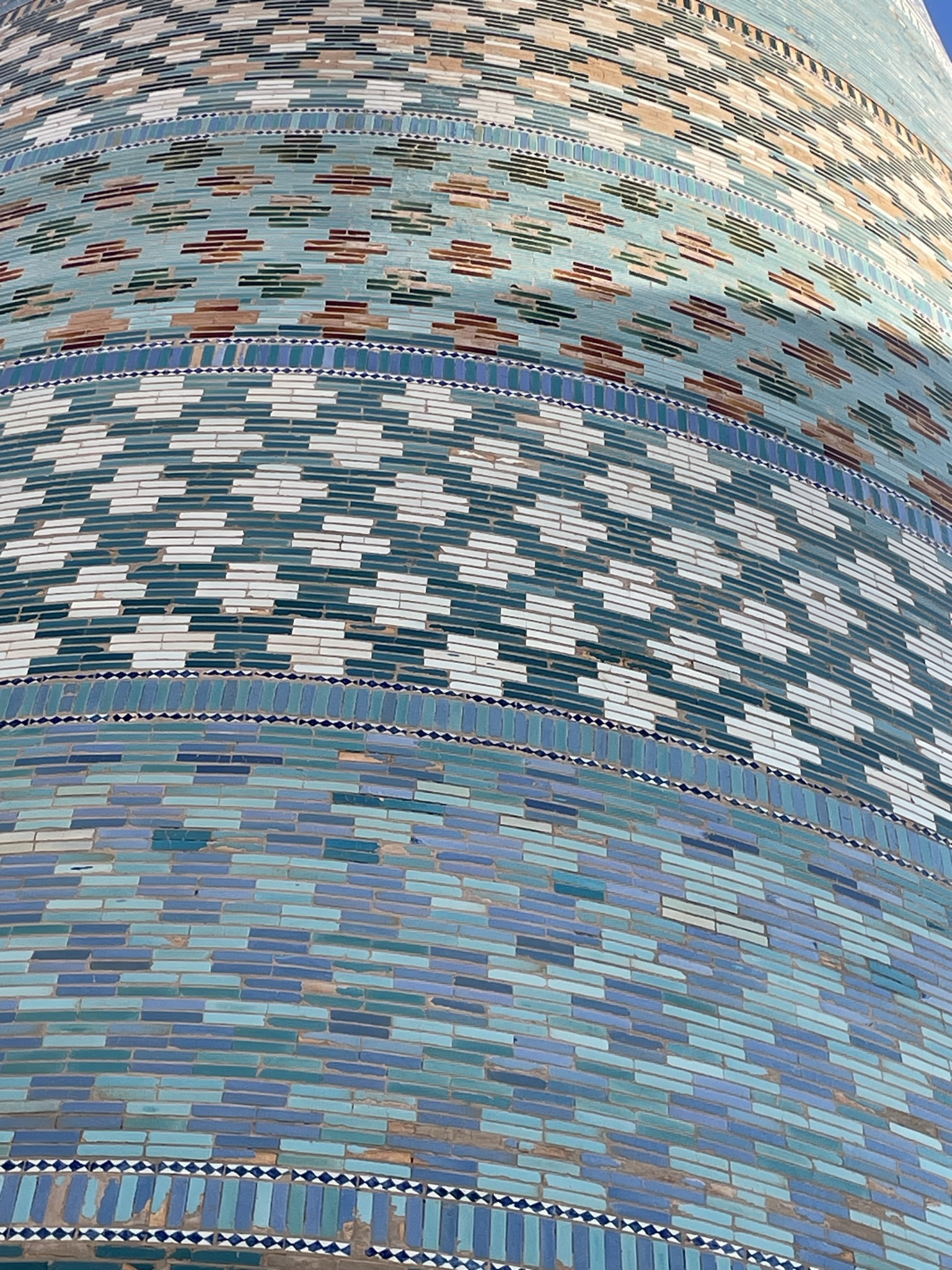
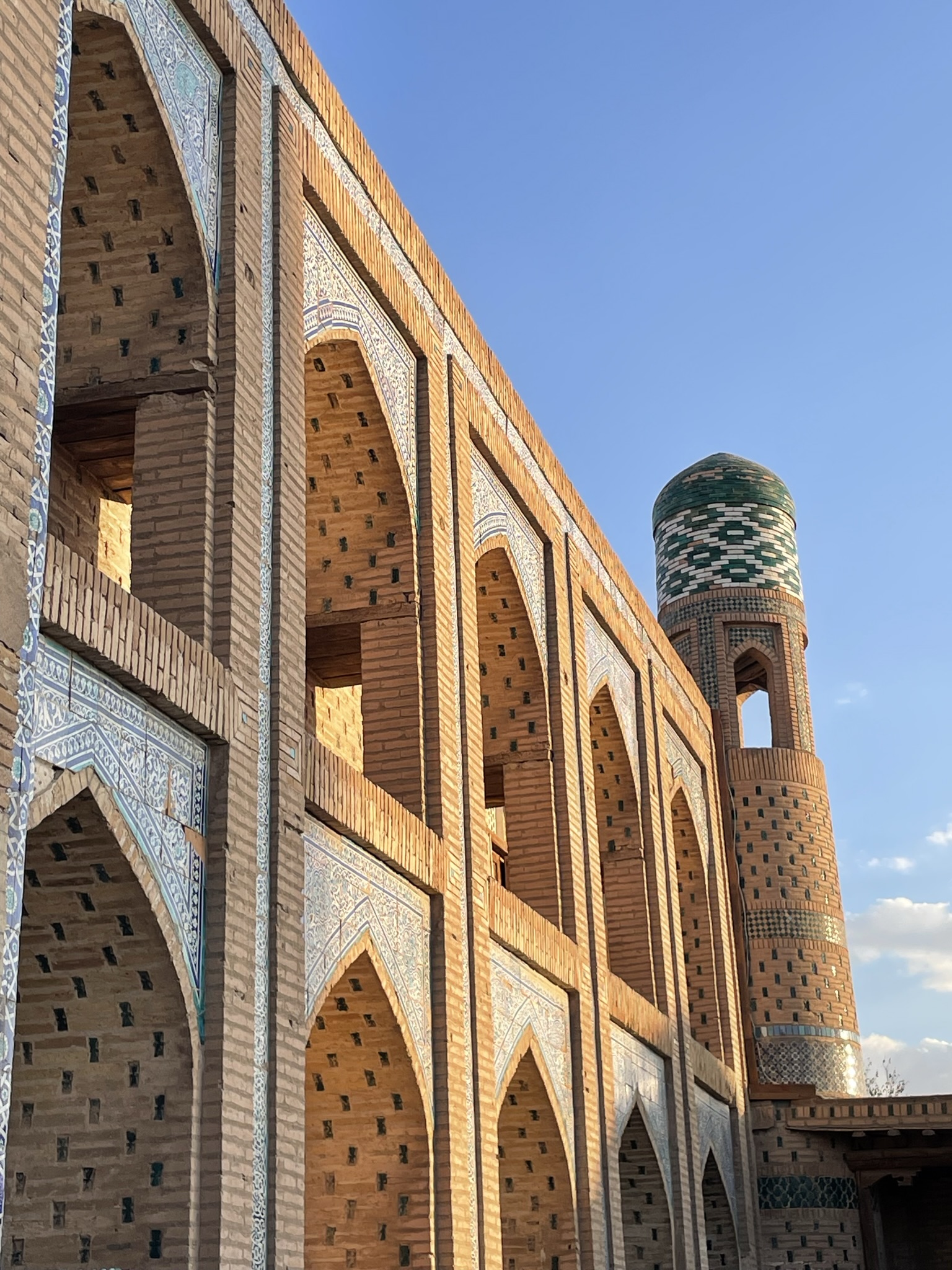
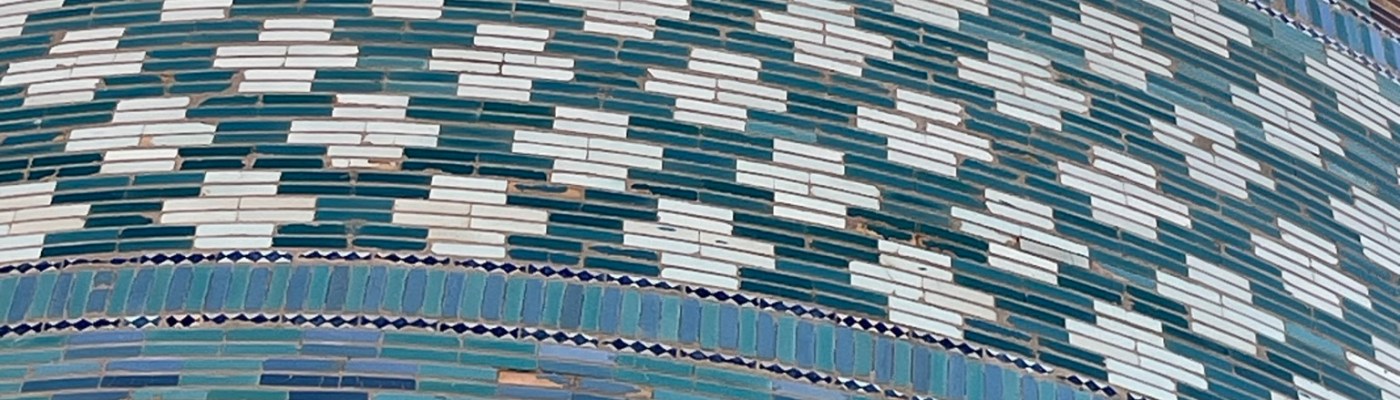
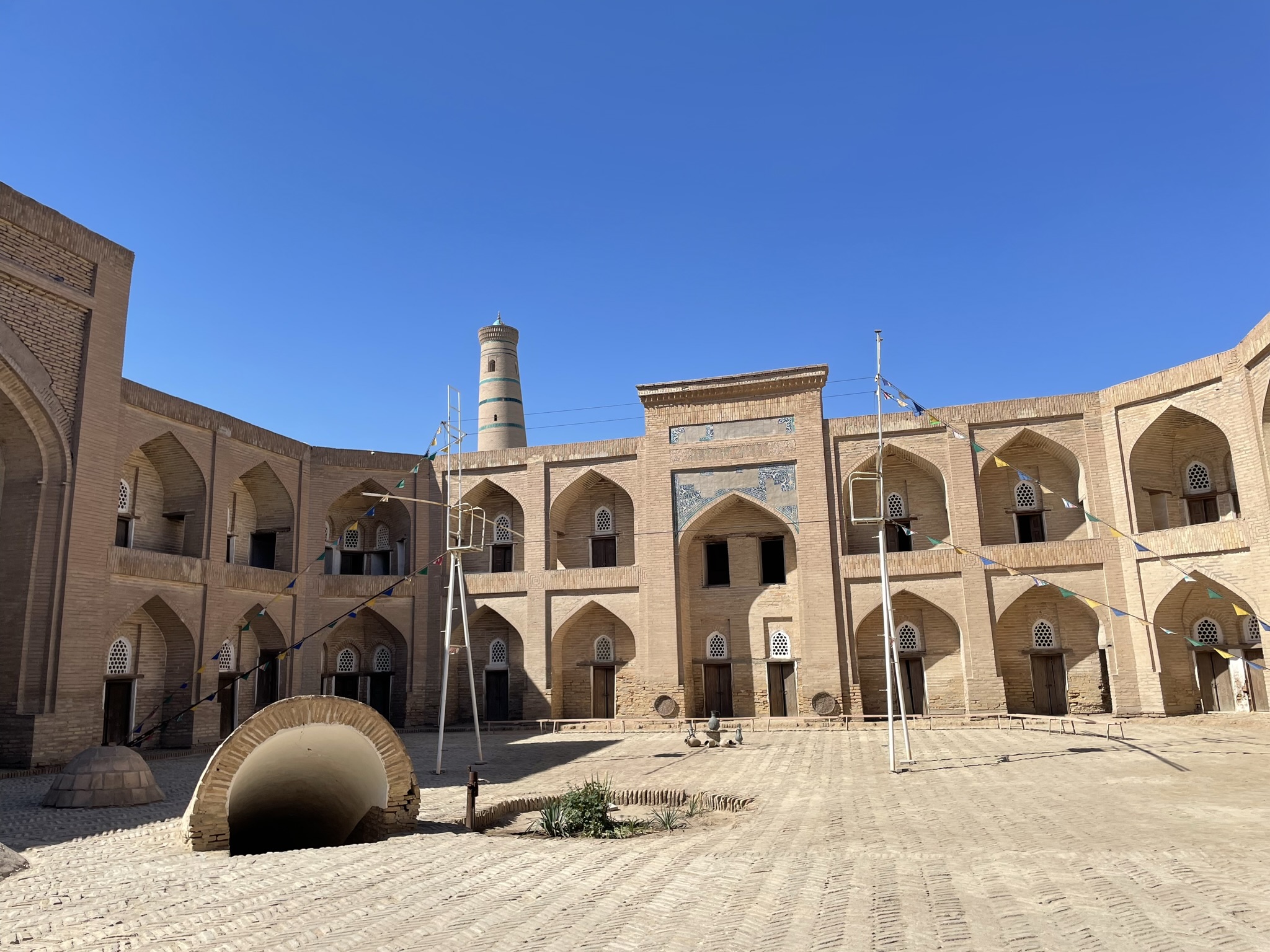
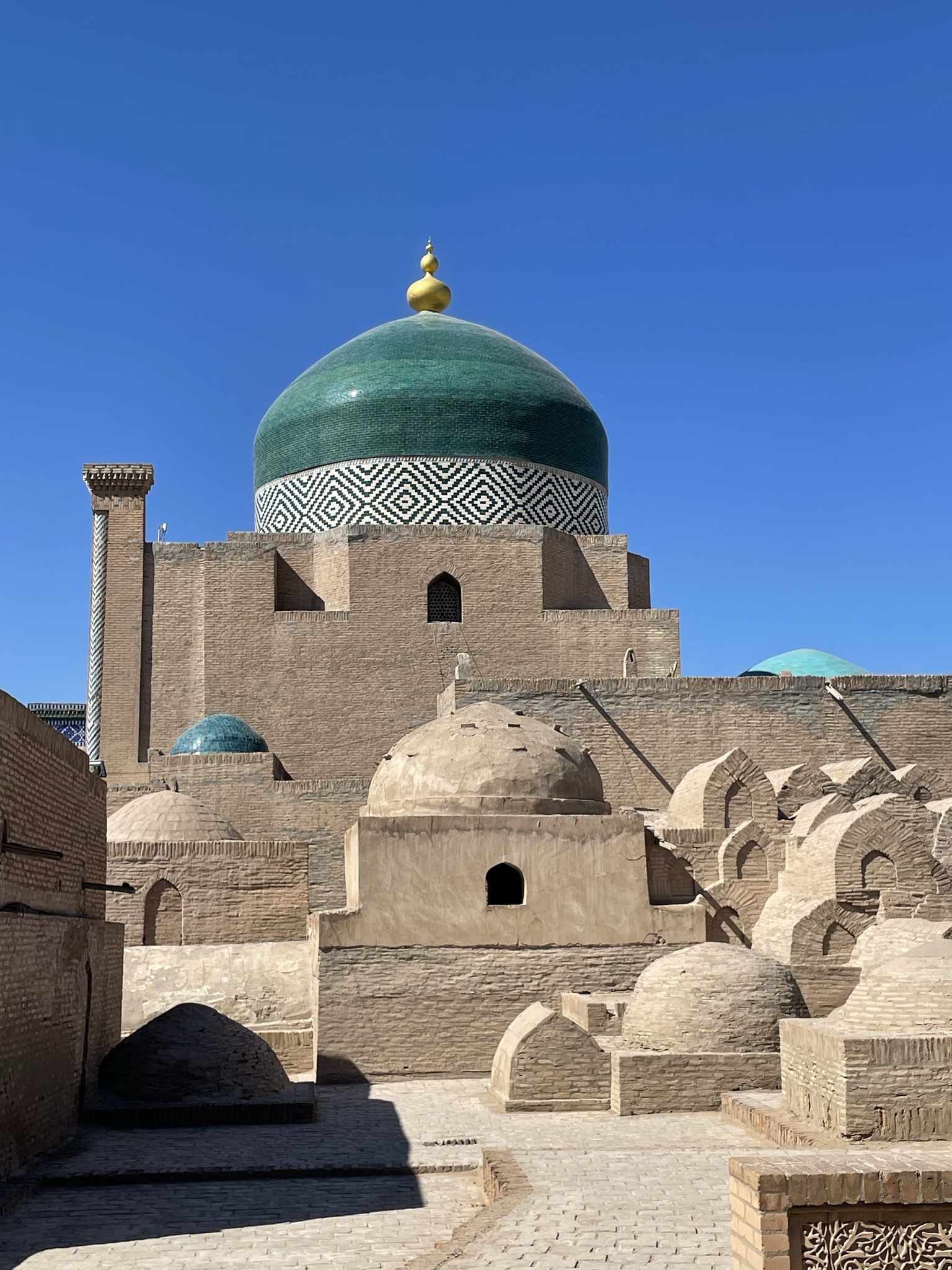
And yet for my complaints, Khiva is simply stunning. Turquoise minarets, thick and thin, fire in the twisting light throughout the day. The domes and facades of the madrasas and mausoleums nearly glow in the long sunset, filtered through dust and sand as it works down the horizon. It is immediately magical, evocative, and arresting. Hammams, khanakas (cloisters for Sufis, a mystical Islamic sect), caravansarais, and the ark, or citadel, fit out an unfamiliar typology of places. It is a bit disorienting, a new vocabulary of spaces for which I lacking any reference point to build around. Instead I wander, street by street, building by building. The many madrasas have been converted into themed museums, reflecting their heritage as places of learning – astronomy, waterworks, natural history, calligraphy – now rendered in converted cells.
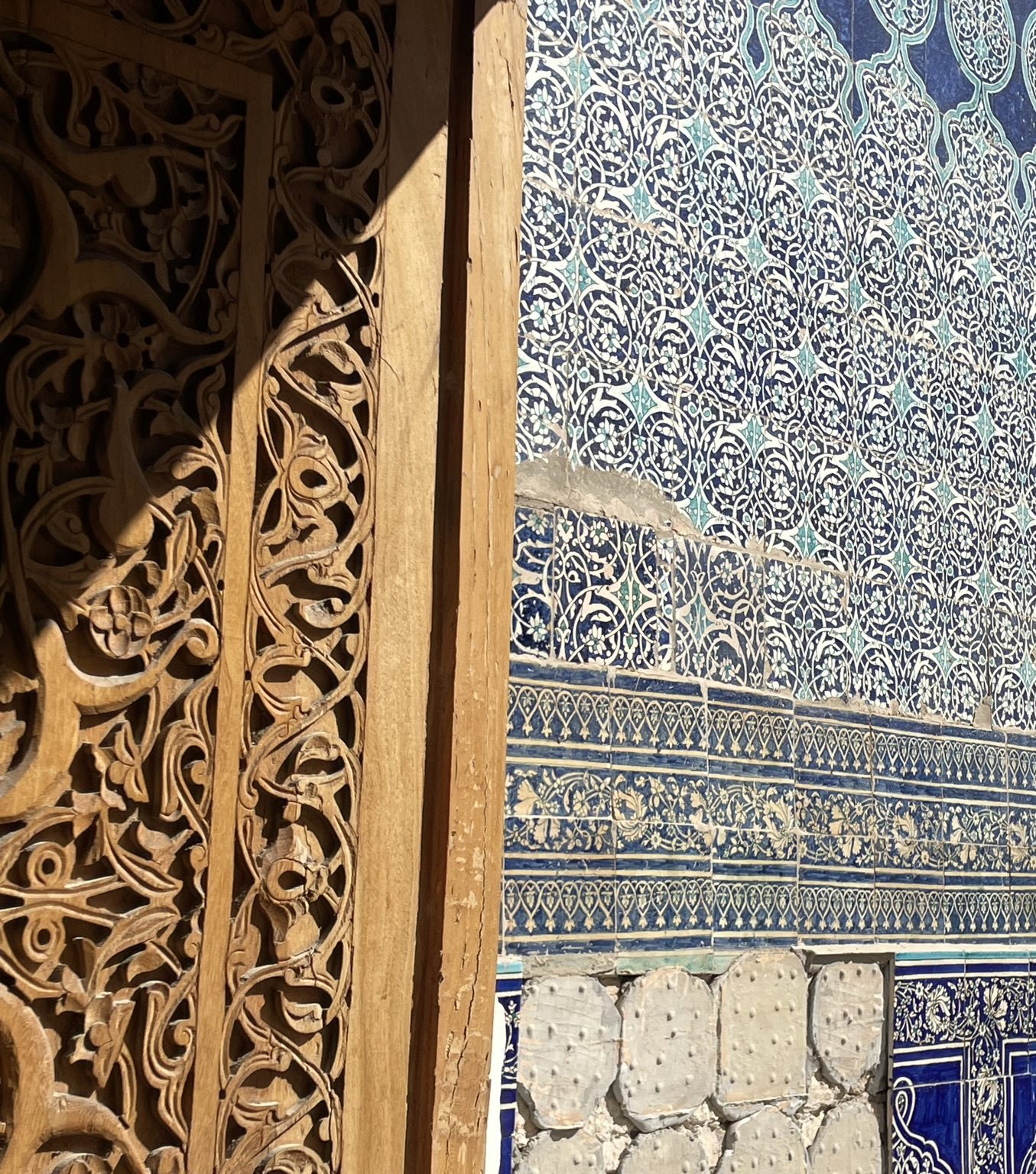
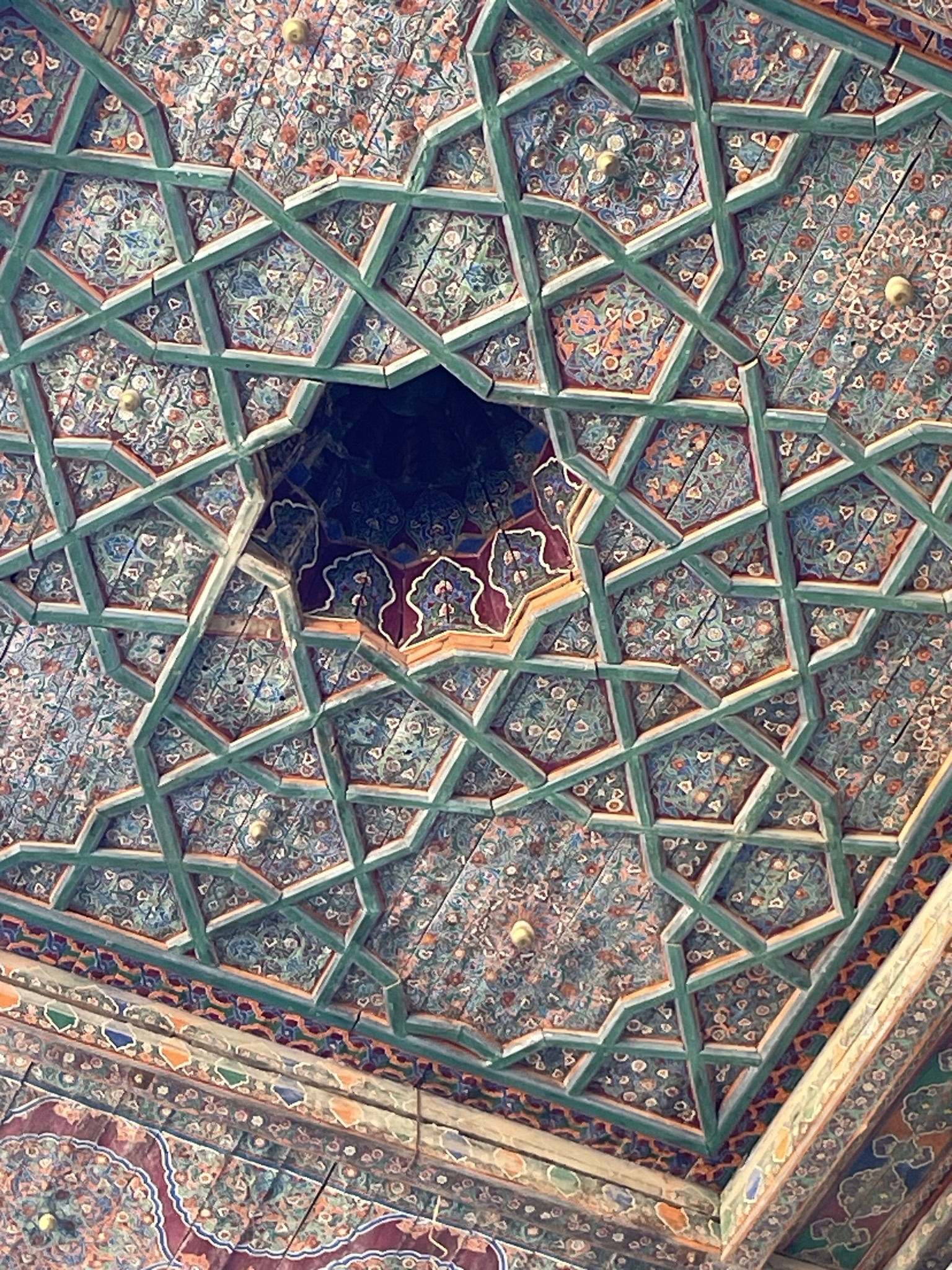
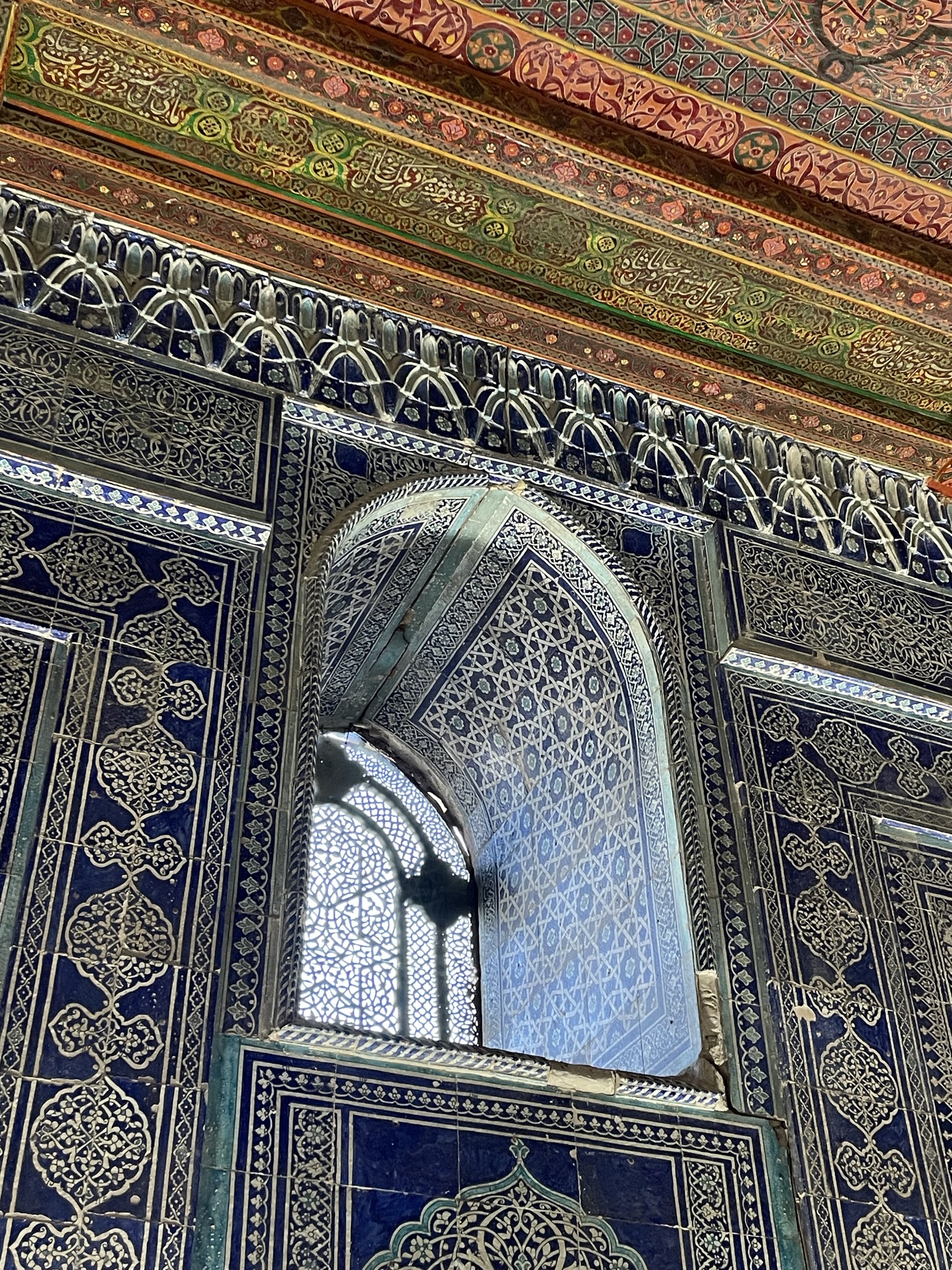
Helpfully one such museum explains what, exactly, a madrasa is and how they work. Essentially a blend of a monastery and school, madrasas served as the cornerstone of Islamic education in the region. Buildings follow a pattern, varying in scale and grandeur, of a rectangular courtyard behind a decorated main entrance. Facing the courtyard interior are the doors to the students’ cells. The madrasa was supported by a waqf, an endowment based often on landholdings which provided upkeep for the muezzin and teachers, as well as scholarships for the students, though today many madrasas seem to have a collection box near the entry too. Students were grouped by their level of study in the Koran and the hadiths (sayings of the prophet Mohammed) for the six months session running from fall to spring. A week was structured around four days of classes and two of independent study, with Friday off. Both religious and secular areas of study (famously astronomy, geography, and medicine in the region) benefited from being at the crossroads between Turkic, Arab, Persian, Indian, Chinese and Mongol worlds, receiving and transmitting knowledge and learning for centuries.
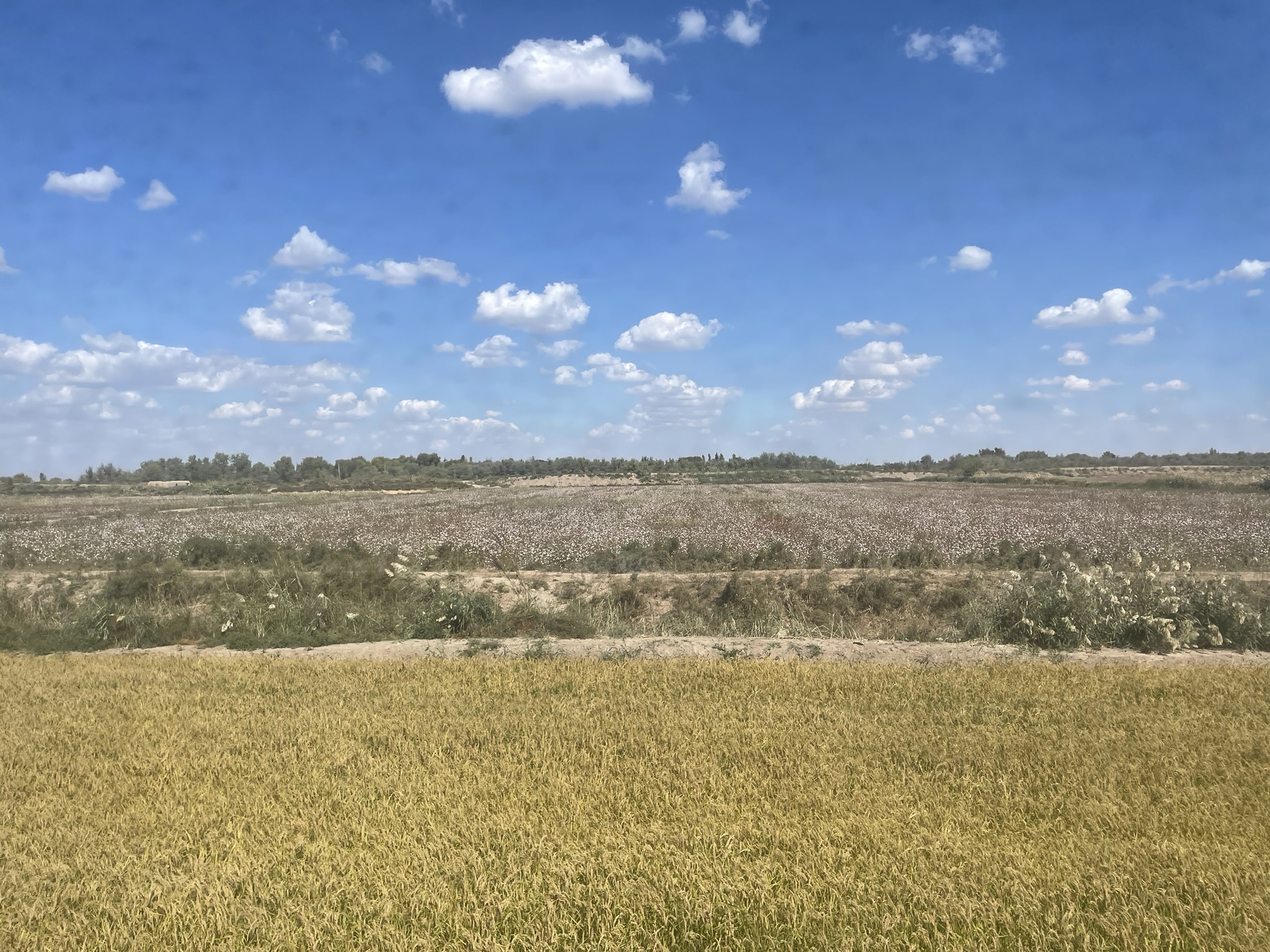
I was not here exclusively for Khiva, and hired a driver through my guesthouse for a daytrip further west. To my disappointment, he spoke neither English nor Russian, so our communication was limited to clumsy scattered Google Translate efforts (“Is everything okay?” “Aren’t you hungry?” “Have you tried our melons?”). The last no doubt prompted by the many sellers set up with the fall harvest by the roadside mirza and watermelons, which to be fair, are quite good. Potholed roads took us through small towns and past cotton fields, where work gangs were gathering the bolls, a common sight across the country this time of year – Uzbekistan is a major global cotton producer and irrigating these many hectares contributed to the demise of the Aral Sea. The recent boom in the Uzbek economy was visible everywhere: new bridges and road repairs marked the landscape. Parallel to a freshly paved expressway ran a nearly completed high-speed rail connection from nearby Urgench. Cities across the country seem marred by ubiquitous, inelegant squat apartment blocks rising on their edges.
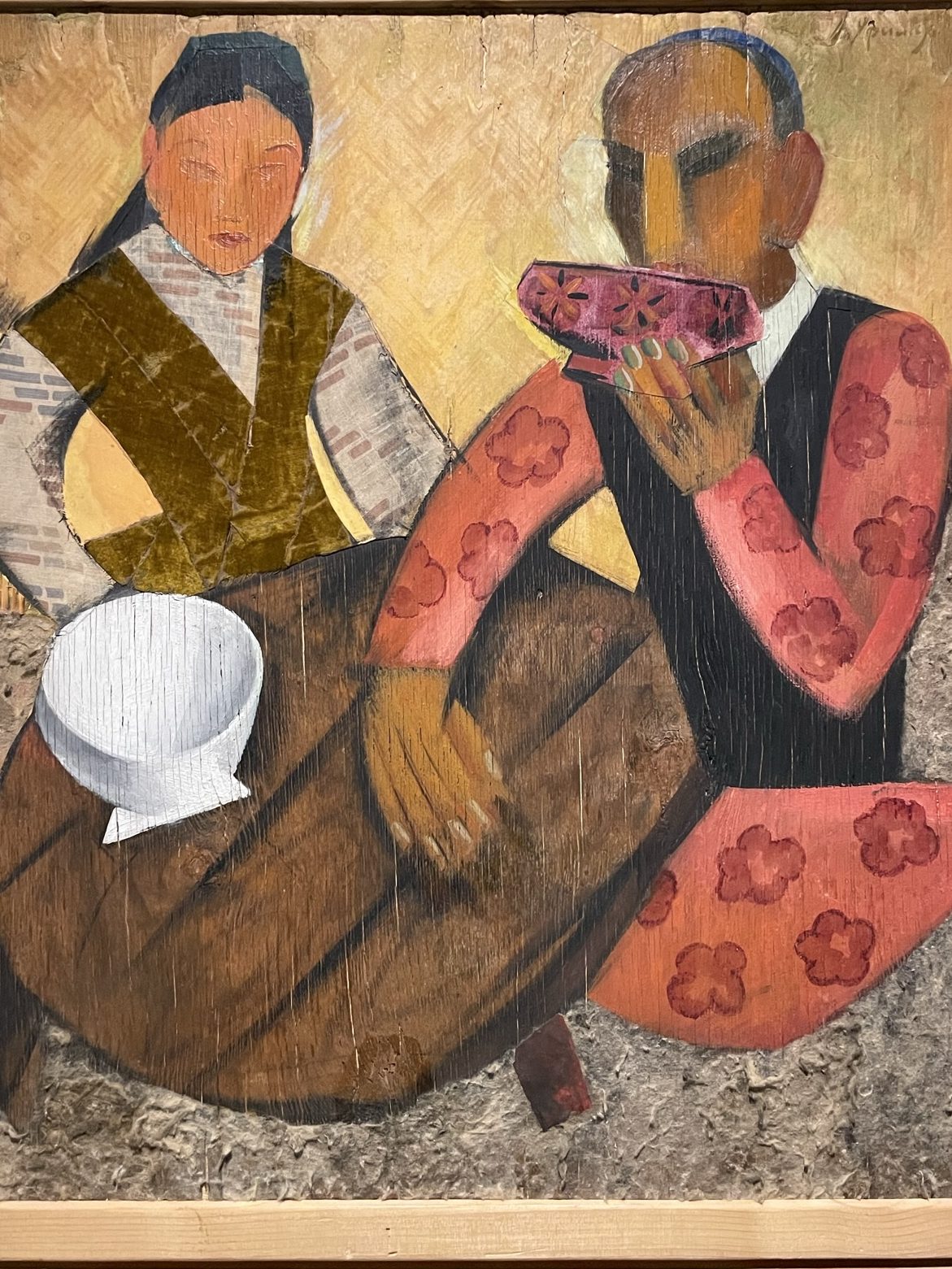
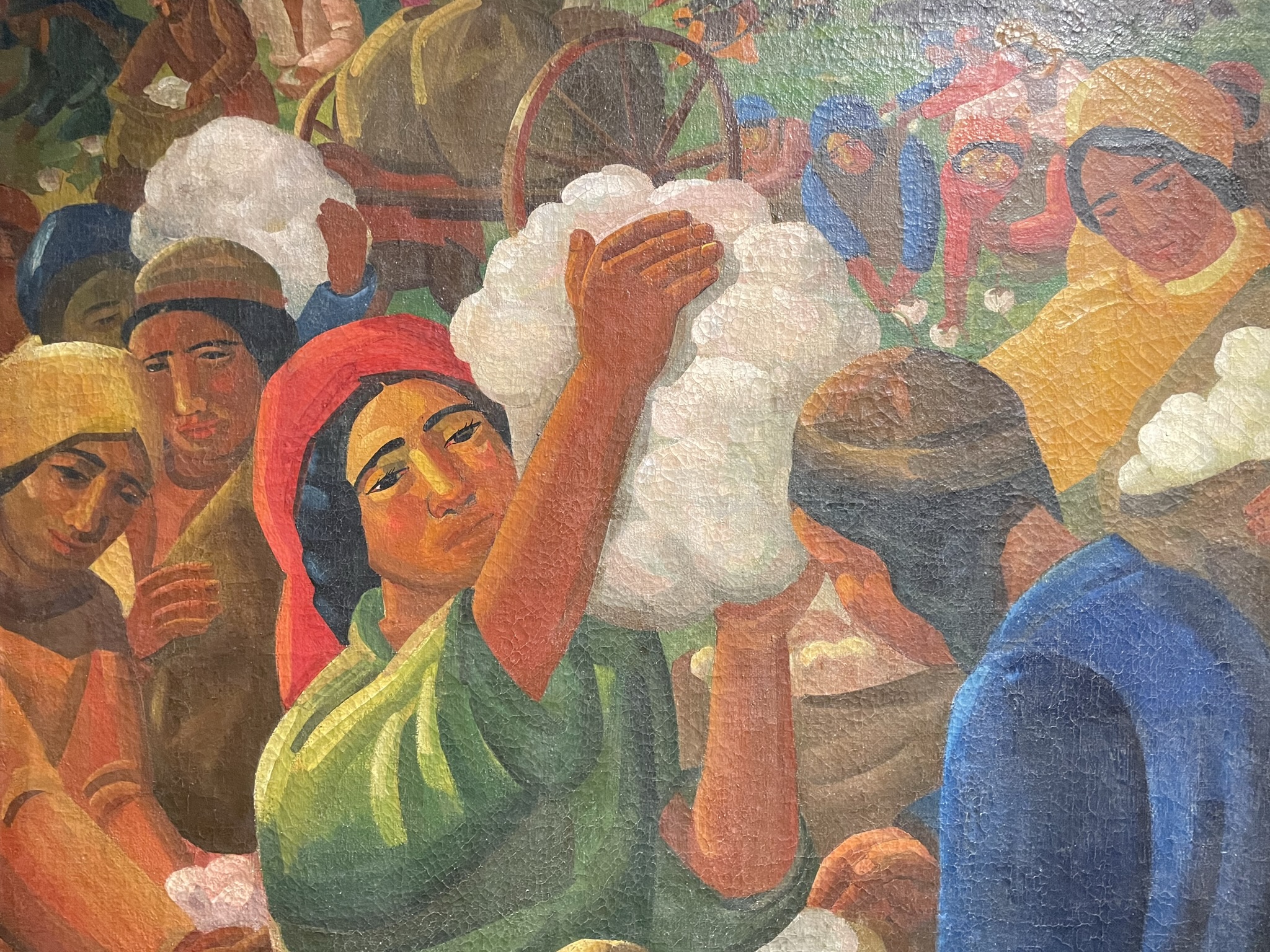
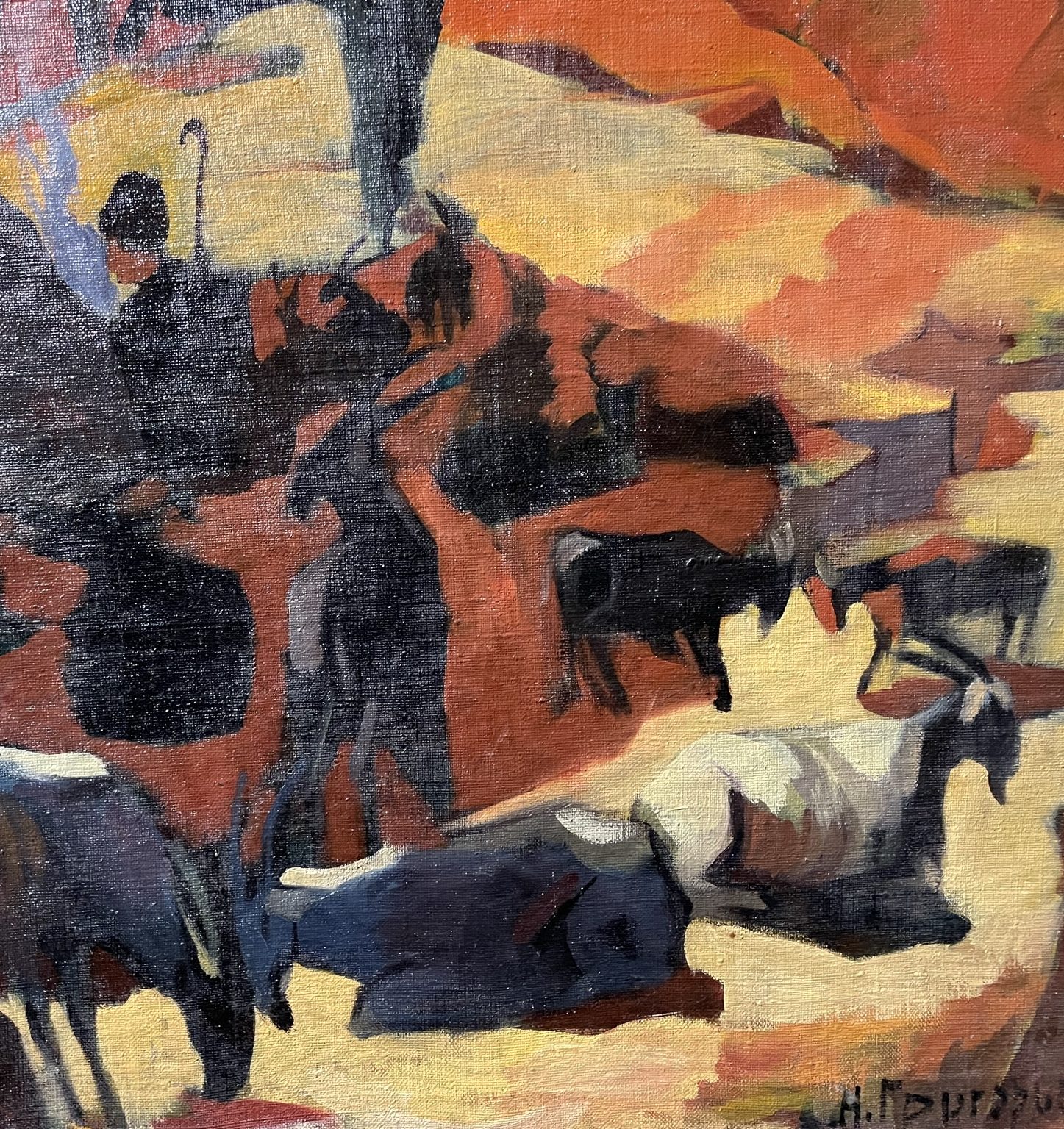
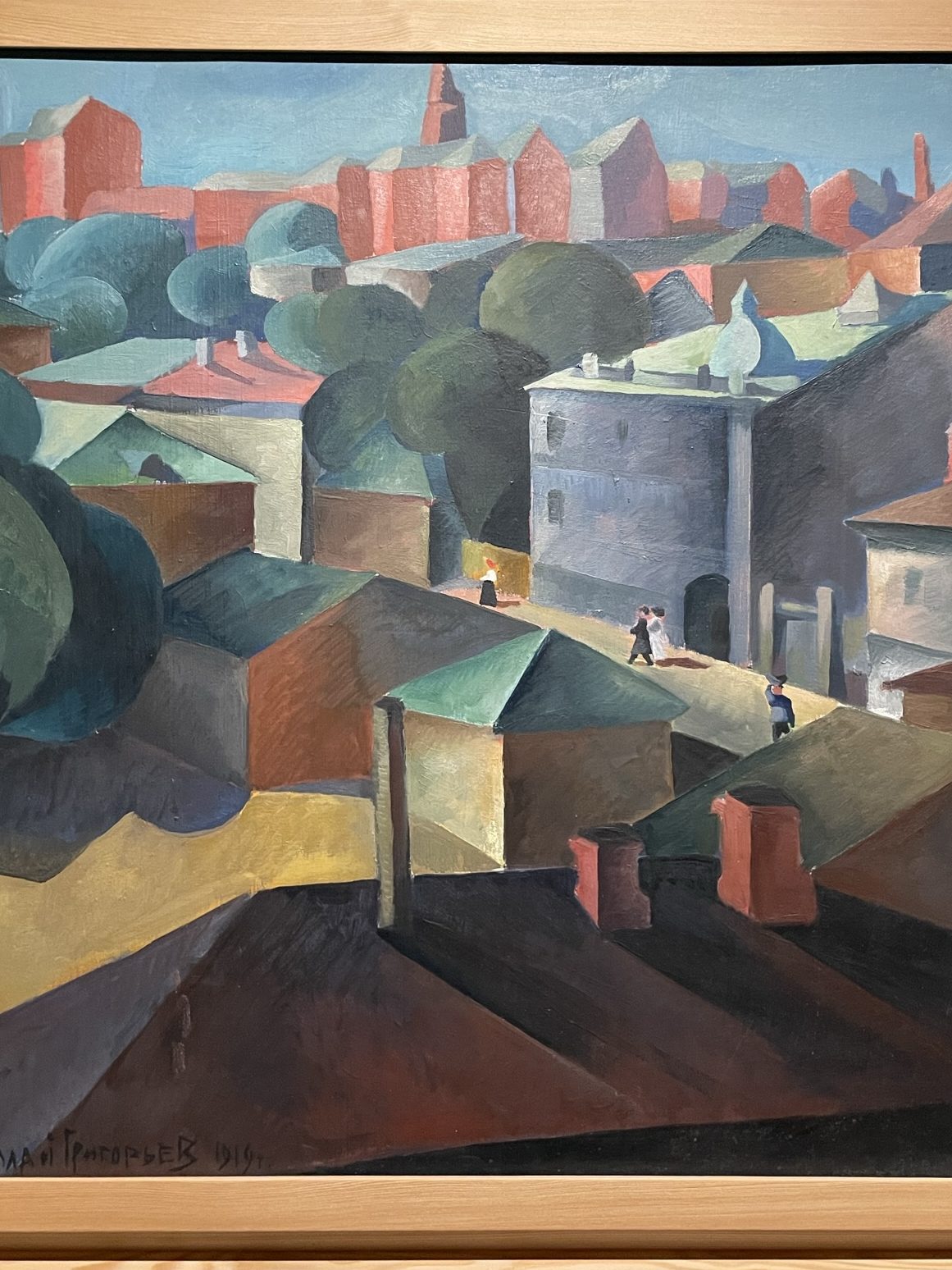
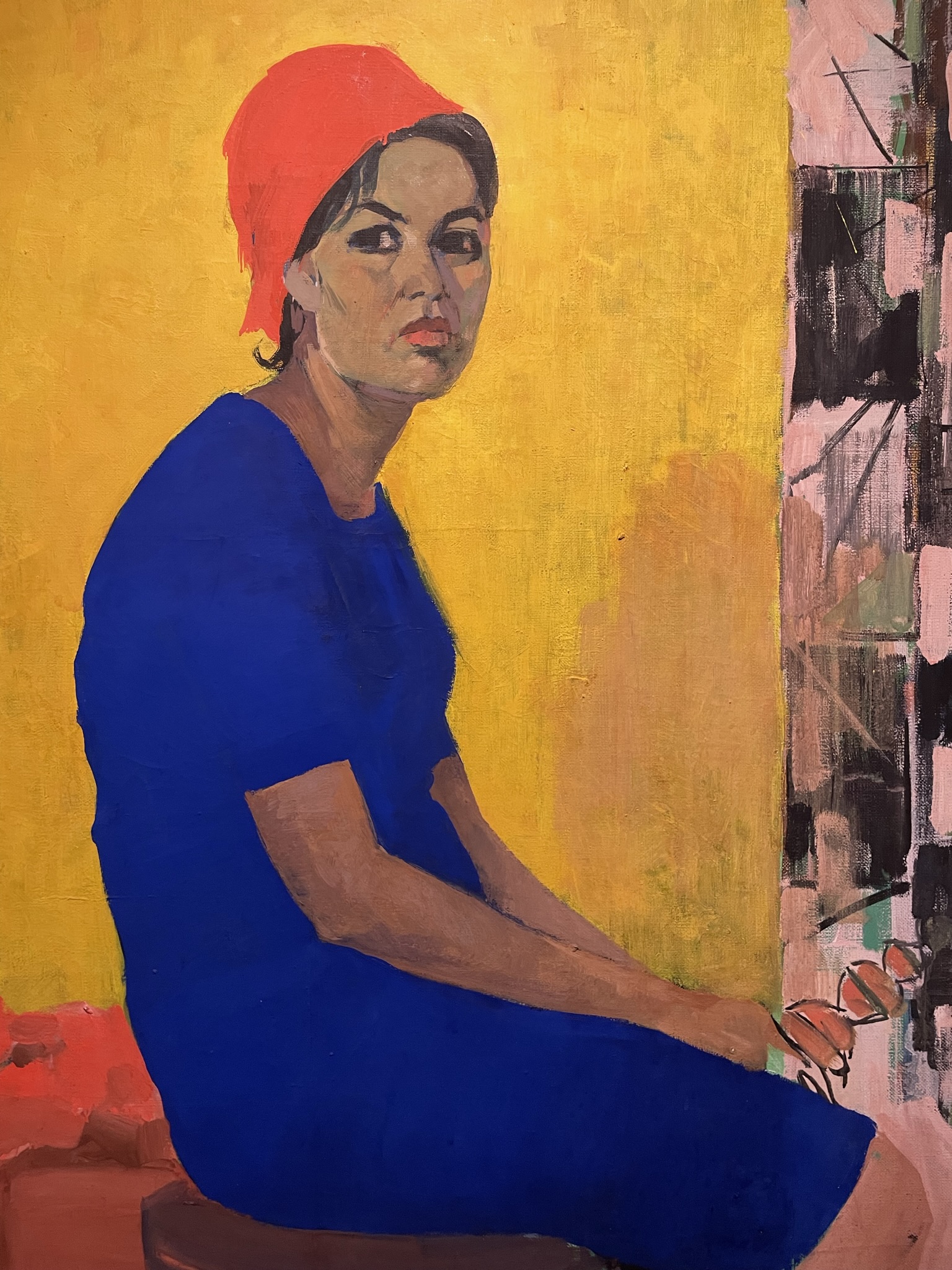
The ultimate destination for the day was Nukus, specifically the Savitsky collection at the Nukus Museum of Art. This assemblage of paintings dates largely from the early decades of the 20th century, a time capsule of both the Tsarist and early Soviet eras when painters from across the vast empire were attracted to the Oriental charms of Turkestan. The artists impressions of local culture vary from paternalistic romanticism to a deeper understanding. The miracle of the collection is its survival of the Stalinist crackdown, the stultifying creative straitjacket imposed through executions, show trials, purges, and casual cruelty. Here in semi-autonomous Karakalpakstan, then an overlooked corner of the USSR, the museum namesake preserved works by artists like Aleksandr Volkov, Nikolay Grigoryev, and Viktor Ufimstev, who had my favourites among a collection that is rich in breadth and well displayed, one of the best museums I saw across the region in its care.
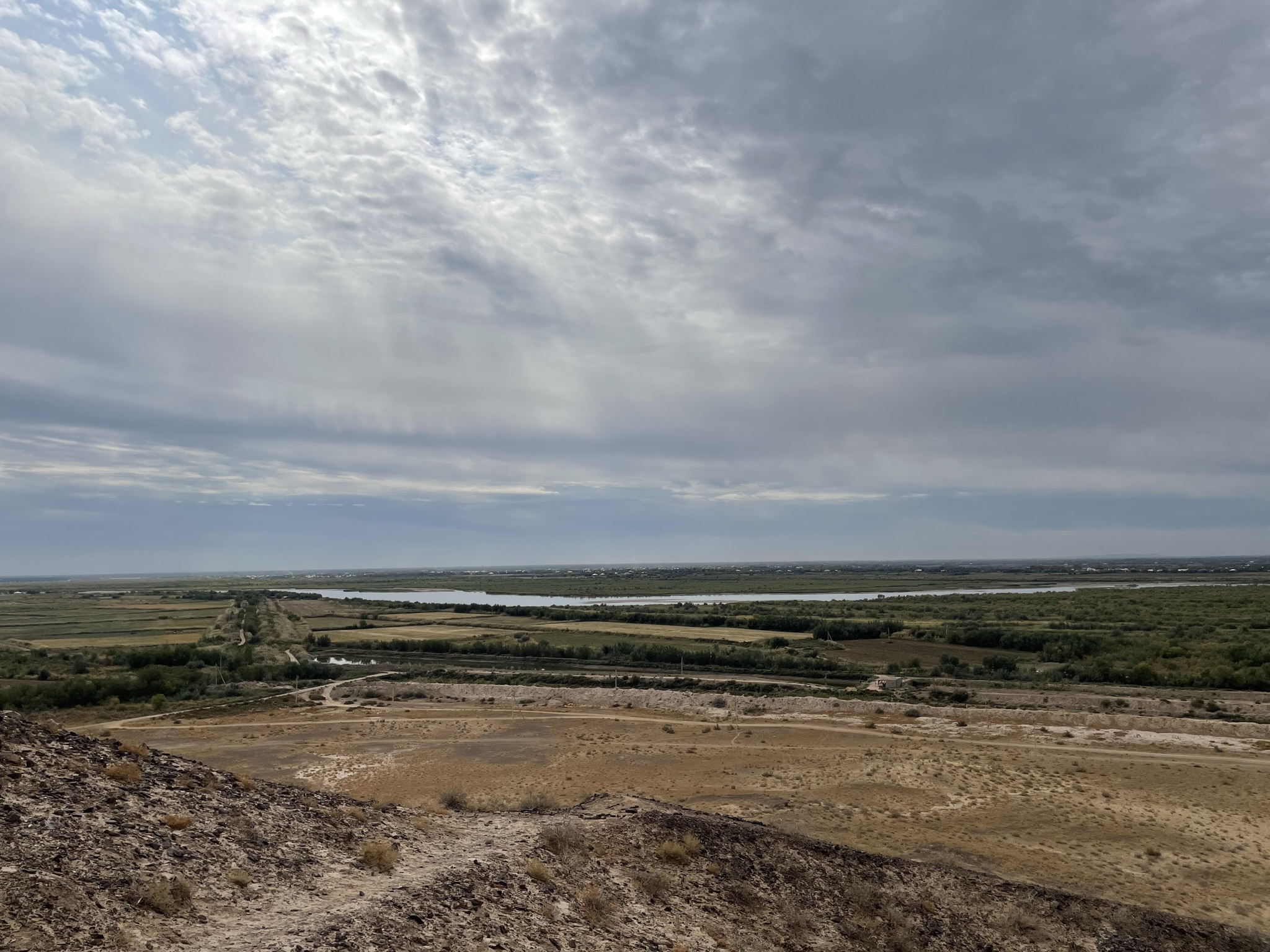
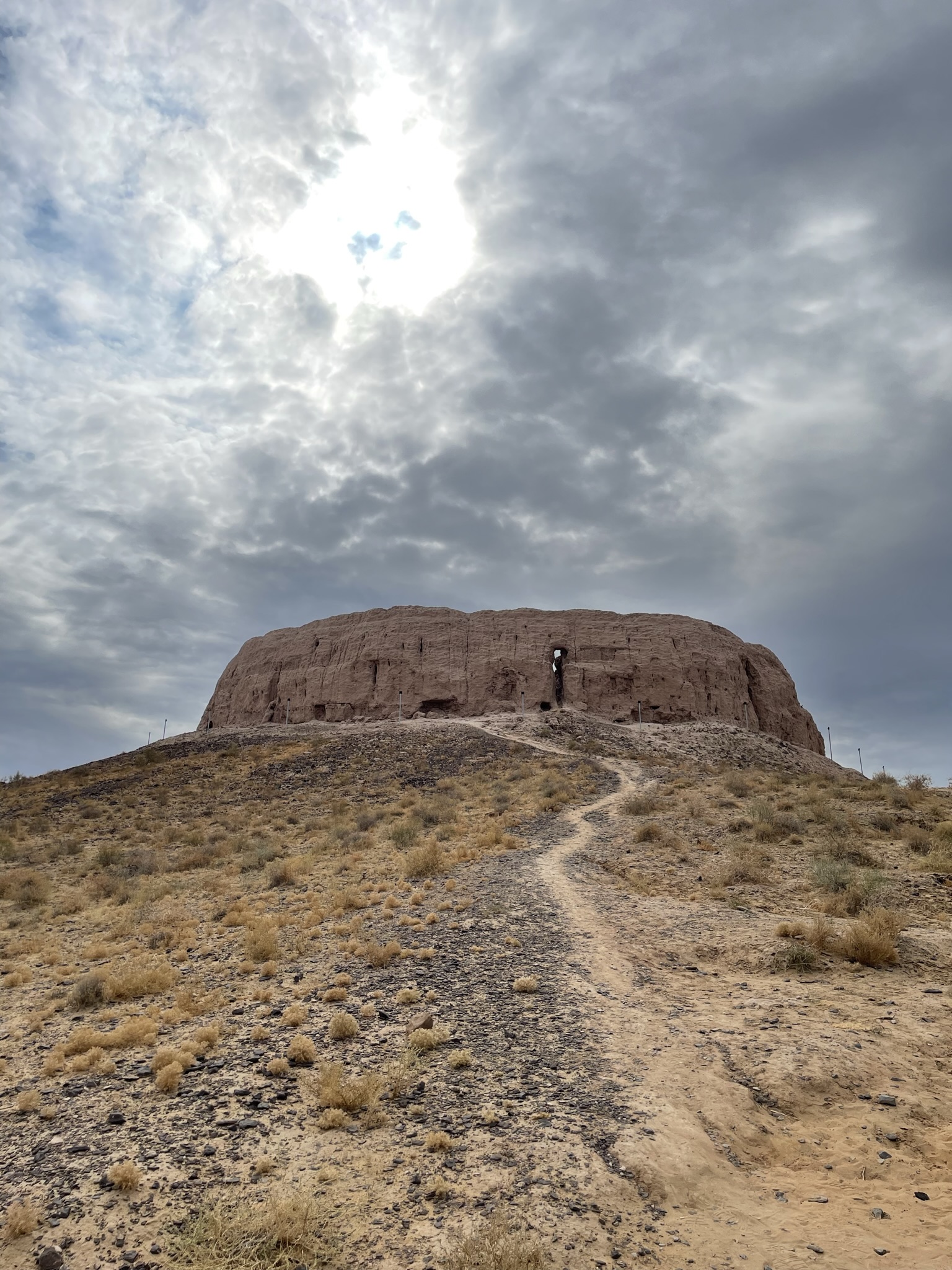
Back between oases, we turned into an access road to the circular ruins of Chilpik Qala, spooking an eagle off a signpost and I watched its long wings arc low over the empty landscape. Built two millennia ago atop a low mesa that rises above the wasted desert around it, Chilpik Qala is a remnant predating the arrival of Islam, when the region was home to animists, shamanists, and Zoroastrians fire-worshippers. It was the latter who held funeral rites here, laying the deceased bared to the elements to be cleaned down to the bones before being placed in ossuary jars. At midday the ruins were quiet, a handful of scattered tourists and little else besides the view over the surrounding countryside, including the deep green spread marking the course of the Amu Darya, known also as the Oxus in the West. Here the river marks the border with the deserts of Turkmenistan, tantalizingly close but bureaucratically hard to reach.
Back in Khiva, I struggled to make my peace with the tide of mass tourism in a small town. Outside the ichan qala’s walls, the city felt more real. Beyond the walls, the nearby Nurullaboy Palace was virtually empty when I visited and kids played in the concrete-paved mahalla alleys at dusk while propped doors opened to living rooms and kitchens, teases of domestic life. The girls kicking a soccer ball around would rope me in with errant passes when walking to my guesthouse. Timur and his family owned and operated it, and the central room shifted from morning breakfast for guests to an afternoon play area for his infant twin daughters who squealed and smiled from their grandmother or mother’s arms when you passed them. These little human moments leavened the experience, a little effort to wave, to smile, to walk beyond the city walls. Timur said the tourist boom was recent, a post-pandemic phenomenon. Time will tell how it changes Khiva, but I won’t be here for it. My Silk Road journey was continuing on to Bukhara, another Timurid jewel in the middle of the country. Thankfully it would not be a night train this time.

