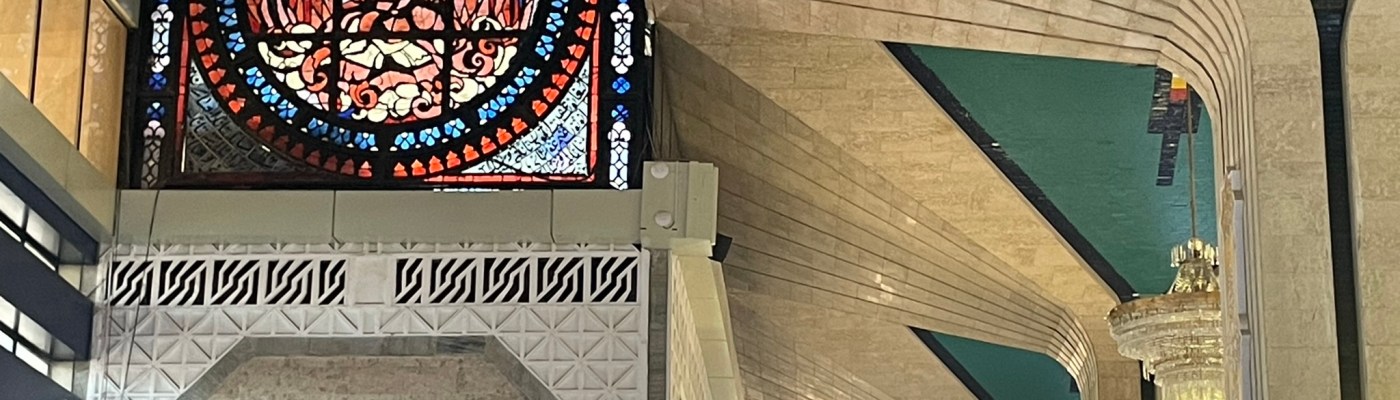
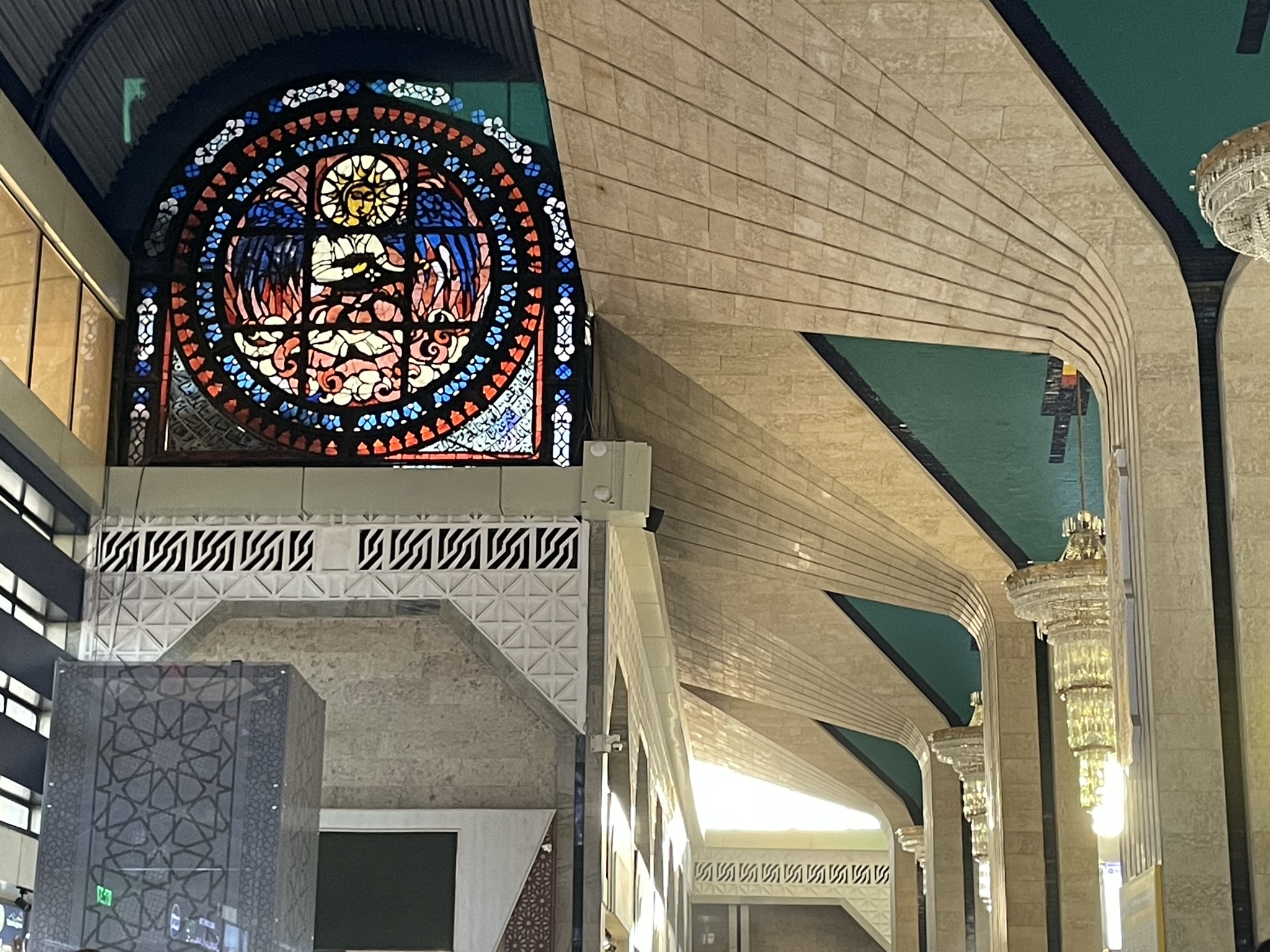
From Bukhara, it was a short few hours on the train before an evening arrival to Samarkand station, a Soviet-era concrete beauty with a high arched ceiling supported by fluted pillars stretching along the main hall, framed by stained glass at either end. Outside the sidewalks bustled in the darkness, bright lights spreading shadows from backlit people and cars. A streetcar pulled into the loop, giving me a moment’s pause before my driver arrived and spirited me to my hotel, set down a quiet mahalla alleyway a few minutes from the Registan, the city’s architectural centerpiece. Less impressive was the hotel itself, a front desk that seemed exclusively staffed by two teenagers in rumpled white button-down shirts. I had to cajole them for a bucket for my leaky ceiling, this after bringing down the broken lamp left uselessly on the bedside table, taking up space. Some late points were earned when they followed up with me days later in Tashkent, arranging to send on my forgotten shirts. A mixed bag for the hotel, but it was Samarkand I was here for. These were just the four walls for the nights.
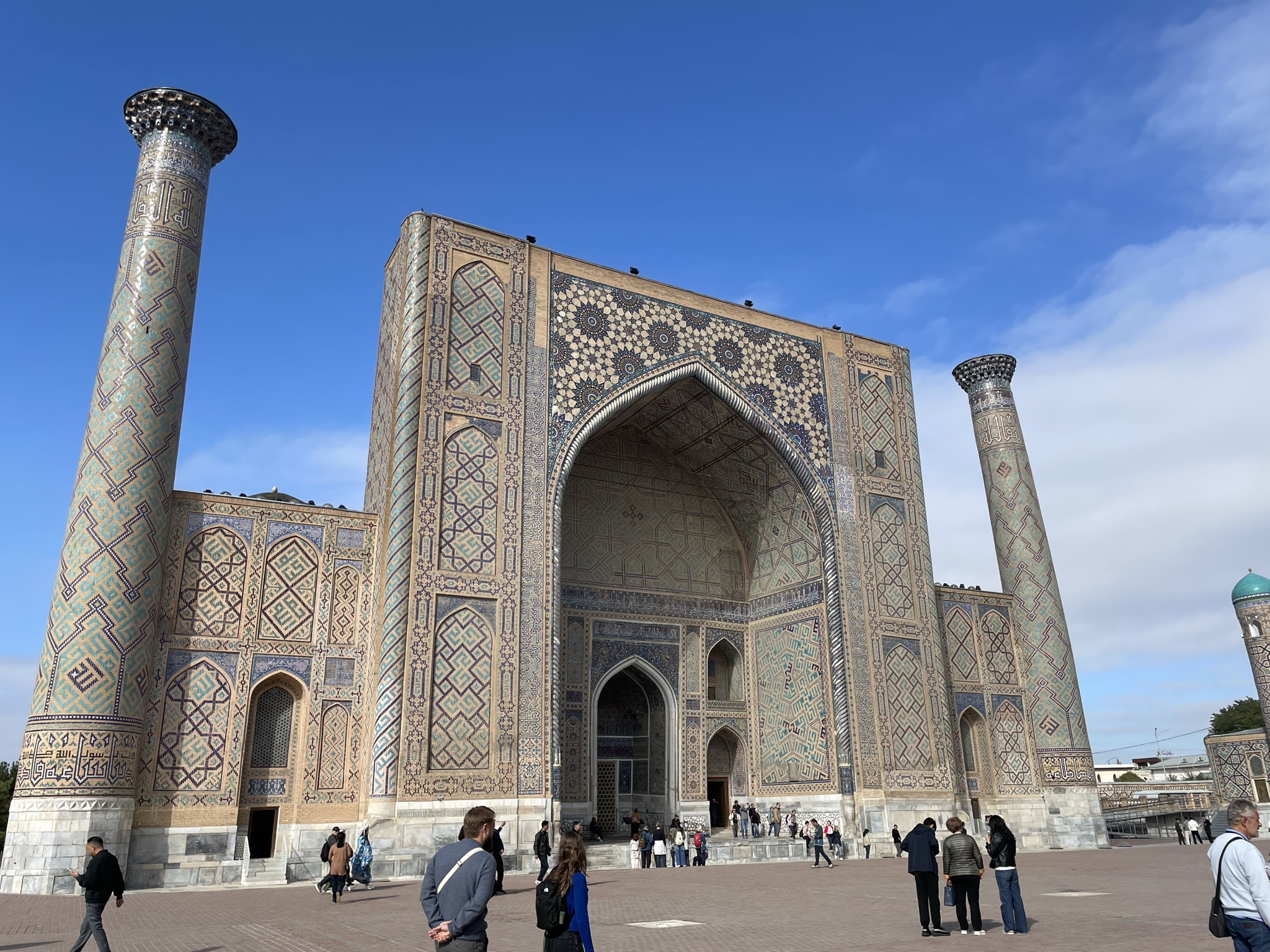
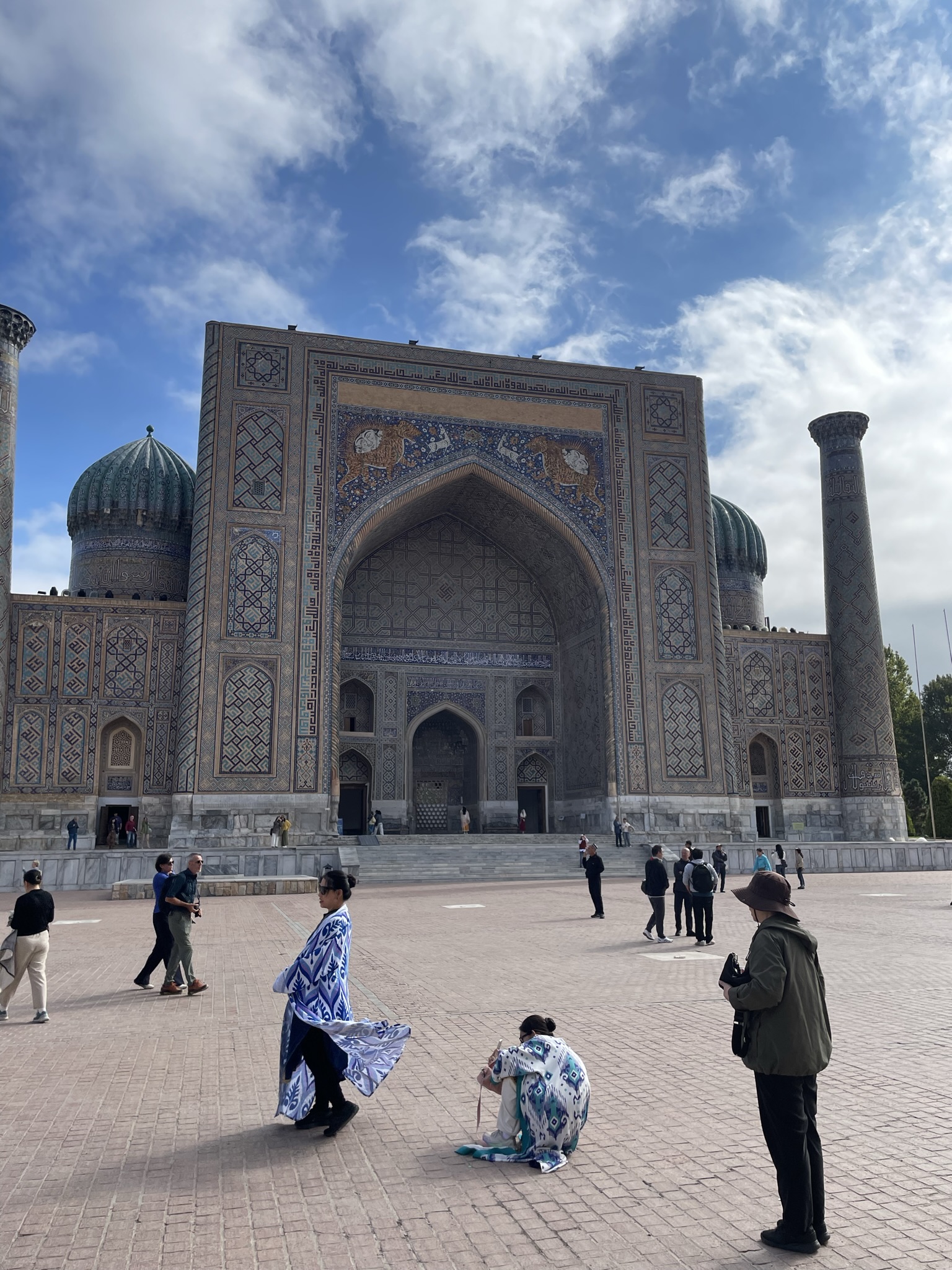
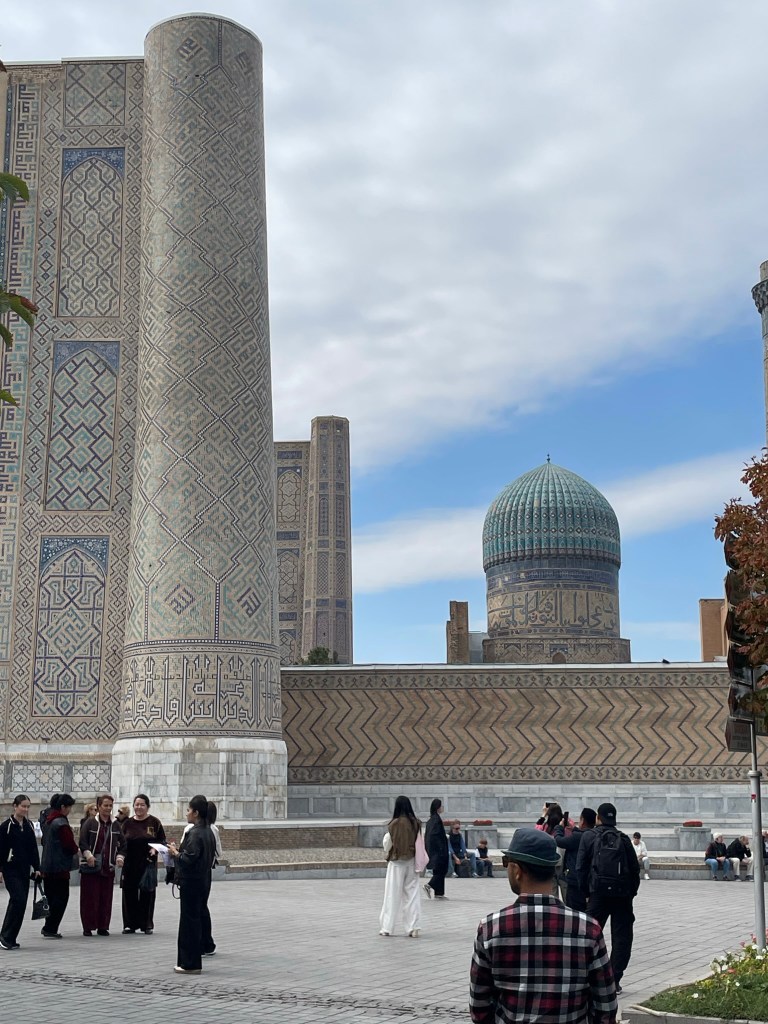
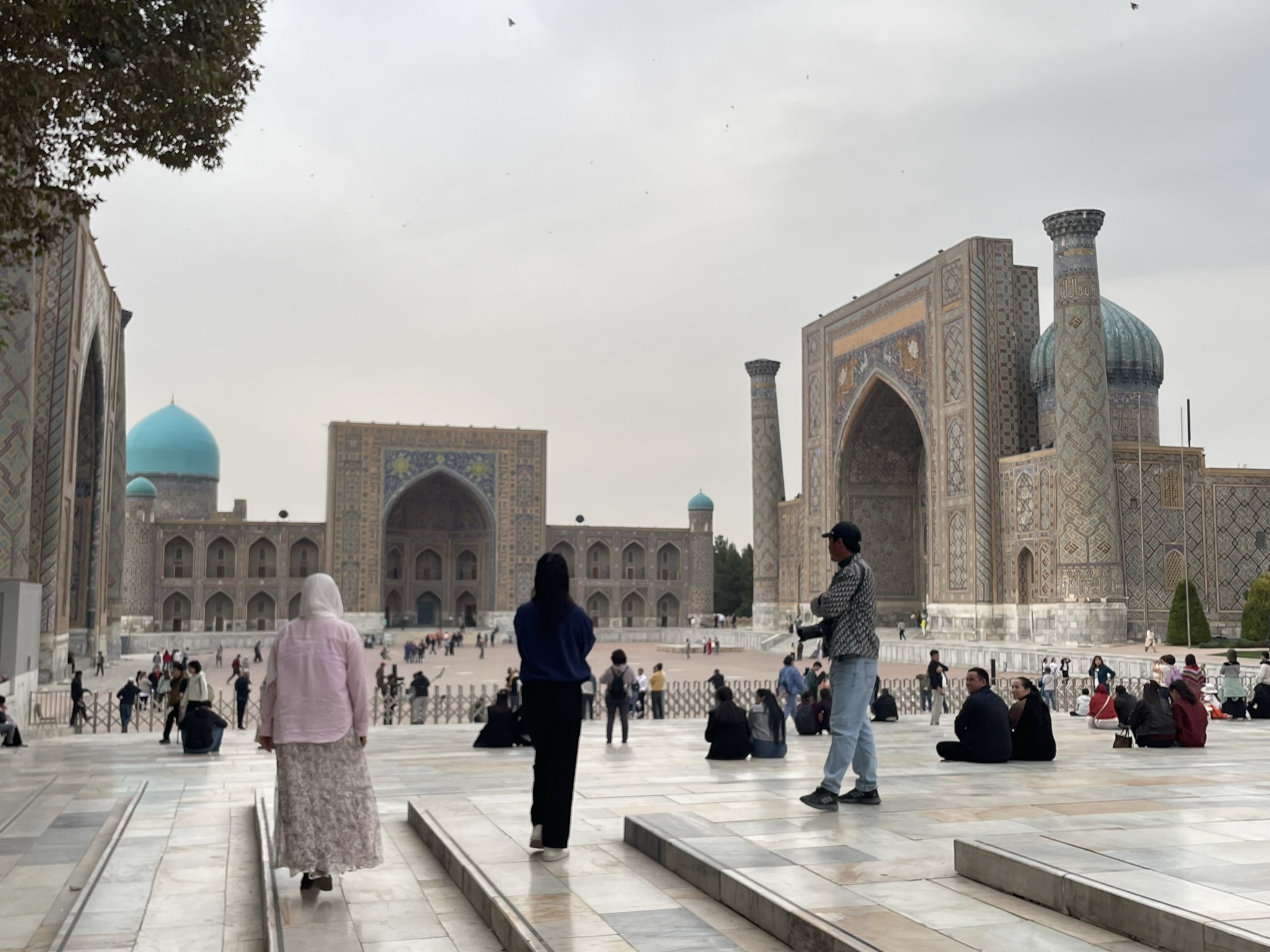
Immediately south, behind high walls, sat the Registan, a square framed on three sides by imposing madrasas, doubtless the largest I saw across the entire trip. While appearing as a singular whole, each madrasa dates from a different era, succeeding ones responsive to the original edifice from the 1400s during the reign of Ulugh Beg, a grandson of Uzbek national icon Amir Temur. Where the grandfather was renowned as a conqueror, Ulugh Beg was noted as an academic, one of the late entries in a long line of intellectuals in these desert oases. The buildings facing the Registan are unreasonably beautiful individually, even more so as an ensemble. I had steeled myself for a throng, but in the early morning hours it was quite enjoyable to wander madrasa to madrasa, cell to cell, and I particularly appreciated the century-by-century recreation of the student cells. It was only around noon that the number of visitors grew unpleasant, the constant waiting and dodging of poor photo takers and the insidious influencers twirling for repeated takes wrapped in trailing scarves and narcissism. I’d had my fill, clearly, and removed myself accordingly.
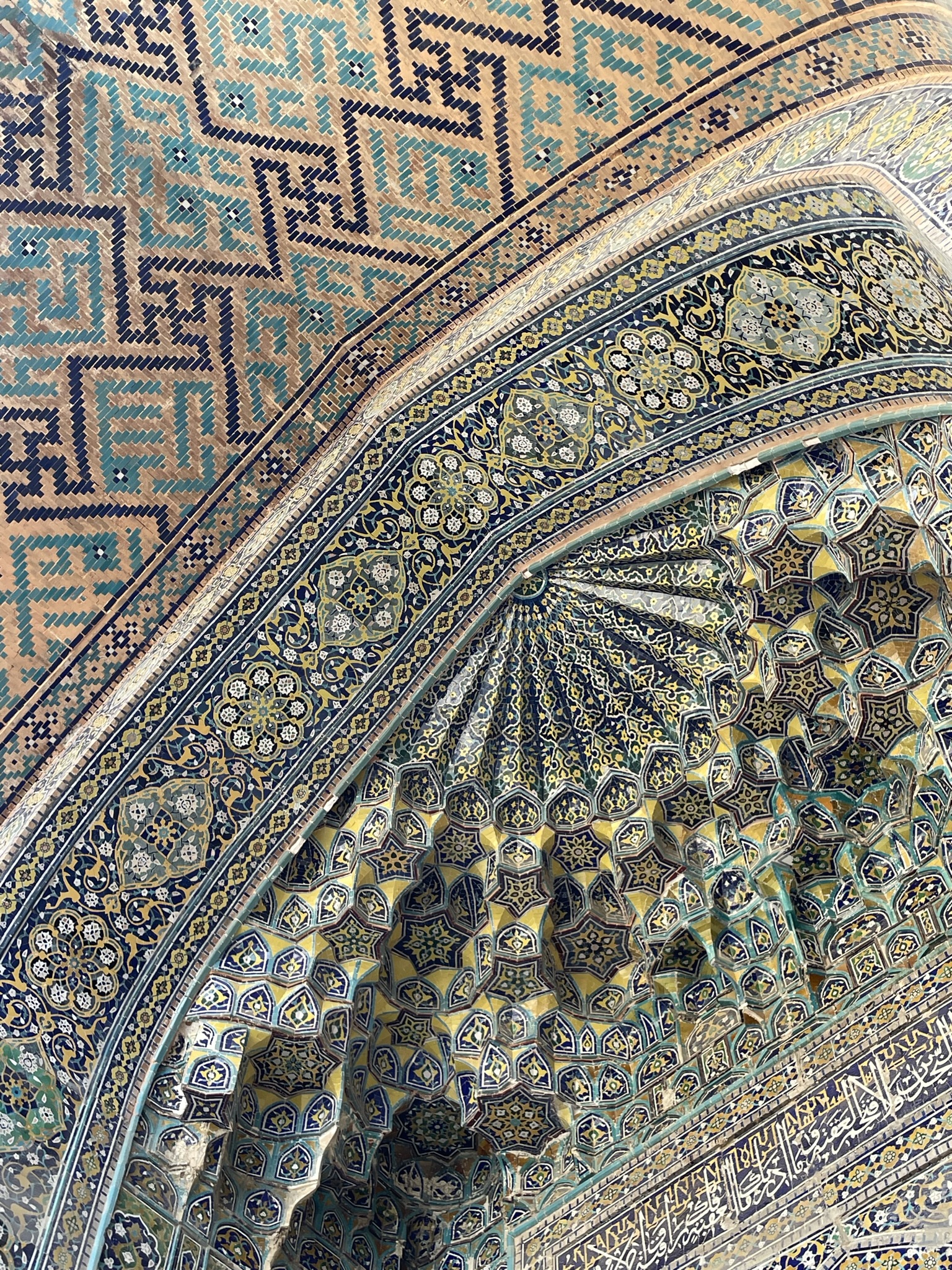
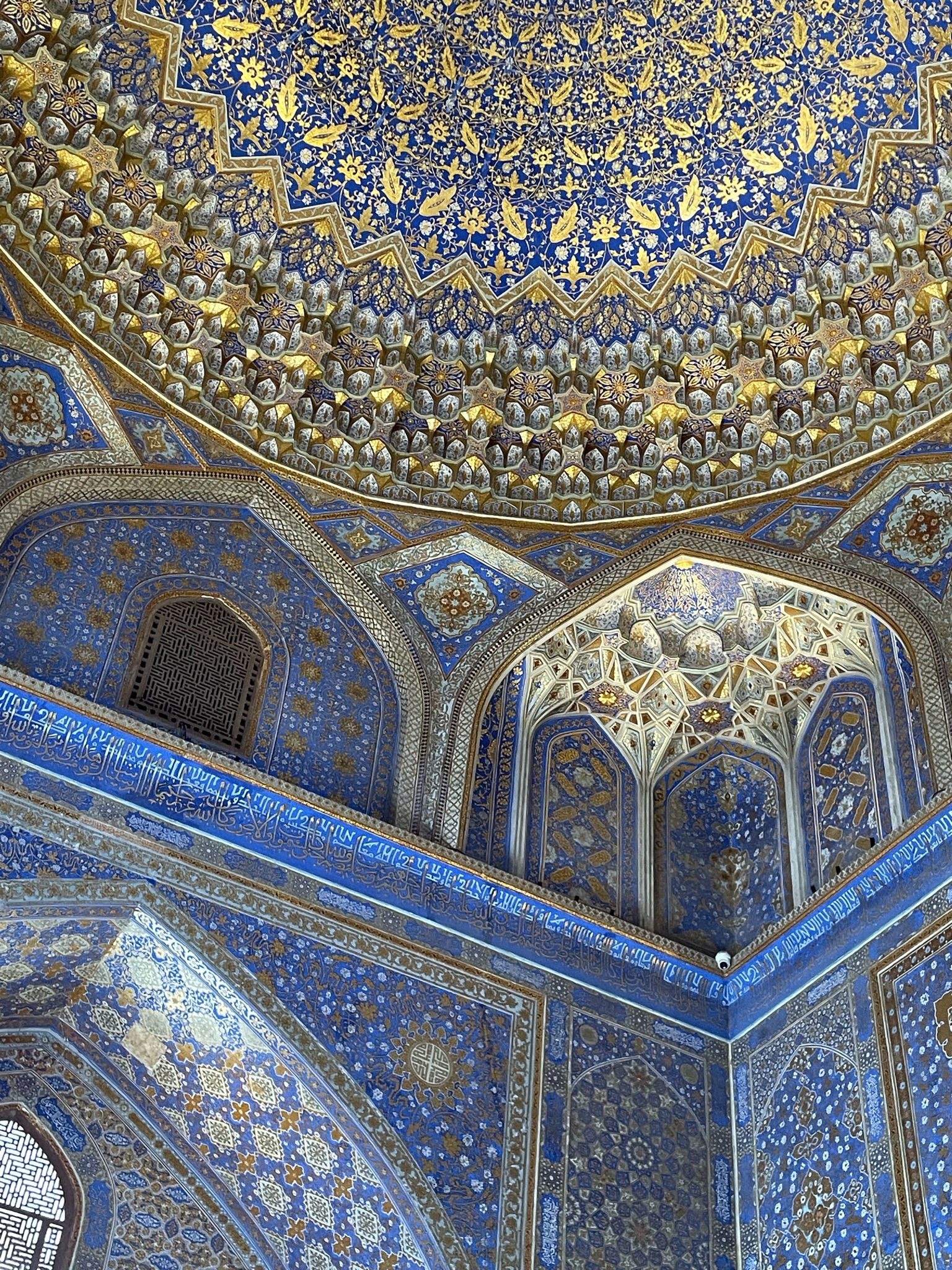
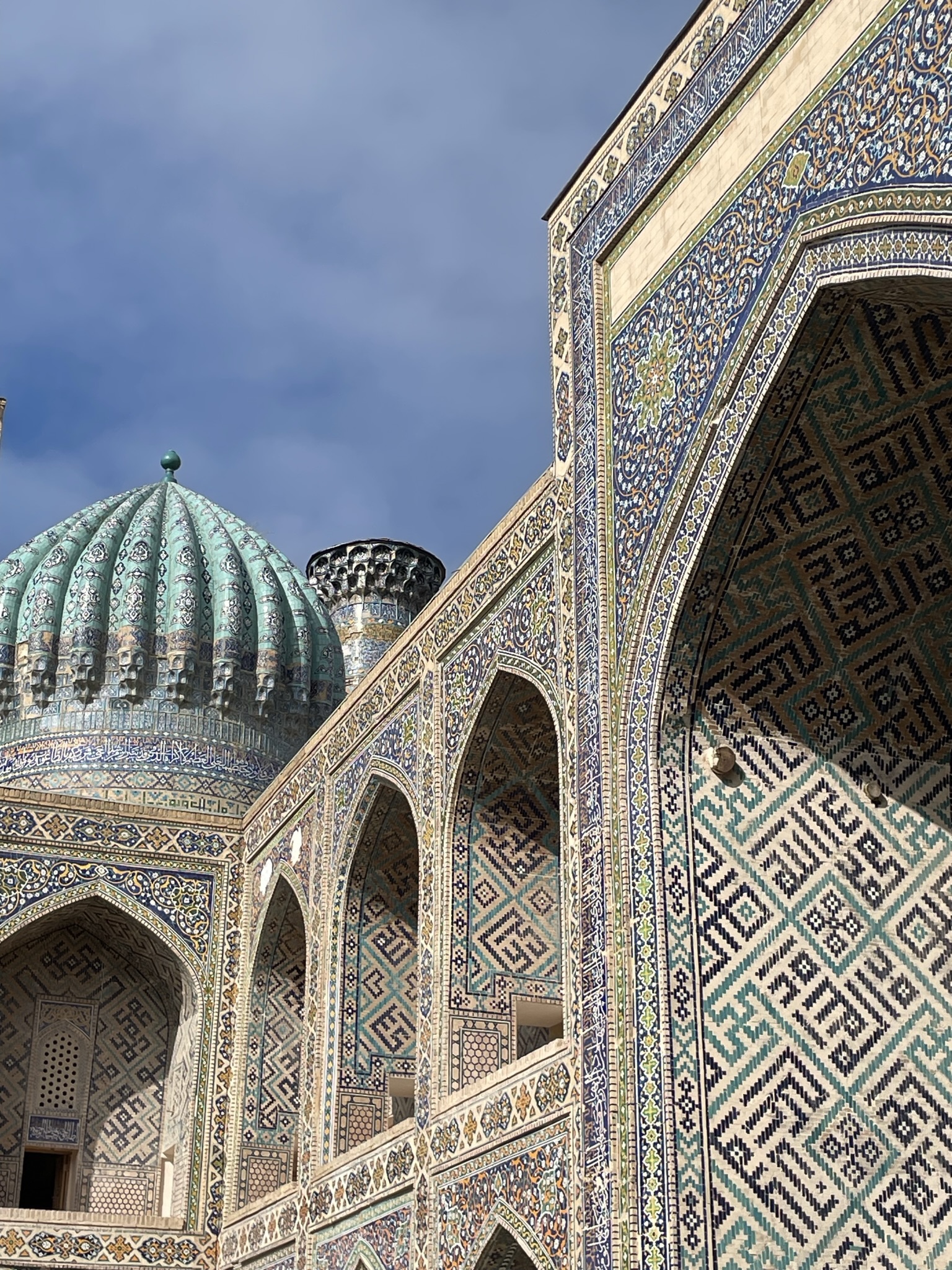
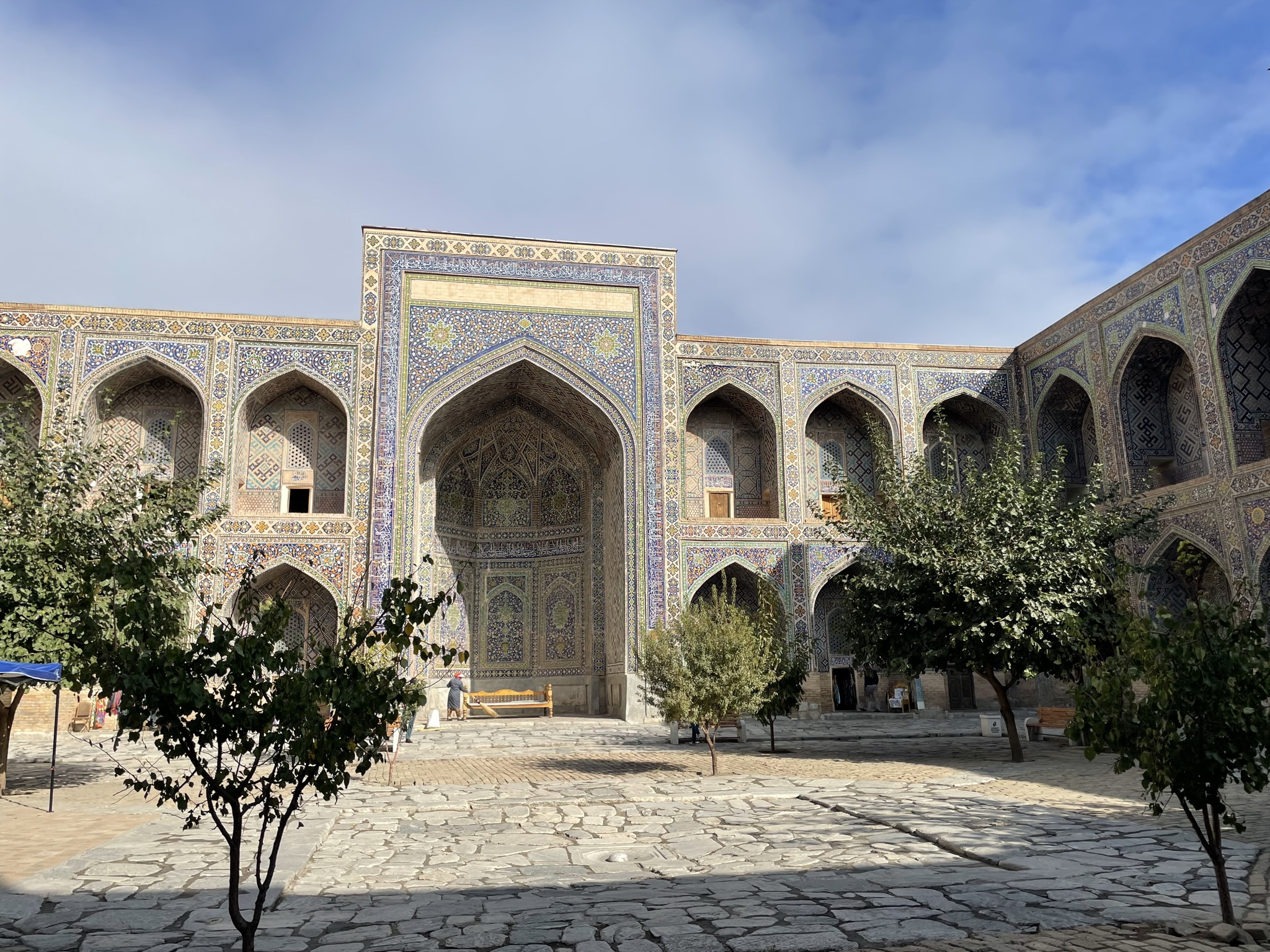
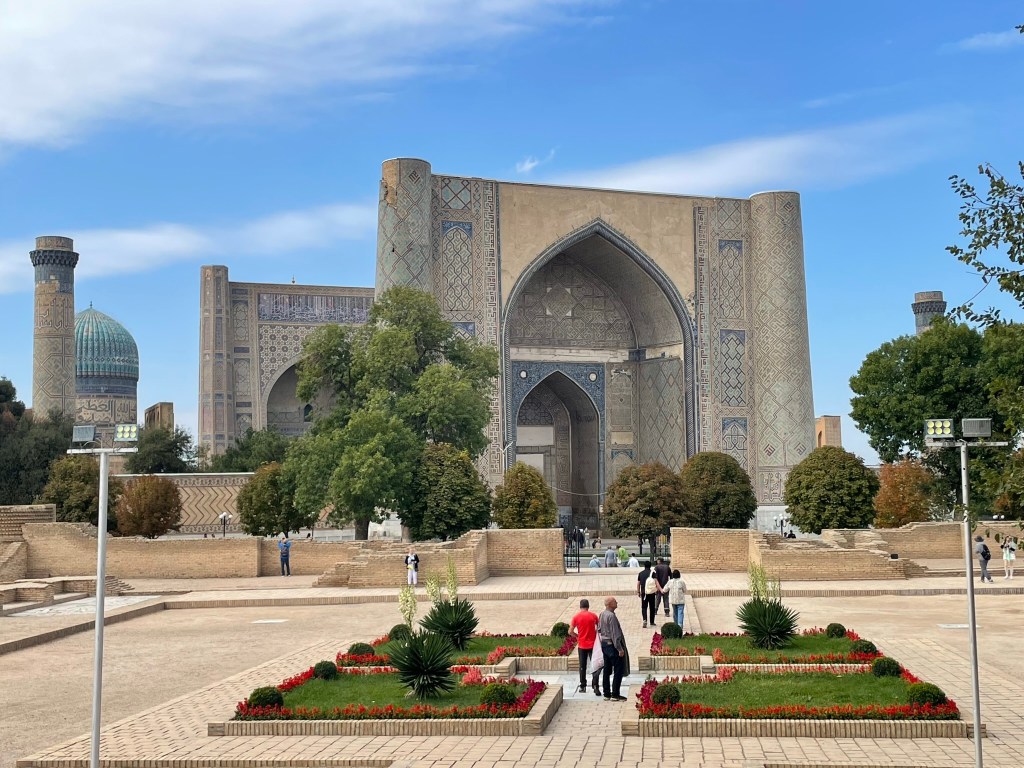
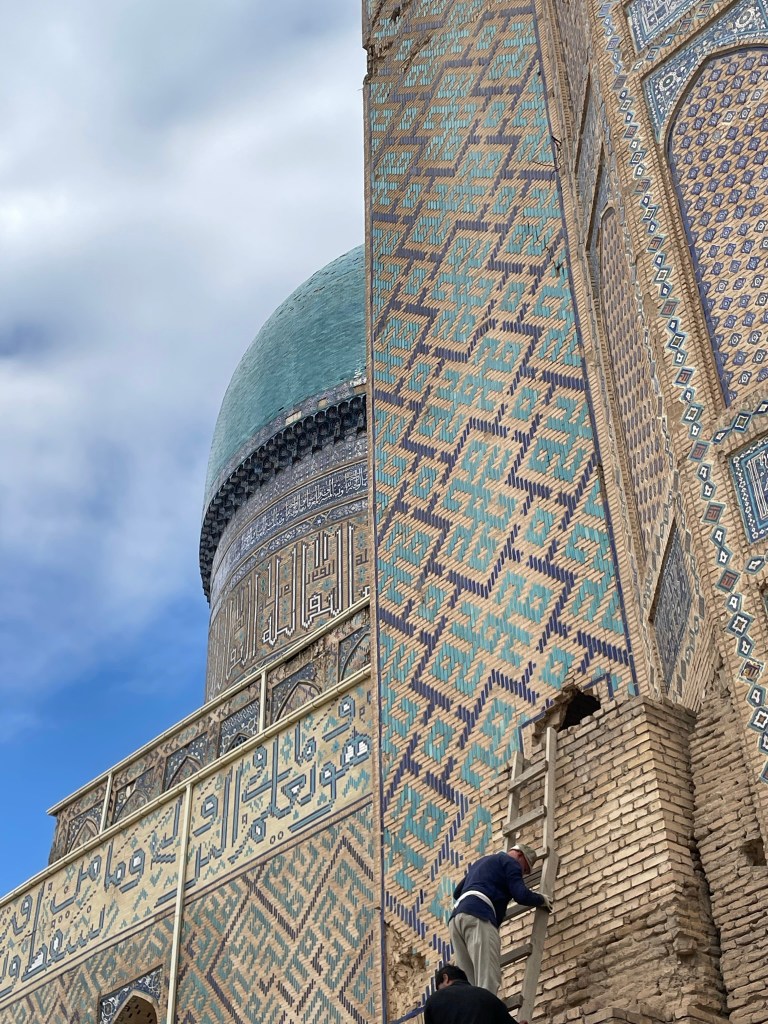
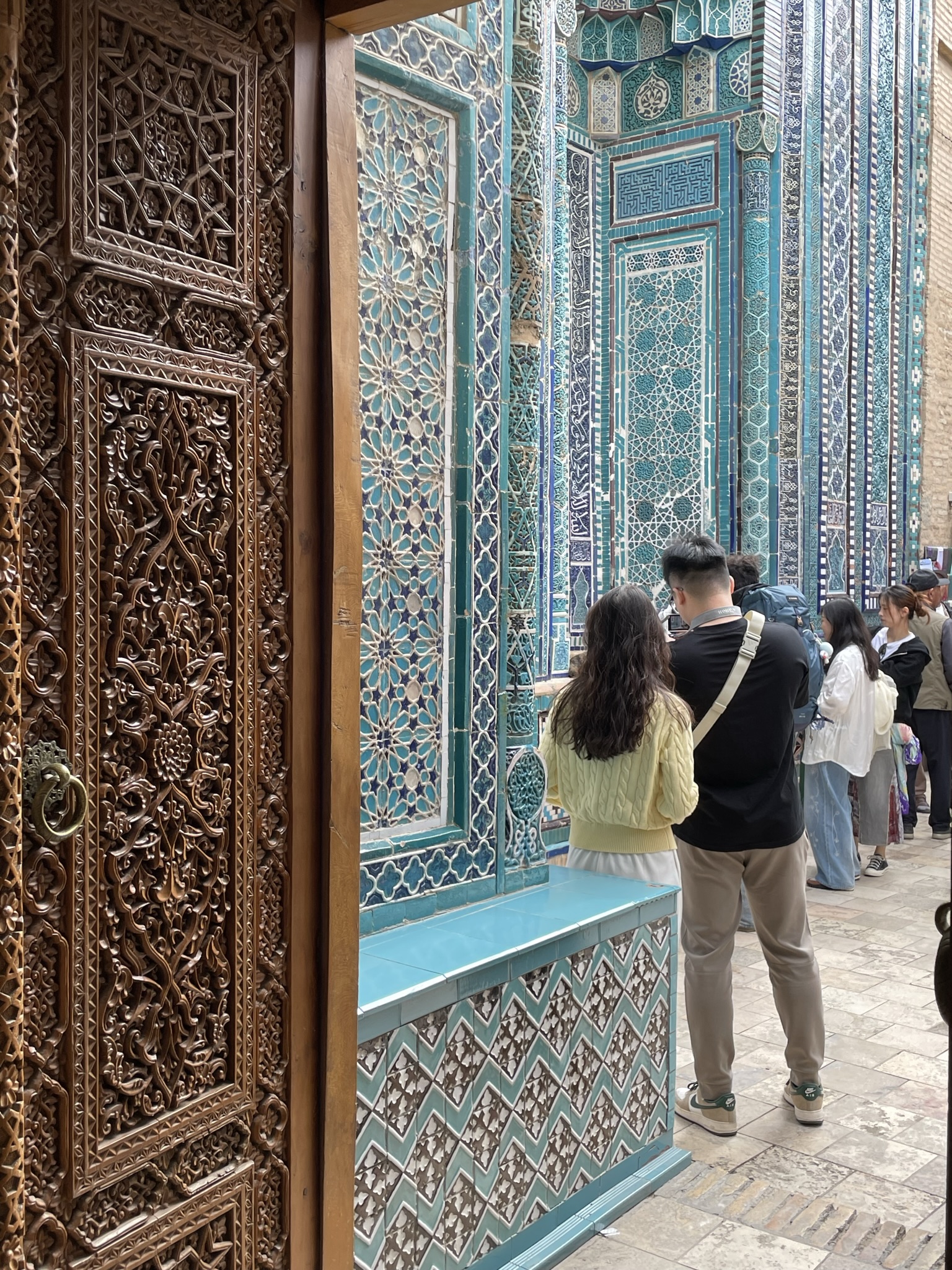
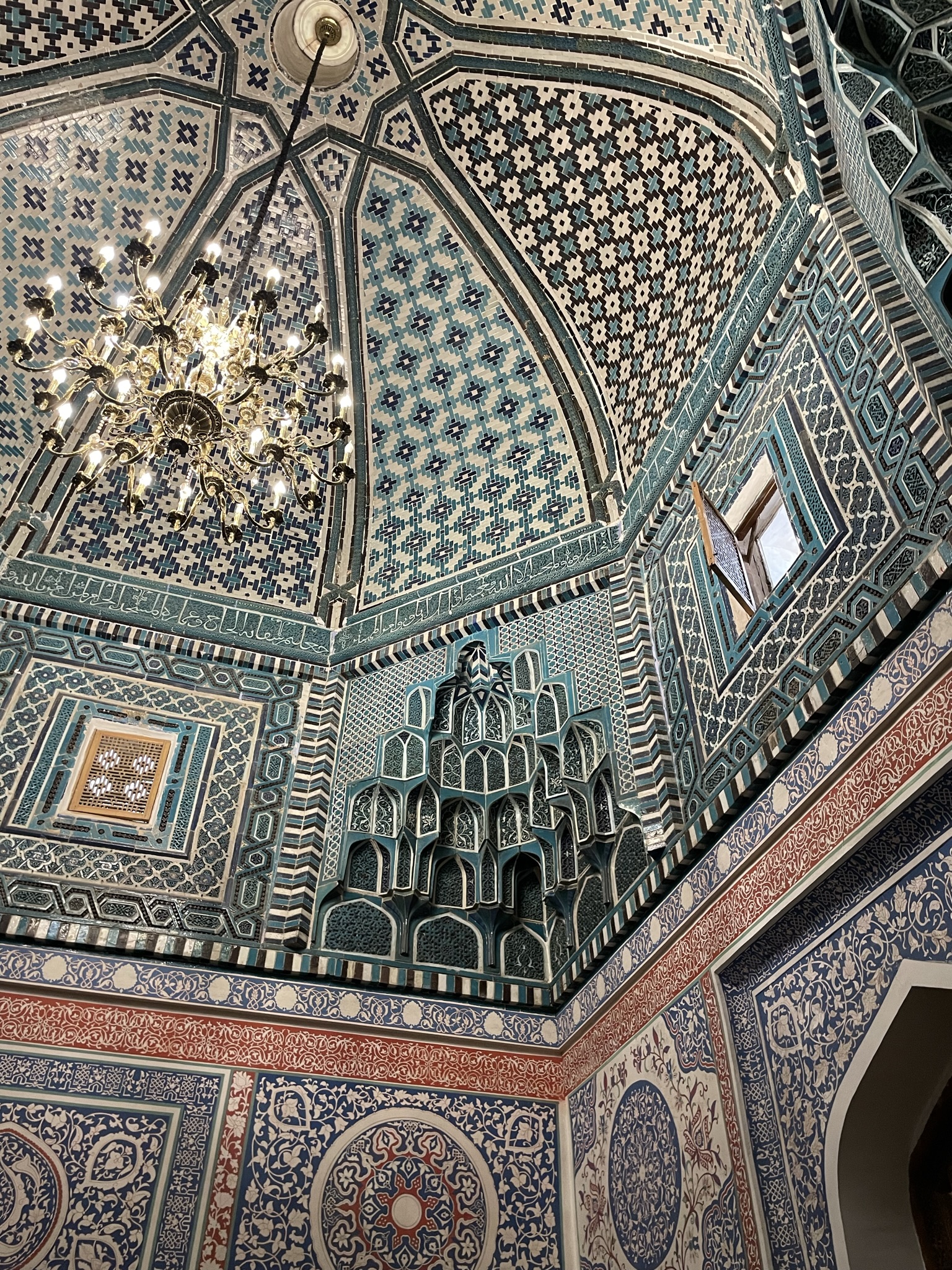
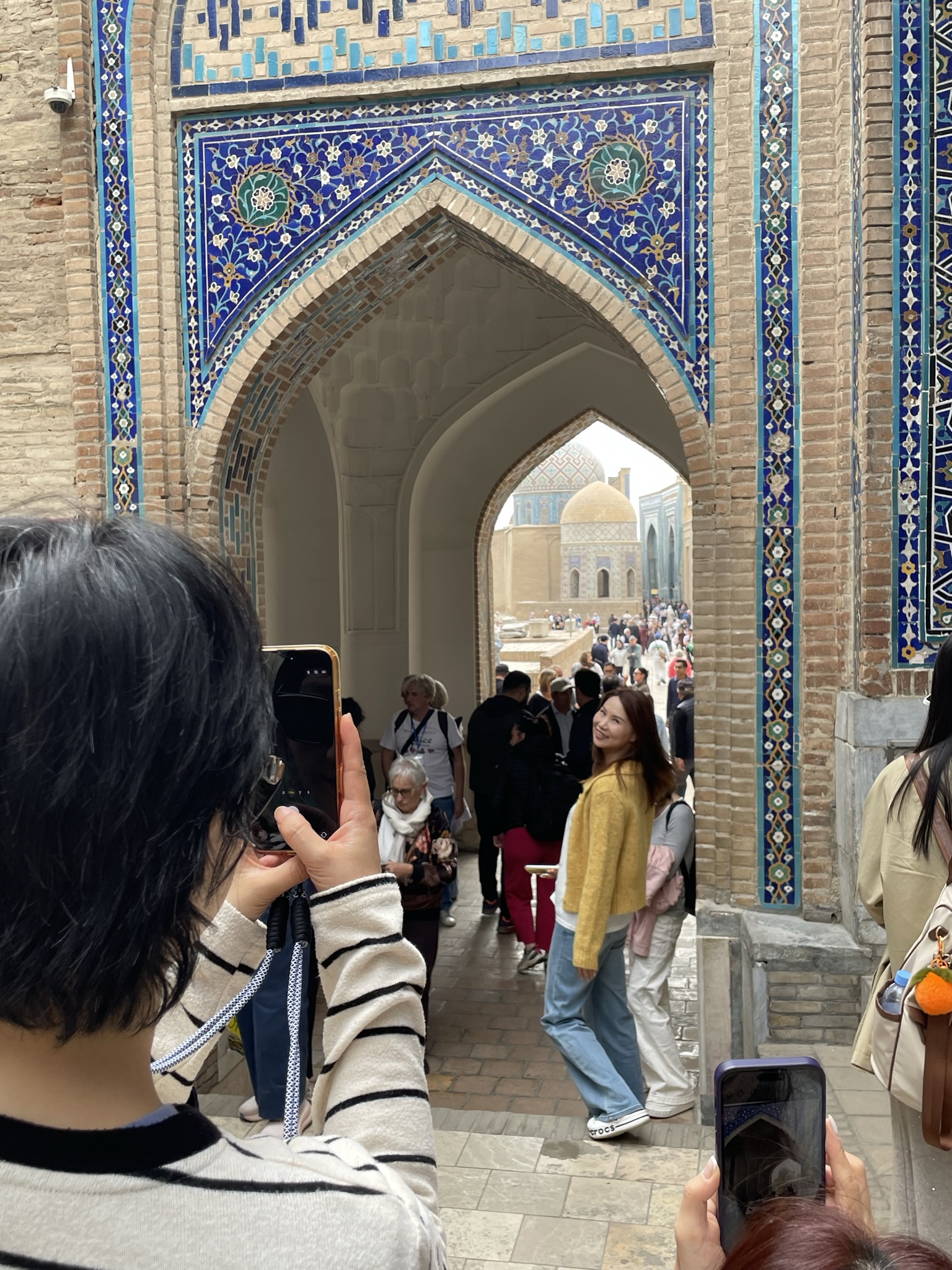
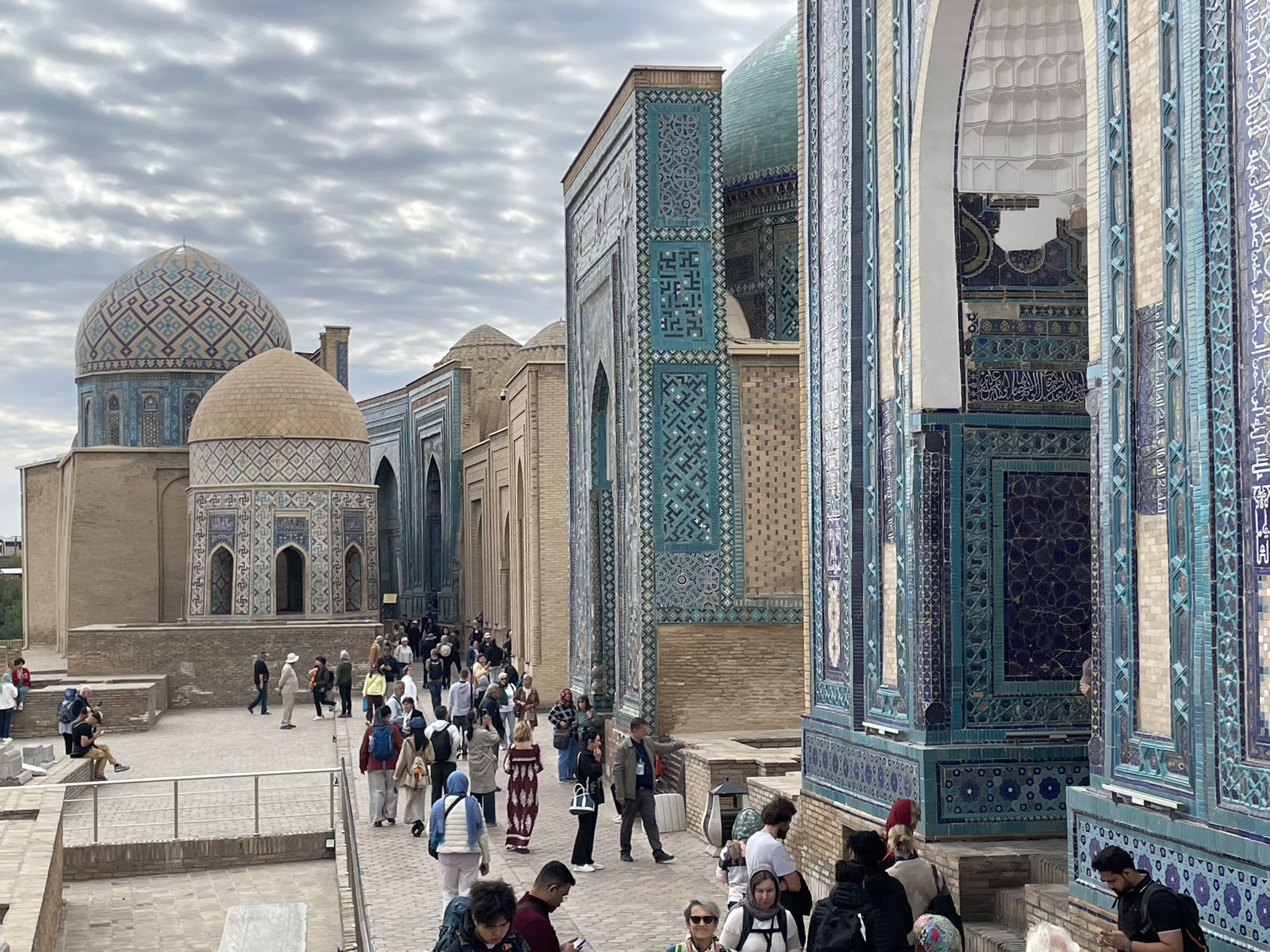
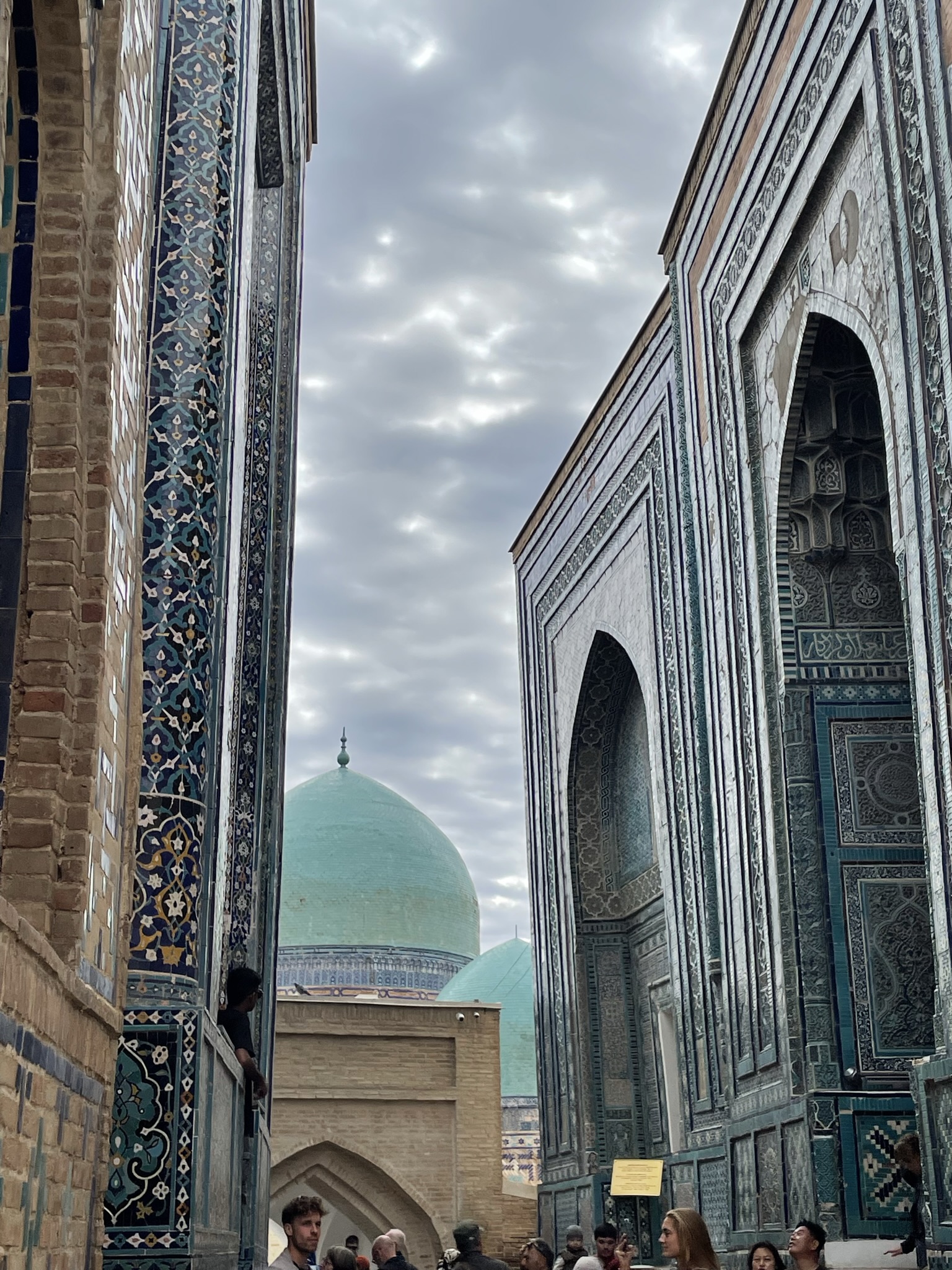
To the northeast of the Registan is a treed pathway lined with shops and restaurants, all of a newer vintage, leading ultimately to a scattering of mausoleums. This street was laid out with a ruthless geometry, feeling like a healed scar over the city’s surroundings, the sprawling web of mahalla alleyways now hidden behind stone walls, apparently unfit for tourist eyes. It makes for a curated, suspiciously clean experience that leads to the Bibi Khanym mosque and mausoleum, the former under active restoration. Farther along lies the Shah-i-Zinda, a mausoleum complex with nearly two dozen buildings collected over the past thousand years. The inciting event was the burial of the Prophet Muhammed’s cousin here, and today the site ascends a hillside in a narrow alley, crowded on either side by delicately rendered, ornate mausolea. It is a stunning place, again undeniably beautiful, and again bustling, all the more so for the more intimate, smaller spaces when compared to the sweeping open stretches of the Registan.
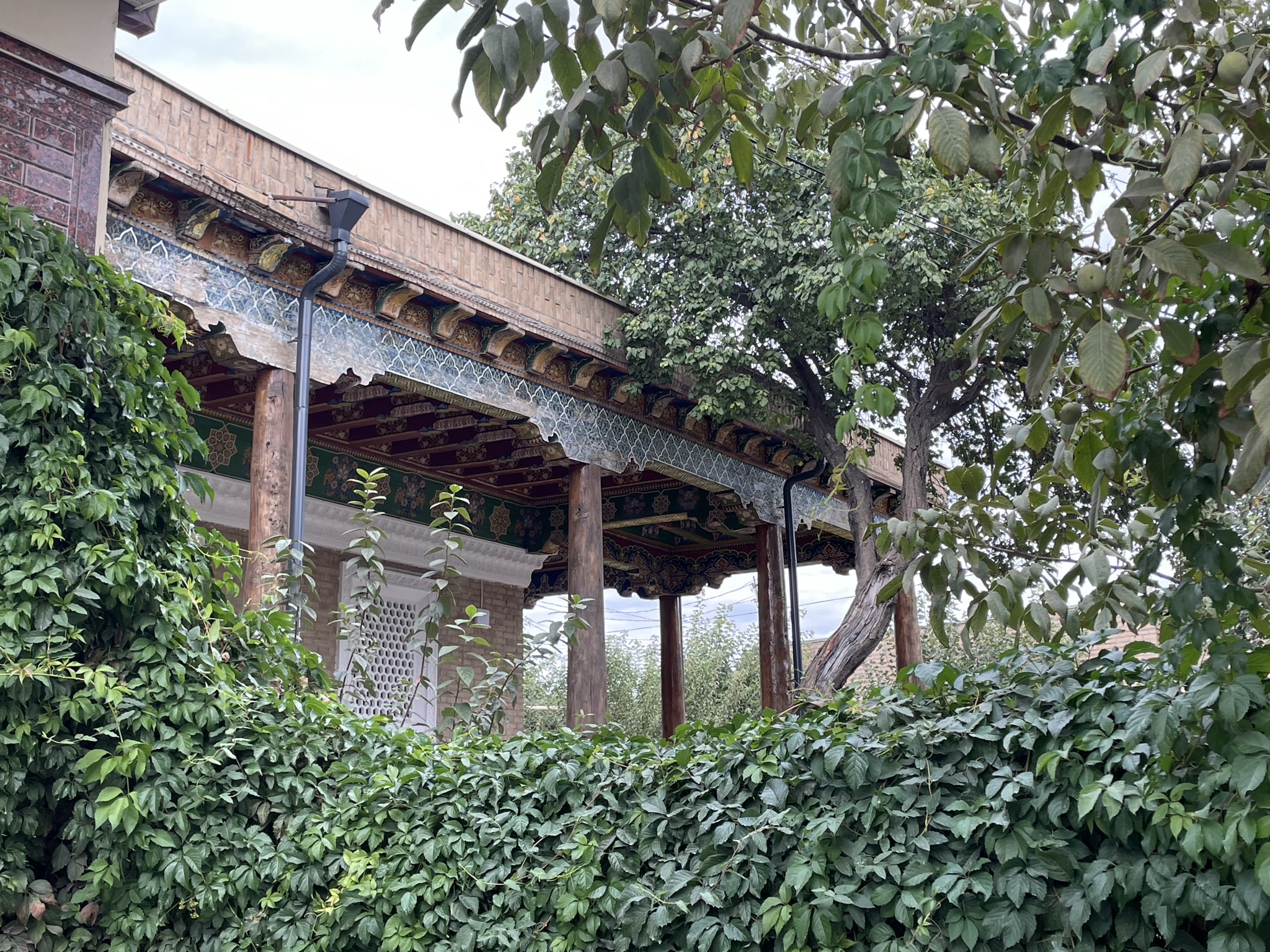
On the walk back to the hotel I took the side streets, a good choice and one that I repeated wherever possible in Samarkand. The mahallas are quiet, with narrow concrete-paved streets indented with a shallow central channel for runoff after the rains. Residential compounds, walled enclosures often housing extended families, pushed up to the street edge, some tantalizingly open, and I stole glimpses into domestic life where I could. Small guesthouses and shops were peppered throughout, children running back and forth in play or, for the responsible ones, on errands. Mosques in the area are an open configuration, often a low walled courtyard offering a flash of green trees and flowers presided over by an ayvan, the raised seating area where shoes are left behind. Minarets are low or non-existent, the whole feeling one of homeliness. It is easy to imagine neighbours knowing one another in these places.
The aforementioned Ulugh Beg, when not presiding over Samarkand, was also a renowned astronomer, with a telescope assembly set up on the distant edges of the city that has long since been swallowed by the growing suburbs. Today there is a small museum that was overwhelmed by roving tour groups and a hagiographic tribute to the reigning government at the end. More helpful was the model of the 15th century observatory. The main ruin left today is the deep, arcing cut on the hilltop where a massive sextant was set, but it is fair to say it takes some imagination. Down the road, I scurried across a highway during a break in traffic, less confident than the shepherd with his goats, who casually sauntered down the middle, aloof, while the cars worked around them.
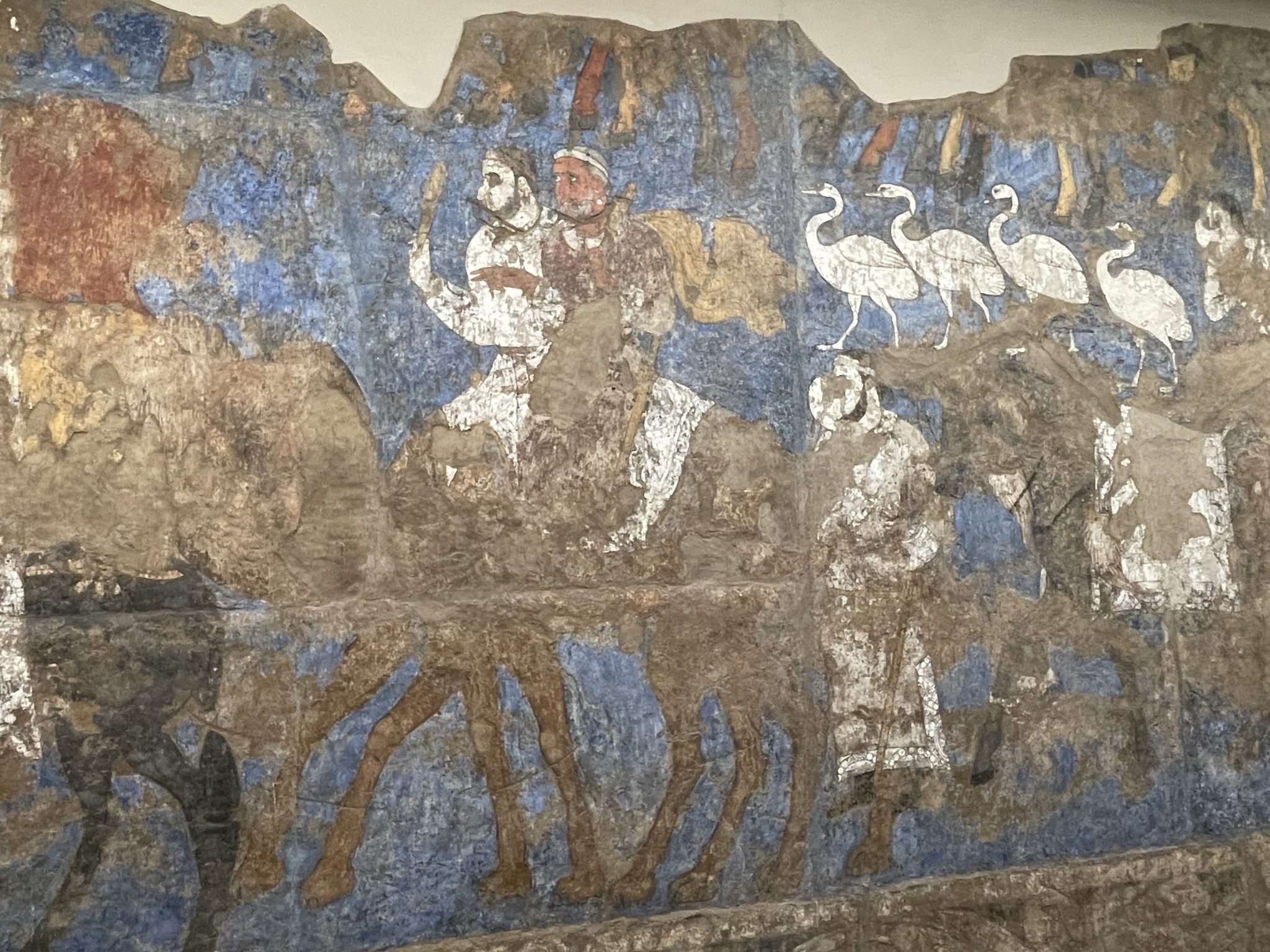
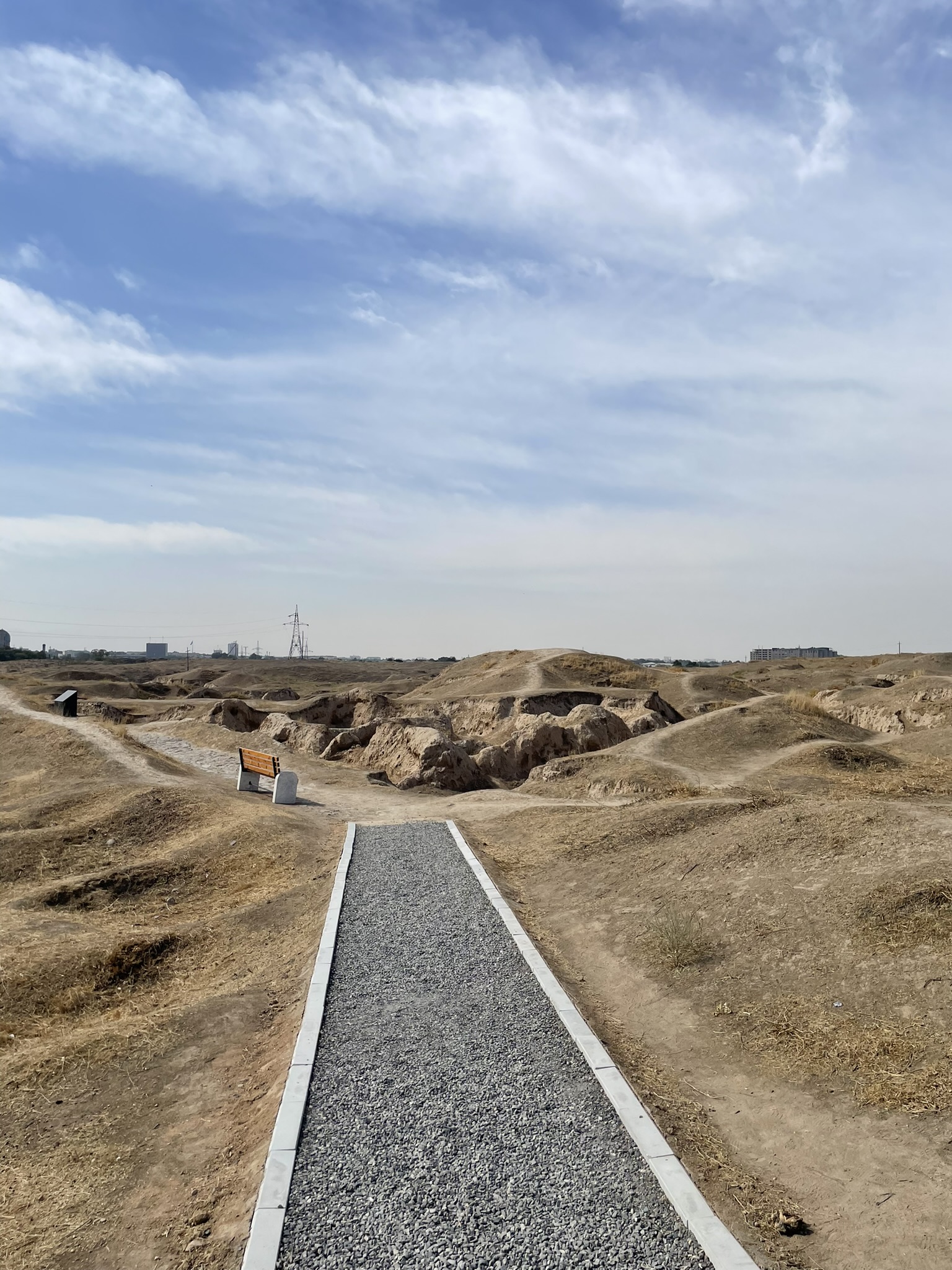
I was on my way to the Afrosiab ruins when a pair of Russian aunts stopped me asking for directions. While my language skills are shaky, I am an excellent reader of maps, and I was pleased to be helpful – later in Tashkent I was stopped again for directions in Russian, so to my surprised satisfaction landed two-for-two on the trip there. Afrosiab are the ruins of an older iteration of Samarkand, today a wide barren stretch of old stones on a raised plateau. This pre-Islamic city persisted for 1500 years before the arrival of the Mongols – here again Genghis Khan enters the record – leveled it. The sensible response was to rebuild to the south, the site of the Registan and present city. The standout among the many recovered artifacts are the 7th century murals that encircled the throne room. Thanks to a helpful video and display, a visitor can get a sense of Afrosiab as a locus of trade: exotic animals from afar, trade goods like silk and jewels, foodstuffs, and arriving embassies from as far as India, Persia, Korea, China and Tibet. It was a remarkable, vivid remnant of this civilization, an unexpected highlight for me.
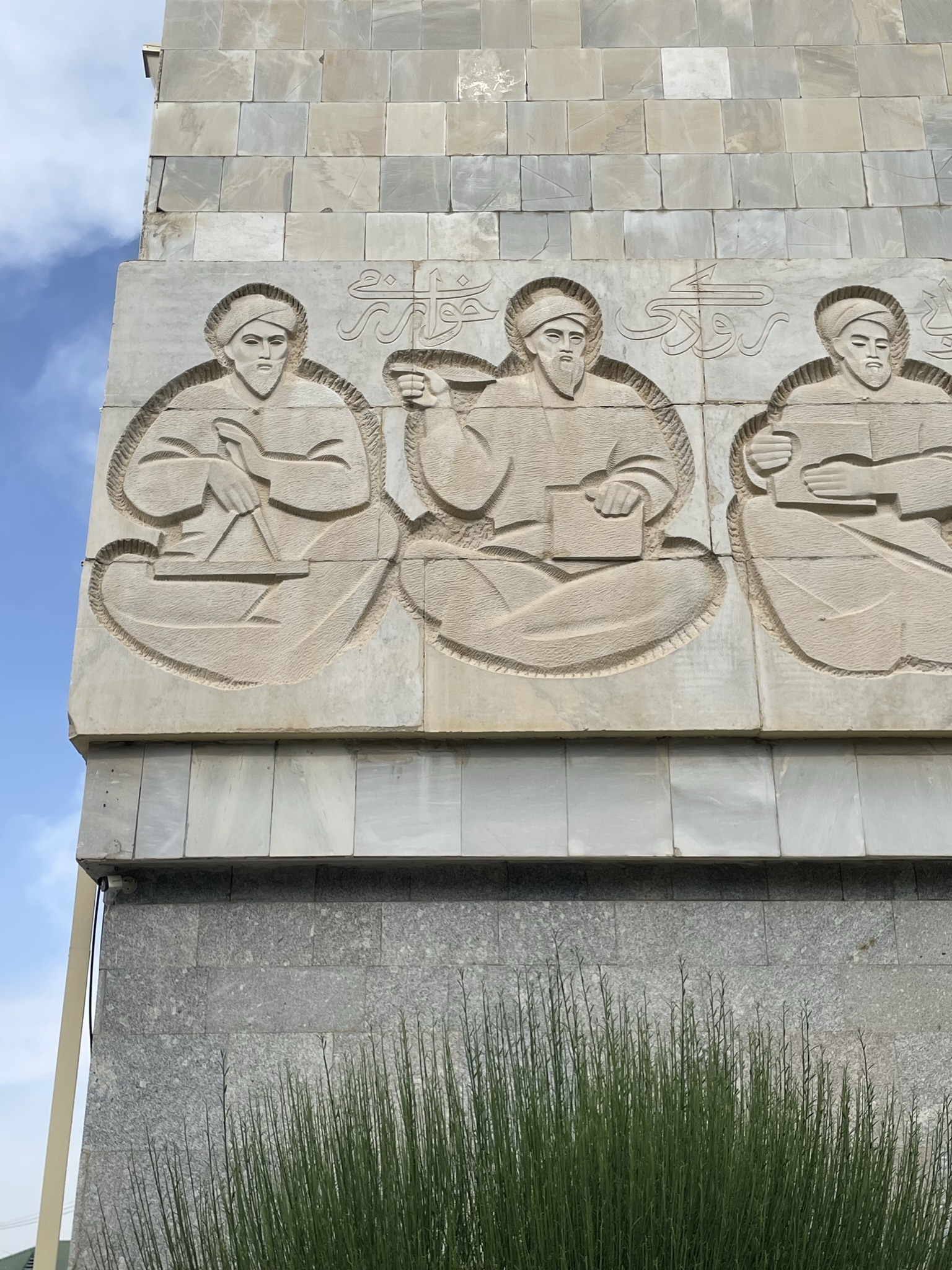
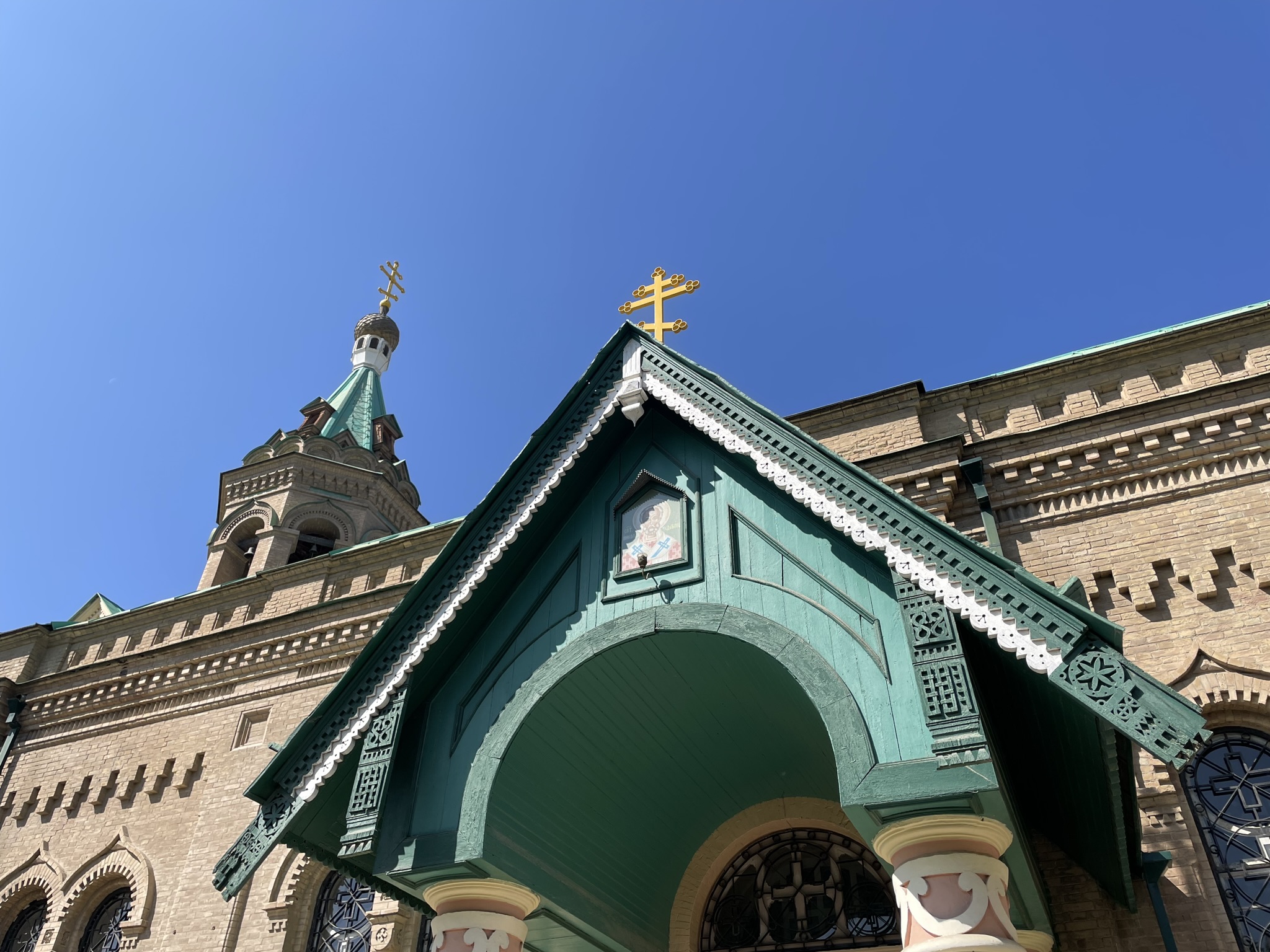
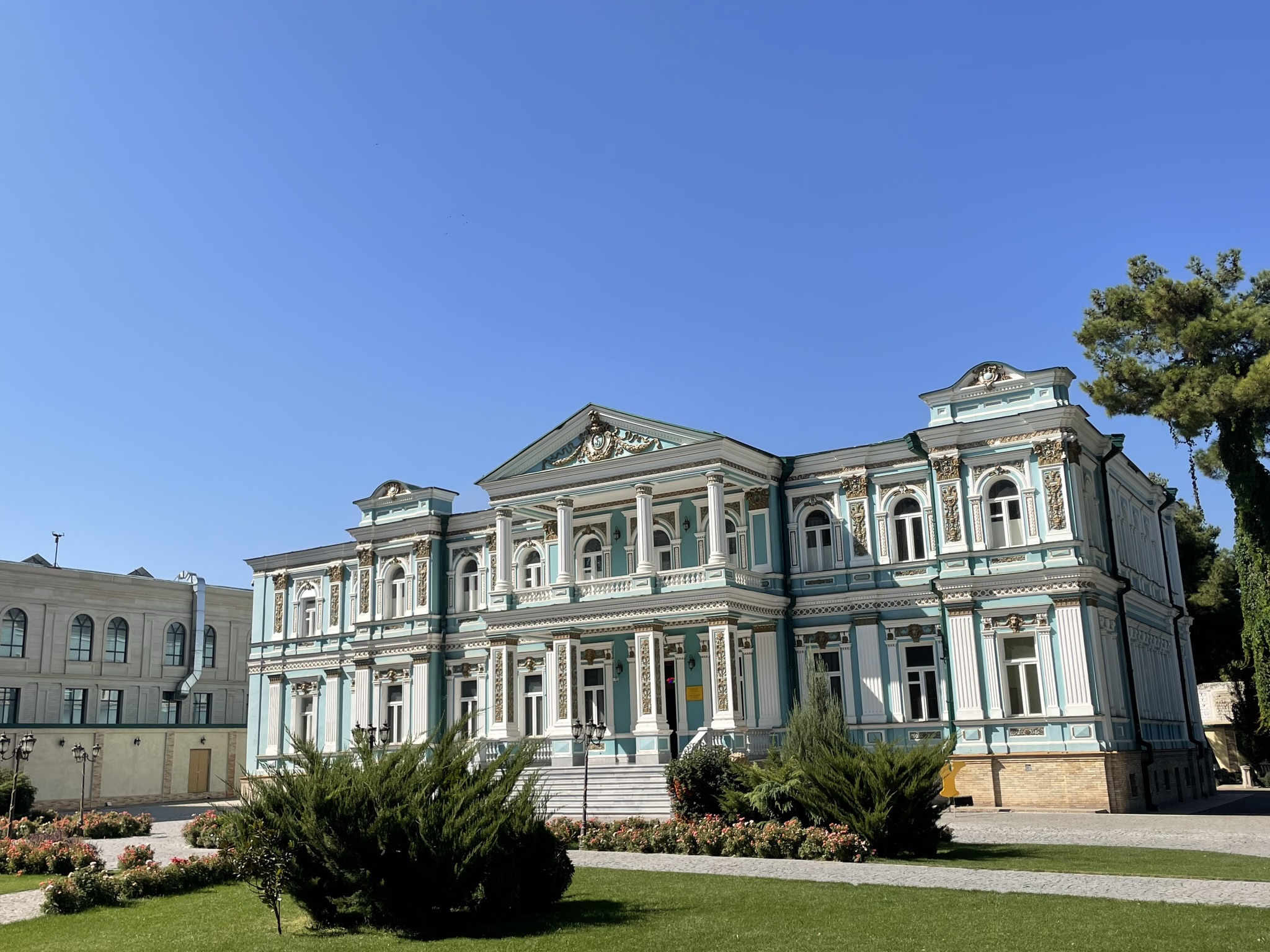
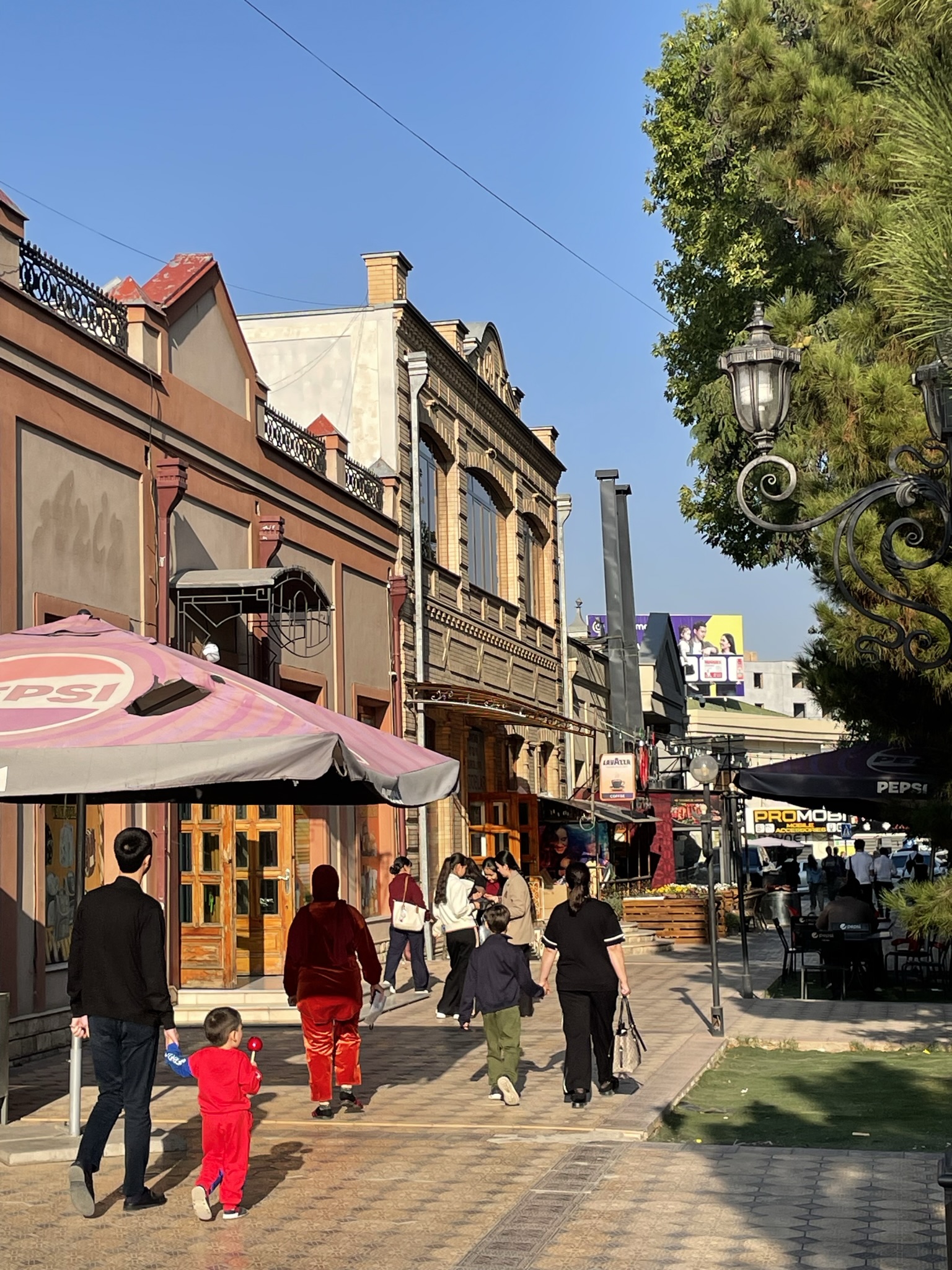
A nice thing as a visitor to Samarkand is that there is a lot of interest beyond the older Islamic buildings. To the immediate west of the Registan area is the contemporary city centre, a fan of broad streets and mature parks. The sidewalks are busy here, supported by the many university students wandering around and the many bookstores are filled with self-help and skill-building books, practical applications to feed youthful dreams of a better life. There are a surprising number of Tsarist-era buildings peppered around, heavy buildings under creamy pastels and detailed crenellations. A curious standout was the restored Russian-Chinese Bank from the early 1900s, its entrance now framed by a pair of guardian lions leading to the Museum of Friendship Between Uzbekistan and China, lazily symbolic of the shift in regional hegemony to the east.
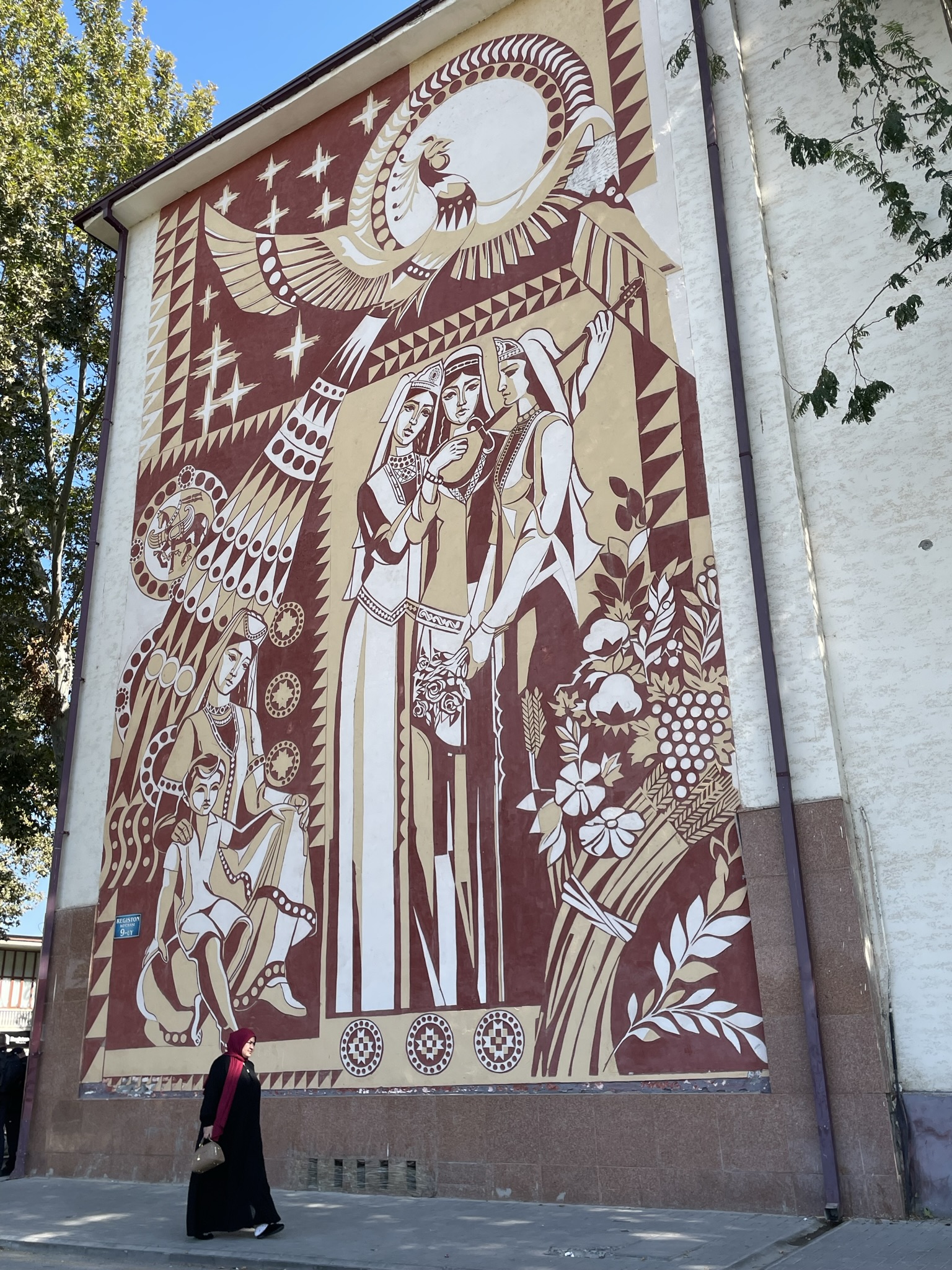
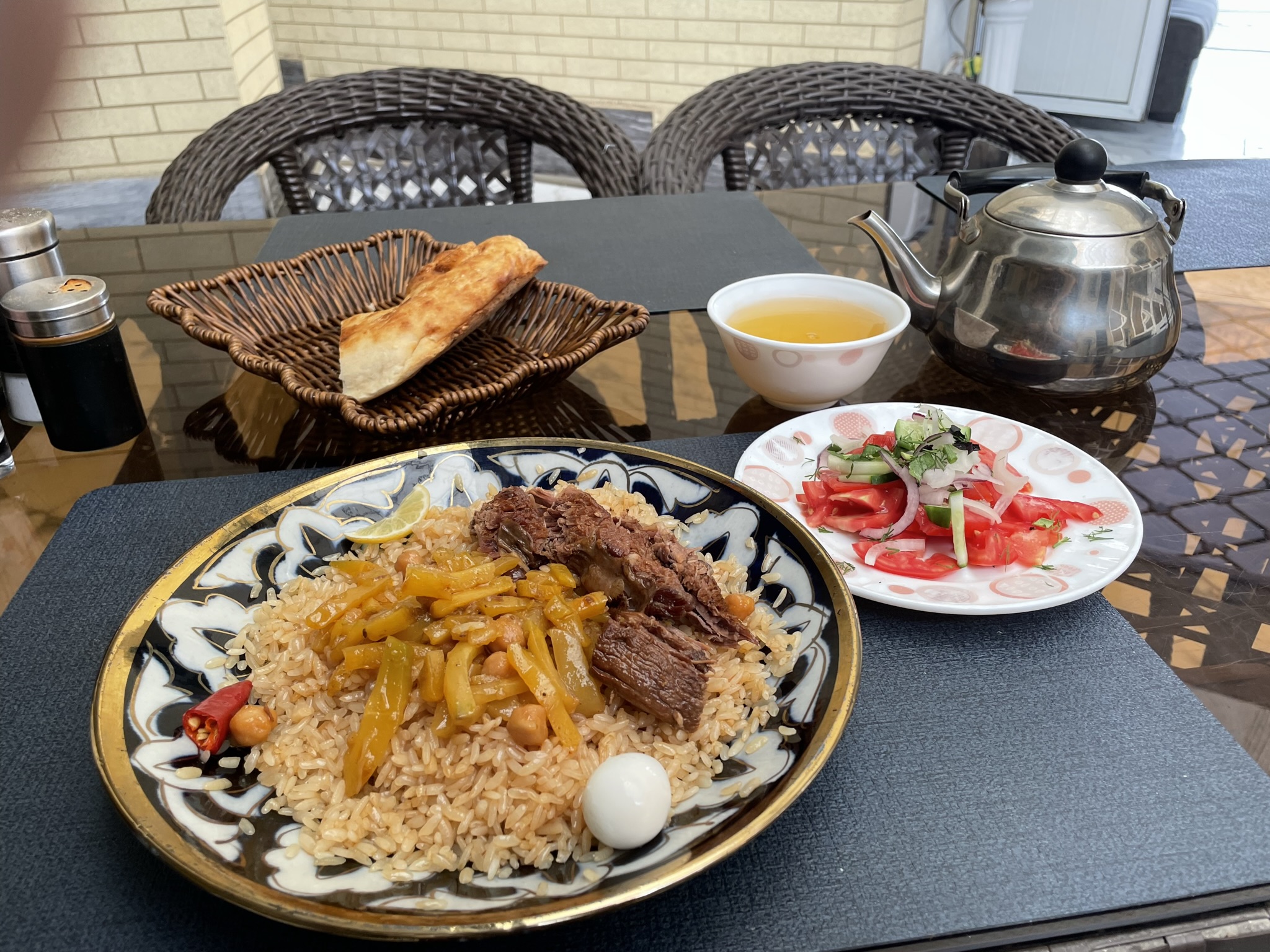
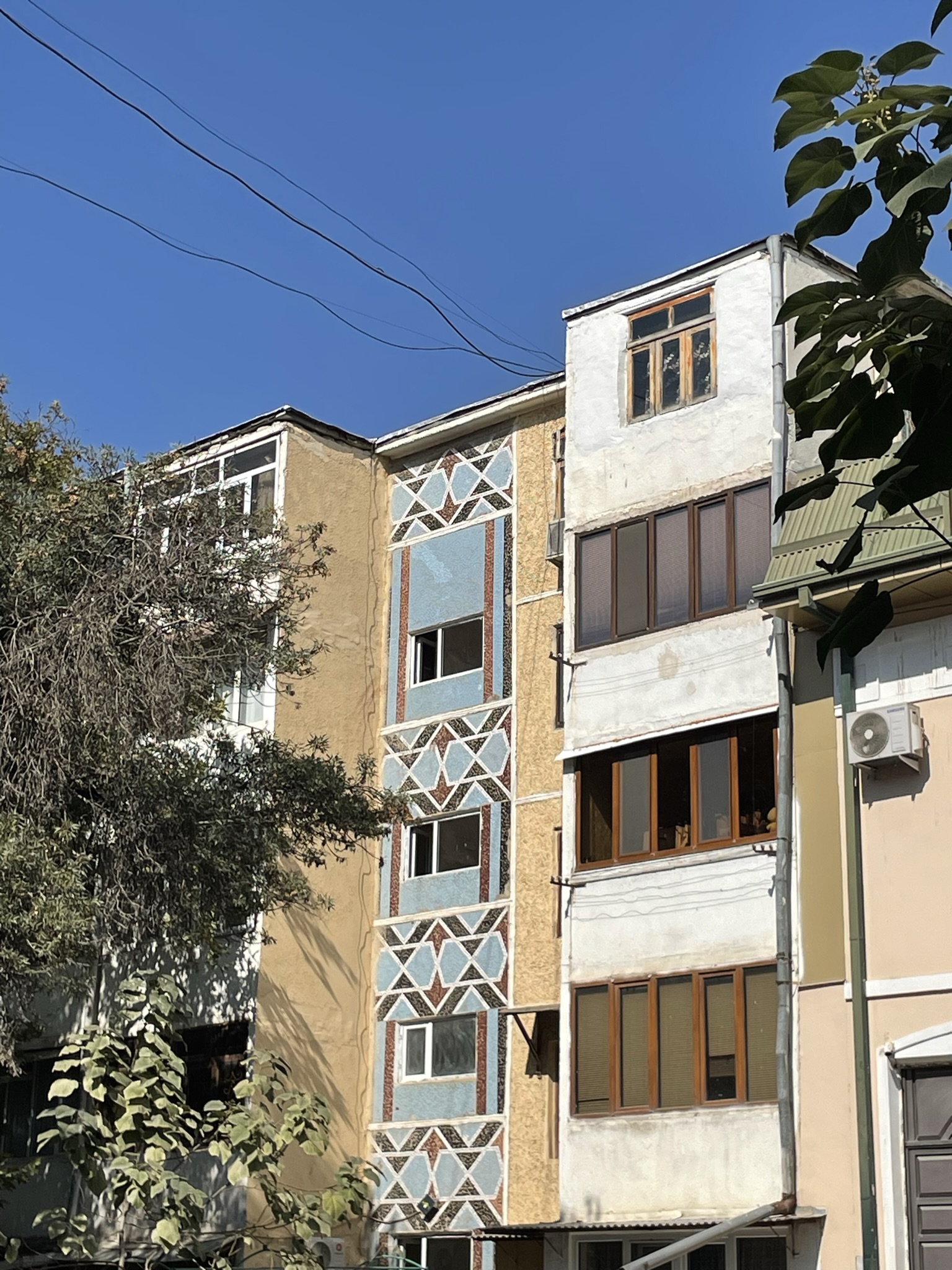
This unwieldy name was matched by the State Museum of the History of Culture of Uzbekistan, destination of an hours-long walk I subjected myself to through the streets of modern Samarkand, past new residential buildings and old Soviet mosaics and murals. The museum building is a bizarre space, clearly a remnant from an earlier era with different priorities and funding for a needed facelift has not yet arrived. Half the space was closed off, lights turned out, with a broken elevator and, to my chagrin, locked men’s bathrooms. I confess to breaking my “no pizza, no burgers” rule at Beer Street. The street in question leads to a brewery and is lined on all sides by pubs, though at present is a muddy mess in the midst of a facelift. In my defense, the pub’s menu was a small novella, a kiss of death that says we do nothing well, so good luck. In that setting, a margherita pizza with a beer was a solid outcome.
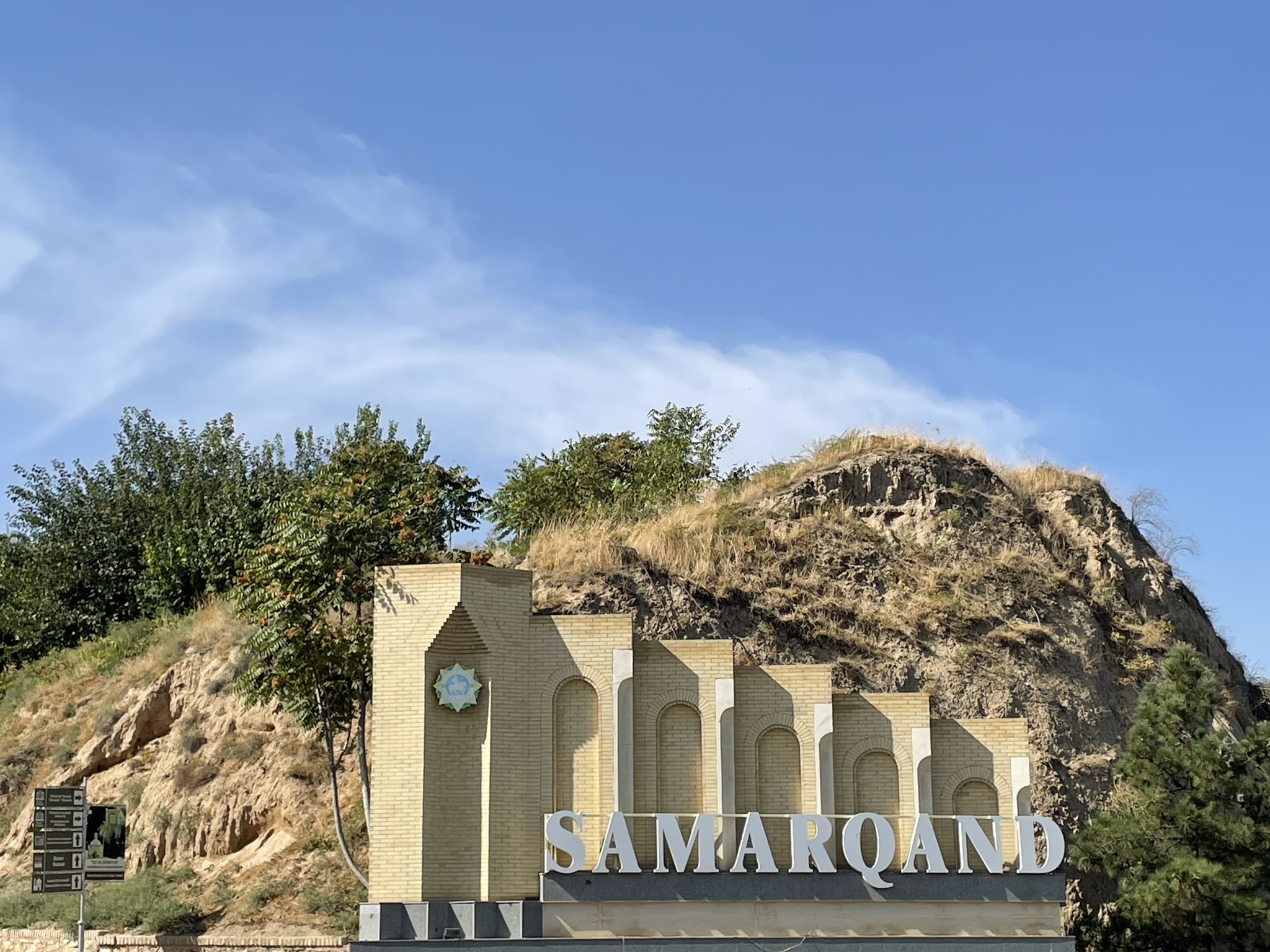
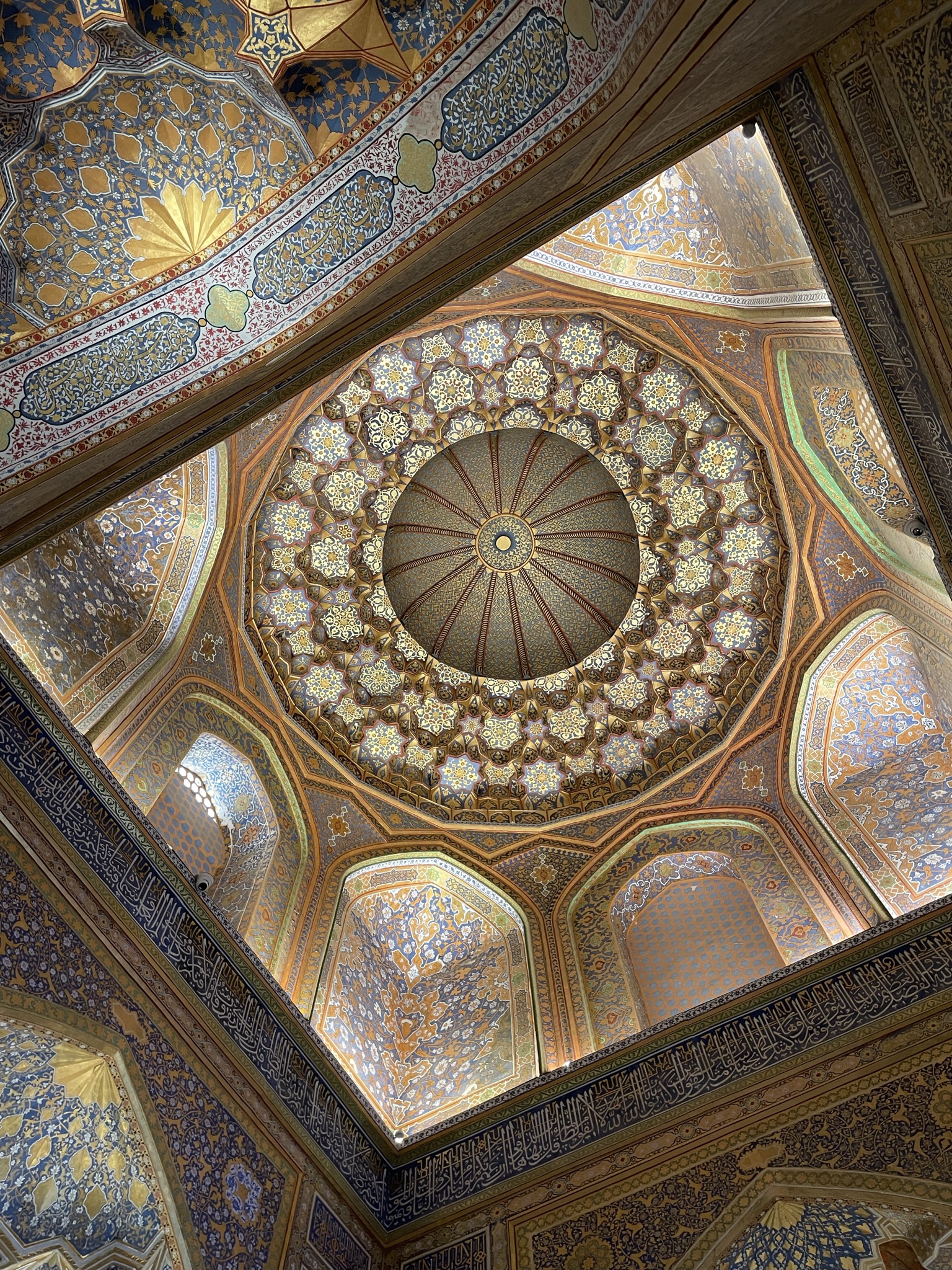
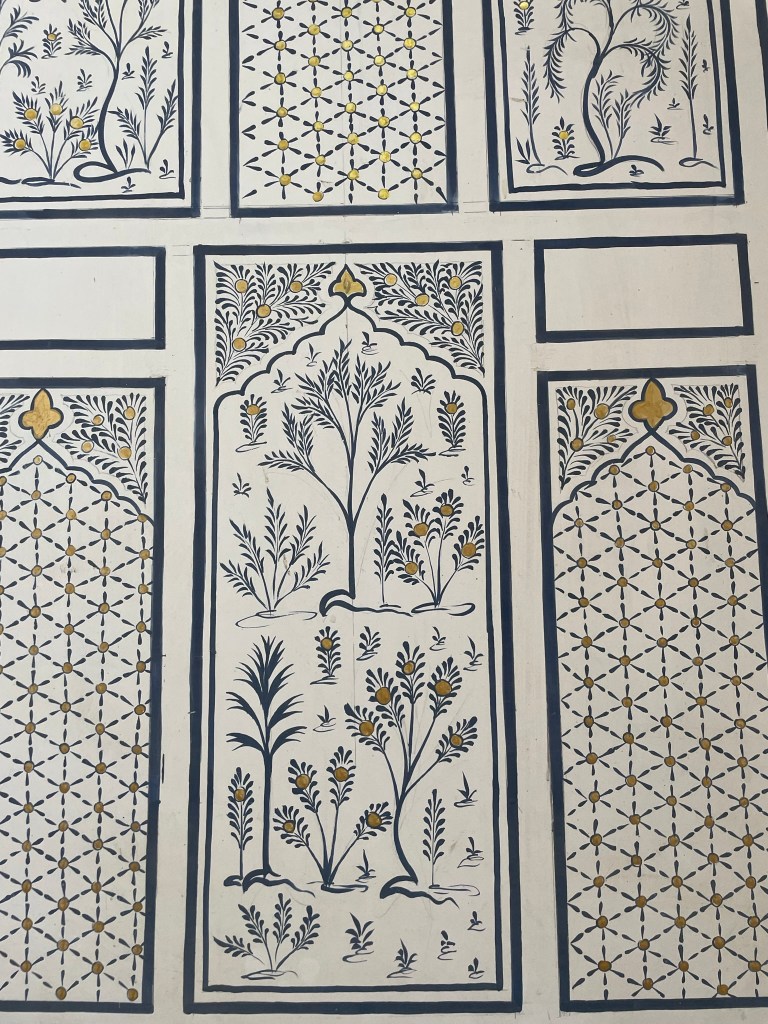
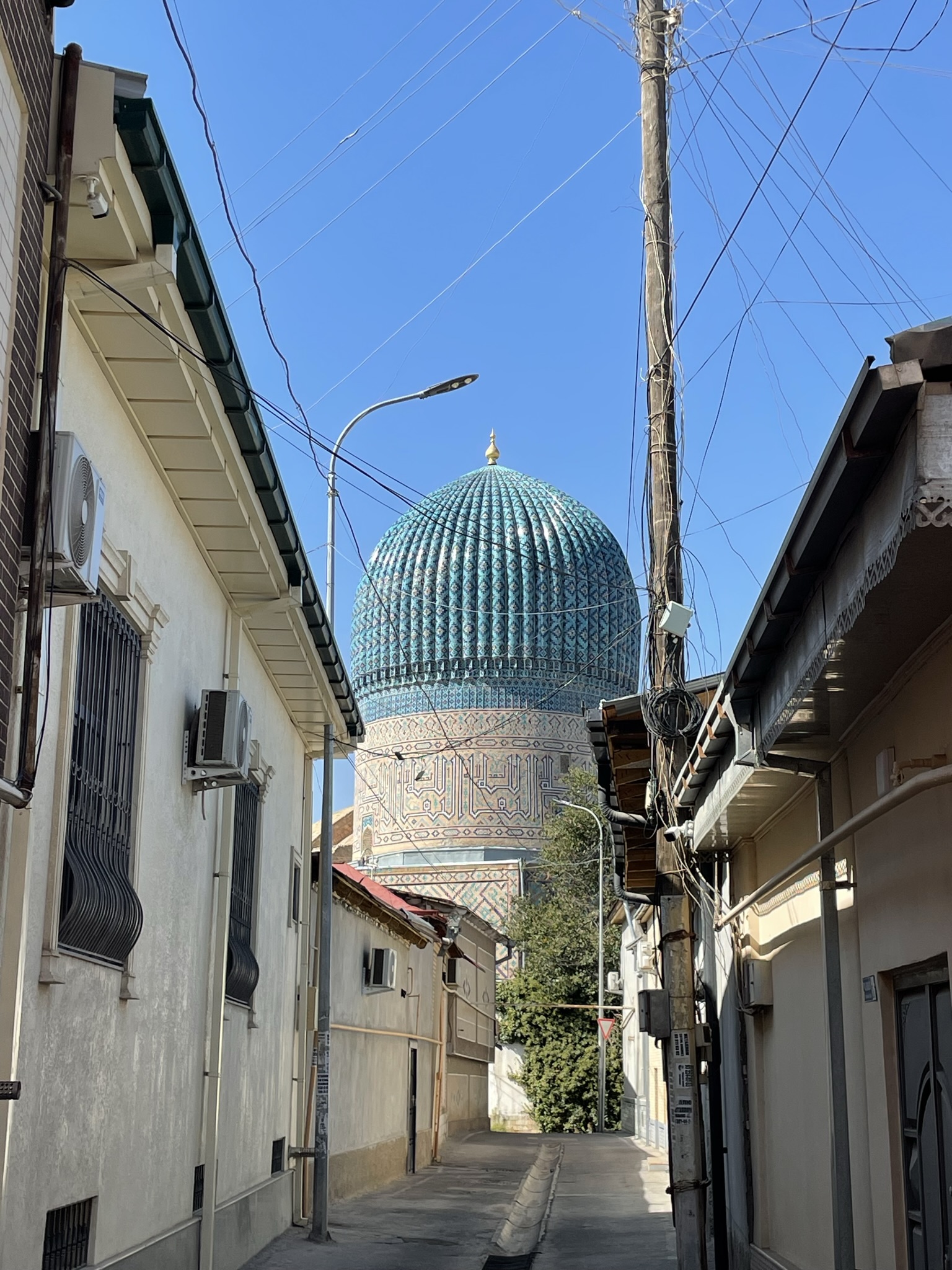
I was glad to make it to Samarkand but after Khiva and Bukhara was reaching my upper limit on volume of tourists, crowds, and beautiful Islamic architecture. My last gasp was the Gur-i-Amir mausoleum, the 15th century family crypt for Amir Temur and his family, including the aforementioned Ulugh Beg for whom I had developed a soft spot. We all have our favourites. Immediately south, tucked away down a short maze of mahalla alleys and thus dissuading tour groups, sat the smaller and quieter Aksaray Mausoleum. Here an Uzbek man stood by the gate as a ticket taker, but with no receipt, no ticket book, and no card reader. “Really?” I asked him quizzically, but he stood firm and smiled. To his credit, it was a cheaper entry than the official sites and he even AirDropped historic photos of the mausoleum for the handful of visitors who made it this far. It may have been a cheeky scam, but in the end it was a great value.
From here it was full circle back to the train station, Samarkand falling behind and Tashkent looming ahead of me.


Yeah my cynicism loves “influencers twirling for repeated takes wrapped in trailing scarves and narcissism.”