It was a bit confusing, departing after a few pleasant days in Bishkek from Manas Airport for the one-hour jaunt over the mountains to Jalal-Abad Airport in the city of Manas. It seems Manas-mania has swept Kyrgyzstan, at least at the institutional level as the government flexes the epic Kyrgyz poem as a sign of national pride and identity. My window seat offered up a close-up of nothing but clouds until we broke through while descending, the fertile Fergana Valley laid out in strips of crops and settlements below. Manas, the city formerly known as Jalal-Abad, sits on the valley’s rim on a southern edge of the country. I saw next to none of it, quickly exiting the two-room airport and ordering a Yandex taxi. Within a few minutes, I was on my way to Arslanbob.
Aziz, the driver, was a lanky man in his early 30s, a father of four and baker by day, friendly and talkative. Throughout the two hours we shared in the car he would pepper me with questions in Russian, patiently waiting for me to assemble my thoughts or piece together questions for him. I quickly found myself van unofficial spokesman for Canada, which globally seems known for two things: cold winters and the French language. Here I failed on both fronts, as Vancouver’s mild winters and (mostly) non-freezing temperatures were unsatisfying; my near zero French abilities further deepened Aziz’s diplomatic disappointment. Turning north from Bazar Korgon and leaving the valley floor behind, Aziz shared, at my prompting, that he was a casual polyglot, capable of speaking Kyrgyz, Uzbek, and Russian, along with a smattering of Chinese, Arabic, Tatar, and English. He was particularly happy with the English name he found, Isaac.
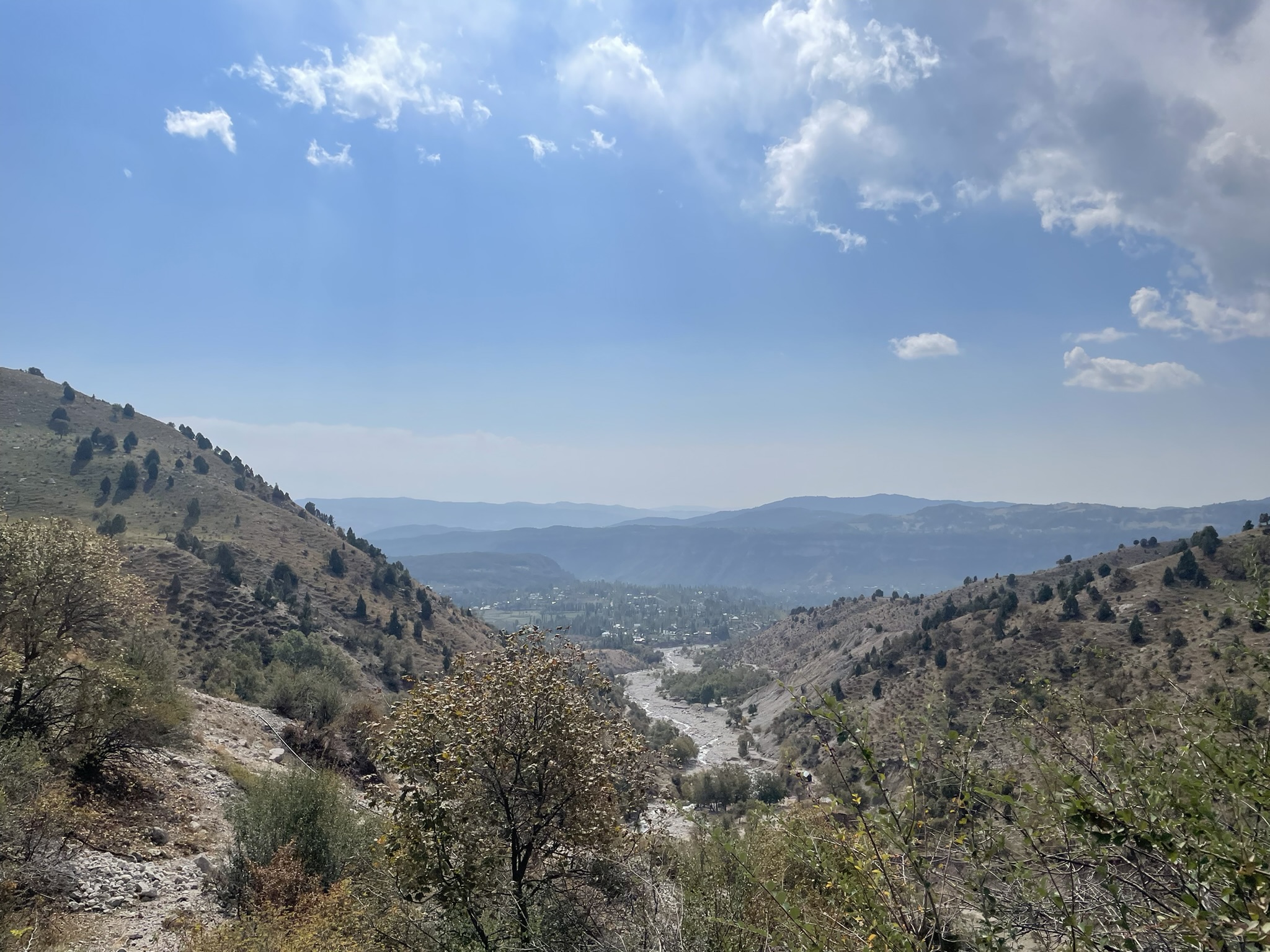
I had watched the gas gauge hover just above empty for the first hour, and gave up on worrying about it as we rose up the western side of a river valley, the views opening up to our right while the sun dipped low on the horizon. Storm clouds gathered overhead, first sending down scattered fat drops in staccato bursts. Within a half hour, they’d given way to a steady downpour under darkness. Aziz, a kind man with a two-hour return drive ahead of him, went to the extra effort of navigating the nameless, rutted and now muddy back streets of Arslanbob and depositing me at my guesthouse, for which I remain grateful. After a late snack and a hot pot of tea, I curled up in my spartan but clean room and passed out.
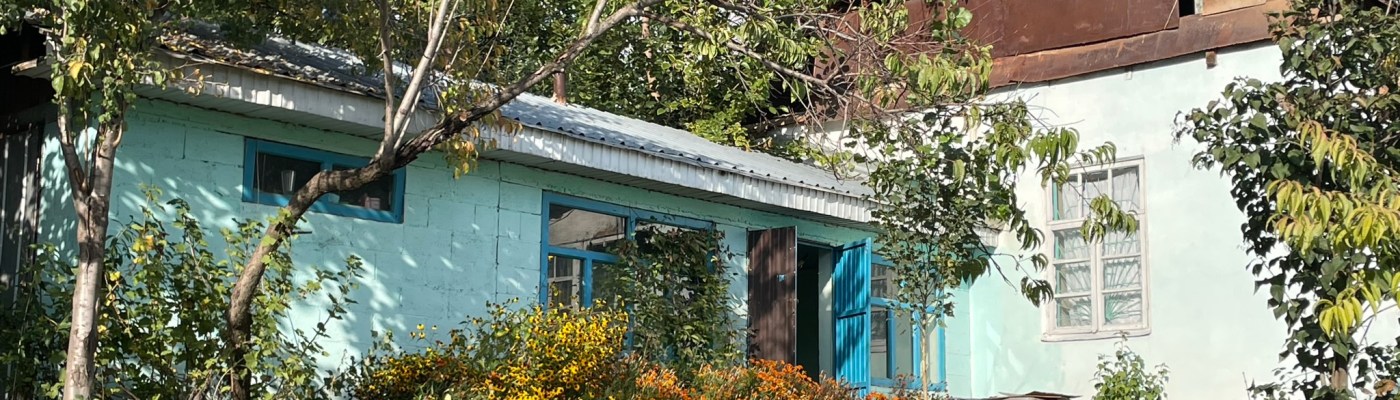
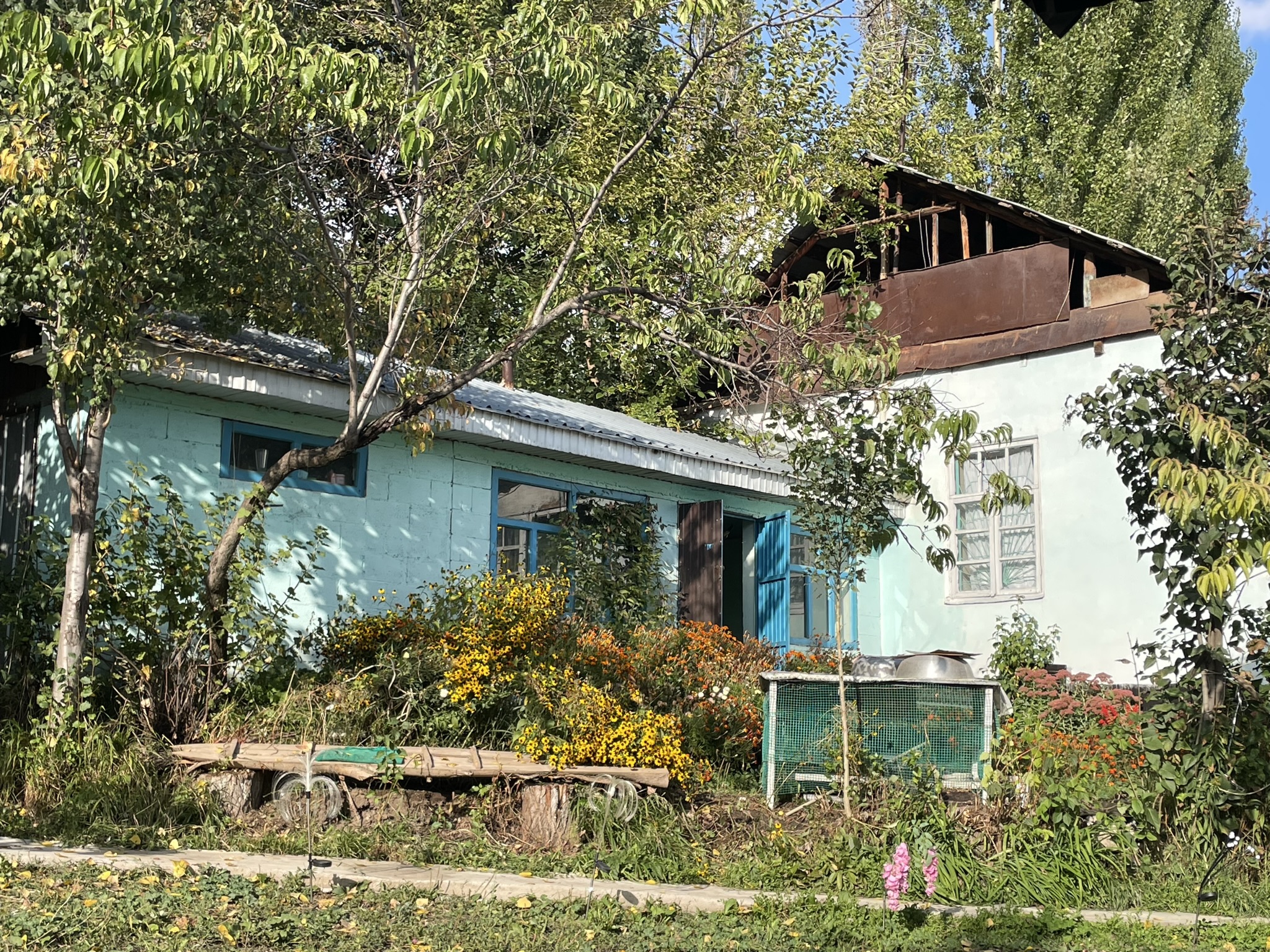
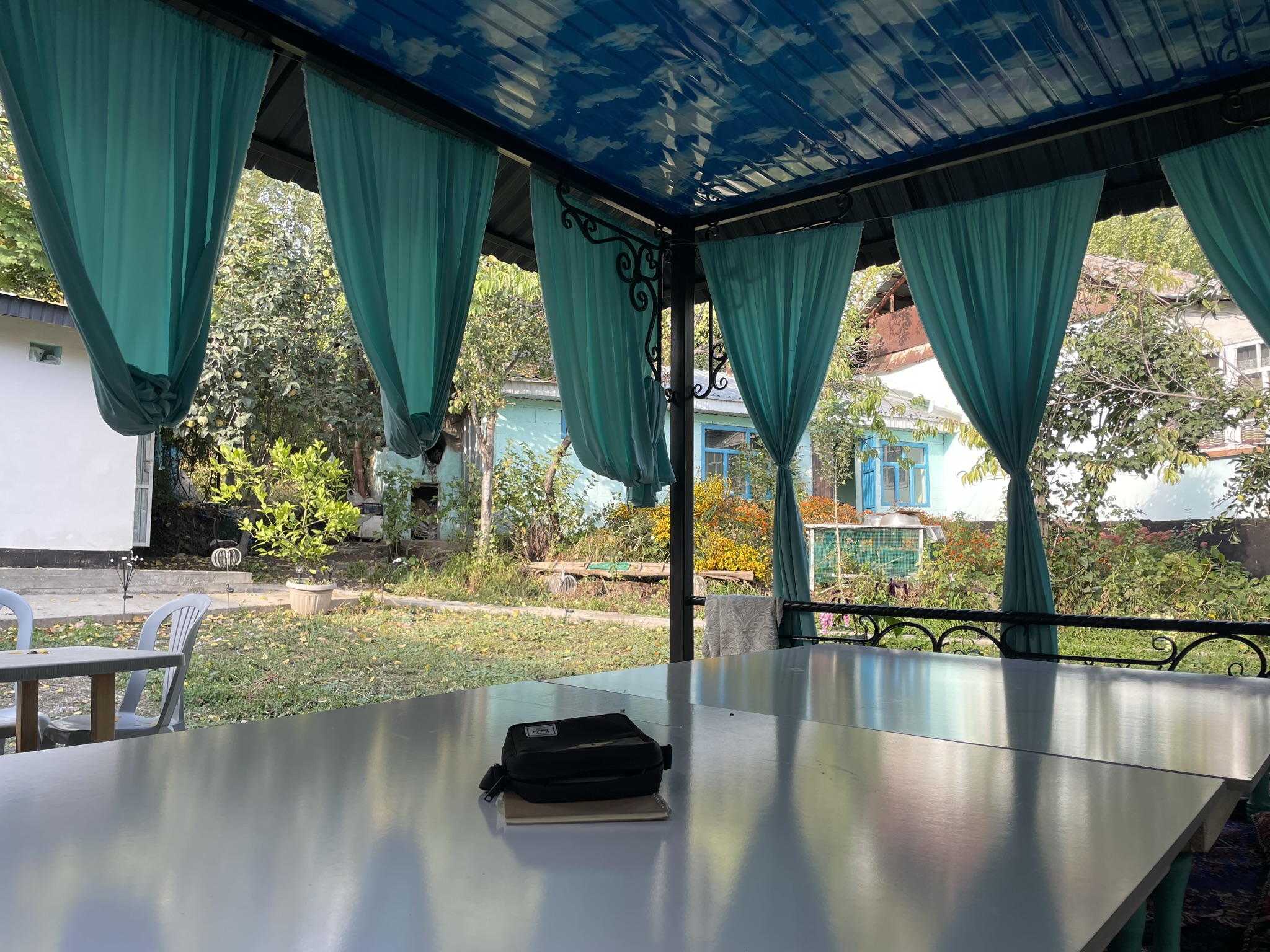
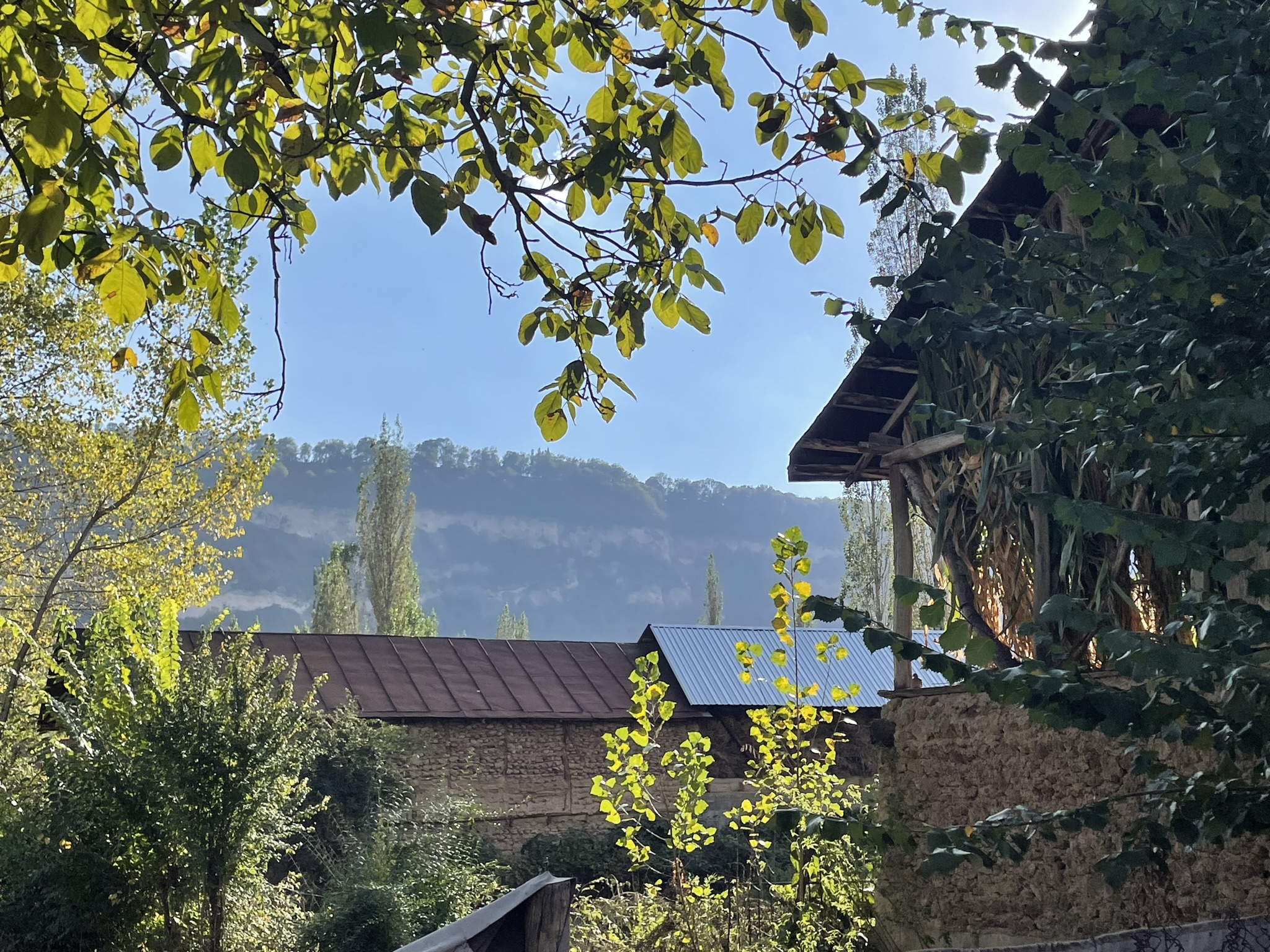
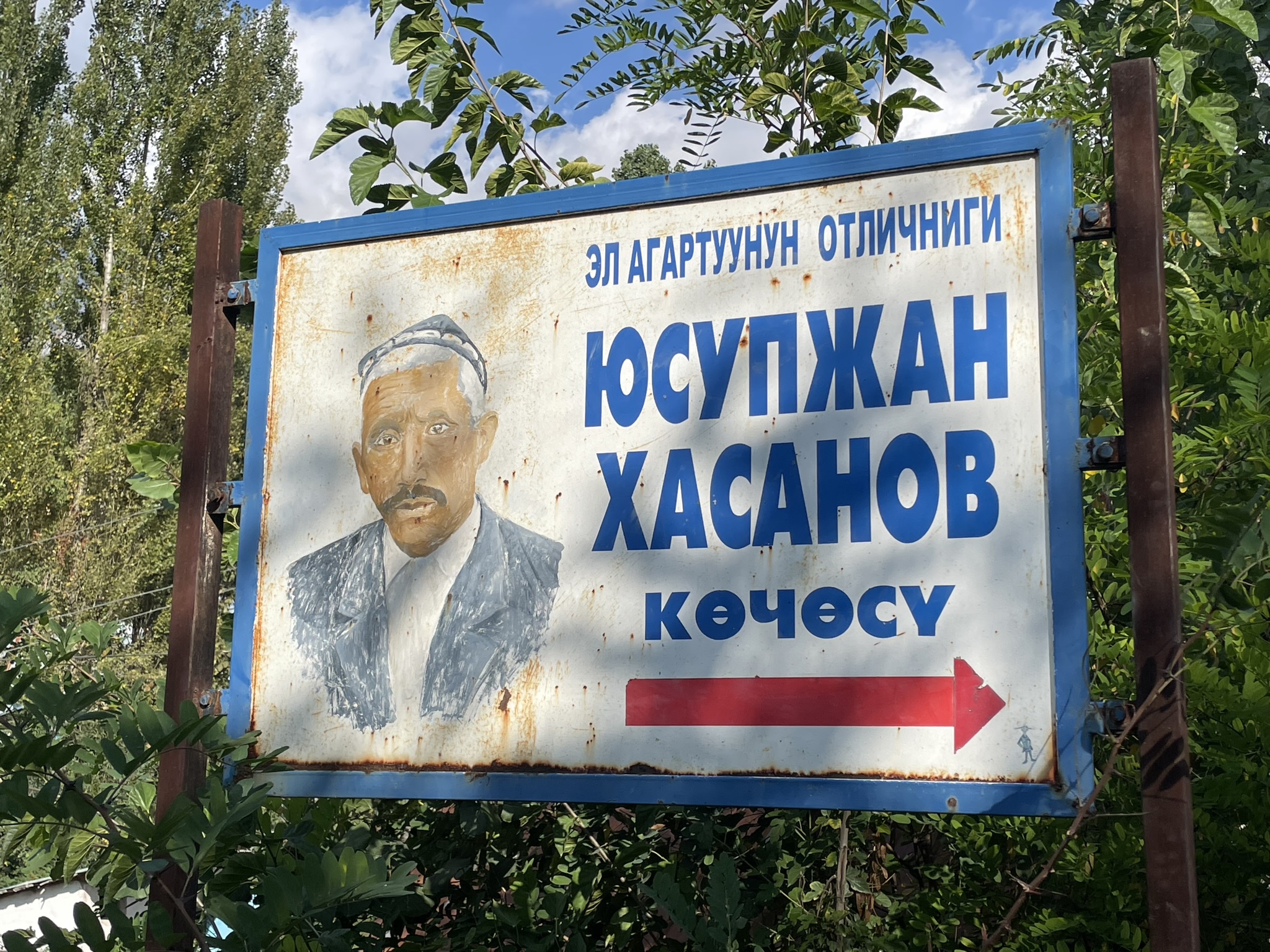
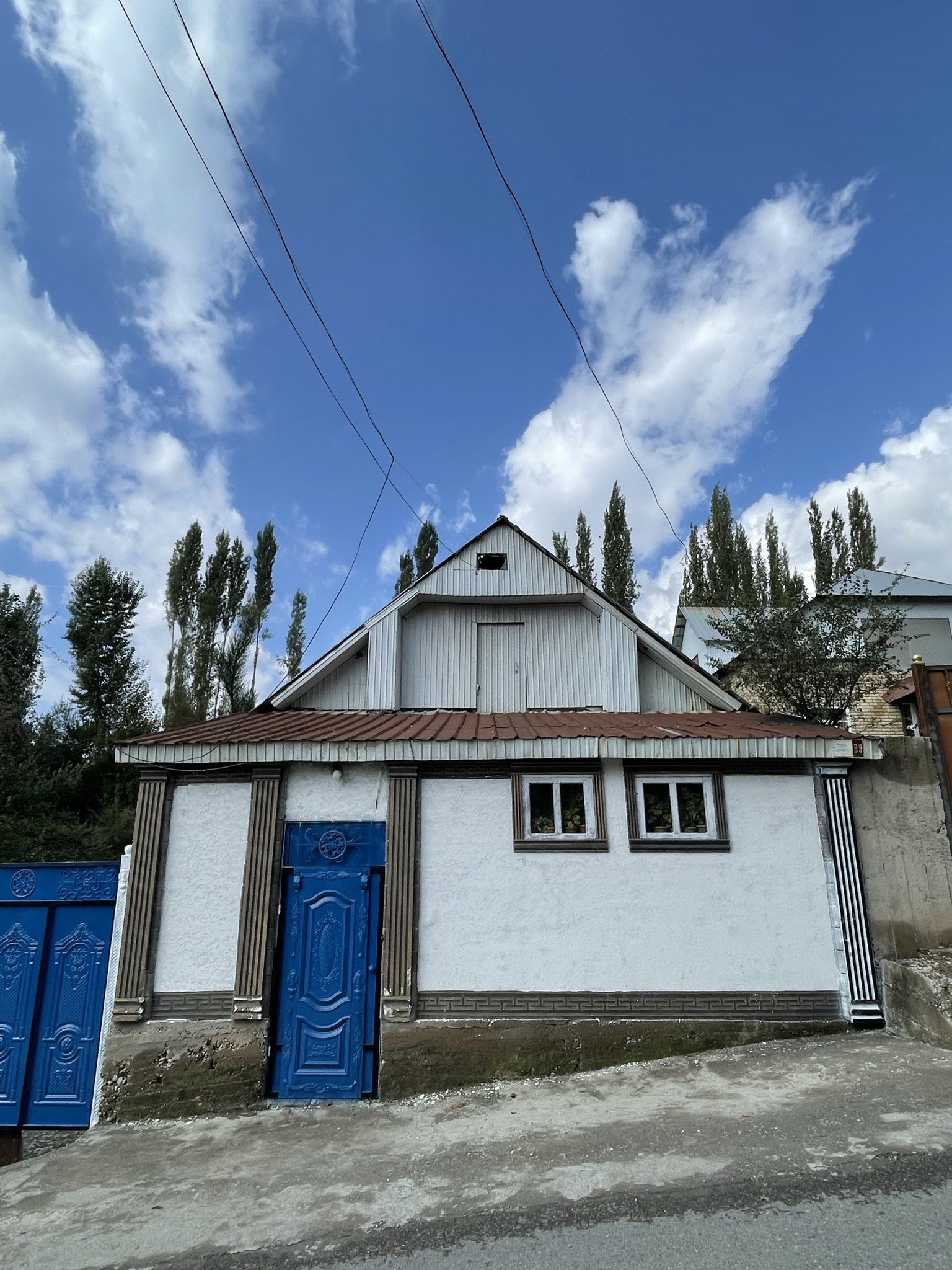
Daybreak in Arslanbob was a different town. My guesthouse, a small U-shaped blue building with a dining hall arrayed around a courtyard filled with flowers and fruit trees spreading over a central ayvan, the covered open seating area, was set just above the center of town, with mountains cutting into the sky on all sides. Breakfast behind me, I headed out for the ‘big’ waterfall, distinct from the ‘small’ waterfall, two of the primary attractions. Directions were scant and I had almost no idea how long the walk would take. Leading out of town, a single sign unhelpfully specifief only ‘waterfall’ in Russian, and I dutifully continued plodding up the steep streets. Children scattered by periodically, the braver ones shouting out a rushed ‘hello’, while the truly bold worked through the basics – names, ages, where I was from. I also had to be brave, asking strangers periodically along the road which way to the big waterfall in Russian.
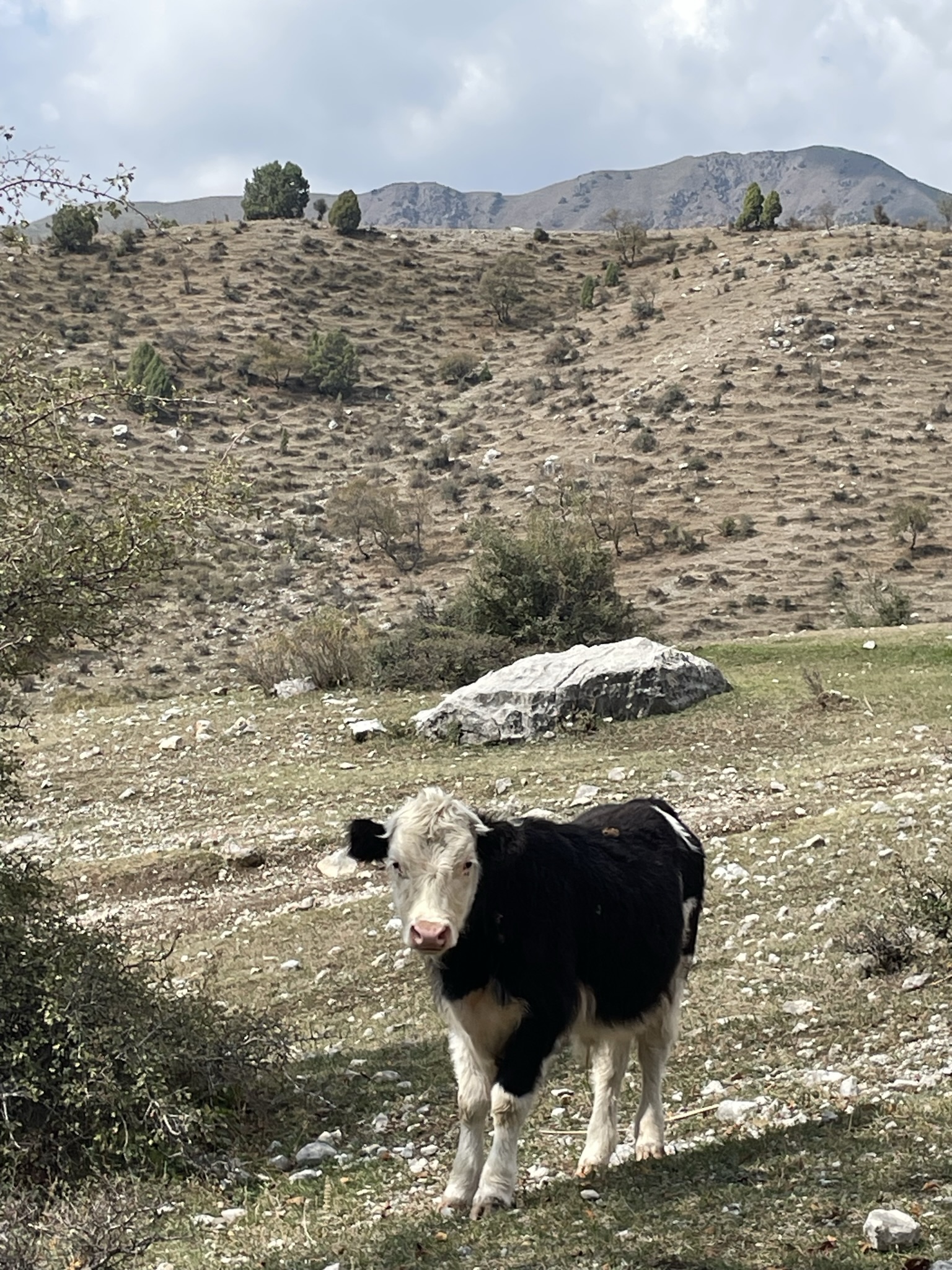
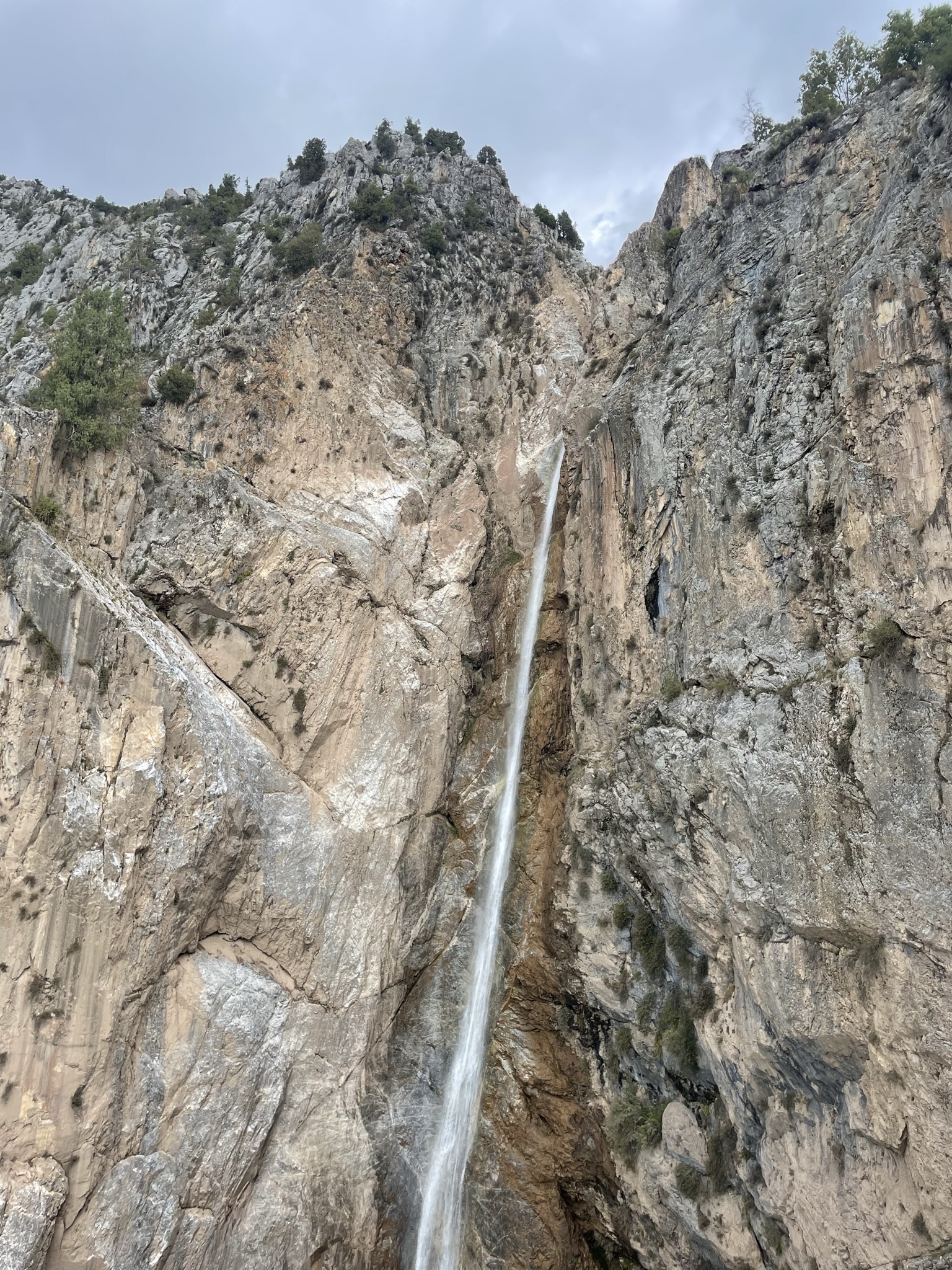
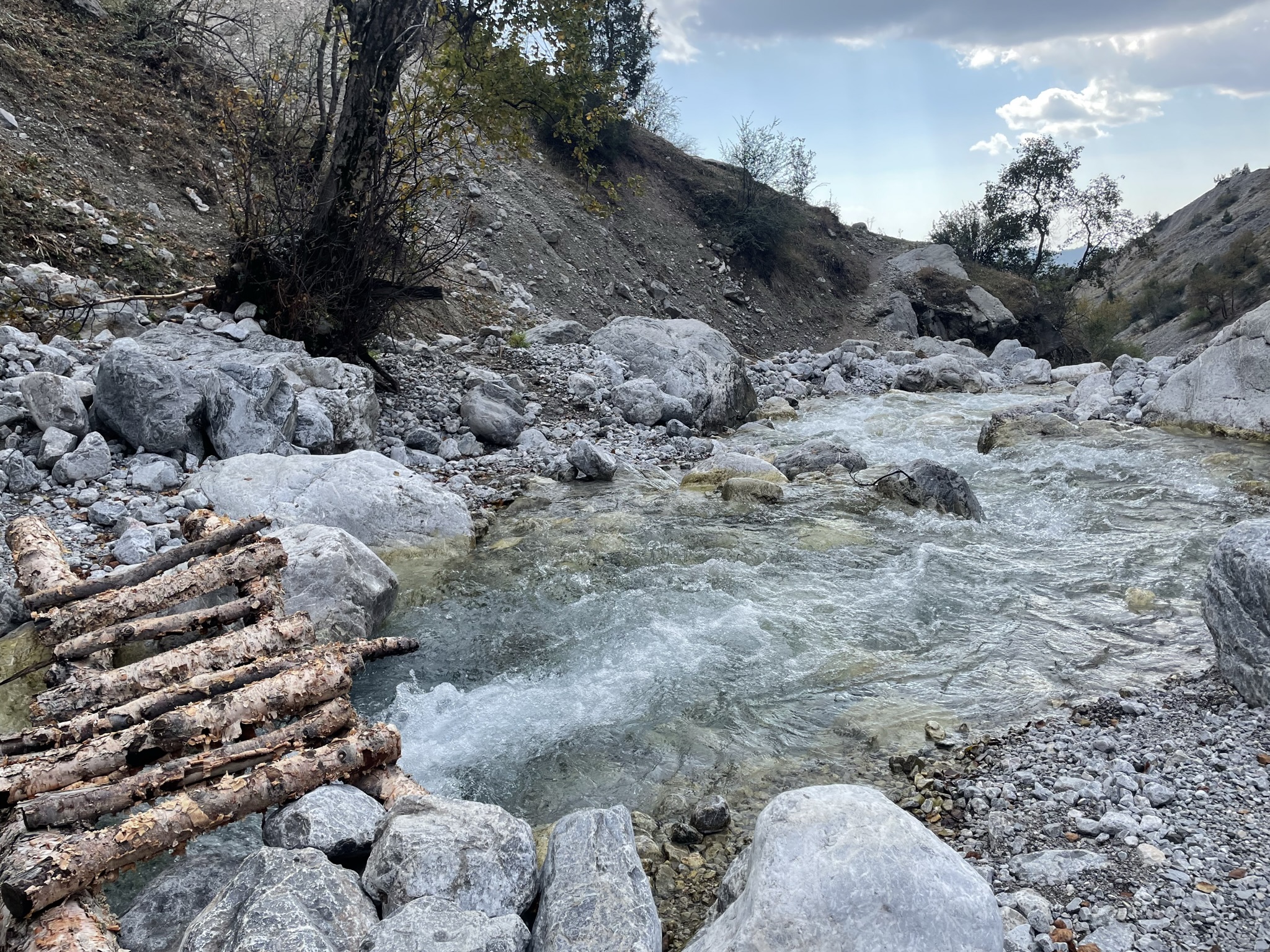
After a point the houses thin out and the road more or less levels off. Alpine plateaus are visible in the near distance, the school kids have gradually been replaced with livestock, horses and donkeys, cows in pastures. Along the edges of the road and behind the fenced courtyards roam small flocks of geese, ducks and chickens. None of them are helpful with directions, and I was very happy to encounter Morogir at a fork in road. While I led with a polite ‘excuse me’ in Russian, he gently corrected me with a proper greeting (‘salaam aleikum’) and a handshake before getting into directions. In broken Russian, he said to walk with him and we went 15 minutes up the road together to the construction site he was working at that day. He gave me clear instructions from there: stay to the left, never take a right turn. I heeded this carefully, and within another half hour found myself crossing a suspect wooden bridge over a swelled creek before making my way up a steep field of scree – the big waterfall before me.
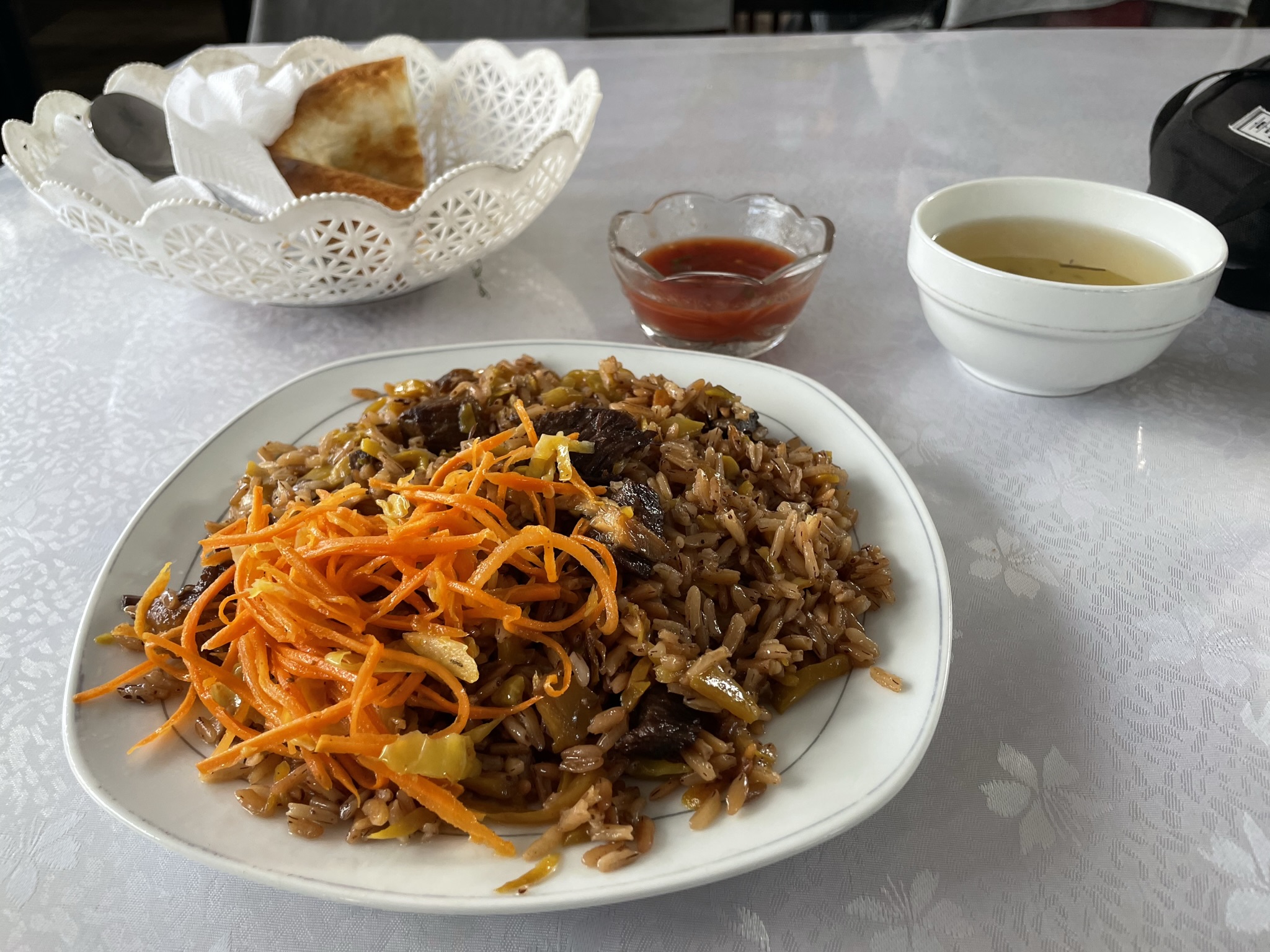
I was happy for the hike, but the big waterfall was somewhat underwhelming. While high, it was not particularly impressive, perhaps a sign I’ve been spoiled in my Pacific Northwest upbringing – this was no Multnomah Falls. By now, after several hours heading up, ominous clouds were rolling over the mountain tops. Urged on by a heavy raindrop here and there, spurred on by my memory of yesterday’s downpour, followed by the growls of thunder, I made my way back down, stumbling here and there and cursing myself for being so unprepared. Back in Arslanbob, the town square was a flurry of activity this Friday afternoon, men exchanging warm greetings and sitting down to share meals after visiting the mosque. A meal was on my mind and I quickly put down a heaping plate of plov, the signature rice and meat dish of the region, with a side of non bread and, of course, a pot of tea, at a local chaixana before a long, unapologetic nap.
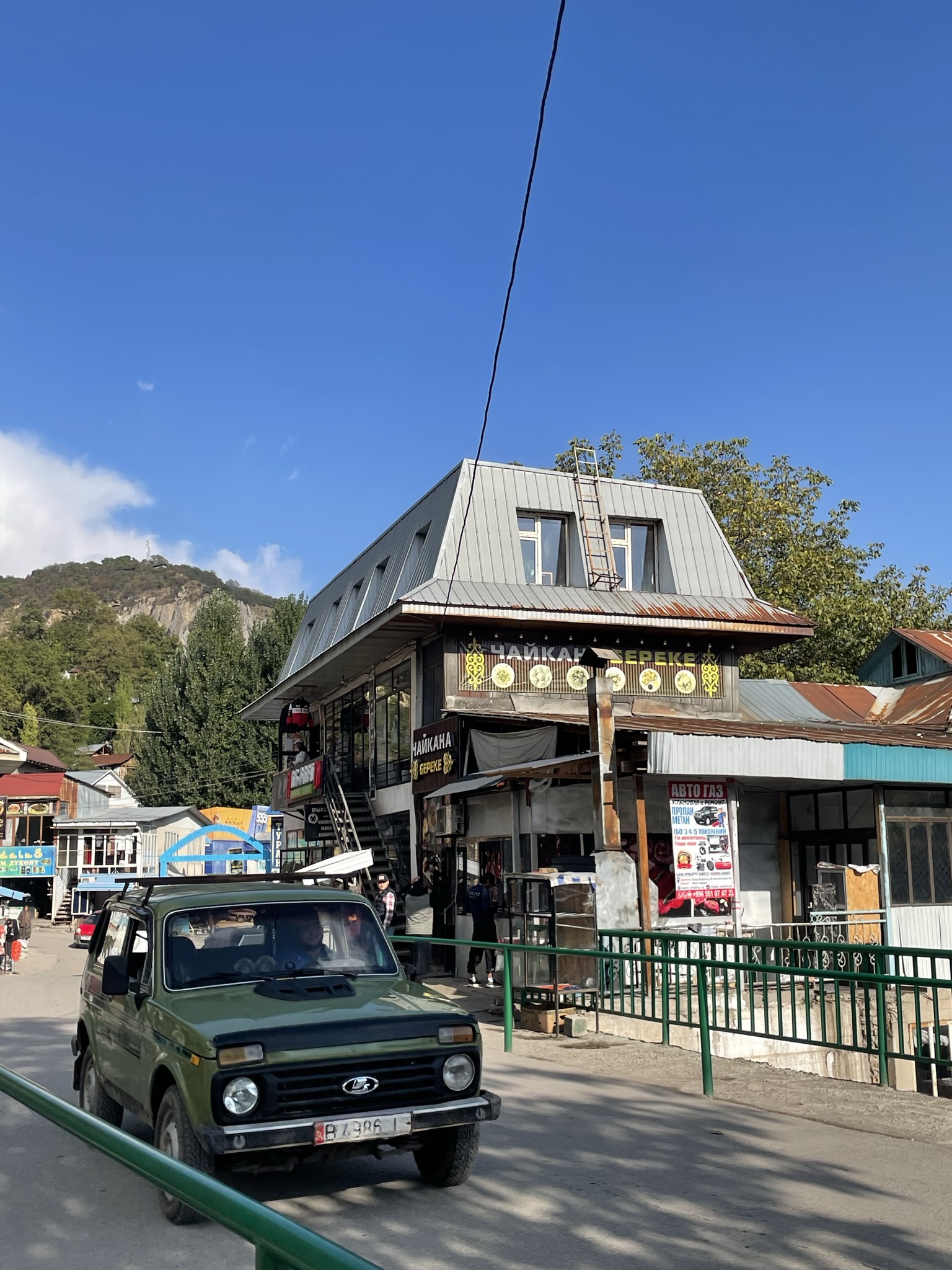
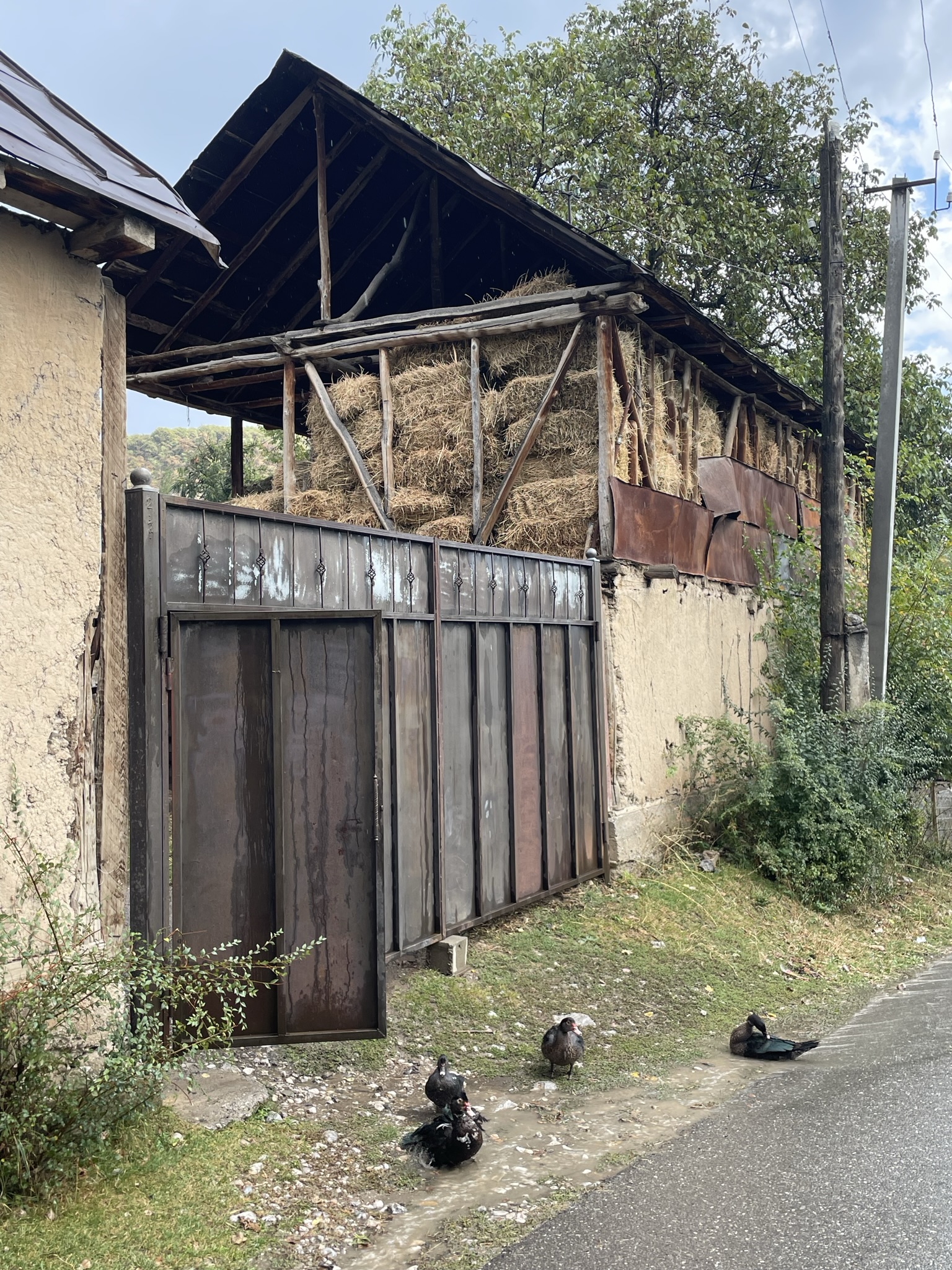
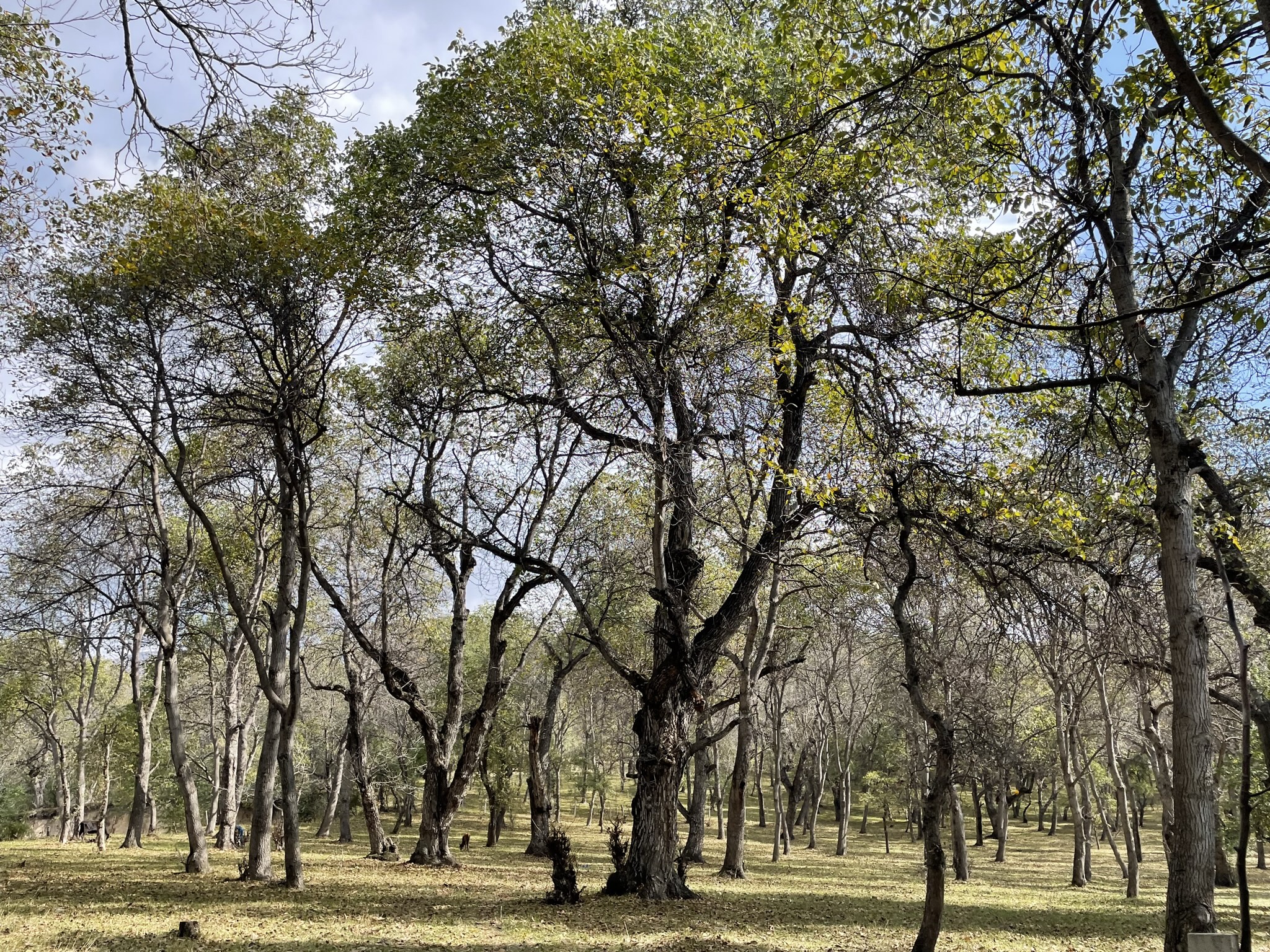
The next day I set out for Arslanbob’s more famous sight: the massive walnut forests, which sit up on a mountainside. The story goes that during the lightning conquests of Alexander the Great, the Greek army made their way as far as Arslanbob, to these very forests. Walnuts worked their way back to Europe with the returning soldiers, carrying a linguistic legacy in at least Russian, where they are are called ‘Greek nuts’. My navigation system, honed from the day before, worked well as I unapologetically greeted and asked directions when I cam across groups of men. Of everywhere on the trip, Arslanbob was the most rural and most conservative. Almost every woman wears the headscarf and often they would go to the other side of the street when walking toward me. I took the cue and limited my questions to men, with the exception of my kind guesthouse hostess.
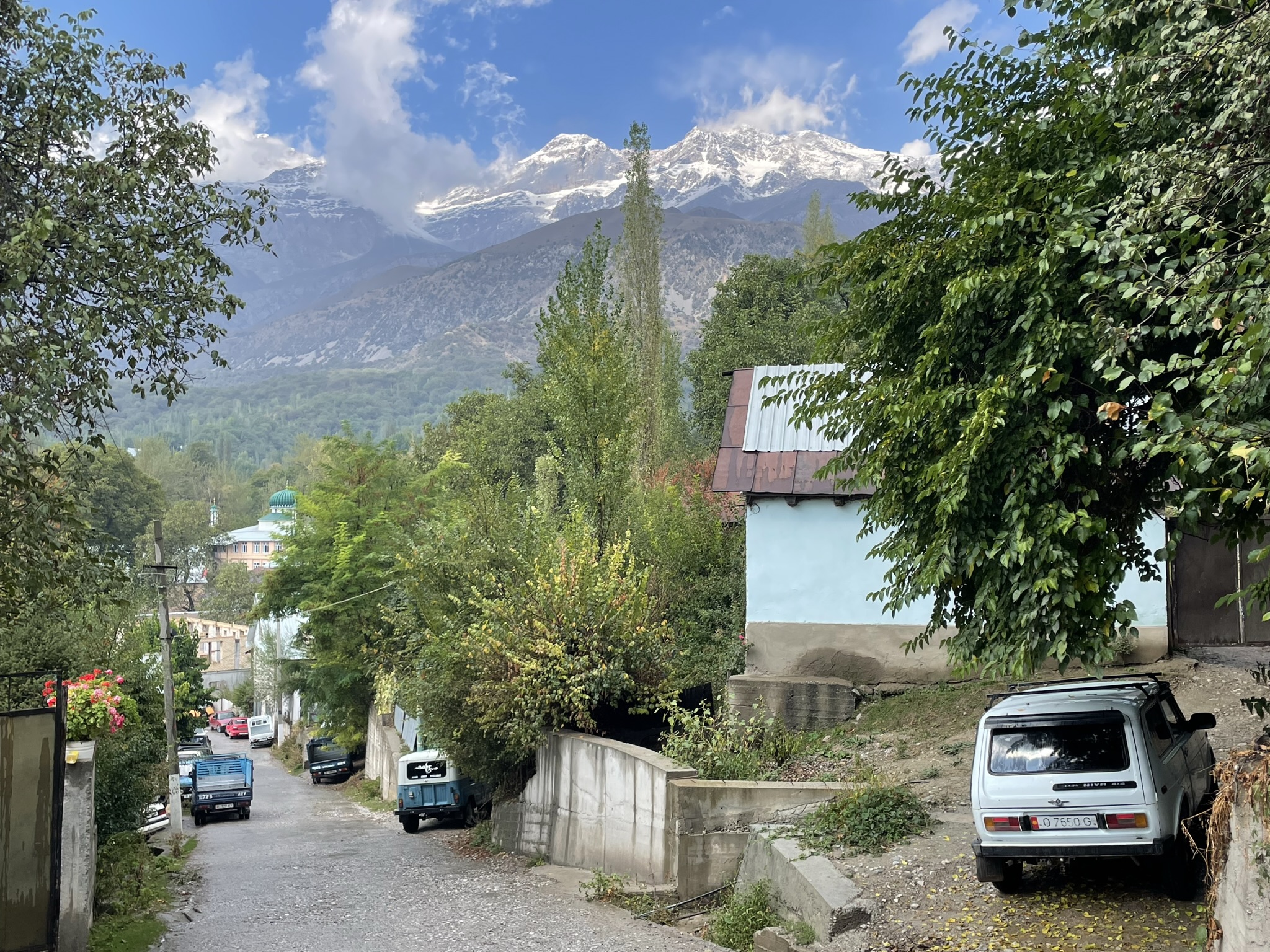
Nearing the walnut forest, footsteps splashed up behind me through the muddied road. A local young man had spotted me and wanted to chat, attaching himself to me with a running dialogue in Russian touching on a wide range of subjects like boxing, calling the police in an emergency, dangerous people, and questions about me and Canada. He was an odd young man, though seemingly harmless, and I did my best to feign ignorance and offer noncommittal answers, trying to bore him into losing interest. He was undeterred, and I continued on my way when he dropped an apple from his pocket, which he quickly washed in a nearby puddle, before offering it to me, along with some stale bread crusts. Kindness is always appreciated, but I did not eat that apple. By now we had reached the walnut forest. Unable to shake my new companion, I lamely excused myself and turned back, not interested in continuing further into the isolated woods with this stranger.
In spite of, and even somewhat because of, such encounters, Arslanbob was memorable. The guesthouse wifi never worked, cell phone service was spotty, and I found myself with a lot of time to read, walk, and write in my notebook, a throwback to travel in years past. I enjoyed the hearty post-hike meals in town and the generous breakfast spread, a prompt affair at 8 of fresh fruit, cheeses, eggs, kasha, and bread (always bread), sometimes with blini. My last day I was seated opposite a Russian pensioner from Siberia, and feeling confident enough now to make a go at a conversation. To my surprise, my breakfast companion knew of our hometown Canucks, but my Russian is not up to explaining how disappointing they have been. Nevertheless, it was a nice morning chat.
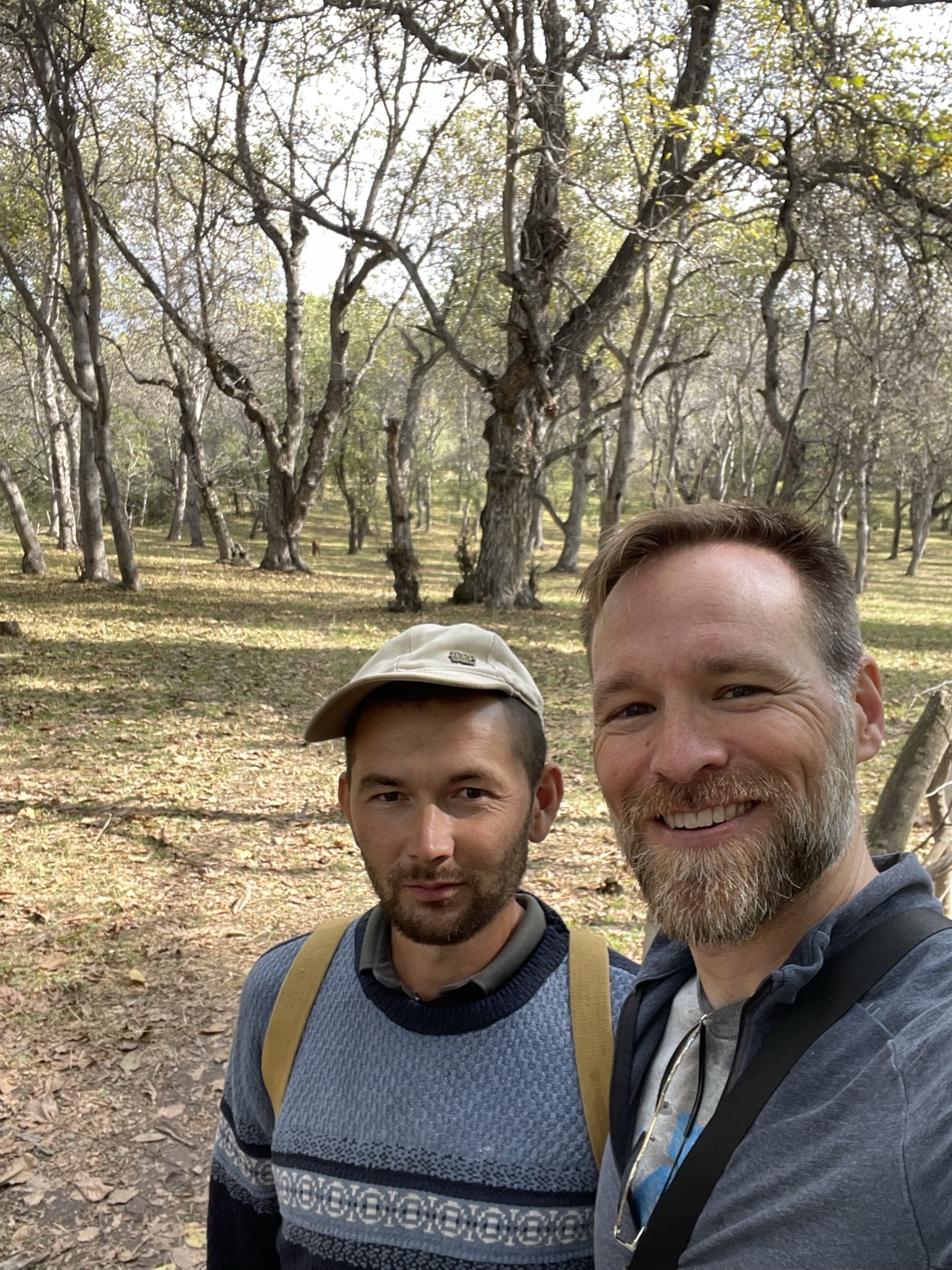
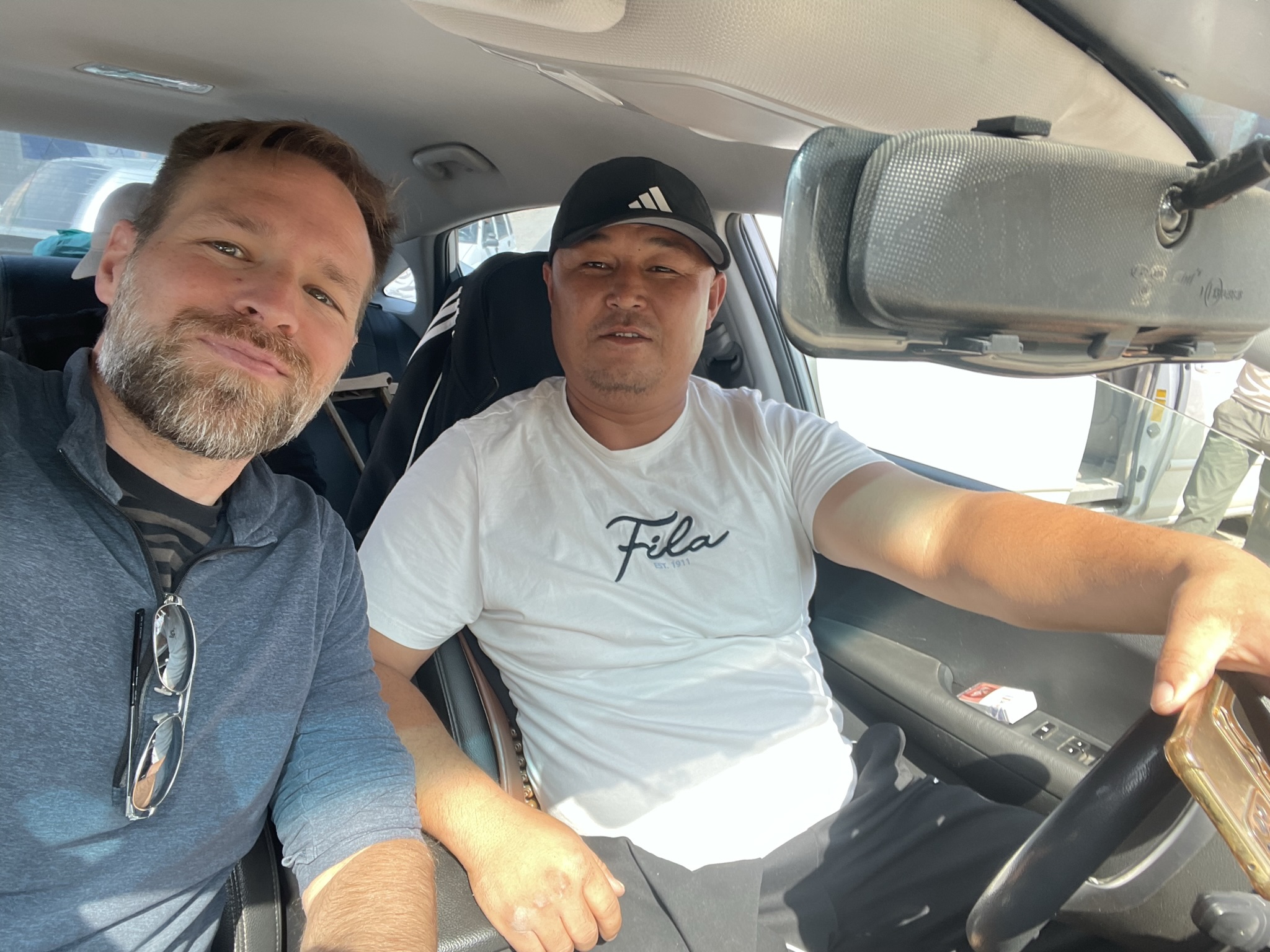
I soon left, bound for Uzbekistan and the railhead in Andijan. This involved a three stage journey starting off with a shared taxi from Arslanbob back down to Bazar Korgan. The namesake bazaar was in full effect and it took me some effort to hunt down a driver who would take me the rest of the way to the Uzbek border, 40 minutes away. I lucked out with a gregarious, chatty, one-legged man (he pointed out the crutches behind his seat so I would not miss them). Along the way we covered the same Canada questions before moving on to family, comparing agriculture in our countries, and an offer to stop and look at the camels on the side of the road. I carry small Canada flag patches as a little gift and offered him one which he promptly affixed to his dash. On the Uzbek side I was met by a horde of money changers and drivers, being figuratively and literally taken for a ride to Andijan. At least there was time for lunch and a supply run ahead of my 21-hour night train to Khiva.

