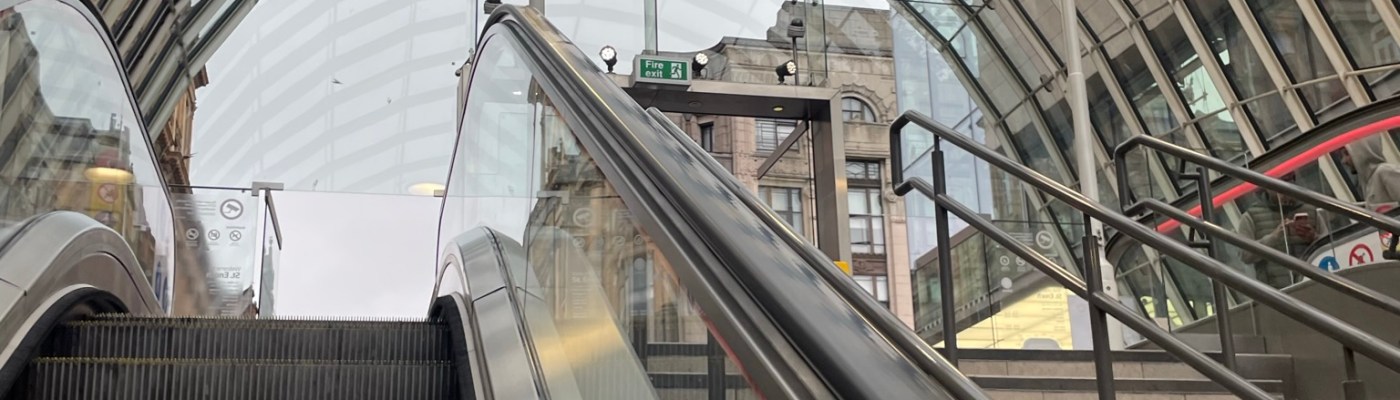
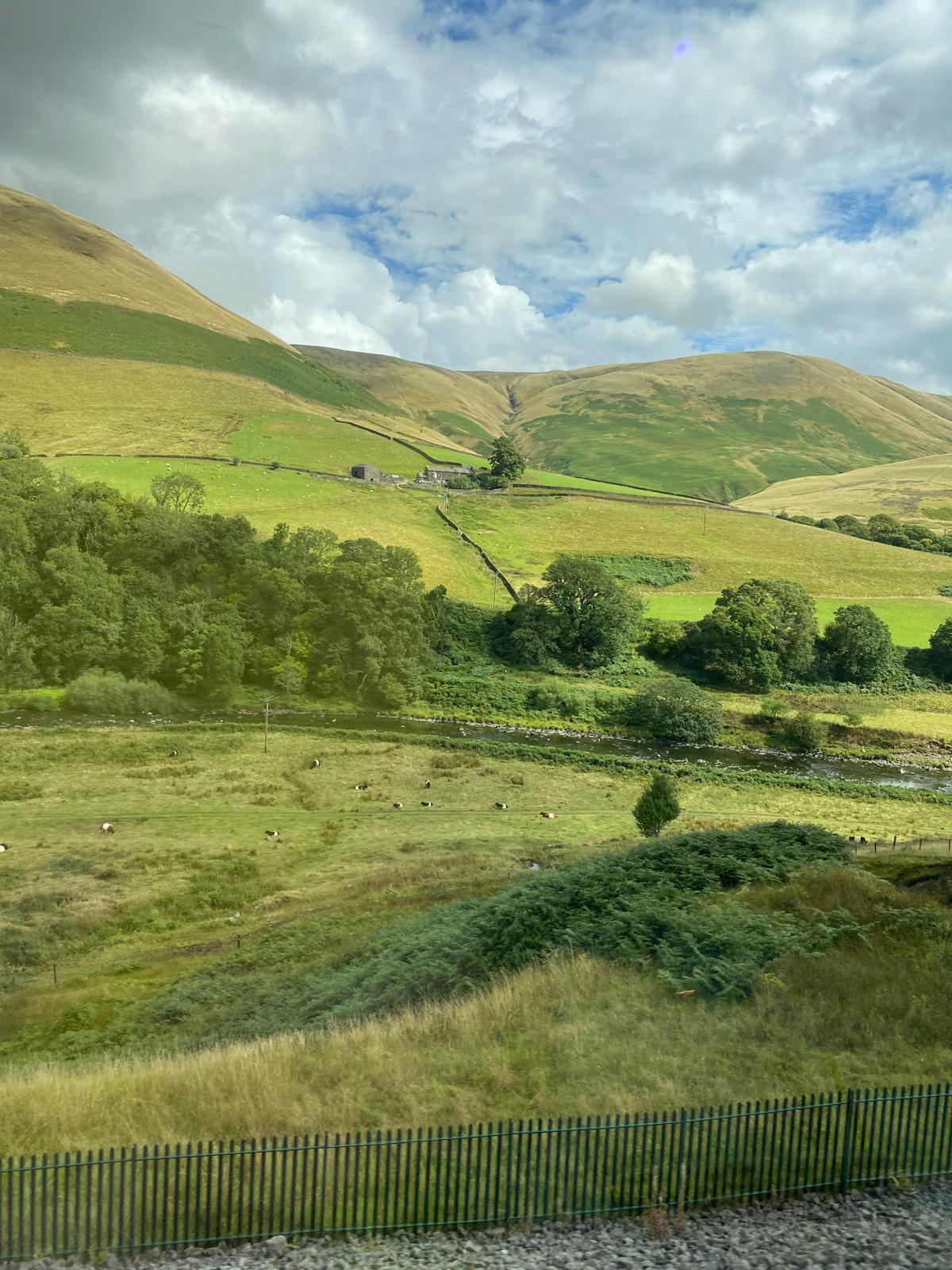
2026 was the year we discovered Taskmaster, the British panel comedy program. More precisely, Hannah found it and eagerly shared the show with me, and I found myself happily watching the show along with her. In the dark, gray Vancouver winter it was a lighthearted, funny way to pass a weekday evening without worrying about the raincoat and umbrella. I did not think it would put me on a train bound for Scotland half a year later, but such was the case when we rolled out of Euston station bound for Glasgow, crossing a parched English landscape that was only just emerging from a long heatwave. The browns and yellows of rolling fields and small towns gave way, north of Manchester, to green again. By this time, we had swapped window seat privileges and Hannah got the better views of the Lakes District, round, sharp hills covered in white flecks from the sheep, broken up by low stone walls crossing every which direction. In five or so hours we’d made it to Glasgow, dodging a light rain as we made our way to the hotel before setting out, sans luggage, to explore a bit.
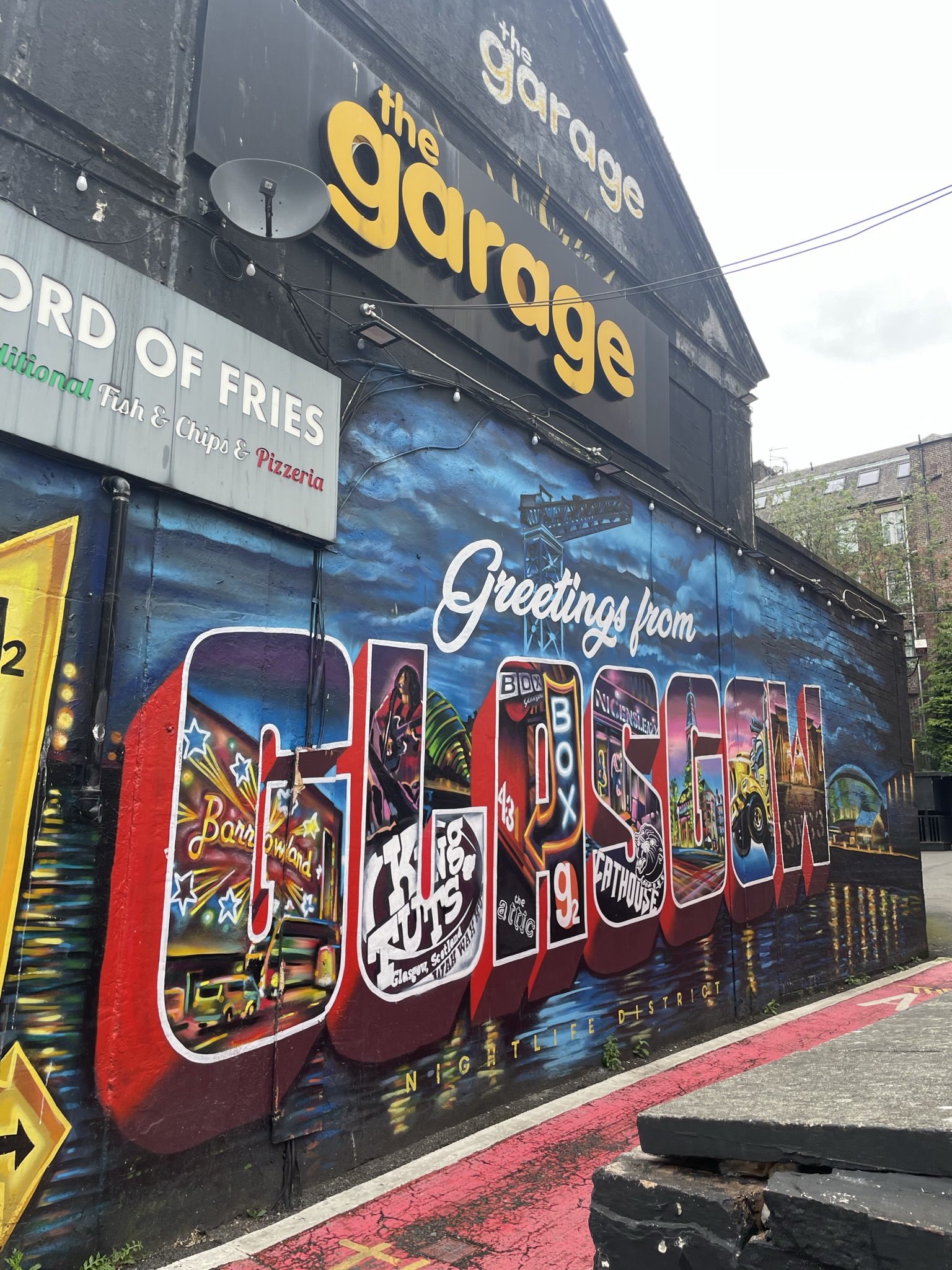
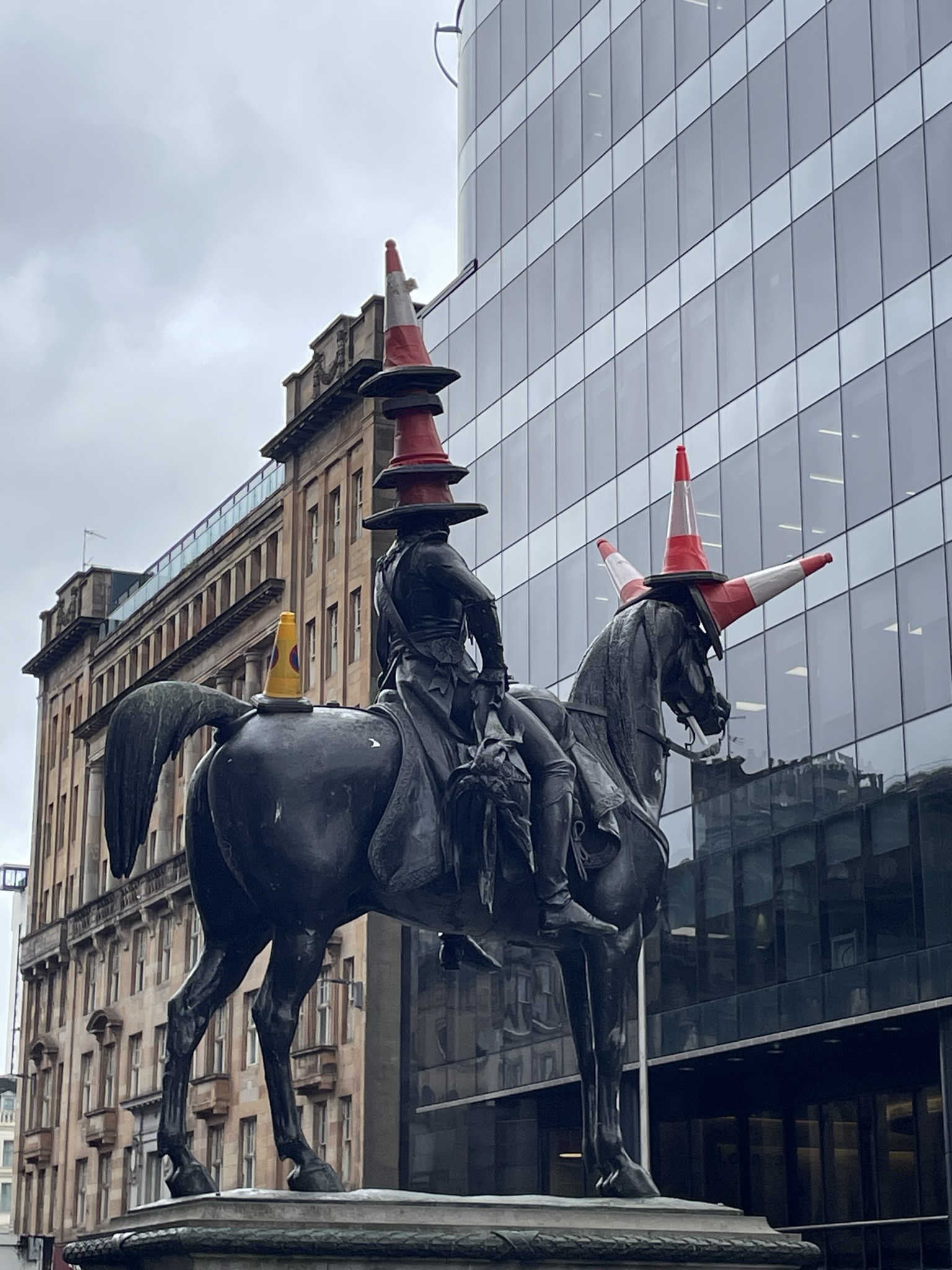
To be honest, Glasgow didn’t jump off the page. The city centre on this fine overcast Sunday was dark, a medley of grays, browns and blacks, heavy stone buildings giving off a stately if unwelcoming vibe. Scotland’s largest city was once an industrial powerhouse, a Victorian era outpost benefiting from an empire near its peak. Fortunes were made, industry grew, labour gained, and labour lost. The city seems to have a strong sense of identity, but may not win beauty contests. Wherever the Glaswegians were, it was not downtown on a misty Sunday. We did manage to do some wandering, stretching our legs along the pedestrianised mall running along Sauchiehall Street and making our way into the West End. Sauchiehall was a mix of wandering hen parties, casino games, and food delivery on e-bikes, a heady, uninspiring mix that almost compelled us to take a break in a Wetherspoon’s before we found a local pub a block down. Farther beyond, into the West End, we made our way to a comedy show at a converted church, a series of local (plus a Kiwi) stand up artists who did themselves proud. Still coping with jetlag, we wandered back and tucked ourselves in to recharge before the big day to follow.
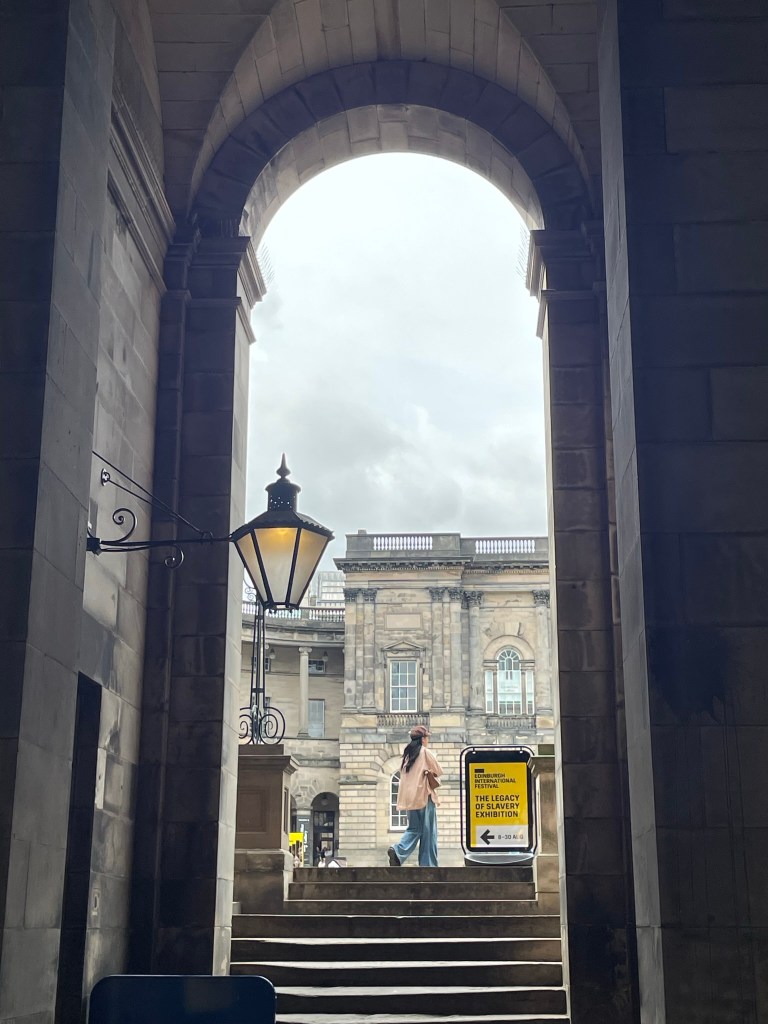
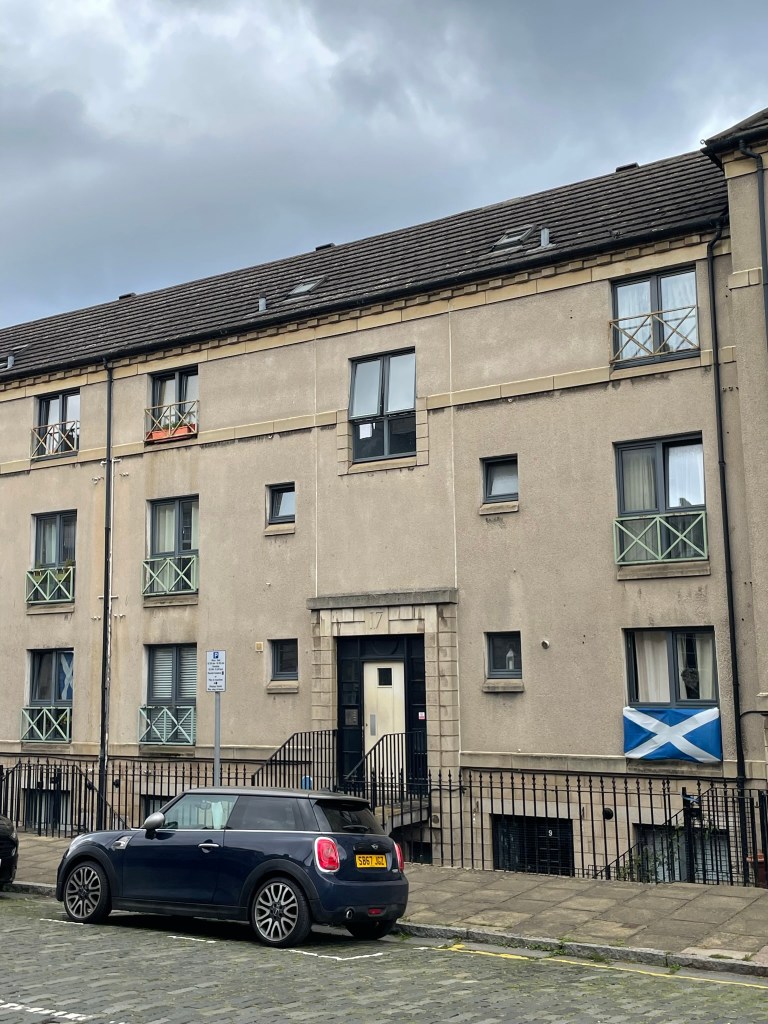
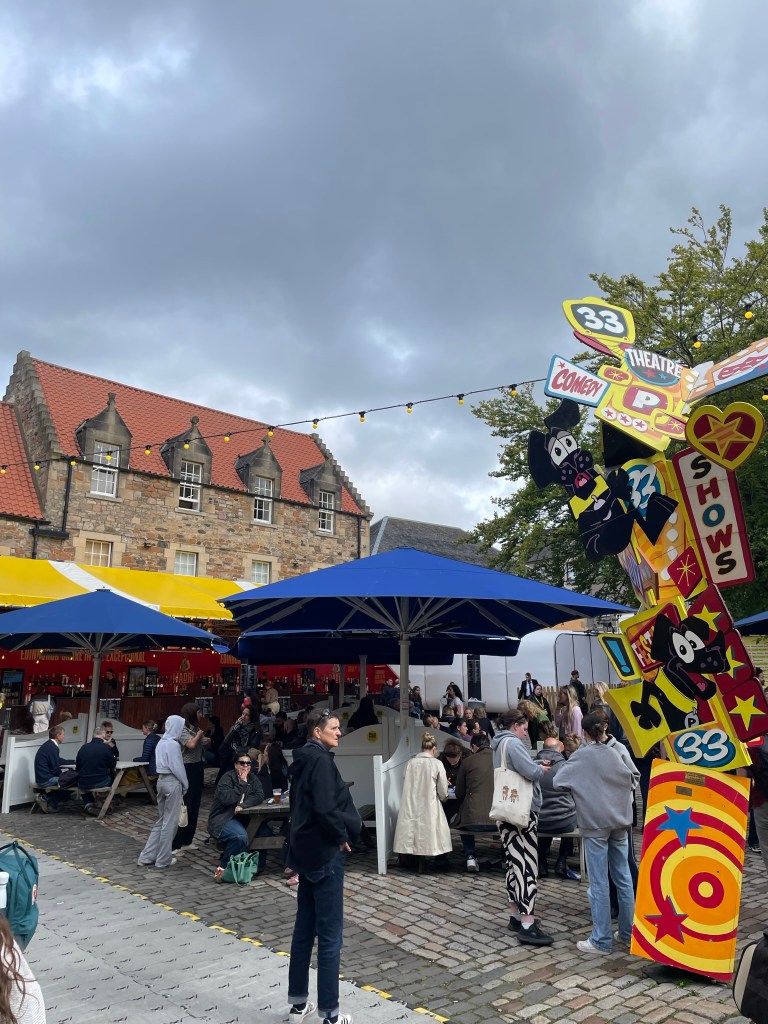
The fresh morning found us again on a train, this time the short run over to Edinburgh. Here, first impressions were strong, travelers departing from the main station to face the stunning, intimidating, and ornate Scottish capital rising impressively towards the skies, what I imagine Hogwarts to be like if I’d either read the books or seen the movies. The city swarmed with people, and while it is a popular tourist destination in general, we were there with a mission. Every August since the 1970s Edinburgh is consumed by the Fringe Festival, a citywide eruption of performing arts filling every street and possible venue, spare walls postered over with offerings, and performers handing out flyers to shows. It brings in actors, writers, comedians, and others from across the country and the broader English-speaking world. Hannah suggested our participation in this pilgrimage, describing it as her “Woodstock”. I was in no position to argue, her track record on comedians is impeccable. And here we were.
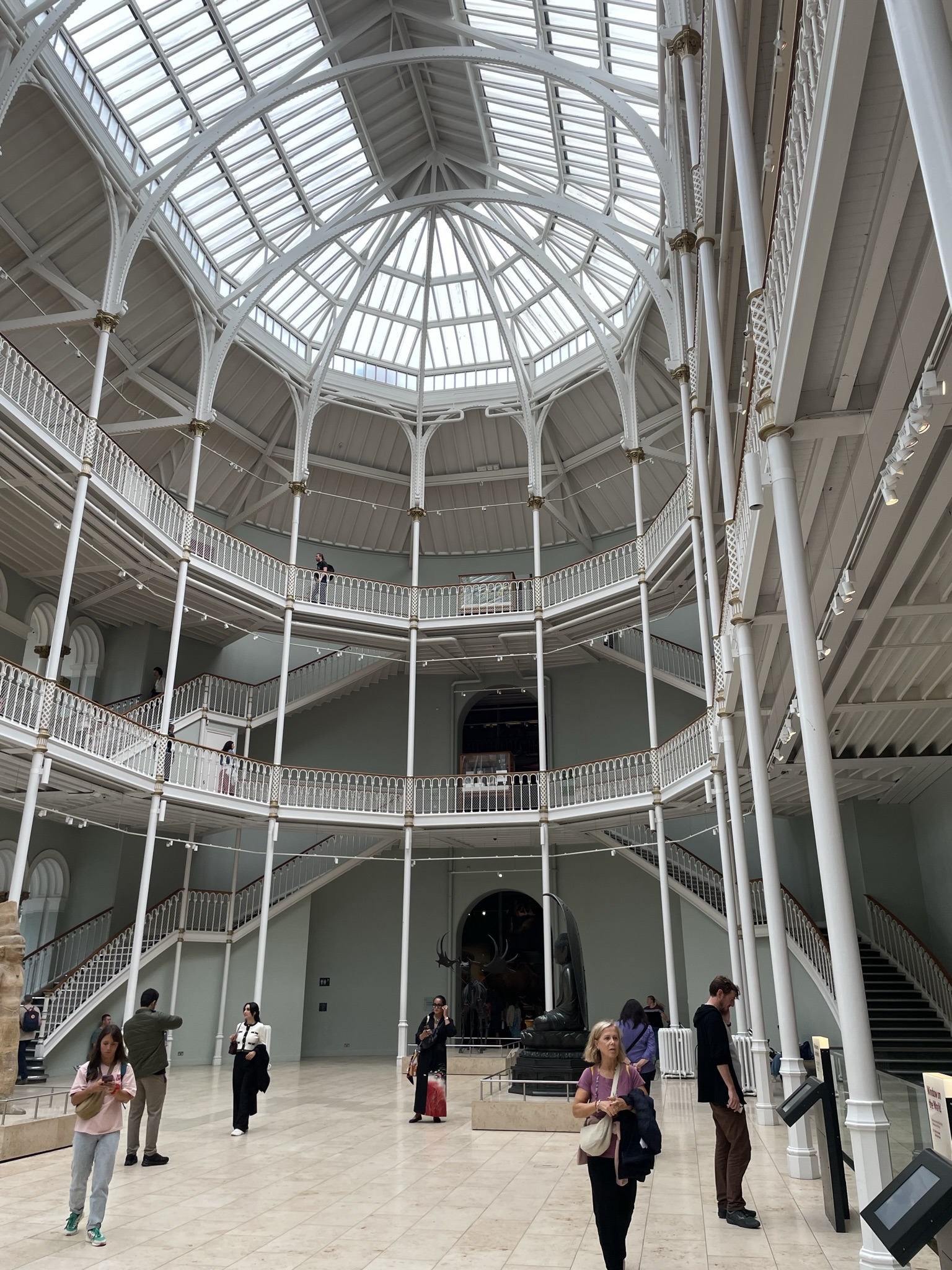
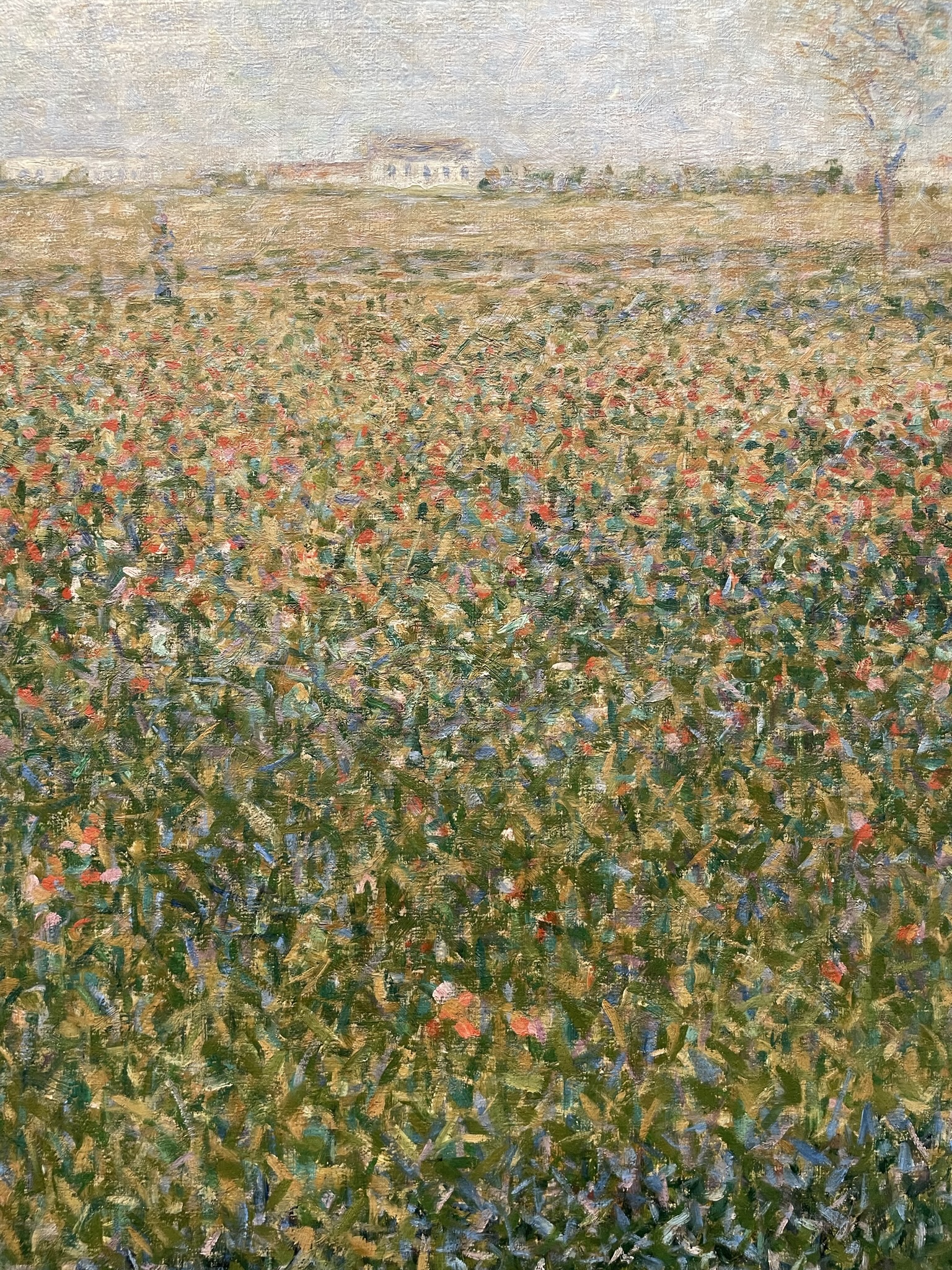
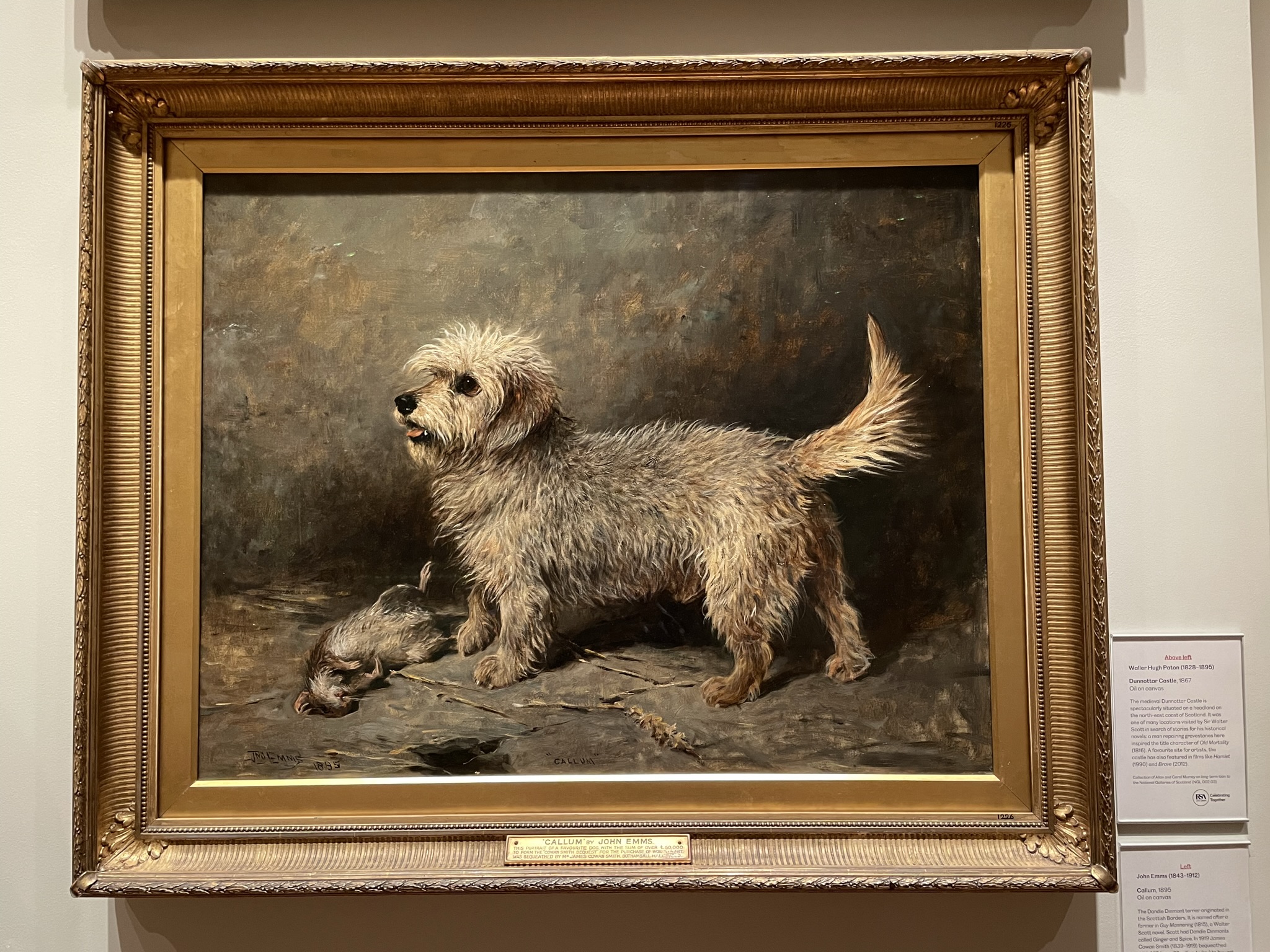
This was our big day, with tickets to three different shows, and we gave ourselves a warm-up, along with several thousand others, at the National Galleries of Scotland. It is a good collection, and I won’t go too deep into it save to recommend it if you should find yourself in Edinburgh with a couple hours on your hands. Two highlights for me: El Greco’s An Allegory, painted around 1590 and looking like it was from the early 20th century. The other was Callum, the Dandie Dinmont terrier immortalized on canvas and, as a condition of a sizable contribution from his owner, required to remain on display. We also found the time to poke our noses into the National Museum of Scotland, watching Dolly the first cloned sheep spin on her turntable in the natural history wing. I was quite chuffed to see the Lewis Chessmen on display and learned that as late as 1951, 43% of Scottish households did not have a bathroom and 33% shared a toilet. While it was unstated, I assume this was a factor in postwar emigration.
The whiplash from domestic sanitation statistics to comedy was sharp. Our Fringe experience began in earnest with an early afternoon show from Ania Magliano, followed an hour later with a set from Fatiha El-Ghorri. Both very funny and both, as fitting for the Fringe, in small venues of 100 or so people – in both cases we were in the second row. Thankfully we were not pulled into any crowdwork. One lesson was the number of bankers and lawyers who sit in the front rows of comedy shows, shockingly well represented and definitely not fun when answering questions from comedians. This then, after dinner and a beverage break, led us to Max Olesker’s one-man play Making the Cut about his conversion, for love, to orthodox Judaism. The reader may speculate what the title alludes to. Exhausted, we made our way back to Glasgow on a late train which I promptly fell asleep on.
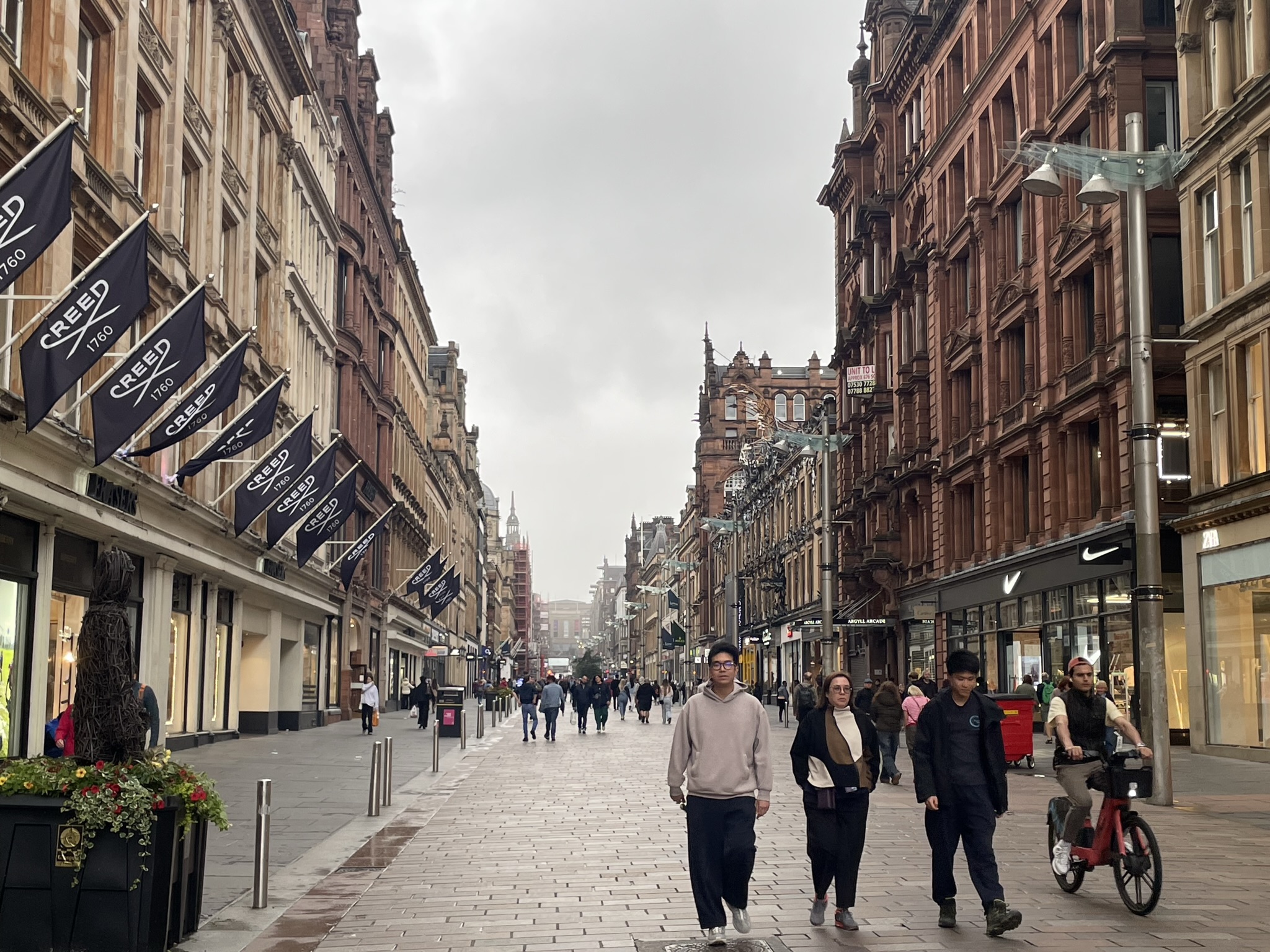
With only three days and two Scottish cities, the plan had been to spend one in each (so far, so good) before choosing where to go on the final day. Well, with apologies to Glasgow, Edinburgh won out here, though the Fringe Festival certainly helped tip the scales. We did spend more time in Glasgow, the last morning spent at the nearby Glasgow Gallery of Modern Art, a former manor converted to library and then, in the 1970s, converted to its current iteration. Considerately, a library was maintained in the basement while the remainder is a gallery home to a rotating collection of (mostly) living Scottish artists. A nice start to the day before kicking off our ritual train ride back to Edinburgh for more Fringe. Hannah and I split at midday, her choice another stand-up comedian, John-Luke Roberts, while I went to the Royal Surgeon’s Museum. Mr. Roberts was apparently quite funny, I learned over lunch later, while I questioned whether viewing preserved organs in jars was the smartest idea before eating. Our last Edinburgh stop was to see the very funny Rosie Jones, another former Taskmaster contestant. Rosie’s show was in one of the many venues branching off the Pleasance Courtyard, one of the central hubs for the Fringe, and she successfully lived up to the hype with an excellent set.
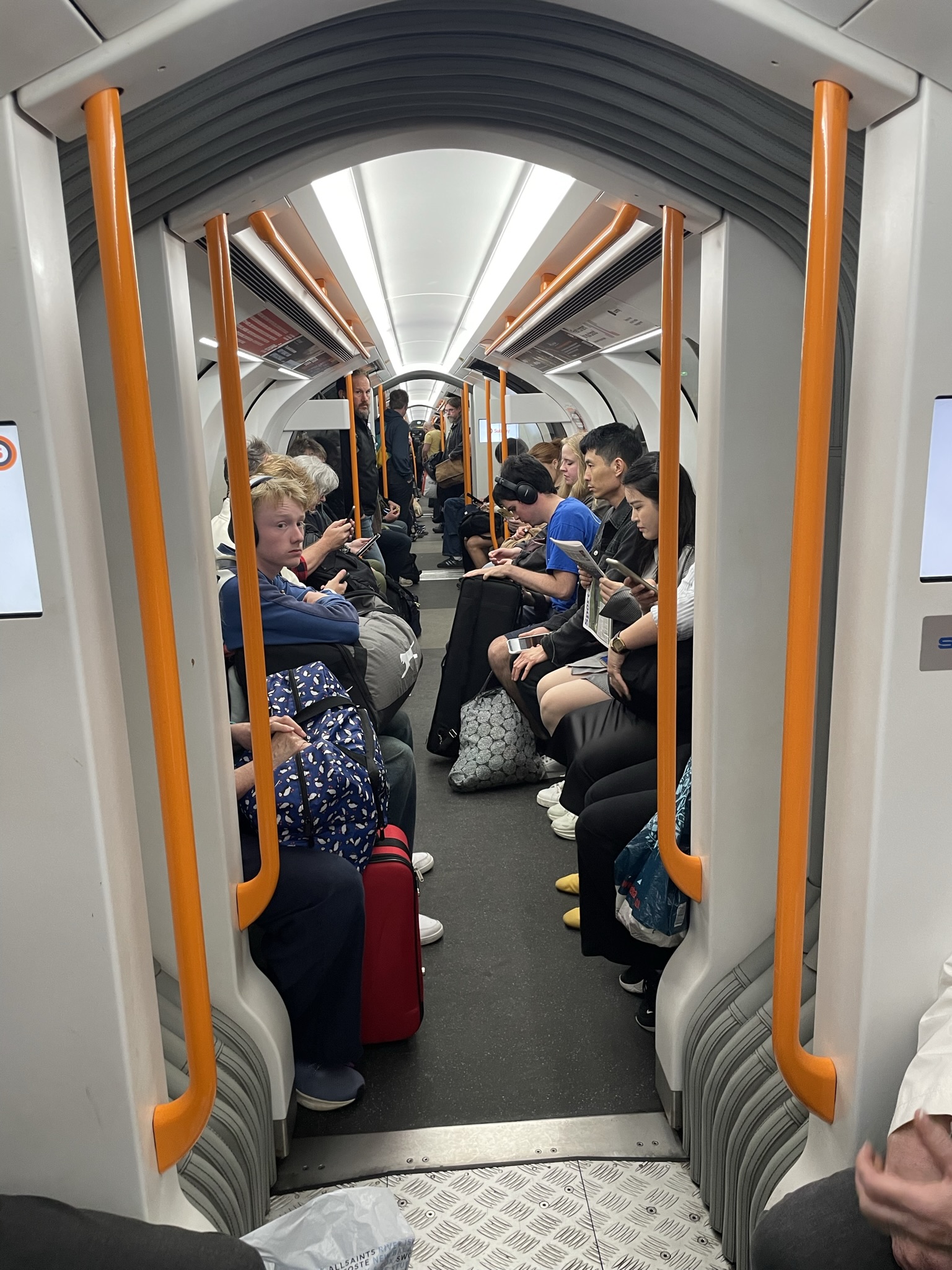
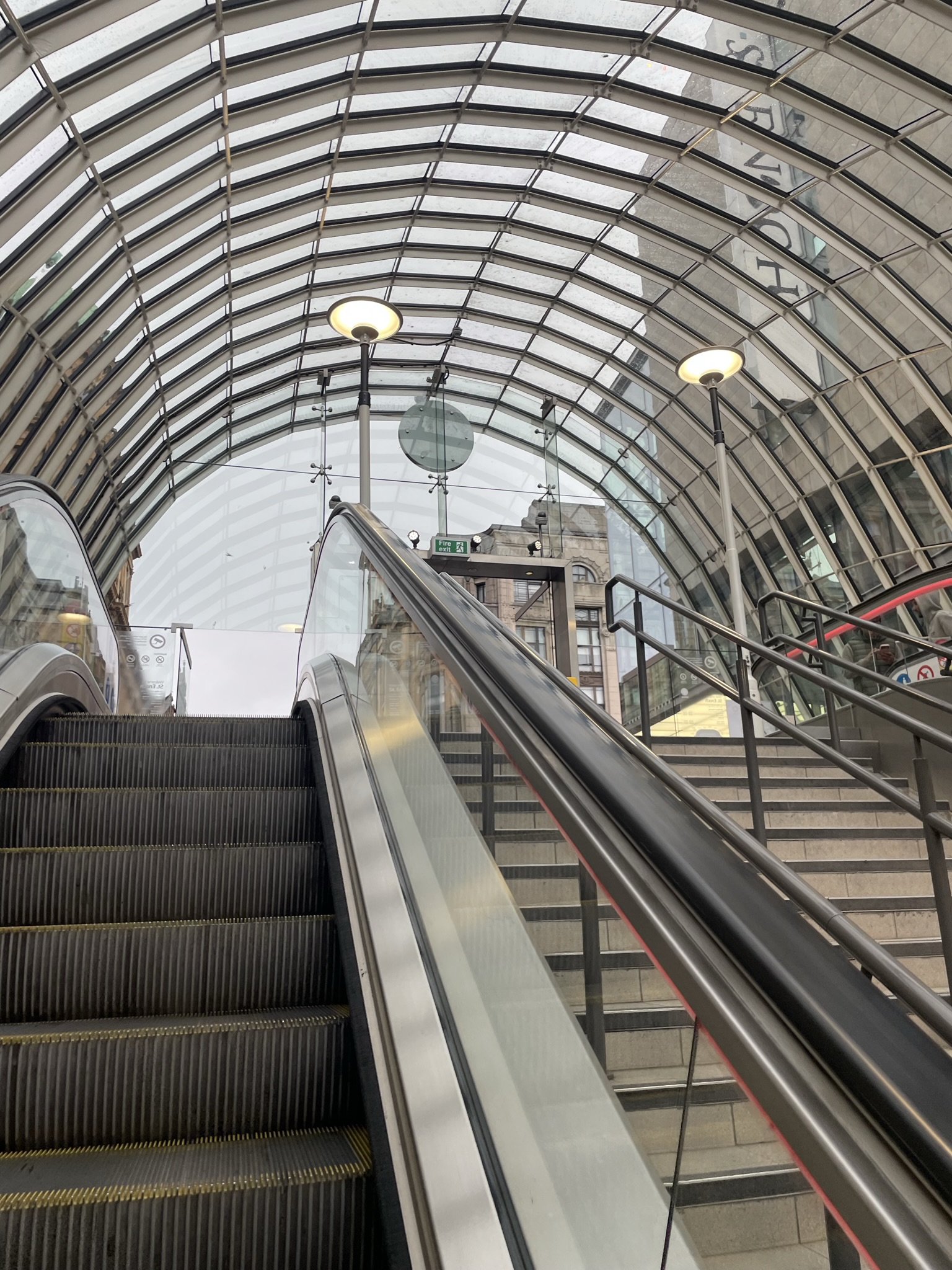
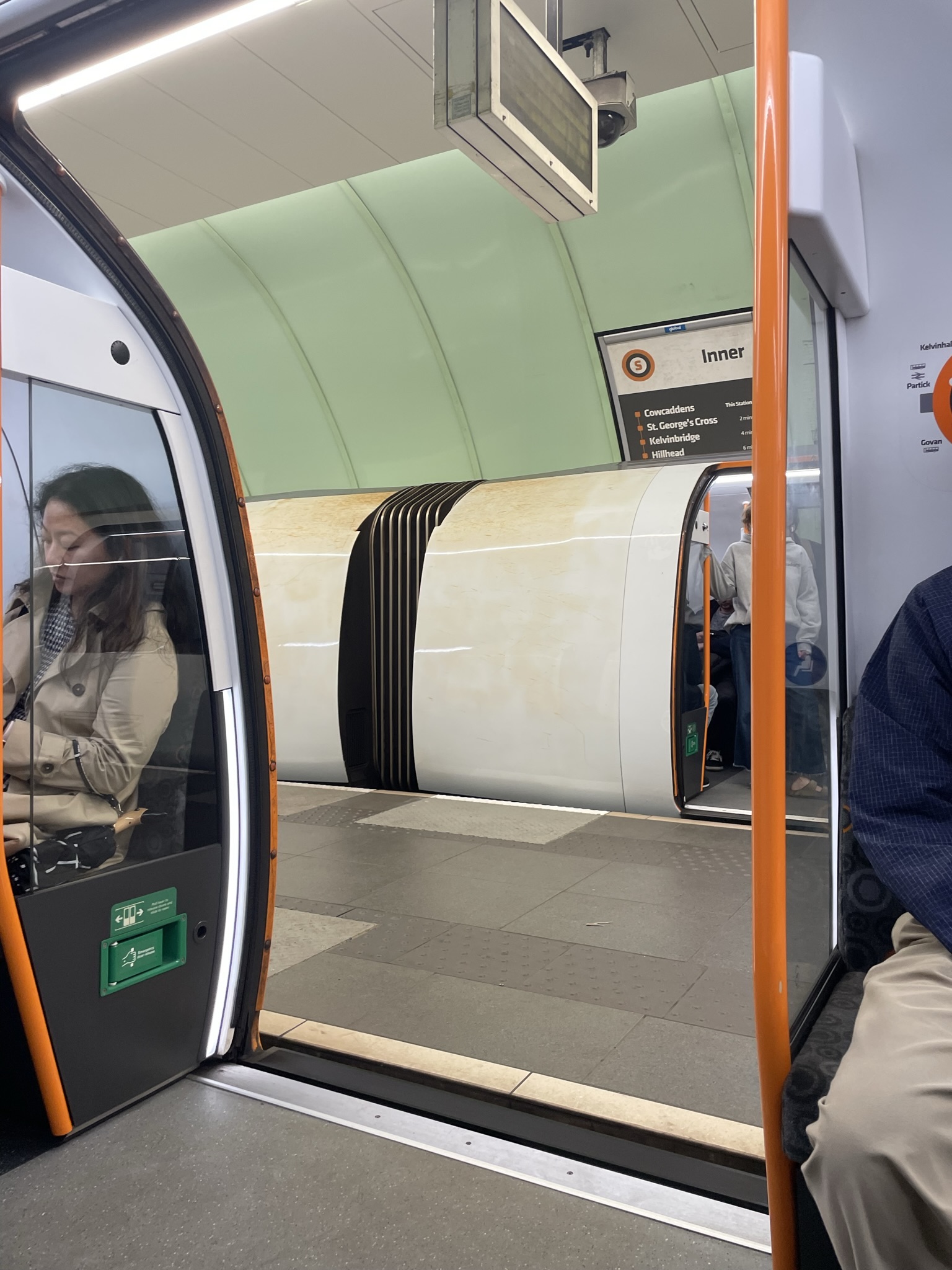
I feel like I’ve been harsh to Glasgow, but I have saved my favourite part of the city for the end: the subway. The world’s third oldest (after only London and Budapest), opened in the 1890s, carves a circle underneath Glasgow, a perpetual pair of loops creating a fairly fast, efficient way to cover ground. The system was originally a cable car, like those in San Francisco, before a 1930s conversion to electric traction. Public investment did not stop there: today the tiny tunnels are plied by the rounded, white-and-orange trains. Everything about the system is tiny, and even I can barely stand full height in the middle of the trains. I greatly enjoyed it and shared this at length to Hannah on our last night over a dinner of neeps (parsnips), tatties (potatoes) and haggis (…haggis). We also talked about what we enjoyed from the Fringe shows we saw and our Scottish days were a nice reminder for me of the unexpected positives a good partner, experiencing their ‘Woodstock’, can offer the other. I like to think the Glasgow Subway was equivalent for her. The next day it was on to London on another cross-country train.

