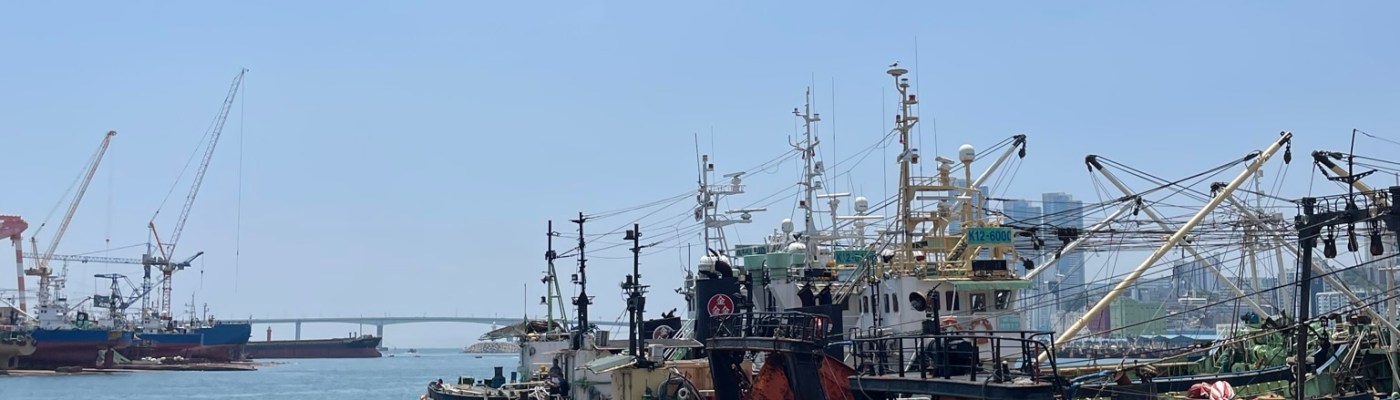
Within a few short hours KTX had effected its magic, spiriting us from our Jeonju respite onto Busan, the second largest Korean city. Though several orders of magnitude smaller than Seoul, Busan is still home to some 5 or so million spread along the undulating coast at the southeastern extreme of the peninsula. It feels drastically different than the capital, a sensation immediately apparent on exiting the train station and facing out over Busan Square towards the steep green mountains ringing the city, flanks assaulted by buildings climbing their way up. A feeling of openness, a sense of looseness. Fewer dress shirts, more shorts and sandals. We watched Busan pass by from a cab on the way to our hotel, structured highways and tower estates up against the shoreline, winding past said green hills punctuating the landscape. We were greeted at multiple turns by the city’s current branding mark: “Busan is Good”. We’ll see, but Busan was off to a strong start.
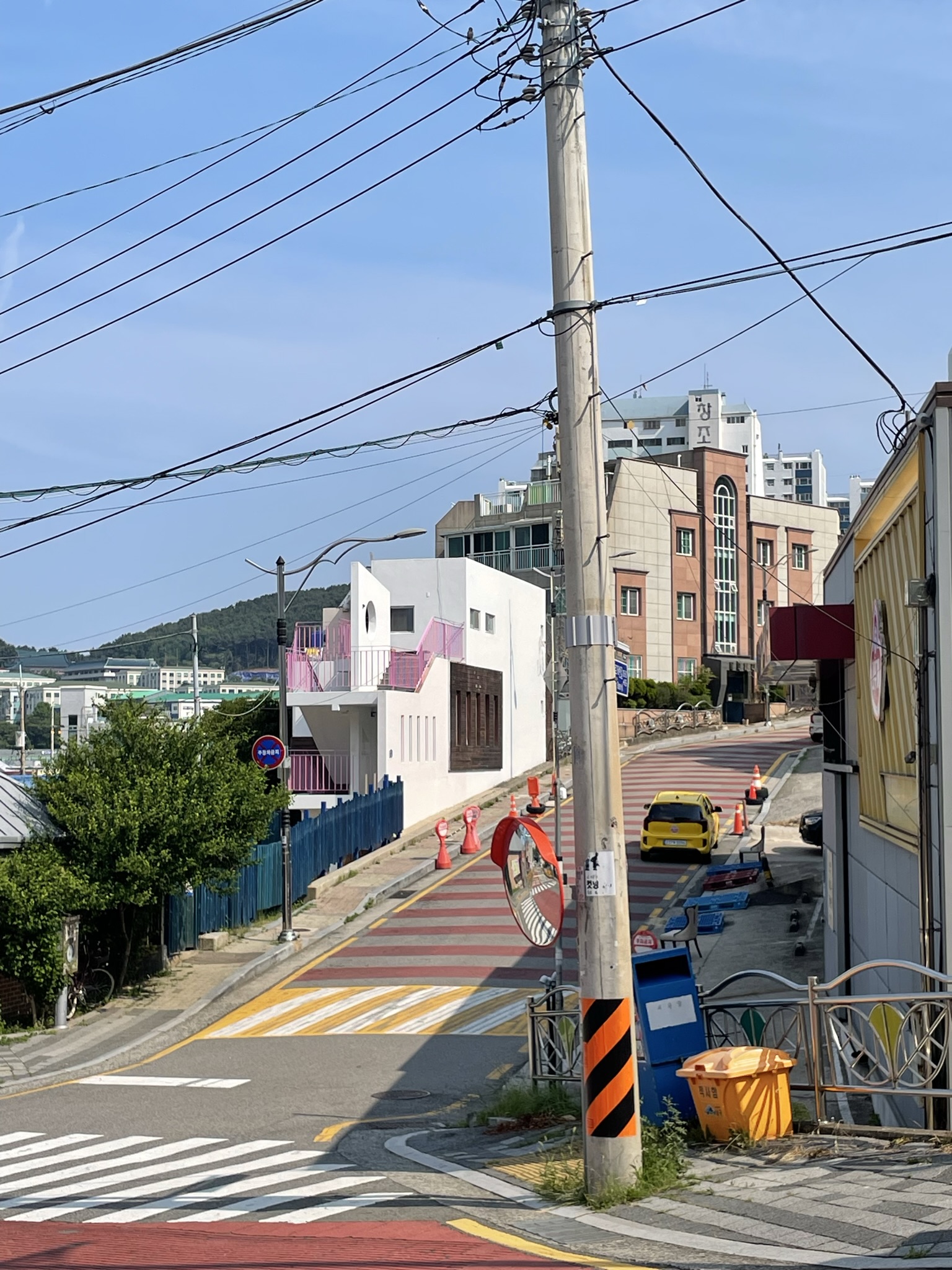
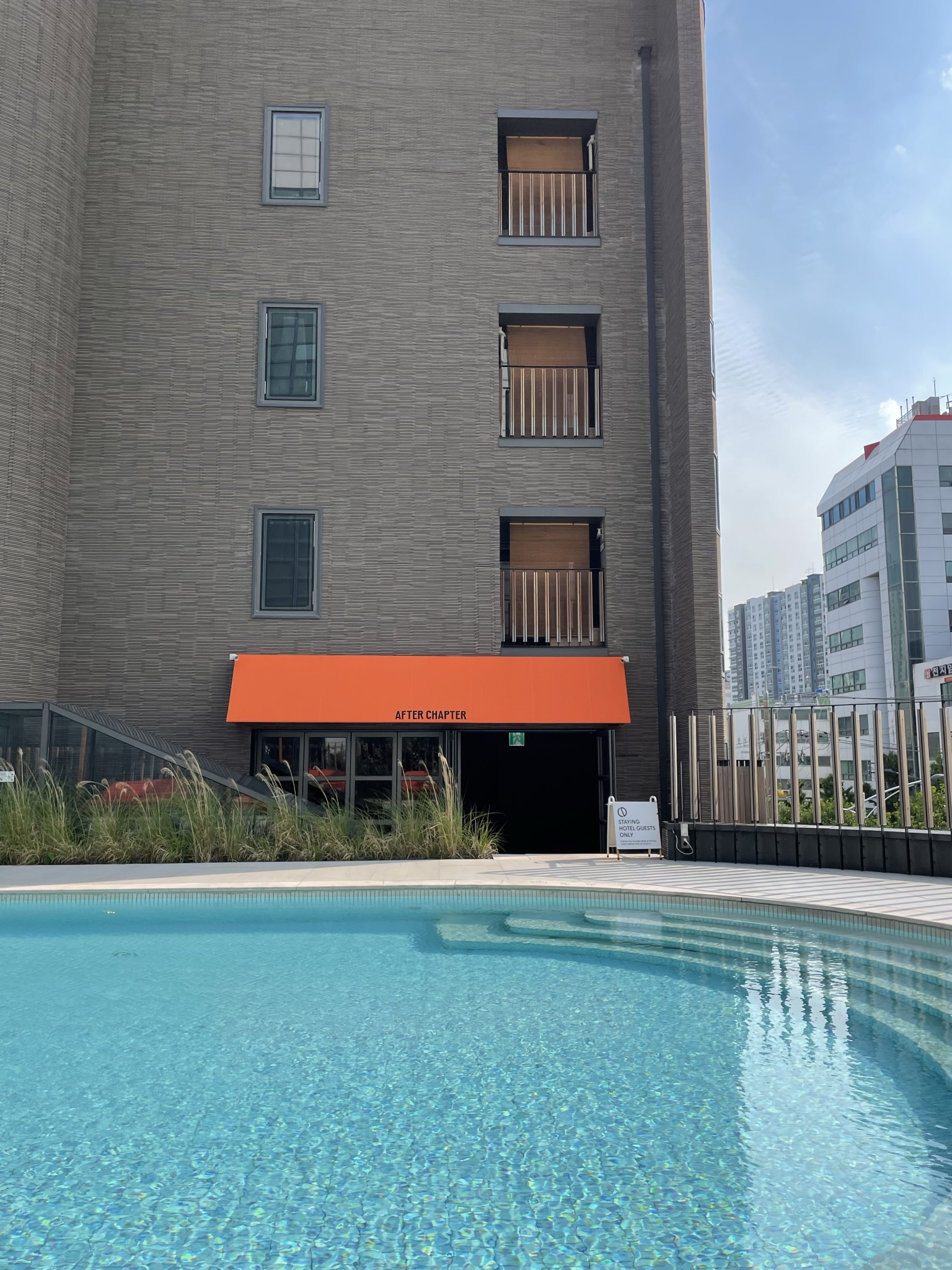
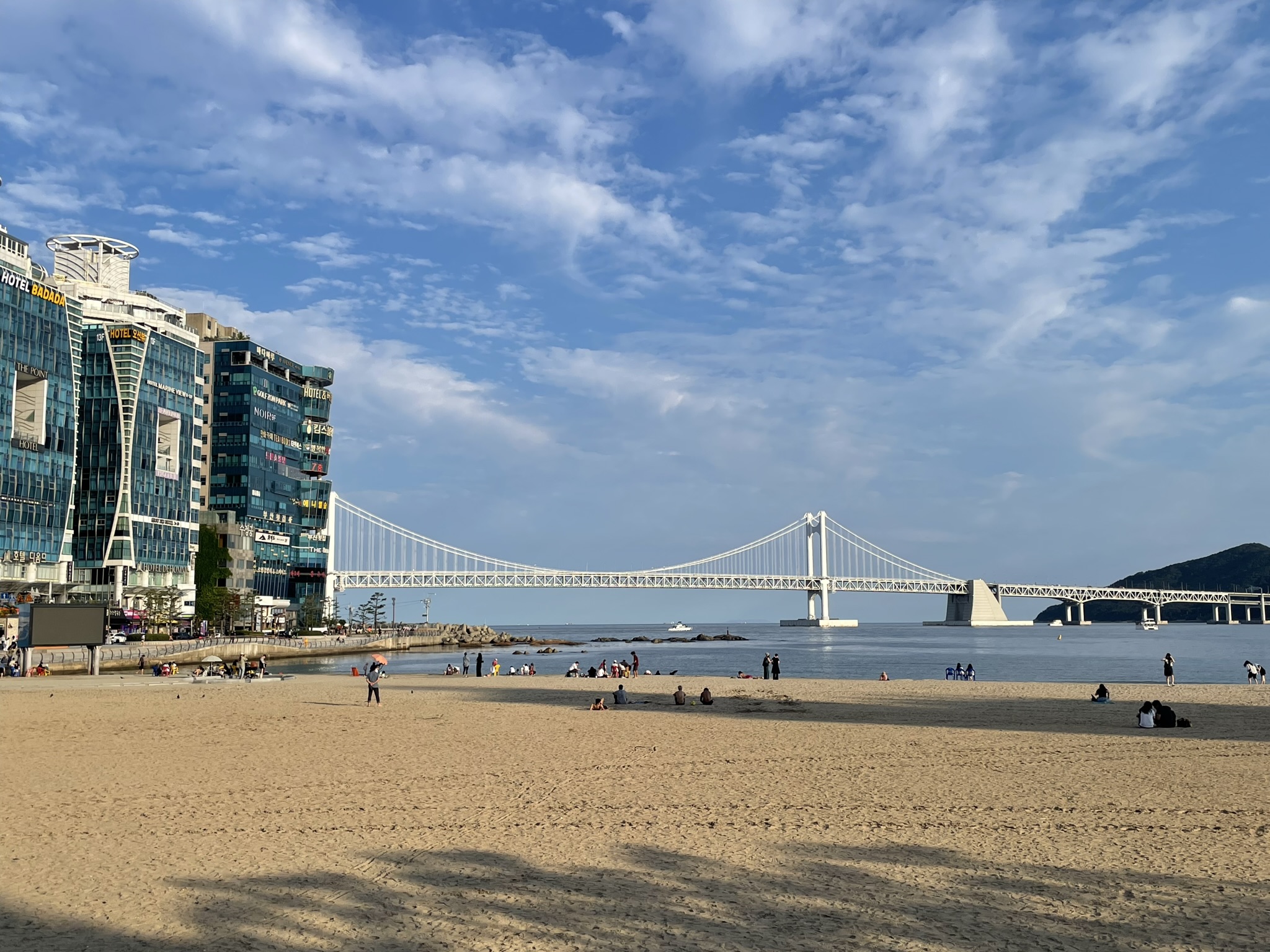
Our hotel was set two blocks back from Gwangalli Beach and a short walk to a subway station, an absolutely deliberate measure of location planning that rewarded us handsomely. Gwangalli is a long, curving stretch of sand facing a placid bay, unfortunately but innocuously framed by a highway suspended over the sea. The beachfront itself and accompanying boardwalk is a constant stream of people moving, runners and cyclists weaving through in the heat of the day. The streets behind are edged, unsurprisingly, by a string of bars, cafes and restaurants of varying quality. Tourist schlock abounds but does not quite manage to ruin the vibe. Our hotel, selected from a slew of similarly priced options, won our custom through its very weirdness. Our room had a curving exterior wall and a Flintstones-meets-Miles Davis aesthetic. No tea kettle but a built-in record player. The third floor pool didn’t hurt, especially at the end of the trip after facing down hot, sunny weather and long city walks.
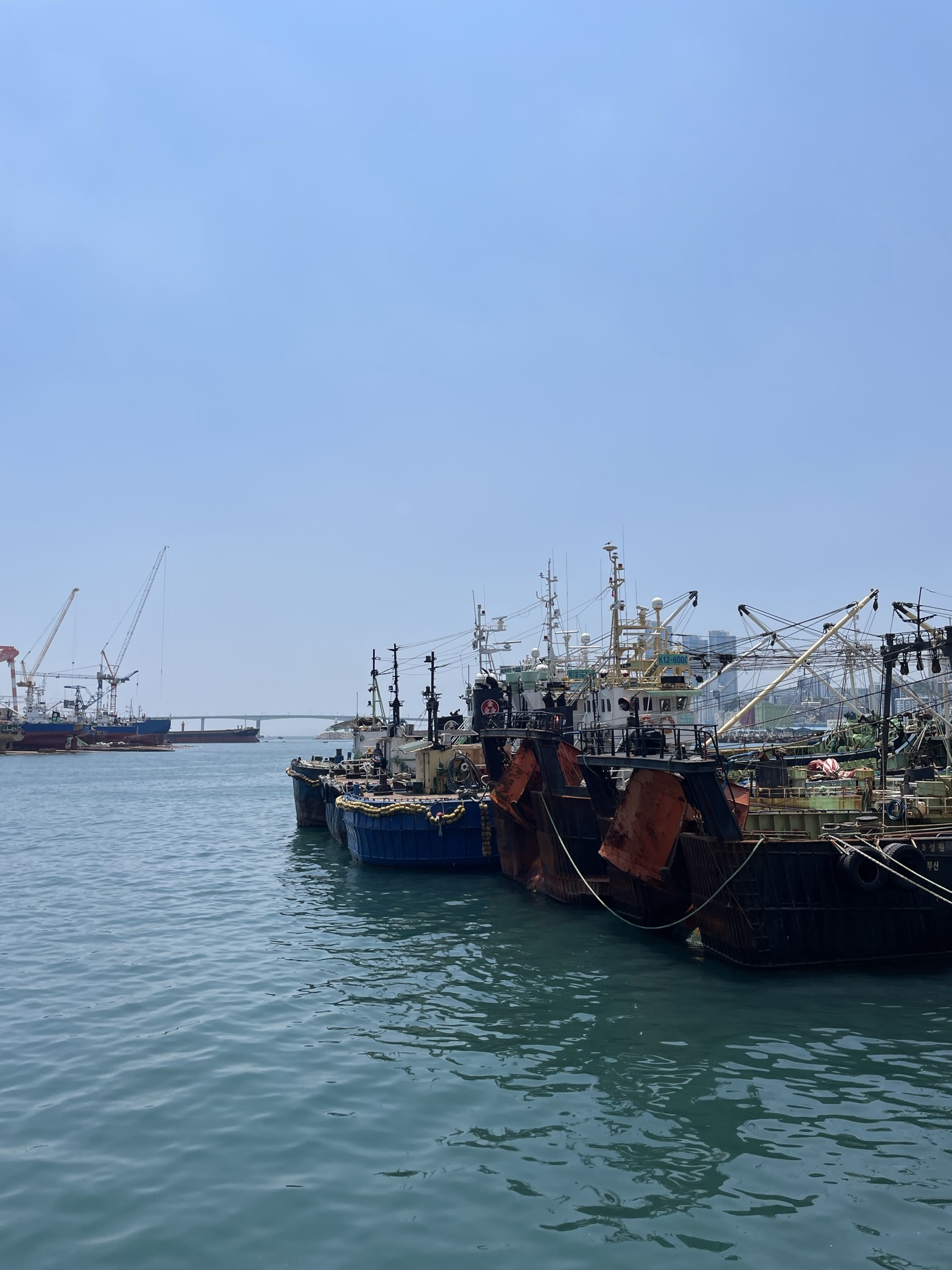
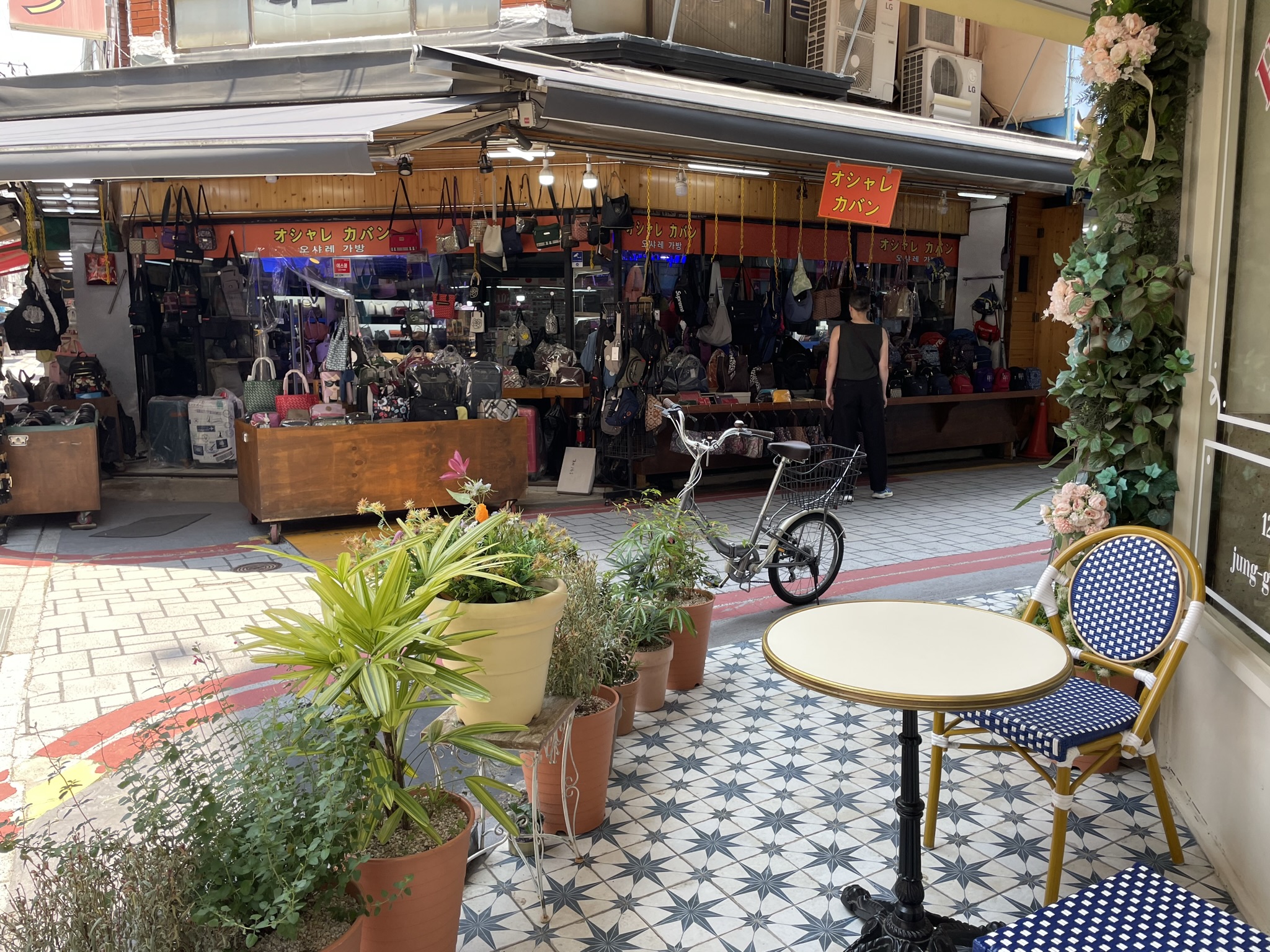
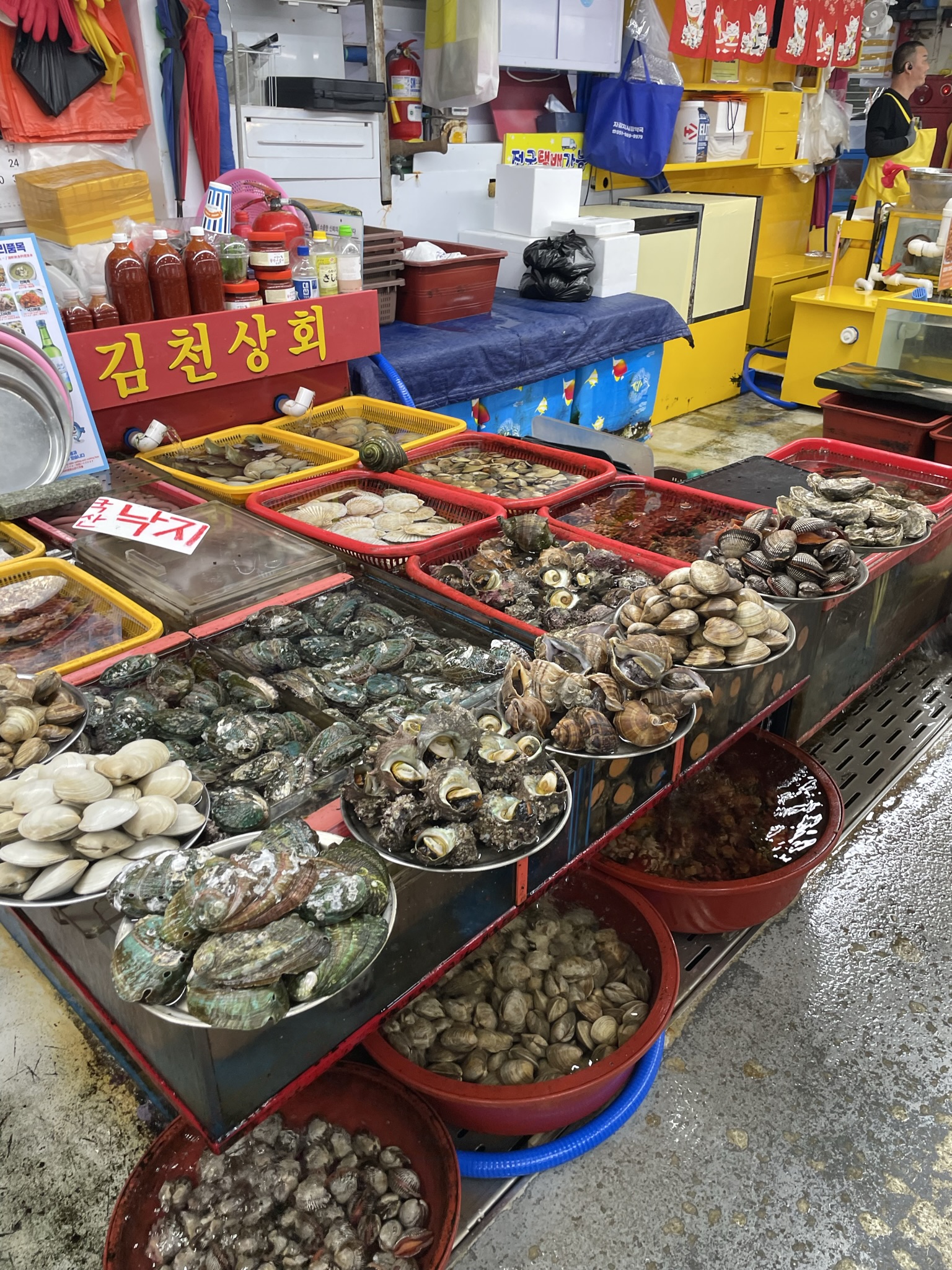
Though time was limited, we did make our way back to the city centre to take in Busan’s sights. The first on the list was the Jagalchi Fish Market. Here the entire bottom floor, very appropriately when all the water is considered, is filled with stalls selling fish, eels, shrimp, prawns, clams, oysters, octopus, squid, and many other types of seafood that I couldn’t readily identify. Fish is, thankfully, a broad category. As the untroubled vendors will tell you in varying levels of English and pantomime involving a laminated menu, you can buy any of the creatures on offer, alive or dead, and bring them upstairs to be cooked or cut fresh at a restaurant table. The restaurants take it a step further, offering to take the effort of buying the seafood out of your hands. While not a hard sell, it is the most harried we saw Koreans at any point on the trip. Another point on cleanliness – I have never seen a fresh market, nevermind a seafood market, so clean and well tended. Another point to Korea.
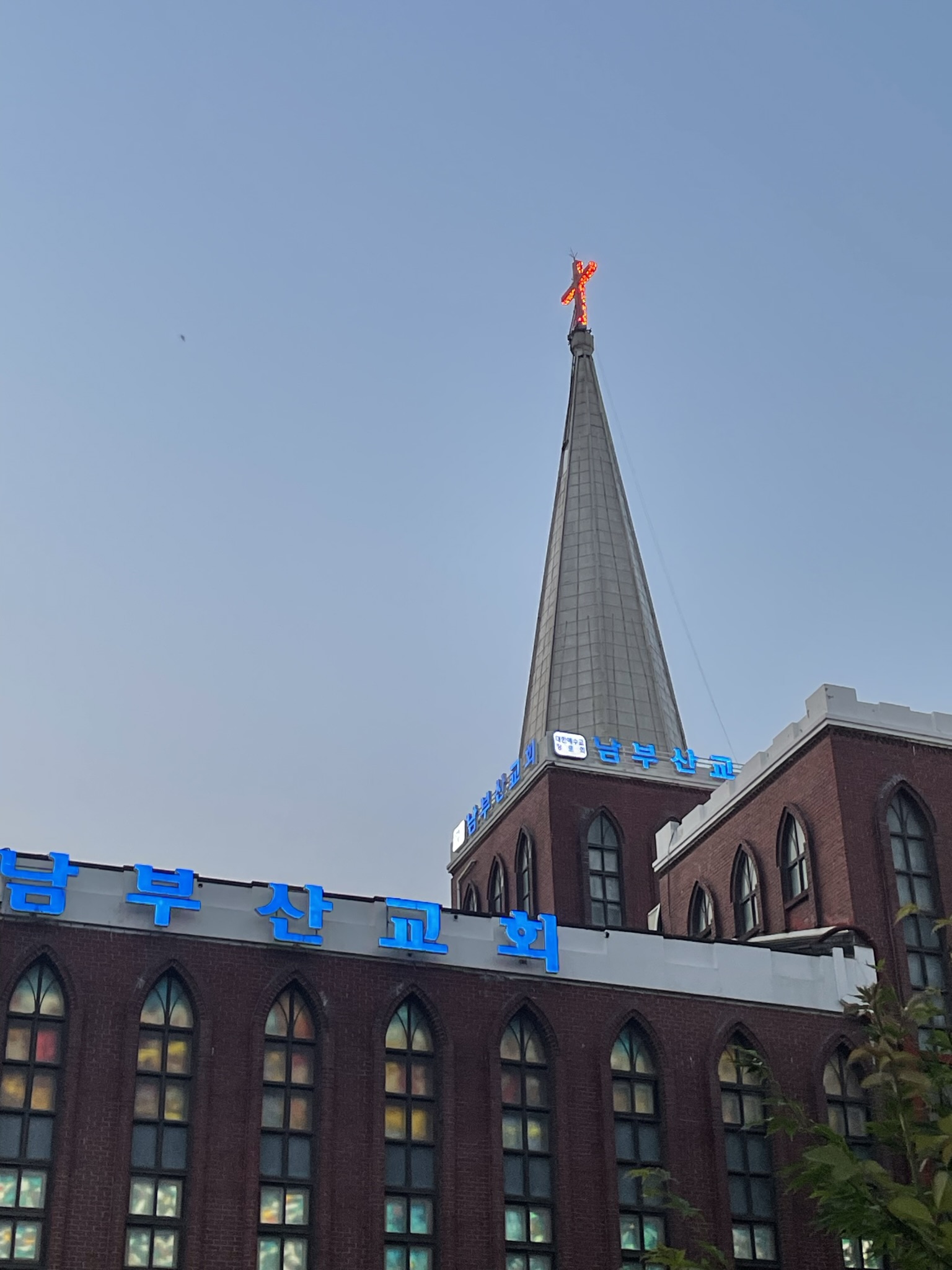
Jagalchi Market sits at the head of another inlet, a stretch of mostly flat land fanning back from it. Much is covered by extensive markets, a practice going back hundreds of years to the Joseon dynasty, who founded the port city in the 14th century and, two hundred years later, staved off a pair of Japanese invasions. Efforts to hold outsiders at bay ended in 1878 with the establishment of a House of the Japanese, a small foreign concession to the post-Meiji resurgence across the sea. At the same time, Protestant missionaries found their way in, proselytizing so successfully that today nearly half the population is at least nominally Christian and churches can easily be found across the country. Post-war, Busan became the central point of import, a focus of the 20th century Korean economic miracle. The role of port and market still seems prominent here, a gridded web of narrow streets tying together sprawling markets all the way back to the hillsides, where the commercial forces crash against the steep slopes. The last gasp here is a narrow alleyway lined with bookshops. Sadly almost all were in Korean, but the atmosphere needed no translating.

From the city centre, Hannah and I headed back towards Gwangalli. Hannah proceeded directly back to the hotel for a poolside break with a book, while I stopped off sooner for an exciting afternoon of niche museums. My first stop was the Busan City Museum, the topic area self-evident but nevertheless continuing the streak of well-funded and well-curated Korean institutions. I learned a good deal about Busan’s history, enjoyed the air conditioned break from the midday heat, and put down a few folding paper cups of water from the cooler, a ubiquitous trait of the museums. From here, it was a sharp uphill to the Museum of Japanese Subjugation and Forced Mobilization. The name is a mouthful, the building housing the museum an enormous structure perched atop a hill like a concrete spaceship with a dark, cavernous interior. This was one of the few museum misses for me, the focus bordering too often on hyperbole. Judging by the fairly empty halls, I may not be the only one.
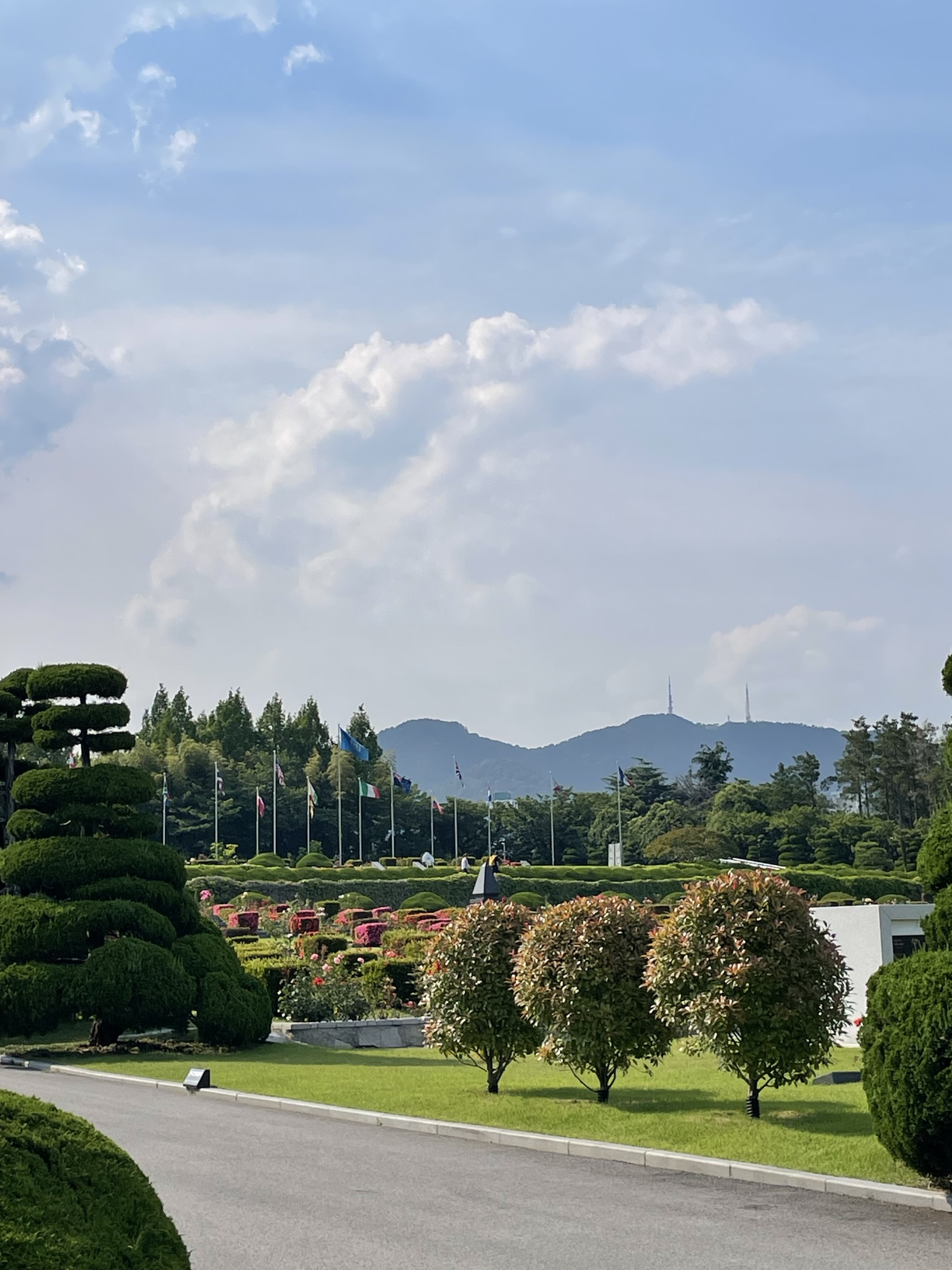
Last stop on my afternoon journey was the nearby UN Cemetery, with waves of tombstones set on a rolling hillside. Busan was, for a brief time, the last redoubt of the South Korean and American militaries, the key remaining city in a tiny cordon of the peninsula after the North’s surprise summer invasion in 1950. From here, aided by an amphibious landing at Incheon, the UN military forces pushed the North back toward the Yalu River at the Chinese border. The cemetery is the final resting place for some of these soldiers, and there is a small chapel on the grounds where an attendant hit play on a DVD just for me. It was another reminder of the senselessness of war, apparently a message much in need of repeating.
South Korea, at any rate, made the most of those sacrifices. Today the country is well-off, vibrant, and open. Cities are clean, with excellent public transport – Busan’s city bird appears to be the seagull, and a gull’s cry heralds the next train’s arrival. On the streets of Seoul and Busan, nuns in grey habits and white trim share the sidewalk with young professionals pushing their dogs (and sometimes even children) around in strollers. CCTV is everywhere, to the point that a number of automated, 24-hour businesses have sprung up, a business model I cannot imagine succeeding back in Canada. Tarot card readings and automated photo booths, to judge from our walks, are also enjoying a moment. One particular innovation relates to coffee culture – there is a discount on takeaway beverages. It’d be nice to see this adopted at home.
Too quickly though our time here came to an end. This was true for Korea and especially so for Busan, which I can say we underestimated. A future return visit was discussed over our last meal, another generous Korean barbeque spread near the hotel. Wandering down a side street back toward the beach, we stopped in at Hugus Brewing, a small bar space with 15 or so seats. We were quickly won over to the tomato ale and fell into conversation with the other patrons. Hannah chatted with a Korean woman who had spent time living in London before returning, drawn back by the more relaxed lifestyle. I spent my time hearing from William, a Panamanian landscape designer who had come to Korea for school and stayed on for work. He told me how, after more than six years, he had been on the verge of returning home before his move to Busan. Even after just a couple days, I could understand why he opted to stay. Busan IS good.
 Zak Abroad