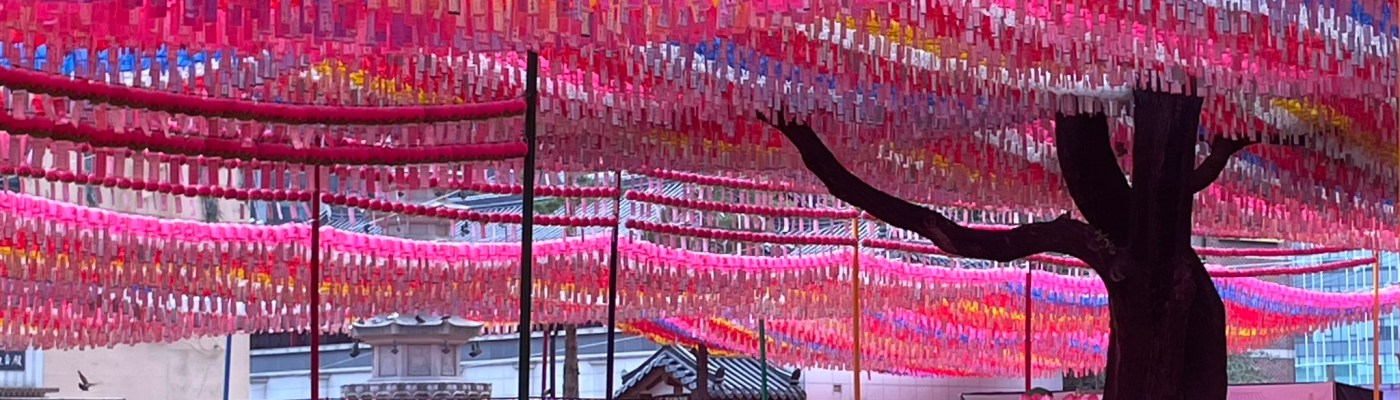
Seoul spreads on and on, squeezing through valley floors and climbing over craggy hills before reaching the shores of the Yellow Sea. Even here, fresh soils have been crafted for the relentless conurbation, playing host to new towns and Incheon Airport. All this is apparent from above, circling the megacity before touching down, a sense of scale and drive reflected on the streets and metro cars of the Korean capital. This is bballi bballi, translated as ‘quickly’, in action, evidence of the wholesale transformation of South Korea since the 1953 armistice. A booming economy, burgeoning cities, and recently defended democratic revolution mark the country’s remarkable last century, washing away most physical scars from the once-devastated landscape. This was one driver for our June trip, along with great food and a direct flight. I had been once before, in 2010, to visit English-teaching friends in Seoul and take a weekend trip to Gyeongju but my memories were hazy – when asked by Hannah what to expect on the ground, I didn’t have any good answers.
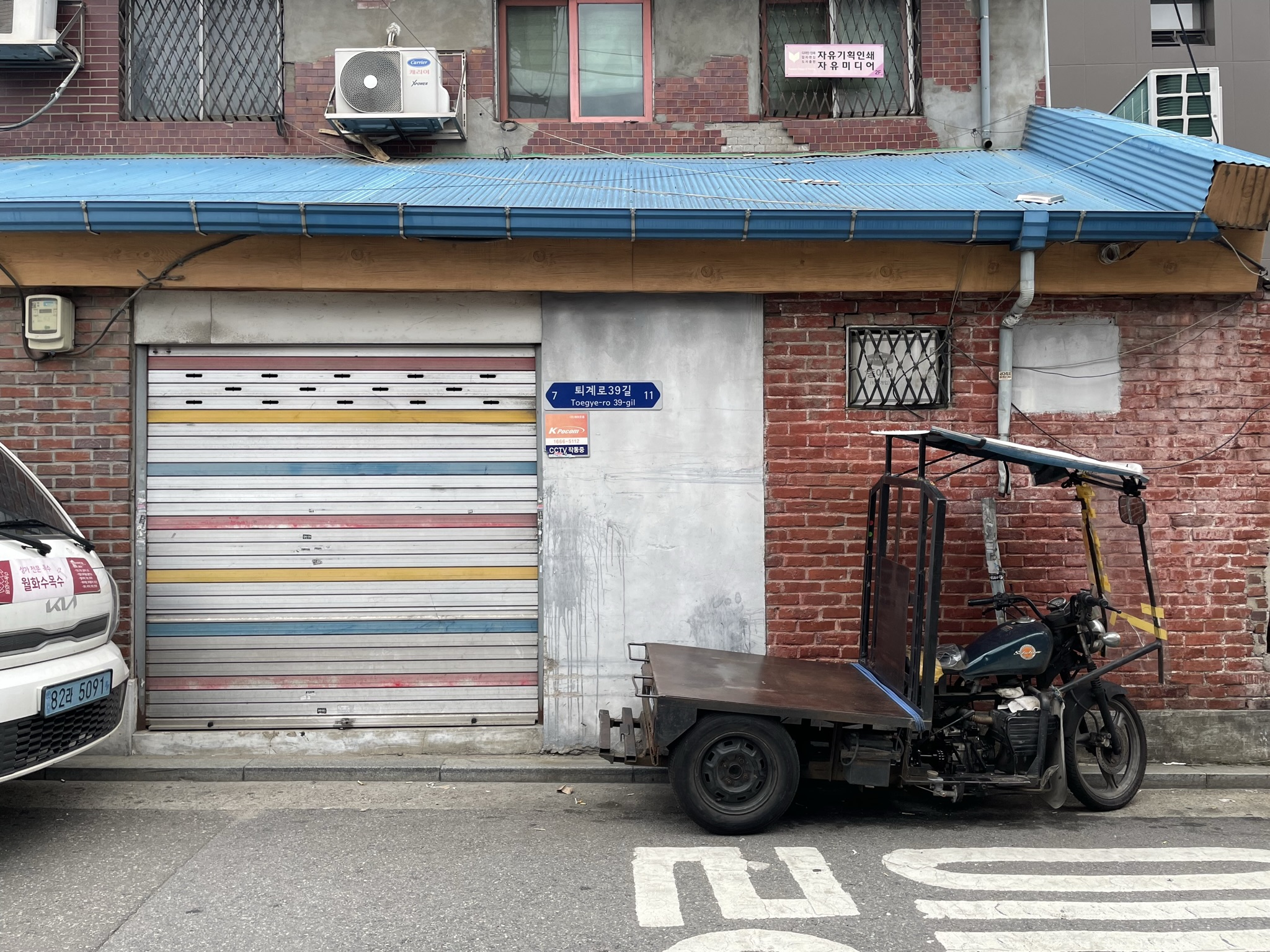
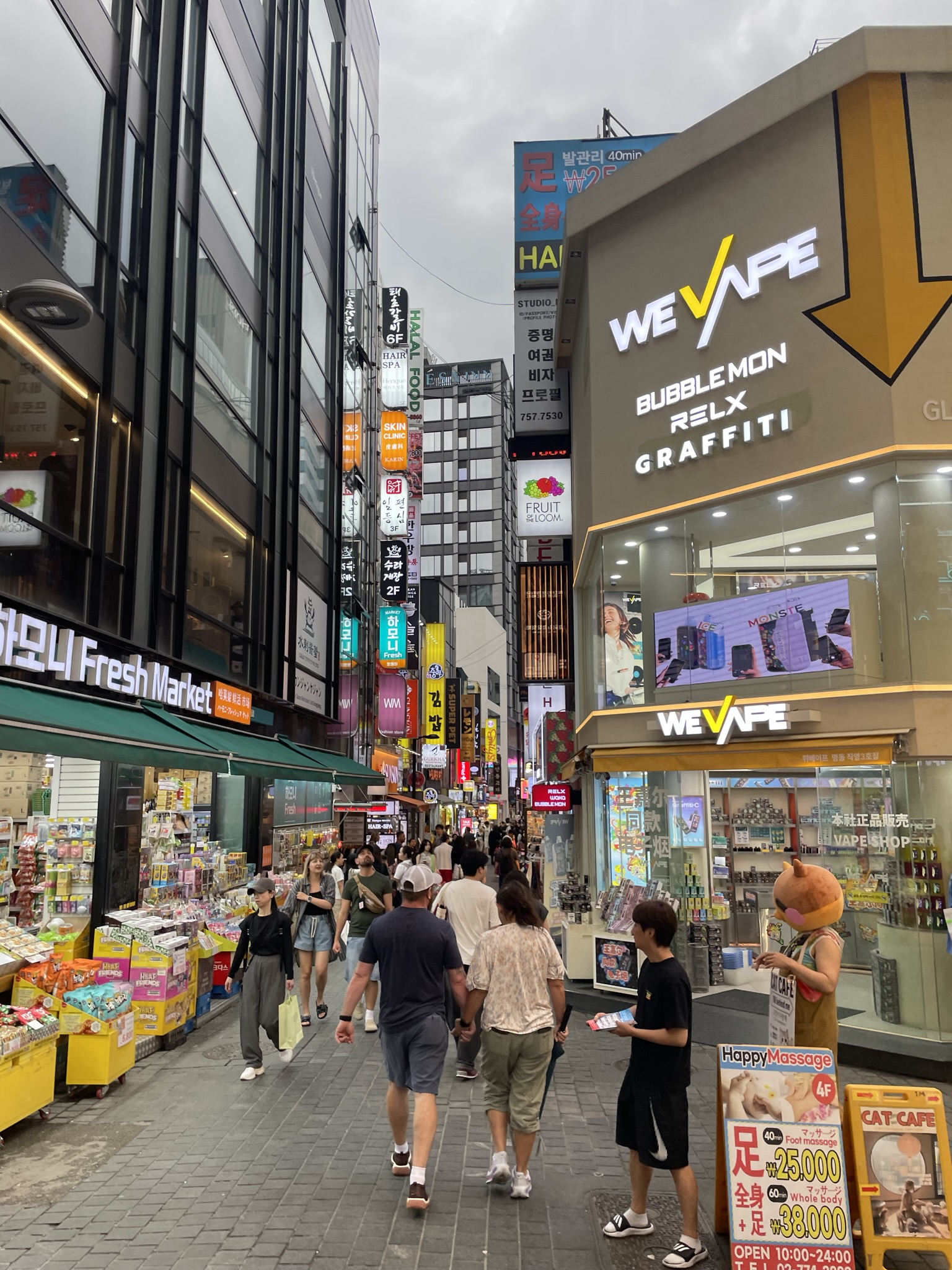
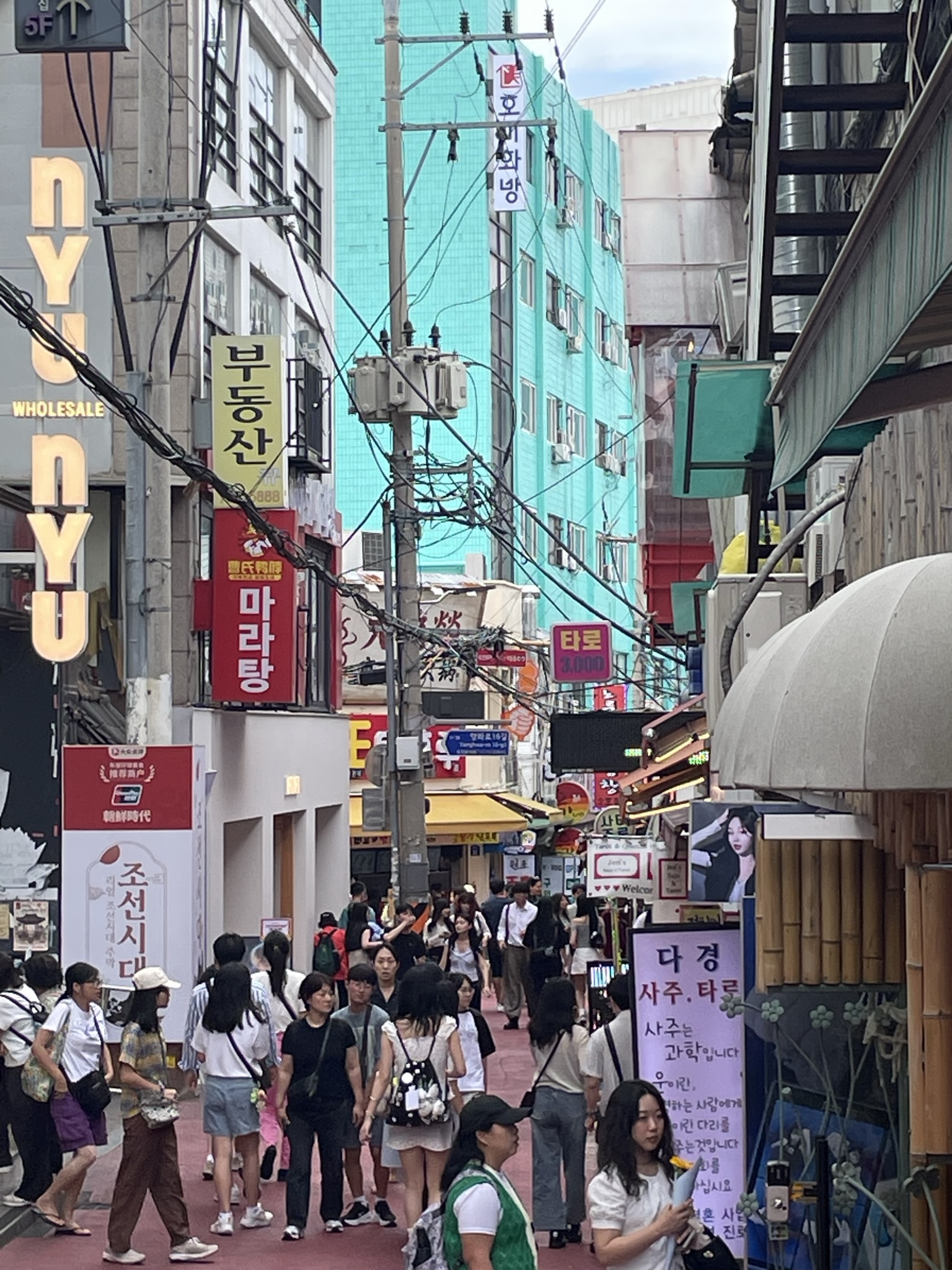
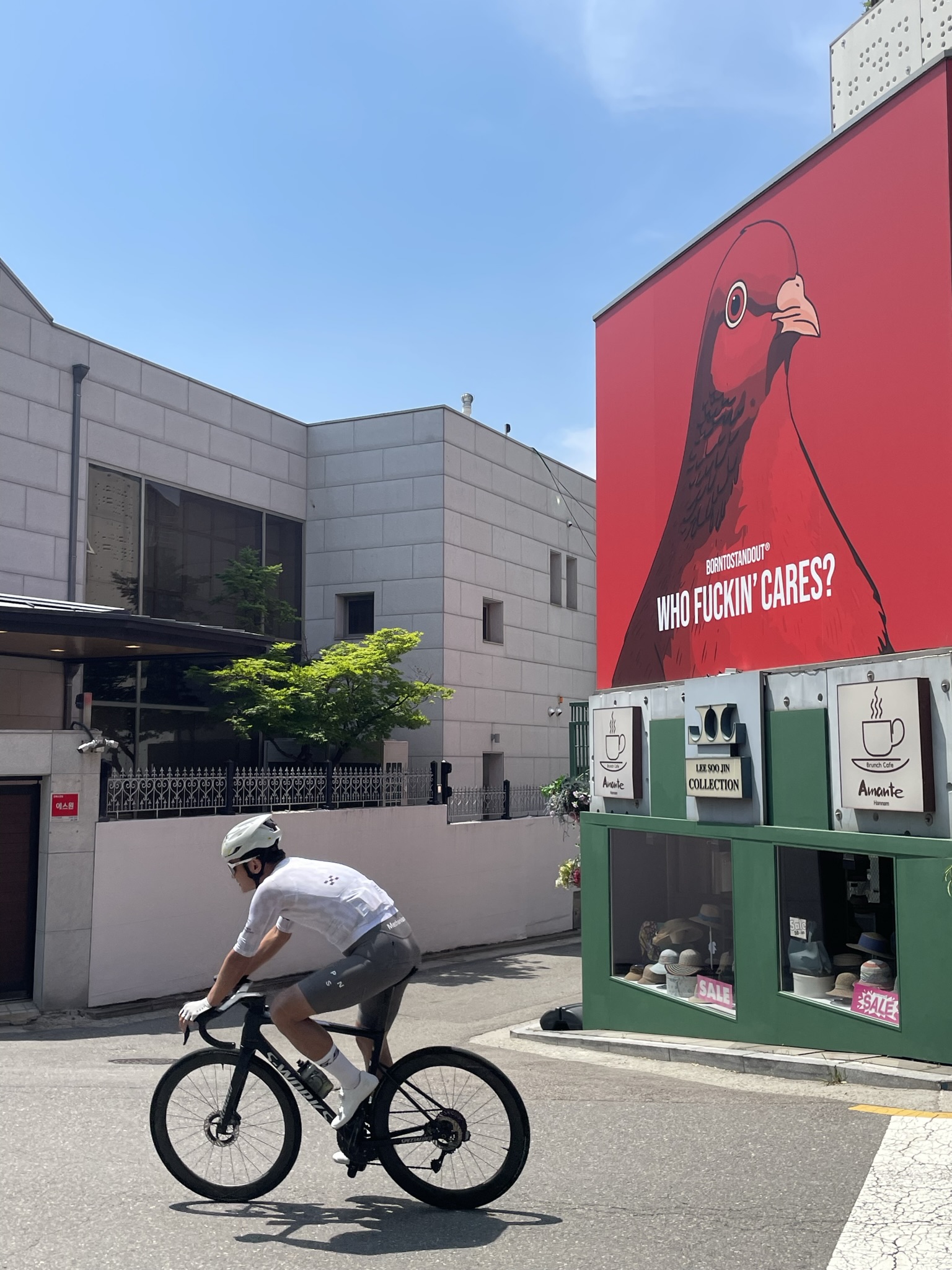
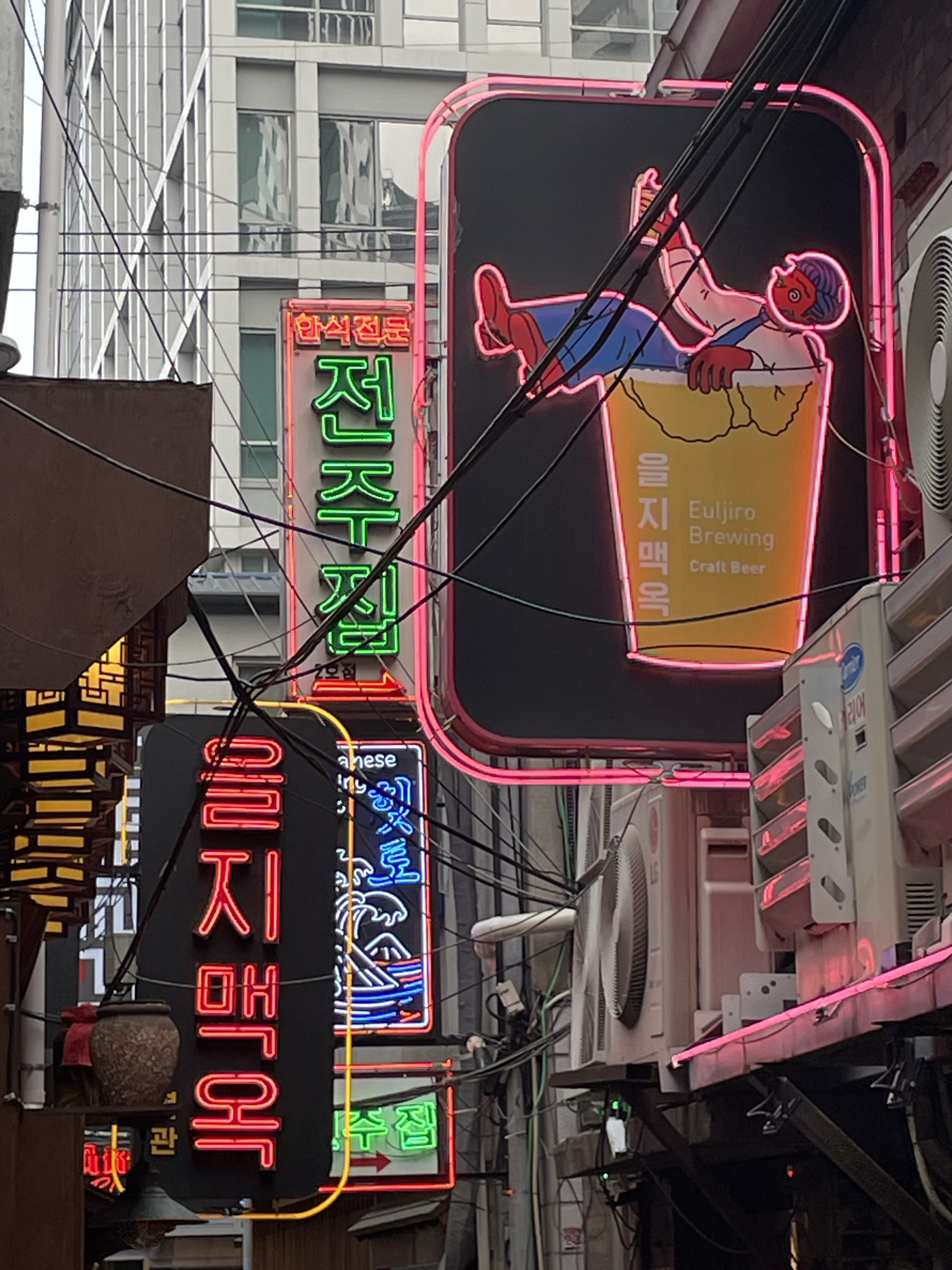
Arrival was a blur, a train ride into the center of the city where our hotel sat atop a subway junction, handy for navigating the boroughs of the megacity spread along the curving banks of the Han River. Outside our door near Euljiro-3 and tucked behind the broad, straight avenues, sat a narrow and twisting lane bathed under the glow of neon and bright lights. We quickly discovered this twisting back alley as the locus for late night activities, a hive of restaurants and bars packed from sunset on, and we returned here regularly for the crowds, food and drink. We spied similar streets scattered throughout Seoul, inevitably busy with foot traffic and boisterous conversation in places like Itaewon, Iksangdong, Myeongdong, and the area around Hongik University. The mixture of people varied by place – some crowded with students and teens, others seemingly filled with a quotient of tourists, or working stiffs blowing off steam.
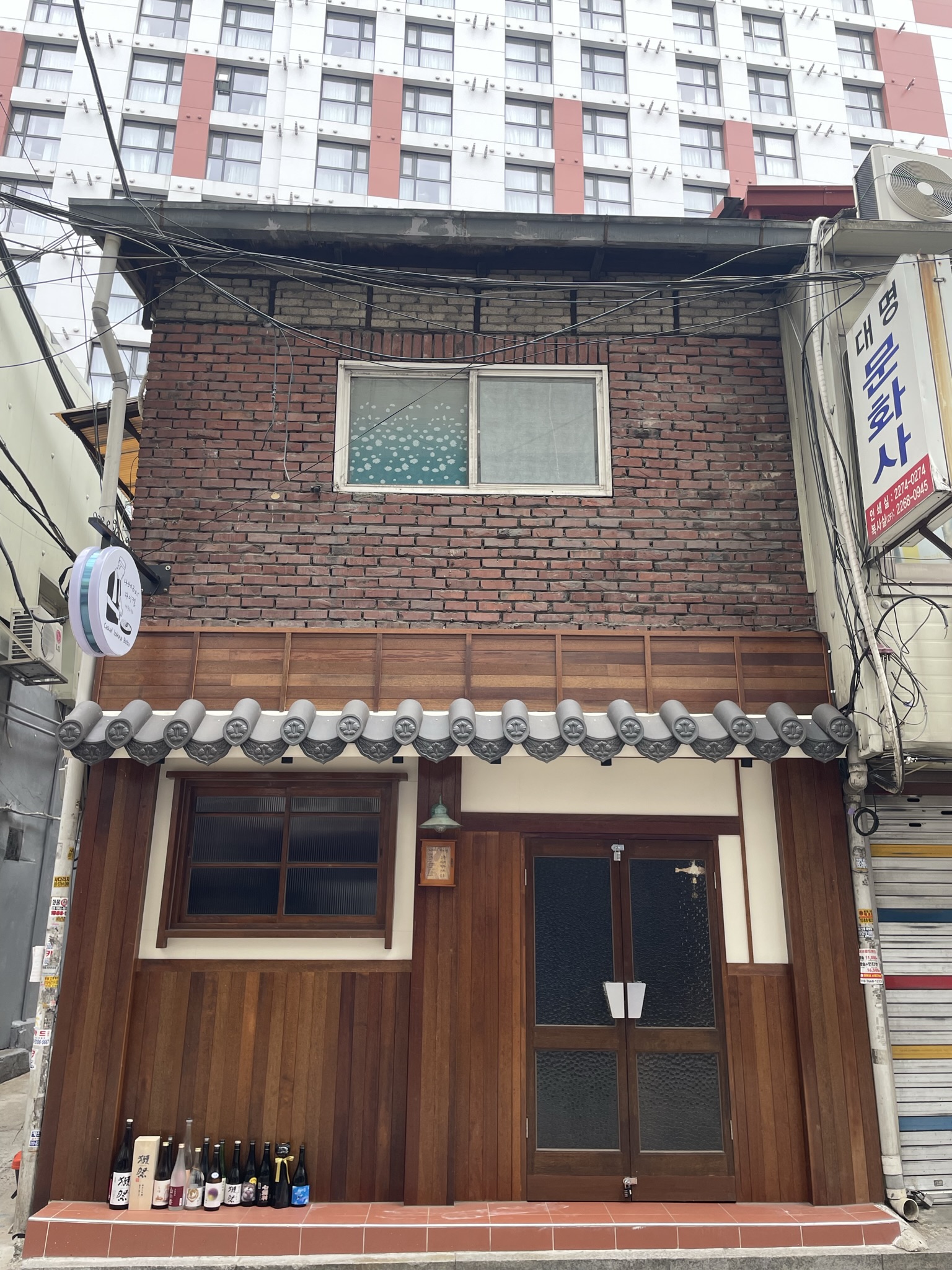
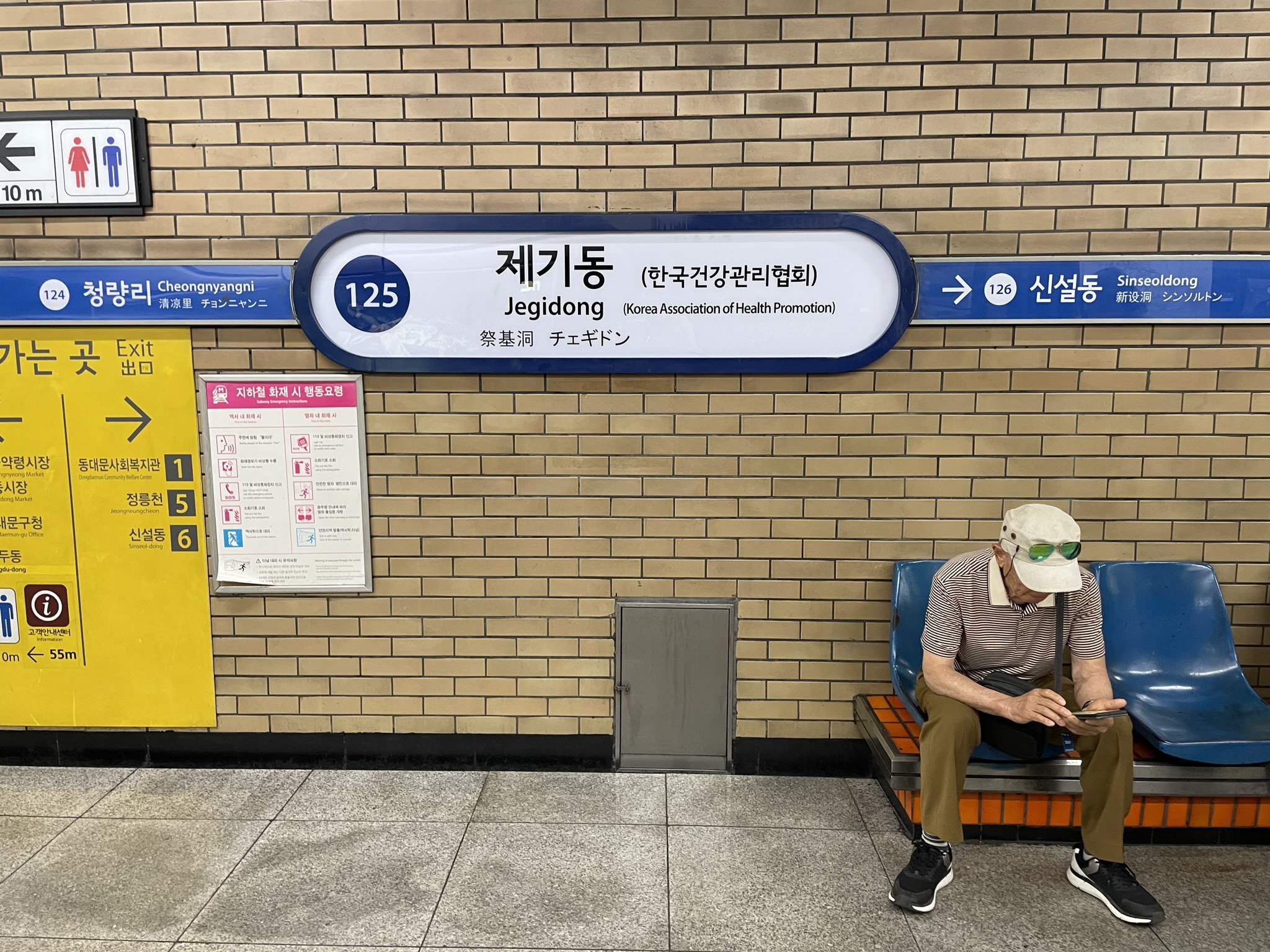
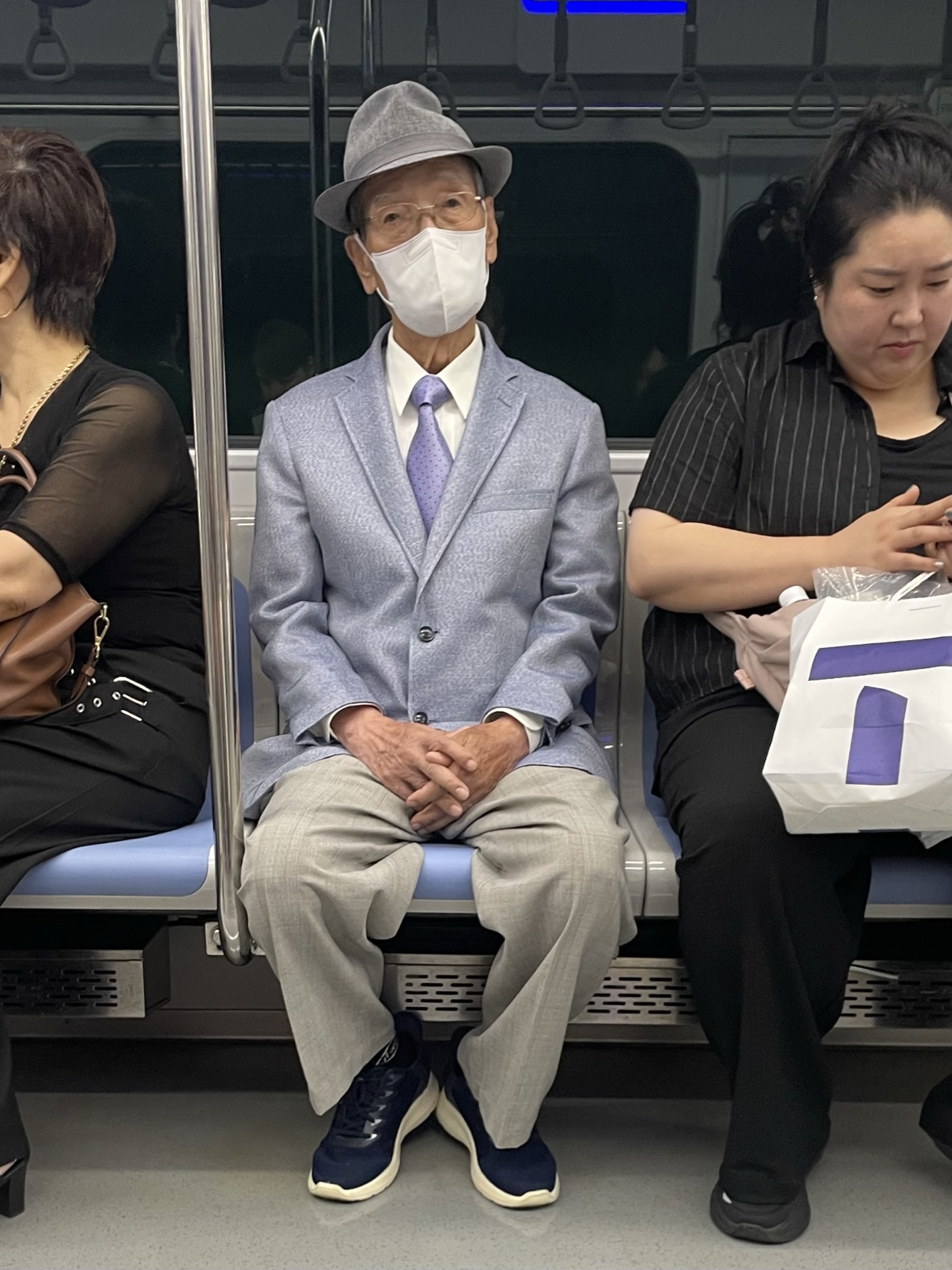
The first day was one of the hotter ones, the air thick and temperatures reaching over 30. I slept deeply the night before, exhaustion from the flight getting the best of me and was still a bit out of sorts as we tramped out for the National Museum of Modern and Contemporary Art, near the Gyeongbokgung Palace complex. The palace is the heart of old, imperial Seoul back when it was known as Hanyang. From here, for hundreds of years, the Joseon dynasty balanced control of the peninsula against its larger neighbours successfully until 1910, when the Japanese annexed Korea as a colony, a situation that would only be resolved following the end of World War II. Both the museum and the palace were closed that day, an oversight on my part that I will blame on fatigue. As a consolation, the National Folk Museum of Korea, housed in a temple-like modern construction, was open, free, and gave an excellent overview of Korean history and customs for us novices. It was a nice silver lining for our efforts.
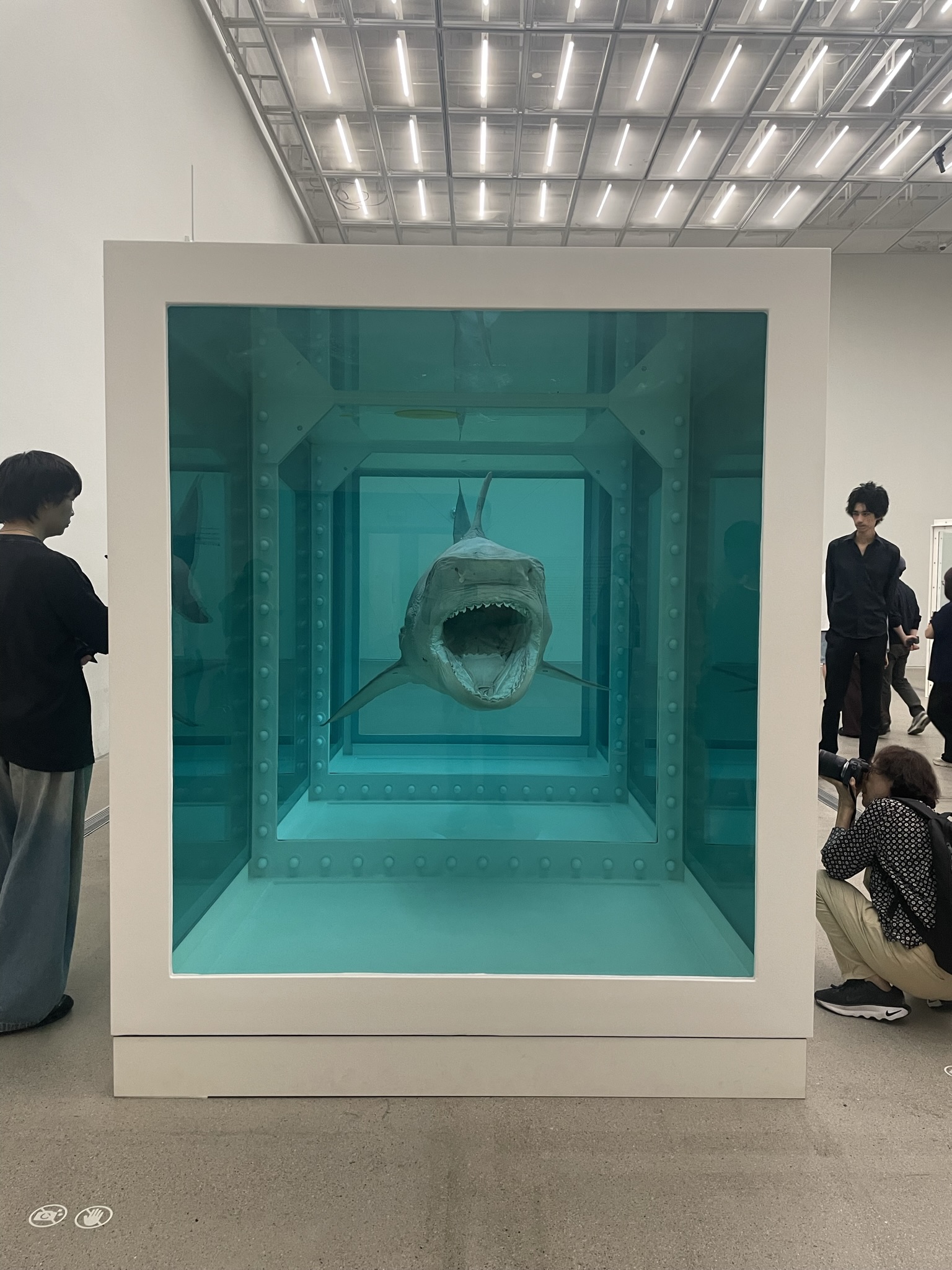
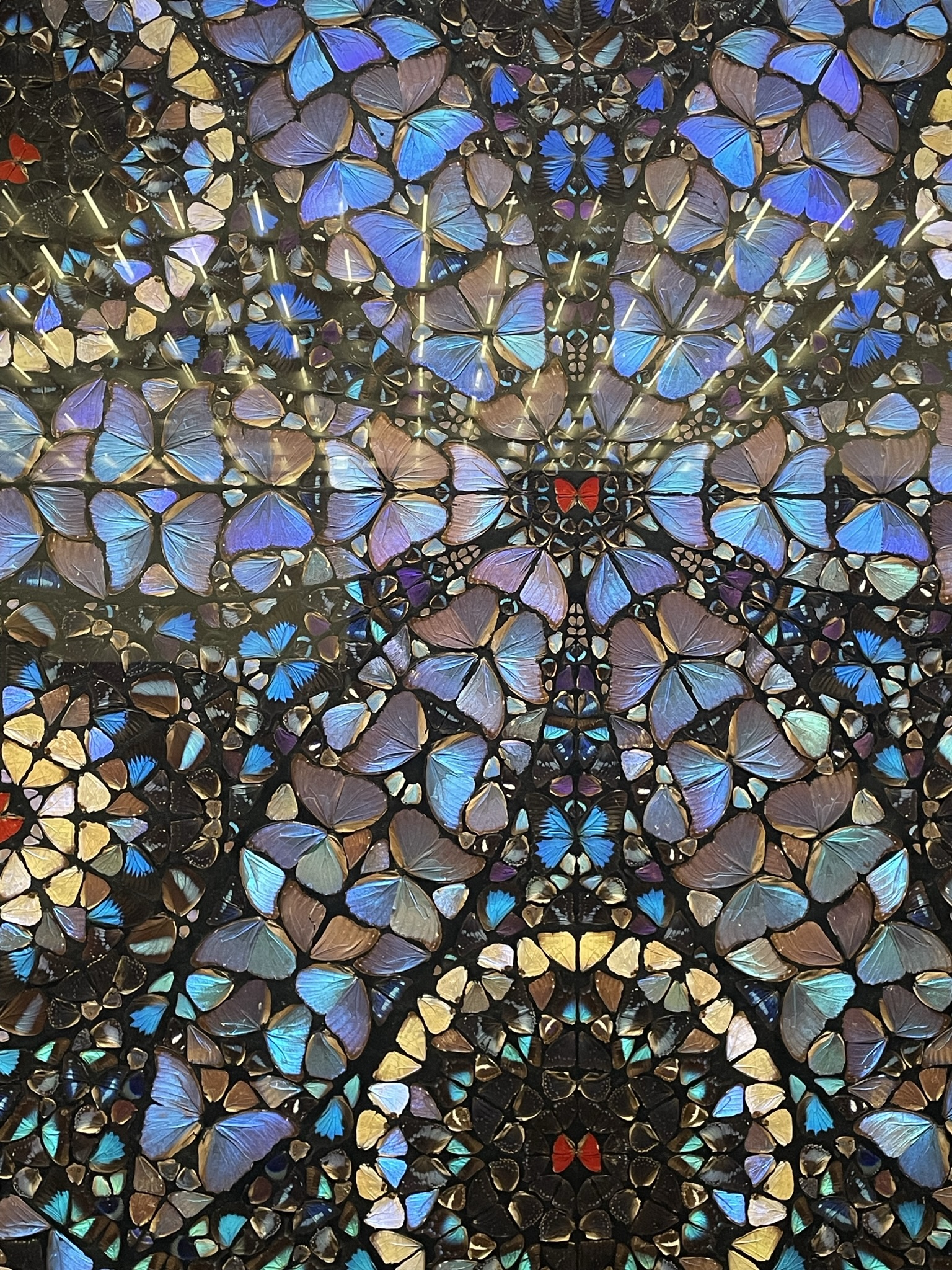
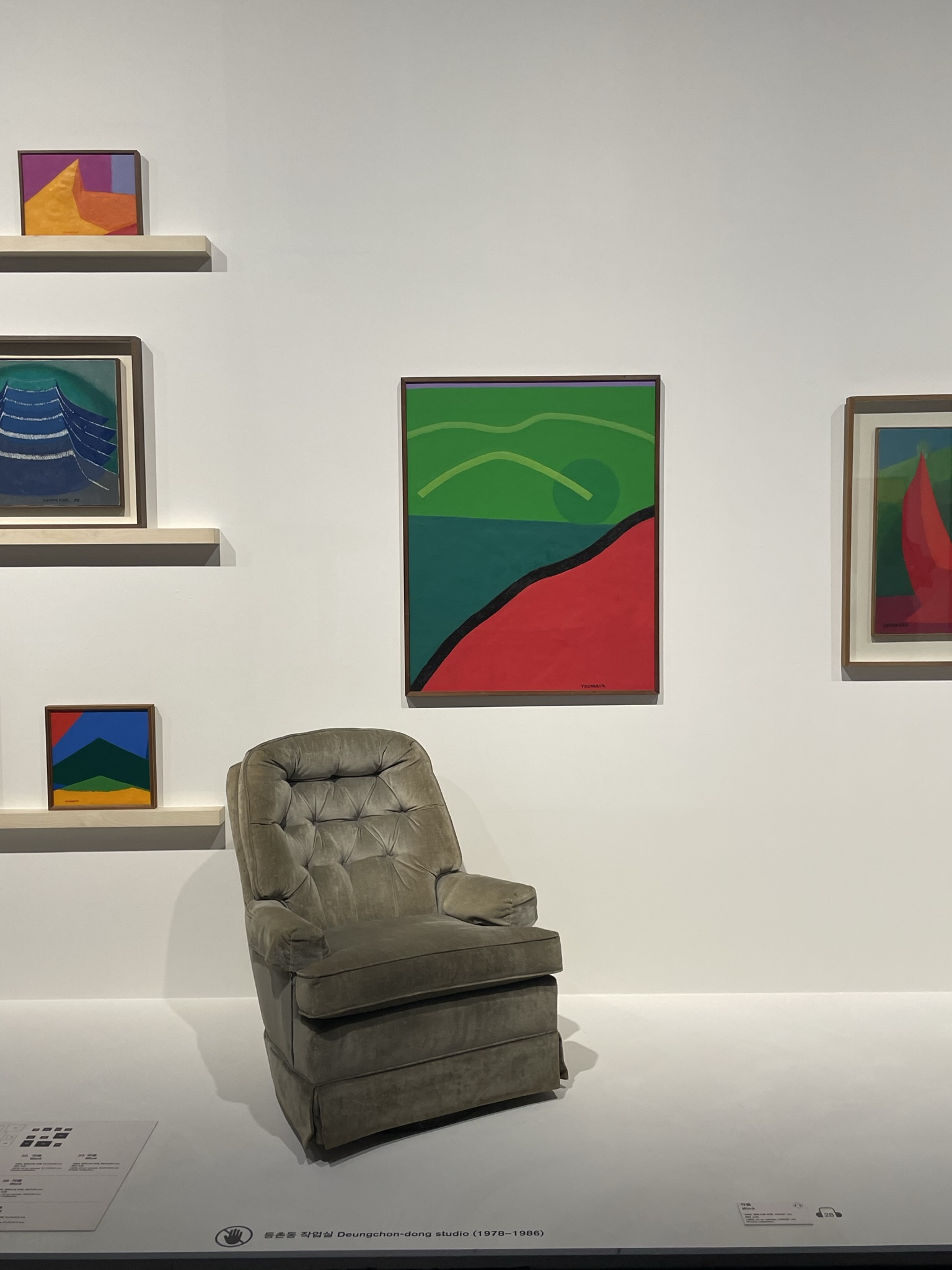
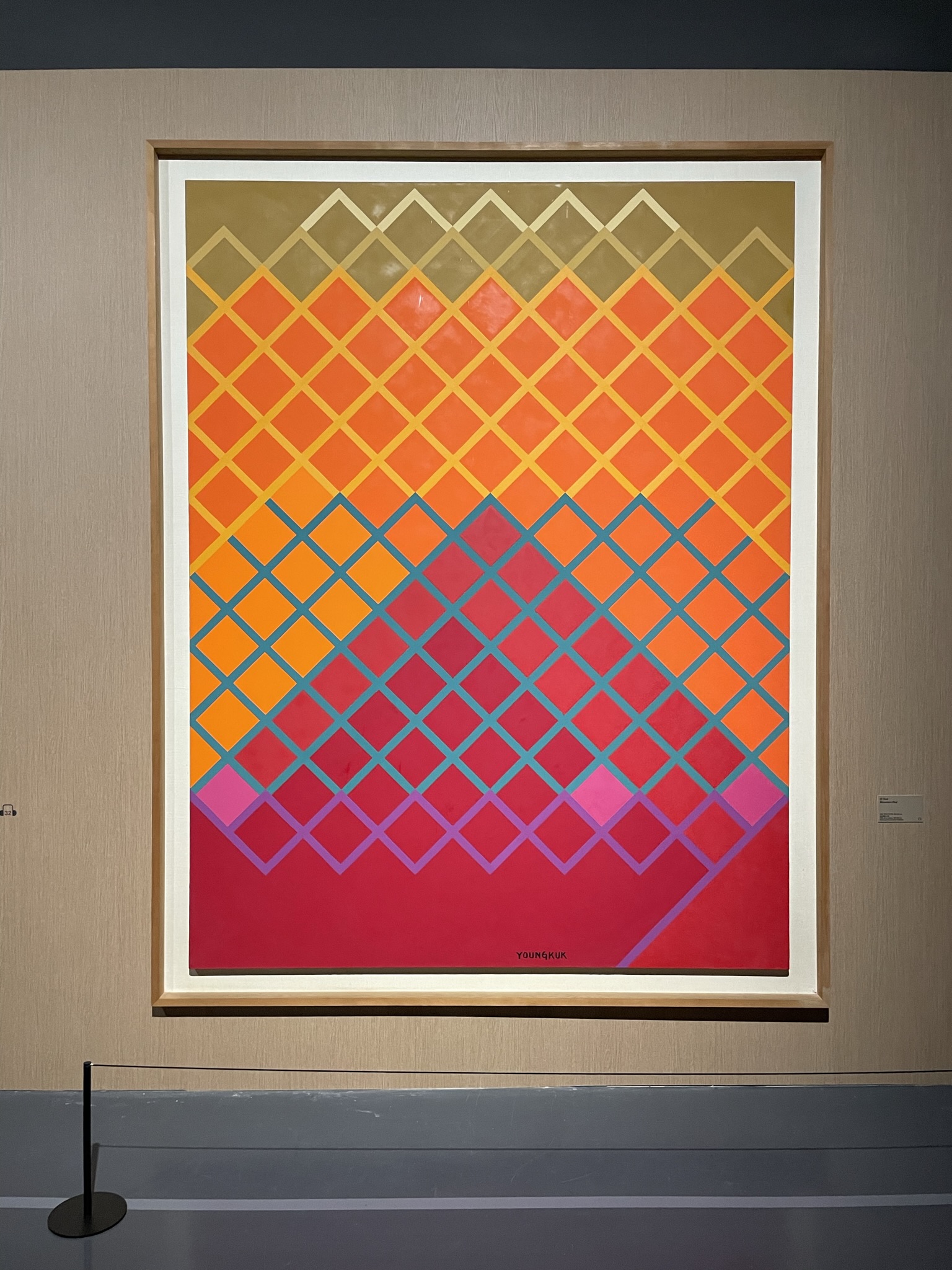
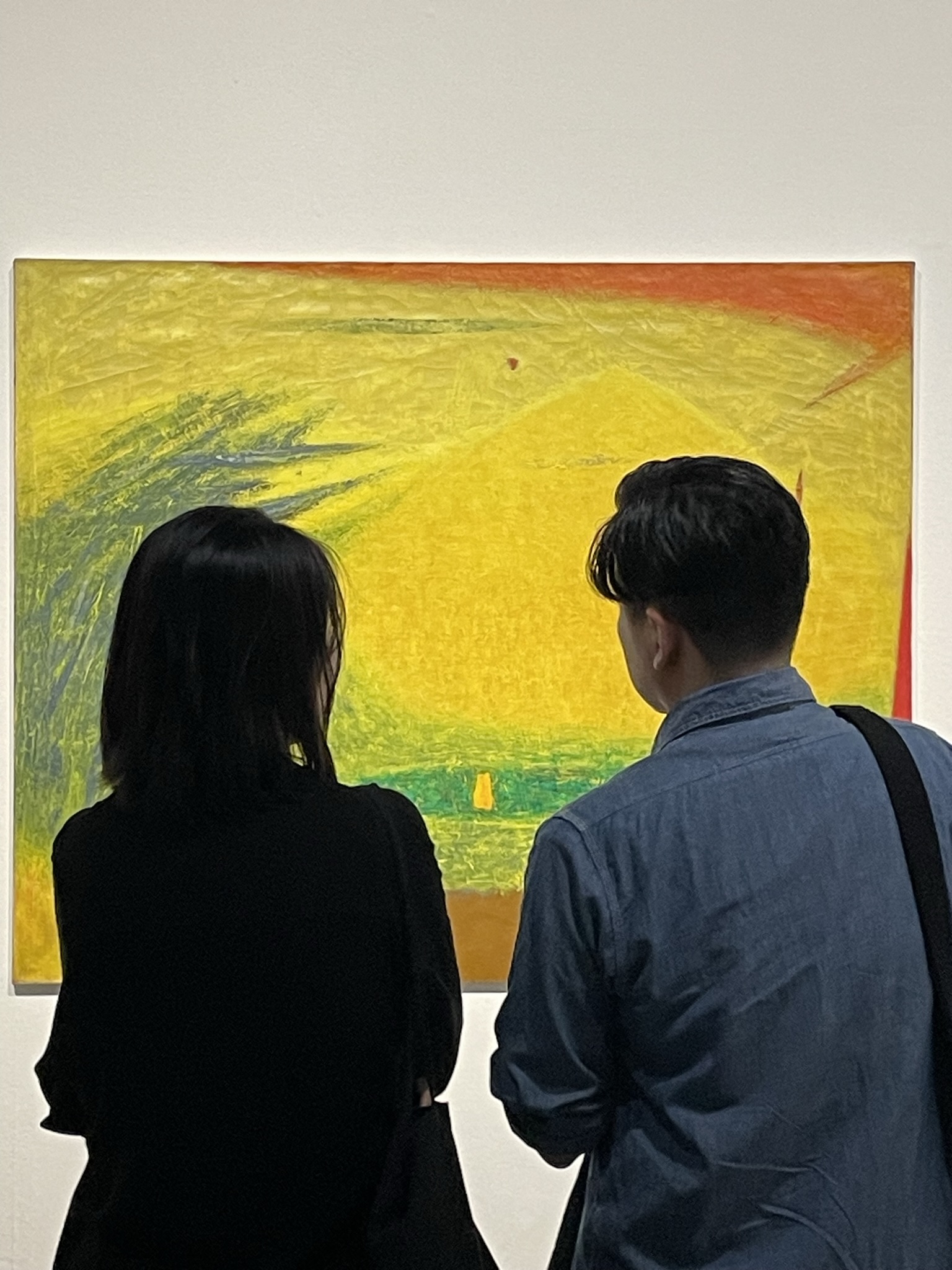
Museums in general were a highlight of Korea. We did eventually make it to the Museum of Modern and Contemporary Art on a day when it was open, joining the crowds working their way through a Damien Hirst career retrospective complete with diamond-encrusted skull and a shark encased in formaldehyde. While I can’t say I am a huge fan of his work, I did like a recreation of stained glass using butterfly wings, beautiful but macabre, and an appropriate fit with his seemingly obsession with death and mortality. My real takeaway is that Mr. Hirst may benefit from a psychologist. We lucked into the opening of the Pompidou Centre Hanwha, with an excellent show on Cubism, flush with works by Braque and Picasso among many other heavy hitters of the era and featuring Korean modernist as well. It is always great to see classic works connected with local artists of the era. Later, at the Seoul Museum of Art, we discovered the works of Yoo Youngkuk.
Mr. Yoo was a modernist, working with geometric shapes, lines, and colour to convey feelings and place, and to great effect. Though new for us, he was not for Koreans, who filled his show and those at the other museums and seem to be avid patrons of the arts. We also spent a morning tracking around Namsam, the large central hill in Seoul, to get to Leeum Museum of Art, housing a diverse collection and, during our visit, featuring Lee Bul, a contemporary Korean artist. I struggle at times with contemporary art, not always finding a connection and here that was true too, though moments transcended the need to intellectualize and instead just feel the emotion. This was most true in a large, central space where two performers calmly and warmly imitated the sounds and emotions of an infant and her mother, the sounds rhythmically filling the room while onlookers, like ourselves, sat quietly rapt.
The museums were of such quality that I was even able to convince Hannah to join me at the Seoul History Museum, providing a long-lens view of the settlement in the hills and valleys around the Han river. I had no idea how far back the history of Seoul goes and there is little visible in its modern incarnation. Most striking here was again the sheer scale of growth in the past 75 years, with the city totally absorbing so much of its hinterlands. The metro, sadly, did not feature heavily in the museum despite its clear importance to movement around the capital. On the other hand, the museum had several life-sized recreations of restaurants, shops and apartments from past generations, testament to changing ways of life and affluence in Seoul. In general, it was great to see so many museums that were clearly well-funded and well-attended, with high-quality exhibitions.
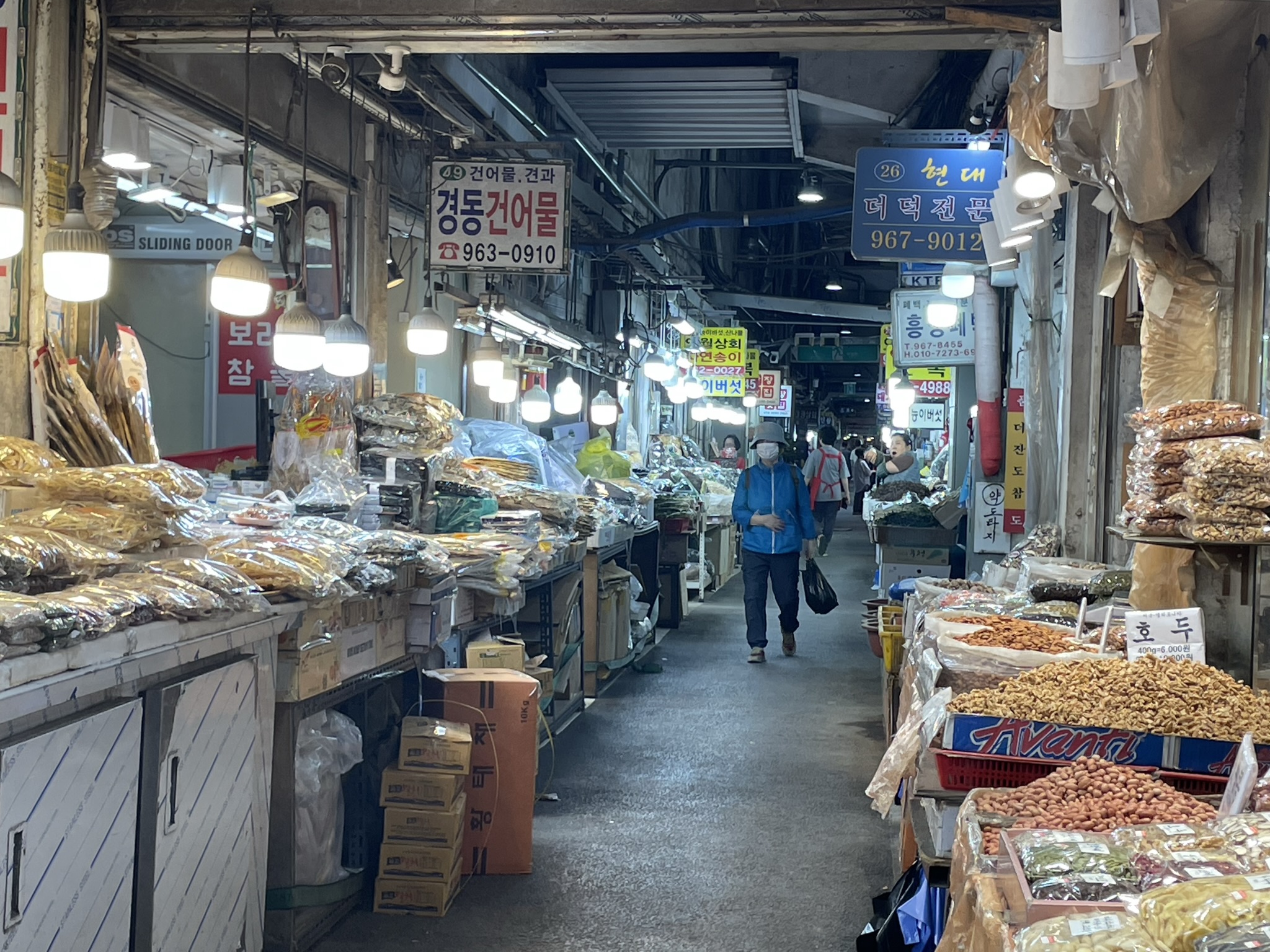
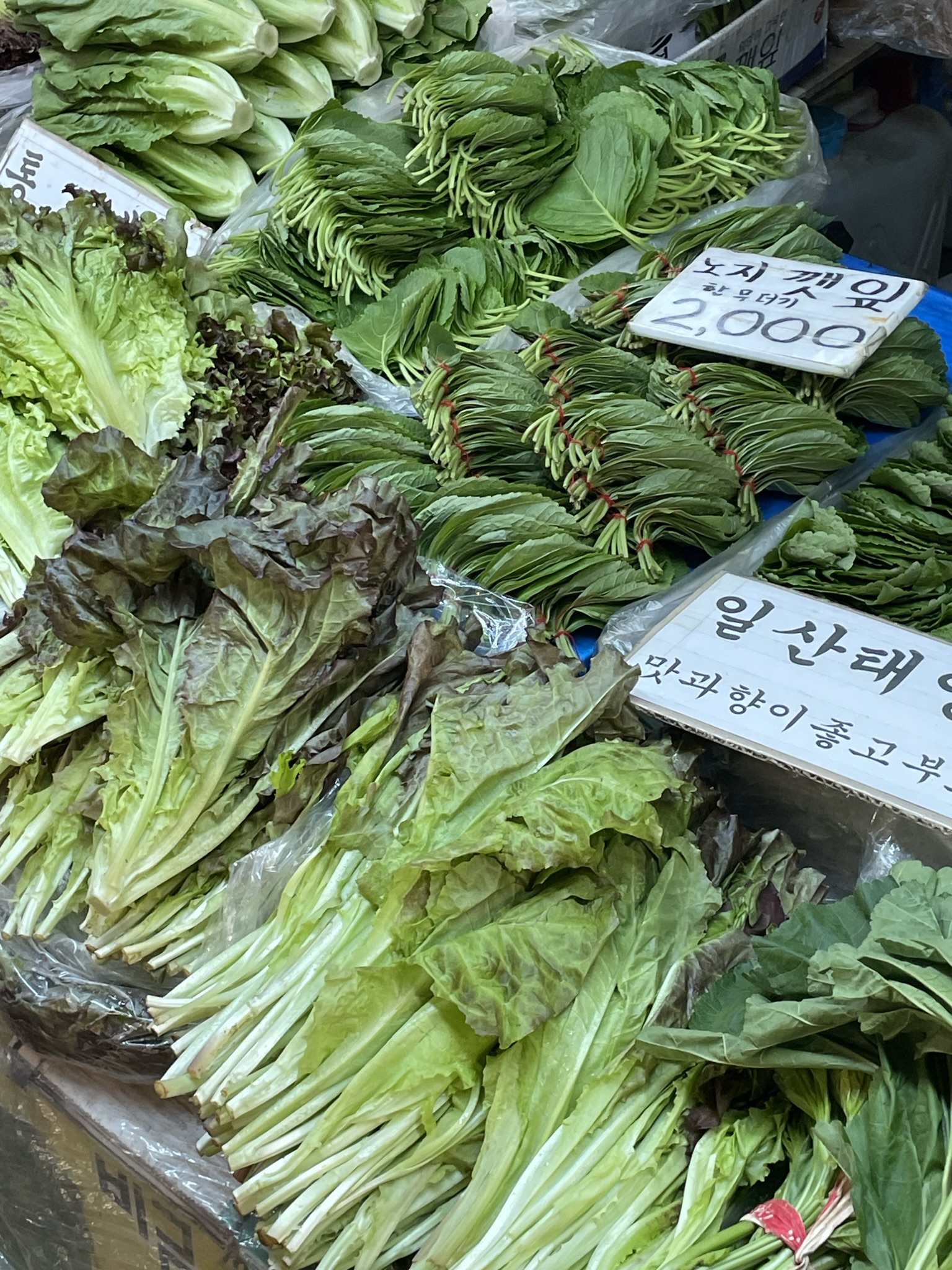
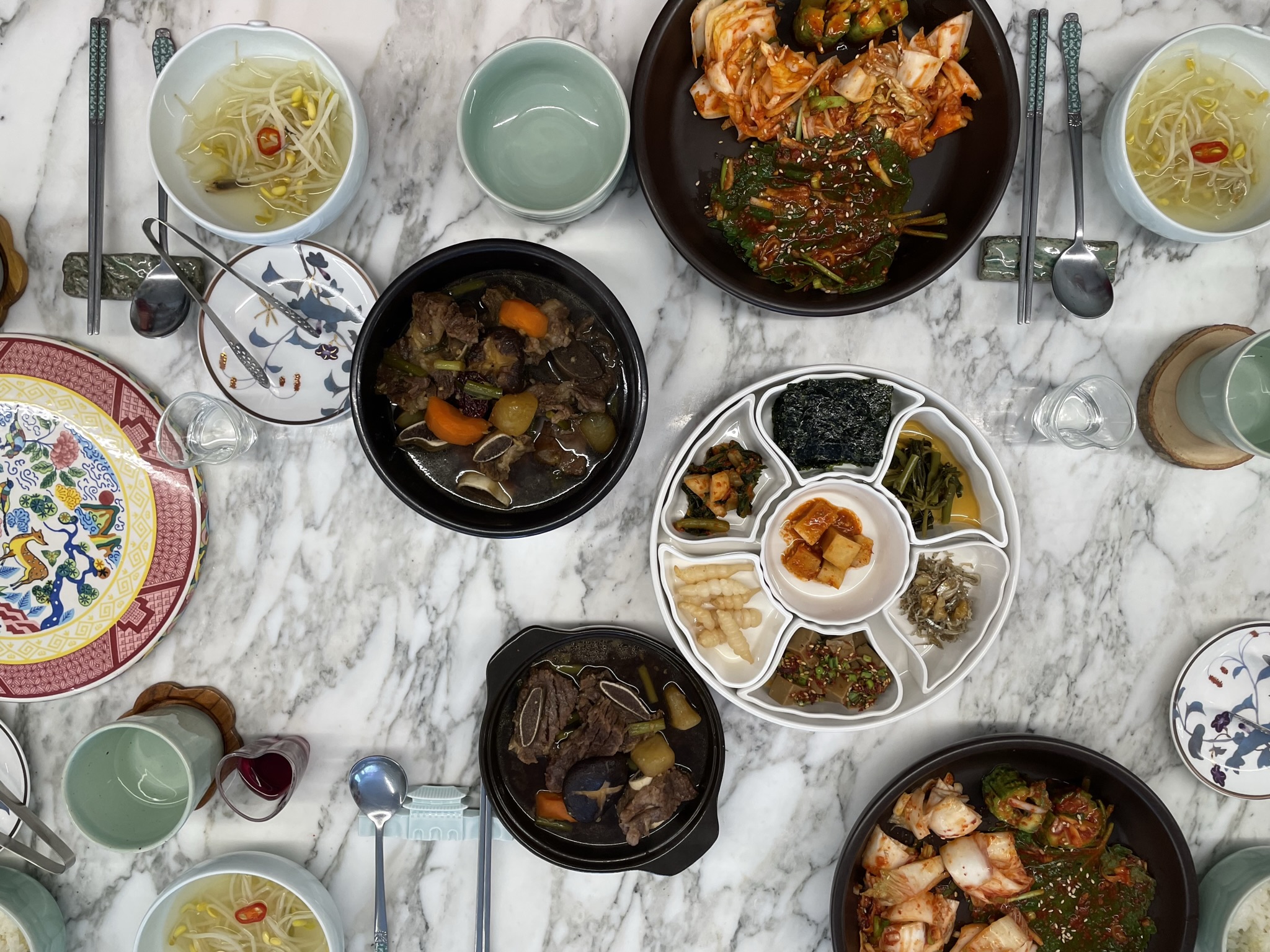
We also made the effort to experience Korean culture outside of its formal institutions. Hannah found a kimchi masterclass cooking course, so we headed towards a traditional medicine market on the eastside of Seoul one morning, meeting with our group at (where else?) a metro exit. Our instructor, Kim Minseon with Ome Cooking Labs, took our group of eight (two Canadians, a Connecticut retiree, and five Germans) through both the traditional medicine market and to a sprawling, interconnected food market. This weekday morning it was calm but active, easy enough to move around and more importantly easy enough to stop and chat without being in the way. The Korea we saw is incredibly clean, and the markets are no exception, just extraordinarily well taken care of with little in the way of refuse or odors apparent. From here, Miss Kim brought our group to her nearby kitchen where we each made our own seafood jeon, a fried Korean pancake, contributed to a kalgogi shortrib stew, and, thankfully provided with both aprons and elbow-length rubber gloves, tackled kimchi. We had a grand time, and Hannah is now a strong three-for-three on food and cooking experiences when travelling.
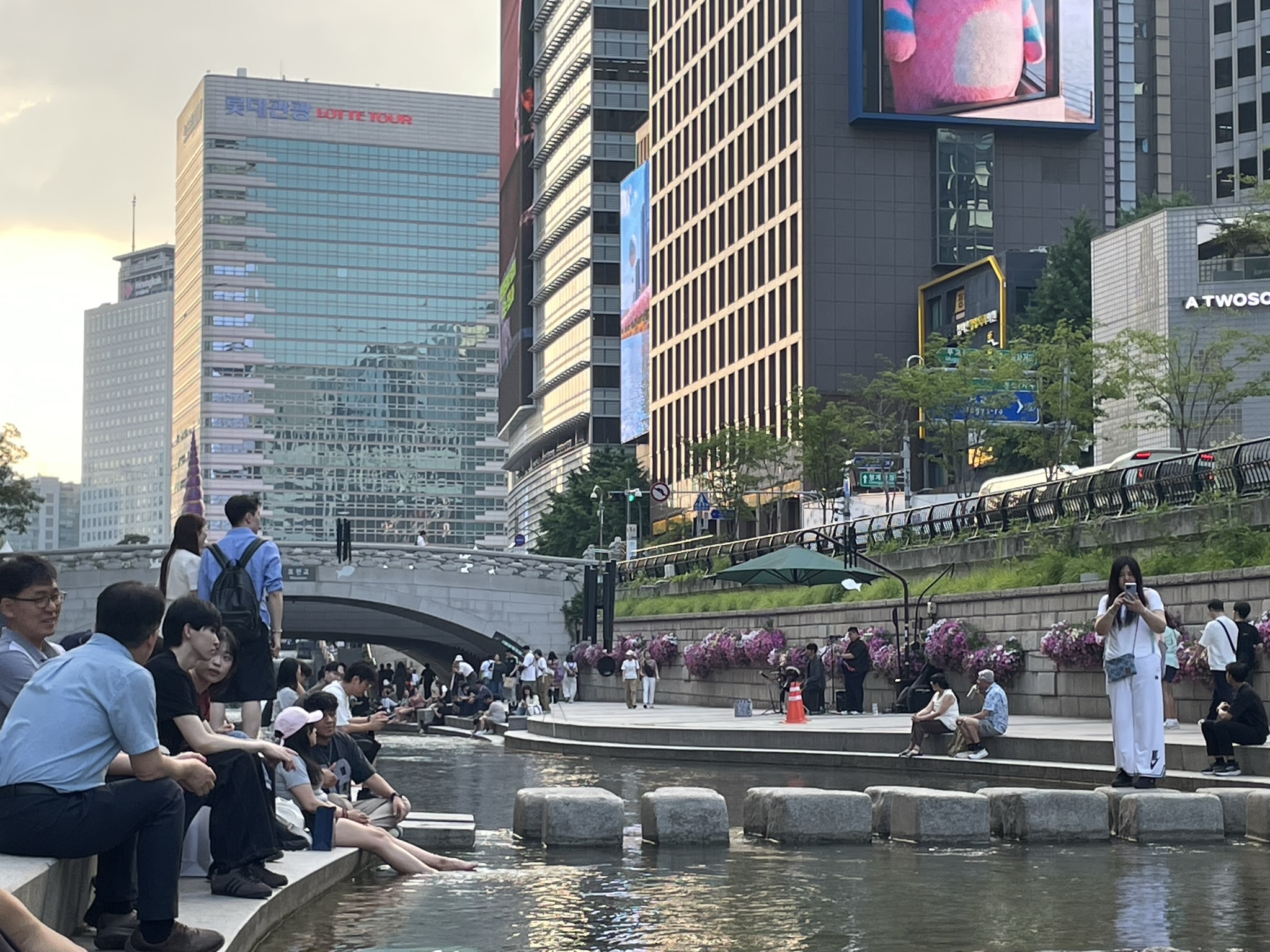
A downside of Seoul’s headlong rush into modernity is that the city can be a bit hard, lacking in parks and greenery in spaces though a clear effort to correct this is evident in the large gingko trees shading boulevards. Some of the automotive excesses of Seoul are also being corrected. Near Seoul Station is Seolluo 7017, a former highway overpass is now an elevated pedestrian walkways peppered with various plant and tree specimens including a pollinators and an Asian giant hornet that kept me walking along quickly. The Gyeongui Forest Line park winds through neighbourhoods along a former railroad right-of-way which has since been pushed underground, another pleasant respite especially in the warm afternoons. My favourite still is Cheonggyecheon, the restored stream in the heart of Seoul that replaced an elevated highway in the early 2000s. It is much featured on older maps in the city museum, which runs from the heart of the city centre for kilometres to the confluence with the Han. In the evenings, people cluster along its banks and dip their feet into the cool water. Farther east, near our hotel, it is quieter and we enjoyed a morning run here before the heat of the day worked on us.
Seoul was ultimately a city of pleasant surprises, enormous in scale but easy to travel around and enjoy. It bustles while rarely feeling crowded, instead projecting a quiet confidence that seems reflected in its every-stylish and composed residents. Even in a week, we were just scratching the surface of all it has to offer and there are many other to-do’s on my list that we simply did not have the time to get to. Part of that was by choice, and while we could’ve taken the full 11 days to enjoy the Korean capital, other destinations were calling us. It was time to get out.
 Zak Abroad