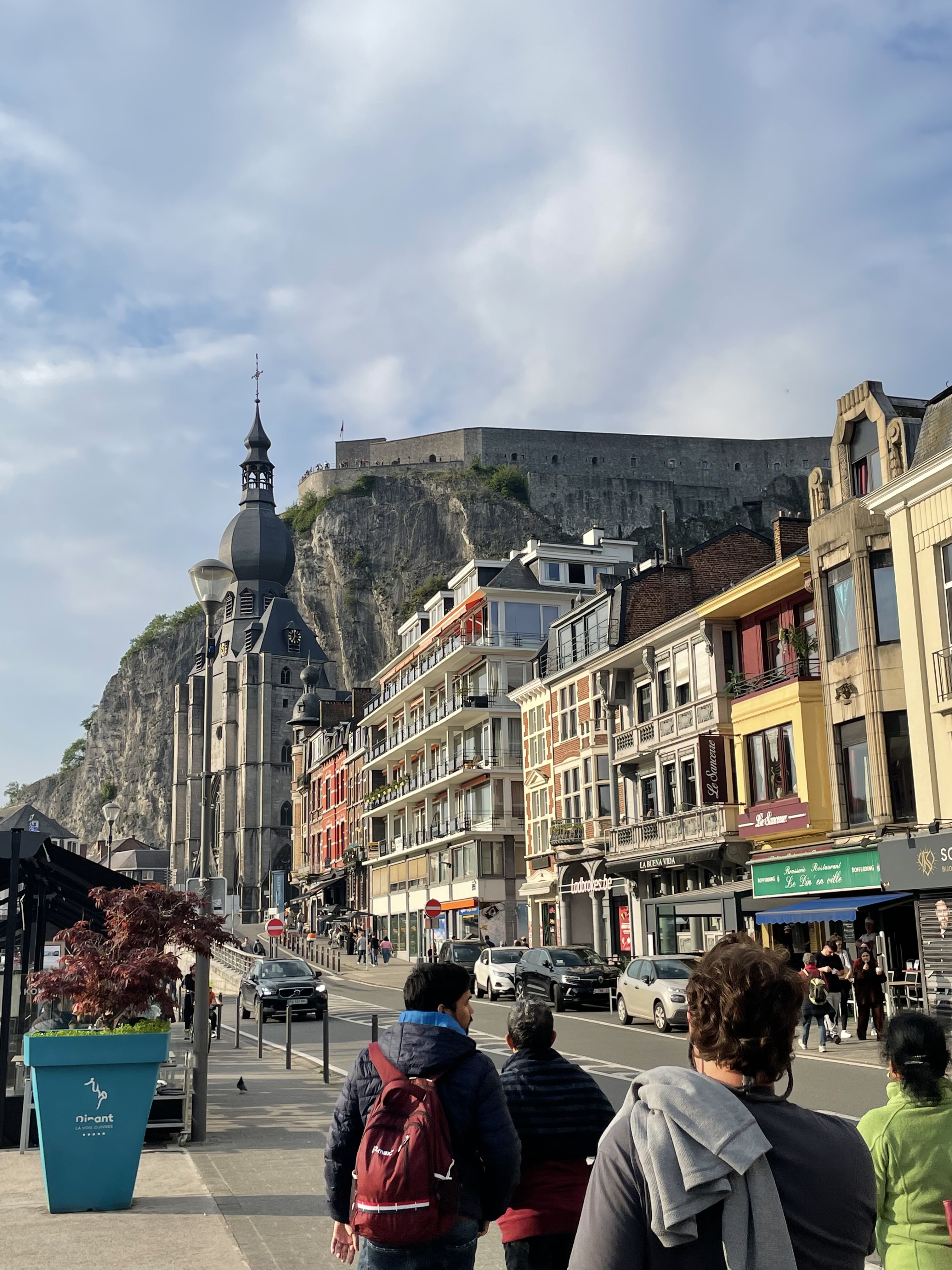
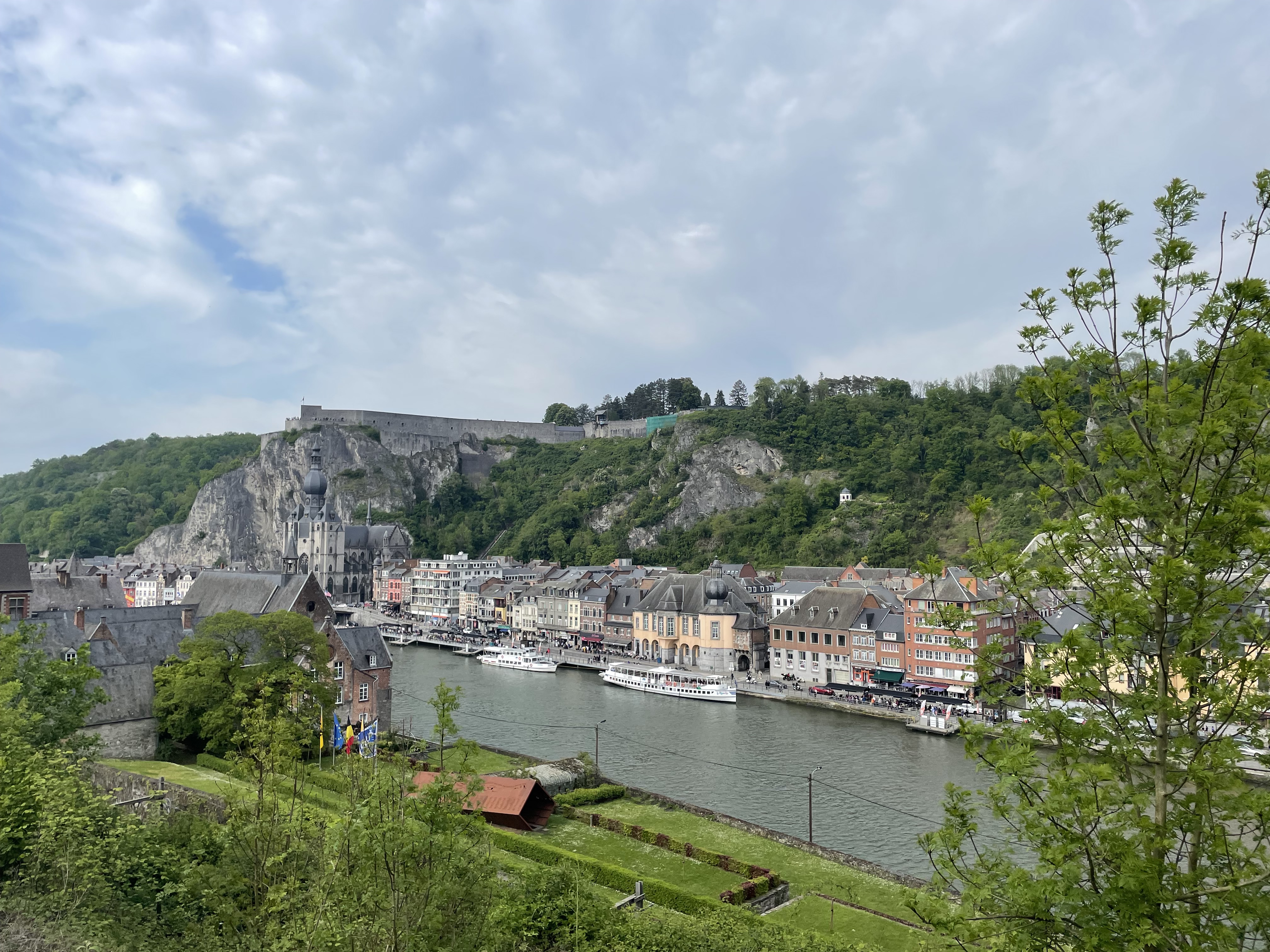
Wallonia is essentially the French-speaking bottom half of Belgium, contrasted with Flanders, the Dutch-speaking north. In contrast to the Flemish, Walloons earn less on average and it shows in the towns that our Skoda wound through in the shallow valleys between rolling hills and forests. We were headed for Dinant, a small town nestled in a steep rocky gorge along the banks of the Meuse, picturesque, charming, and near enough to Brussels-based weekenders and daytrippers. Like many small towns, Dinant has few claims to fame: Alphonse Sax grew up here and left to became an inventor of musical instruments, an ideal career in the more whimsical 19th century. His most notable effort, the saxophone, continues to grace high school music classes and is recurring motif on Dinant’s streets and bridges. More prosaic sites, like a hilltop citadel and a grossly oversized 13th century church with a pear-shaped spire, complete the picture of Dinant. For our part, we satisfied ourselves with walking the riverfront while weighing our options for a meal and a drink.
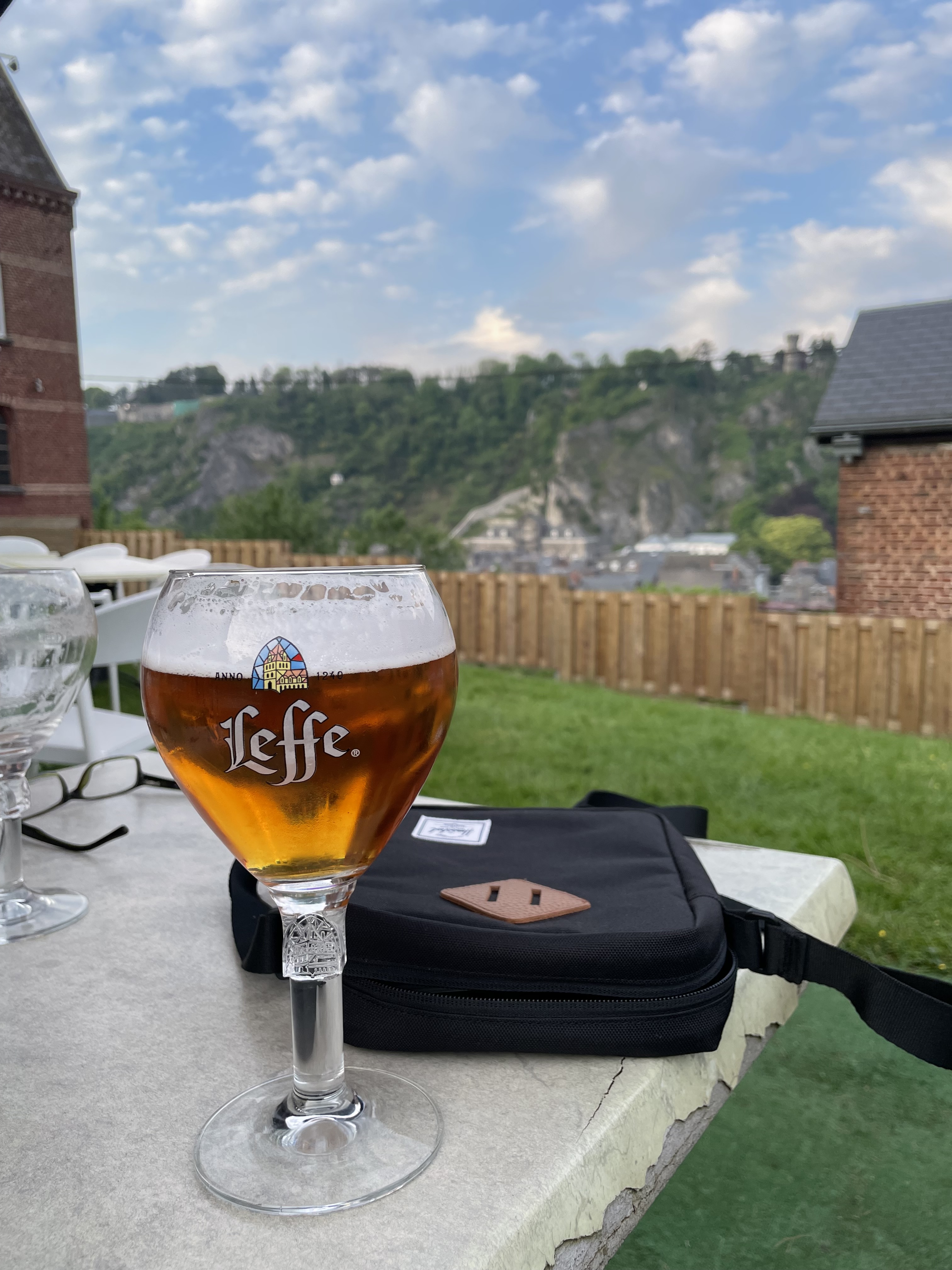
Charles de Gaulle, the towering figure of 20th century France, walked these bridges and it was in Dinant that he was first wounded in combat in World War I. We had, inadvertently, been shadowing the man’s career: passing by train through his birthplace of Lille, staying in Bayeux where he gave several speeches, passing through Verdun where he was captured, and now Dinant. That said, all the statues are of saxophones here, I suppose de Gaulle isn’t as photogenic. The other claim to fame in Dinant is the origin of Leffe beer, founded in a monastery in the 1200s and now owned by global conglomerate InBev. This legacy was highlighted at the Leffe Maison, a converted hilltop abbey and our hotel for the night. Belgian beers aren’t my favourite but after several long driving days and emotionally draining visits to war memorials and battlefields, sitting at a table on the grassy lawn with a view of Dinant below while putting back a couple beers was quite welcome.
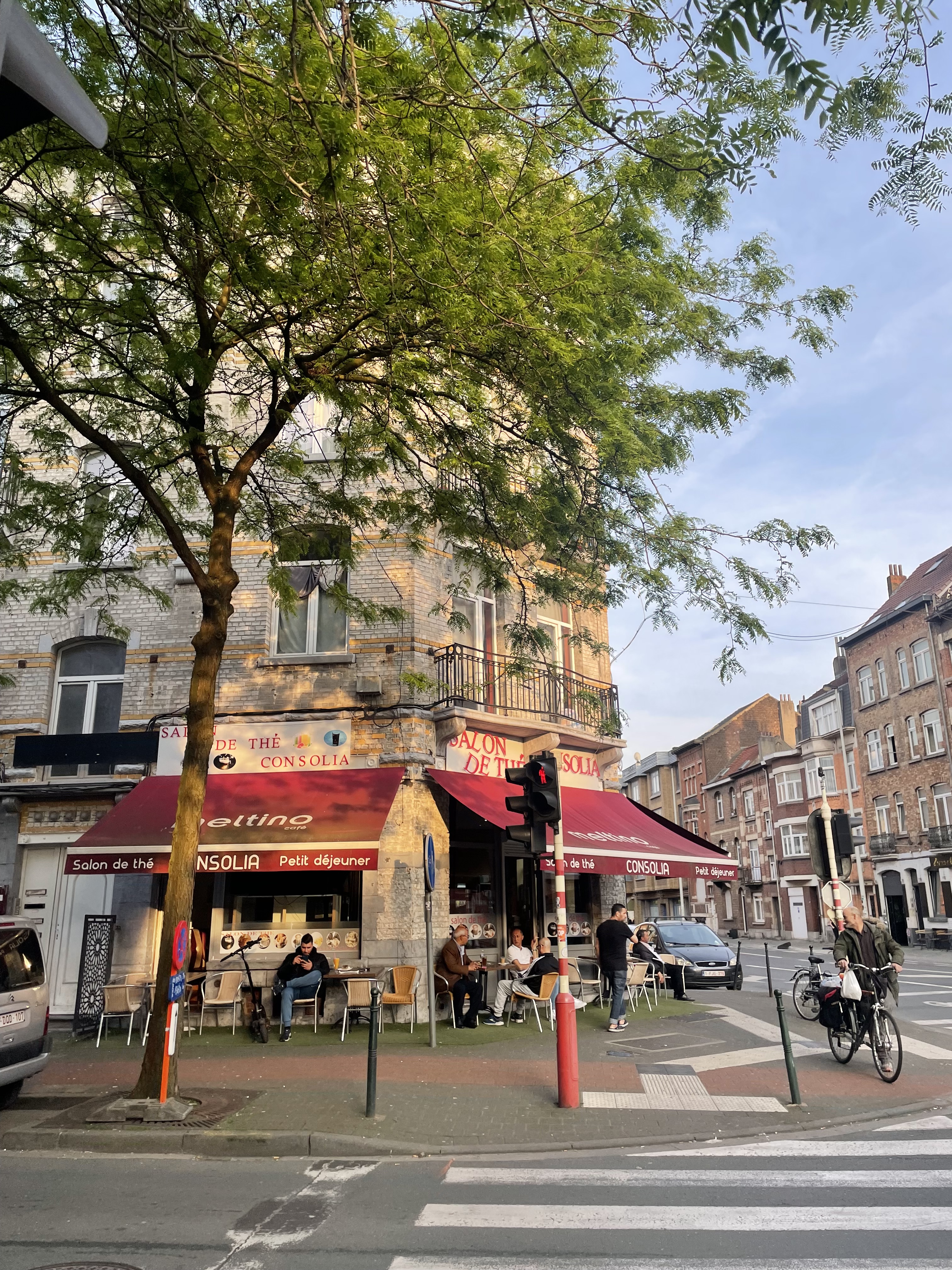
From Dinant it is only a bit over an hour back to Brussels but the transition feels stark. My only, admittedly brief, visit to Brussels was in 2002 on a backpacking trip. At the time, it had seemed a good idea to pass a night at the train station en route to Amsterdam, and the stand out moments were a large shutdown carnival and waffles from a vending machine. This was the chance to Brussels to shove aside lackluster remembrances and boldly show its true identity. The airport, our rental car’s home, is a jumble of dated mid-century concrete rooms, alternately crowded and empty, all in dire need of maintenance and a good cleaning. Gare du Midi, the main train station, is similar, and neither improved Brussels’ stock.
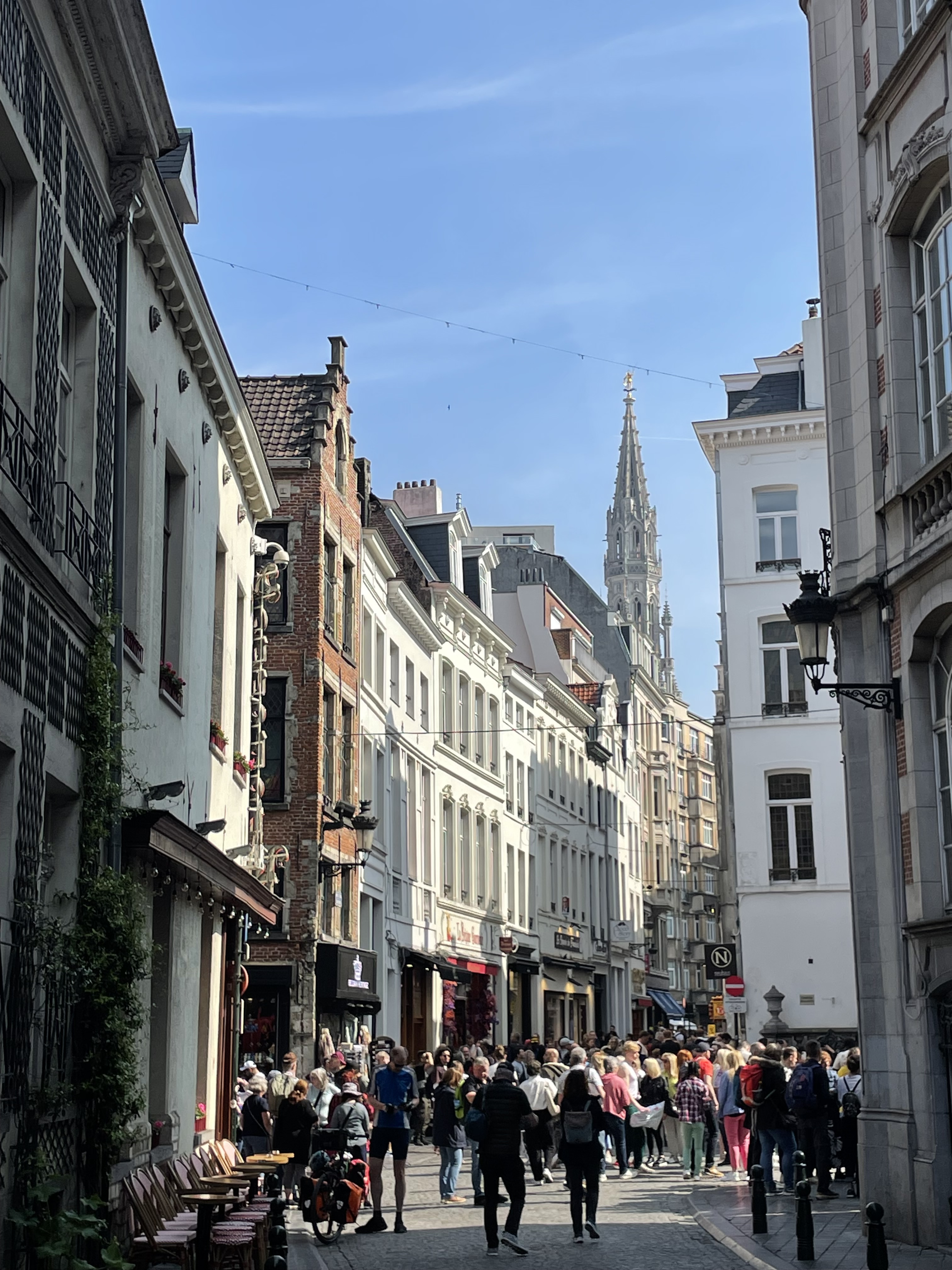
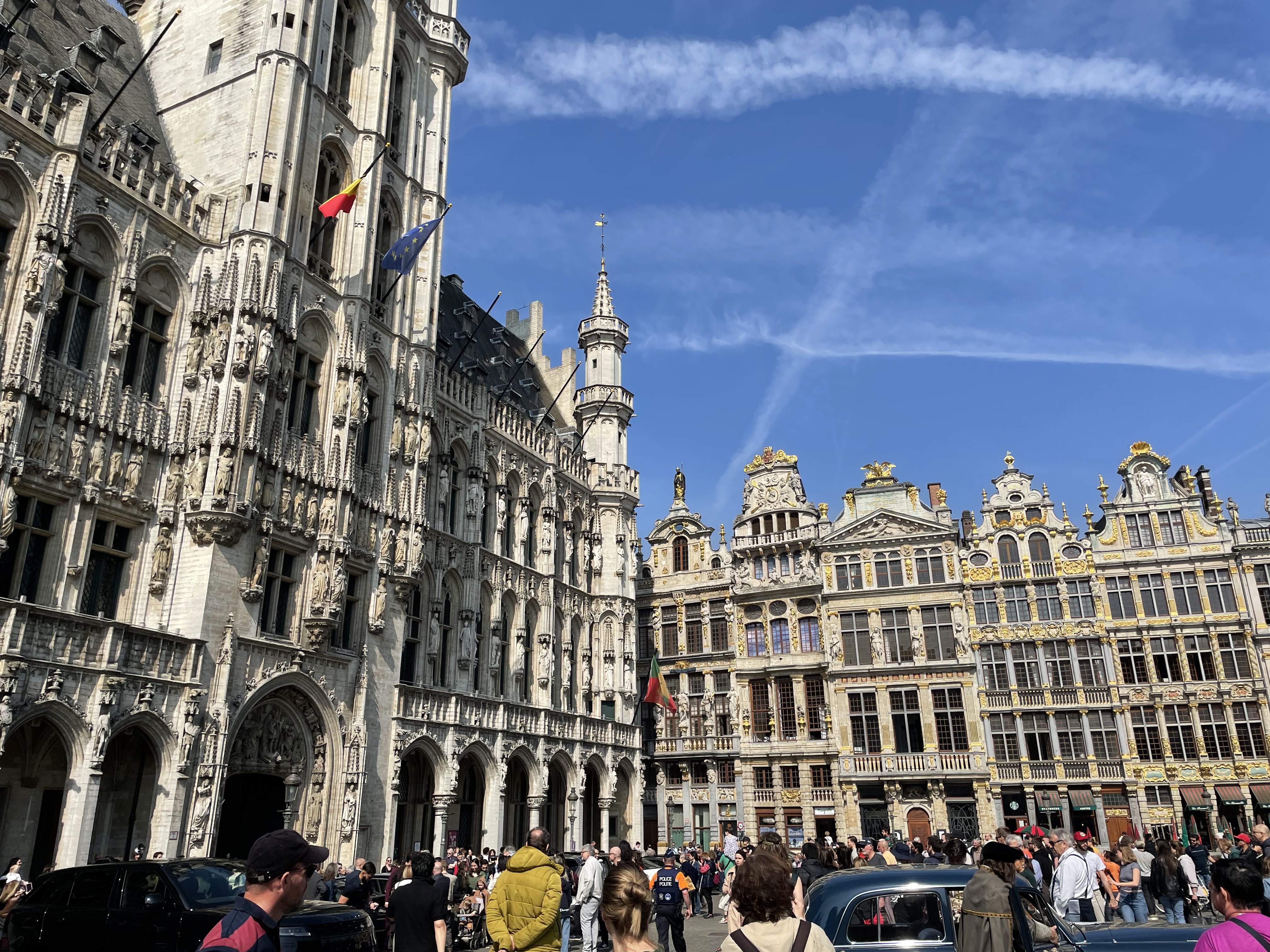
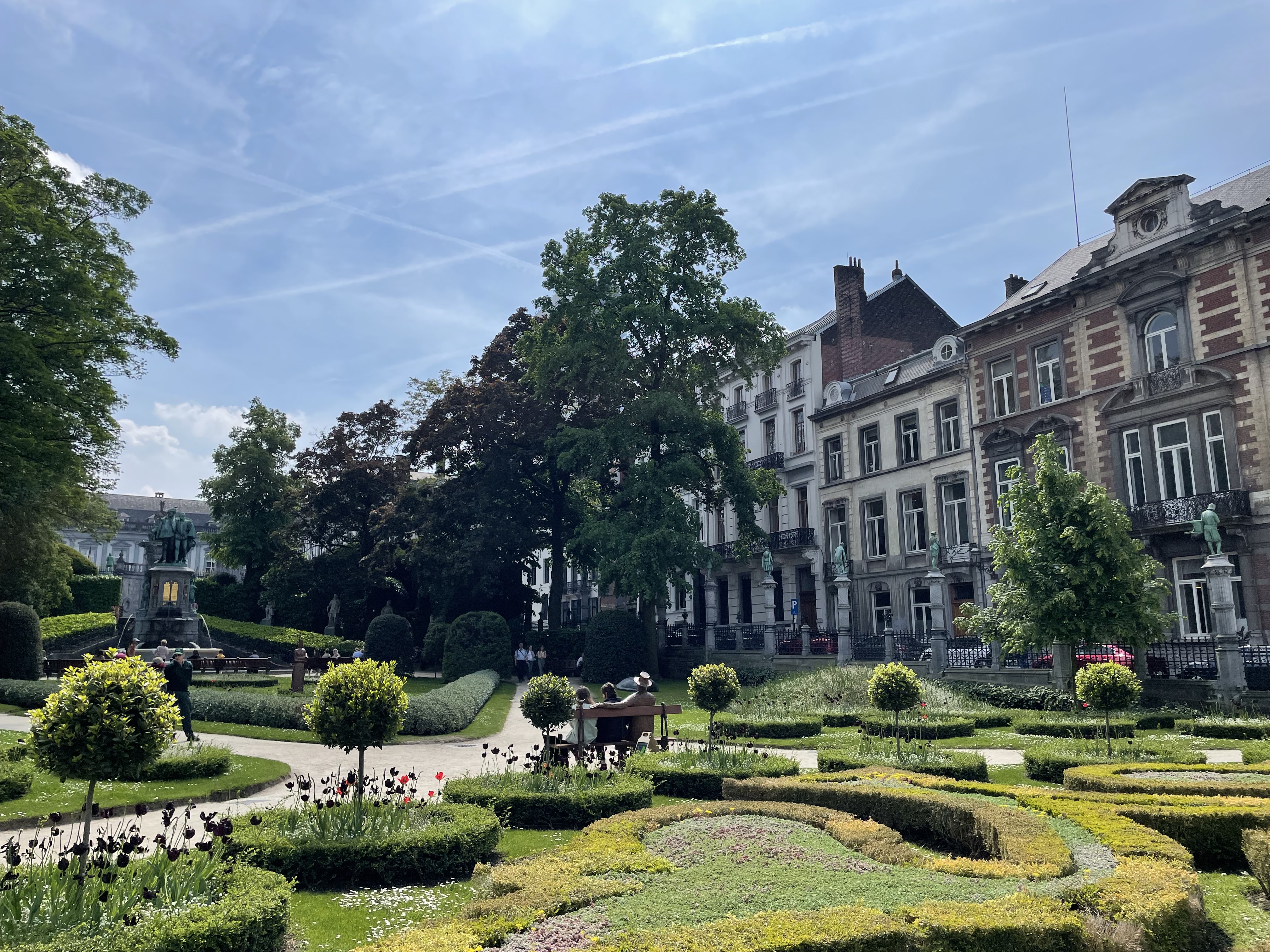
But we pressed on, heading on foot to the centre of town on oddly quiet streets. Rounding a corner, seemingly from nowhere, we happened upon crowds led by flag-toting guides. Here group tourism had clustered around the Manneken Pis, a statue of a little boy peeing into a fountain and a concerning omen for the touristic riches of Brussels. Like our Gastown steam clock, I failed to see the point. A few minutes later, weaving between groups, we arrived at the Grand Marche/Groot Markt, an eruption of cafes ringing a large plaza apparently used for photo ops. Brussels is the bilingual heart of Belgium, where French and Dutch share equal status and English is ubiquitous. The tall, narrow old buildings ringing the market and the winding streets shooting out from it are charming, an abrupt and welcome shift from modern Brussels. There are some Victorian era shopping arcades now busily employed in overcharging for ice creams and coffees, but all of this was not quite enough to sustain more than a day or two of interest.
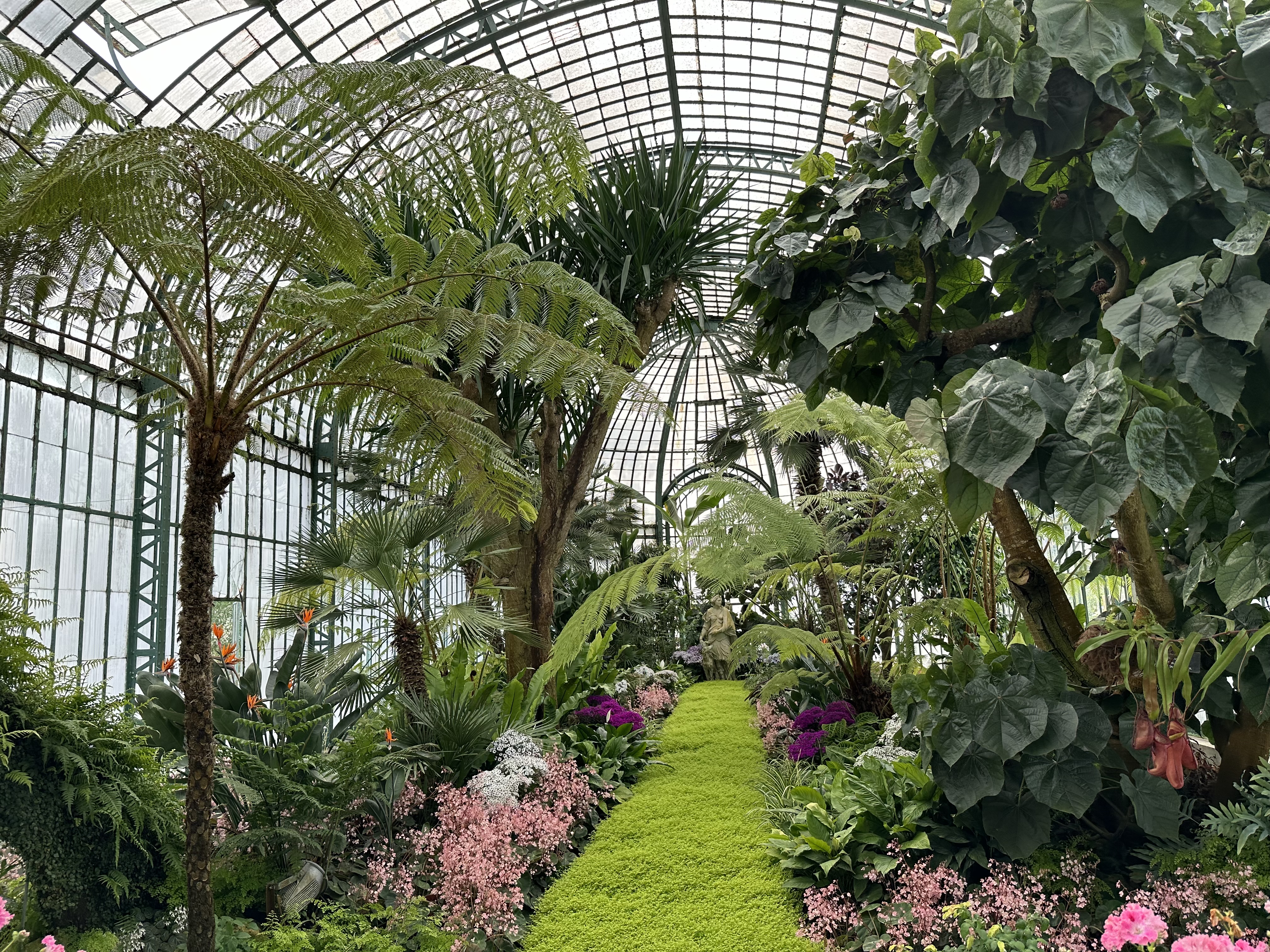
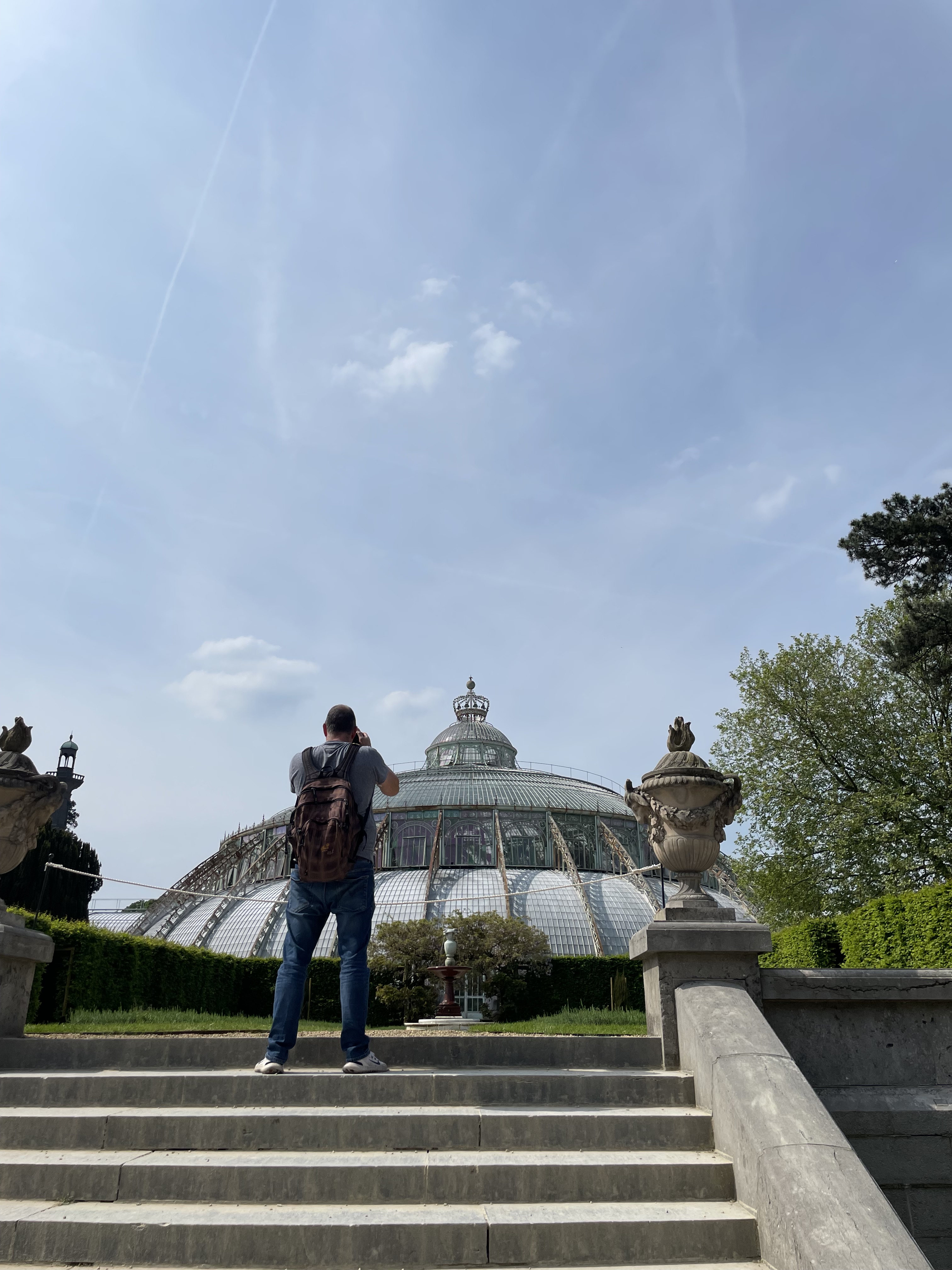
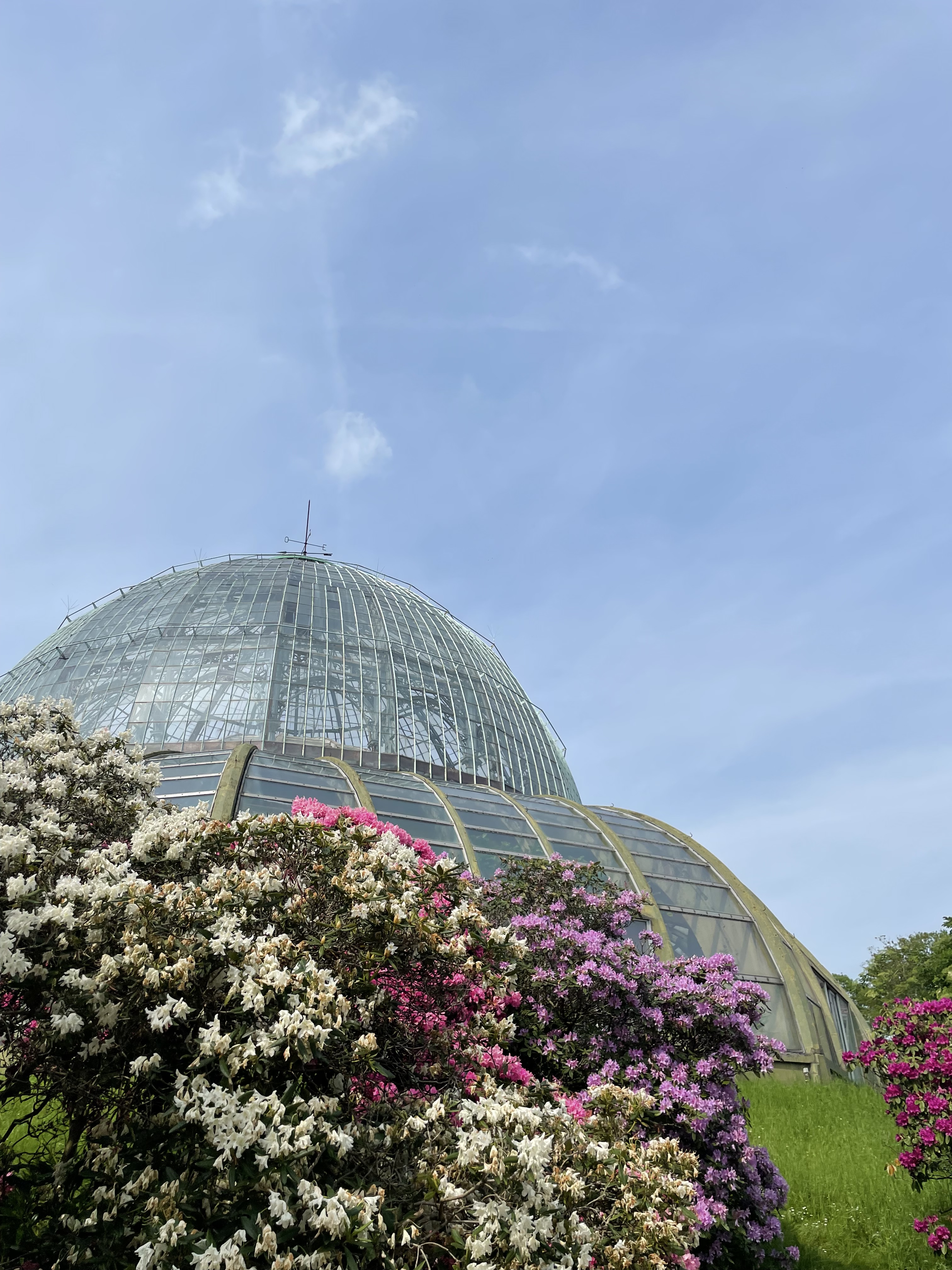

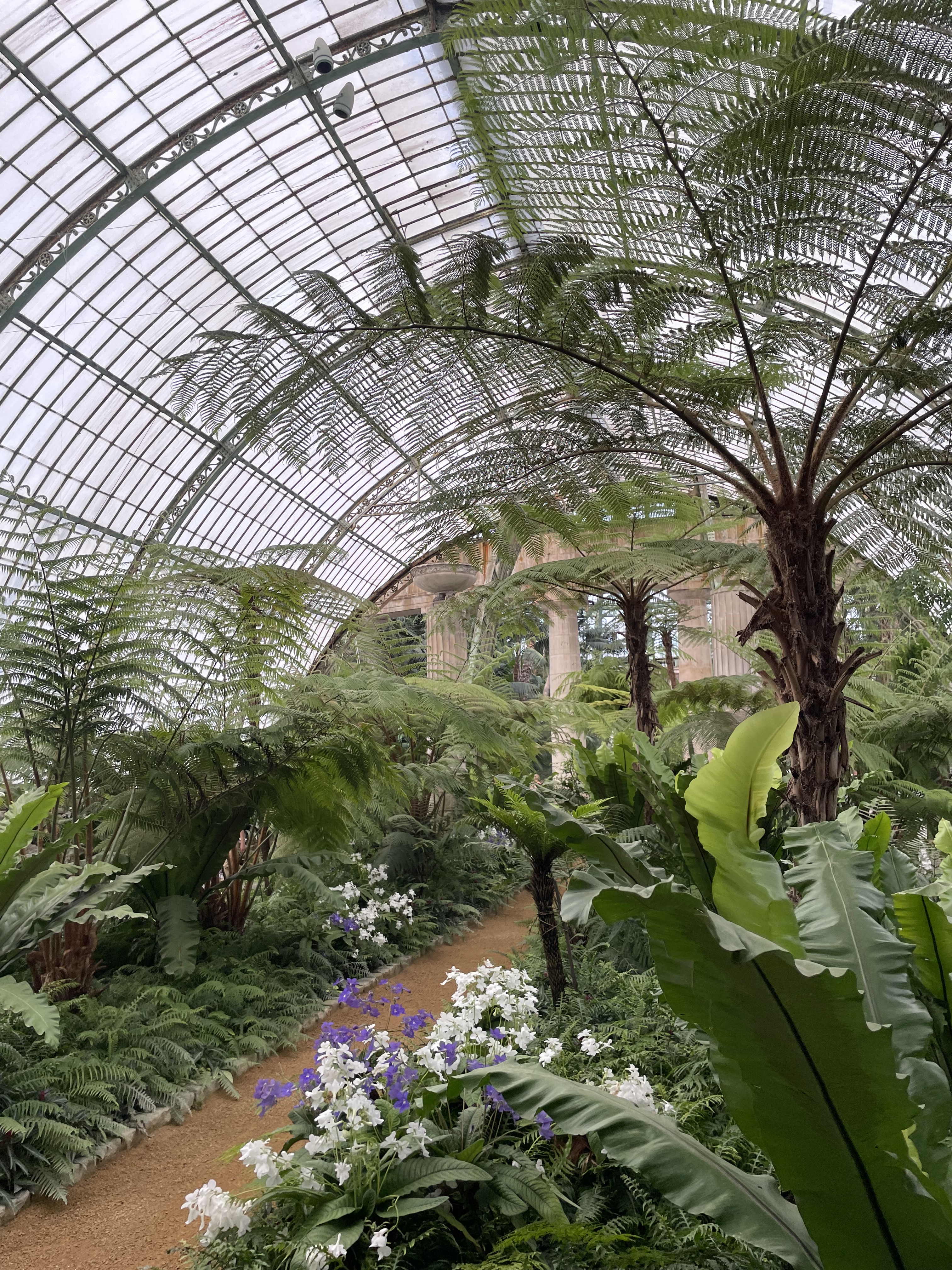
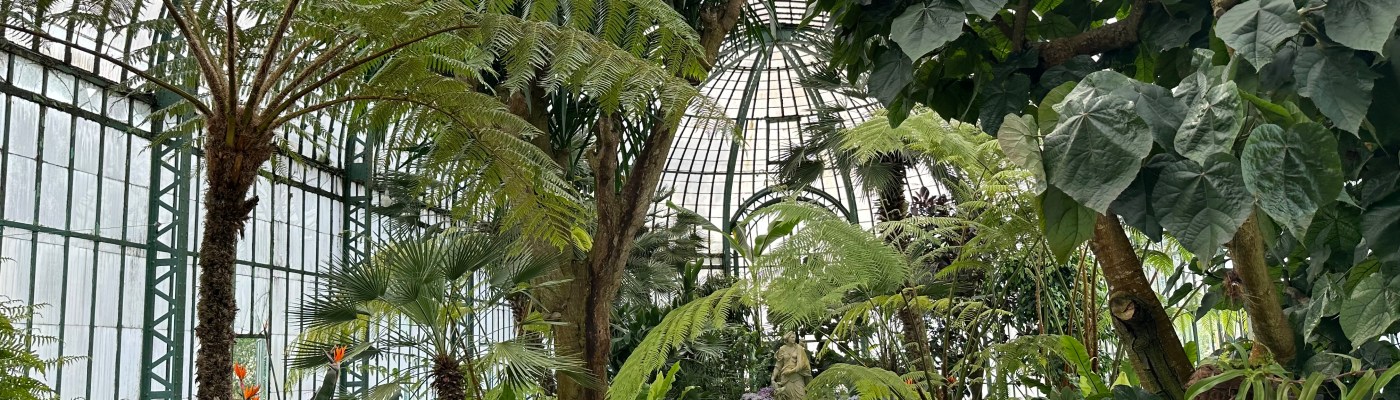
The highlight of Brussels, somewhat unexpectedly, was the Royal Palace. Or more specifically, the Royal Greenhouses of Laeken. Situated on the palace grounds, a walled in green expanse in the north of Brussels, the greenhouses are opened every spring to visitors. Their legacy traces back to Leopold II, the fin de siècle monarch and “owner” of the Congo for nearly a quarter century. The greenhouses are a sprawl of glass and steel, embodying the Victoria era’s fascination with technology. Here it is paired with the global reach of the European colonial enterprises, boasting an impressive collection of botanical riches. Laeken makes for a fascinating snapshot of a fraught era but couldn’t solely redeem Brussels.

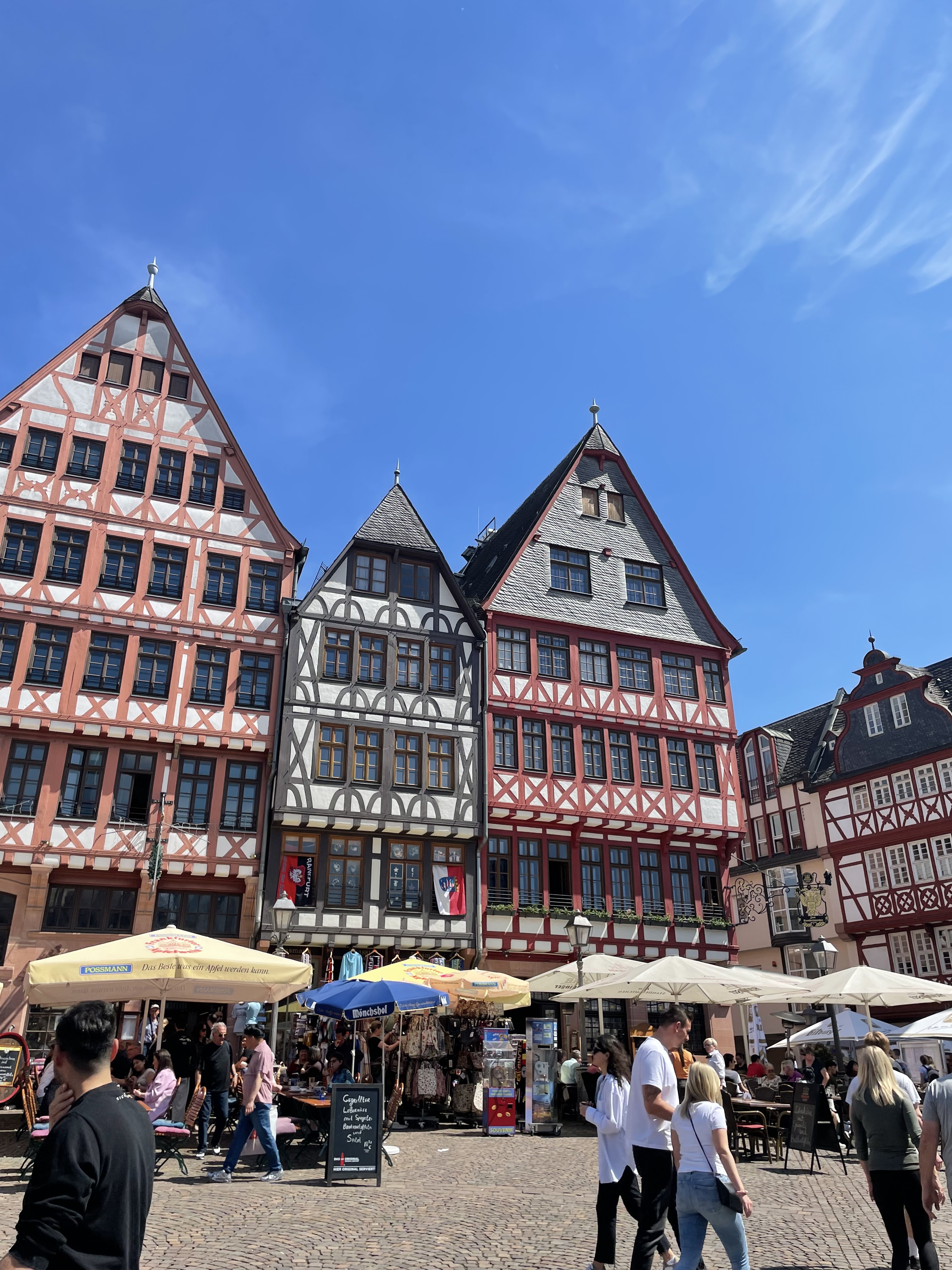
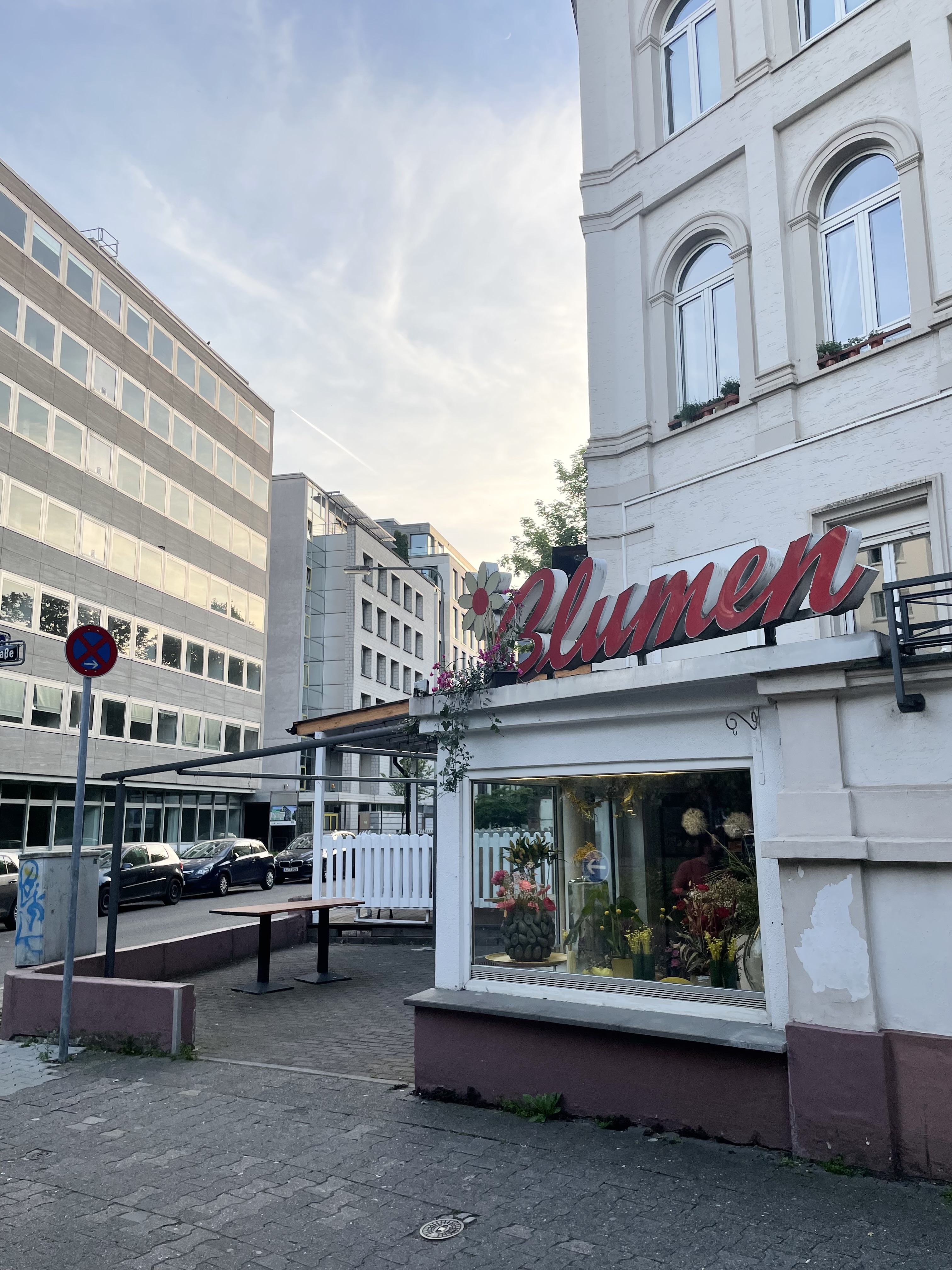
Over kebabs that evening, Ian and I discussed a change of plans, moving up our departure to give ourselves a full day in Frankfurt. Neither of us had spent any real time there beyond the airport and, like Brussels, first impressions were a concern. The area near the main station is forgettable at best – it is a city of bankers, so inequality is part of the bargain. The other side of that is a lively and charming altstadt tucked between the Main river and the skyline. We were rewarded with a brilliant day where the whole city seemed to be out along the river or on a patio, living their best lives. Frankfurt was the right decision, a low-key ending to a whirlwind run around northwestern Europe and catch up with one of my oldest friends. From here, Ian flew home to his family. For me, the second, solo half of the began: I was Bosnia-bound.
 Zak Abroad
Anticipating the next chapter, Zak!