
Honestly I had only a vague notion of what Georgia (the country, not the state) would be like. Friendly people, pretty countryside, good food. All this was gleaned secondhand at best through friends who had visited in years past, or from more distant sources like Lonely Planet. But the impression given was a good one so I purchased tickets and began the countdown for a three-legged flight via Amsterdam and Riga. I’d been warned on arrival to Tbilisi that the airport taxi drivers are a pushy bunch, jostling for your business and ready to rip you off at the first slip up, so it was a relief to instead find a flat-fare booth that had me seated and on my way within minutes of passing through customs. My first impressions of the Georgian capital were sleepy and quiet, the smooth tarmac of a new access road at dawn and some presumably traditional Georgian instrumental piece over the radio. Twenty minutes later I was standing outside my hotel on a nondescript Tbilisi street at 7 in the morning, my eyes open just long enough to complete check-in before a morning nap.
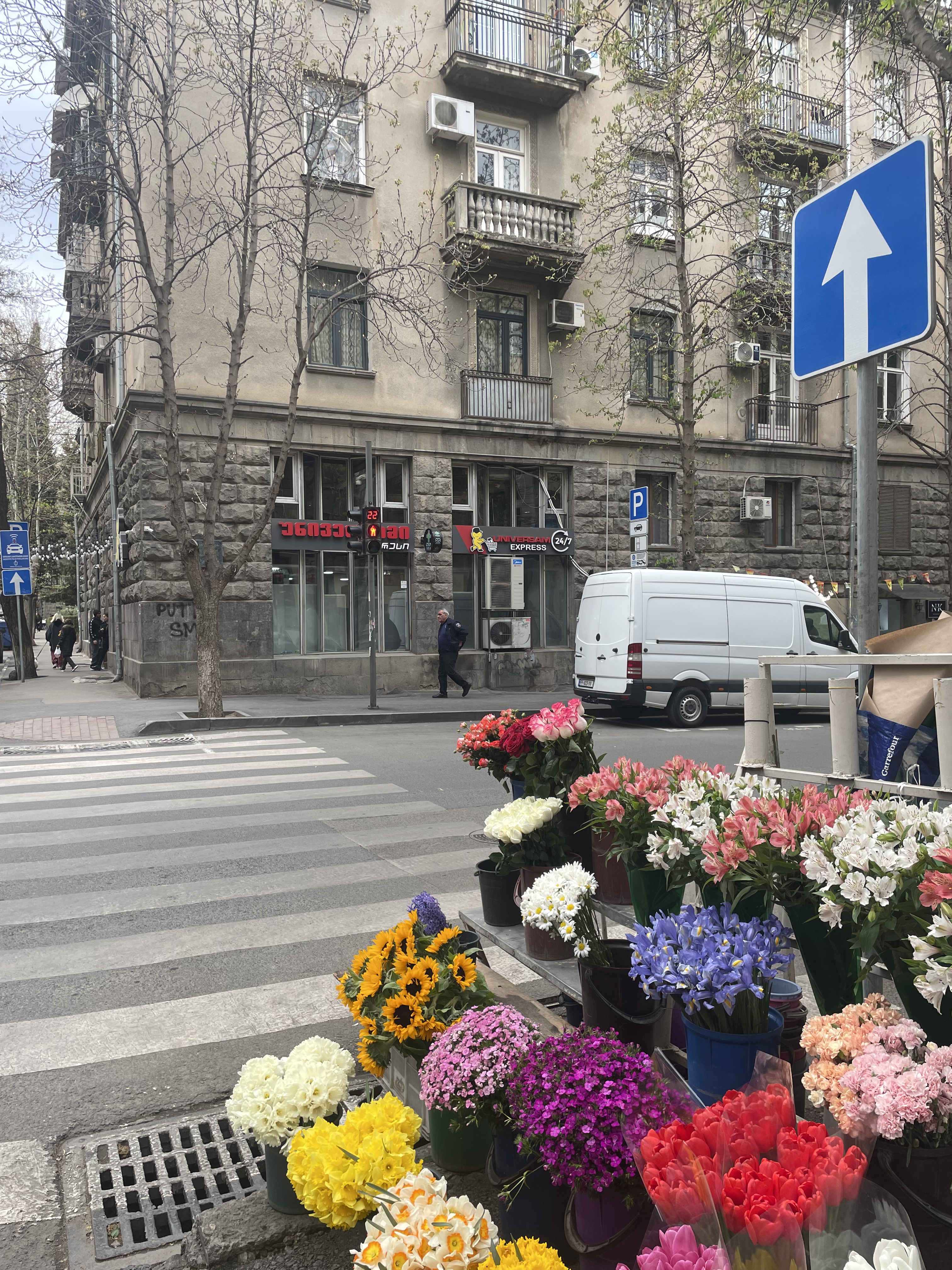
The city had come to life by the time I headed outside, and Shota Rustaveli Avenue roared with an unending drone of car traffic. Tbilisi is split in two by the Mtkvari River, with the bulk of attractions on the western side. Rustaveli is the main axis, connecting northern neighbourhoods down to the Old Town. It was a fine spring morning so of course I opted to walk the half hour to the old town. Despite the cars, Rustaveli is a people street, with public life playing out on benches and pedestrian underpasses, booksellers and painters laying out their wares on spare surfaces, and European and Russian-style buildings punctuated with storefronts, cafes and money changers. Produce fills boxes that frame storefronts, and flowers are sold in colourful bunches on street corners by old women with scarves over their heads. I don’t think I ever saw Rustaveli quiet, regardless of time of day, and it made for a thoroughly charming starting point for my explorations. Any city overflowing with booksellers is bound to be one I’ll like.

The old town itself reflects the bigger changes that have been working through Georgia in the three decades since Soviet collapse and independence. Old buildings are in a constant state of renewal, and in some cases entire blocks have been redone with new facades and fresh paint, making for a pleasant enough effect but also bringing with them the usual junk souvenir shops and internationalized cuisine that follows globalization and investment. Near the riverfront, an entire series of alleys have been reconstituted with outdoor patios specializing in shisha and hamburgers, and the gentle come-ons of hosts and hostesses imploring you to take a seat. In lieu of this, I was able to find a basement restaurant flagged in a guidebook for my first taste of Georgian food, kharcho, a lightly spiced and warming beef stew, with a side of khinkali dumplings. Later I treated myself to a cup of fresh pomegranate juice, getting to use Russian for the first time with the vendor. In the course of conversation it casually came out that in addition to Russian, she speaks Georgian, Armenian, and English. A casual polyglot and a reasonable response to a region of shifting people and borders.
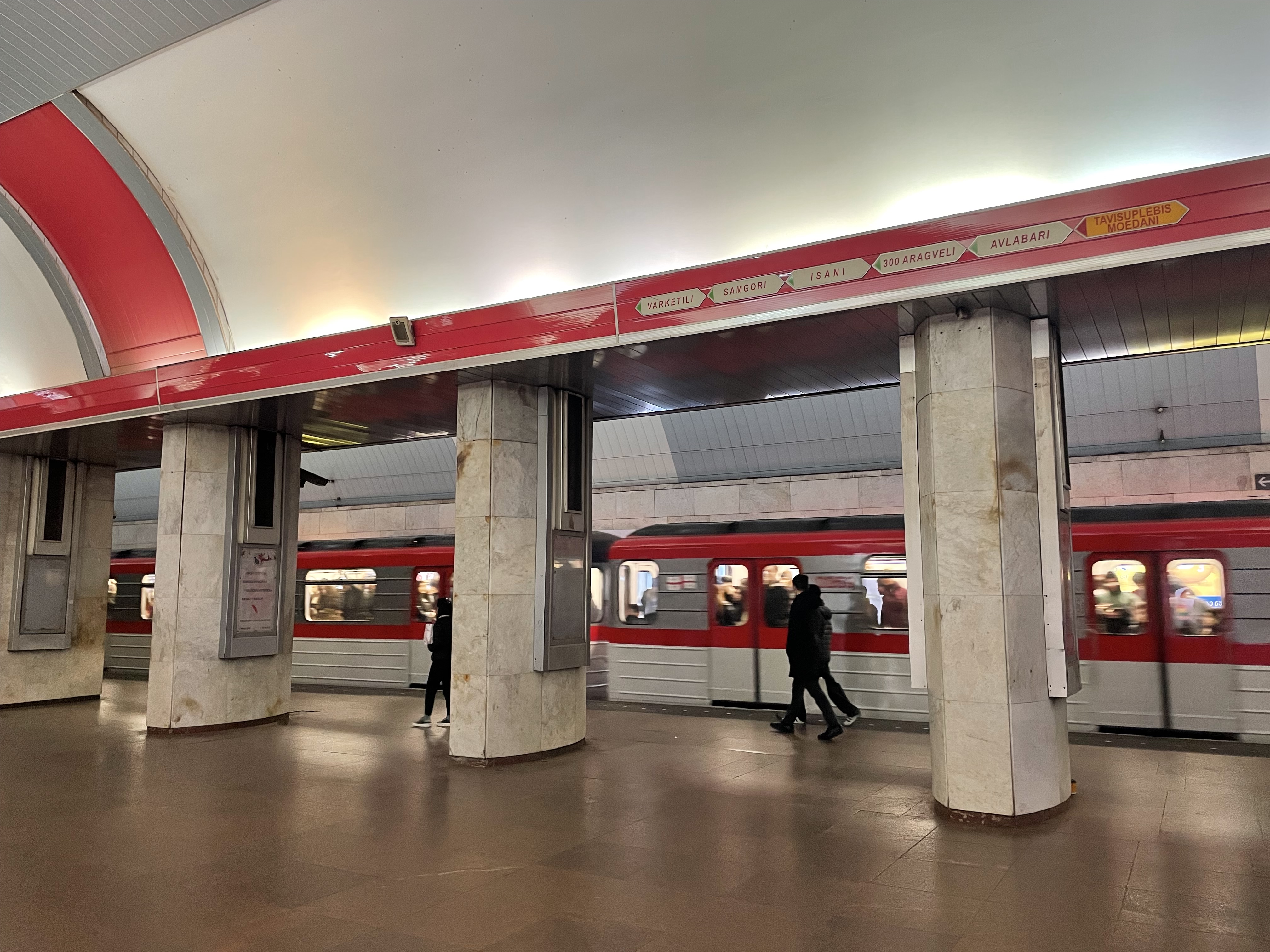
One of the most striking things that becomes apparent after spending a bit of time in Tbilisi is how layered the city is. Buildings from all ages push against one another for attention in the cityscape, reflective of Georgia’s location at a the crossroads of trade and empires. The history of the Caucasus region seems strongly defined by its geography, fiercely prideful cultures protected in isolated mountain valleys clinging to their identity in the face of different empires and invading armies that have moved like a tide over these lands – Turks, Persians, and most recently Russians. Soviet era monuments and buildings pepper the city, none perhaps more tangible than the city’s metro. While it lacks the ornate decoration of the Moscow Metro, it has many other trademarks of Soviet subways: barrel vaulted ceilings, frequent trains, deep stations at the end of long escalators, and metro cars that seem to scream through the tunnels while people play dominoes or chess on their phones. Today Tbilisi asserts a European identity, with EU flags present everywhere and English proliferating as the second language of choice. The Russian architecture, cafe culture, and easy access to glass of wine or beer in the evening further reinforce this European feeling.
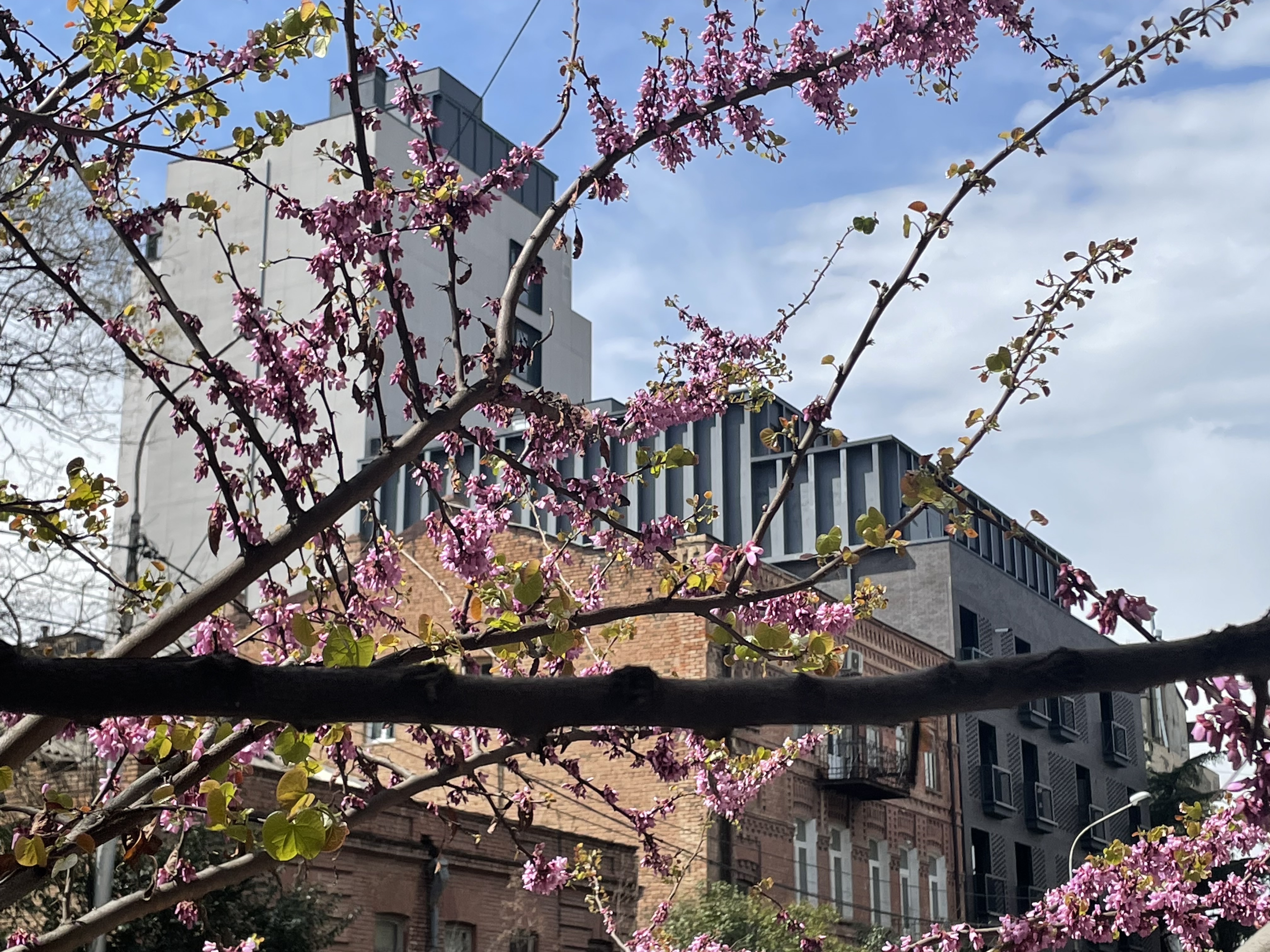
For all the modern intrusions and new construction, there are still very traditional elements to the society. Small Georgian churches dot the city, their architecture distinctive, like small fortresses topped with a rounded turret. The layout is the Orthodox cross, and inside is all frescoed walls and icons, with lit candles filling the air with waxy smoke. The candles are sold anywhere and everywhere, and Georgians often cross themselves while passing these churches. Even the street dogs are friendly, lazing in the middle of sidewalks waiting for a pet. Many sport ear tags which signal their participation in a program to sterilize and vaccinate these unofficial city mascots, a policy no doubt appreciated by the more furtive street cats. The friendliness of Georgians takes many forms. I took a chance at an 8-seater bar down the street from my hotel and after a bit of chatting with the bartender, he poured us shots of chacha, the national brandy, infused with persimmon, one of over a dozen infusions lining the bar wall. Shortly after, a Russian friend of his dropped in, and I managed my personal best with the Russian language though with grammar that would probably appall my teacher.
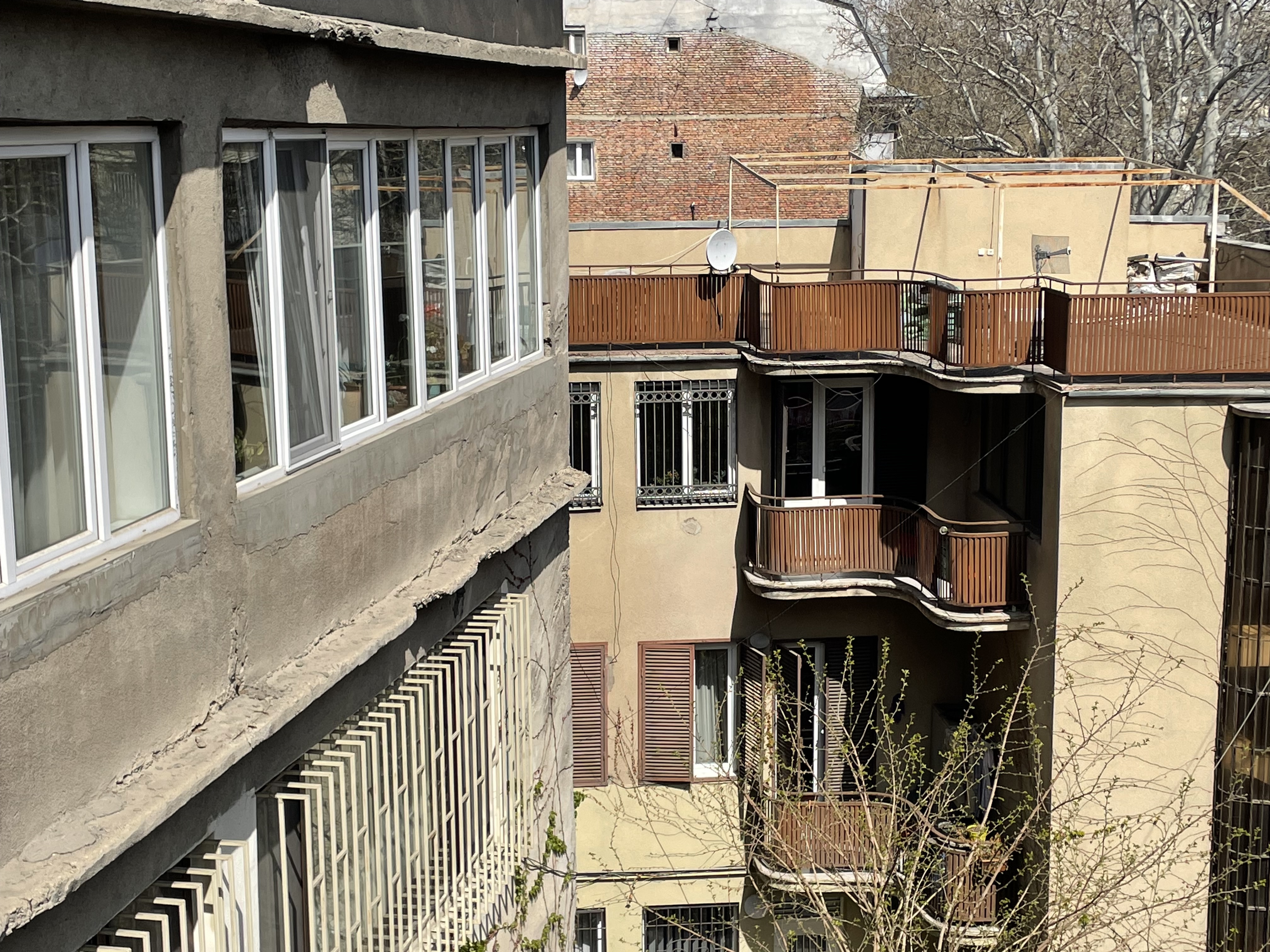
With my feet under me, I had felt comfortable taking on a more challenging outing in the city. This was to visit the Tbilisi Skybridge, a series of apartment blocks dating from the 1970s and built on a sloping hillside, all connected with an open air bridge between buildings. I had no idea what the area would be like, or whether it would even be accessible, though the Internet, bastion of truth, led me to think it possible. I rode the metro out to the end of the line in Saburtalo district, and was quickly able to spot the buildings. Walking up the hillside, I happily discovered the skybridges are very accessible, and that the only real thing to keep in mind is having a 20 tetri coin (10 cents) on hand to use the jerry-rigged building elevator, which features a coin-op slot that apparently provides some easy revenue to the building. To celebrate this successful expedition, I got myself a coffee and ponchik, a little doughnut filled with vanilla creme, from a nearby kiosk.
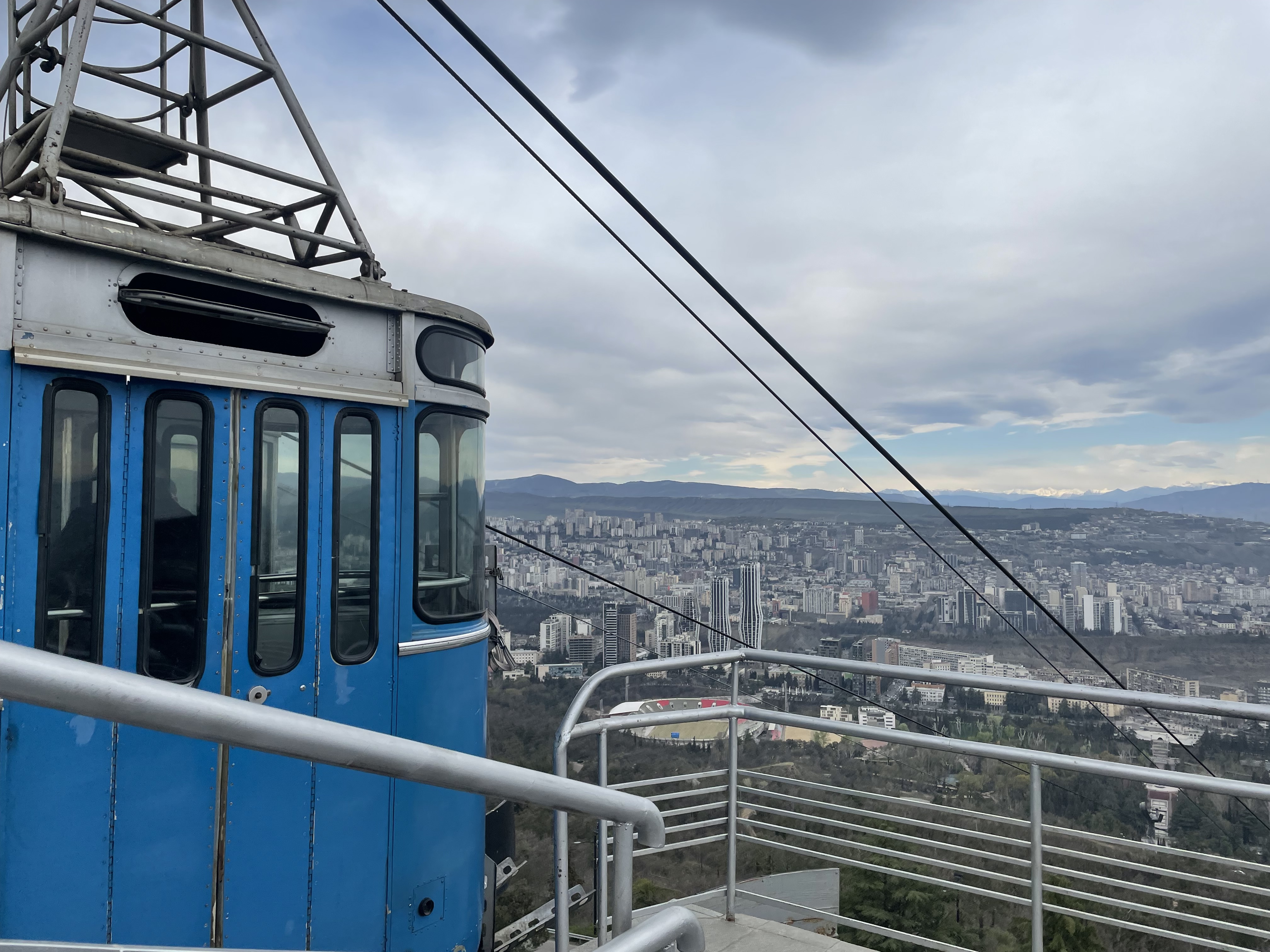
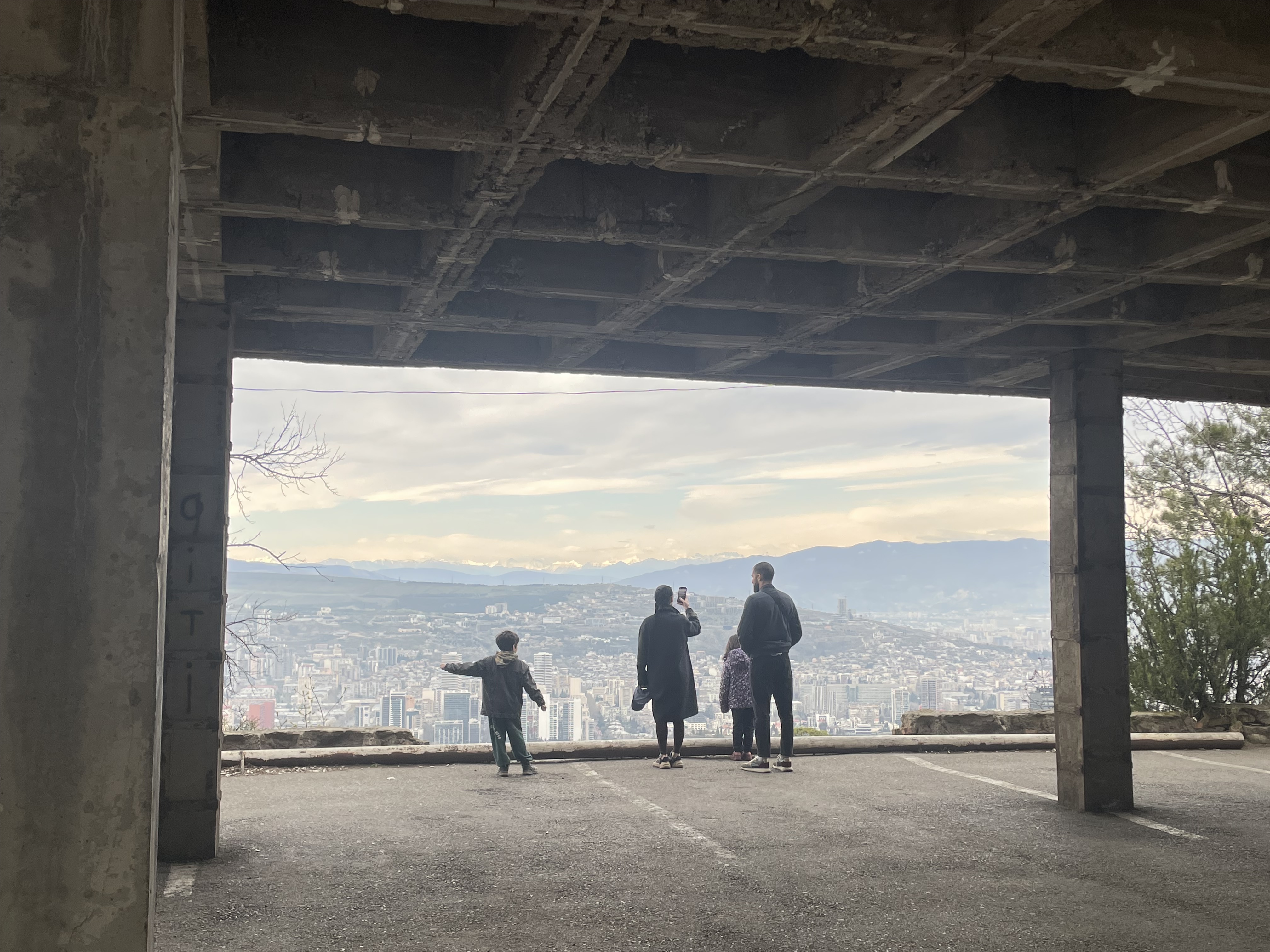
Like the rest of Georgia, Tbilisi is framed by dramatic topography, with steep hills rising up from the flanks of the river, splitting neighbourhoods between the various ridges. Over time this has meant the development of a number of hilltop attractions – ferris wheels, botanical gardens, hiking trails, the Mother Georgia statue – all tied with the lower lying city through cable cars and funiculars. I’m a sucker for a good city view, and took a nice midday walk through the upscale Vake neighbourhood to its namesake park, where a somewhat terrifying small cable car from the 1960s shuttles groups up and down from Turtle Lake. The view at the top was worth it, and the day was clear enough to see the snow white peaks of the Caucasus mountains, an expansive range marking the frontier between Georgia and Russia. These mountains would be my first destination outside the capital.
 Zak Abroad
Thanks for your stories I enjoy them!