
We made it back to Cusco without incident, departing on a jam-packed PeruRail train that is known as one of the most expensive in the world, in terms of cost per distance travelled. It made for a pleasant ride at least through the Sacred Valley and back up to the cradle of hills that contains Cusco. The trip in total is less than 100 kilometres, the sort of distance covered by the bullet trains of Germany or China in less than half an hour. For us, it took nearly 4 hours, but we had the pleasure of being treated to a very earnest fashion show en route displaying the various styles and ways to wear garments spun with the wool of the various camelids of the Andes. It was actually a little fun.

Back in Cusco it has been quiet. Both Mom and I have largely explored the town, or at least the portions that seem to merit exploration. Yesterday I continued my quest to view as many ruins as possible, joining a regional bus for a ride back into the valley town of Pisac, a centre of handicrafts, tourism, and home to eponymous ruins, situated on a hill high over the town. Deciding that my legs are too shot for another grueling uphill march at that altitude, I assauged by tired muscles with a cab ride up, affording spectacular views along the route of the valley below and rolling hills. For whatever reason the scenery is not tiresome, and I´m glad of it.
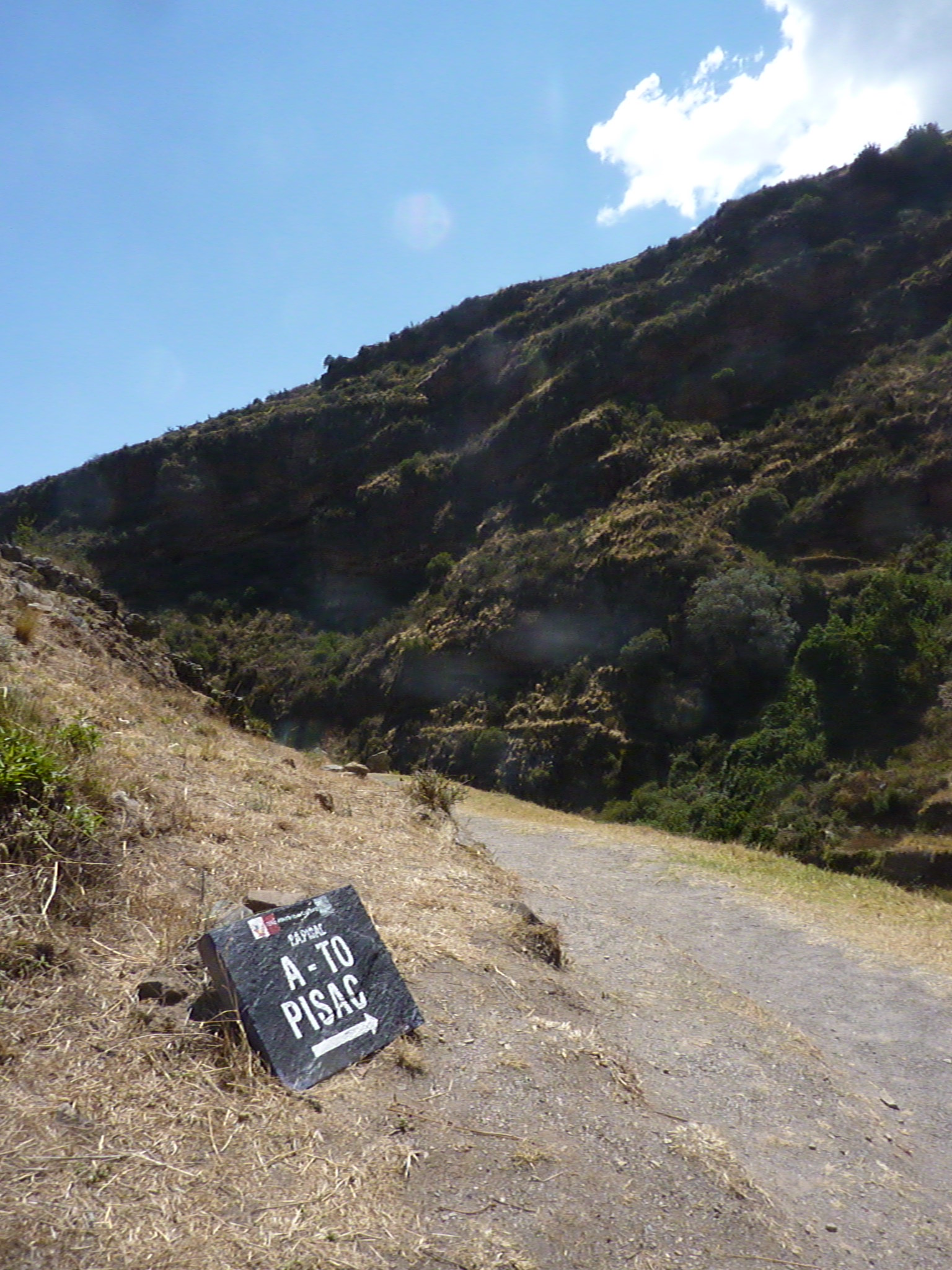
The ruins are a bit of a gong show, full of tourists (surprise!) though in this case the bulk seemed to consist of Brazilians wearing the same orange baseball caps. As they were of no use for me, I skeedaddled past and made my way to the ruins, slowing my pace only to eavesdrop opportunistically on English language guides, climbing about as I was allowed and ever careful to respect the posts and ropes telling me what zones were no-go. Ultimately the best part of the site was the departure, a simple wooden sign pointing to the town of Pisac and a narrow dirt path leading down a dry gulch. Buffeted by wind and sun, the trail was almost empty and offered moments to pause and simply take in the majesty of the surroundings, including the old agricultural terraces mirroring my descent.
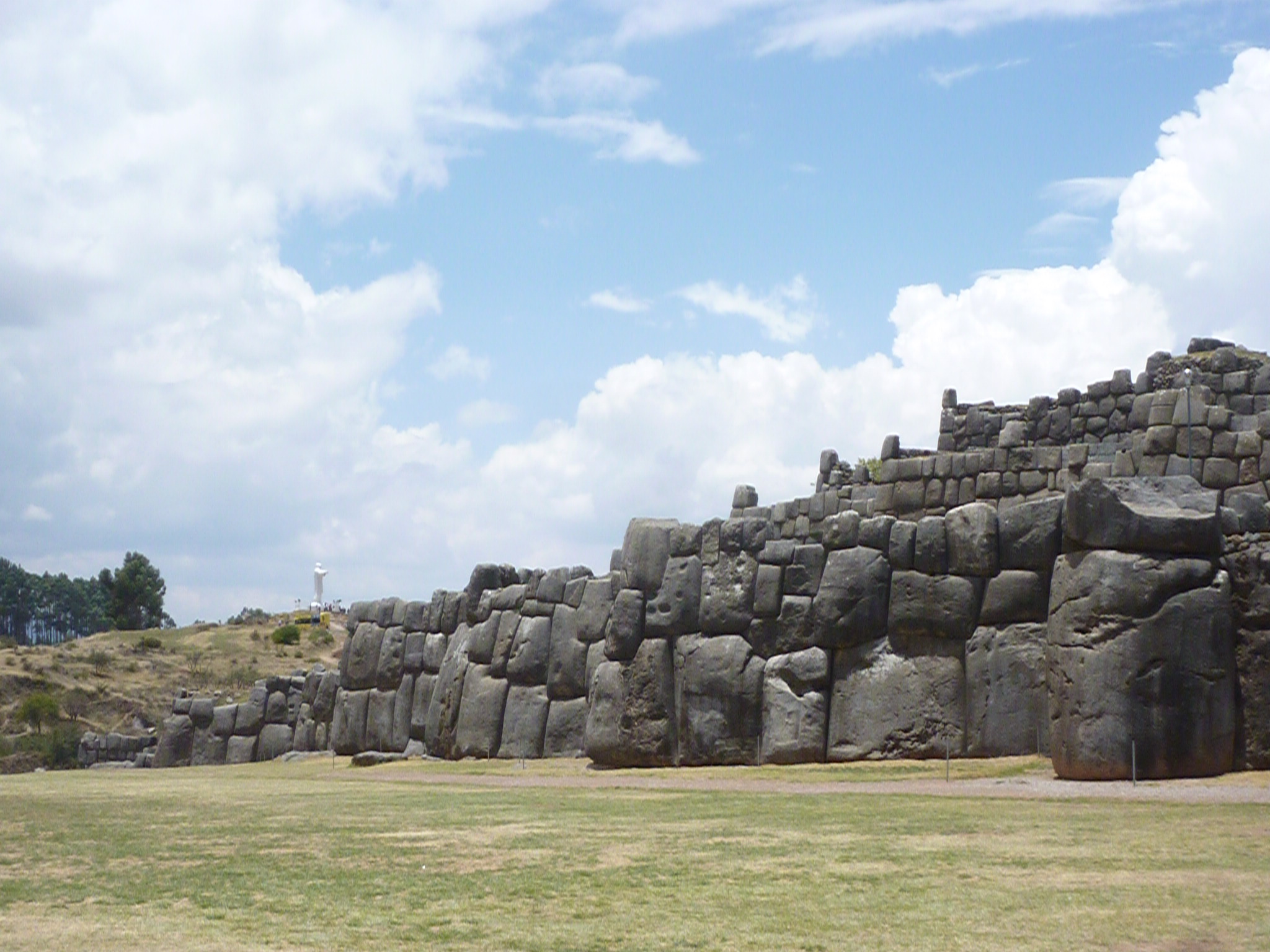
Pisac, the town, is small and pleasant enough, once reached. The plaza de armas here is given over to selling crap (crafts?) to tourists and my main goal was hydration, partaken with a tasty homemade chicha morada and complemented by an empanada. Today, locally in Cusco, we went to Q’enqo and Sacsahuaman, two of the nearest ruins to the city itself. Again, the lacking narration and signs lead one to be a bit of a beggar for information on the sites but the quality of stone work, particularly at Sacsahuaman, is again impressive. The ruin is located at the ‘head’ of the puma that the Incan city of Qosqo (navel of the world) and served as a ceremonial centre as well as a fortress. This latter use is evident in the massive walls fortifying the site, including rocks far taller than myself and a number of tons heavier yet, all placed with the same exact precision as is customary of the Incas.
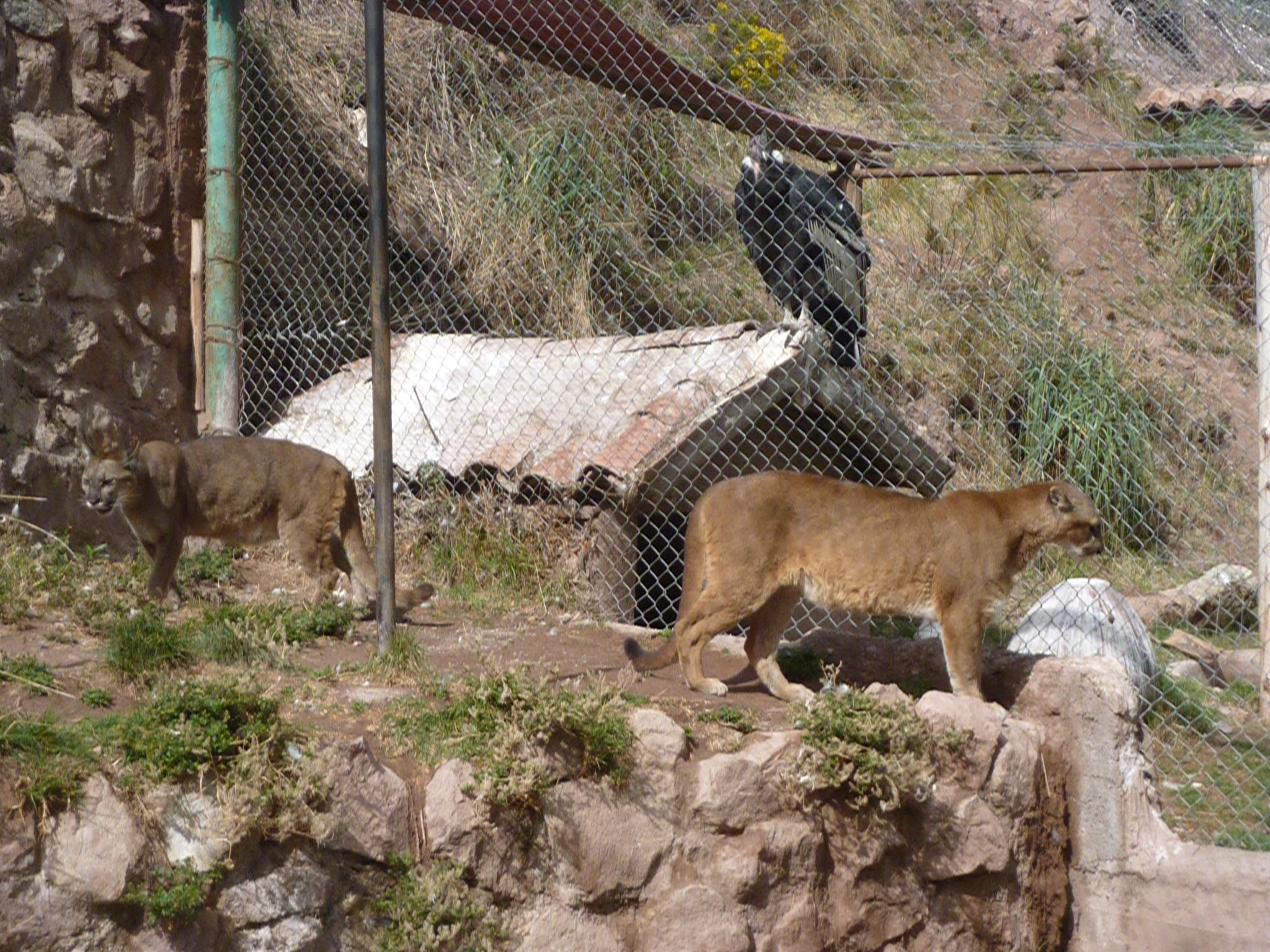
The last stop on the tourist trail was a bit more fun and markedly less dusty – the Cochahuasi Animal Sanctuary. Set outside of town, the sanctuary serves as a place to rehabilitate and tend animals that have suffered some malady, injury, or abandonment. They have the usual repertoire of alpaca, llama, and vicuna, as well as the elusive fourth camelid, the aggressive vicuña, a light and non-threatening seeming animal with a hard stare. In additiona there were Peruvian hairless dogs, a monkey, some playful coatis, and a bevy of hawks and macaws. The stars of the show, no offense to the overly friendly deer, were the pumas and the Andean condors.
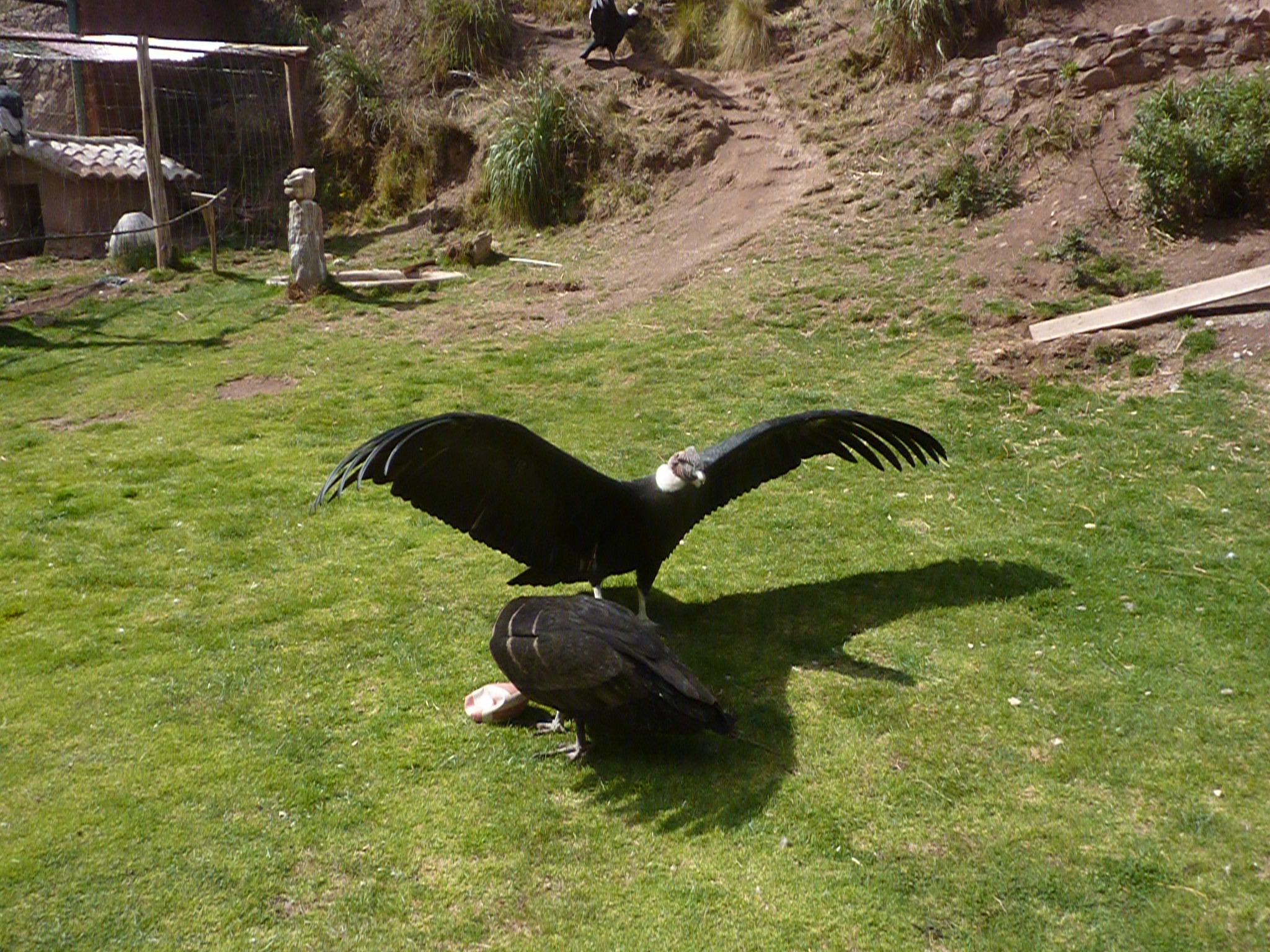
The pumas, same as those in the US and Canada, recently had a cub that could be seen, spots and all, in the nursery for the animals. Sadly we missed their feeding time though were told that a lame donkey had been donated to the sanctuary in the past as a gift for the pumas. Luckily for the donkey, the sanctuary is a no-kill zone and the animal was rehabbed instead. The condors, the largest flying birds in the world, are impressive. Large with bare feet and heads exposing talons and gnarled, leathery hides, they have a wingspan over 3 metres and it is easy to see how these massive scavengers were able to embed themselves in Incan lore. A definite highlight of the trip and welcome change of pace. D-day arrives tomorrow and the trip transforms into a solo journey to Paraguay and Buenos Aires. As ever, more to come.
 Zak Abroad
The Andean condors are particularly impressive. What a sight they’d be soaring overhead! I guess we are not so different from the ancient Inca if we can equally admire such creatures.
Love,
Dad