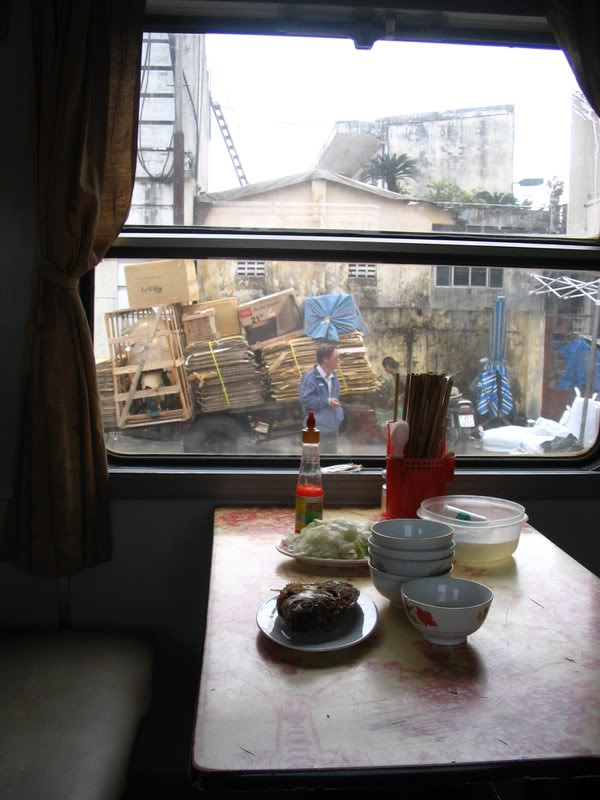
Leaving Hanoi, we hopped rides on the back of a pair of motos whose ambitious drivers careened around slower vehicles, in a race against time to get us to the train station. We boarded our 30-hour train bound for the bottom end of the country, prepared for a 2 night and 1 day excursion down the length of Vietnam. Our four-bed cabin was shared with two Chinese college students who were fun to chat with and literally dropped their jaws when they heard me speak some Chinese. The countryside is exceedingly beautiful, and cmeras don’t seem to be capable of capturing the brilliant emerald color of the rice fields, which were filled with water buffalo and farmers stooped over in conical hats before a backdrop of rising green peaks.

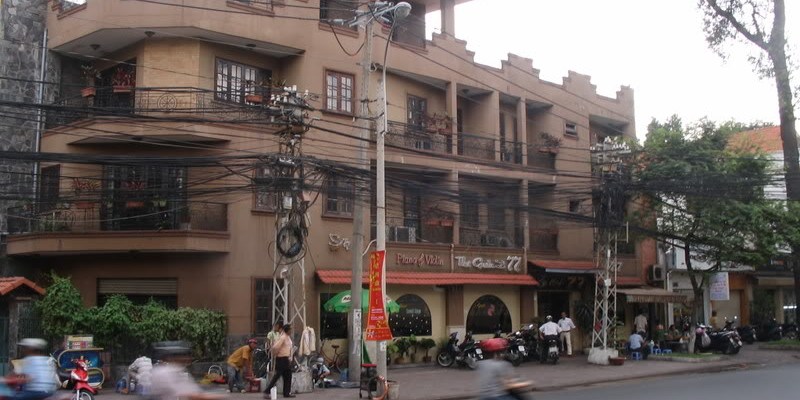
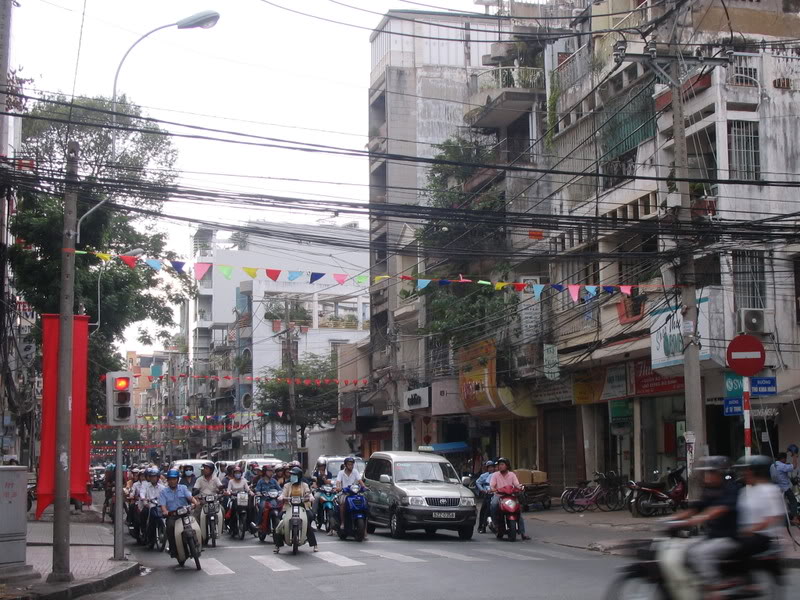
Early in the morning we arrived into Ho Chi Minh City, a moutful of a moniker that nearly everyone we came into contact with referred to simply as ‘Saigon’. One of the (admittedly few) pleasant aspects of America’s decade-long involvement in Vietnam is that foreigners on the street don’t attract the dumbfounded stares we seem to in Shenzhen. Nice change of pace. Around our guesthouse is the backpacking ghetto, centered on Pham Ngu Lao. Compared with Hanoi, Saigon feels and looks bigger, faster-paced than its northern cousin. The intimacy of the streets is replaced with a modern feel that gives the city a different kind of flavor and grace than Hanoi. The two make appropriate bookends for the country.

We booked a trip with god-knows-how-many-other tourist buses to visit the famed Cu Chi tunnels northwest of Saigon, where the remnants of massive Viet Cong tunnels still exist. A highlight of the visit was discovering that, yes, I can squeeze into a hole in the ground with an opening of only about 1 foot by 1 and a half. Numerous B-52 bomb craters could be spotted, and though gimmicky, we did get to fire off a few rounds with an AK-47. Hell of a kick on those. There is also a restored tunnel portion that covers near 100 meters underground through which we shimmied and crawled our way. It was incredibly hot and claustrophobic, and I can only imagine what it must have been like with the ground above you shaking from falling bombs.
Back in Saigon, we explored the city, visiting the old Roman Catholic cathedral and exploring the central Dong Khoi area, where we spent time people-watching along a long green strip that led to the opera house. Turned out that the park is chock-full of rats and mice moving about, and we sat with our legs pulled up on a bench observing with bemusement as they shuffled from bush to bush across the open grass. It actually made for a pleasant evening.
On our last day we made our way over to the ever-expanding War Remnants Museum, which covers what is known here as the American War. Large portions of the gallery are devoted to documenting the heroism of the Vietnamese and the hardships they suffered, as well as some of the grosser atrocities (think My Lai) that Americans committed, and our more enduring legacy to the genetic future of Vietnam: Agent Orange. The museum, when it originally opened decades back, was known as the War Crimes Museum. I can only imagine what it was like then. There was also a section devoted to documenting the brutal methods used by the South Vietnamese regime (they were no saints either) in keeping down dissent.

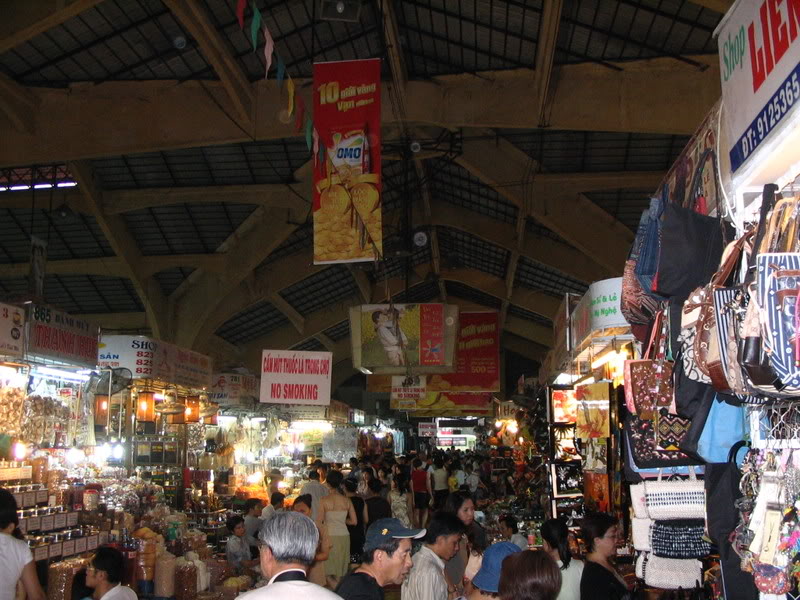
In general, we enjoyed our time, flitting between tourist sites and taking in the simple pleasures of the city. Near the hostel was a large park filled with a flower market by day and women doing dance steps by night while friends play badminton and dogs roam. We took to a restaurant that offers movies with your meal, played on a big screen upstairs, and enjoyed the relaxed atmosphere that pervades most of Vietnam, provided you have learned to tune out the honking of the motos.
Over the course of the trip, I came to realize that perhaps my favorite of the countries Kathleen and I visited was Vietnam. It is blessed with scenery that is difficult to beat, a friendly and industrious people who were able to put behind them over three decades of war, and a long history of which they are justifiably proud and which I will not try to write out at length here. I wish I had more time to explore the smaller cities and towns across Vietnam, and I hope in the future to get such a chance.
 Zak Abroad
Never a dull moment in your explorations. Keep it coming!