
While Hanoi has much to see, it is also easy and worthwhile to get out of town. The tourism industry in Vietnam in a model of efficiency and organization. Small storefronts pepper the Old Quarter offering up a menu of daytrips and overnight choices, all at reasonable prices, and complemented in the virtual marketplace where the same options are a click away, easy to book in the day before. All this is serviced by a huge cast of drivers, English-speaking guides, interchangeable vans, and a constellation of stopovers spreading in every direction from the capital. We paid the extra $5 for a ‘luxury’ tour, which means only that the seats are more comfortable and our group was smaller – no headsets or loudspeakers needed, a blessing easily worth the mark up. Alex, the guide, and Cong, the driver, assembled our group in a series of stage pick ups: a young, aloof trio of Tunisians, a perpetually tardy Saudi couple, a pair of gregarious middle-aged Brits, and a couple Canadians.


En route, Alex offered an overview of Vietnam in economic terms, framing the need to tip service providers around the rapidly growing but modest per capita income of the Vietnamese. Our van glided along a recently completed highway, flat and smooth, past a collage of rice paddies and villages. Symbols of new material wealth abounded and atop nearly every rooftop flashed a stainless steel water tank, outcompeting the more modest temples and Catholic church spires in the miniature town skylines. Journeys running the length of the country from Hanoi south to Ho Chi Minh City, currently a trip of around 30 hours, will collapse to less than 6 when a new high speed rail line opens, per Alex, “maybe in ten years.”. Sitting in random patches of traffic throughout the day, the case for this investment seems clear.

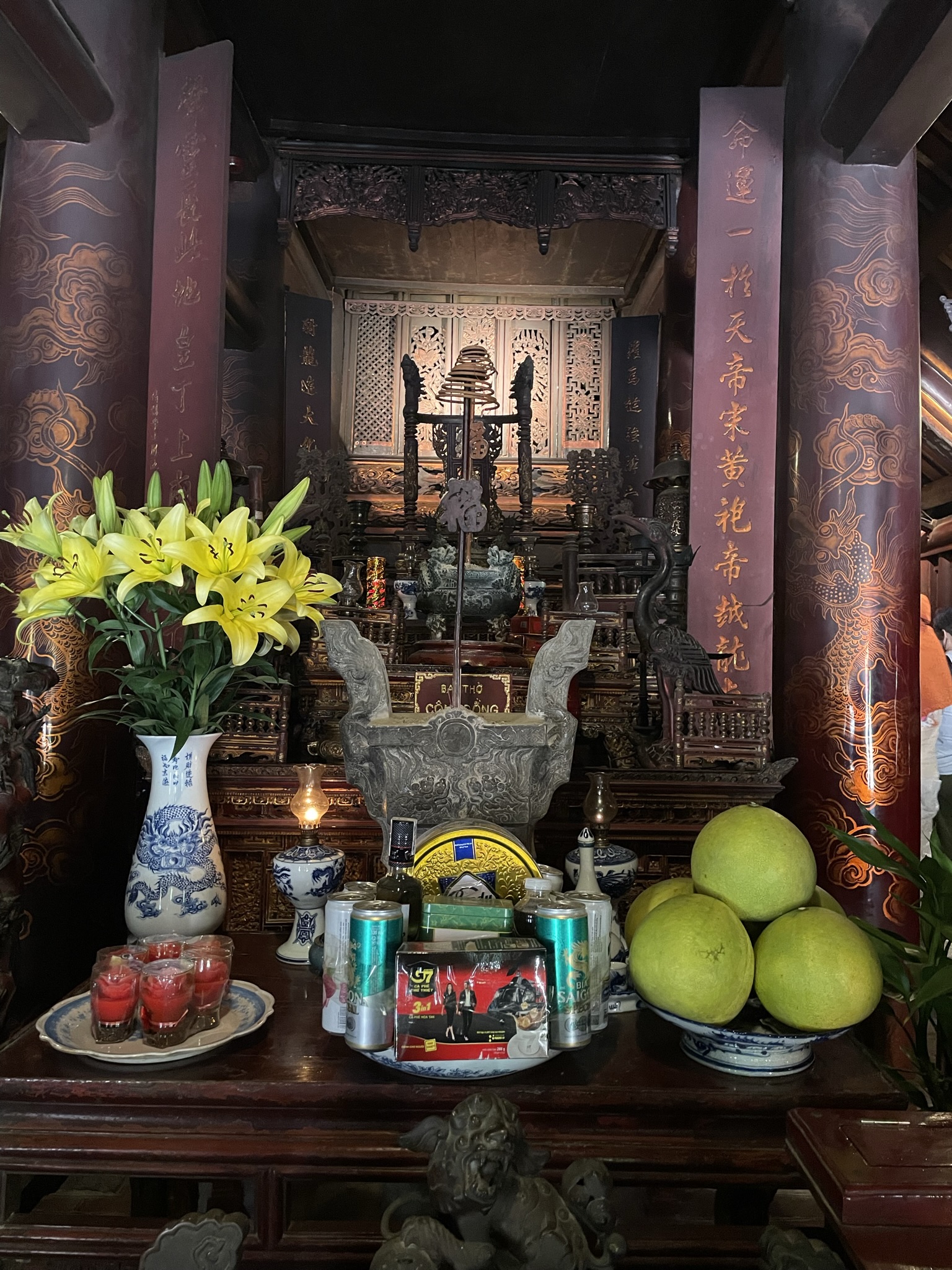
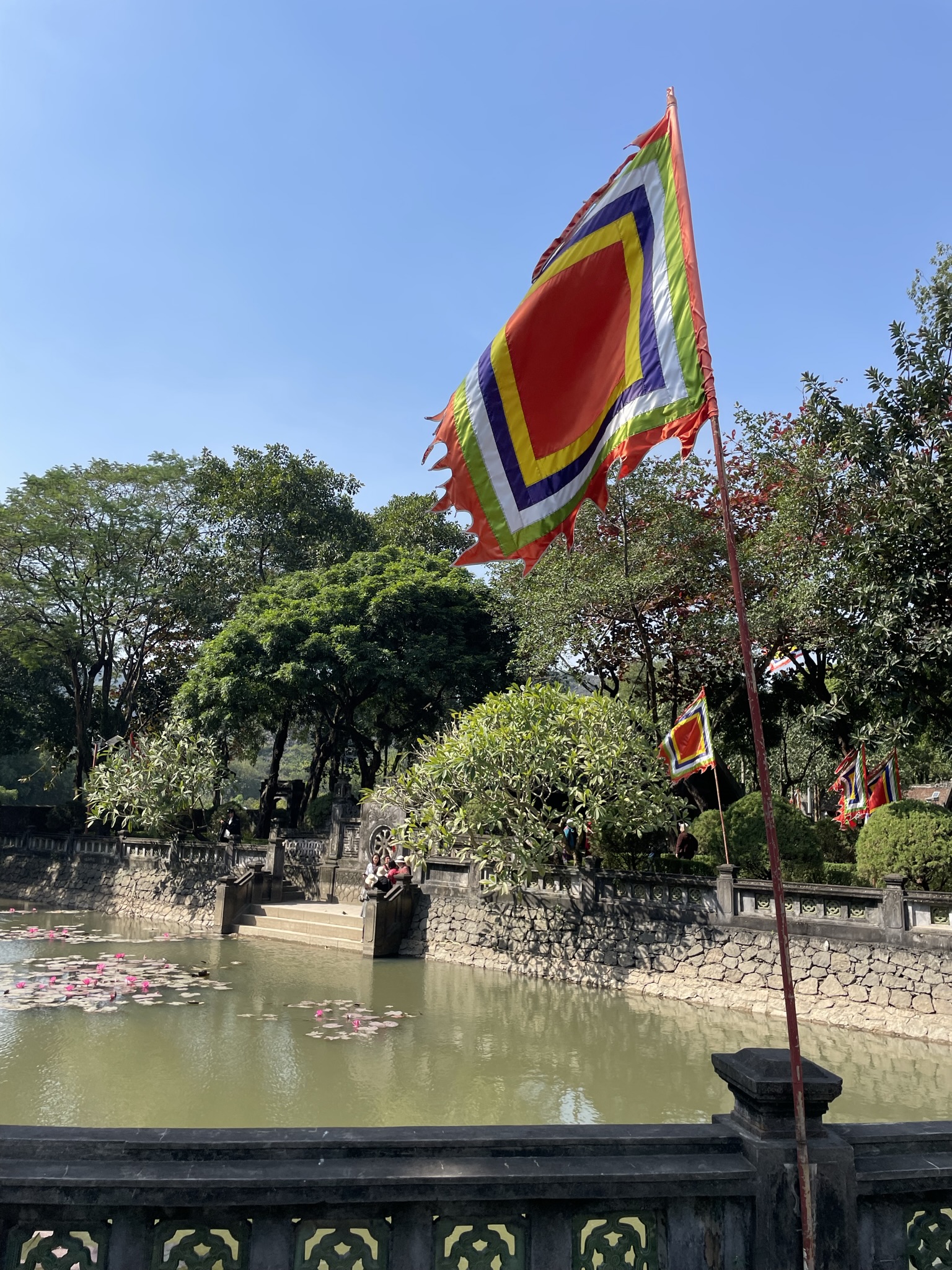
Our first stop was a roadside shopping centre that had managed to funnel seemingly every tour van, profiting from a brisk trade, followed by a push south to Hoa Lu. This ancient capital was the better of the two stops. While feeling a bit undersized by today’s standards, Hoa Lu occupies an important place in Vietnamese history: it was the seat of the first Vietnamese dynasty that slipped off the yoke of Chinese control a millennia ago. The site, nestled along a quiet river amid rice fields and limestone peaks, features a pair of elongated processional courtyards leading to temple structures, refined and unimposing but very busy. Alex steered us through competing tour groups, moving like schools of fish through the grounds. We reached Hoa Lu via a short bike ride on quiet roads meandering past the sharp limestone peaks at the edge of the river valley. My bike was half rust and the seat so low that my knees brushed my elbows while pedaling. It may have been old enough to transport supplies along the Ho Chi Minh Trail, but nevertheless it was pleasant to enjoy a quick ride on a nice day.
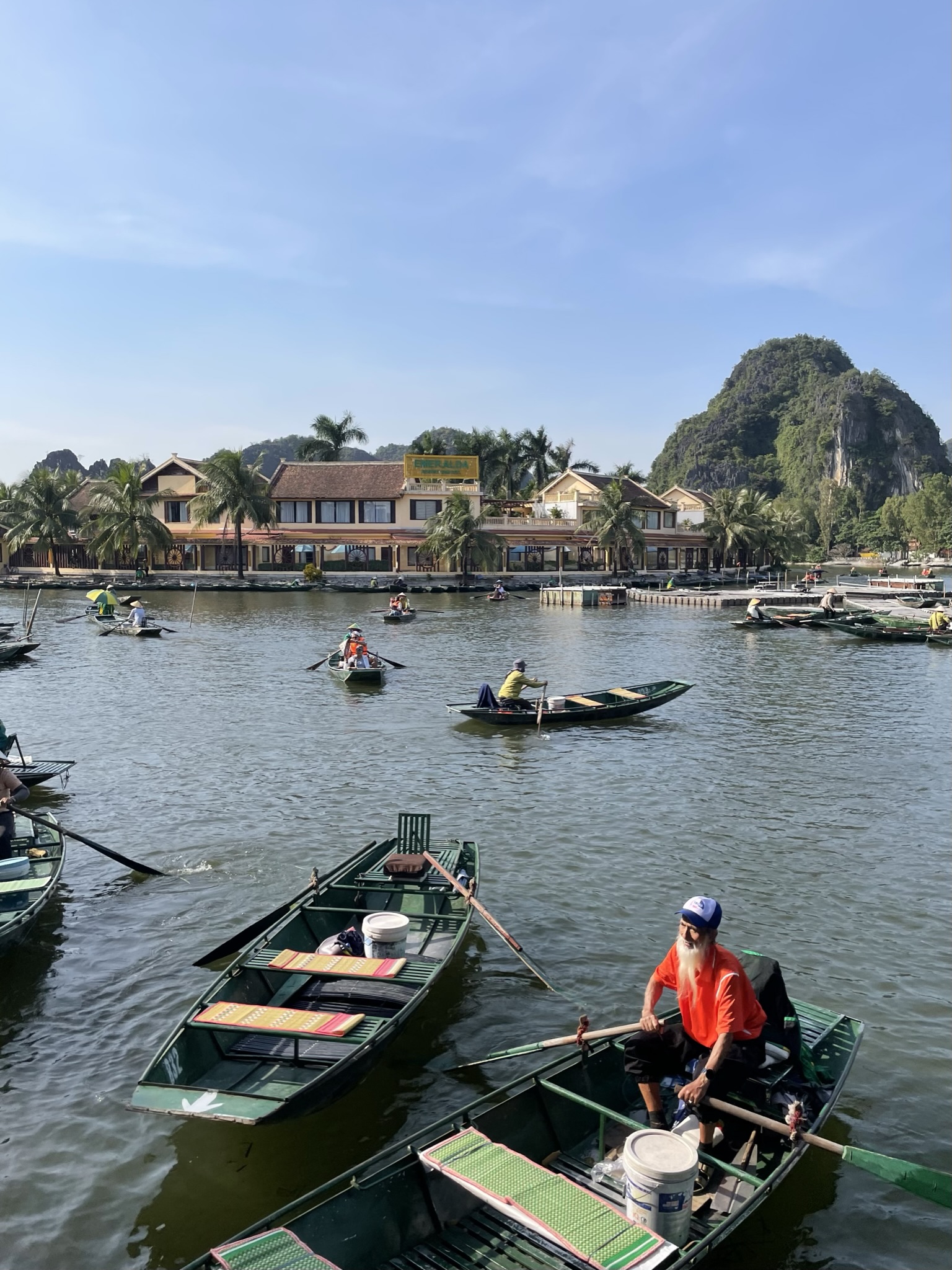

Having worked up an appetite, ours was among the first groups to descend on a very solid buffet-style lunch (drinks not included) where I treated myself to an embarrassing number of sweet fried taro balls for dessert. Fortified for the afternoon, our van bore south to Tam Coc for a boat trip that was a blend of stunning natural scenery crossed with a theme park. The whole process included a parking lot for our vehicle, followed by an electric open-air shuttle ferrying us through the town to promptly deposit us at a winding queue. Here, Alex sprang into action, part stock broker and part auctioneer, tickets in hand, urging us along in pairs and trios to our respective rides, here, modern steel rowboats that have replaces sampans. Hannah and I had the good fortune to be paddled by a thin older man sporting a long white beard who seemed to enjoy agitating his coworkers with oar splashes and boaters.

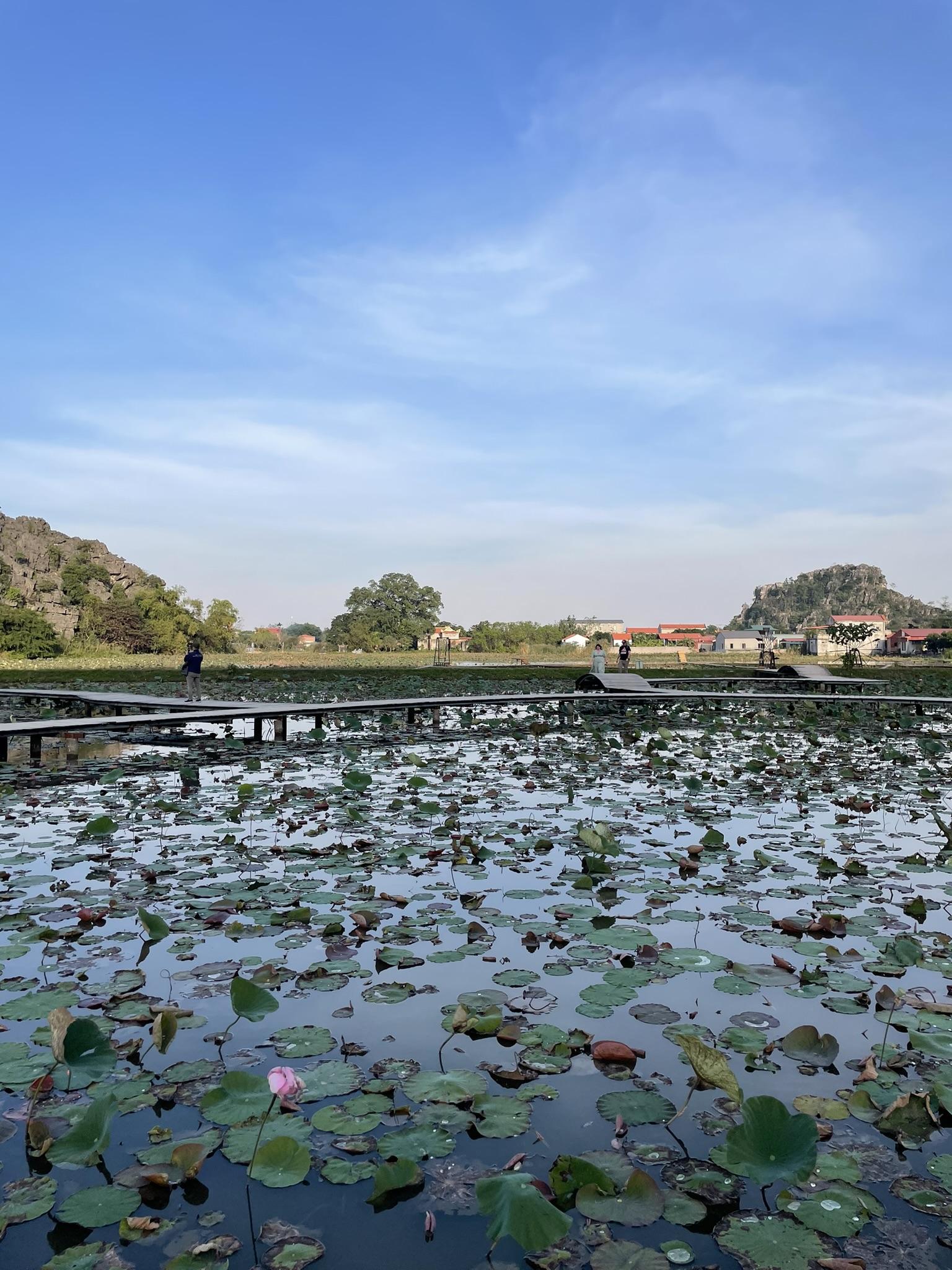
The river itself winds through a narrow valley, framed by either side by towering karst. Along the edges are rice paddies, fallow at this time of year and instead filled with lilies and lotus pads. Periodically the river carves directly under the karst, through low, wide caves where you have to watch your head in the sudden darkness. For our guide it is a dull ritual, ferrying us tourists out and back, and he and his colleagues row with their feet, freeing their hands for cell phones, a clever adaption. Occasional commercial opportunities pop up, with prints passed from boat to boat for perusal and a flotilla of photographers waiting in ambush past a bridge to snap, print, and try to sell you your portrait before you can step back on dry land. It is an impressive operation, though the highlight for me turned out to be birdwatching (grebes, bitterns, ducks, egrets and a a brilliant green kingfisher all featured). This, Hannah reminded me, is also a sign that I am well and truly entering middle age. I suspect she’s jealous that she didn’t spot them herself.

Back on the road, Alex filled the group in on the sprawling concrete plant off the highway, noting Vietnam’s rise as a producer and exporter of construction material. This was achieved at the cost of those same limestone peaks we’d been paddling by, here a denuded moonscape that has chipped away and battered along the edge of this vast industrial complex. Our last stop of the day was Hang Mua, a small cave capped by a 500-step hike to a hill top pagoda. Each of the 500 steps was at least one foot high, a useful but neglected detail until we began our way up a more arduous climb than planned. At the top, crowded and with slick stones ready to twist an ankle, we were rewarded with a stunning view of the landscape. It was late when we made it back to Hanoi, satisfied with our day out of the city and appreciative of the long hours put in by Alex, Cong and their compatriots in the tourist industry.

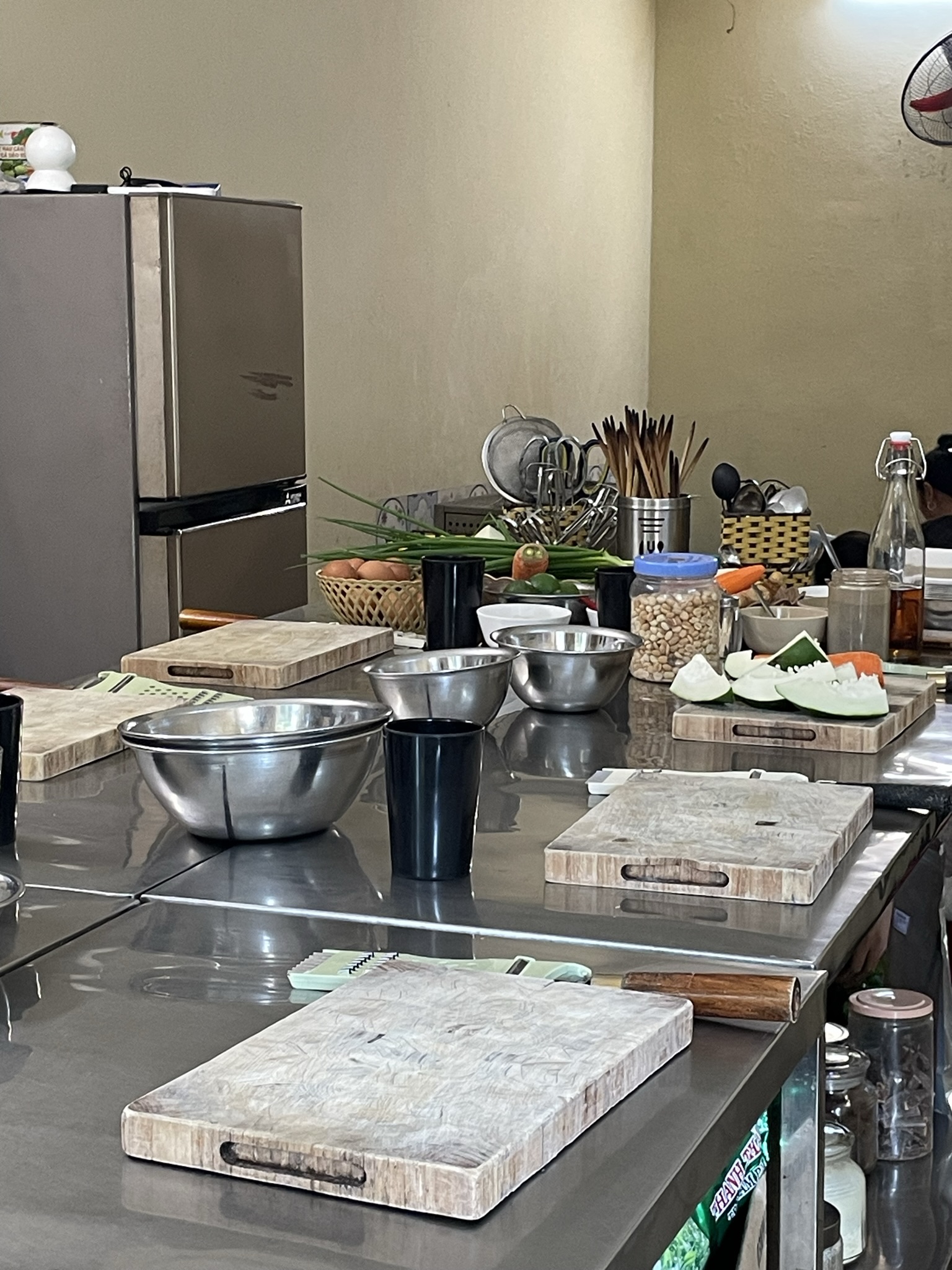
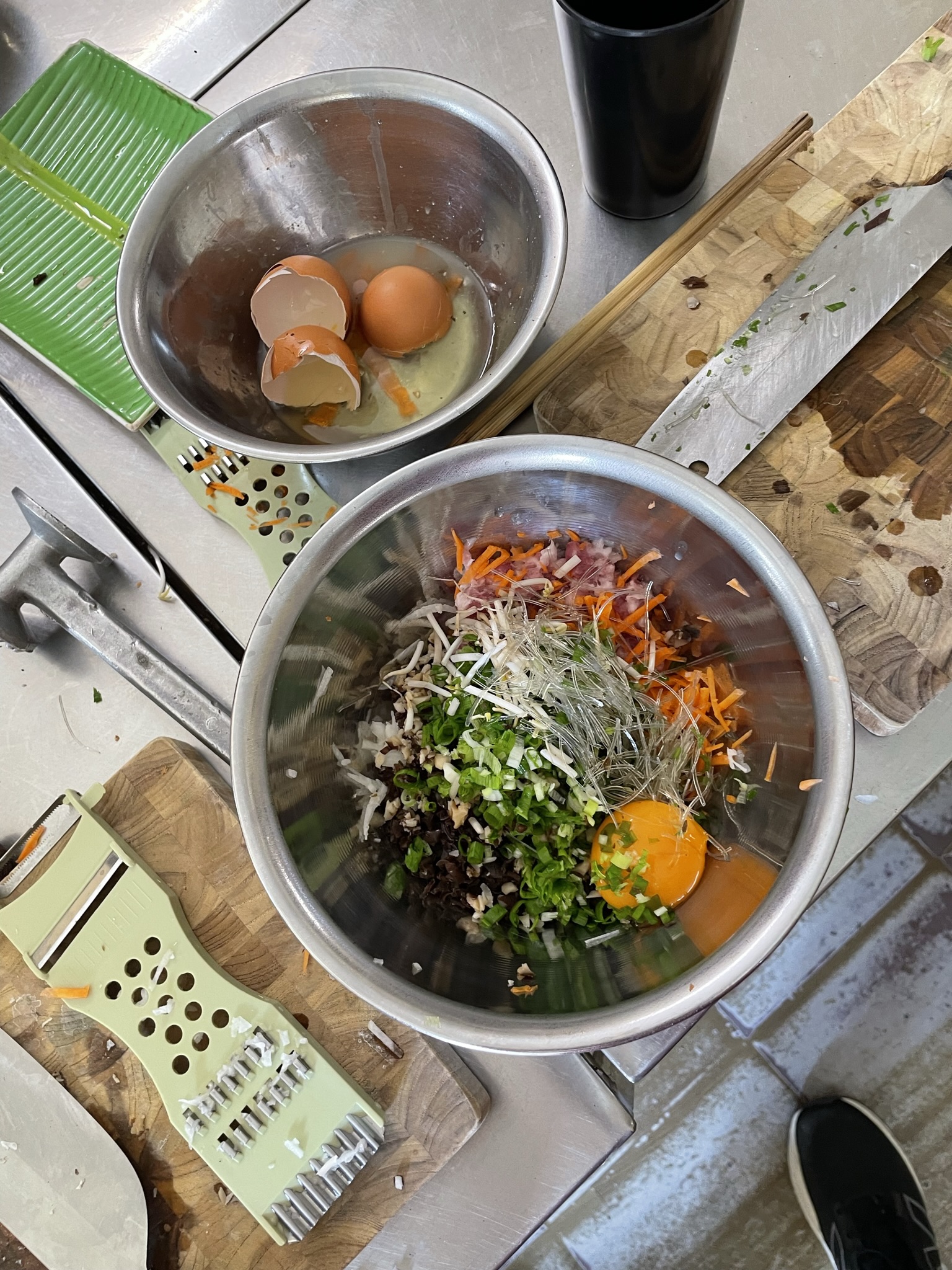
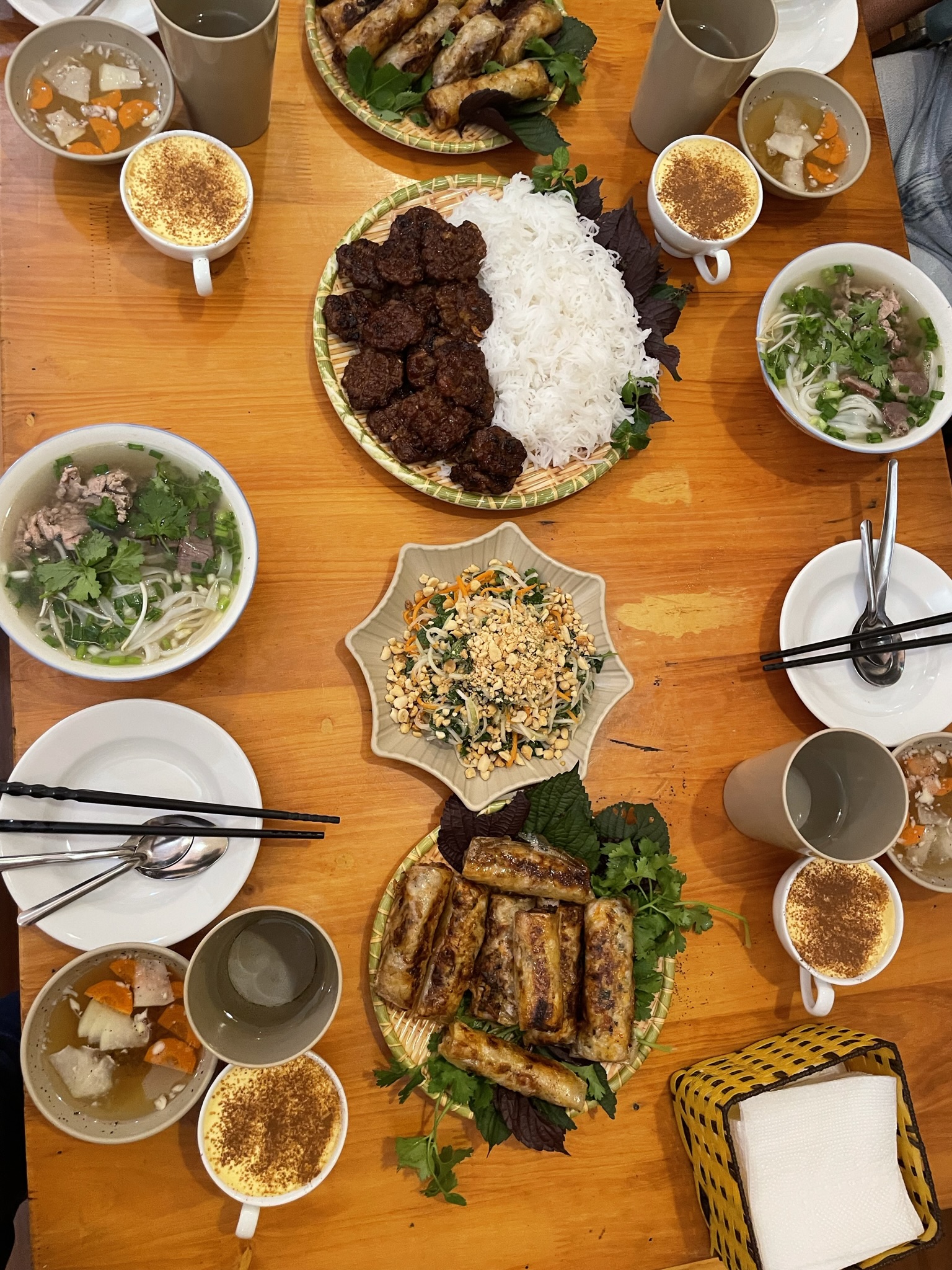
A separate late booking was our cooking class, convened in the floors above a coffee shop (of course) in the Old Quarter. Our instructor Emmy took the eight of us through the produce market outside the front door, explaining the differences between pho and bun noodles, which I promptly forgot. More successfully, I was able to answer a number of questions along the lines of fruit, vegetable, or animal part (kidney!). I attribute this fully to China’s markets. Back in the kitchen, Emmy kindly took us through five different dishes in three hours time, an accomplishment achieved through efficient delegation – my tasks including straining the pho broth, Hannah was entrusted with frying some of the banh cuon. Perhaps the most challenging part was trying to repeatedly flip over a beef bone the size of my head over a grill using chopsticks. Equipped with a recipe book, we may actually be able to reproduce these recipes in Vancouver, especially given the large Vietnamese community in our neighbourhood. At the end, the group sat to enjoy our lunch: banh cuon (spring rolls), bun cha, pho, green papaya salad, and egg coffee. An absolute highlight of the trip.

Less satisfying was our excursion to Bat Trang, a village now swallowed whole by the growing capital city. Formerly a major production point for ceramics at the confluence of a small tributary with the Red River, today it is a hair-raising car ride along a winding dyke road to the photogenic but dull “museum”. Here we were quickly appended to an English-language tour which moved in lockstep with a Vietnamese one, a roving sonic battle with only losers. The tour focused on a series of carved wooden sculptures that, when lit, cast specific shadows. The most intricate was a three-turn meditation on Ho Chi Minh, the Communist hammer and sickle, and the Vietnamese star. What does this have to do with pottery? Great question. Also left off the English language tour was the sculpture honouring President Putin. Neither of us were moved to buy a wooden sculpture, though Hannah did find some nice hand painted bowls nearby.
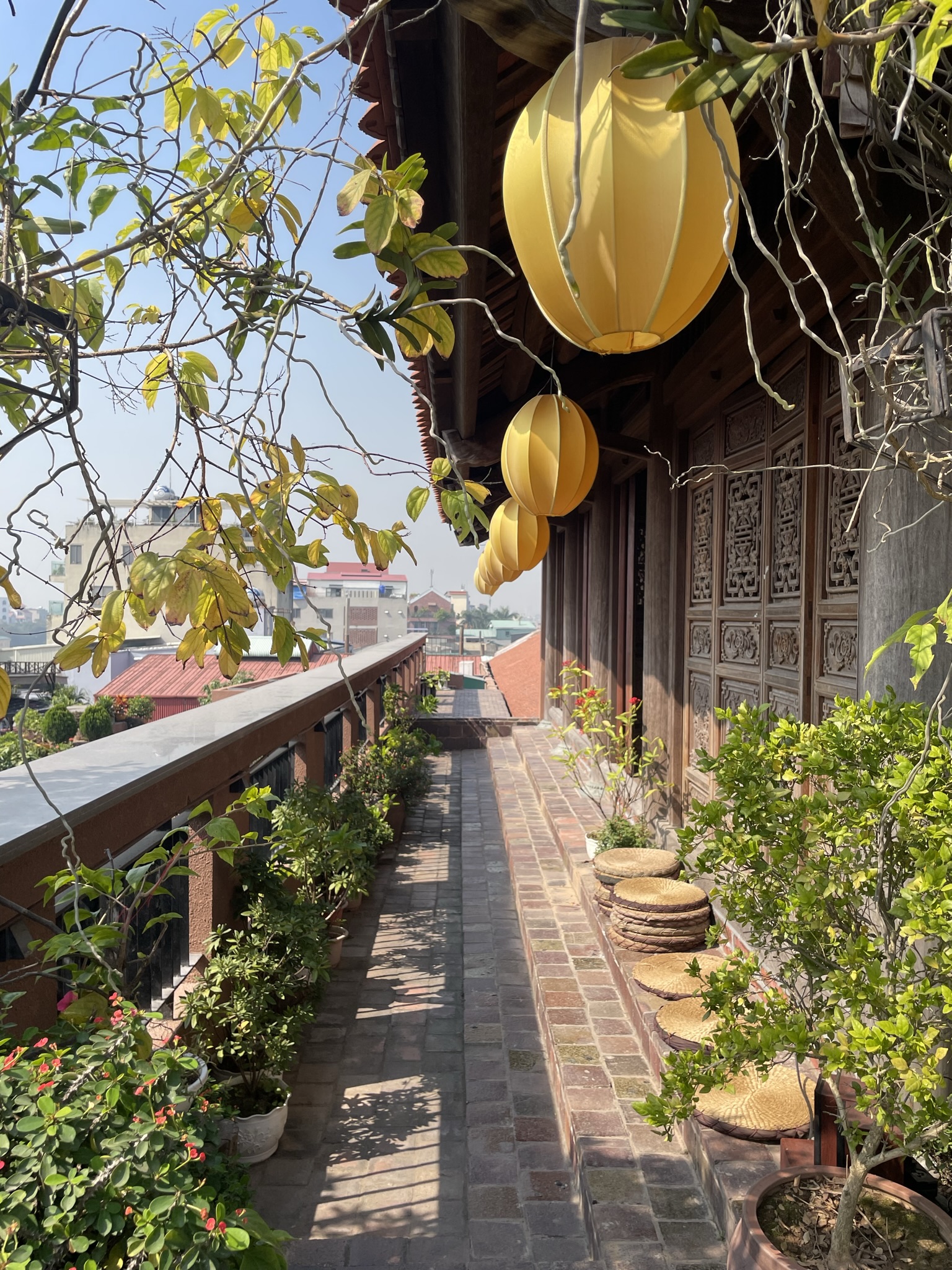
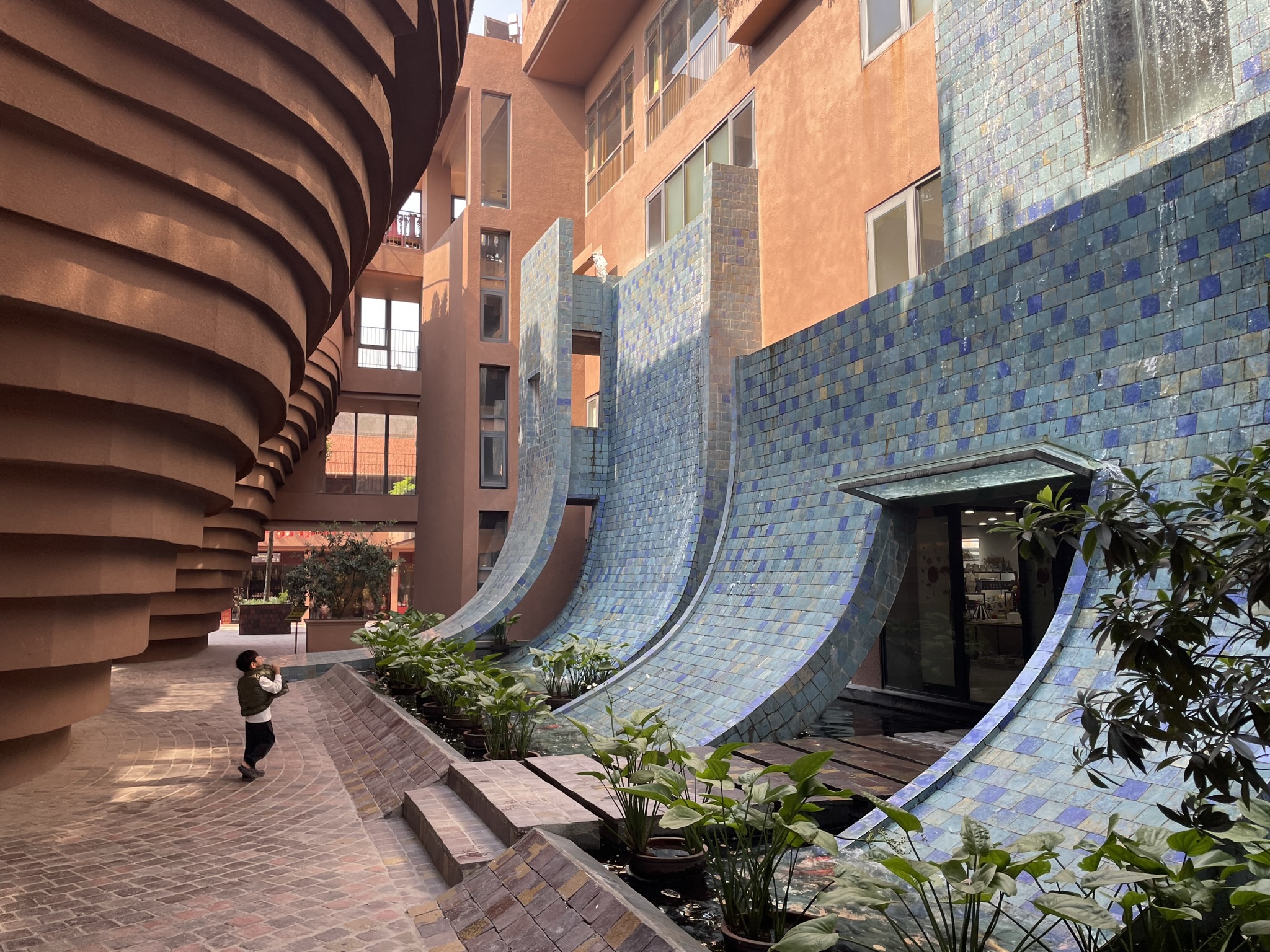
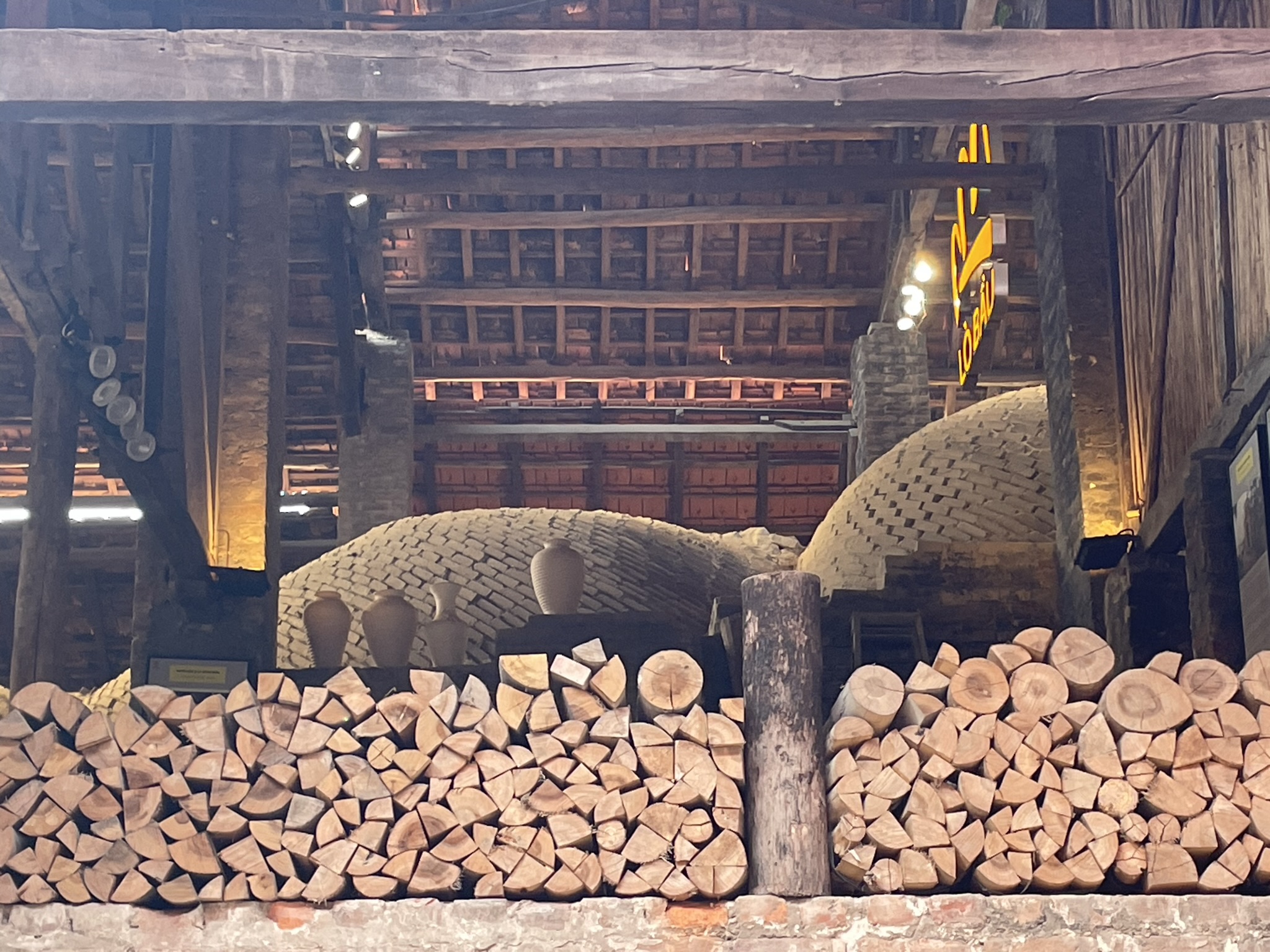
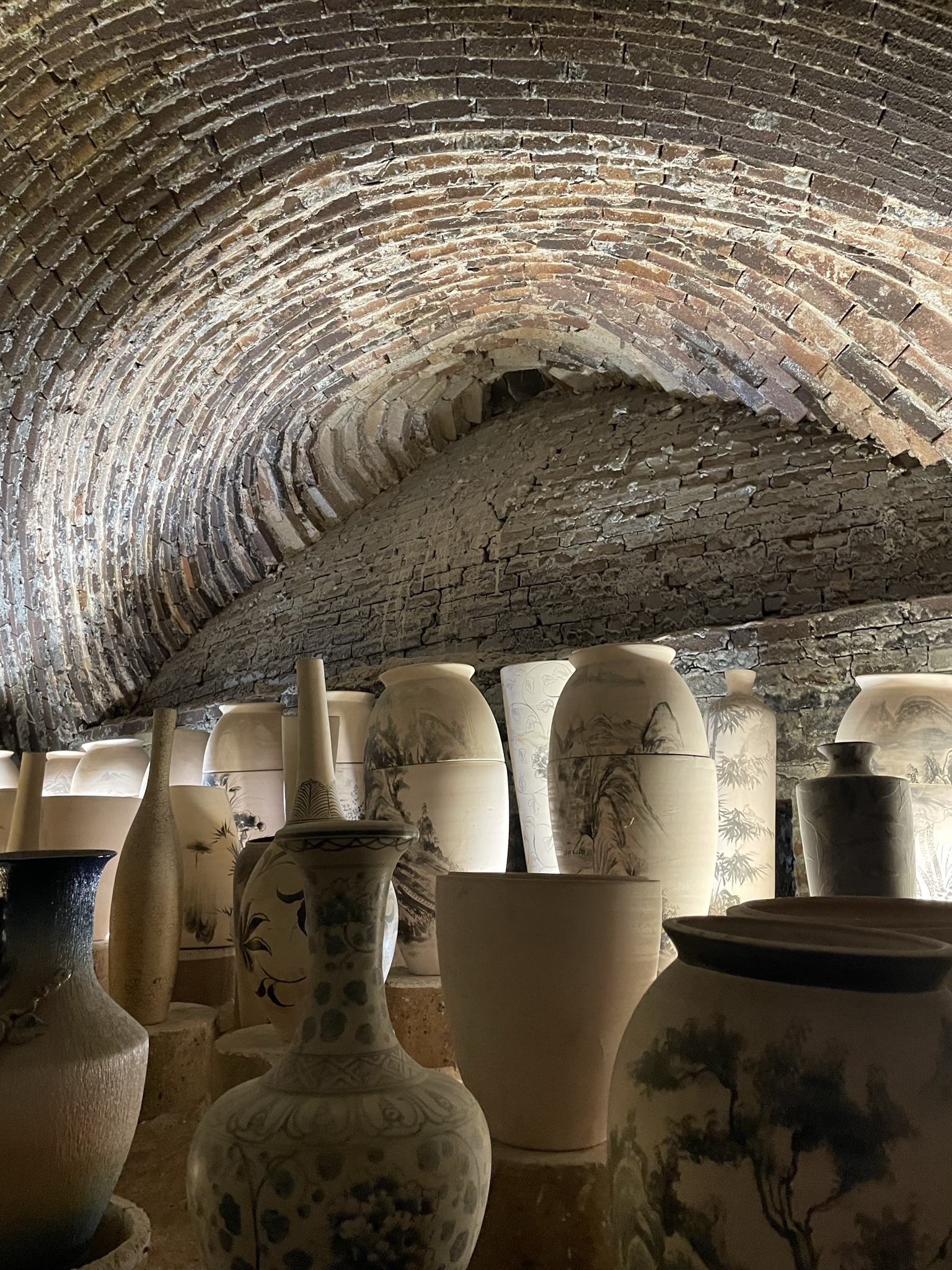
Bat Trang is not on the organized group tour circuit, at least not yet. The potential is there though. The village has an old riverside landing along the Red, a number of local temples, and a dinh, or guild house, that was (perhaps is?) a place for gathering potters and ceramicists, though it was locked tight when we passed by. Most impressive was the “dragon kiln”, a cavernous structure of arcing bricks with multiple chambers large enough for people to walk through comfortably. In each are staggered shelves for firing pottery. Nowhere to be found is a sign explaining the structure or its importance, instead it is set behind a covered courtyard. Our misadventure in Bat Trang did connect us, via a random arthouse coffee shop stop, to the Hanoi Photo festival, where we picked out a photography exhibition by Catherine Karnow (daughter of Stanley, author of Vietnam: A History, the US undergrad staple), whose photos touch on the human side of a country in transition. Tourism, organized or disorganized, continues to have its charms.
 Zak Abroad