There is so much to see beyond the boundaries of Mexico City that deciding which direction to head is almost paralyzing. Fortunately, Mexico’s Secretariat of Tourism has come to the rescue with its Pueblos Magicos program, an on-and-off-again effort meant to highlight the many places worthy of a visit around the country. At the risk of stating the obvious, the ruins of Teotihuacan, adjacent to the ‘magic town’ of San Juan de Teotihuacan, figure prominently in any daytrip discussion from the capital. Our experience of the town itself was from the window of a public bus, watching the small town bustle before we were deposited unceremoniously on a roadside near the ruins. From here, it is a processional march past small restaurants and trinket sellers until, just beyond the parking lot and entry gate, the Pyramid of the Sun rises straight ahead to the east.

Stepping down from the raised threshold to the arrow-straight Avenue of the Dead, a visitor is greeted by aggressive jaguar cries. These small self-advertising calls are a handheld ceramic, a persistent action to bring attention to the scattered blankets laden with souvenirs, their sellers tolerating the heat and sun for a chance to offload a foot-high ceramic model of the Predator stylized in an Aztec motif. A cold water bottle would have been the better option. At the north end of the long Avenue is the Pyramid of the Moon, the smaller ceremonial corollary to the Pyramid of the Sun, the third largest such structure in the world. One difference since 2014 is that visitors are no longer allowed to climb either pyramid, a change likely for the best but still takes away some of the fun. Still, even without a climb, the scale of the site and the remaining bas reliefs and frescoes easily impress.


There is, for a small fee, unfettered access to the site museum, a collection of artifacts assembled over various digs that pieces together the story of this ancient city. Predating the Toltecs and the Aztecs, the people of Teotihuacan oversaw a vast network of trade and tributary states that peaked between the 5th and 7th centuries before a period of decline. The ruins were named in Nahuatl as the ‘place of the gods’, Teotihuacan, and today they remain mysterious, spawning a raft of theories and speculation. It’s hard today, passing through the endless kilometres of urban sprawl back to Mexico City, to imagine a civilization disappearing into history in such a way. Its also easy to imagine why successor states would seek to tie their own origin stories and history to this place, cementing legitimacy by grafting the new onto the old. This would turn out to be a recurring theme in New Spain as well.
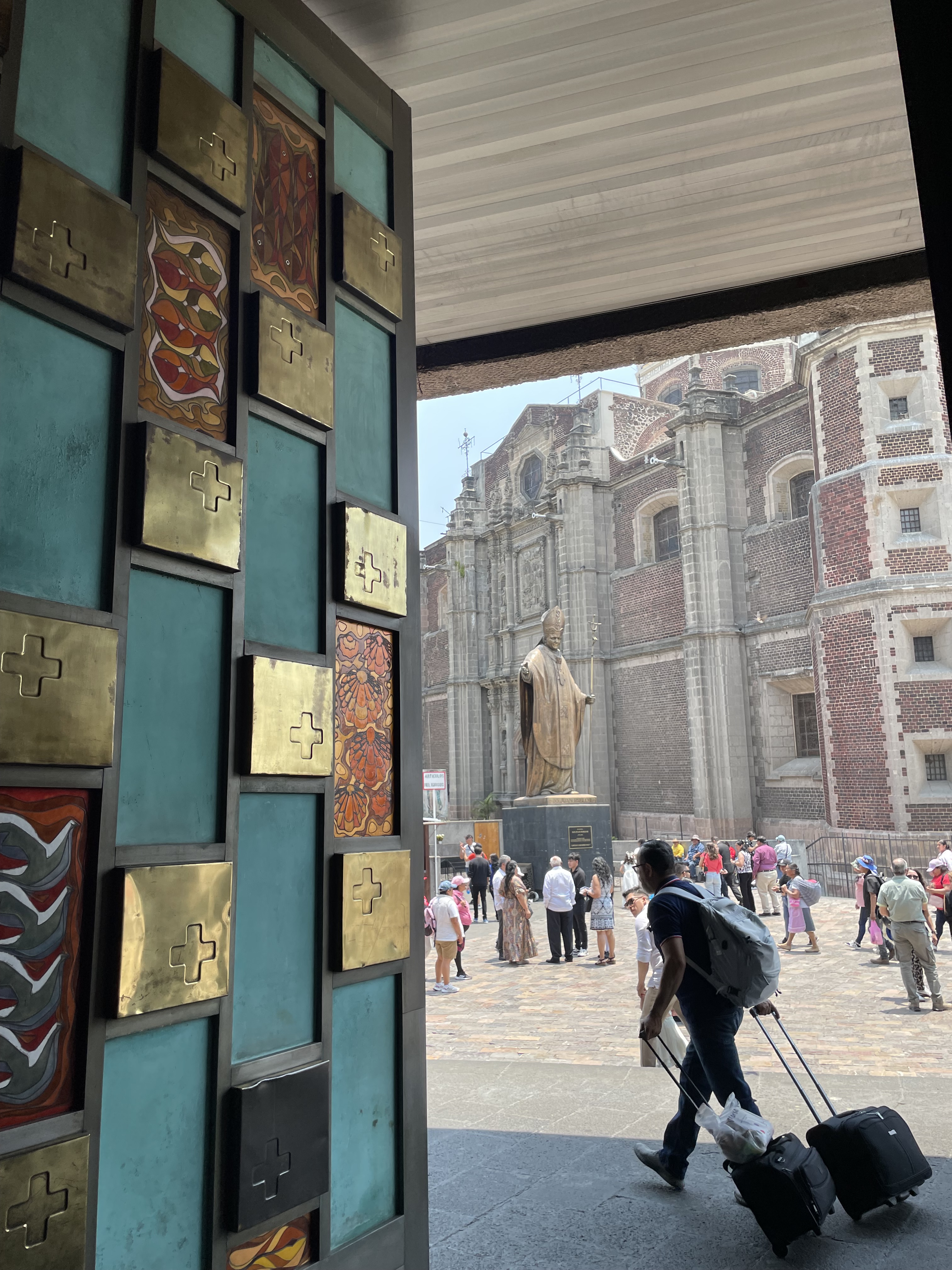


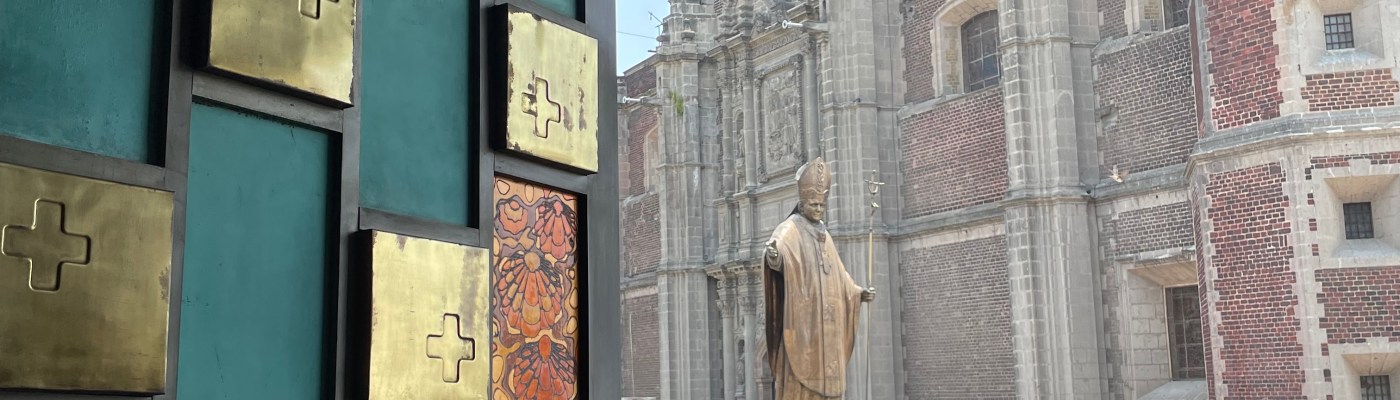
Also to the north amidst the reaching suburbs of the city, at the edge of the metro line, is a different centre of religion. In 1531, a peasant was visited here at Tepeyac Hill several times by a vision of the Virgin Mary. Cortes and his party had only landed on the shores of Mexico in 1519, so in relative terms this was a triumph for the Catholic church, a recent convert being shown a miracle. This revelation was met with unease from the church officials and the enterprising monks and priests of various orders, who were still working diligently not only to spread the good word but to do so in the right way. Ceding control of the symbolism and the mythology, especially so early into the Spanish colonial era, was a concern. Nevertheless, this homegrown miracle took root and over time the Catholic church came to terms with Tepeyac’s transformation into a pilgrimage centre, consecrating the basilica that is today the most visited in Mexico.

It is both jarring and refreshing to visit the Basilica of the Virgin of Guadalupe and its surroundings. It is soundly set aside from the international tourism mainstream, though there is a steady stream of Mexican visitors, some dressed to the nines, taking pictures and worshipping. Outside the gates is a multi-block pedestrianized mall leading from the subway, where clusters of tents offer votive candles. The oldest church buildings here have settled over time, their foundations sinking unevenly to the point that the 1705 basilica has a noticeable slant to the floor and the chandeliers hang at an angle from the walls. It is an unnerving sentiment in a seismic zone, even if the building has already survived three centuries. The new basilica, opened in the 1970s, is substantially larger and more modern, a soaring peaked roof sheltering a wide open fan of seating. The style, while a departure from the classic buildings, is well-executed. Overall it is an odd pilgrimage for a Canadian tourist, lacking explanatory notes but deeply rewarding a bit of early research.

Our biggest excursion of the trip started with a quiet early morning walk through the gridded blocks of the Centro Historico, crossing the long shadows stretching between the dawn’s yellow soft rays filtering through the dust and smog over the rim of the mountains. Like moths to a flame, tourists in outdoor gear and floppy hats slowly converged at the meeting point, sorting ourselves out into respective sprinter vans. Ours worked south to the suburban edge, stopping at a comically disorganized gas station for snacks and coffee before beginning the climb out of the Valley of Mexico. The tolled highway is in fine shape, busy with the hum of holiday traffic working up the steep mountainside past overgrown tufts of browned grass and thin pines under the same yellowed sun. The crest of the highway was marked with a wide arch spanning the road, announcing our crossing into the state of Morelos. From here we began our descent to Cuernavaca, the city of eternal spring.


Prosperous and pleasant, Cuernavaca is a Hispanized corruption of the original Nahuatl name that hints at the long history of human settlement here. Mesoamerican people resided here long before Cortes marched through, eventually establishing an eponymous country residence known as Cortes’ Palace. The broad, imposing structure is built from volcanic stone and now home to the Morelos State Museum. We learned this from our guide, Leonardo, deftly switching between English and Spanish for the group, while a stray dog laid down in the grass nearby, lazily wagging her tail. A few blocks away is the Cathedral of Cuernavaca, a Baroque structure dating from 1534 and built from volcanic stone.
Within the high walls and small windows, the interior surfaces are whitewashed and adorned with frescoes. These images tell the story of St. Philip of Jesus, the first Mexican-born Catholic saint. The unfortunate Philip earned his canonization following a wayward proselytizing journey to the Philippines when his ship got blown up course, resulting in him meeting a rough end in Japan. Again, the importance of visual arts as a storytelling medium was on display, a successful marketing effort in what is today a very Catholic country. Outside the cathedral is a capilla abierta, an open-air chapel that imitates the pre-contact religious precincts of the region. The Catholic orders mimicked the structure, given rise to this unique type of chapel.


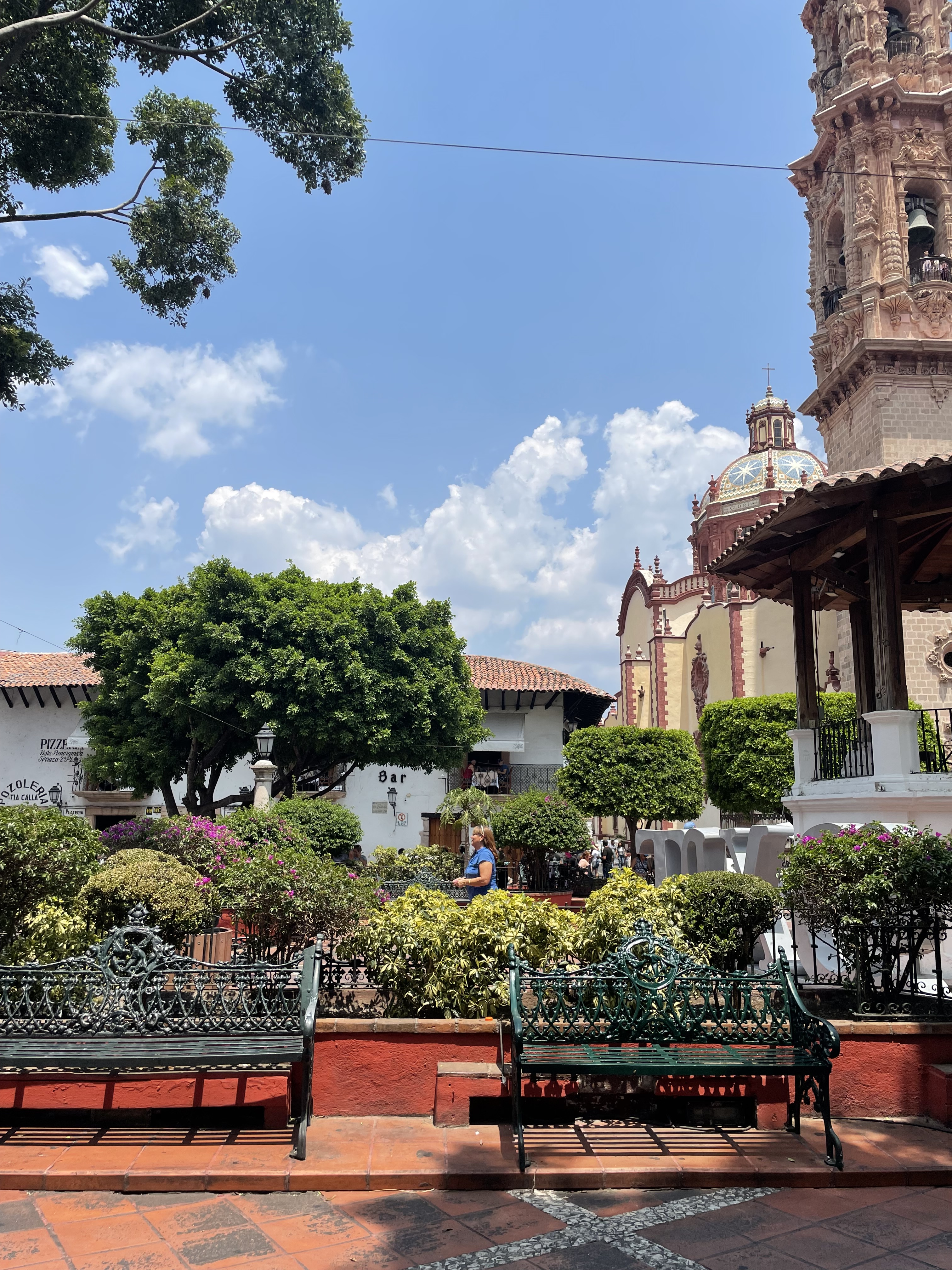
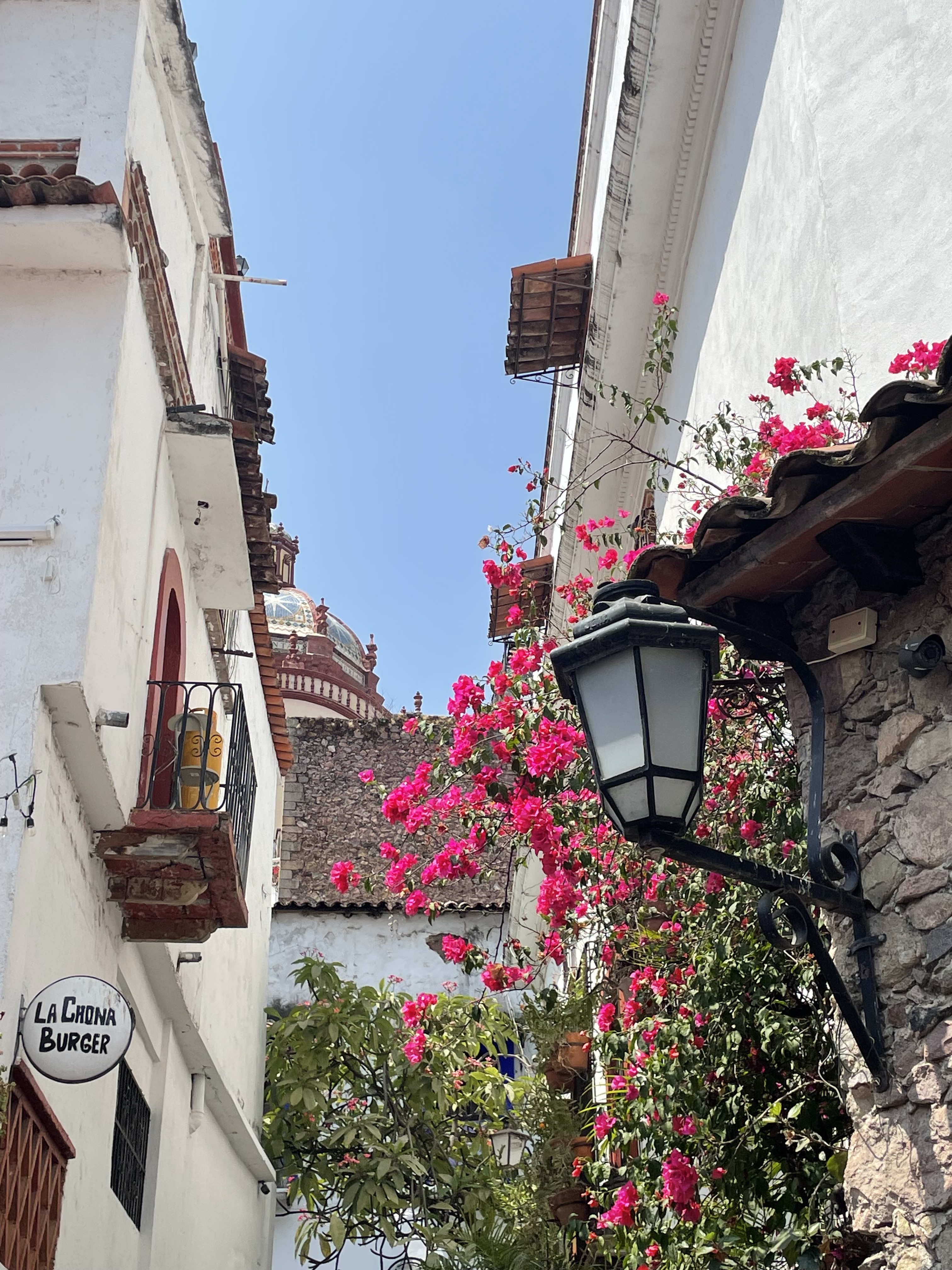

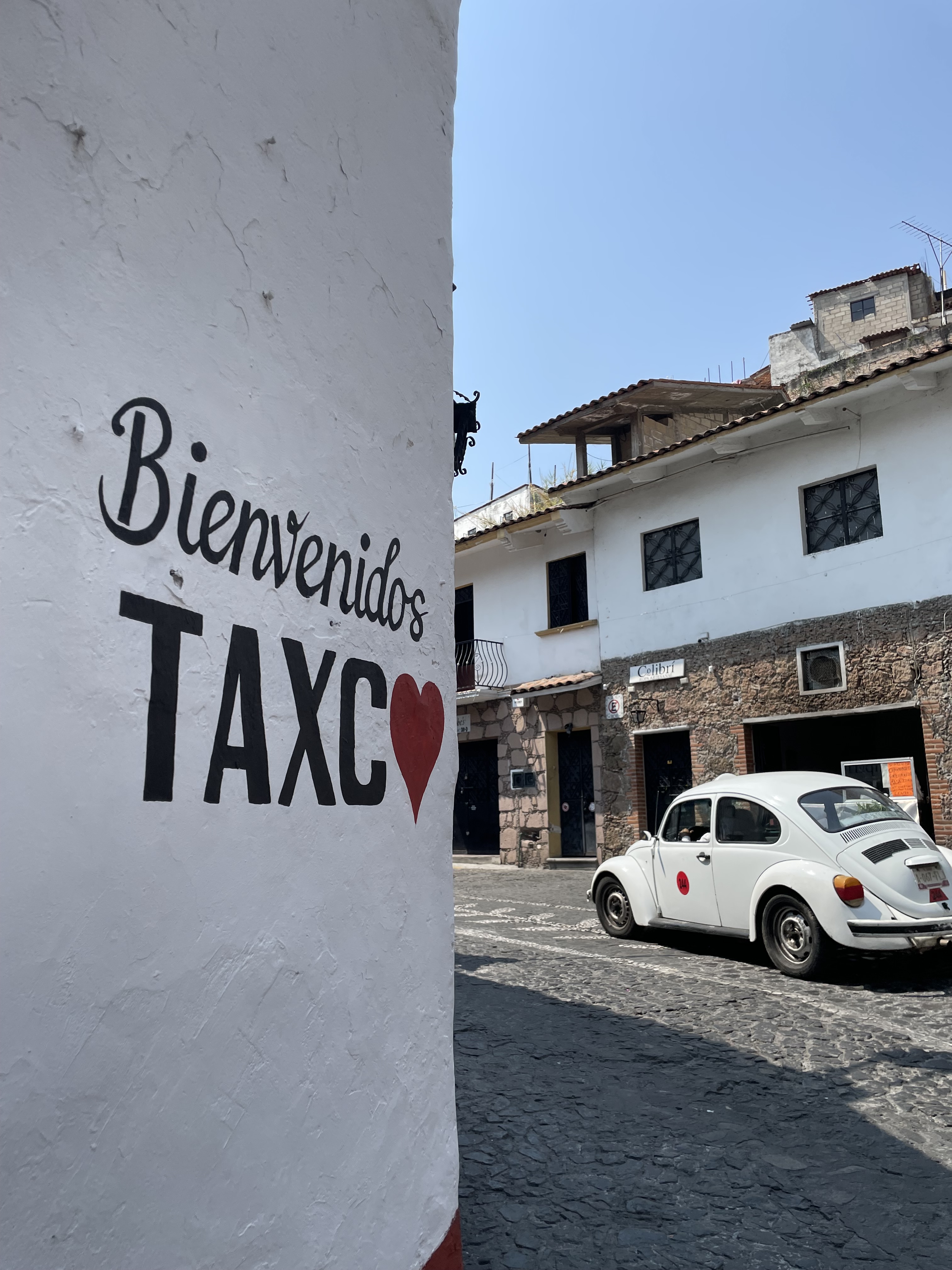
From Cuernavaca we continued off to the southwest, rising from the valley back into the parched and broken hills. The snaking roads clung to the hillsides, winding past forgotten towns and a forgotten spring of dead grasses and half-bare trees. The heavy sun hung high over barren scrub rendered in a brown spectrum, eventually punctuated by the white and reds of Taxco, cascading down a slope like a landslide of civilization amongst the ruin. This pueblo magico was founded on the silver trade, first extracting ores through mining and now extracting tourist dollars through the necklaces, bracelets, rings and more in the dozens of silver shops embracing the small zocalo. The town itself is a charming maze of whitewashed walls, terracotta roofs, and nonsensical streets doing their best to cope with the local topography. White VW Beetle taxis and minibuses swarm the streets, a symphony of revving diesel thrum of struggling stick shifts. It is an intoxicating setting, immediately atmospheric and able to rise above its tourist status to be, well, magical.
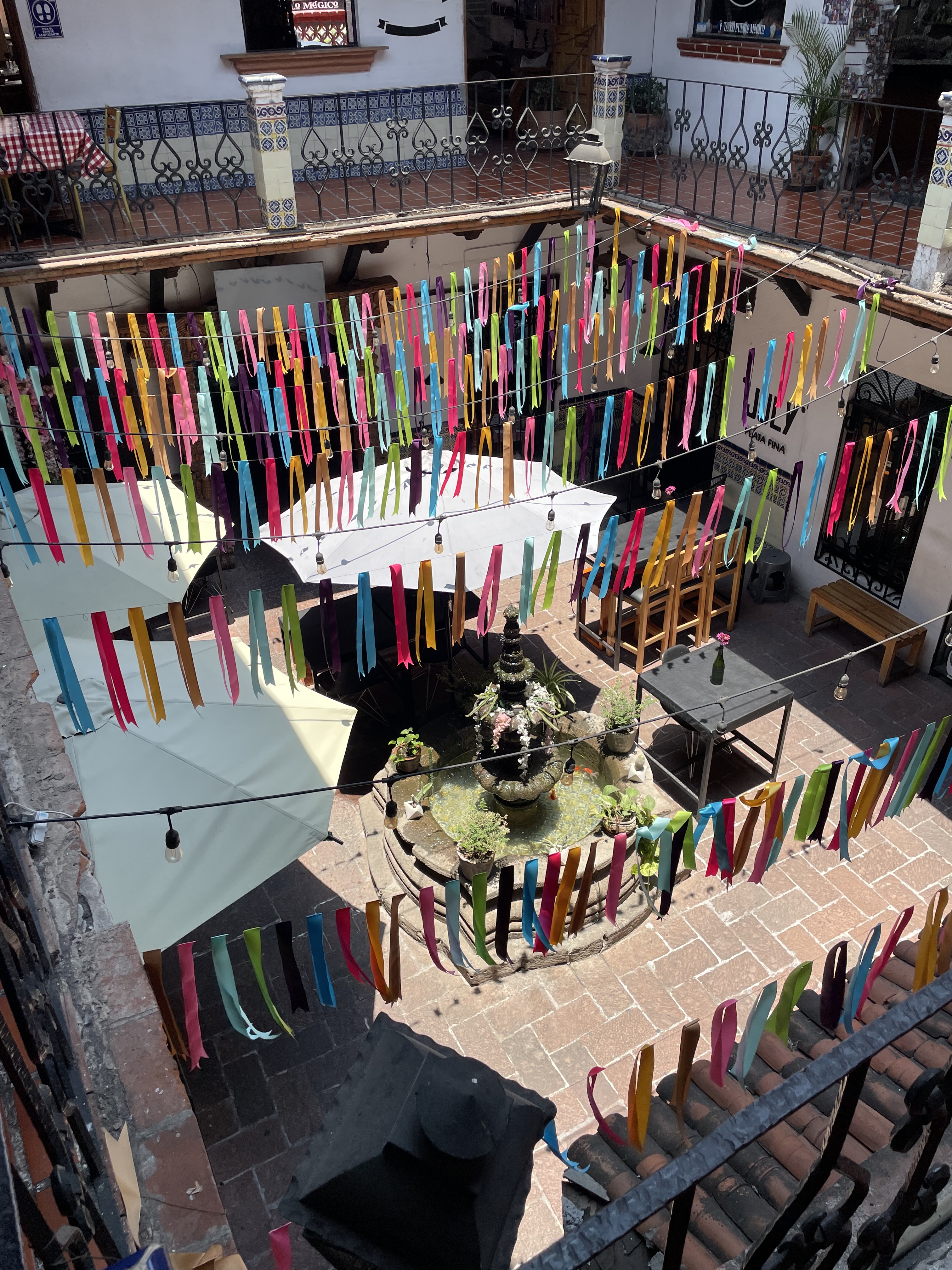
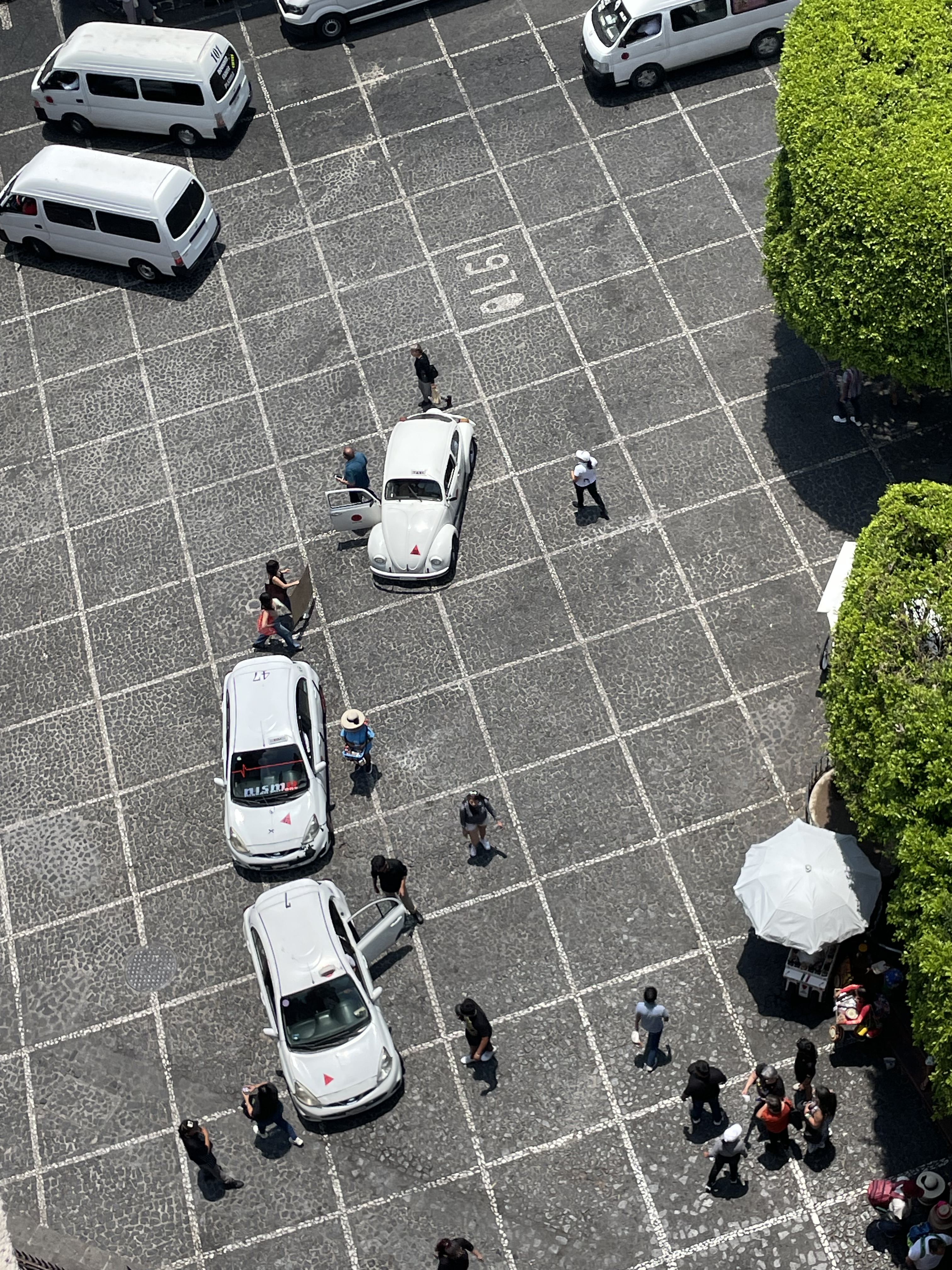
For those who aren’t silver shopping, the Church of Santa Prisca is a pink Baroque landmark fronting the zocalo with an enticing bell tower to climb, offering great views over the city below. From here the punch and growl of the diesel engines fight for space with the calls of the great-tailed grackle, a sleek blue-black bird dominating the city’s trees. The gaudy church was funded by Jose de la Borda, at one time the richest man in Mexico, presumably with an eye to his eternal soul. His terrestrial legacy includes extravagant decor, naturally some rendered in silver, and a wooden floor that announced my every movement as I took it in. A few blocks away from the zocalo, the silver shops and overpriced restaurants peter out and the crowds start to thin. The white Beetles still zip by, their hungry engines humming up the hills.
Before long we were back winding through the hills, beginning the twilight trip back to Mexico City.
 Zak Abroad