We eased away from Naoshima to cities in a gradation of ferry, train, and shinkansen. By midday we were back underground, Osaka’s subway taking us into the heart of the metropolis. At first glance, Japan’s second city looks a lot like Tokyo: the same tower clusters, narrow lanes, elevated highways, and fine-grain concrete urbanism filling every available corner of the city. All the usual amenities were there, with both a kissaten and a dozen izakayas a stone’s throw of the hotel lobby, which included a direct connection into a convenience store. For all of these surface similarities, there was more to Osaka than met the eye. The city, a large unknown in my mind, was livelier, more informal, even rougher the capital city. It was intoxicating, in the end.
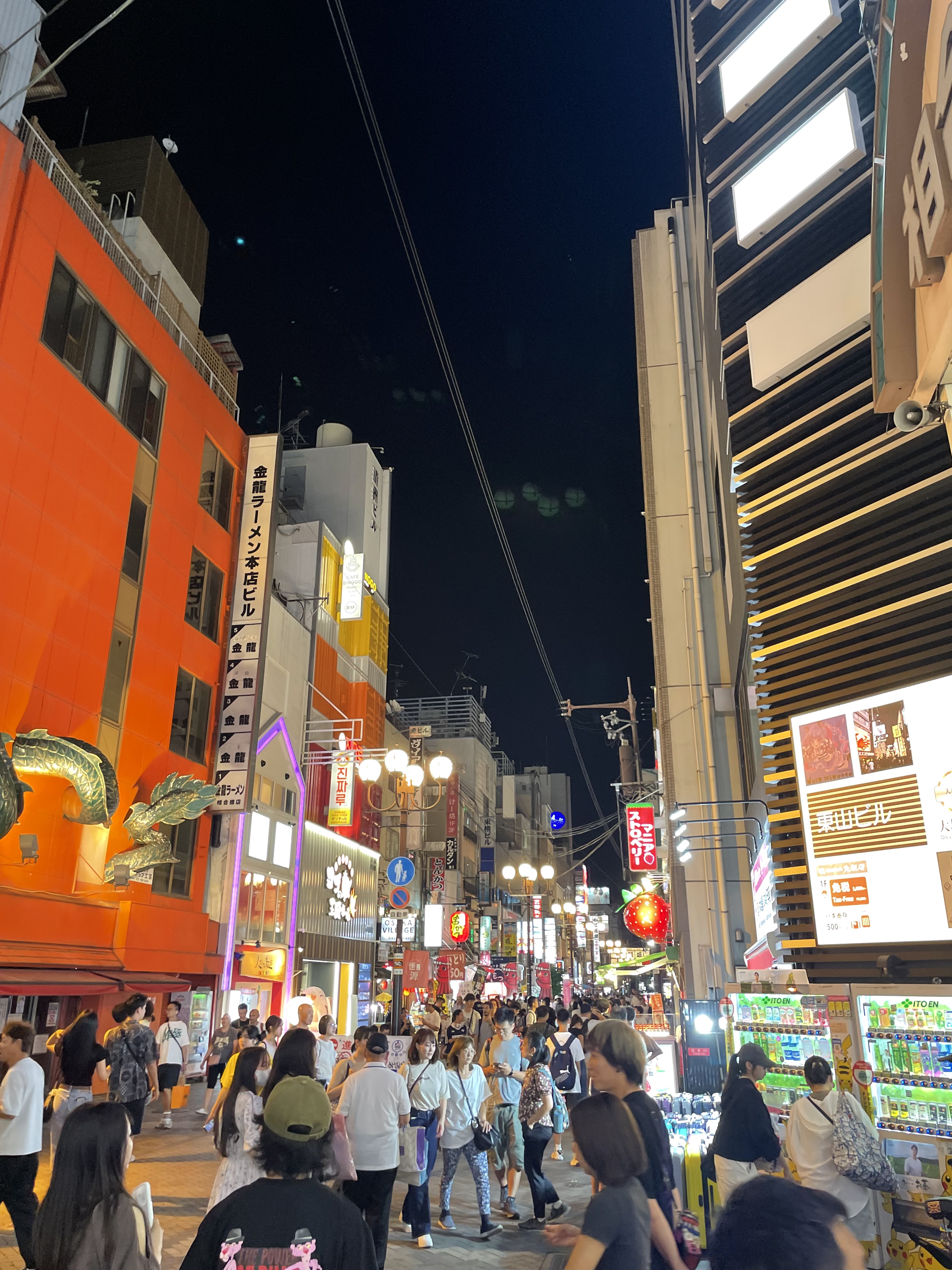
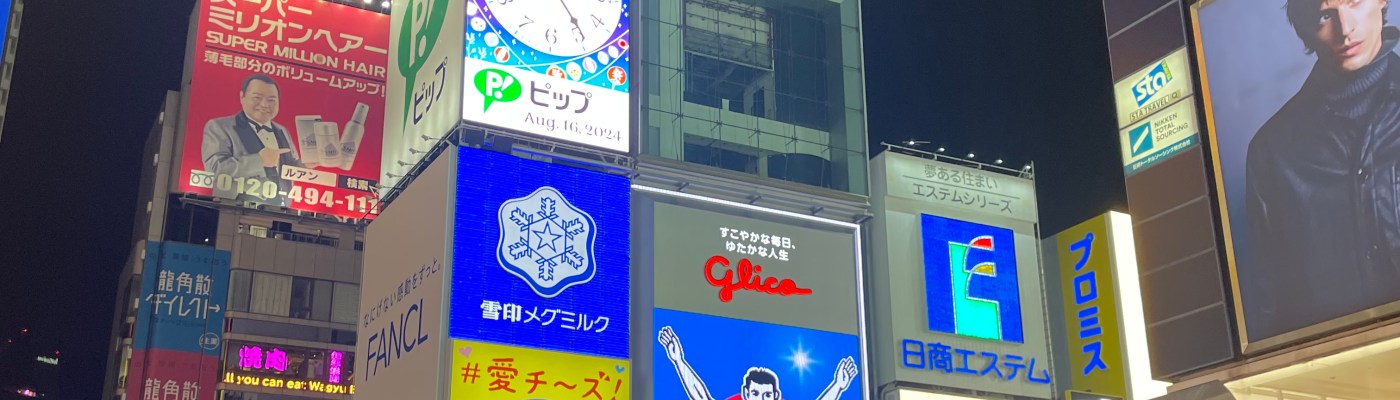
The beginning though was a bit of false start. Untethered to our bags, we set out in the heat for the Museum of Oriental Ceramics, situated on a thin island stretched out along the Tosahori River. For a still unknown reason, every access point to the island was closed to cars, with enough cops milling around to fill out a Die Hard sequel. We never found out why, and had to return to the museum another day. Instead we wandered the street grid toward Dotonbori, another waterfront area, popping into bars along the way, dusk gathering between drinks. By the time we reached Dotonbori, the night had arrived and the streets pulsed with a sea of humanity moving in all directions under benevolent neon and brightly-lit signs, complete with the iconic Glico running man. Tables spilled out onto the streets, restaurant soundtracks competing with the hum of alcohol-enlivened conversations. It was like this every night we passed through, tourist barges plying a short stretch of the canal, corner come ons and pamphlets to come in, sit down, come upstairs. The anodyne sound of a DJ set bounced off the building walls, all enjoyed by a global congregation.
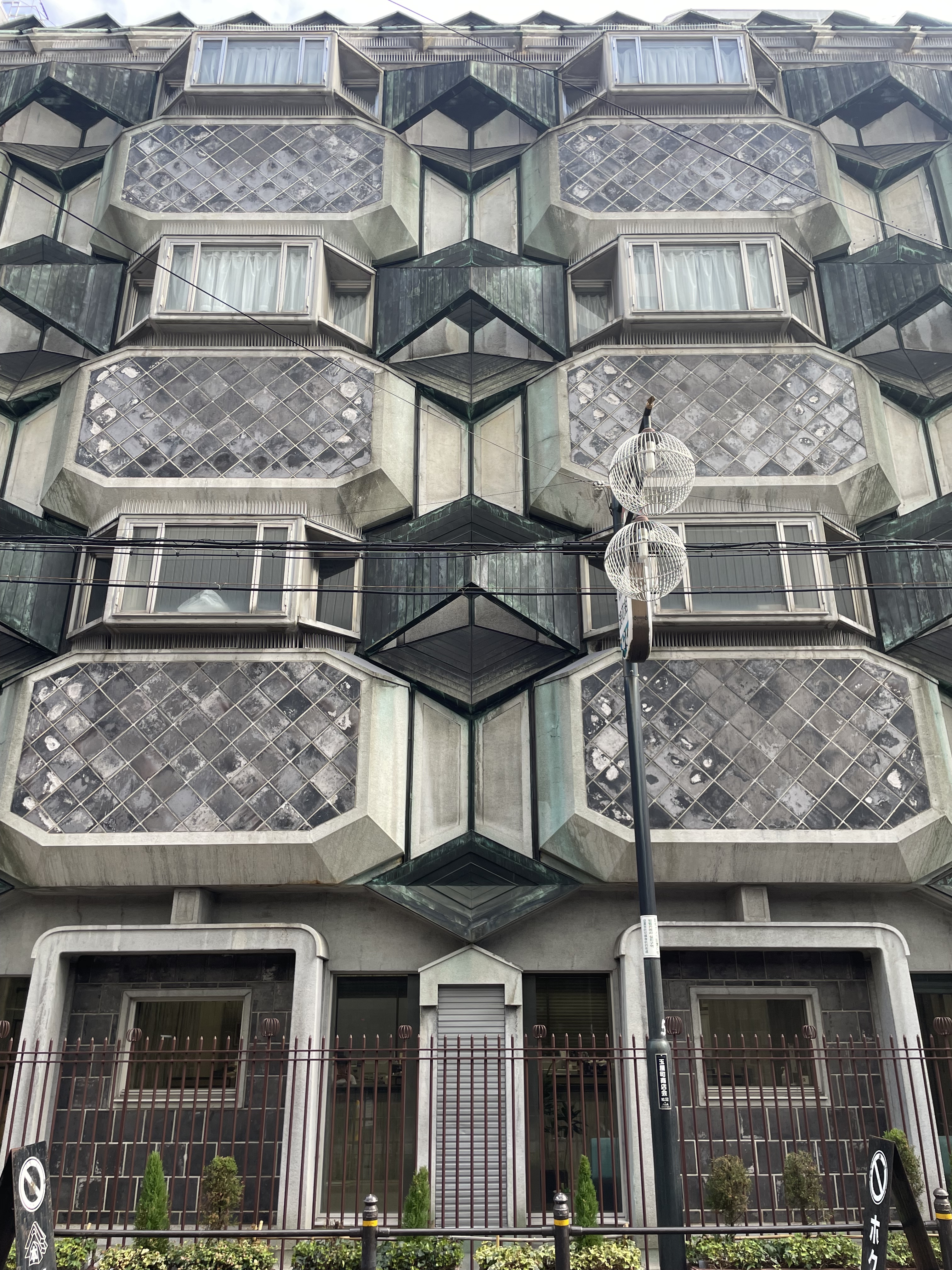
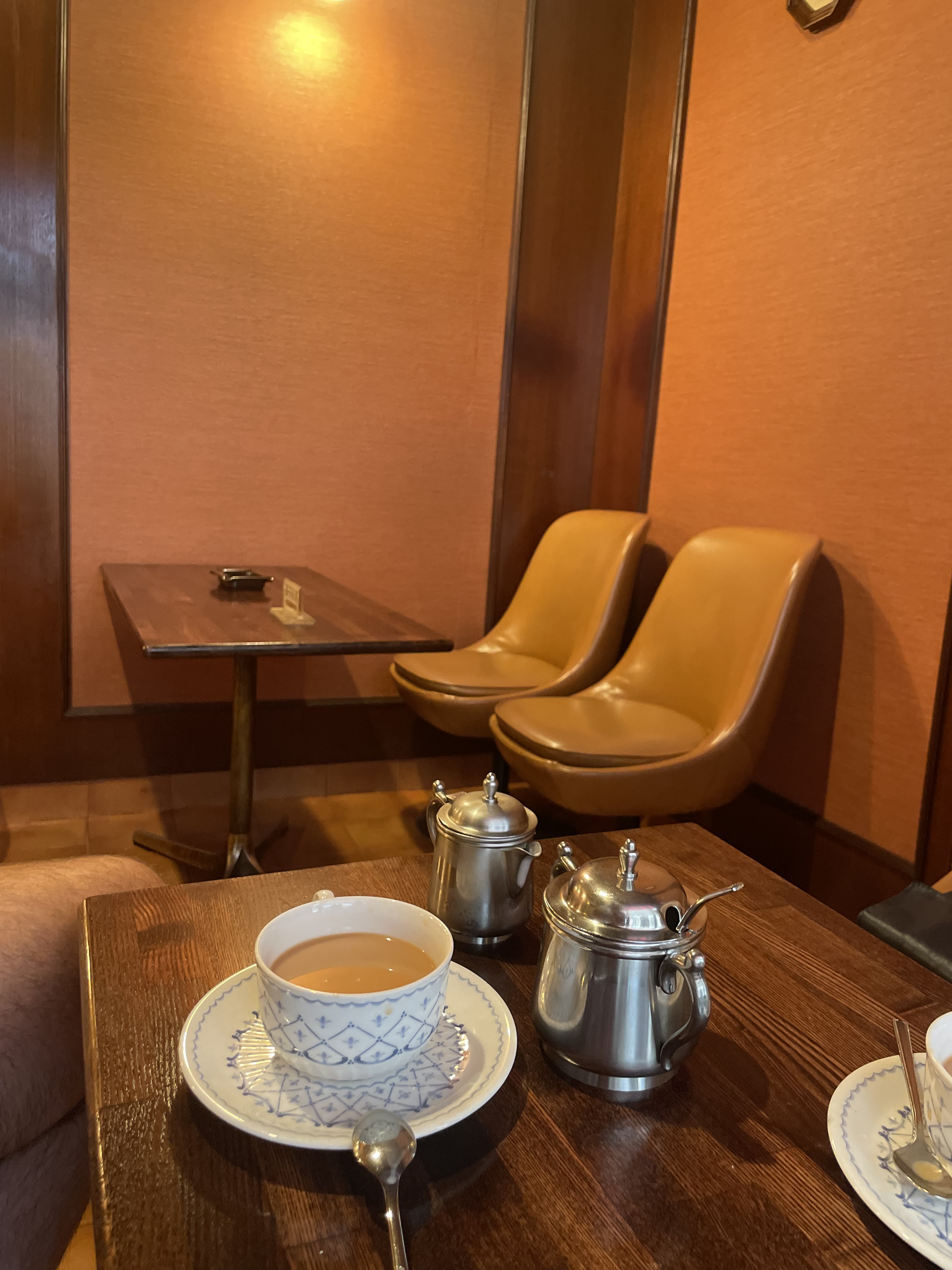


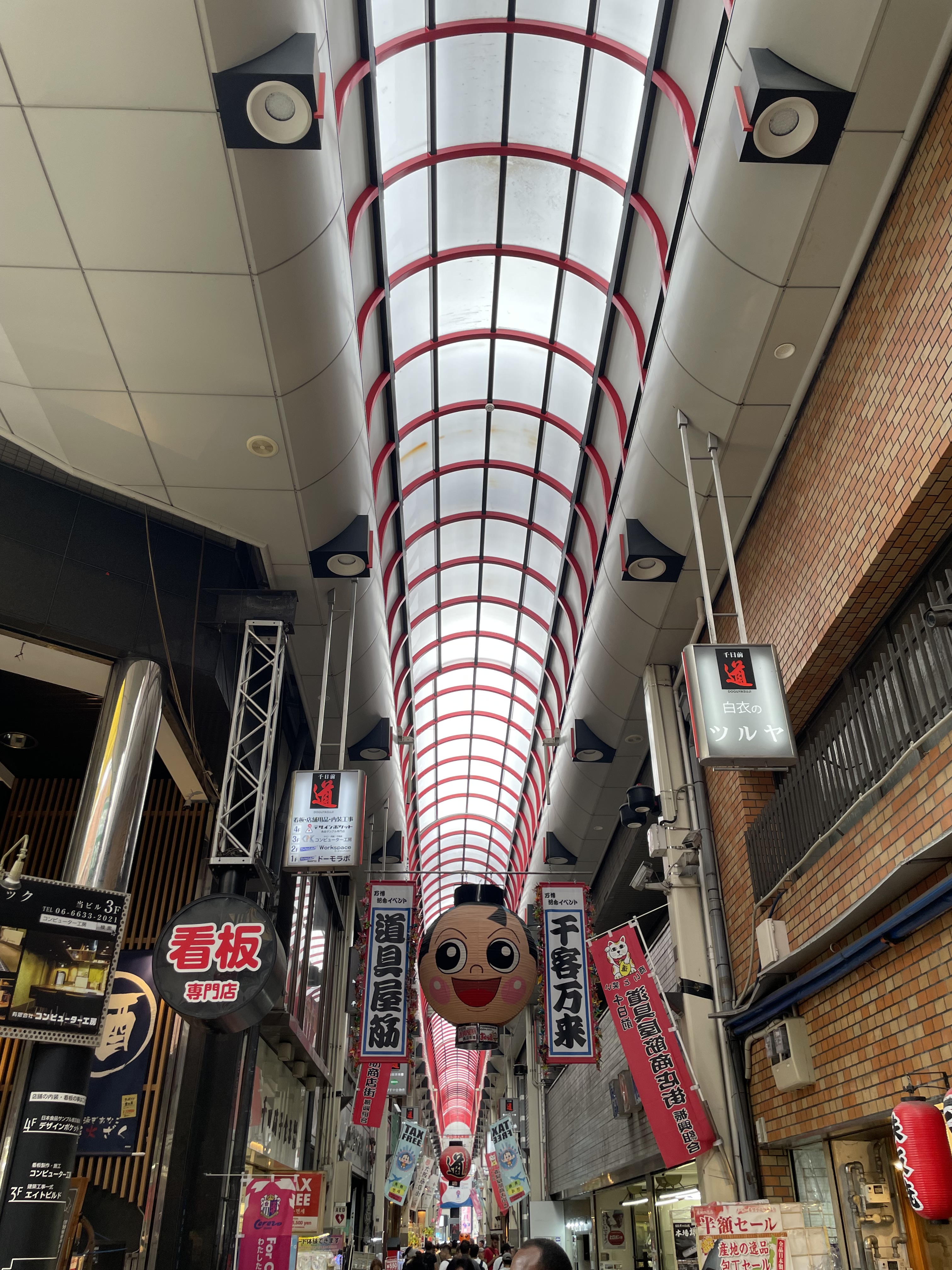
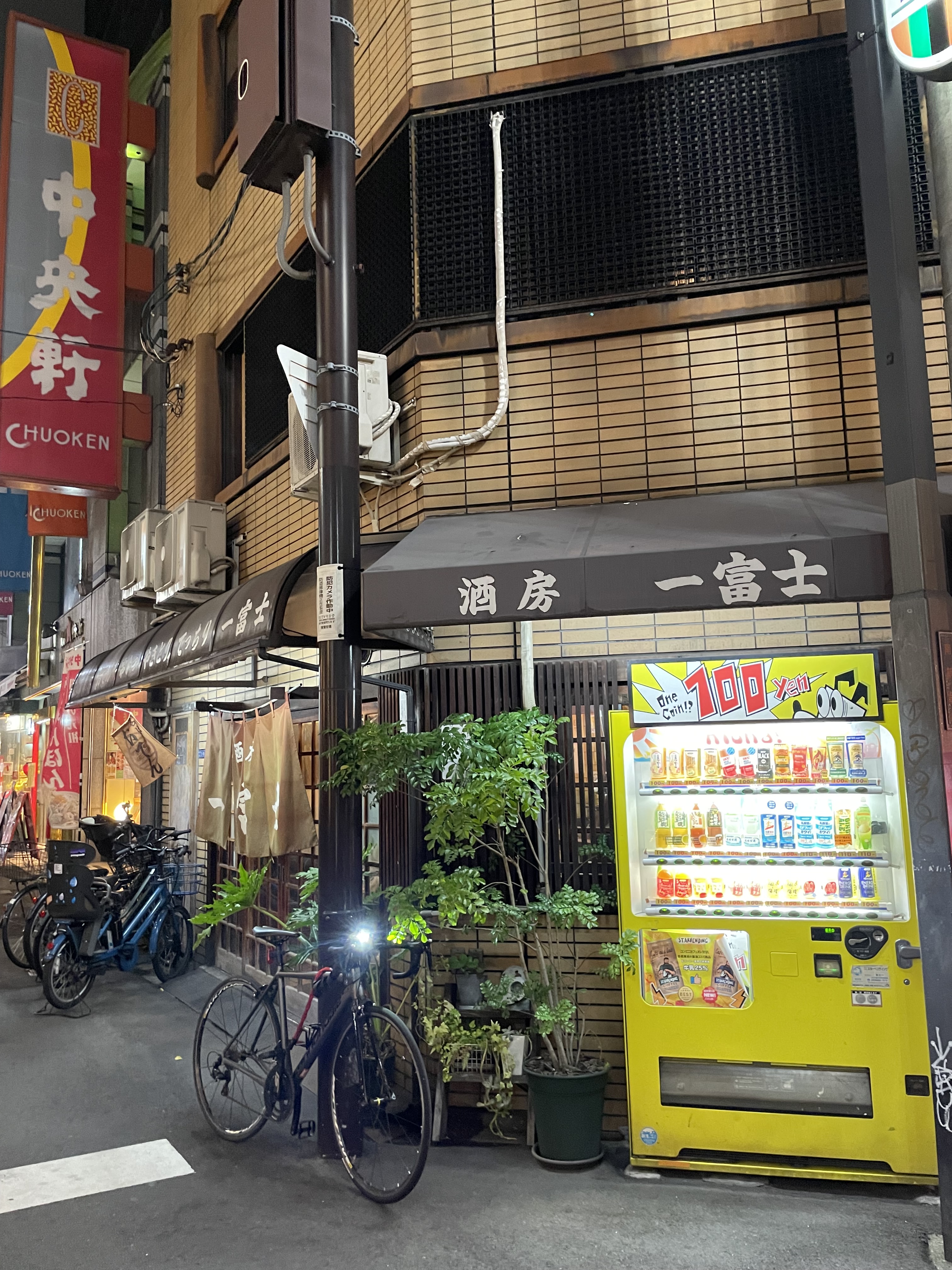
Bands composed of teens and twentysomething stake out territory on the wider streets near Dotonbori, marking territory with speakers and signs with their Instagram handles. We stopped for a promising trio ably belting out pop ballads, one of their girlfriends clapping and looking around at the gathered audience with wholesome delight. It was a sweet moment, one that we never saw in Tokyo. Even daytime Osaka differs. The narrow streets are lined with one of the longest systems of covered arcades I have ever seen, translucent coloured plastic covering arches three or more storeys high stretching block after block. Below the arcades the streets are lined with the usual assortment of restaurants and shops, bars and pachinko parlours, each clamouring for attention and all conspiring to overwhelm the senses. Osaka, for whatever reason, feels less polished than Tokyo. The tourists stand out and there are far fewer salarymen, whether on the streets or the metro, than the capital. It is a looser, more casual place. Tragic youth take drags off cigarette on back alleys and there is even occasional litter on the street, practically unthinkable in the rest of the country.
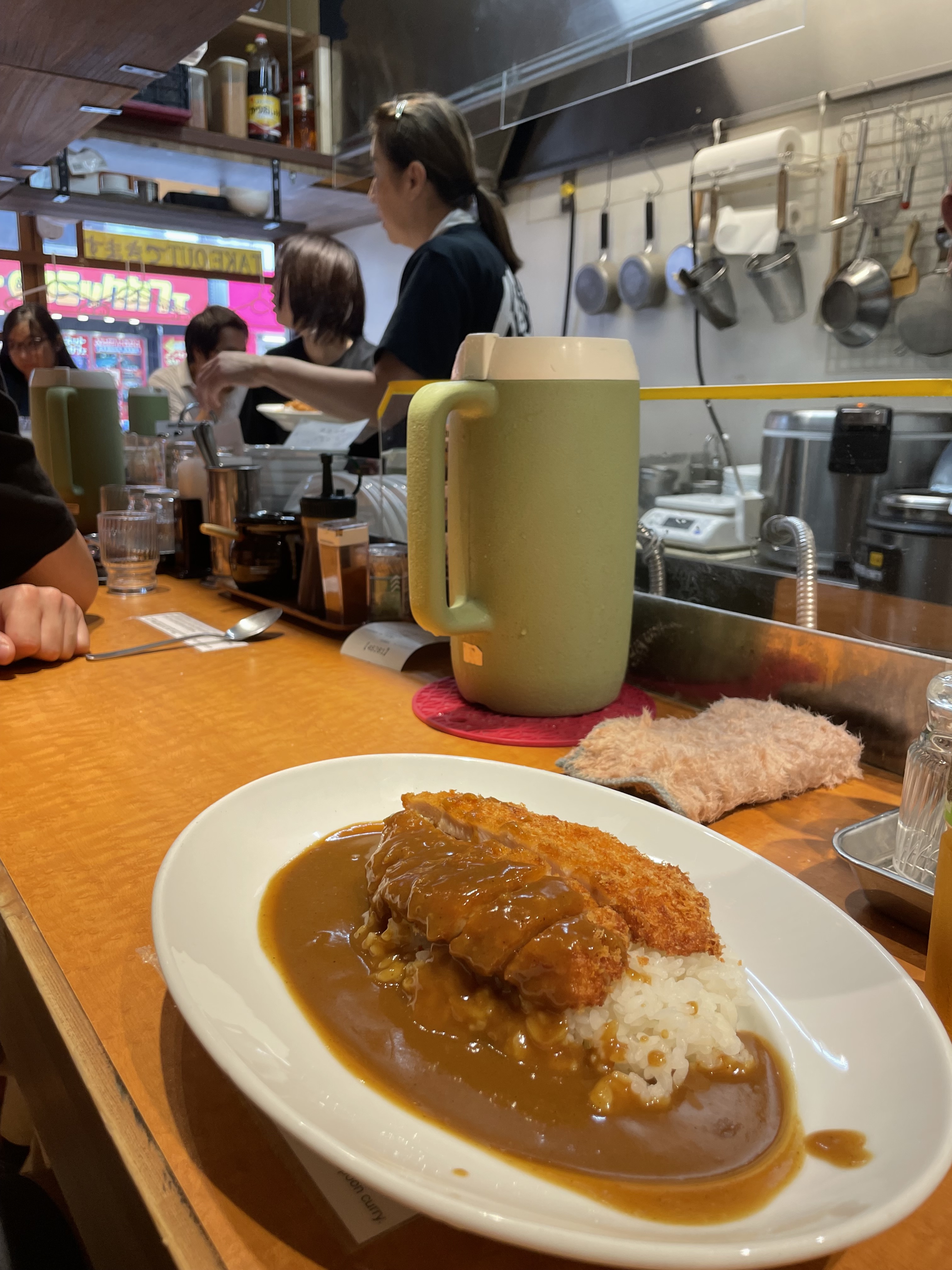

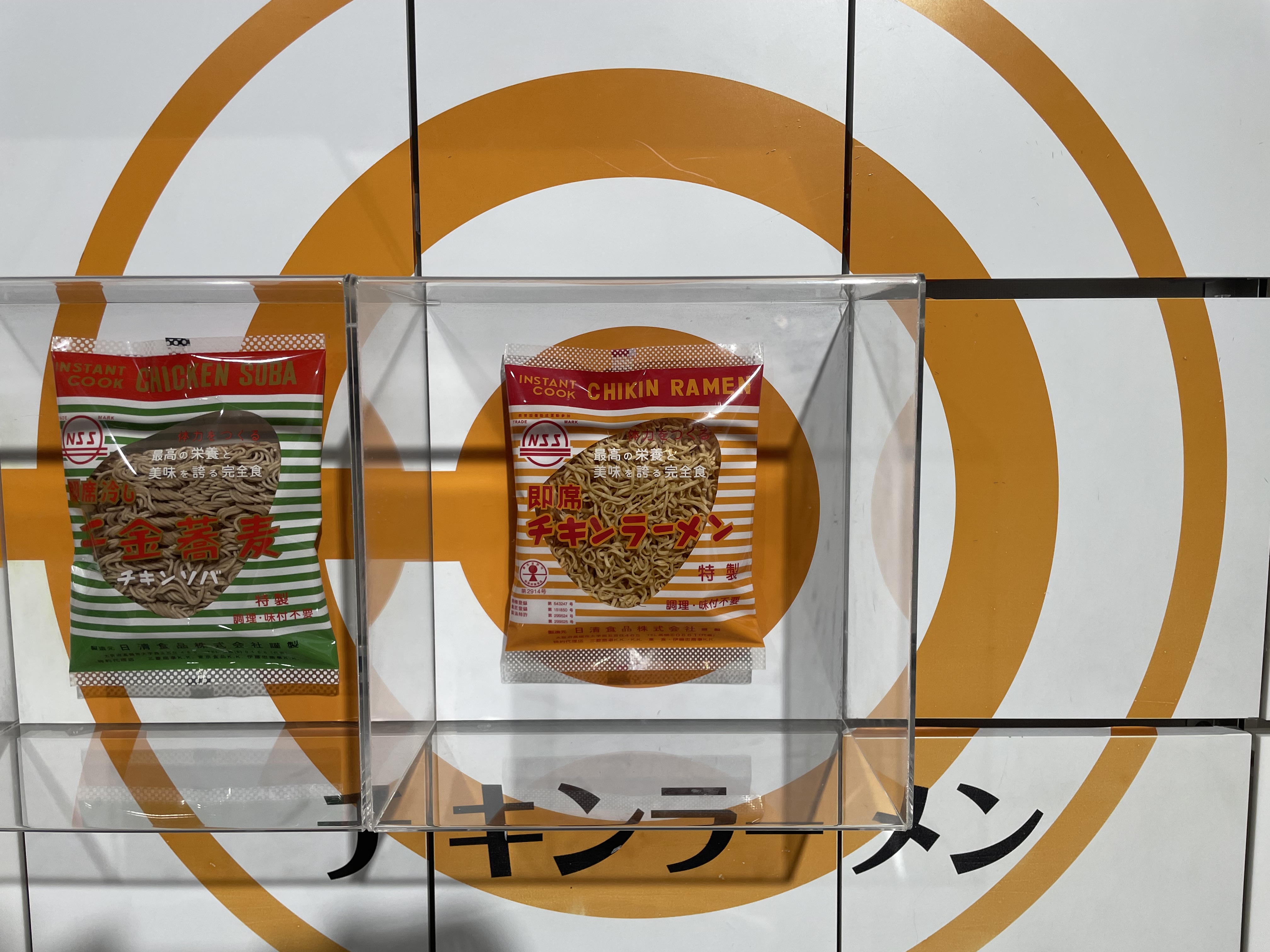
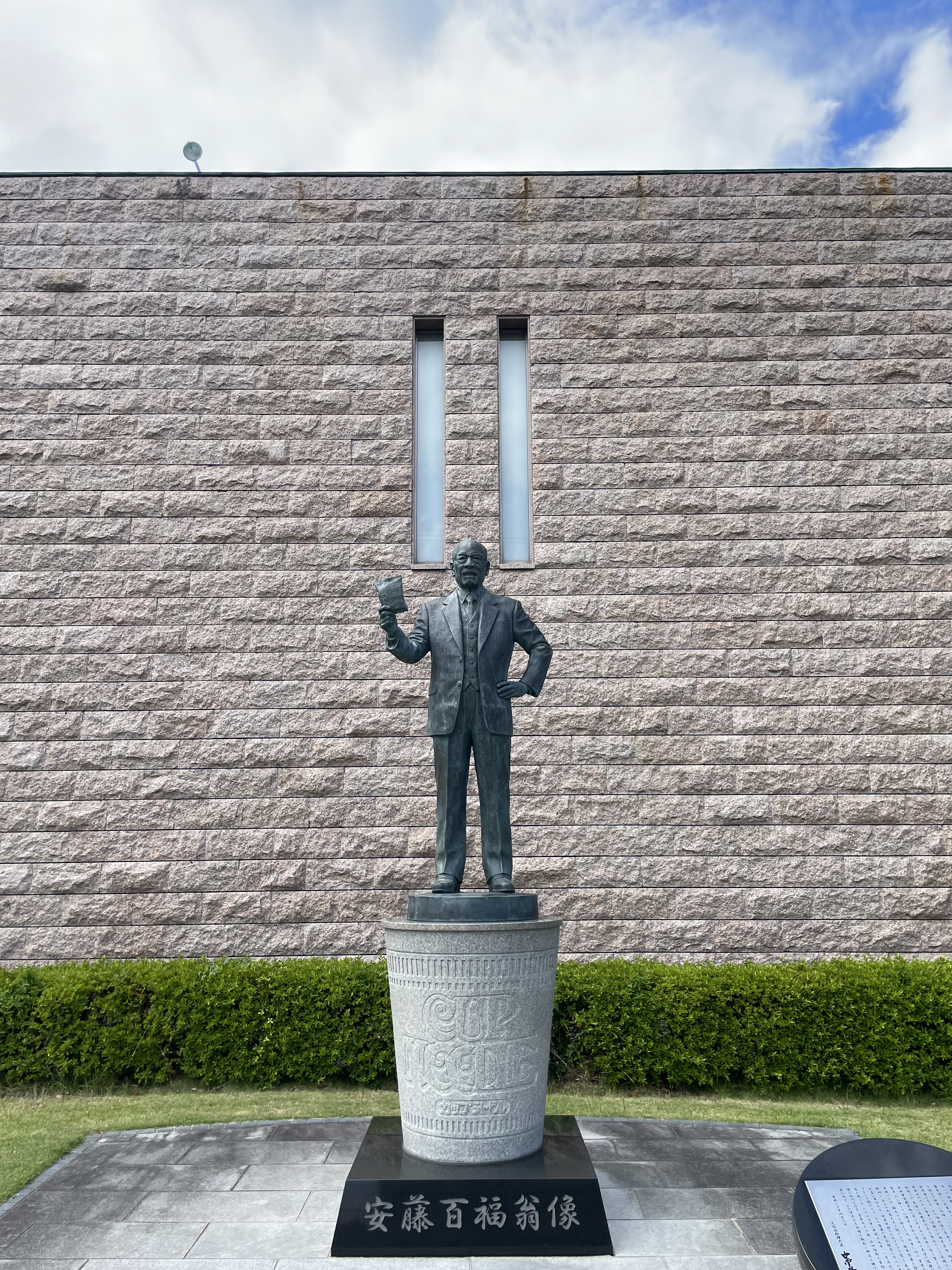
Thankfully we were reminded the next day that a heavy-handed work ethic is alive and well at the Cup Noodles Museum on the city’s northern edges. The museum is overrun with families on this day, many heading upstairs to design their own noodle cup, a form of work disguised as play. We skipped this, opting for the vaguely educational museum. The Cup Noodles corporation dates to the postwar period, when the tireless Momofuku Ando pioneered the now globally ubiquitous instant noodle, the stalwart meal of long train rides. Inspirational quotes from Ando abound – “if you feel like work is too hard, just imagine it is fun” – that speak to his drive, and the exhibits include, most notably, a life-sized molded plastic recreation of his workshop, complete with chickens and coop, surrounded by a high caliber display of Cup Noodles products through the decades. Appropriately, the front lawn of the museum includes an Ando statue, larger than life and benevolently astride a cast cup of noodles, a capitalist Colossus of Rhodes.


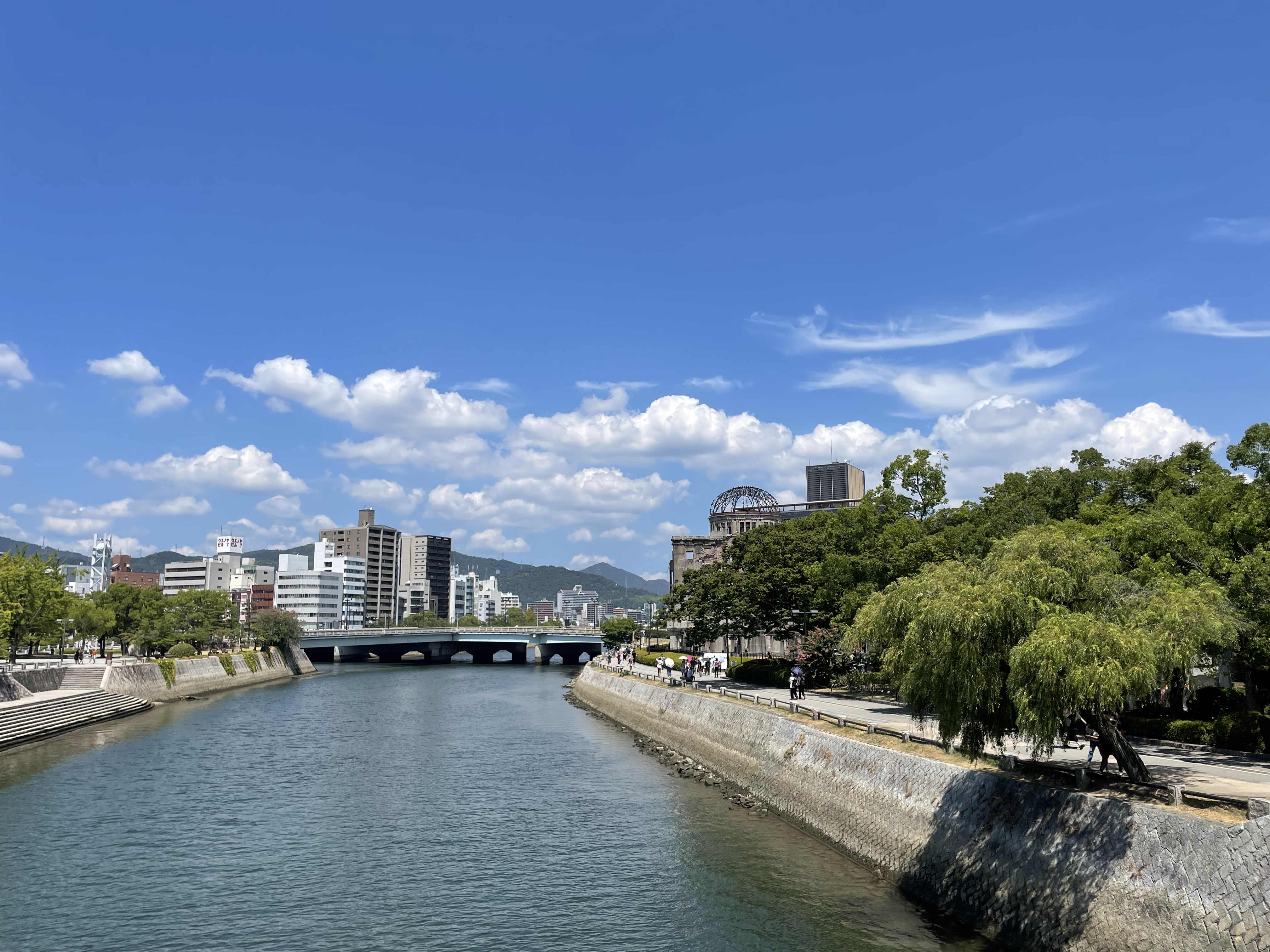
The postwar period was framed sharply on a daytrip to Hiroshima, a city whose existence speaks to the resiliency of late 20th century Japan. The city spreads out over a flattened estuary, and near the centre is a green space, jarring in part for its rarity, solemn as a scar. Alighting from the tram, you are immediately confronted by the recognizable and charred remains of the Genbaku Dome, a former trade hall and the sole marker of the atomic blast left on the ground. From there, a string of memorials set among the green lawns guide you to the museum that commemorates the first nuclear bomb and its impact. Inside, we shuffled along slowly as part of a hushed crowd through darkened rooms, each bearing different testimonies from the dead and survivors. It seems a distinct terror for the people who lived through the blast, who watched their loved ones and sometimes themselves decay suddenly and unexpectedly over the weeks and months that followed. A singularly horrific tragedy that has thankfully been repeated only once. Nearby, back on the city streets encased by concrete and glass buildings, there is a small plaque that sits below where Little Boy blew. It is one of many haunting places in this town.

Hiroshima is also testament to life going on, to the ability, perhaps the need, to pick up the pieces and rebuild. The city has done that well, and boasts a small but well-stocked art museum with, somewhat ironically, a heavy European focus. Back in Osaka, another city blitzed to rubble in the war, the unexpectedly popular City Housing and Living Museum recreates the old city through a room of time-stamped dioramas illustrating different eras. The highlight however is a recreated Edo-period neighbourhood, where tourists can don kimonos and take photos, all in the airconditioned comfort of an oversized 12th floor chamber. Unsurprisingly, I loved all of this, particularly as it was one of the few museums that legibly laid out what it was all about and how Osaka evolved over time.

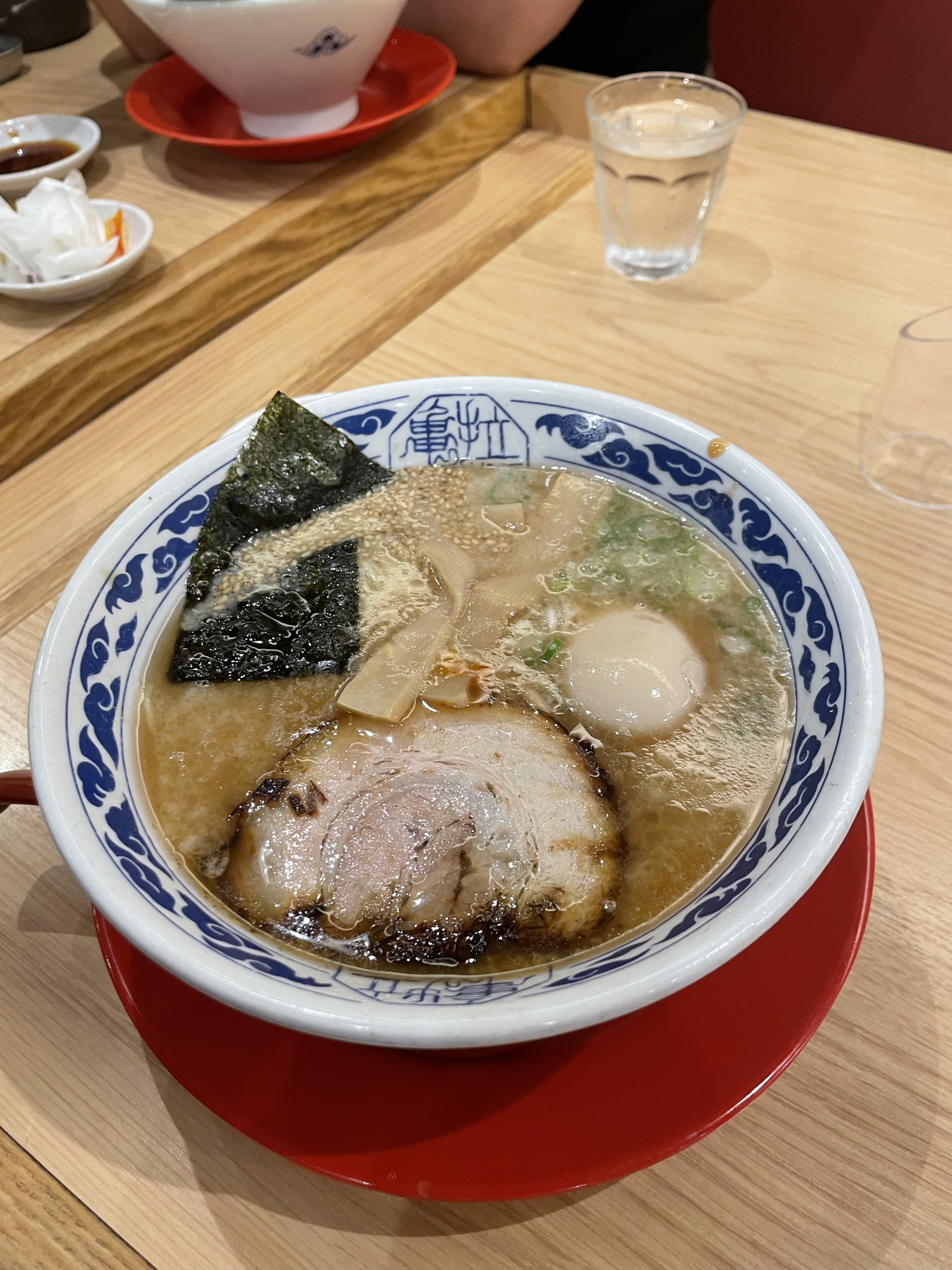


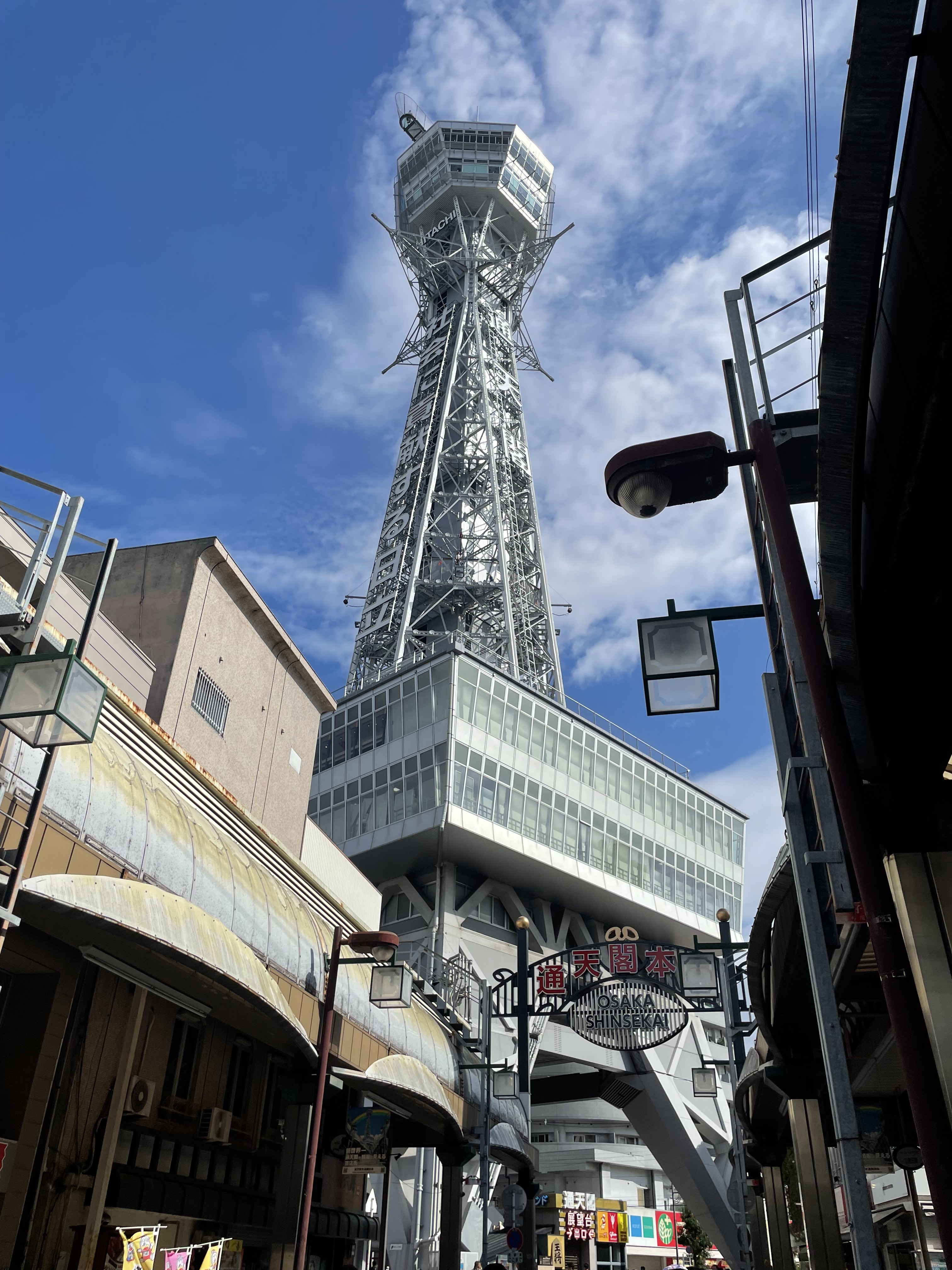
And that evolution continues today. Far from throbbing neon heart of Dotonbori and the endless underground department store/mall hybrids, neighbourhoods keep changing. We saw this firsthand in Nakazakicho, a low-slung area of haphazard alleyways where we dodged spitting rain, poking into vintage shops and cafes. The experience re-affirmed for me that I am out of touch with youth culture, regardless of where in the world I am. Later on we stumbled into Nipponbashi, an up-and-coming but seemingly not yet defined warren with the same ingredient mix of small streets, small buildings, and small shops. If you need a budget kimono, I can now pass on a few names. Later on the same walk we ended up at Tsutenkaku, an observation tower rebuilt in the 1950s. The robust metal structure would be at home in Fritz Lang’s Metropolis, but at its foot linger disappointed tourists, wandering the angled streets. The entire neighbourhood had a half closed feel, though it was the middle of the day.
Whether and when Tsutenkaku revives will be something we’ll have to look for next time. And there will be a next time. That same day we hustled back to the hotel, grabbed our bags, and seated ourselves on an express train to Kansai airport, a postmodern incongruence on an artificial island airport boasting, thankfully, direct flights home. As expected, Japan surpassed all our expectations. The country is a well-connected and safe place, with a long history, great food at any price point, and is just endlessly interesting to explore. Japan is also distinctly itself, allowing visitors a glimpse inside as you pass through, both at dizzying speeds on the shinkansen and on a quiet late night walk down a city street. The vibrancy is tangible.
 Zak Abroad