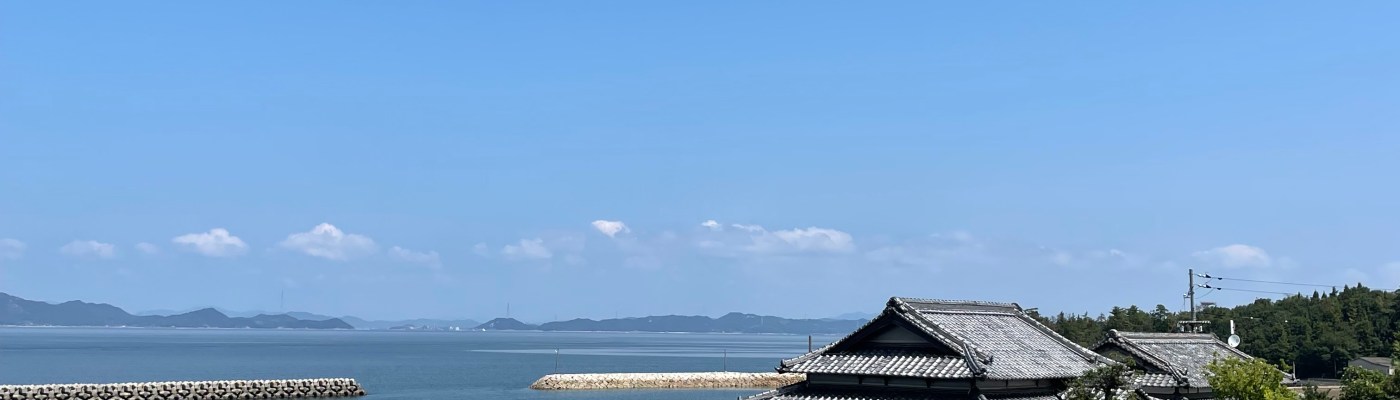
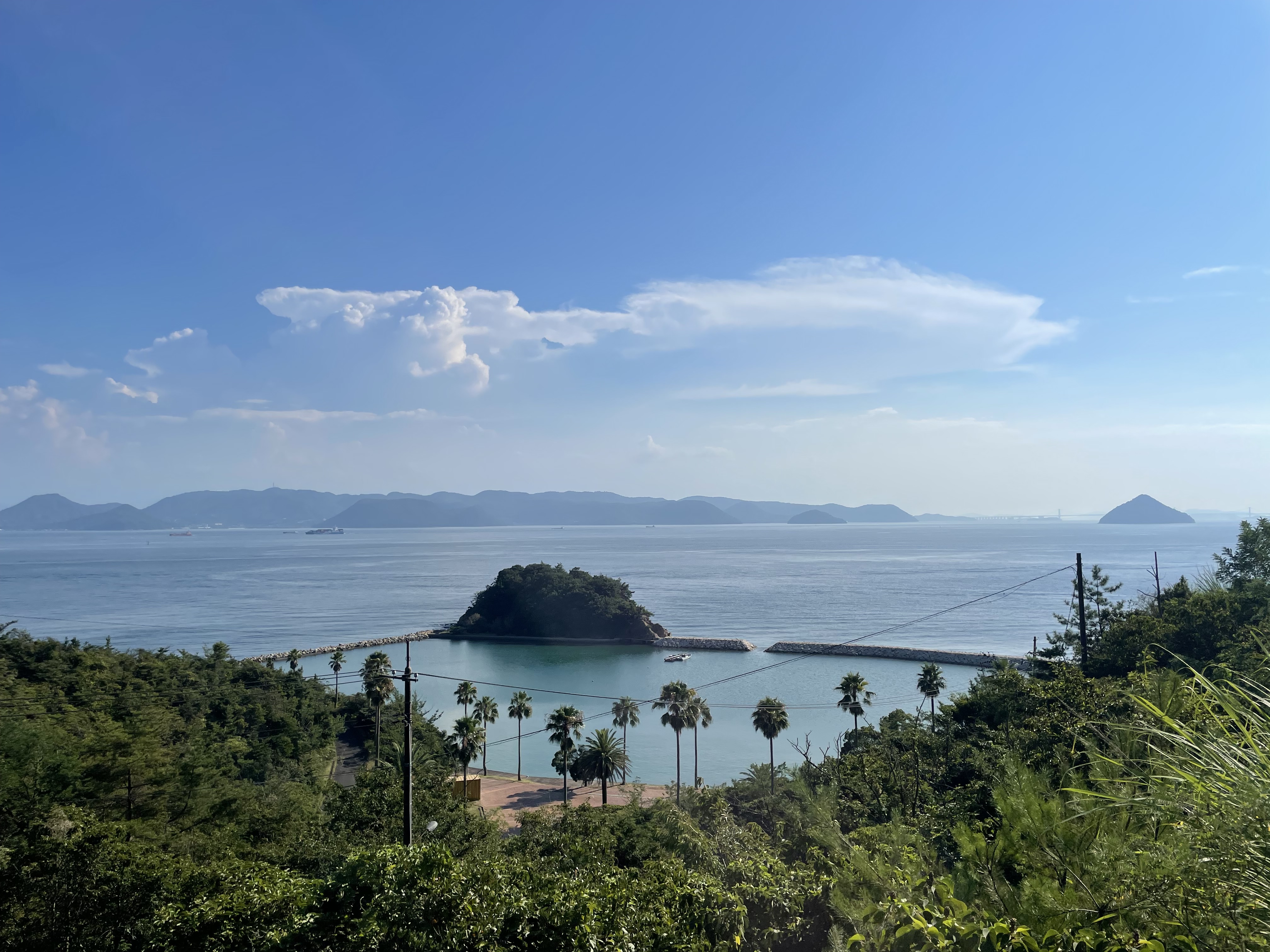
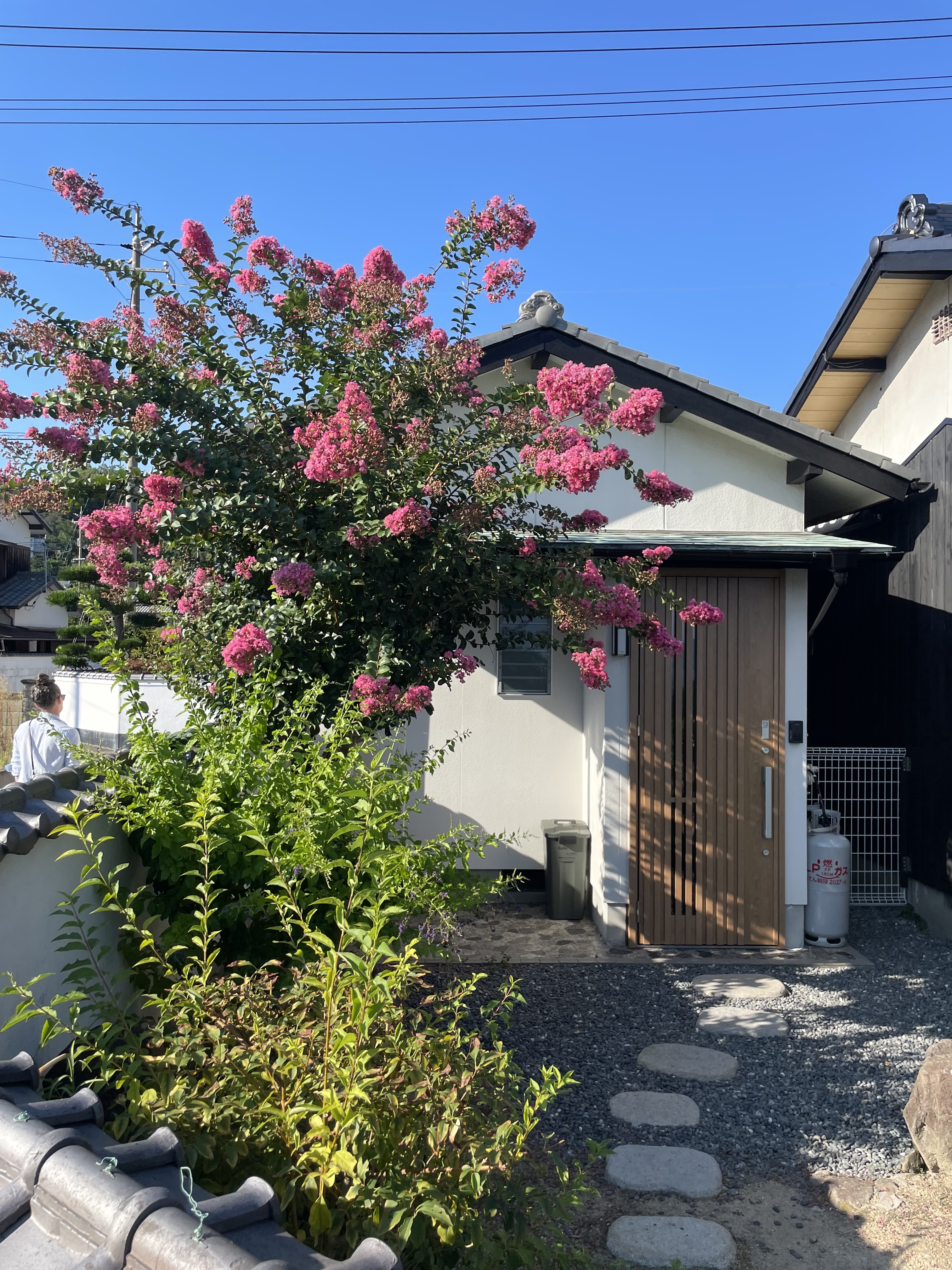
After more than a week of Japanese cities, we allowed ourselves a change of pace. From Kyoto, a few trains, a dockside lunch, and a brief rush through the heat found us on a small ferry bound for Naoshima. The small island loomed up ahead, bare brown rock rising from the inland sea, the distance speckled with smaller islands and framed by Shikoku in the background. The island’s heavy industrial history is alive and well – the first sight is a pile of black coal the size of a building, methodically being fed into an awaiting cargo ship. Shortly after we turned a corner and the heavy machinery was supplanted by the small town of Miyanoura, one of three settlements on Naoshima. Soon we were off the boat and in a minivan, a short trip to our tatami-floored guesthouse. The sea, 50 metres from our doorstep, lapped at the sand on a crescent beach, an invitation in the August heat and humidity.

The economic trajectory of Naoshima, and neighbouring Teshima, have defied the stagnation defining the lives of recent Japanese generations. Here, the demise of (most) industries and depopulation has become opportunity, the islands recreated as an offshore, outdoor art museum. This hyperlocal focus on contemporary art was kicked off by the Benesse Foundation, a philanthropic arm of the namesake company behind efforts like Berlitz language schools and headquartered nearby in Okayama. In the 1980s, the Foundation built a sweeping modern museum, carved into the hillside, a stark, unmistakable sign of intent. Since then, various other artistic efforts have proliferated, redrawing the surrounding landscapes and recasting the fortunes of locals. For now though, our date with the Benesse House Museum and its successors would wait. It was time for a swim.


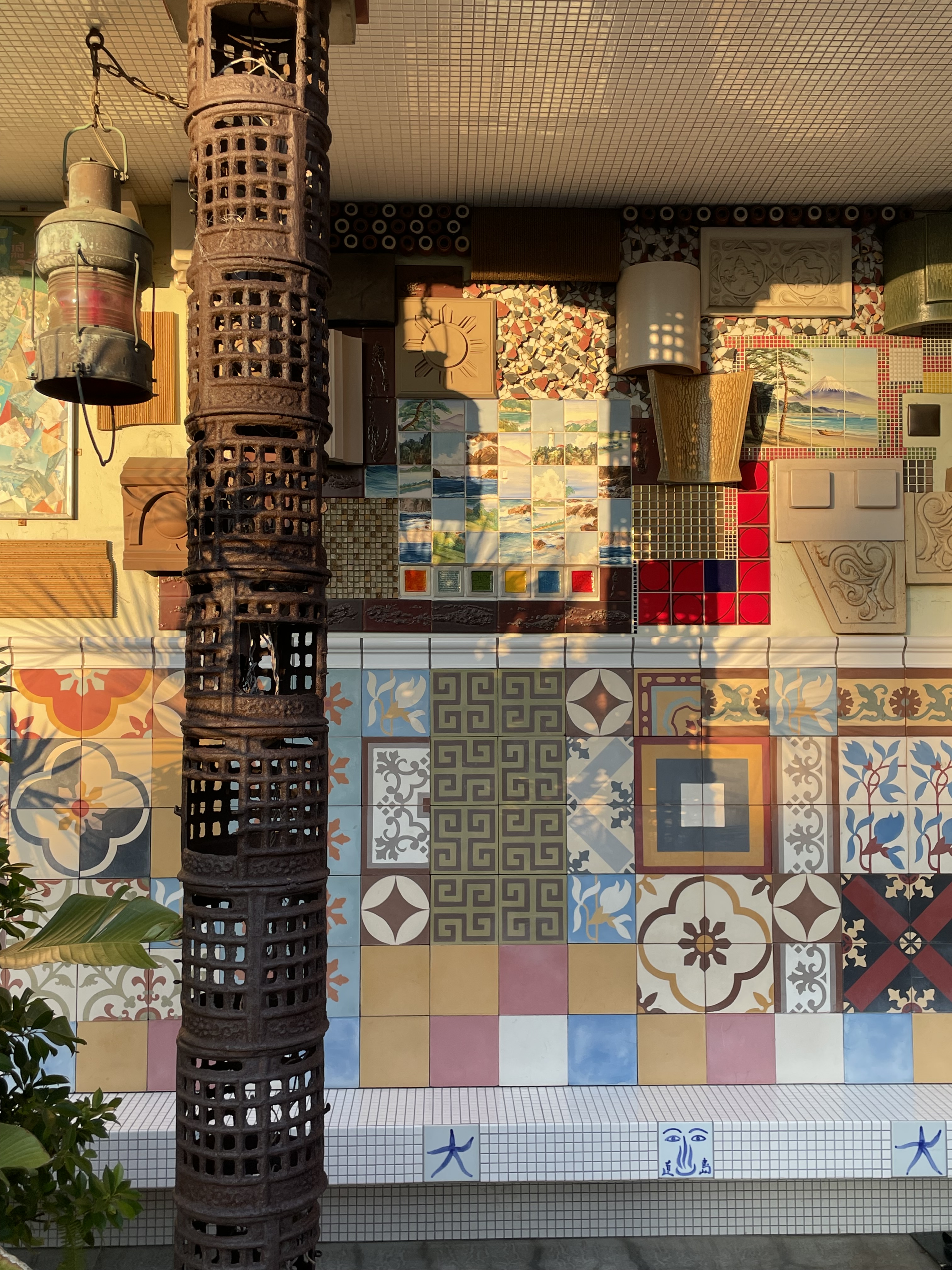
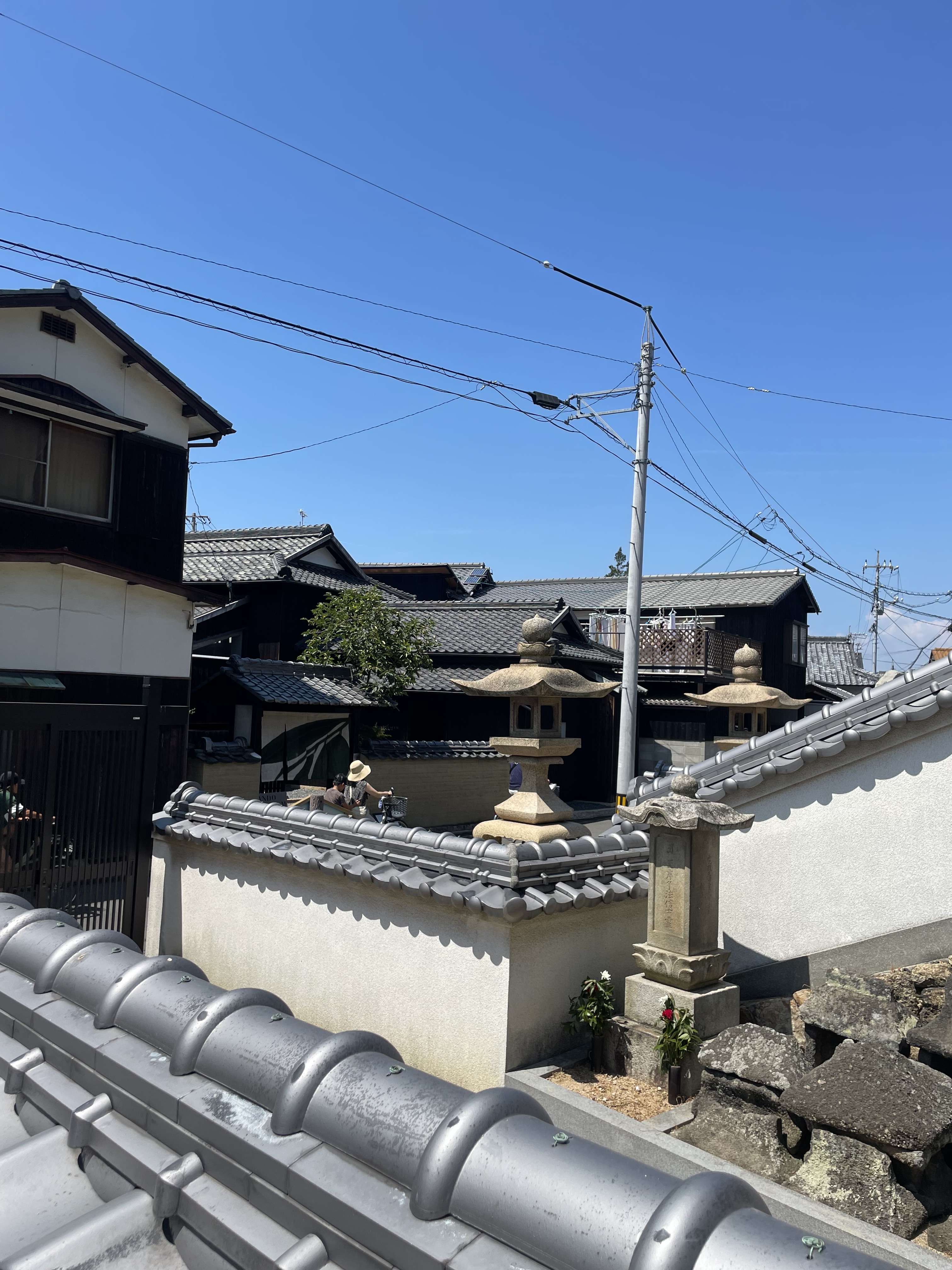
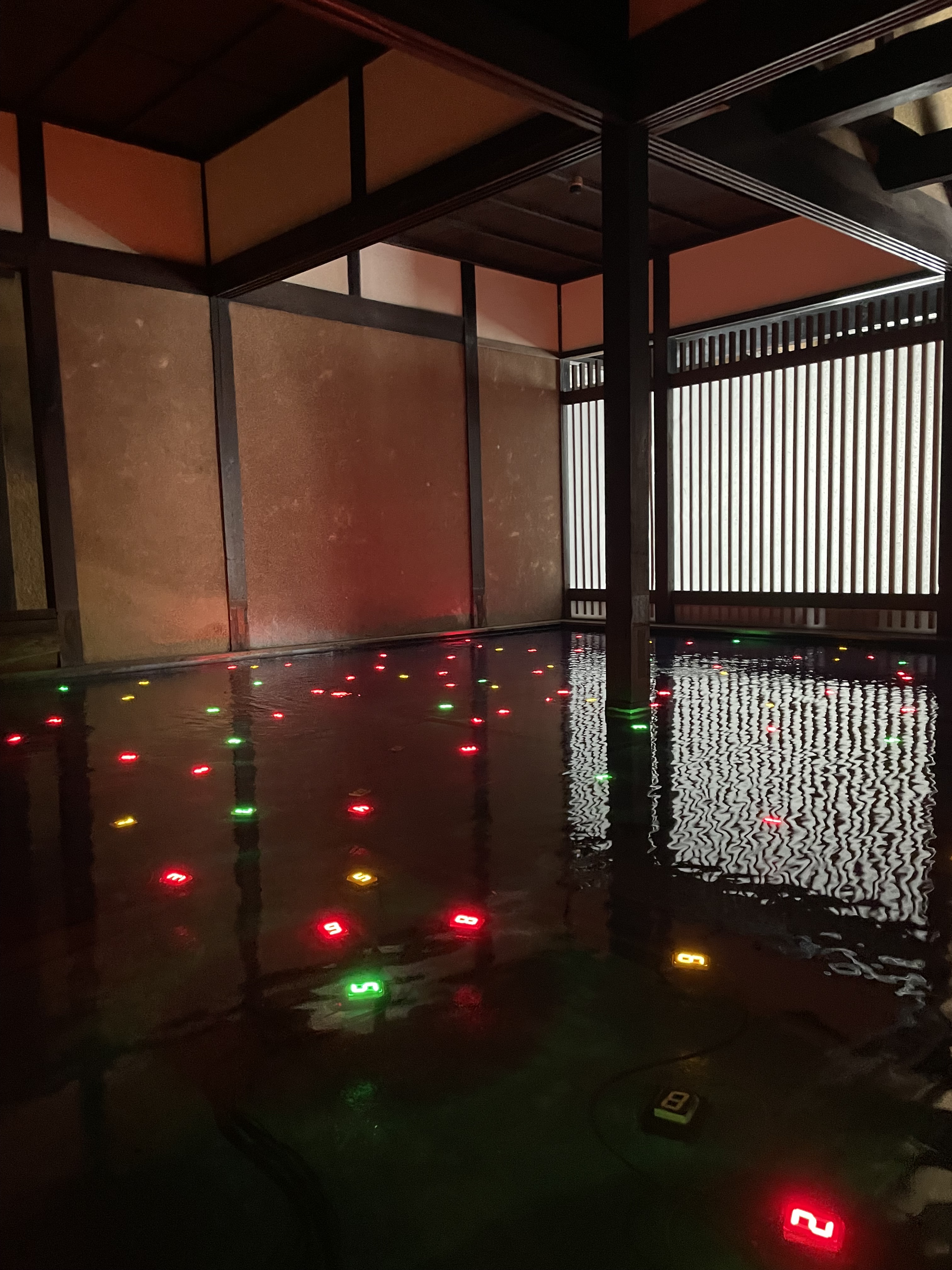
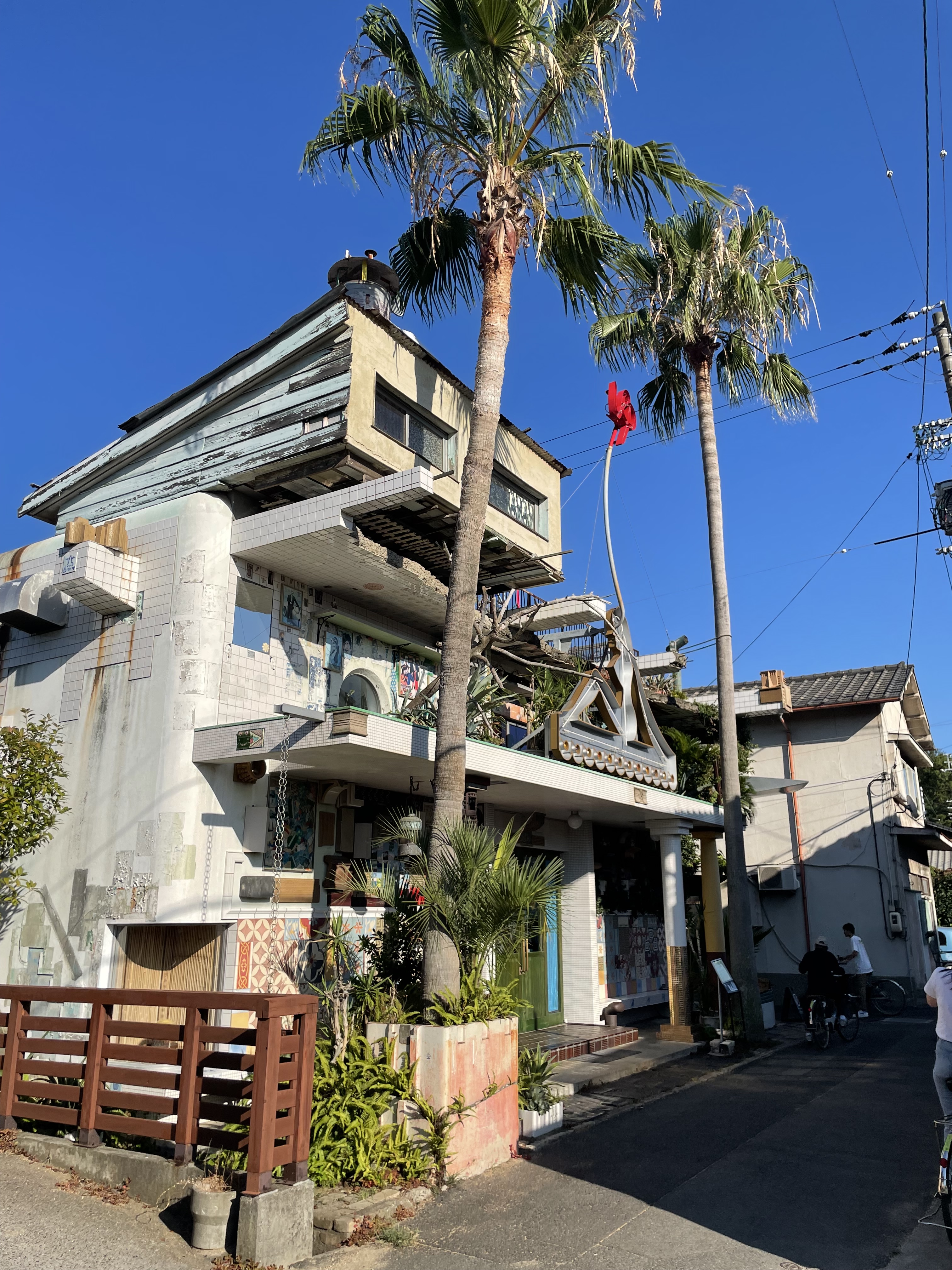
Our first full day on Naoshima began with an early letdown: rental bikes were sold out for the day. Gamely, we walked cross island from Miyanoura to Uno, on its eastern shore, occasionally relieved from the oppressive heat by the stalwart vending machines tending to otherwise quiet roads, surrounded by bush and vibrating with cicadas. In Uno, a series of repurposed old houses serve as singular art installations, each executed by one artist and with, for me, varying results. The best of the batch was a James Turrell installation where you are guided into an old house, descending into a cool and completely dark space. The pitch black effect is so complete as to be unnerving and for a few minutes, you see absolutely nothing. Gradually your eyes adjust until you can make out a large rectangle at the far end of the room and you are invited to stand and explore the space. Steps are hesitant, the experience a cautious rediscovery of a sense so taken for granted.
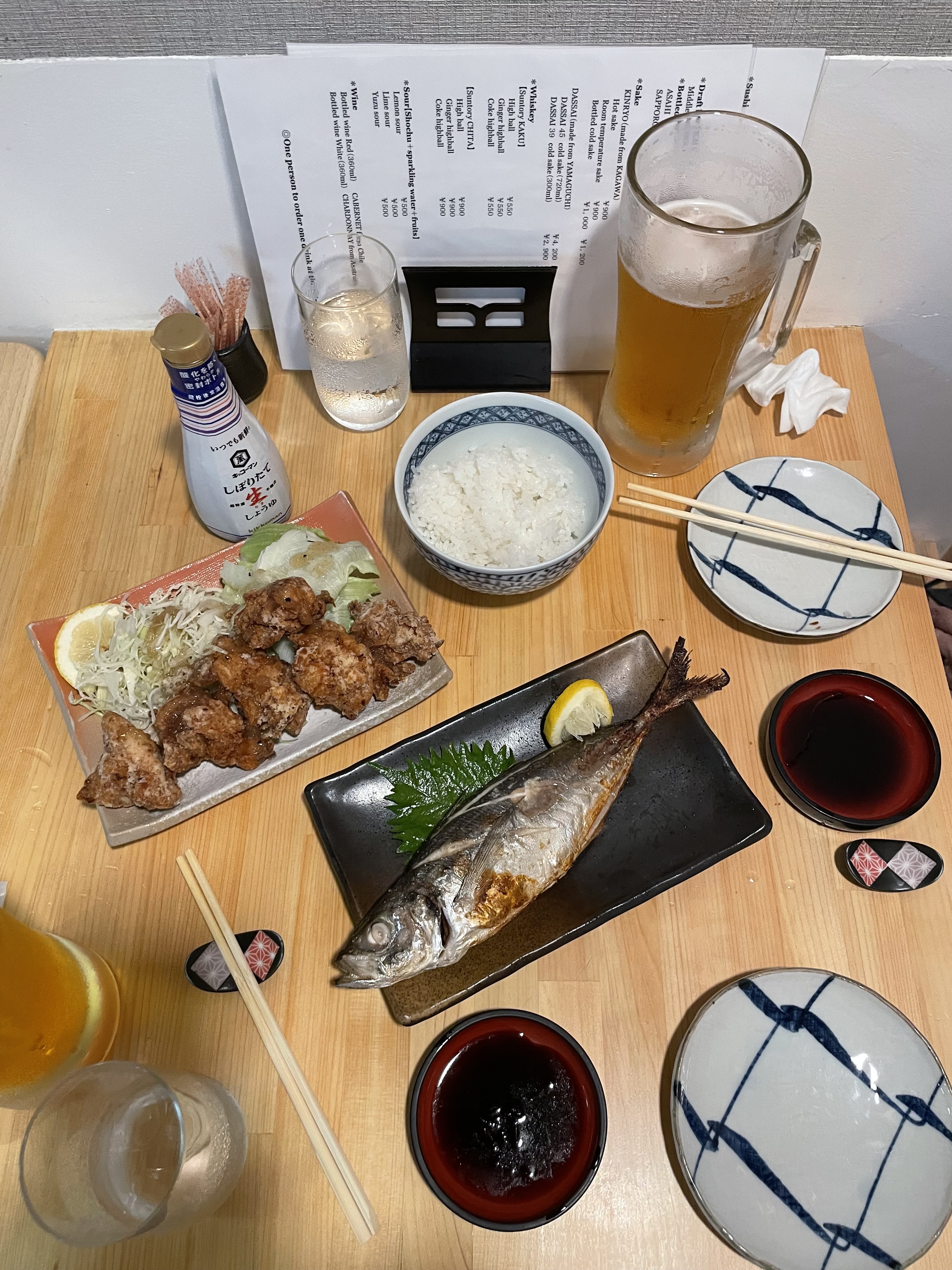
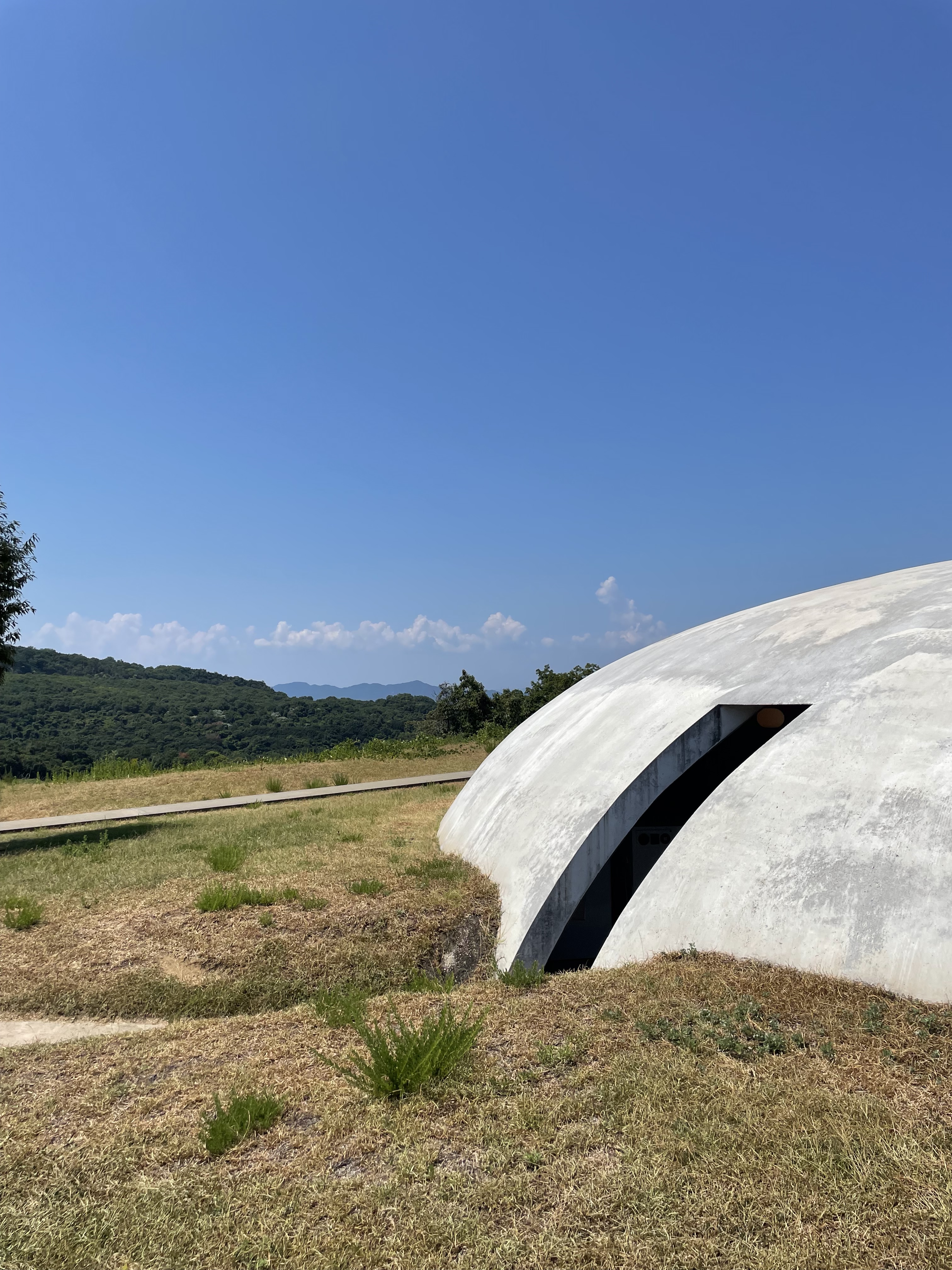
Back in the sunlight, we trudged onward through the green heart of the island, balancing oversized ice cubes in our hands to provide a sliver of relief from the thick midday heat. Eventually we entered the Chichu Museum, a concrete battleship sunk into the earth, where visitors commit to an ongoing choreography of replacing their own shoes with (for me, undersized) sandals to see work by Monet, Turrell, and Walter de Maria. By the time we got home, we were overdue for a swim, watching in shoulder deep water as the evening ritual of fish leaping in the bay. The feel of Naoshima is small, quiet. The solitary 7-11 closes at 9pm after buzzing all day with shoppers and snackers, a testament both to its quality and the lack of dining options. We went two-for-three for dinners, the first night treating ourselves to a sashimi platter in a respected local spot before falling flat the next day: an oversized, understaffed joint with a hapless server/chef tandem. Here, the pork in our pork fried rice was left out on the silent hope that it would be unnoticed. The server smiled with embarrassment when ask and pleasantly compensated with a plates of fries. We rallied on our last night at the Gumbo Hut, a quirky ramshackle room where the sole proprietor serves up cold beers and excellent bowls of the namesake stew, all accompanied by classic Motown hits.

A highlight was our daytrip to nearby Teshima, a smaller, artier (or artsier?) island to the east. Here we picked up e-bikes, signing our legal rights away with an acknowledgement that virtually every road has a drainage ditch but that there is no hospital. In case of an incident, just email the bike rental shop. From the small port we pedaled up and over the rolling hills, past restored rice paddies, cruising down to our post-lunch appointment at the Teshima Art Museum, a single work by Rei Naito. Here, you follow a winding trail before entering, shoes off, a swooping concrete form tucked into a hill. The space is a meditative blur, subtle pinprick fountains pushing out water drop by drop along the floor. The sky opens above in pieces, obscuring nature and artifice, inviting you to slow down, pay attention and reflect. We spent the better part of an hour here, quietly sprawled on the formless floor, watching clouds and small clear puddles of water slide from shade into sun.


Perhaps my favourite artwork on both islands was Christian Boltanski’s Archives du Coeur. This is tucked in a small concrete structure on the far edge of Teshima, an e-bike journey from the ferry terminal up, over and around the island topography before a brief walk through a stand of trees mirroring a religious pilgrimage. The building sits at the edge of a nameless beach, facing the inland sea and Shikoku. Boltanski’s work is built around nearly 90,000 recordings of heartbeats from around the world, playing one at a time for a minute or so before switching to another. Inside the exhibition, you are in a long, dark hall with a single lightbulb suspended in the middle, brightening in time with the muffled, heavy sound of a heartbeat. It fills the thick air, intimate, almost intrusive, simultaneously unsettling and affirming. Stepping back outside, I sat on a bench, felt my own breathing, watching the breeze ruffle the leaves. Birds sang in the trees and waves lapped over the beach.
Our last evening was spent close to home, wandering up and over the hills to the Benesse House Museum, the foundational cornerstone to the whole local art scene. Dusk settled over the sea as we made our way past scores of layabout feral cats and signs warning us of wild boars. Overhead, the sea eagles had retired and the skies were alive with the frenetic to-and-fro of bats. Forking off at a guardhouse, Benesse House is at the end of a winding, car-free road. Occasional lampposts cast yellow stepping stones of light, shepherding us around the bend to the starkly illuminated museum. Benesse House is all angled concrete and glass wrapped around a small hill, looking the part of a Stanley Kubrick-directed Bond villain lair, complete with helipad. We had the museum almost to ourselves at this late hour, taking in the sights and making our way home by flashlight. The next day, warm and quiet, we left Naoshima to continue the trip. The island receded in the wake behind us as the ferry pulled us reluctantly back to the real world.
Next stops: Osaka and Hiroshima
 Zak Abroad