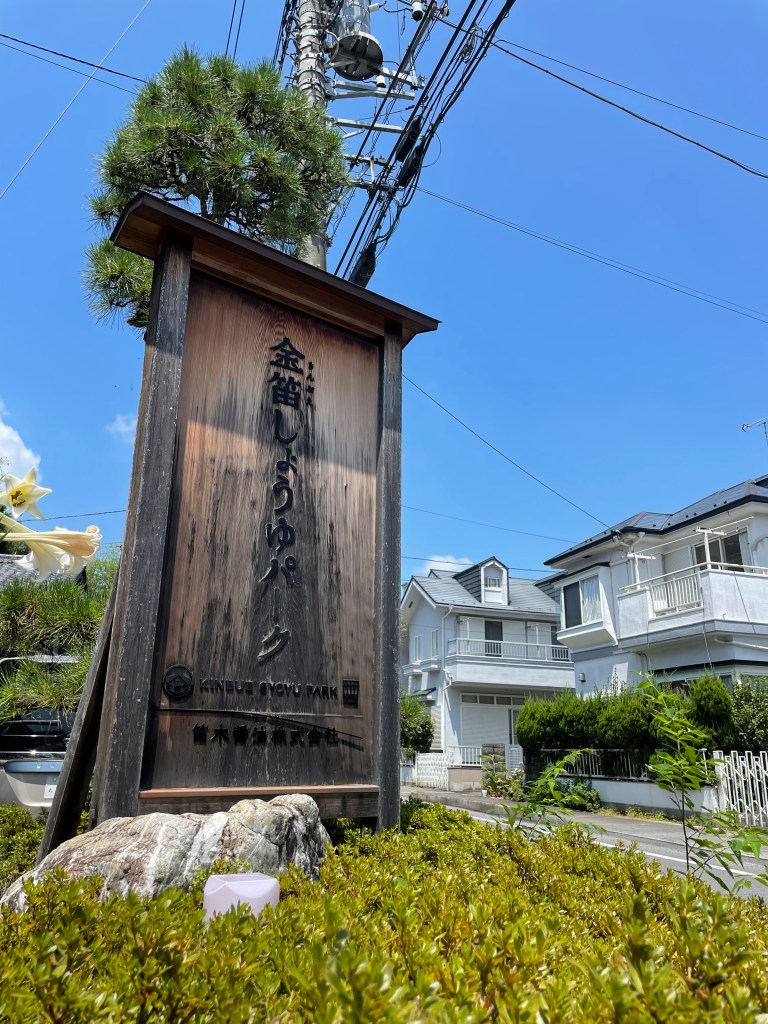
We broke away from Tokyo for a daytrip into the western suburbs, a morning express train taking us to Kawagoe before a bus transfer to another smaller town. Our destination: the Kinbue Soy Sauce factory. Hannah had reached out over email weeks before, and we stood under a mister in the shade, dodging the heat, until our 11:30 English tour began. Our guide was the company owner, Kichigoro, who emerged from his office with a heavily annotated binder in hand to take us around. We quickly learned that he is the 12th generation of his family producing soy sauce in the traditional way, dating back to 1789. Some of the buildings on site date to the mid 1800s and the oldest is mid-restoration, facing a near future as home to a museum and gift shop.
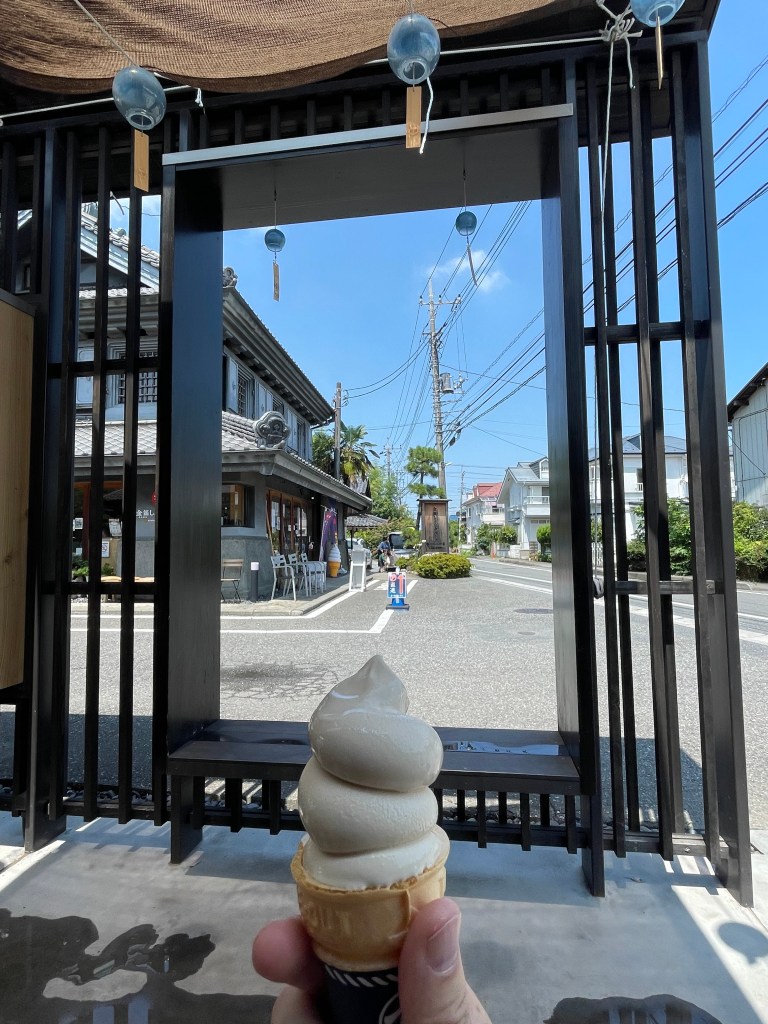
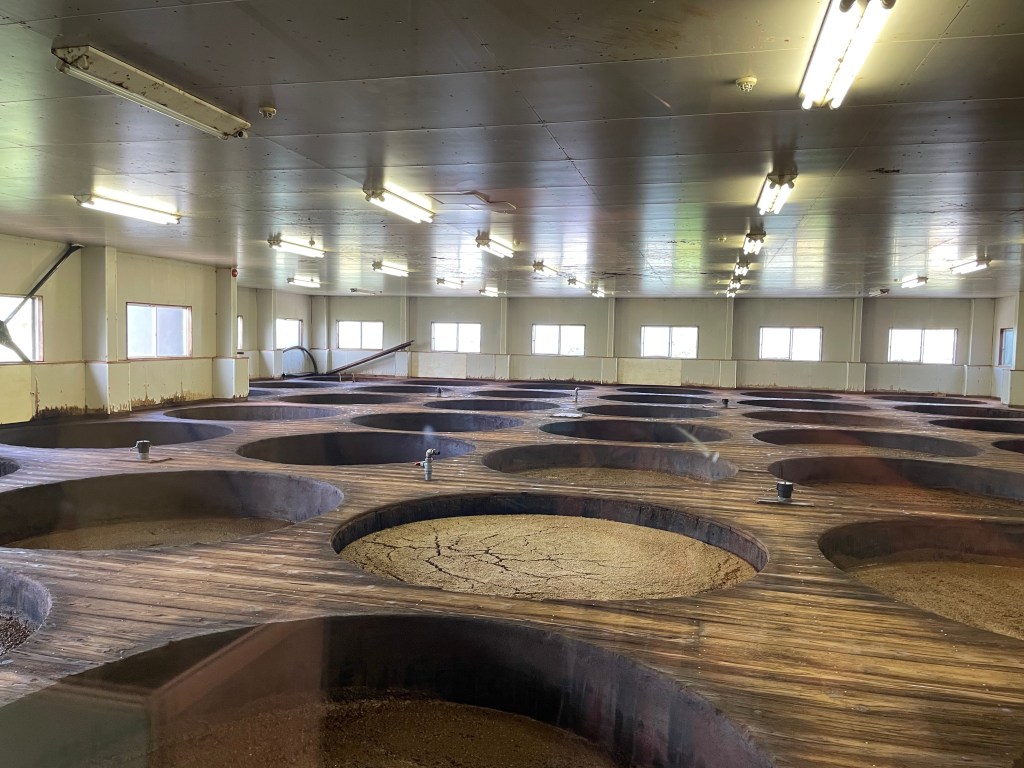
Traditional soy sauce is created through the fermentation of water, soy beans, wheat and salt, mixed together into a liquid called moromi, to which koji, a yeast-like agent, is added. The moromi is kept in cedar barrels, some of which are over 150 years old, and they get periodically agitated by hand using a specialized long stick. The moromi stays in the barrels, fermenting for 2-3 years, during which it evaporates and darkens, the smell and taste intensifying before it is pressed, boiled and distilled into the finished product. Less than 1% of soy sauce in Japan is produced in this traditional manner, and typical industrial “big soy” is done in steel drums, aging for a paltry six months. It is always fascinating to see how common traditional foods are prepared and the enthusiasm of Kichigoro was infectious. We loaded up on souvenir soy at the factory shop, took a tourist photo in a replica barrel, and rewarded ourselves with soy-flavoured soft serve before starting our way back toward Tokyo.
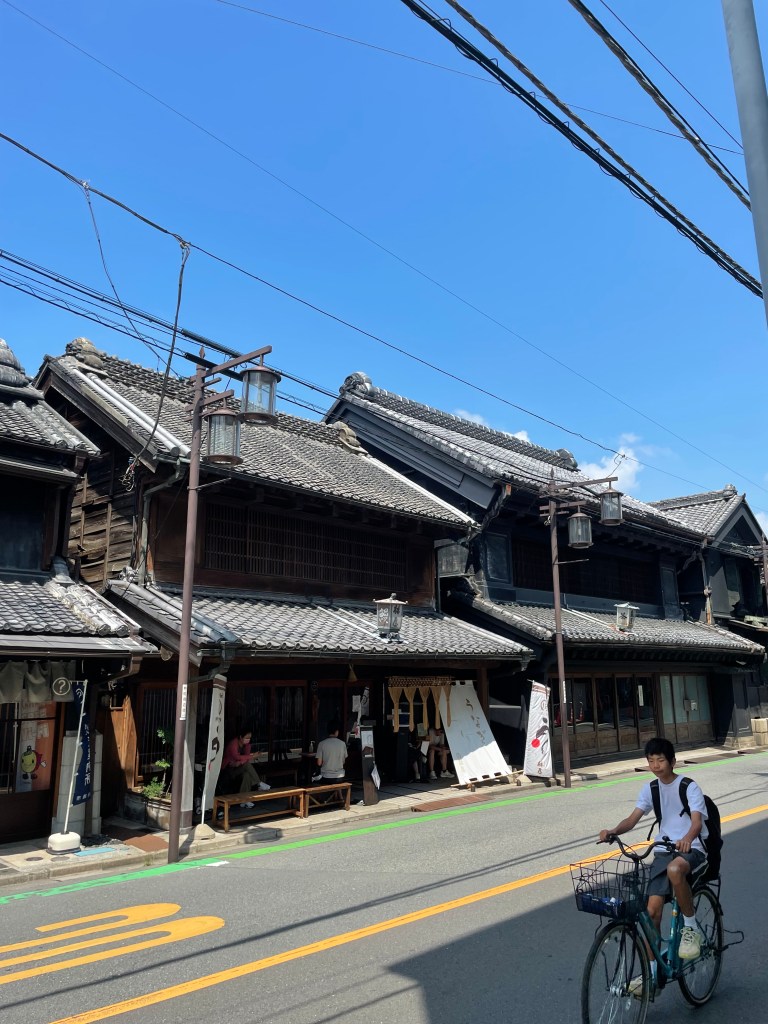
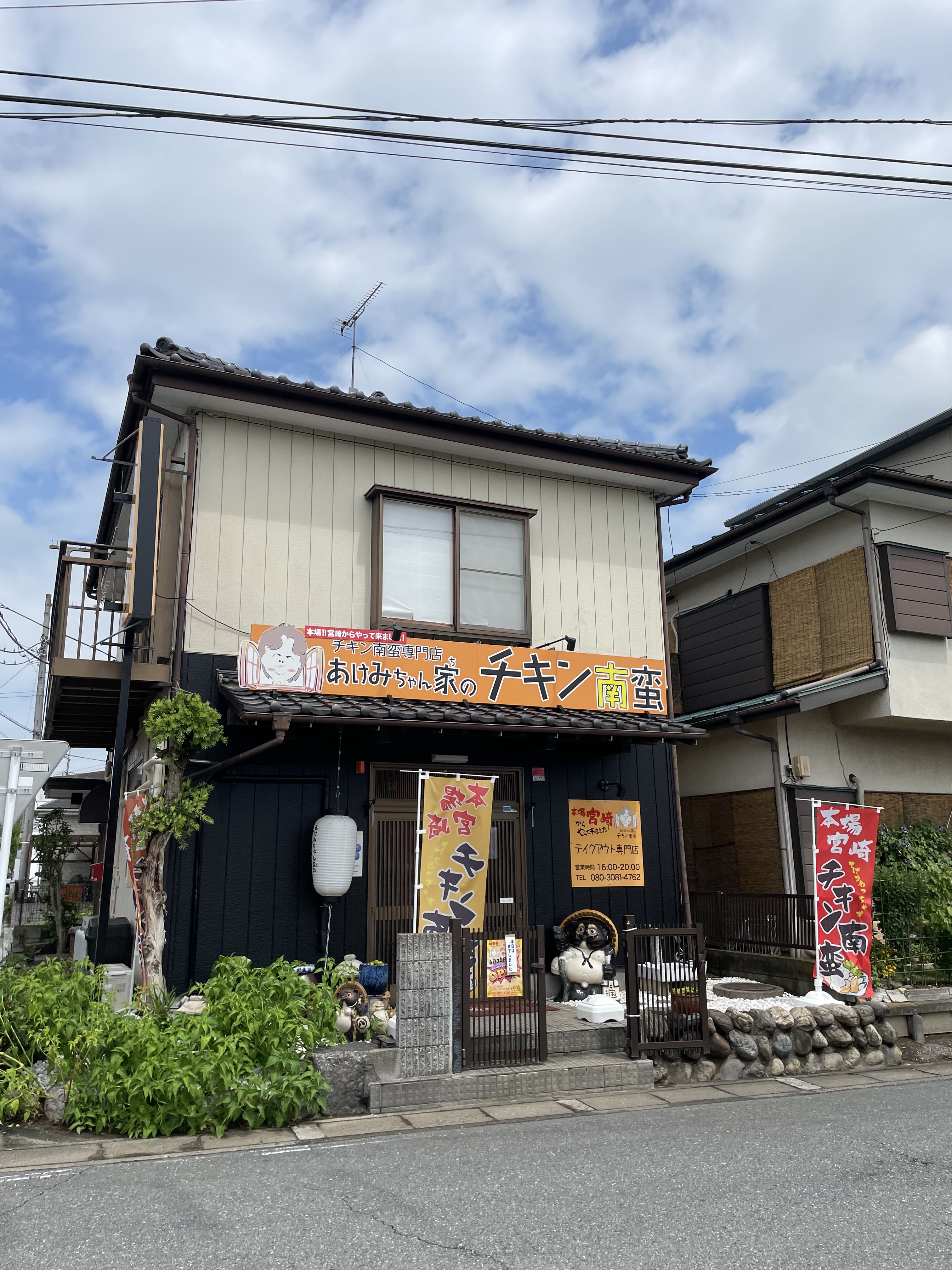
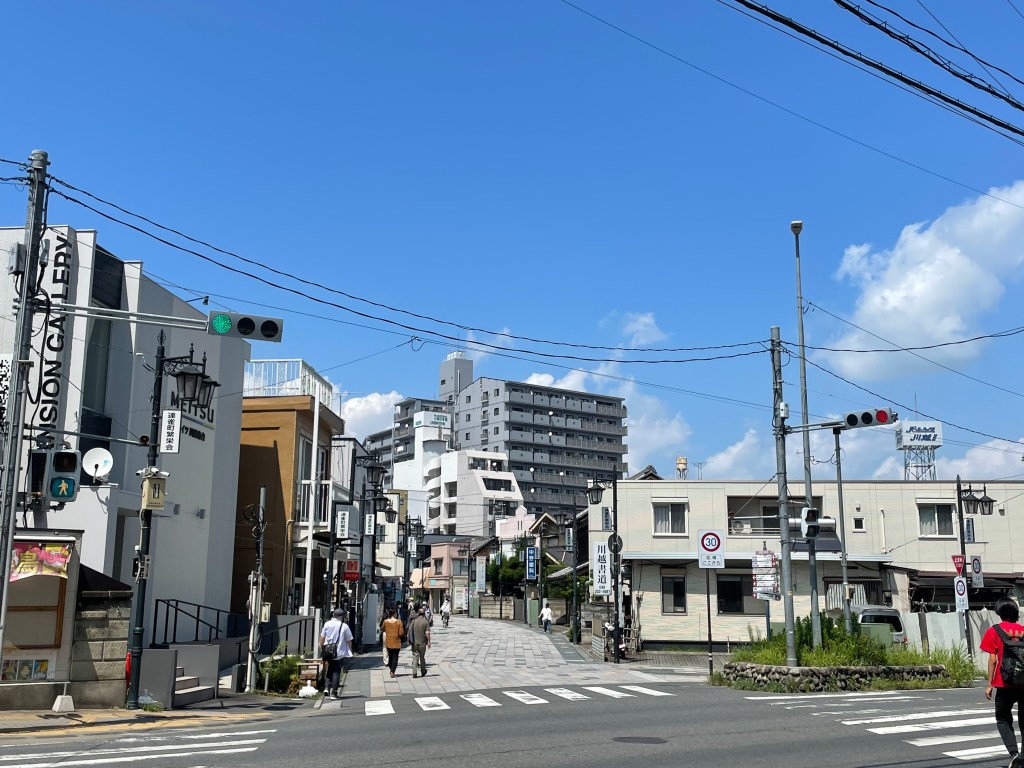
We broke our trip up with lunch at a stopover in Kawagoe. Today, the city is an outer suburb of Tokyo but vestiges of its previous independence remain. For the 250 years of the Edo period, Kawagoe was a regional trade hub, a transhipment point for the agriculture of the surrounding Kanto plain. With no heavy industry, the city was spared American bombing raids and retains a charming mix of stone and wood merchant homes and warehouses. Narrow streets filter through these buildings, alongside a smattering of pre-war Taisho and early Showa period structures and more modern accompaniments. The contrast in both age and scale compared to Tokyo is immediate and persistent, a more relaxed pace and a tangible sense of history that is harder to dig out in the capital.
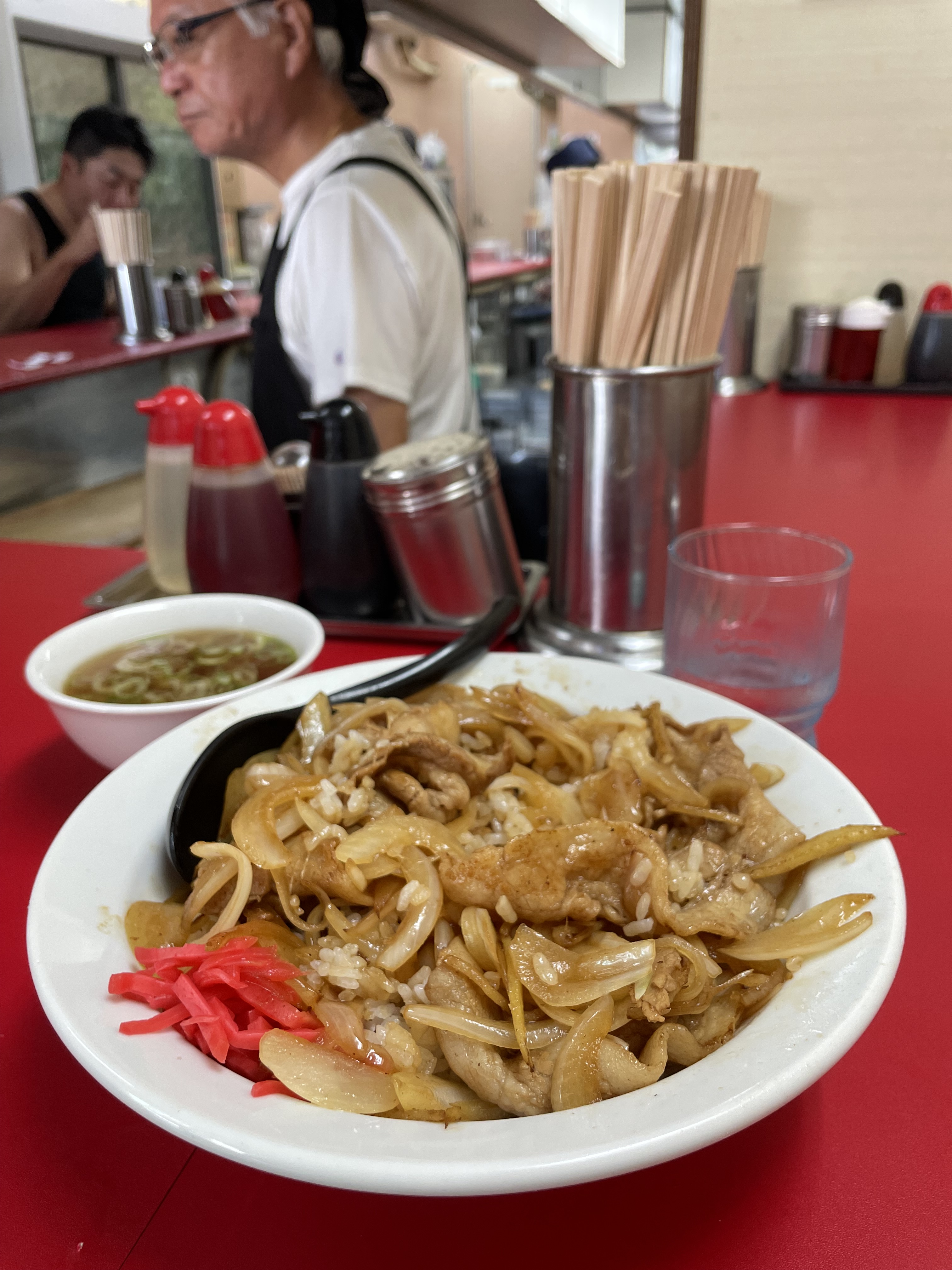
Lunch was at a push-button diner set back from the central pedestrian spine of Kawagoe. A small machine, similar in size to an ATM, stands sentry at the door, fully equipped with credit card readers, a change dispenser, and a backlit button for each menu item. You select and pay, receiving a printed receipt to hand off at the counter. This system let us skip over the language gap and go straight to the weathered red counter that swept, J-shaped, down the length of the diner kitchen. Even at a greasy spoon diner, the Japanese served up good food. Reflecting on its visible history, Kawagoe is filled with vintage shops selling jeans and T-shirts bearing names of American universities and other 1990s era cultural touchstones, like a series of savvy raids of Value Village bargain bins were carried out. I remain unsure how to feel about my adolescent years qualifying as vintage.
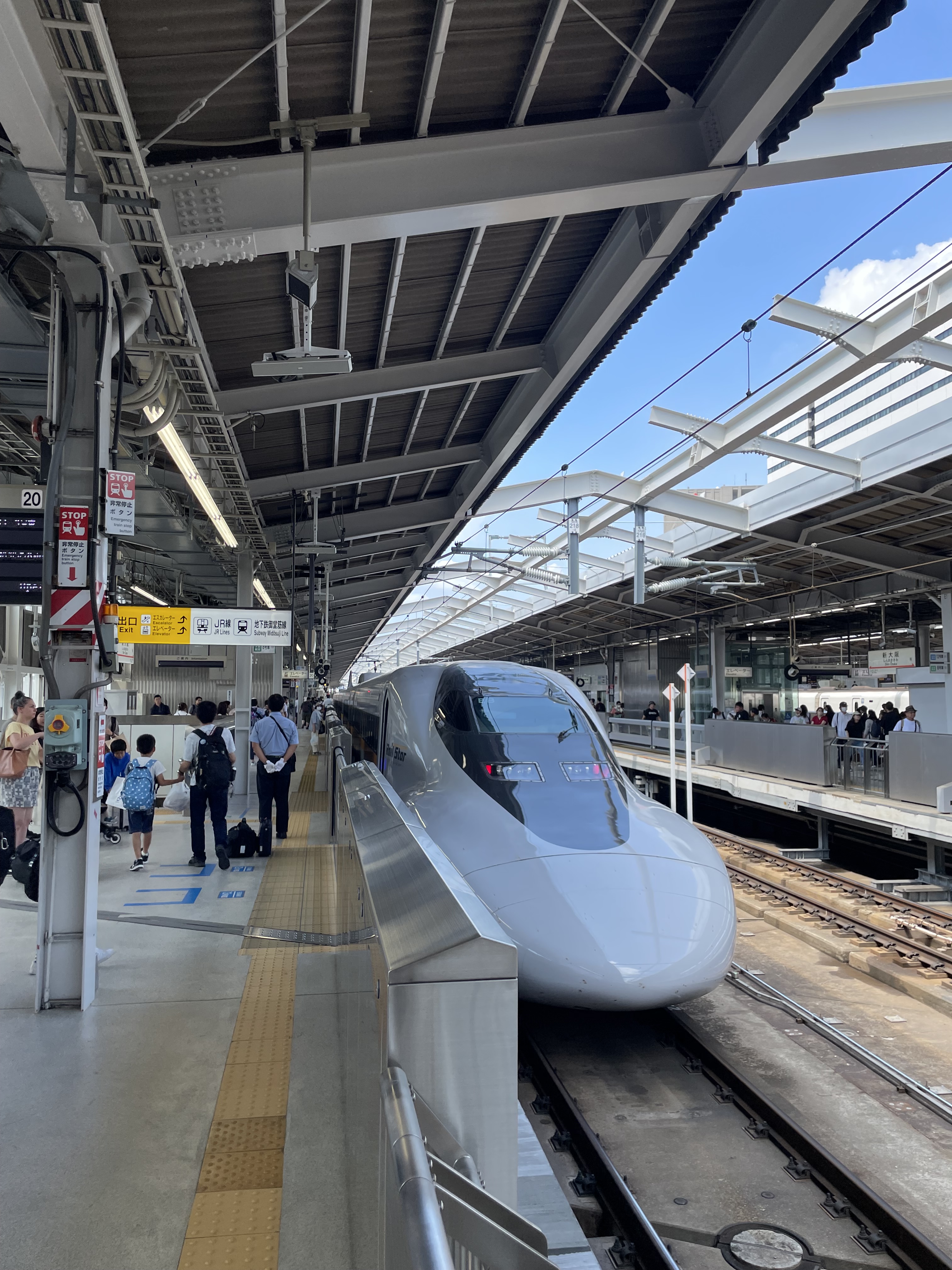
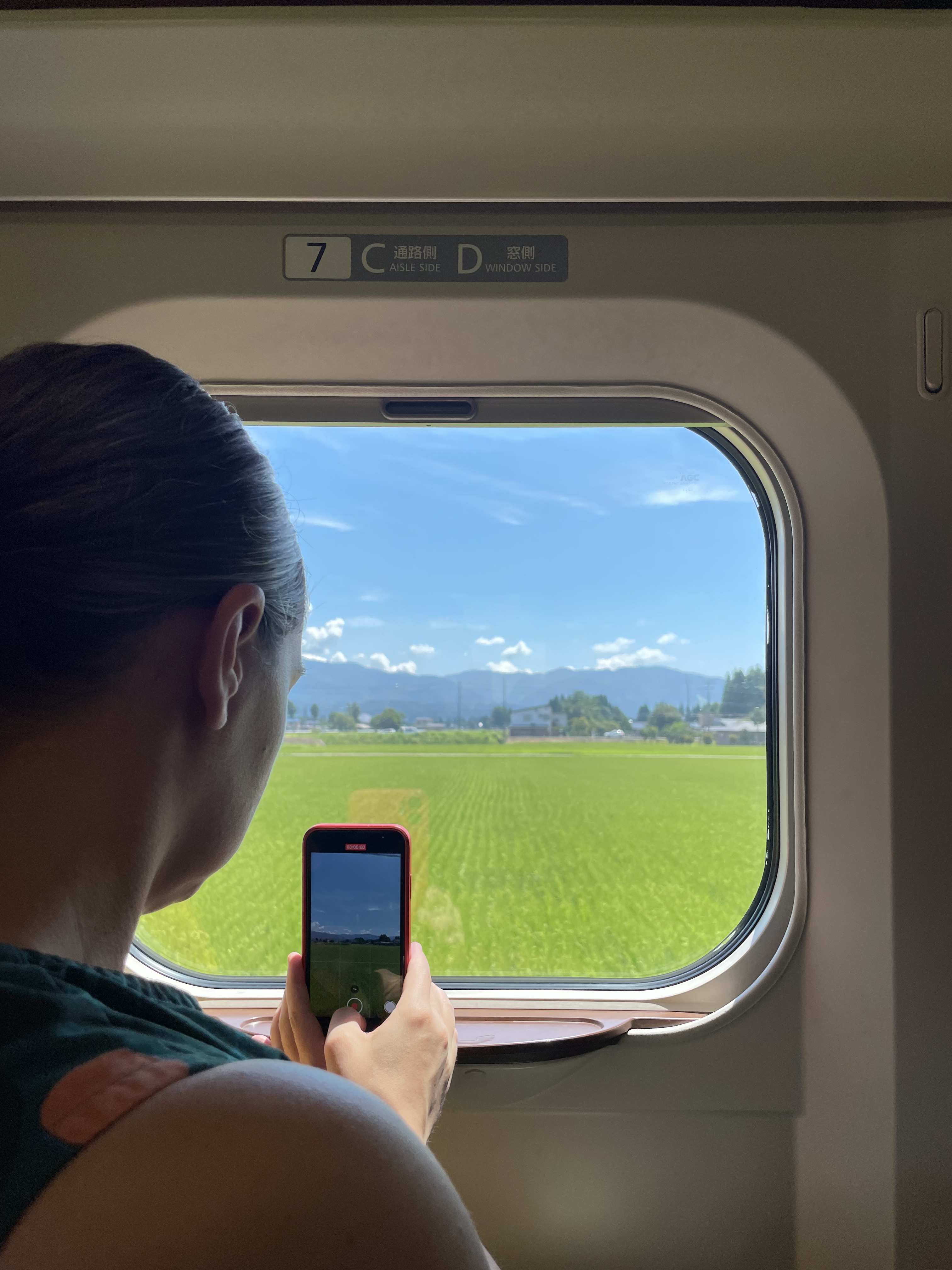
We left Tokyo again, this time on a shinkansen bullet train that blasted out of the megalopolis and past Sendai before the countryside asserted itself and the cities became smaller and fewer between. We were bound for the northern reaches of Honshu, accompanied by the deep-green mountains running up the spine of the island. At the foot of every hill, the forests give way to a patchwork of fields and rice paddies, the latter a shimmering emerald in the midday sun. Berms and small roads cut through, interspersed with small towns and the occasional castle, flashes of glazed tile roofs blinking by from the train windows. Nobody told me the countryside would be so pretty.
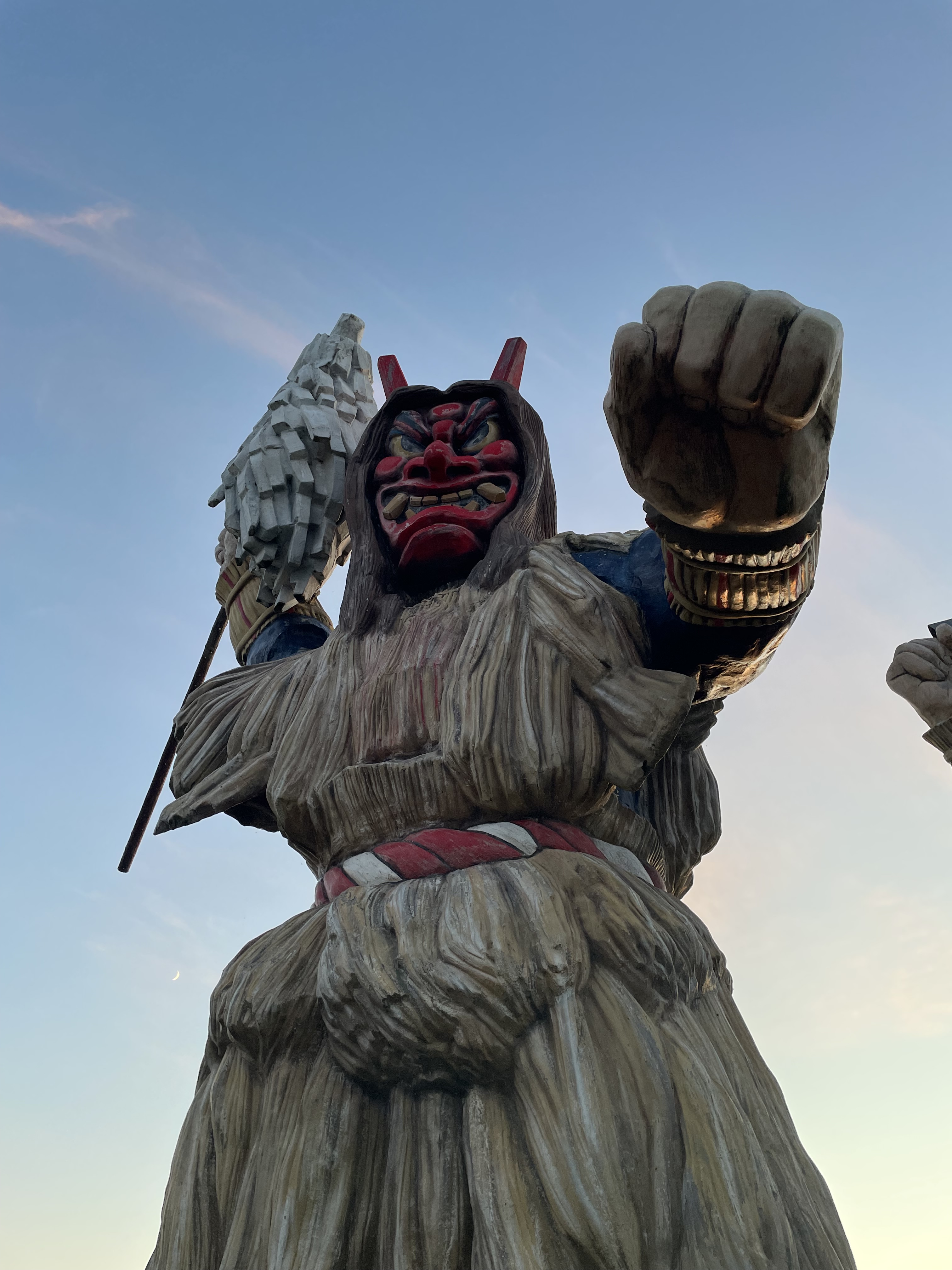
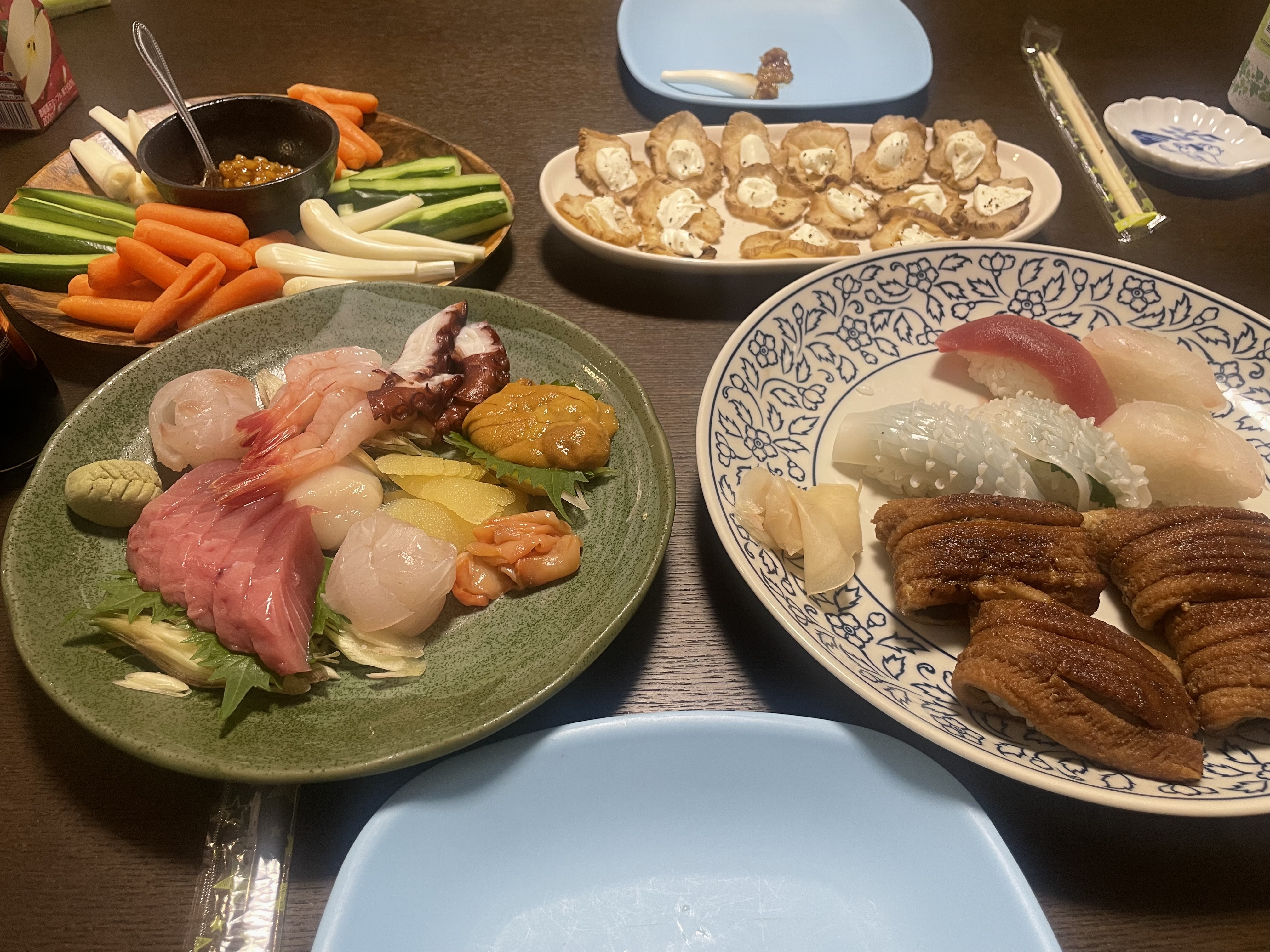
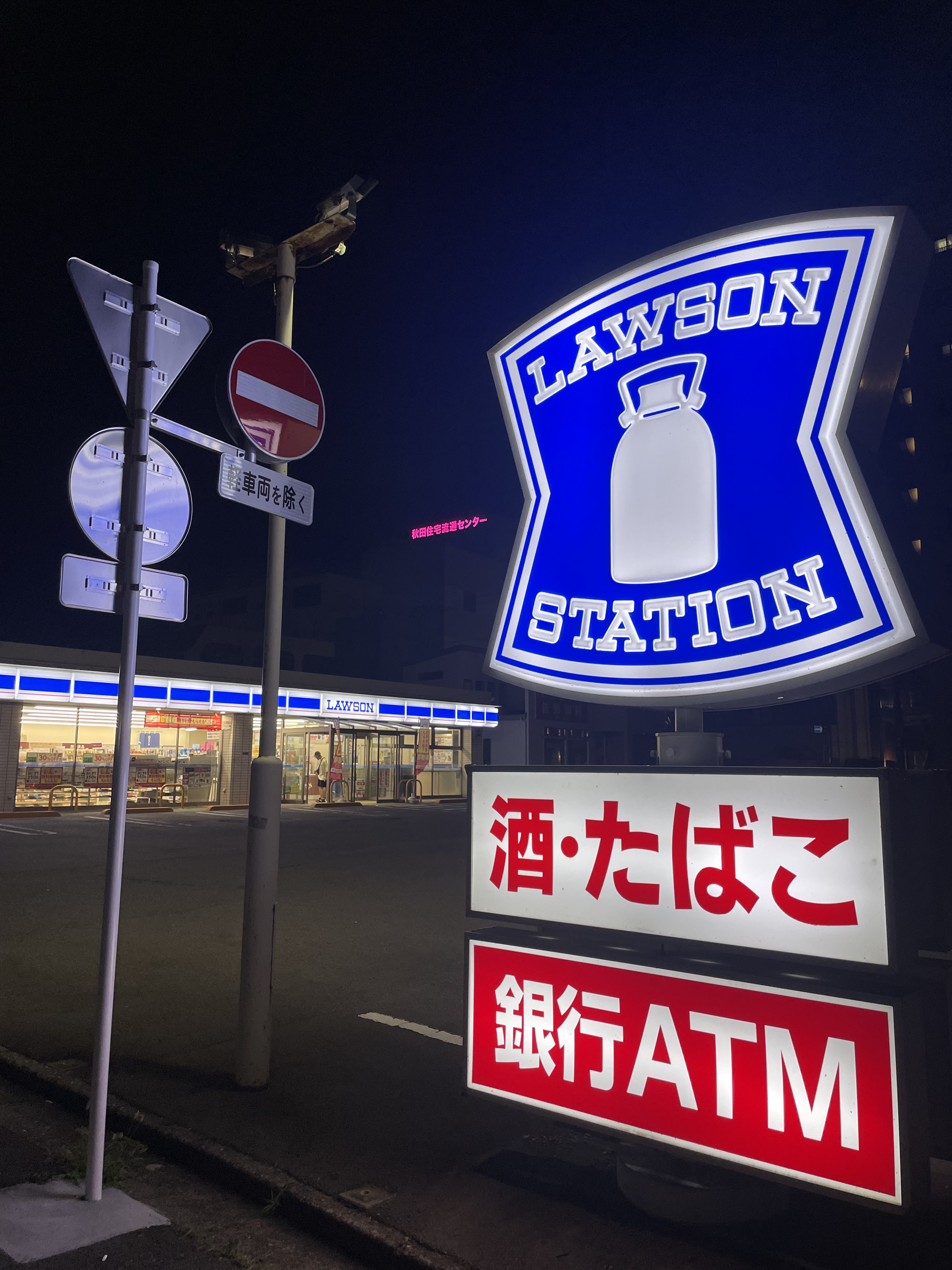
We alit in Akita and made our way to the hotel, Hannah in the lead, muscle memory taking us to her old apartment building, where Hannah stopped to reminisce and point out her former balcony to me. Dropping off our bags, we headed to suburban Akita, a maze of similar streets and tidy houses, before arriving at her friend Mihoko’s, where we were met with an abundant platter of sashimi prepared by her sushi chef father. While we chatted, Hannah and I enjoyed the company of Mihoko’s daughter, ages 1 and 3. The baby was all smiles, happily passed back and forth by us strangers while the toddler plied us with an endless supply of Play-doh ice cream before plopping into my lap and asking me to read her some books. We could not have had a warmer welcome.
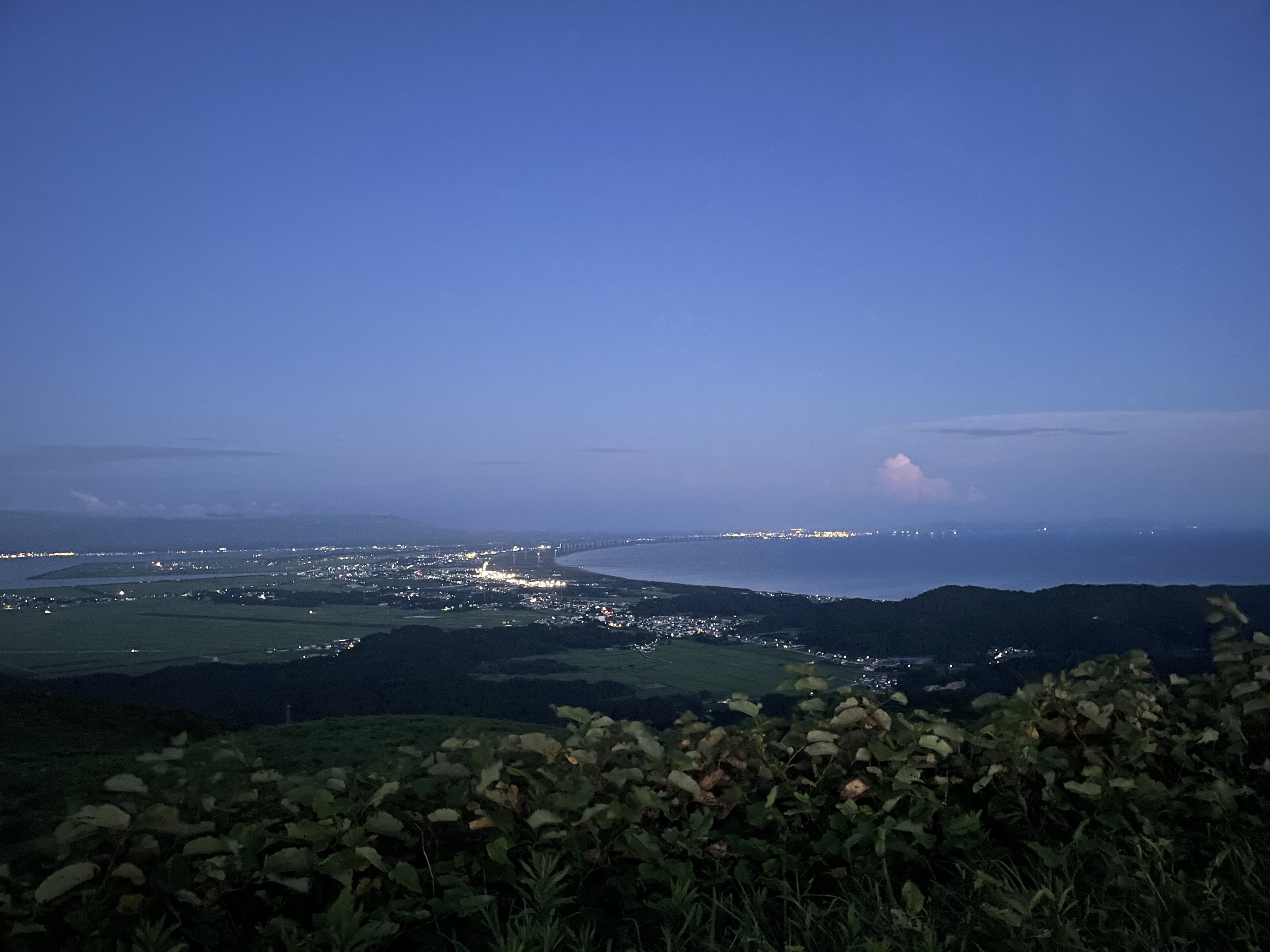
Later, after Mihoko’s husband finished work, the family took us for a drive north to the Oga Peninsula, a bulge of land pushing out into sea, crowned by Mt. Kampu. From here, Sea of Japan and Akita extend below, a constellation of lights lining the shoreline. Parting with the family that evening, we tucked into an izakaya near our hotel for dinner. Unlike Tokyo, Akita has virtually no foreigners, and I was reliant on Hannah and the server conspiring over dinner choices in Japanese. Uniquely on the trip, we were approached for conversation by another diner, a young man out with friends, who wanted to know where we were from and why, of all places, were we in Akita. Throughout the trip, we would be asked the “Why Akita?” question over and over. Before leaving, the group asked for a picture with us and not long after, exhausted, I feel asleep in the hotel bed. One long day was about to lead into another: the next morning, we were Kyoto-bound.
 Zak Abroad