
The clouds were heavy and low, a looming threat as I climbed off at the Zagreb bus station. The loitering crowds paid no attention to any new arrivals, faces disappearing into the taxis or threading out on the sidewalks. Bag over shoulder, I opted to chance the coming rain and walk the half hour to my apartment, tired of sitting after six hours in the coach. The Croatian capital is seemingly defined by scaffolding, every block face having at least one building enshrouded in a lattice work of aluminum ladders and platforms under a green shroud. Buildings waiting their turn are simply adorned with signs warning of crumbling facades. Nearly half of the sites are closed for these renovations. The rain came that evening, heavy sheets driven by the late wind, pushing me indoors to the rental apartment. Despite the animated conversations from the café regulars across the courtyard, I was able to fall asleep at a reasonable hour that night. An incomplete day and an inauspicious arrival to Zagreb.
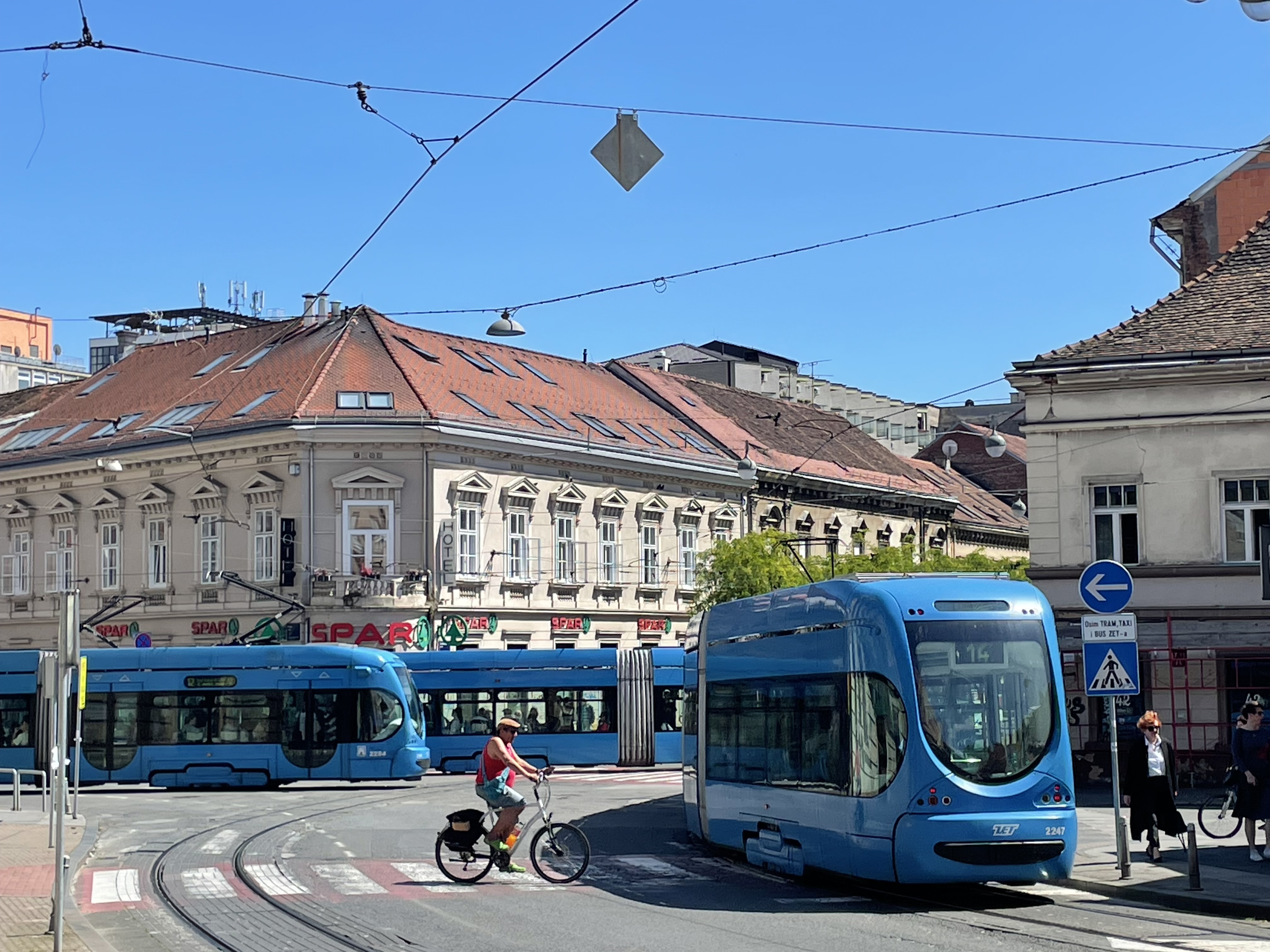
The sun broke the next morning and I took to the pavements. My apartment was in Lower Town, the flat stretch between the train station and its Upper Town counterpart. Lower Town is a formal grid filled to the brim with late 19th century architecture, a small-scale Budapest or Vienna reflecting the Habsburg turn in power. Cafés are the defining feature of…well of the Balkans, but of Zagreb too, with at least one on every block. Past the creamy stone, chipping stucco, scaffolding, and accumulated grime of decades, blue trams shoot through in all directions, omnipresent. I made my way along the streets, stopping in a bakery to grab breakfast before arriving at the city’s main square, Trg Ban Jelacic.

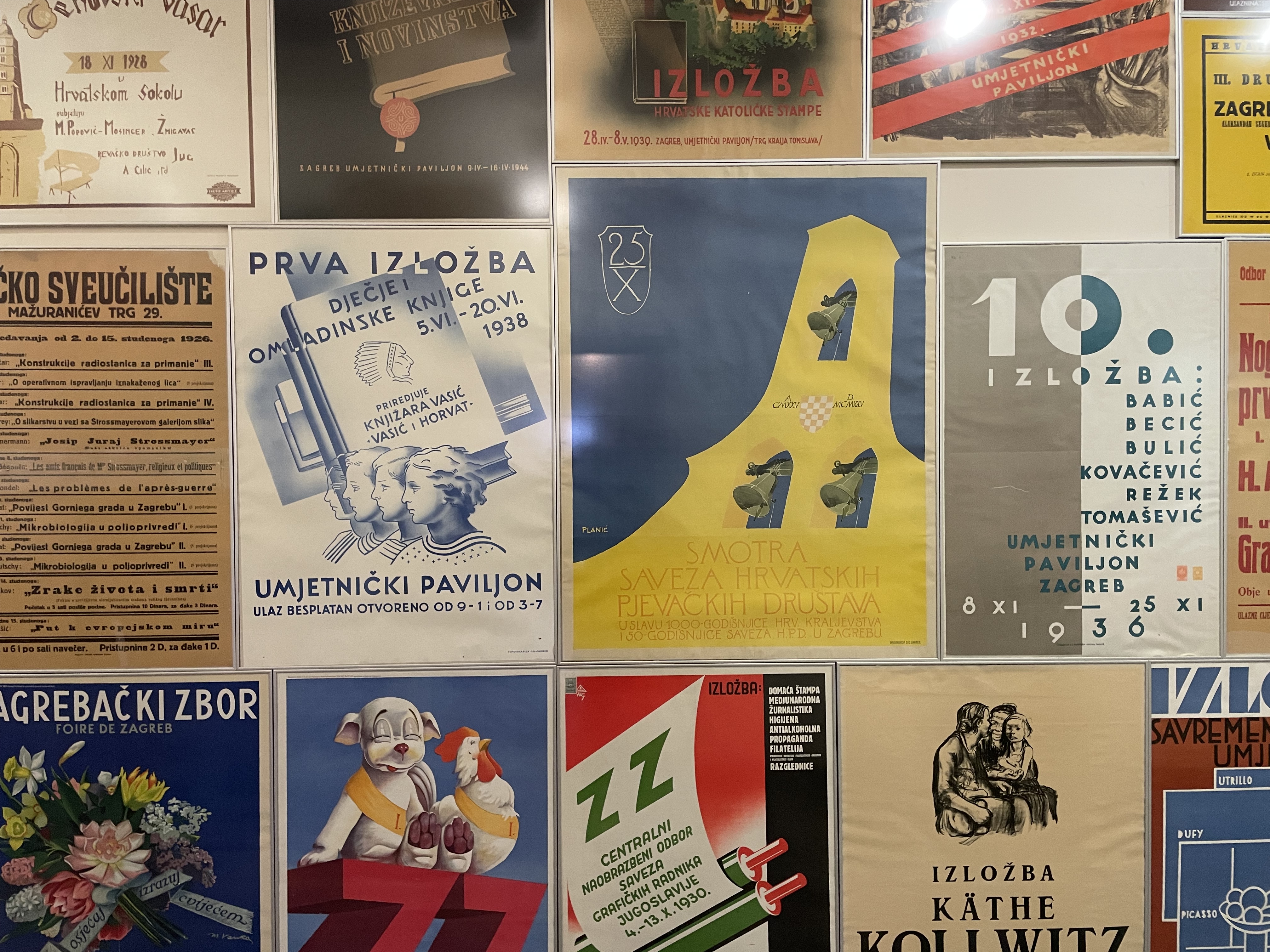
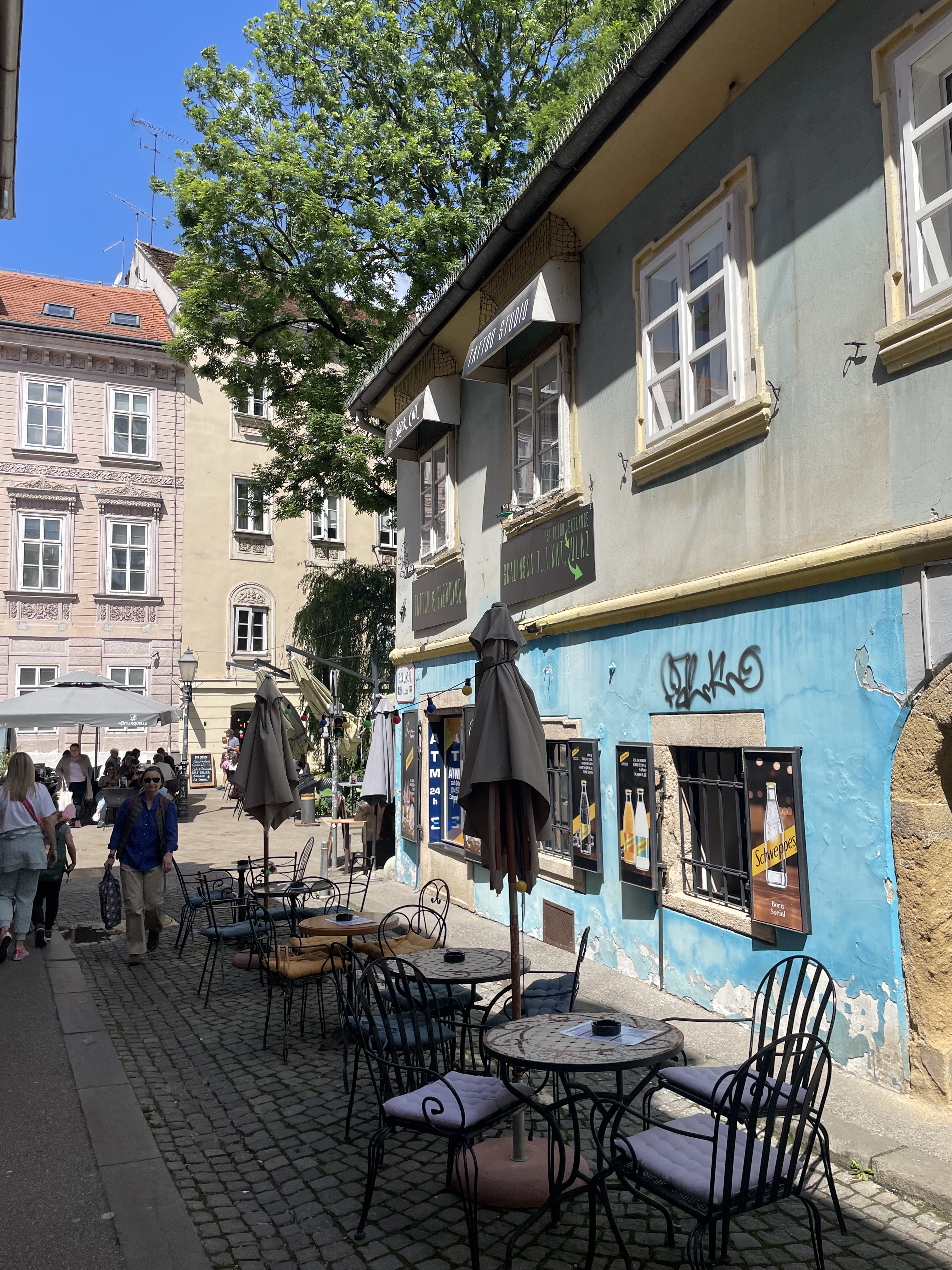
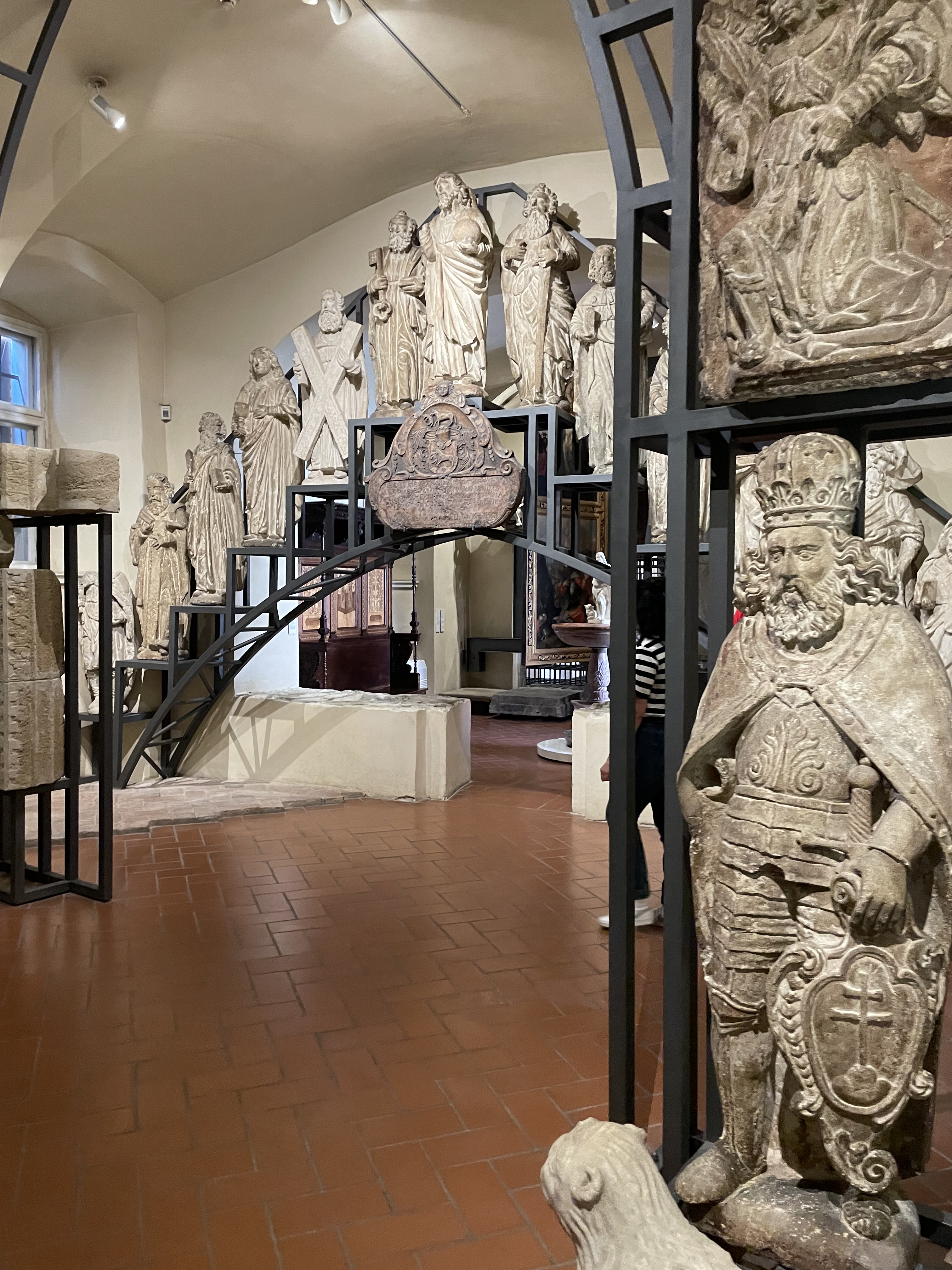
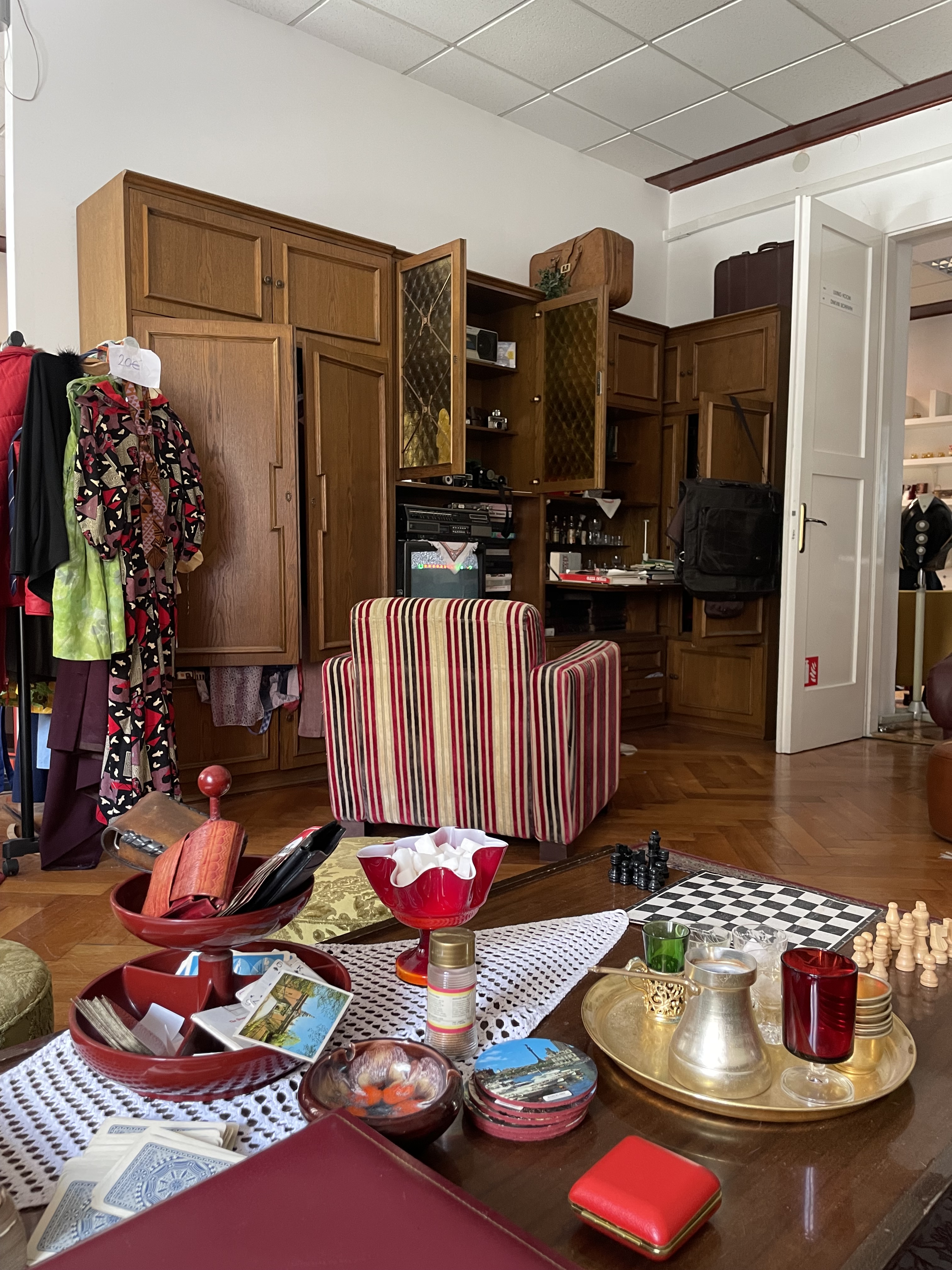
From the square, roads run up in long arcs to Zagreb’s Upper Town, lined with an endless flow of cafes, restaurants and shops that bustle throughout the day. Its eastern half is Kaptol, the seat of the Zagreb’s Catholic archbishop, while the west, Gradec, was the commercial hub, both dating back to the city’s 13th century founding. All this was laid out in the City Museum, a thorough, well-done and under trafficked affair. The overview of Zagreb’s past was complemented by the separate 80s Museum, a recent addition stashed into a 2nd floor apartment and filled with bric a brac intended to recreate a Yugoslav apartment of that era. It is a delightful and refreshing space, practically an indoor flea market, where a visitor is invited to touch any and everything and almost literally make yourself at home. A definite highlight of Zagreb for me.


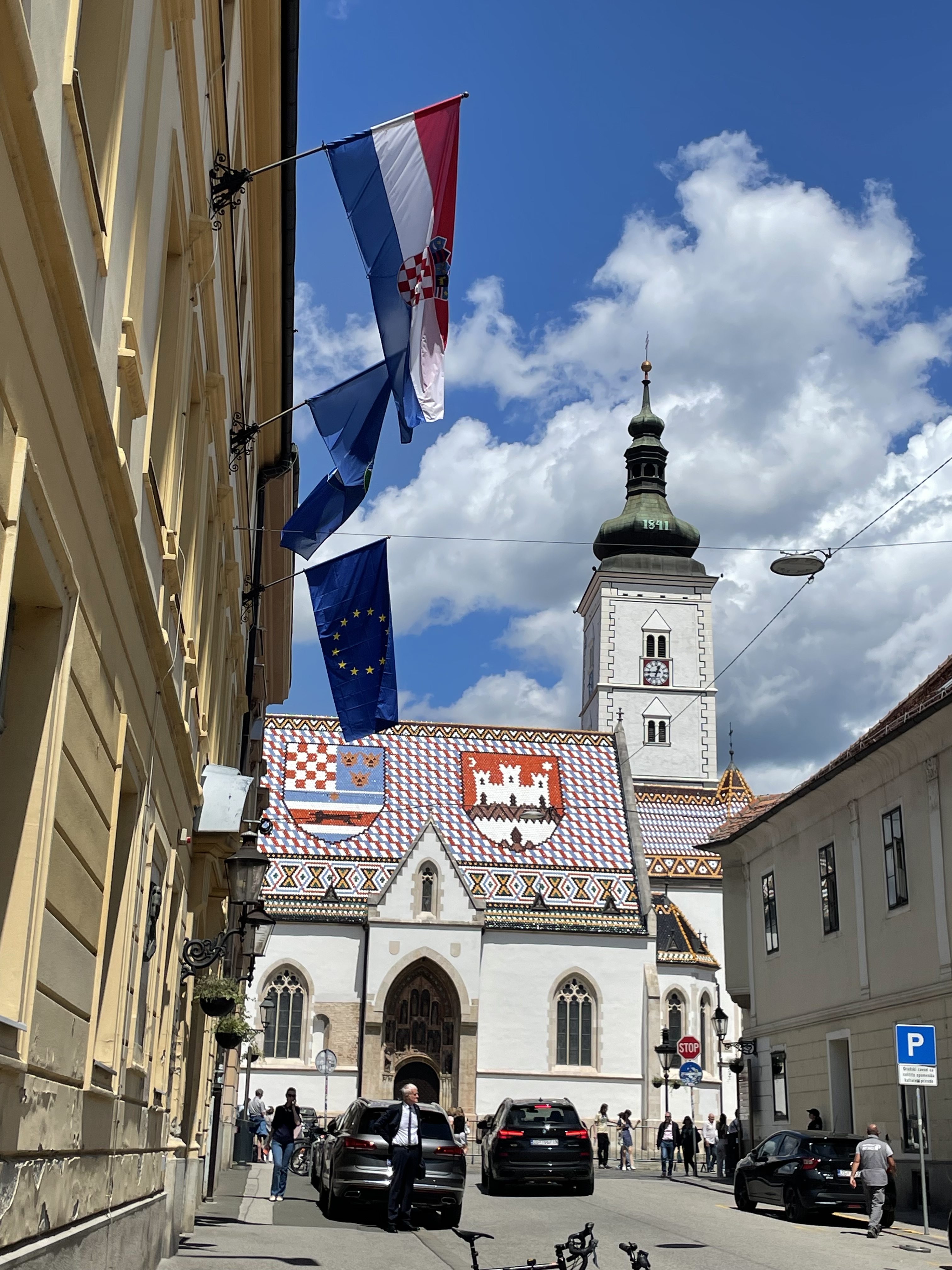
By my last day the rain was long gone, swapped out for unrelenting sunlight. I stowed my bag in a train station locker and spent the day ducking the heat with strategically placed café stops between museums. An unexpected win was the Tesla Museum of Science and Technology, home to a wide array of relics from the past century including early streetcars and part of the regional tug-of-war to lay claim to the peripatetic inventor. Another win was the Botanical Garden, also an Austro-Hungarian legacy with welcoming shade trees. Zagreb in a few short days struck me very much in transition. EU money is underpinning major restoration of the core, the new (or newly restored) constantly brushing elbows with the old. It feels forward moving, confident and self-assured.


That Saturday evening I climbed on board the night train, the first leg in a 36 hour multistage journey that would end with me flying home from Paris on Monday morning. In retrospect, this was ambitious and in planning, I had opted to splurge for the four-bed cabin. Imagine my surprise to instead step into a six-bed cabin where only four beds were sold. A disappoint to me and to the pair of Germans sharing the space, but it rocked us through the darkness. The cabin remained stuffy and I slept poorly, waking every few hours before disembarking that morning in Stuttgart. The train station remains a mess, victimized by the ongoing Stuttgart 21 project that was just underway when I was here last, in 2017, a mess of temporary signage and detours. I stashed my bag again, and caught a train an hour south to Tübingen.
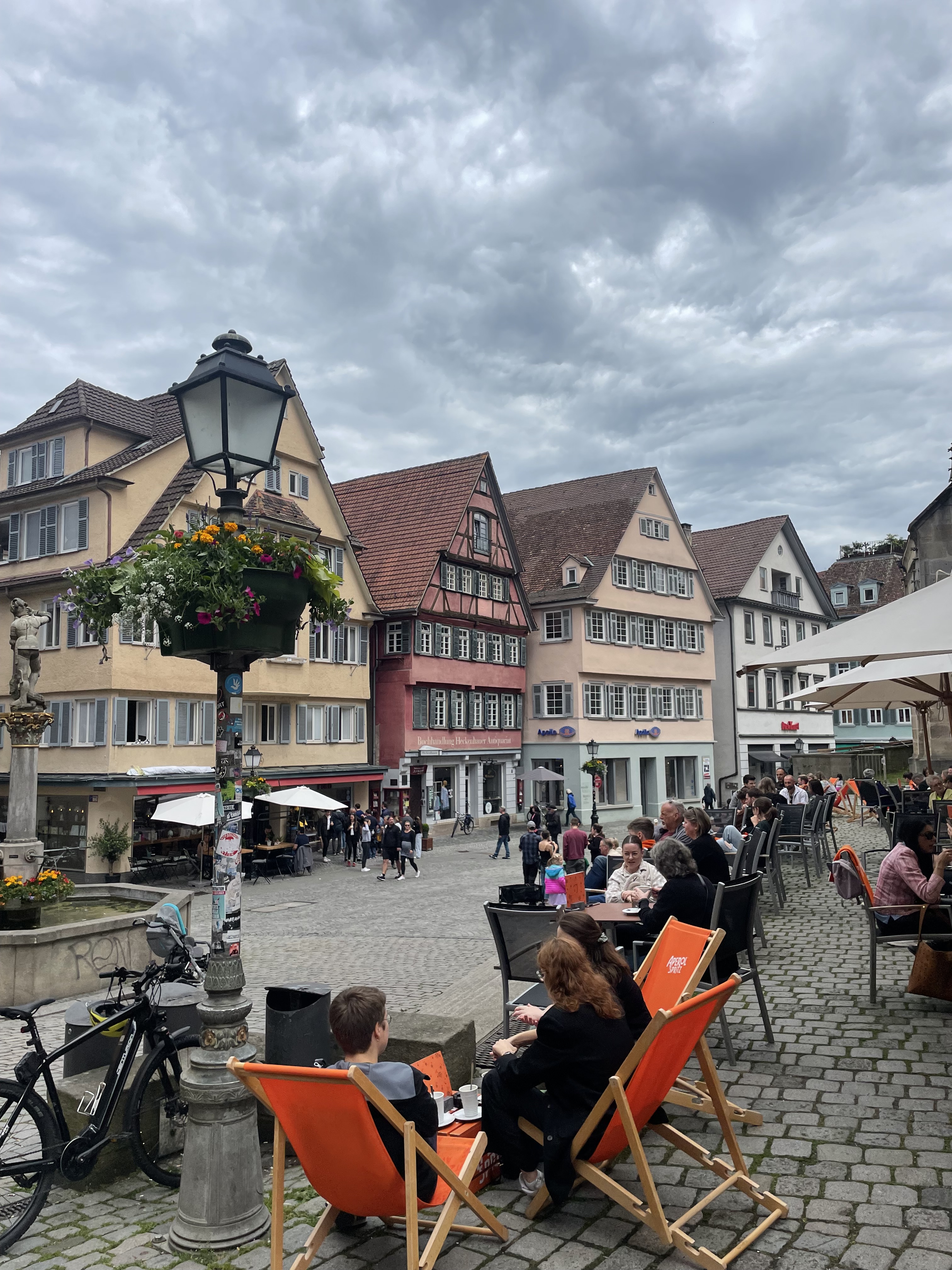


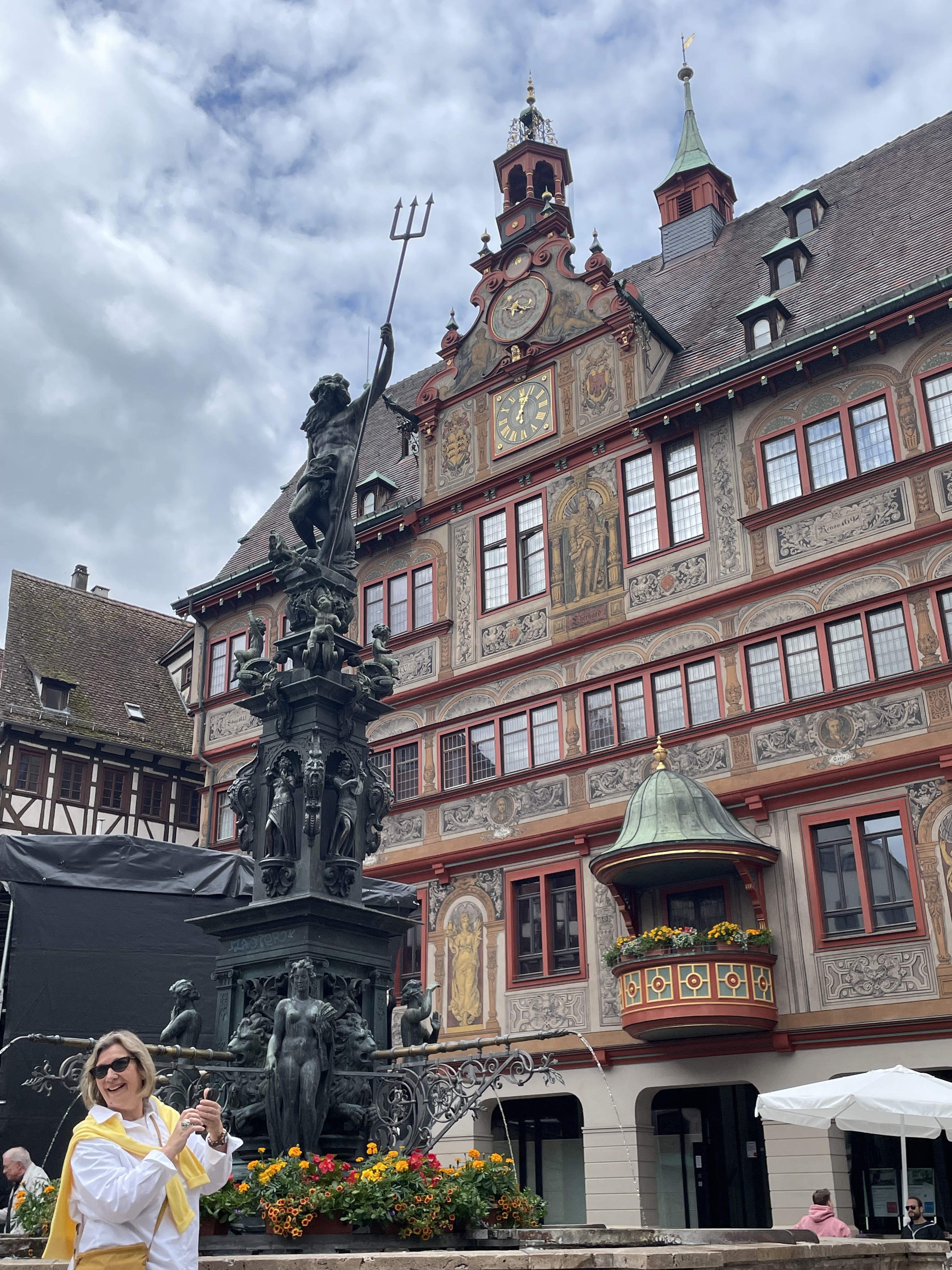
Tübingen, a small university that straddles the Neckar River, is where, 20 years ago, I lived for 6-month study abroad term, every day spent in intensive German class. I absolutely loved that period of my life but had not been back since 2007. The streets, quiet on a Sunday, are much the same as I remember, with a few places come and gone, but all still familiar. It is, of course, me who has changed and walking streets from my dorm room to school reminded me of how wide open the world was at that time, how big it seemed to grow every day before my eyes. Doors close, doors open, and nostalgia trailed me through the winding streets of the Altstadt. Leaning into memory, I stopped at the Neckarmüller biergarten overlooking the river, watching punters pole along the Neckar. Being back was moving, but life goes on. In a day, I would be headed back home. It was time to look ahead.
 Zak Abroad
Thanks for the writeup Zak. I always enjoy these!