Our first and only stop before crossing into France was near the Flemish town of Ypres, where we pulled into a small private museum known alternately as Sanctuary Wood or Hill 62. For Canadians, this is the area immortalized by the poem “In Flanders Field”, which combined with poppies worn on Remembrance Day form the core markers of this war in the public mind. The site preserves a portion of the property as it was during World War I, its ground pockmarked with craters and muddy trenches held up by rusting corrugated metal. The building itself is an odd assortment, featuring a café and a second building, clearly an old house, filled to the brim with various bric-a-brac from the Great War. The narrative of events is left unclear but its outcome is marked at either end of the road by a Canadian memorial and cemetery to the dead, many of whom remain unknown.

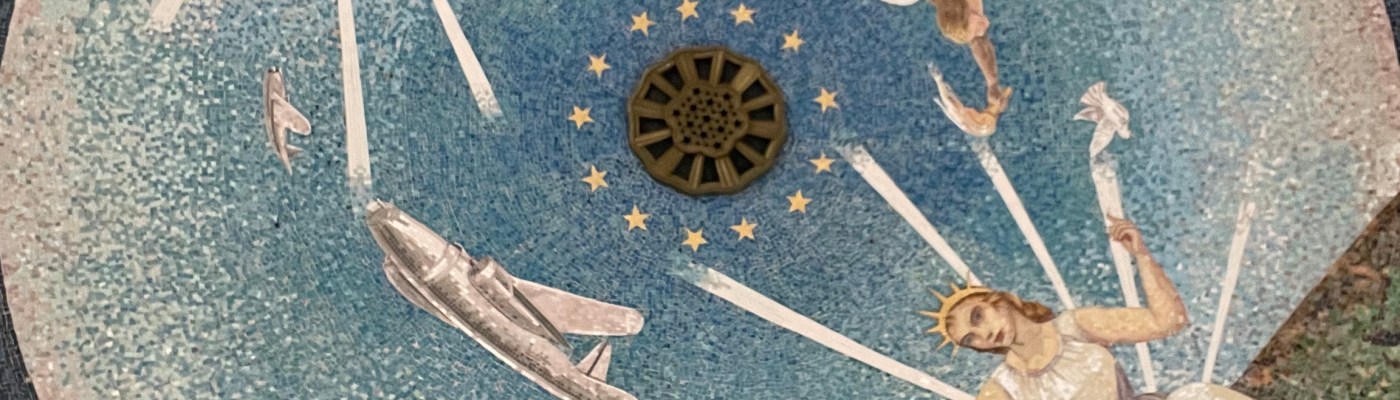
Passing into France was a nonevent, with just a small blue sign, with requisite yellow stars, announcing the frontier. Forgetting that it was Sunday, we had made no plans for nearly every shop and restaurant being closed, leading to a late lunch at McDonalds before we packed it in for the day at the small but pleasant Neufchatel-en-Bray. The Normandy countryside is peaceful, marked with low rolling hills and long vistas, occasionally punctuated by a woods or river, such as the dramatic arched crossing at the mouth of the Seine near Le Havre. Sheep and cattle wander in flocks between mistletoe trees or sit next to fences, unfussed by the passing Citroens, Renault, or our Skoda.
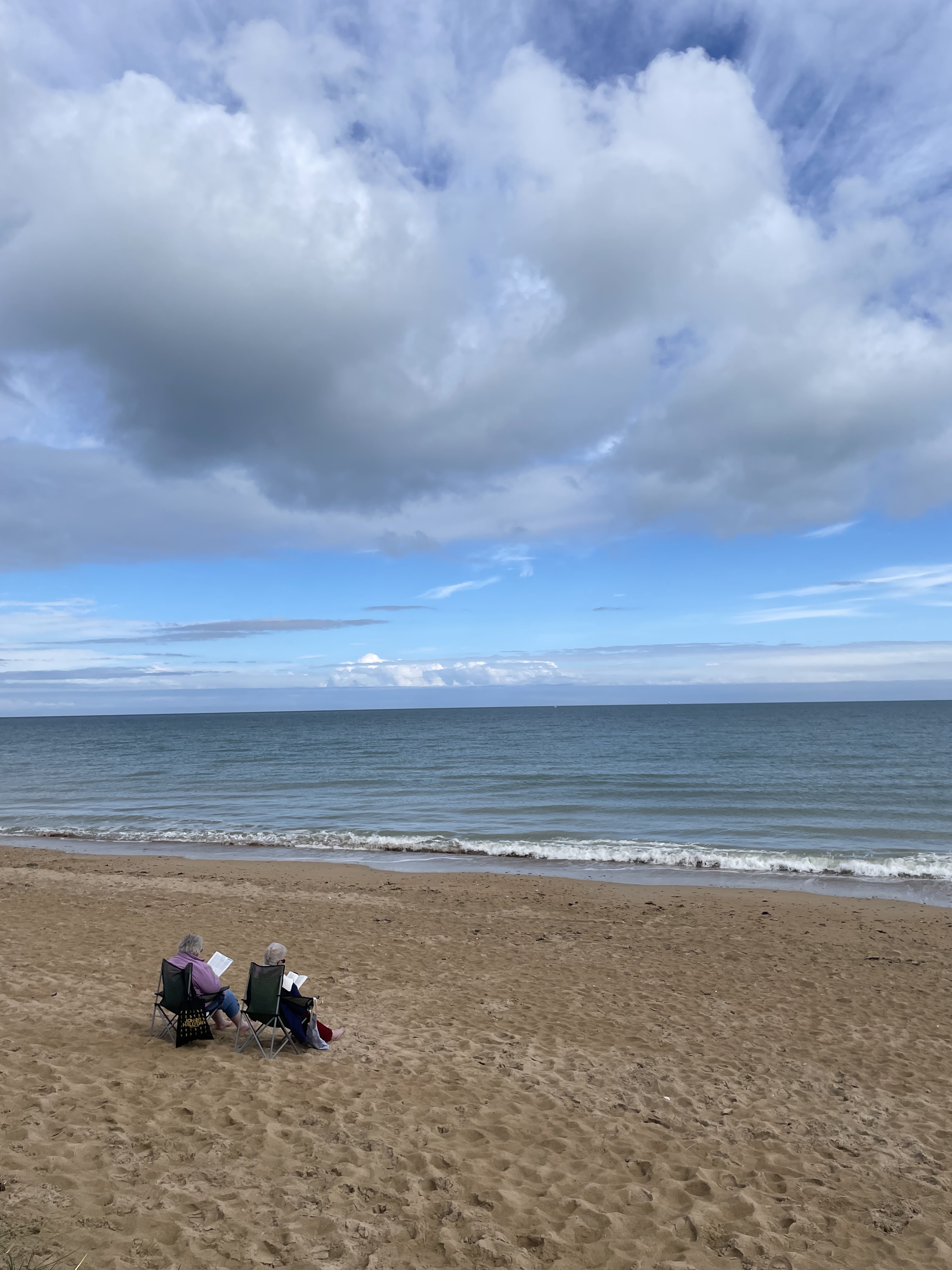
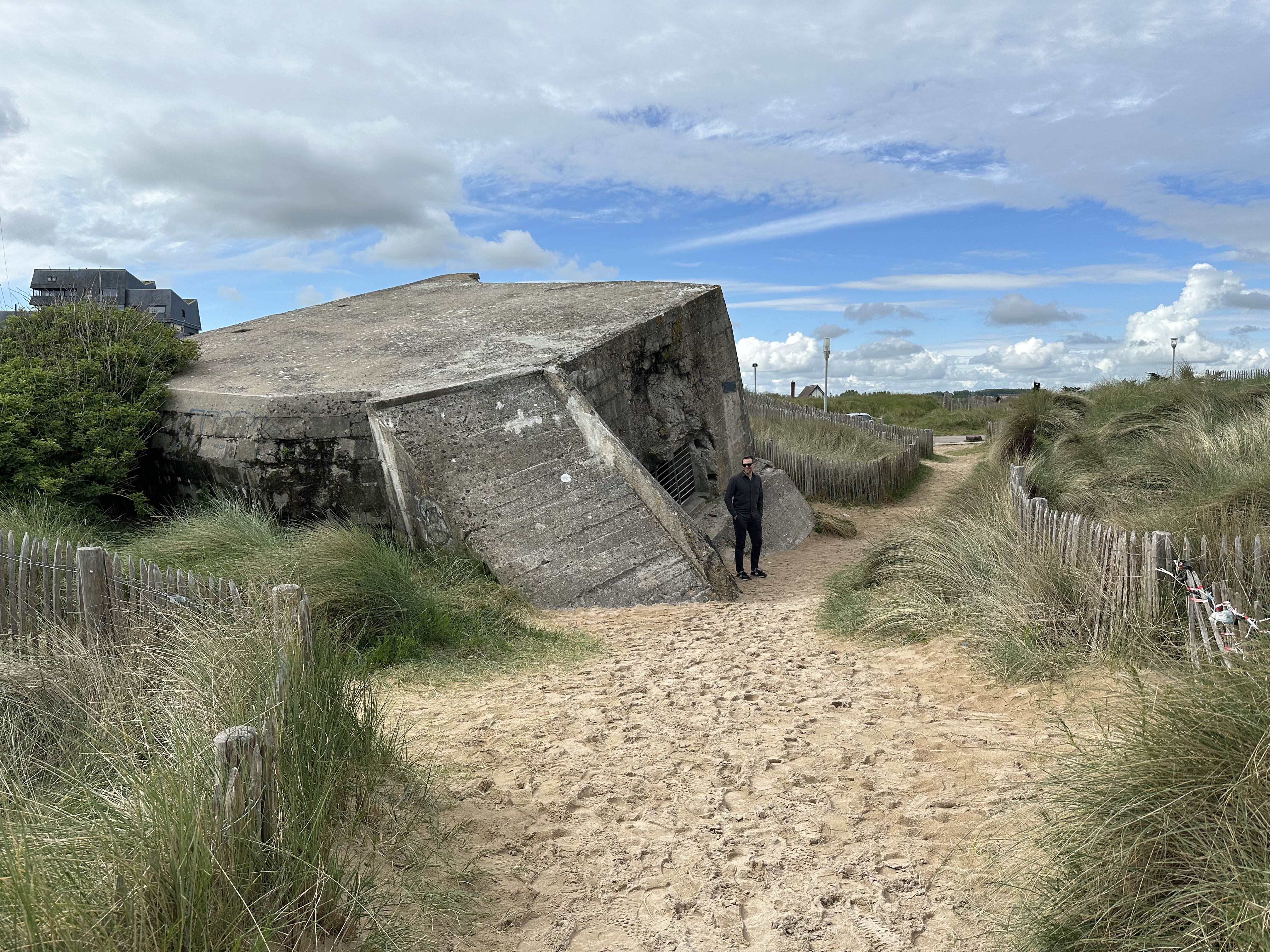
Five different beaches mark the D-Day landing zones, and our first stop was Juno Beach. Canadian soldiers made footfall on the sands of this narrow beach in the early morning of June 6, 1944, trading in the roiling waters of the English Channel for German guns and mines. We stopped in Courseulles-sur-Mer, a small seaside town just past the reinstated sand dunes and in the shadow of a ruined Nazi battery sinking unevenly. The sun was bright this morning and the only people around were a pair of women in beach chairs reading quietly. It is hard to square the peacefulness of that scene with its recent past, but perhaps that is the point.
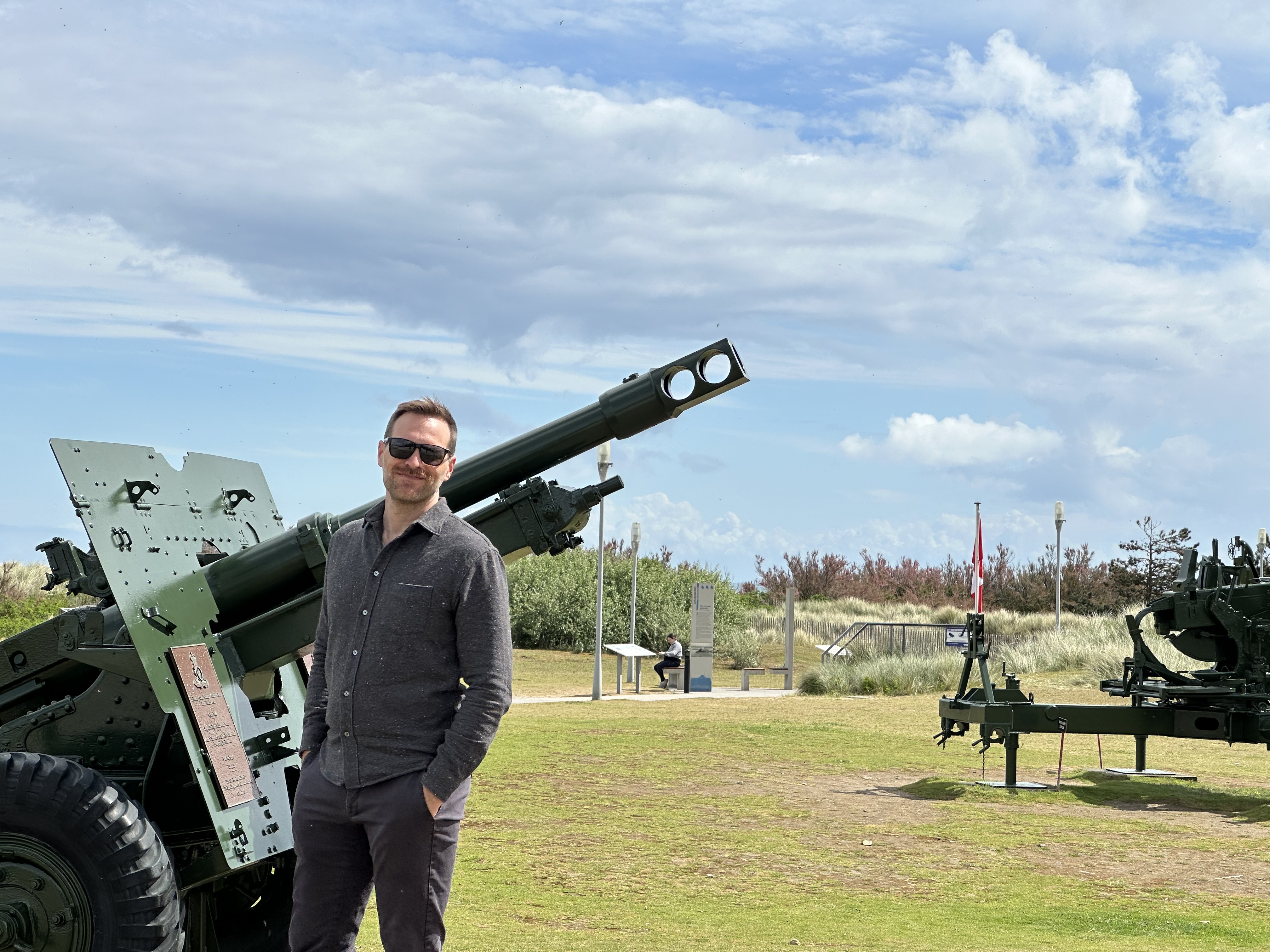
Slightly inland is the Juno Beach Centre, operated by the Canadian government and speaking to Canada’s role in the war and in particular how it affected the young nation. At the end of the museum’s exhibitions is a short film summarizing Canada’s actions at Normandy which tries to end on a sentimental note but only reaches a maudlin. The effect becomes more jarring as you head out through the gift shop, a bastion of Juno Beach shot glasses and placemats. While I don’t know how well Canadians know this history, it is very much alive and present in Normandy, where the maple leaf flag can be found flying from many towns and memorials.
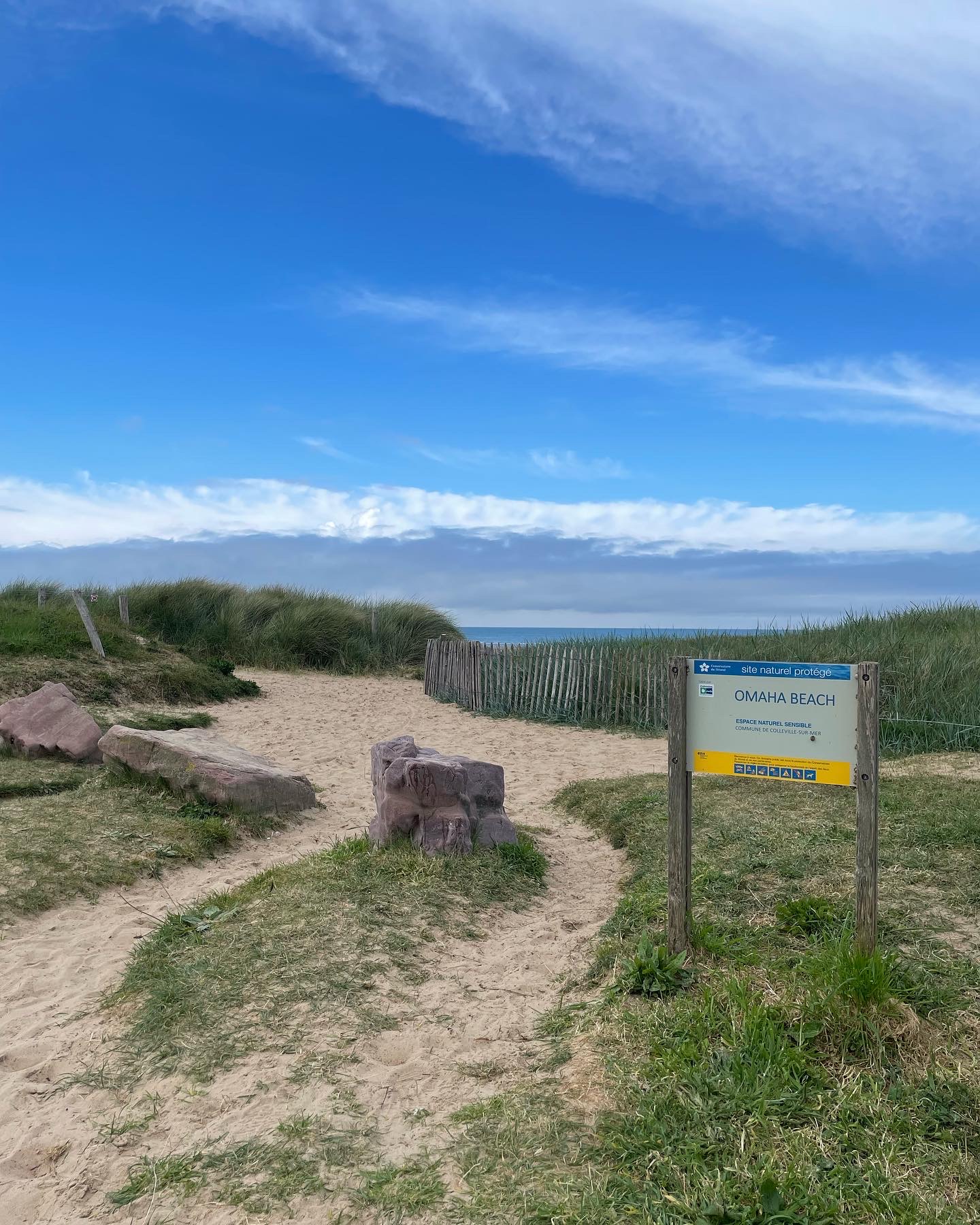

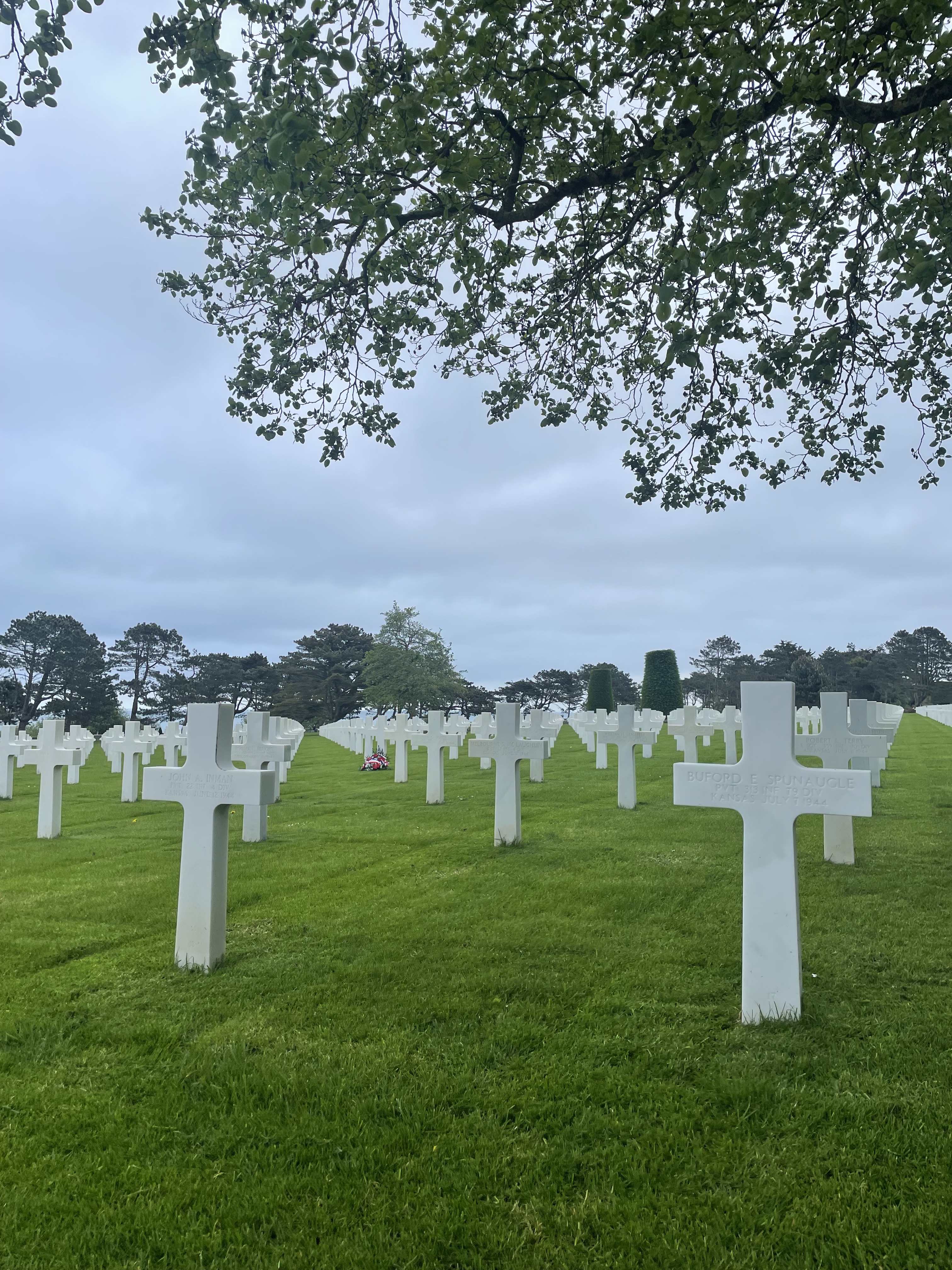
Among the American beaches, we picked Omaha over Utah. Landings at Utah Beach had been pushed off course by weather, ultimately resulting in an easier landing with relatively few casualties. Omaha Beach was the opposite, with soldiers arriving on target and directly into the teeth of German defenses, exposed over up to 400 yards of open sand. The American sacrifices on this day, and those to follow in the Battle for Normandy, which raged for months, are on stark display at the American Cemetery. It was here too where we really encountered mass tourism, a parking lot crowded with tour buses, shuttles, and camper vans. Generally people are respectful, and while I can’t quite get behind the hats and jackets being worn to celebrate the landings, everyone I saw treated these spaces with solemnity.
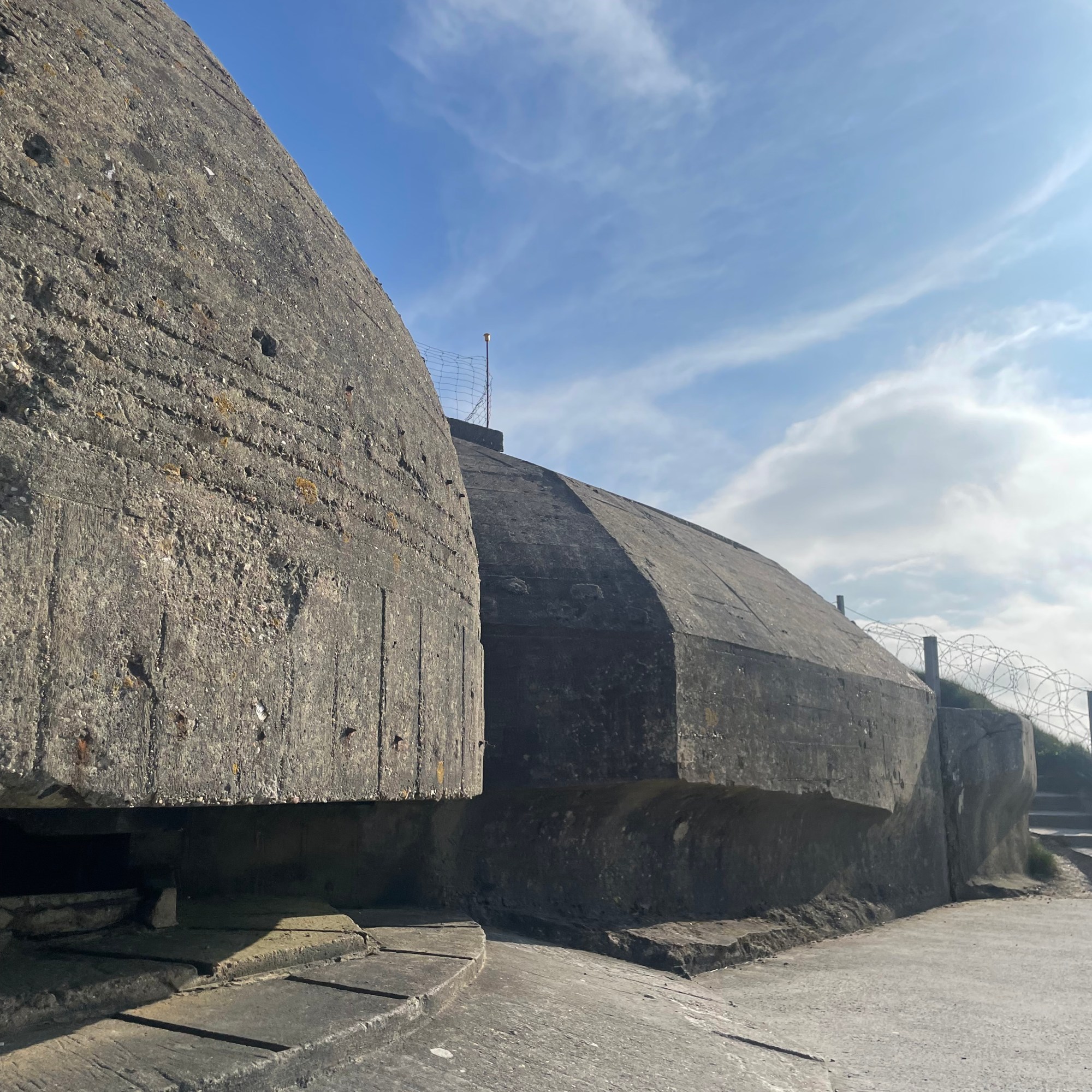

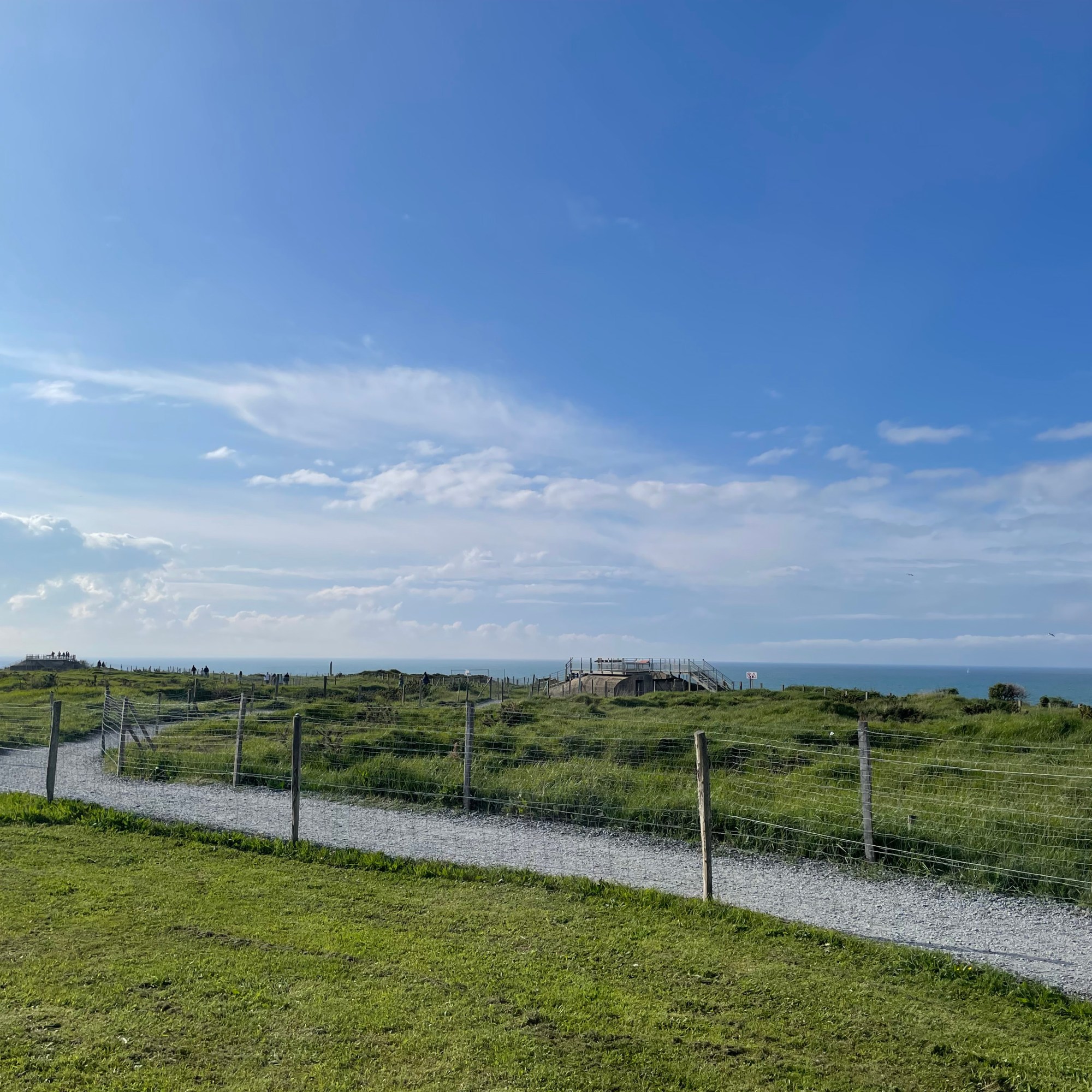
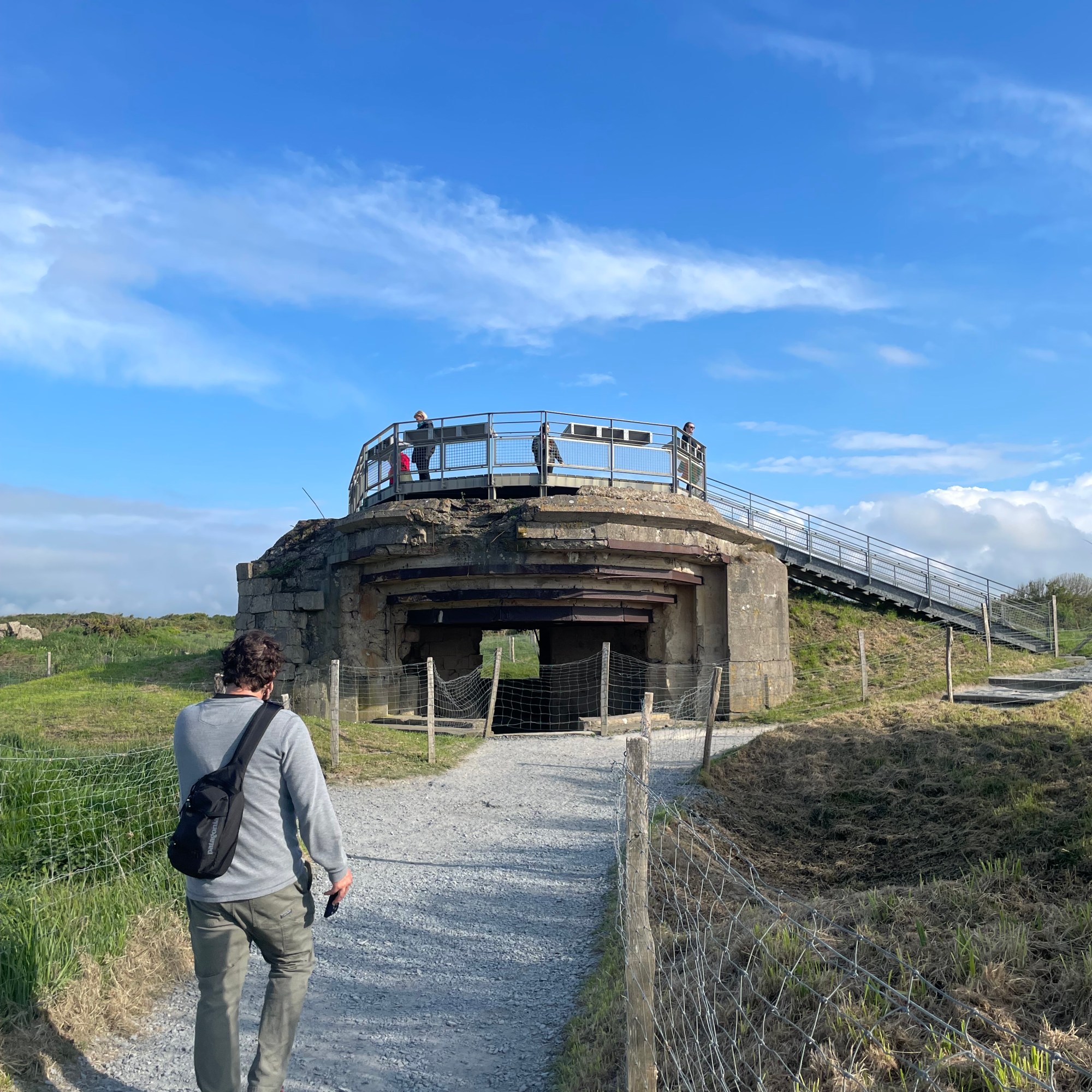
The last big stop we made in Normandy was at Pointe du Hoc. This is a set of sheer cliffs facing the sea, nestled between Omaha and Utah Beaches. It was also an emplacement for German defense measures, with clear sight lines to both beaches. This potential threat was not lost upon those planning Operation Overlord and a Rangers detachment scaled these cliffs on D-Day, fighting inland to disable the guns and eliminate this threat to the troops arriving below. Today it is quiet but the network of bunkers, gun casemates, and pillboxes sit well-preserved under the Norman sun and a light breeze. All around is bird song, cooing doves and magpies flashing by, and it’s almost possible to forget what happened 80 years ago.

Ultimately Normandy is overwhelming. The scale of the Allied invasion was unequaled in history, a single opportunity that would either succeed or fail, with no in between. Beyond the beaches, Allies and Nazis fought for months to take hamlets and towns, to extend their lines, to batter the enemy. Today these towns are stoic, small collections of square Norman houses with pitched roofs that seem to hold their memories. Each has its memorials, with scattered ruins and cemeteries in between them. In my lifetime these places, and their stories, have passed from living memory into history. I can’t imagine what that was to go through as a young man.
 Zak Abroad
Well written, Zak. A reminder of the horrors of that day and that war. So many lives sacrificed