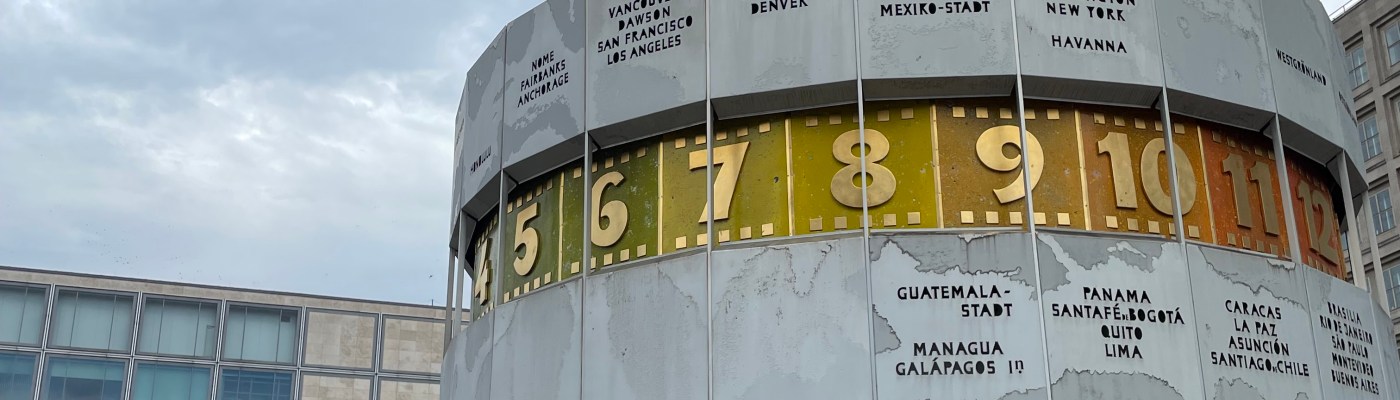
I’m a restless traveler. I don’t like sleeping in and the idea of a full beach day makes me deeply fidgety. Given the choice, I’d rather be out in a city, town, forest, mountain – somewhere – moving my feet. This used to manifest as constantly going from one place to the next, wanting to see more, more, more, often allowing two, at most three days for any given spot. I have slowed down now and get more out of digging deeply into a place. So Berlin was a five full days, no day trips, no extra overnights. Just lots of walking, up and down kilometres of pavement and through parks, on and off the yellow trains that tie the German capital together. I can’t think of a better way I want to spend my time. Berlin is a perfect canvas for my hungry impatience.

In stark contrast to Vancouver, Berlin is filled with more museums and galleries then we could possibly find time for. Hannah’s list of galleries, built only on research and recommendations, was easily over thirty. The Boros Collection, a private art collection, was the top of our list. The stark concrete structure, looking like an electric substation, was built with slave labour for the Nazis as an air raid shelter. After the Third Reich’s inevitable victory, it was to be converted to a memorial. Instead the building was reborn as an East German warehouse. Bananas from Cuba, a rare commodity in East Berlin, were stored here for the well-connected, and East Berliners apparently would slice a single banana as a shared treat. The wall fell and the building, derelict, became an underground rave and tagging hotspot. Its transformation into private real estate nicely caps off Berlin’s own over the past century. Tickets pre-booked, we were led through the contemporary art collection. I was thankful to have a guide – some of the work on display is quite conceptual and without any context could look a late Sunday afternoon garage sale. All the same, Boros was a great stop and a welcome counterweight to the hundreds (thousands?) of Renaissance works we had just seen in Italy.
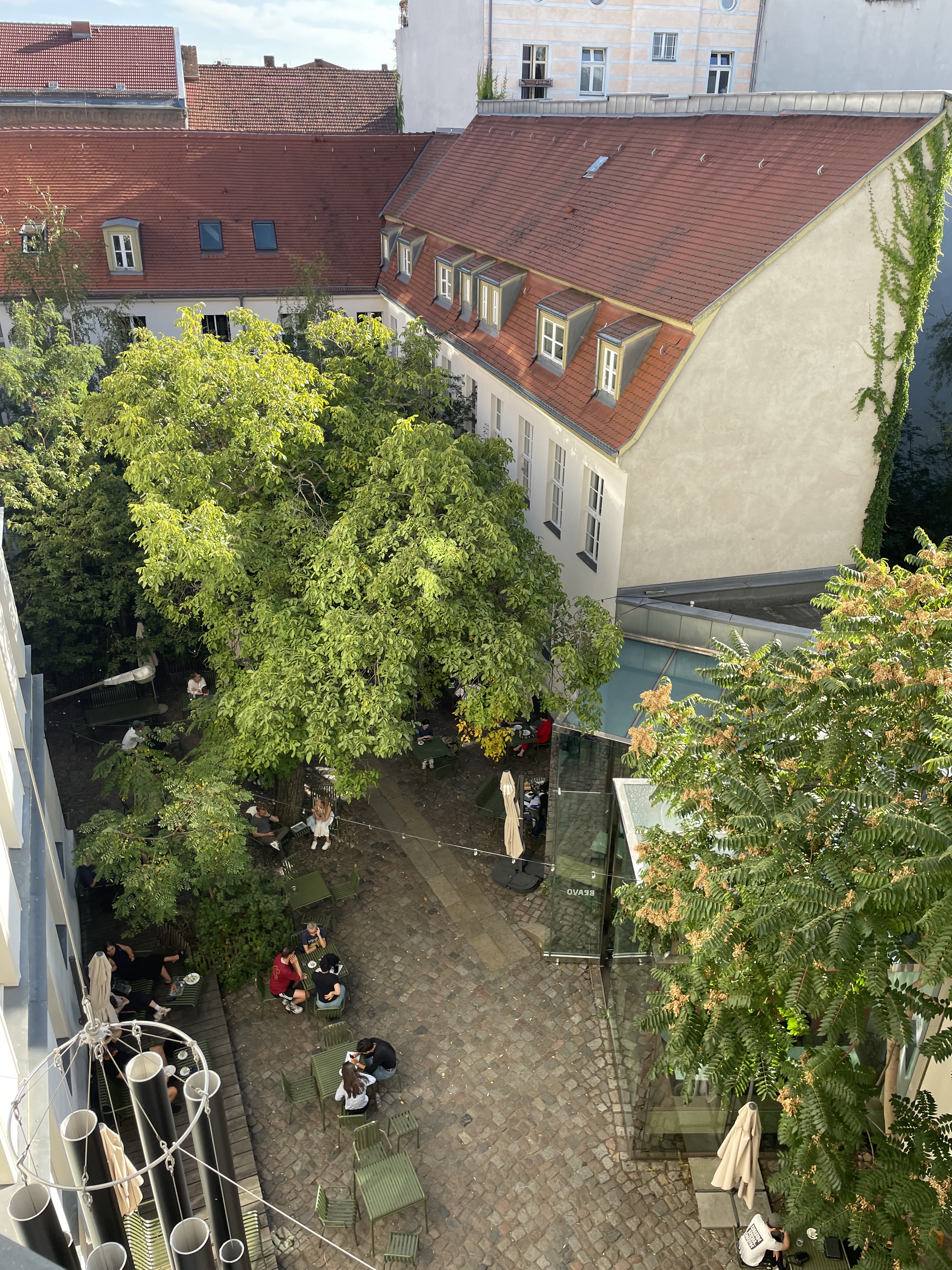
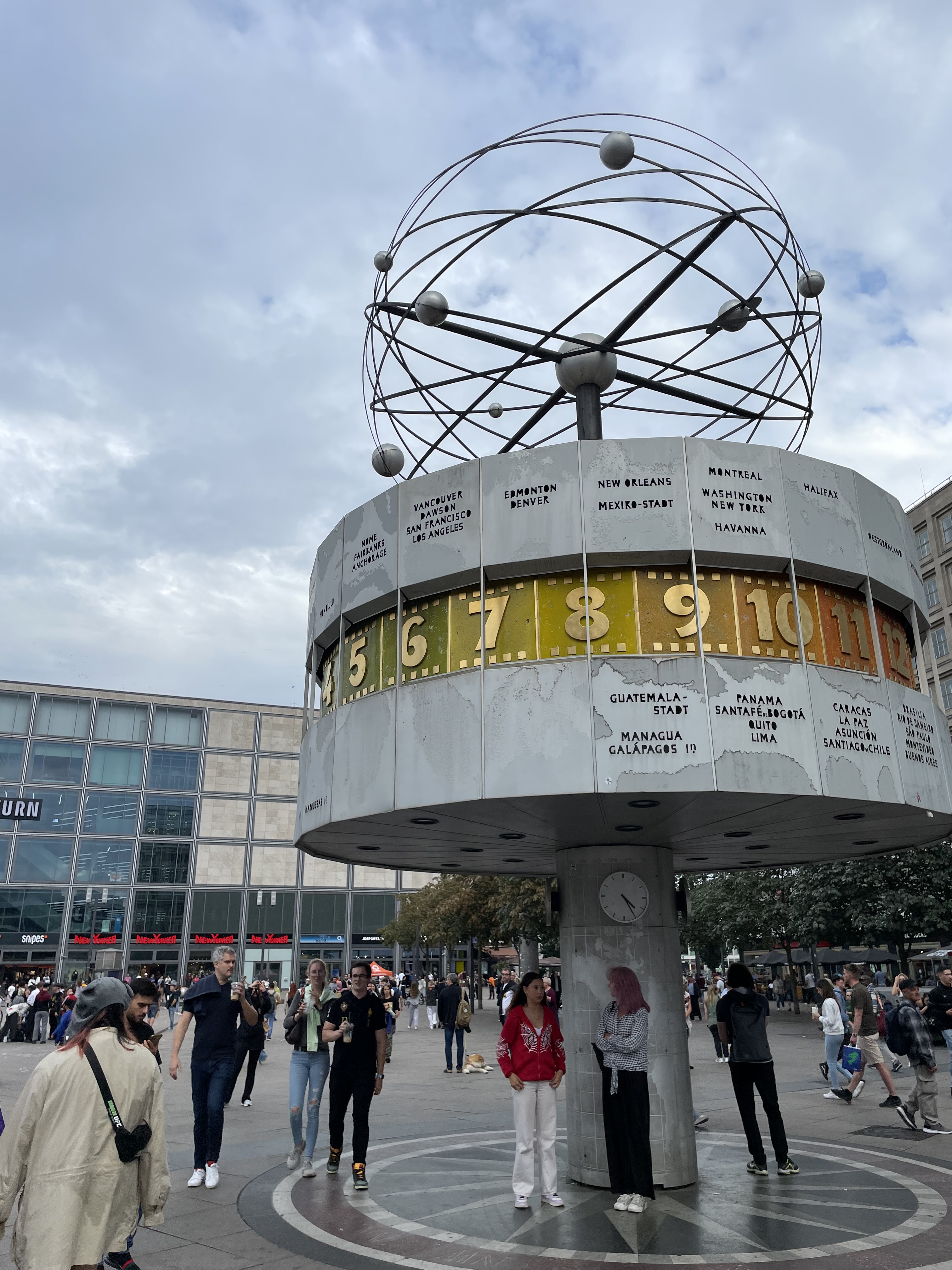
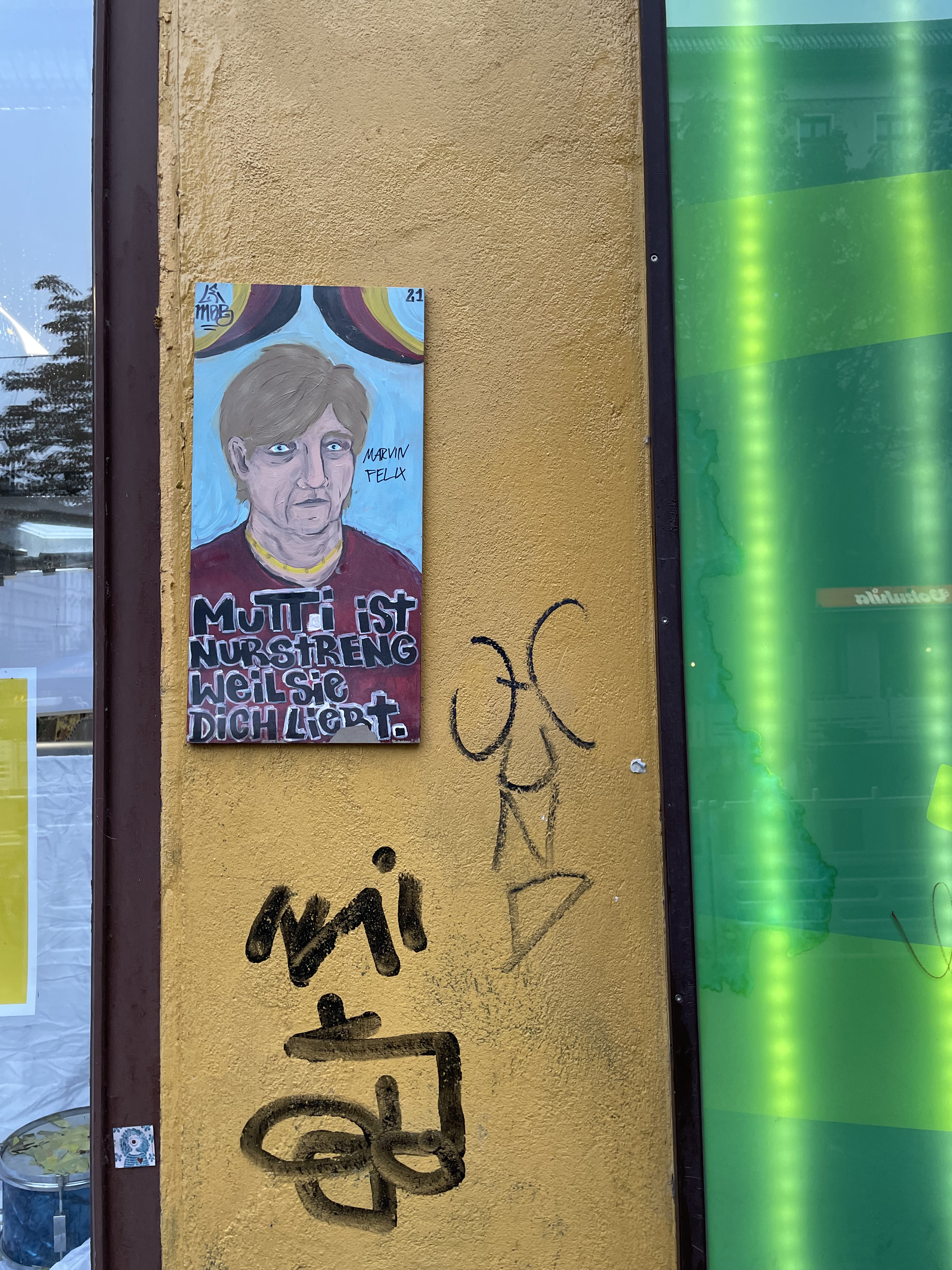
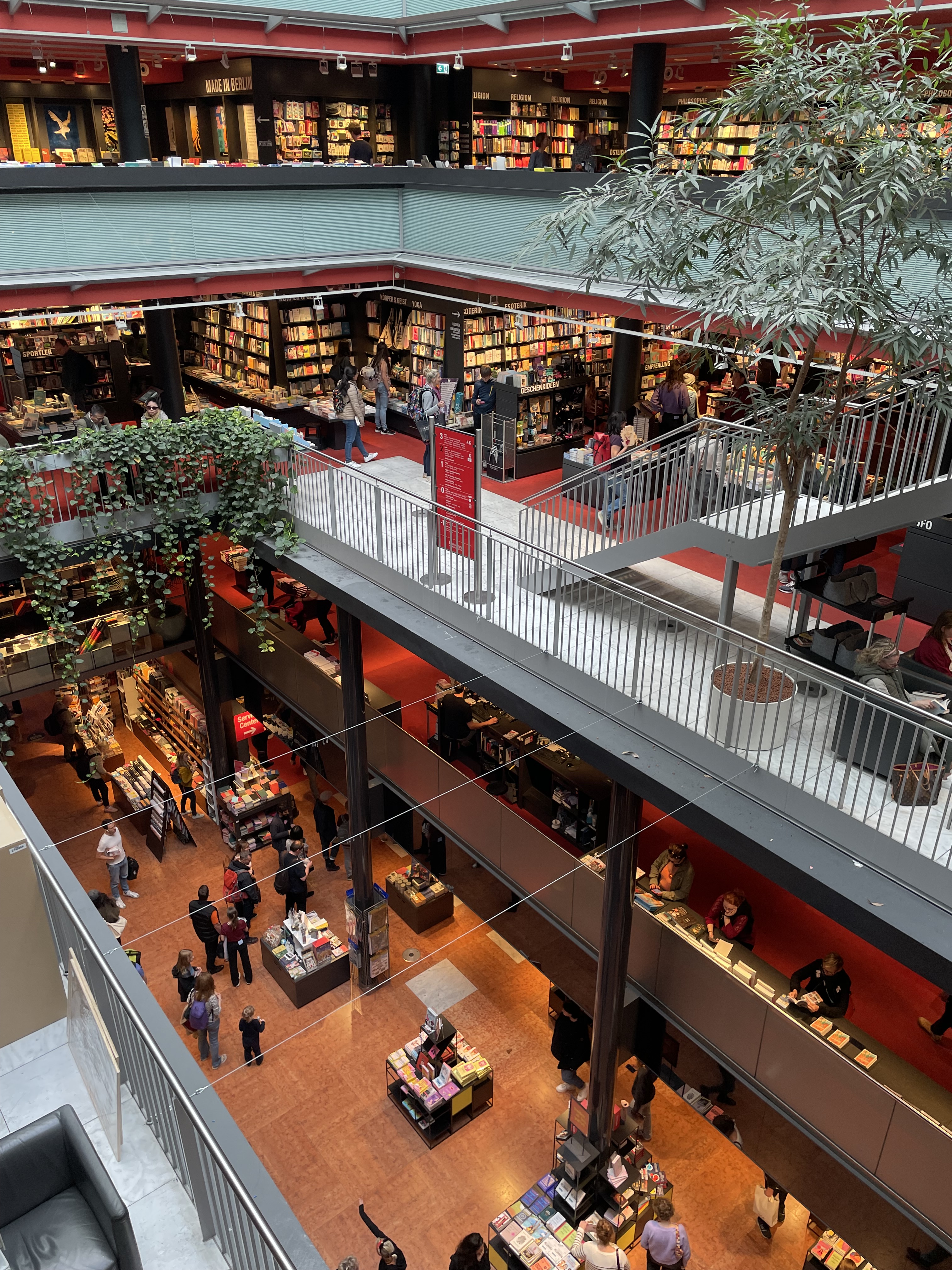
Expansiveness is part of Berlin’s appeal. Long, winding streets thread endlessly through neighbourhoods that quietly bleed into one another, a constant invite to keep going. When on the road, Hannah and I often split up for part of the day. This time we parted ways at Berlin Zoo station, Hannah armed with her laundry list of galleries, and me dodging a drizzly sky between bookstores. One, Bucher Bogen, is nestled beneath a series of gently vaulted cream bricks, under the rumble of an S-Bahn, and stuffed with architecture, design and assorted non-fiction. English is uber alles in Berlin, and Germans will switch to it at the first sign of linguistic weakness. When Hannah and I are together, mumbling to each other about a croissant or a cake at a bakery, I get it. We tipped our hand early there. But on my own I’d like to think I have a fighter’s chance of speaking some German and generally I got more benefit of the doubt when solo. This didn’t stop a bookstore cashier at Schoeller Bucherstube from ringing up my German book in English. No mercy.

Sometimes I like to pick a theme for a trip or a place. For Berlin, it was East Germany, the former Deutsches Demokratisches Republik, or simply the DDR. It was just a topic I didn’t know much about. Conveniently, a number of local museums focus on the DDR, including an eponymous museum offering a well-curated contemplative walk through daily life in the former Socialist republic. State structures, unions and the Stasi are all touched on, but it was the everyday life – food, media, music, Trabants – that was more evocative. The DDR Museum was housed in the Kulturbrauerei complex, an arts and culture space filling transformed brewery, a staple of deindustrialized Europe. In the same complex was a show by photographer Bettina Flitner. She had visited Mestlin, a DDR model village, in 1989 and again in 2014, asking residents the same question: how do you feel reunification? Summed up, feelings are mixed, depending who you ask. Rounding out the theme, the Berlin City Museum had a deep dive into expatriated East German singer Wolf Biermann. All of this, along with the nearly ever-present Fernsehturm, helped scratch my post-Socialist itch.


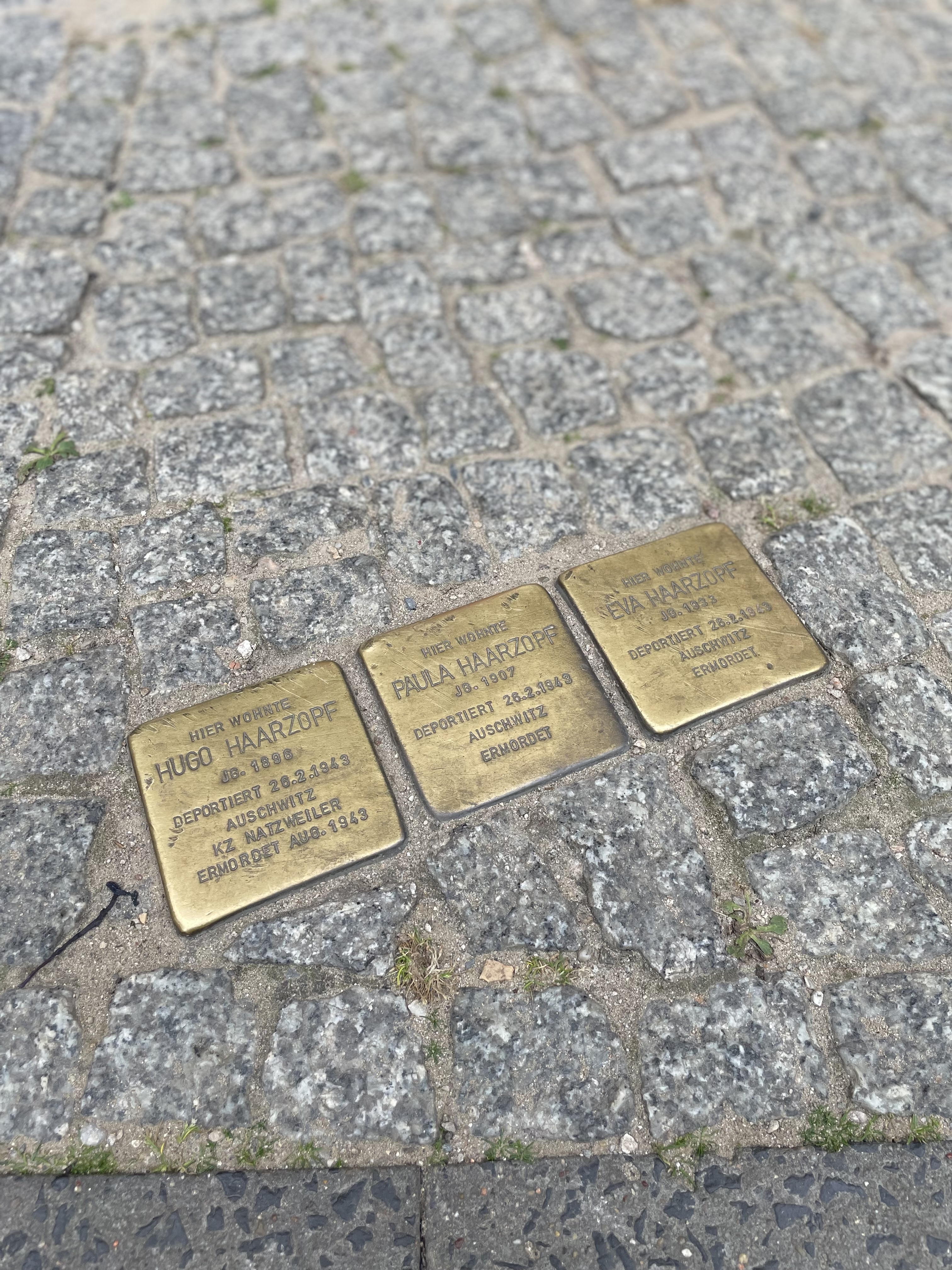
Berlin’s recent history is complex, to put it mildly. World War II, and particularly the Holocaust, mark the city. The Holocaust Memorial itself, filling an entire block south of the Brandenburg Gate with undulating, alienating grey blocks, is the centerpiece and houses a good subterranean museum. More moving were the stolpersteine, stumbling stones, that are scattered throughout Berlin. These small brass squares, nestled into the sidewalk, mark out addresses where Holocaust victims lived. The stolpersteine are intimate, immediate and personal. Each tells a story its own short and chilling story. Headed to a museum, I passed the the stones of the Haarzopf family: Hugo, Paula and their 10-year old daughter Eva. There home was on Schonhauser Allee before they were deported to Auschwitz on February 26, 1943. The entire family was murdered in the camps. These affecting stories are repeated on different streets, with different names and fates, in front of different homes, across the city, testaments to the individuals and families swept up into an enormous tragedy.
Our last day was typical, starting up with a coffee and pastry before a walk. Our destination was Mauerpark, a greenspace reclaimed from the former no man’s land where the wall once stood. En route we passed by a Spanish tour bus group wandering around a stylized Berlin Wall memorial, cameras in hand. It’s easy enough to take pictures in front of the Colosseum, it seems odd to take one in front of these recent monuments so tinged with tragedy. Onward we went, reaching our destination, the Mauerpark’s sprawling Sunday flea market. I love flea markets, they’re a window into people’s lives, all emptied attics and dusty junk bins laid out and looking for an offer. So much bric-a-brac, a delightfully contained eruption of chaos, table after table. True to my theme, I found a memoir of an East German during the transformative 1990s, my souvenir.


Another day I headed out for a mid-afternoon stroll, straying from Mitte into Prenzlauer Berg. Walks are a space for discovery and I found not one but two antiquarian used book stores on the same block. I left both empty-handed, overwhelmed with choices and paralyzed by indecision. This was a bad call – neither was open the Sunday I went back. My wandering ended at Arkonaplatz, a small, typically European park, all gravel paths, benches, plane trees and geometric lines. The local market was in full swing, assorted stands with snacks, butchers, produce, and, of course, cheesemongers. Young kids swarmed on push bikes, older ones peddled unsteady circles around adults talking on benches. I don’t know that I could draw up a more idyllic picture of city life than this. That night, we circled back to what had become our neighbourhood wine bar, a dim space with a pressed tin ceiling and dark wood tables under jaundiced lights. We sipped wine and the sky turned to ink.
 Zak Abroad