Initially I was considering a pair of daytrips outside of Rome during our six days there, in addition to the wedding-related activities we were signed up for. After a few busy days, I realized that would be a thorough over-commitment and a surefire recipe for trip burnout. So Naples, specifically Pompeii, landed on the editing room floor, pushed out in favour of Florence. The deciding factor for Florence was spending some hours with friends of ours visiting from Toronto. There are apparently a few tourist draws too, a completely reasonable thing given its seat as the cradle of the Italian Renaissance and the overwhelming volume of architecture, art, and history that crowd the city’s narrow streets. Decision made, we set out from our apartment to Termini to catch our train.
At my insistence, we rode Rome’s trams. This was a mistake, a slow, crowded and stuffy one and I gained an insight into why Romans, for all the hassle that it must be to drive (and park) in the Eternal City, choose it over other options. The experience was so grindingly slow that we hopped off early so we could aggressively speedwalk to, and then around inside, Termini station. It was a relief to find our Frecciarossa and within a few minutes we were on our way. Italy’s high-speed train network has completely transformed travel through the country, and in just over an hour and a half we arrived in Florence. This is down from nearly four hours and much as I like my friends, there was no way we were going to spend 7 or 8 hours on a daytrip to visit them. Point, Italy.
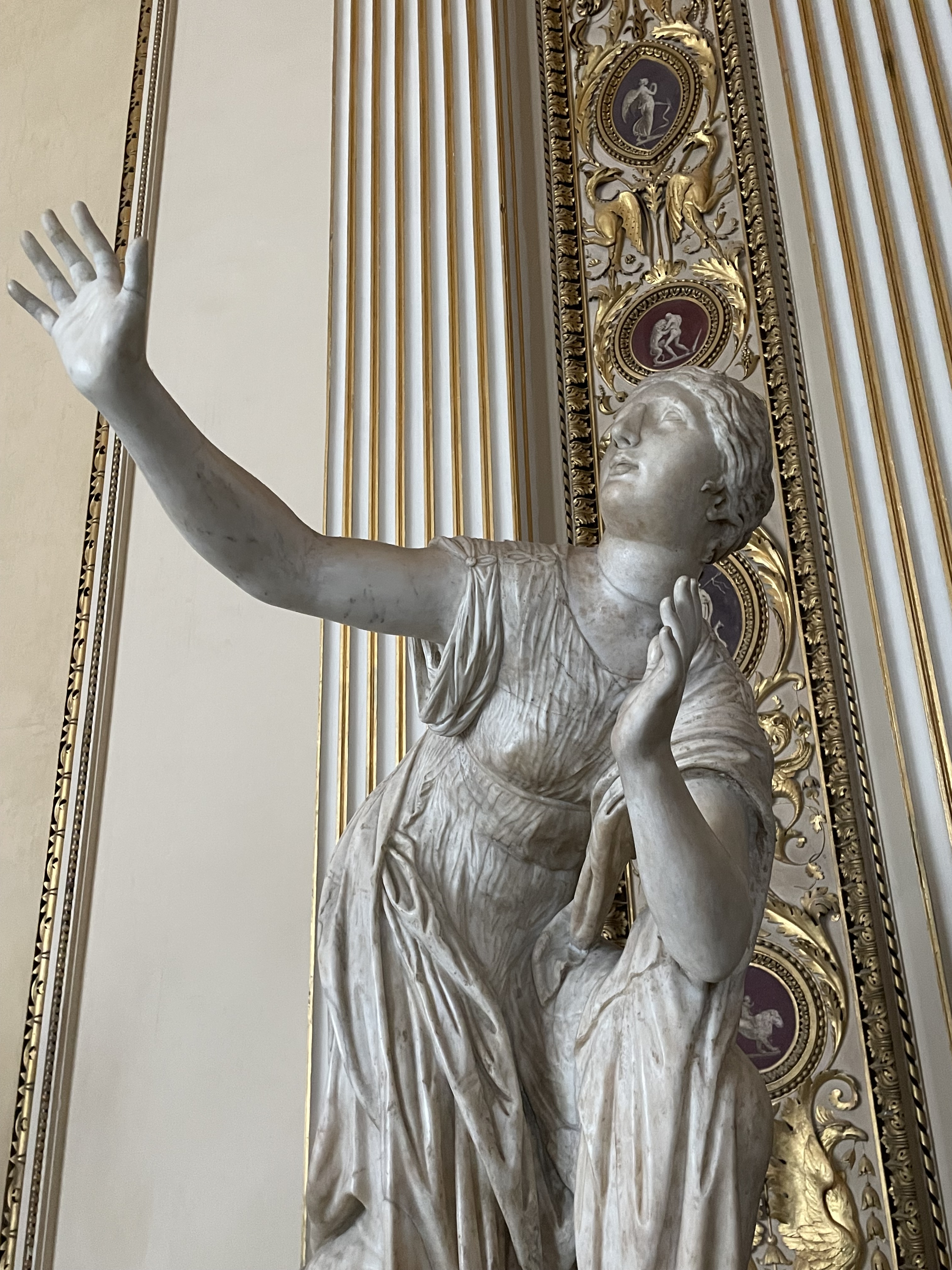
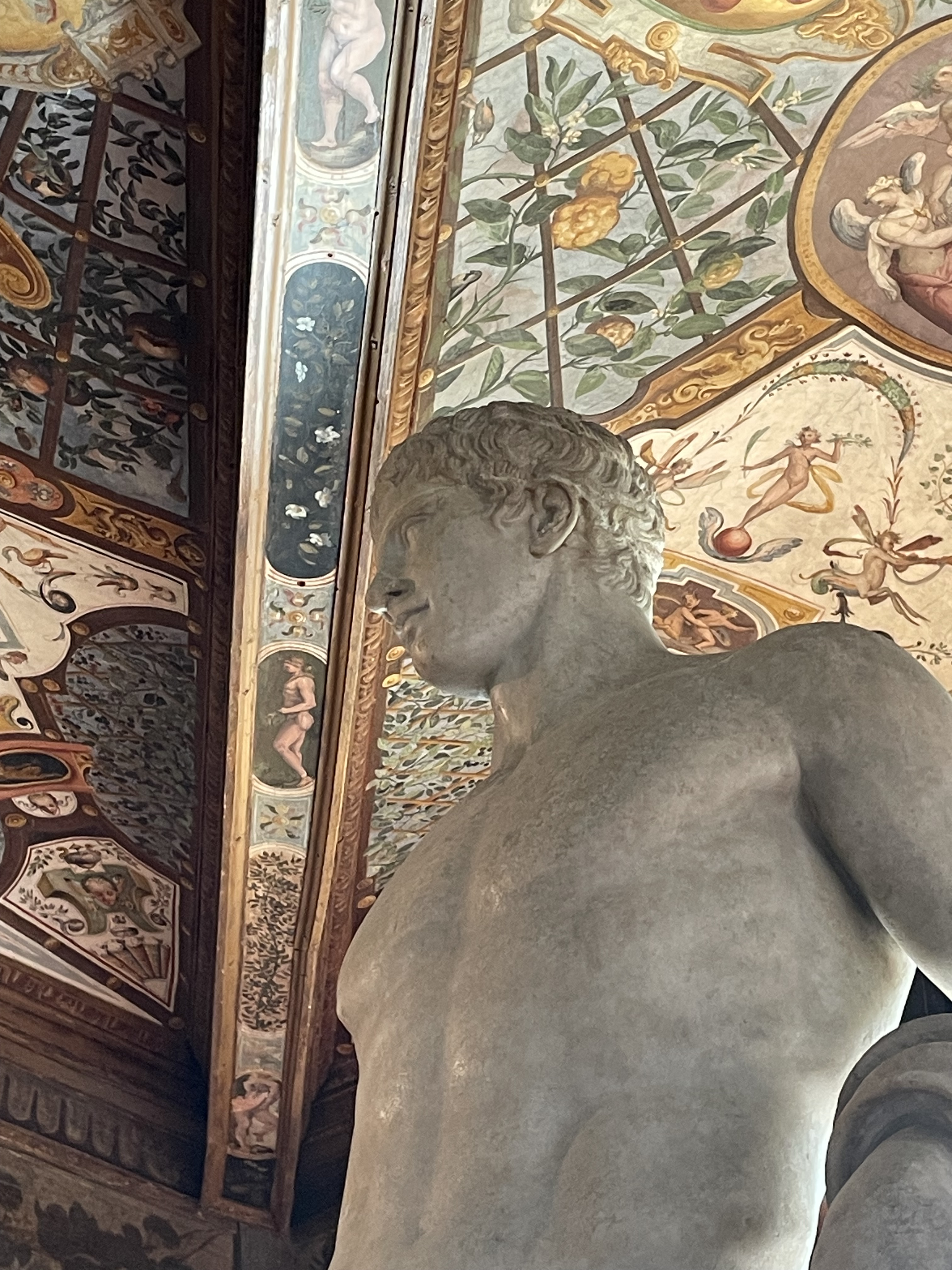
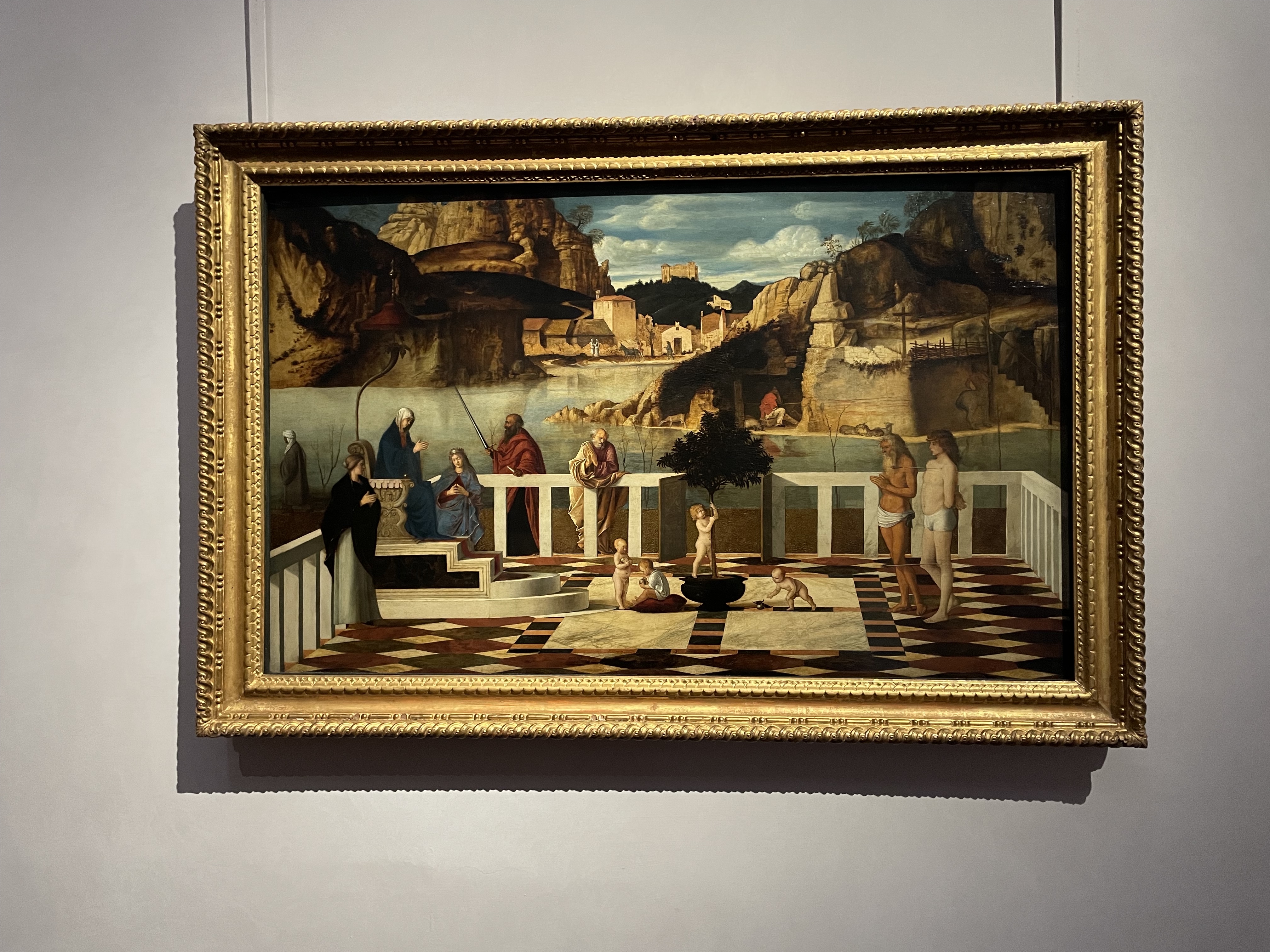
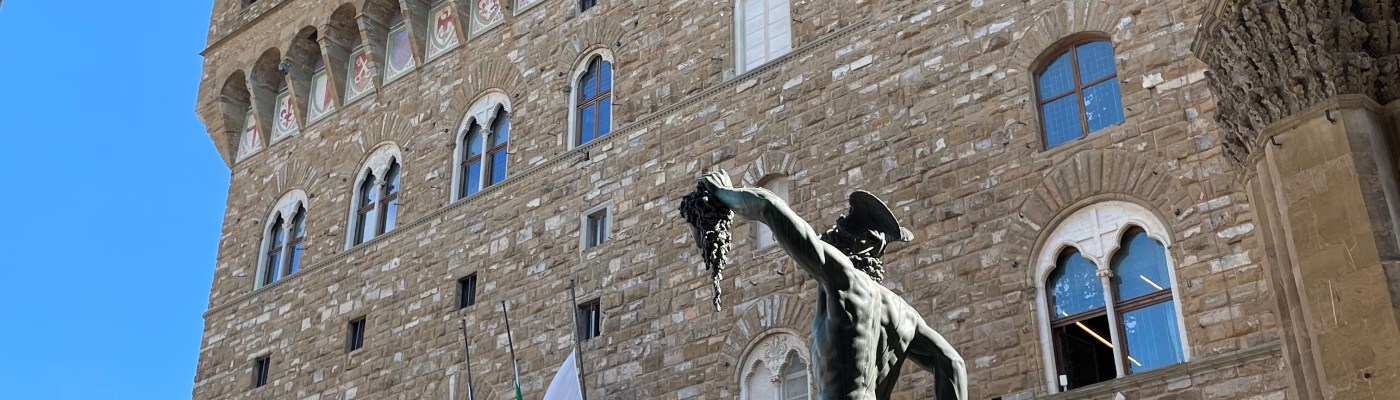
We did build in some sightseeing, snapping a few pictures of the Duomo before trying to flatten myself against a wall as flag-led tour groups moved like schools of fish. I just wanted to finish my panini. For our big activity, we opted for the Uffizi Gallery over the Accademia. The latter is home to the Michelangelo’s statue of David, however a reproduction sits out in a plaza, which, on a tight timeline, was good enough. The Uffizi inherited the art collection of the House of Medici and began to take tours in the 16th century before becoming a full-fledged museum in the mid 19th century. This makes the Uffizi a true original and likely has its own fascinating history. Frustratingly it was Wikipedia, not any information in the Uffizi itself, where I learned this and seemingly typical of the exposition and narrative within the gallery.

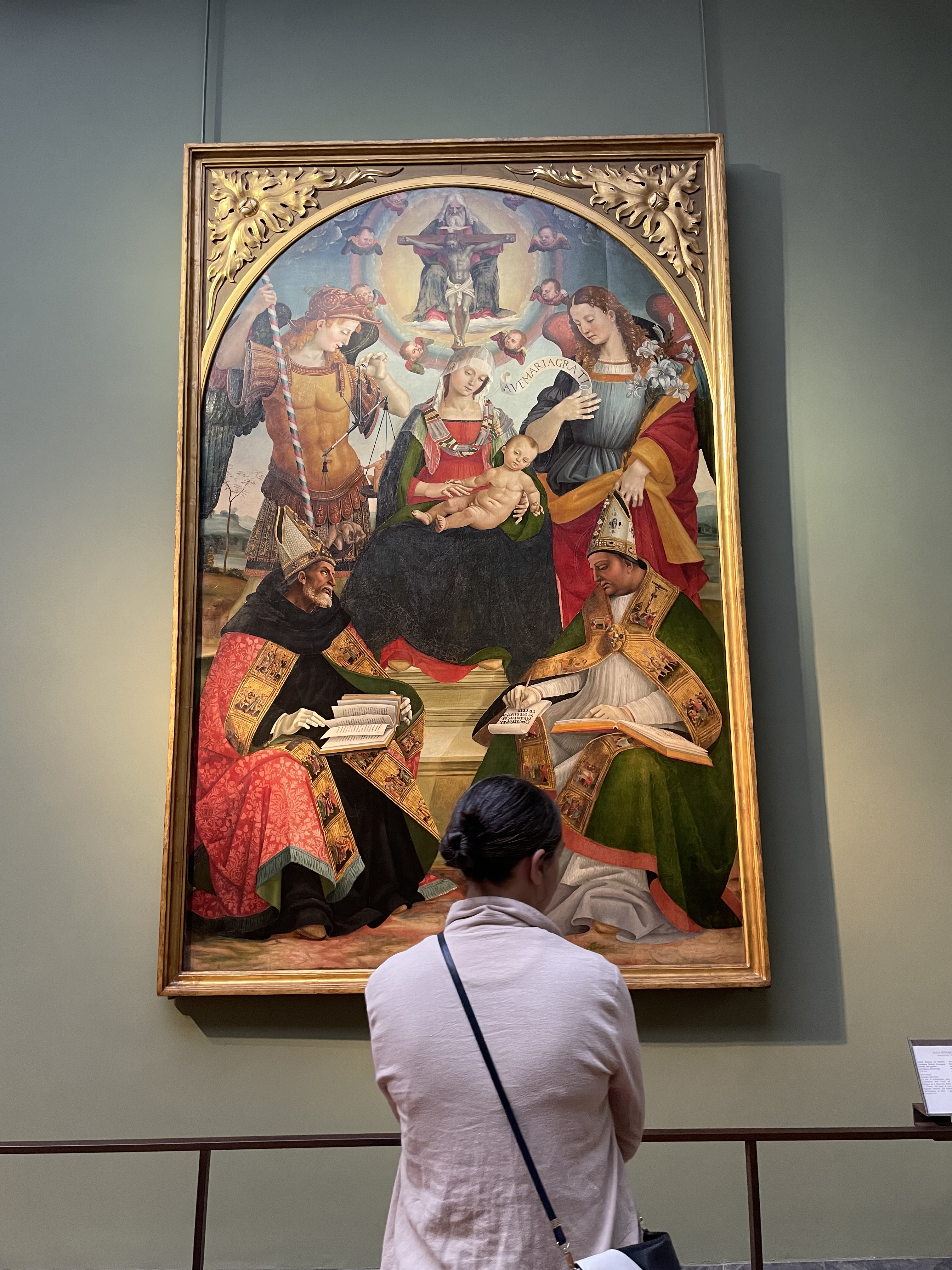
My foggy memories of the Uffizi in 2002 were a stuffy place with a lot of religious art that seemed repetitive. Heading inside in 2023, I assumed my memories were coloured by my youth and lack of exposure art, or really to much of anything. This time I was ready, geared to really see the works on display. Well it was much the same as my first go around. Lots of people suffering and sanctified, an veritable photo album of Jesus, and a complete inability to paint a baby’s face lasting for centuries. Museum didactics as dated as the building itself – name, artist, year. Any context is a bonus. Being observant and contemplative is harder when being jostled by your rat-running fellow visitors, snapping pictures mindlessly before moving to the next painting.

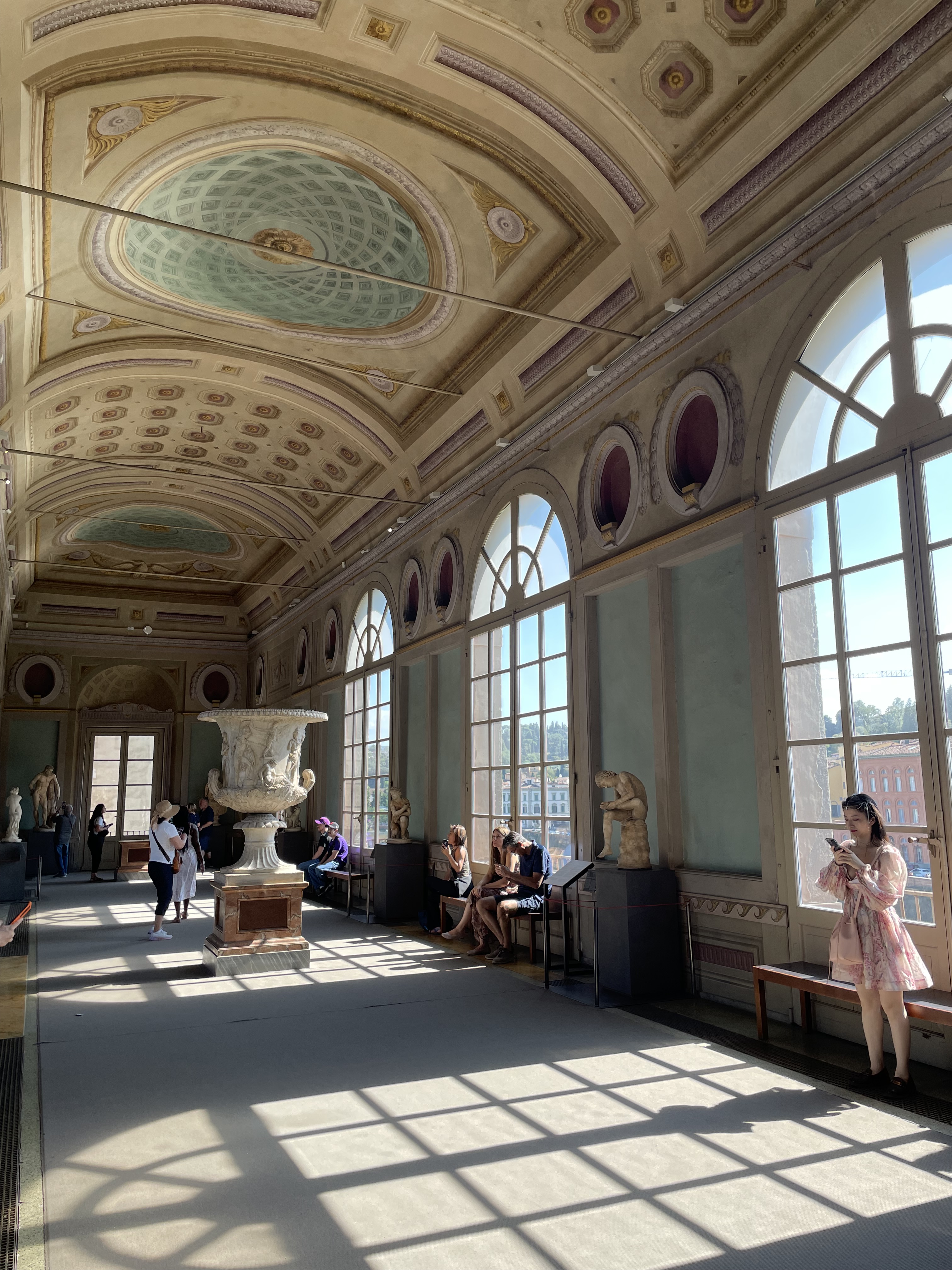
What I have learned in the years since that first visit is to find things that do stand out. When does perspective appear, or the first still life paintings, or grand natural landscapes? Ask yourself what prompted the gallery, in the centre of a staunchly Catholic country, to acquire several portraits of Martin Luther, noted theses nailer and father of the Reformation. One fun fact that was shared by the Uffizi – in the 16th century it was common to have a portrait cover for commissioned paintings, like a hardcover jacket. Few of these have survived and a matching pair of cover and painting exist here. The halls are lined with Roman statuary, some of which was carefully added to by Renaissance artisans, a practice akin to adding contemporary characters to thriftstore paintings. They do it in Rome, too: Egyptian obelisks hauled across the sea and reclaimed by the ancient Romans, only to be further altered by the Catholic church. It is an interesting, often direct practice of appropriation.


Having made my peace with the Uffizi, we found a quick espresso hit (did I mention the early start to the day?) and made our way to a meeting point with Jessie and Dan. Despite the many tourists, tourist groups, and Italians working in tourism, we actually found one another easily and escaped over the Ponte Vecchio to a wine bar on a small street tucked back from the Arno River. Between the company, the wine, and the air conditioning, this was easily a highlight of our day in Florence. It helped that Dan actually knows about wine too and can make informed choices. This is a skillset I am lacking but it doesn’t stop my enjoyment.

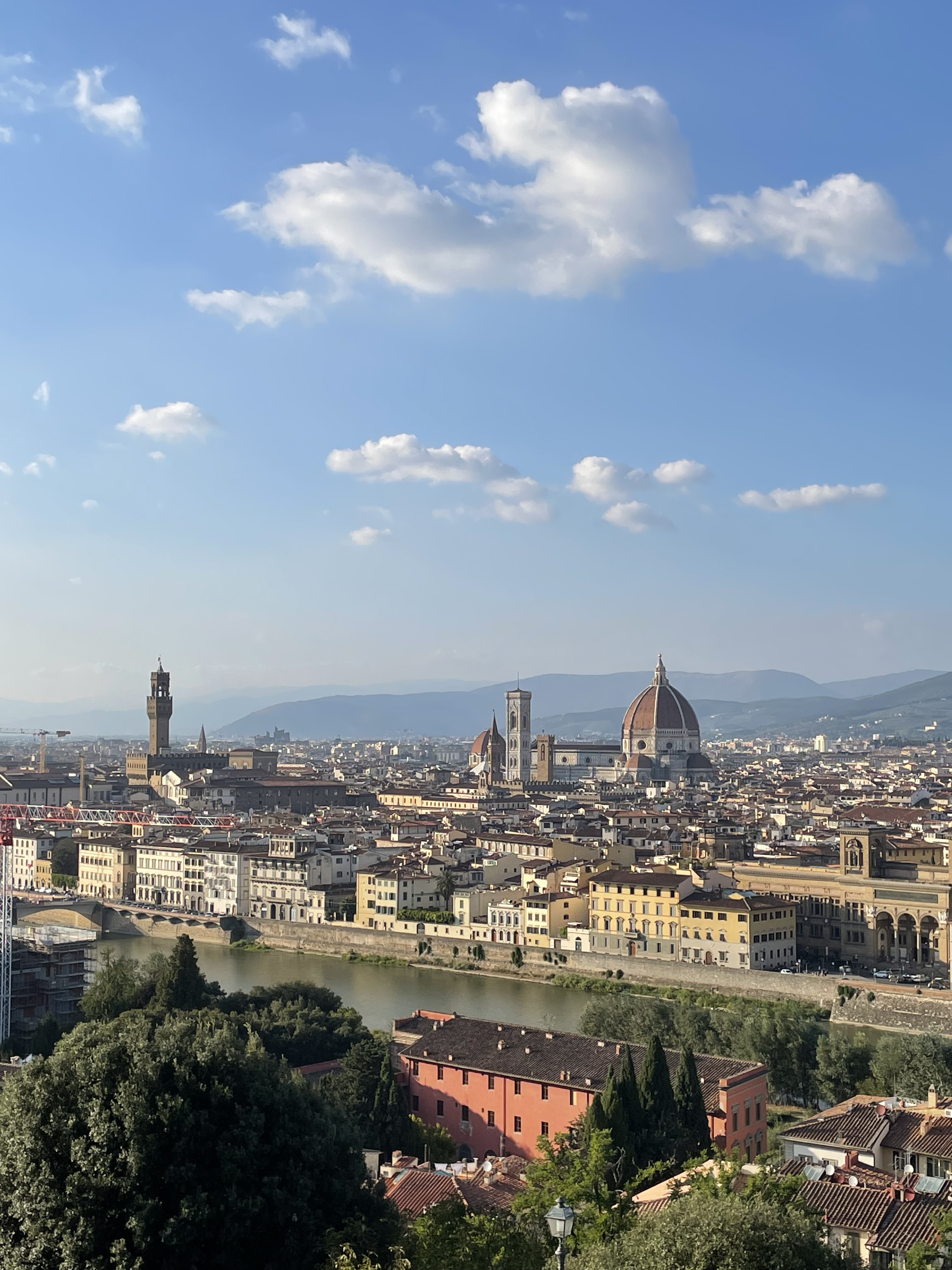
From the first wine bar, we took stock of a few other options on our way up to the Piazzale Michelangelo, a viewpoint at the end of a short walk up a steep hill. The last flight of stairs, a wide expanse of weathered stone, was covered by what appeared to be an art class, pencils or charcoals in hand, committing the view to the posterity of their sketchpads. Lacking this skillset as well, I settled for a picture. The day remained rudely warm and we instead made our way back to one of the enotecas we had passed. Time to share one more bottle before making our way back to Rome.
 Zak Abroad