How does one even start to write about Rome? What new or insightful take is there on a city that has been visited for thousands of years, a seat of a republic, then empire, the home of the Pope and his church, the capital of Italy? My only experience here was over two decades ago, an 18-year old agog at the sheer scale of the Vatican and overwhelmed by the ruins around seemingly every corner. Some memories are sharp, many others vague, but the city made an impression on me, like many others. Many, many, many others. In the intervening years tourist arrivals to Italy have nearly doubled and for the global middle-class, Catholic pilgrims, disheveled backpackers, pensioners, and corn-fed Americans, all roads really do seem to lead to Rome.
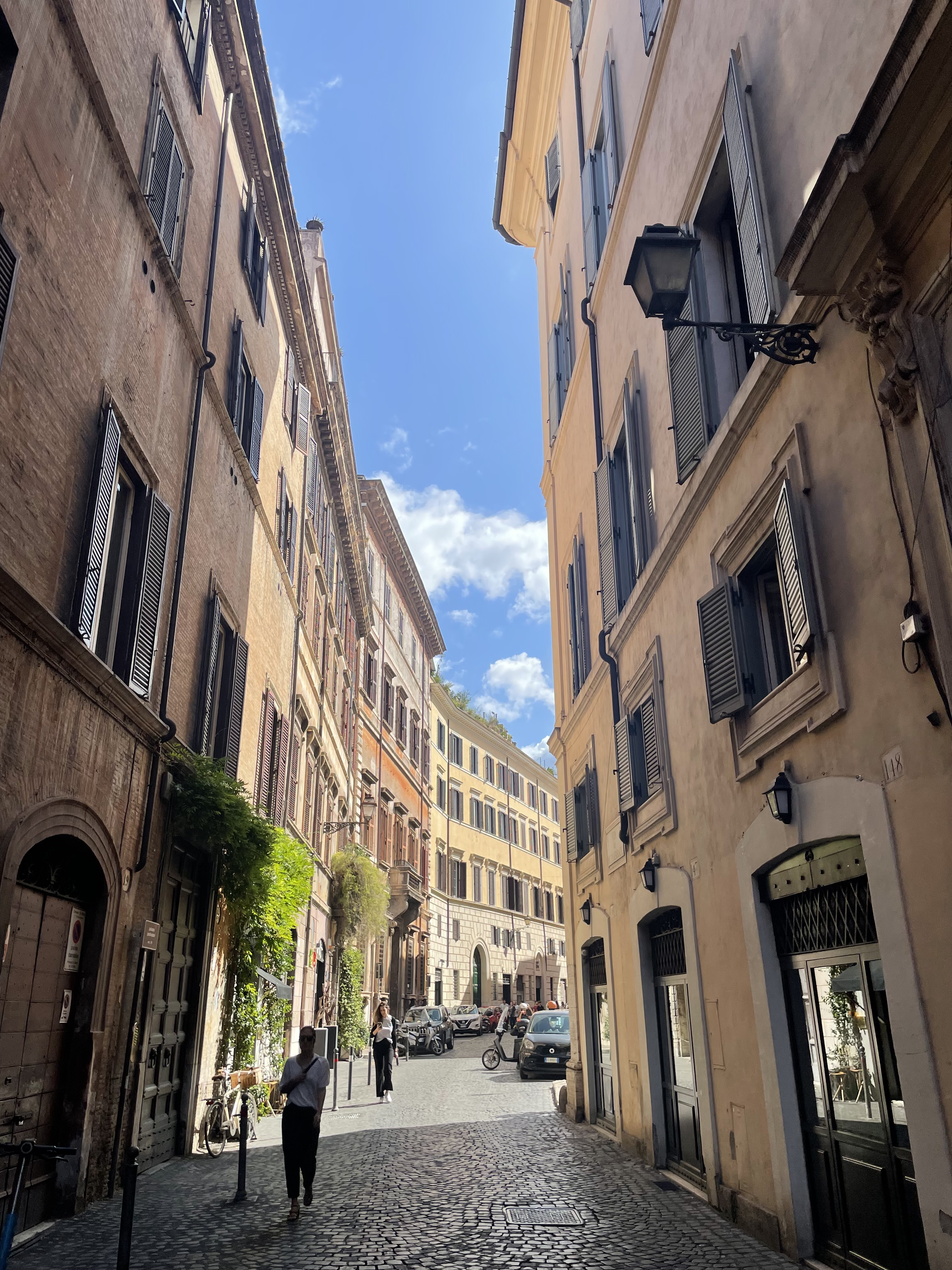
Once those roads enter the city however they seem to dissolve into a random pattern of arcs and lines, an extremist concrete abstraction resembling scribbles on a page from above. Lost tourists post up on the sidewalks, maps pulled out, while an unending flow of pedestrians, mopeds, buses, cars and even the occasional brave bicyclist work around them. Rome is thick with history and in spite of everything around you, a delight to explore on foot. This is perhaps in part to getting around by any other means being an exercise in frustration, but within ten minutes of picking a direction you are bound to find something to stop you in your tracks, whether it is a swirling piazza, uproarious church or melancholy ruins. There’s something to suit every taste, and a lot of it to boot.
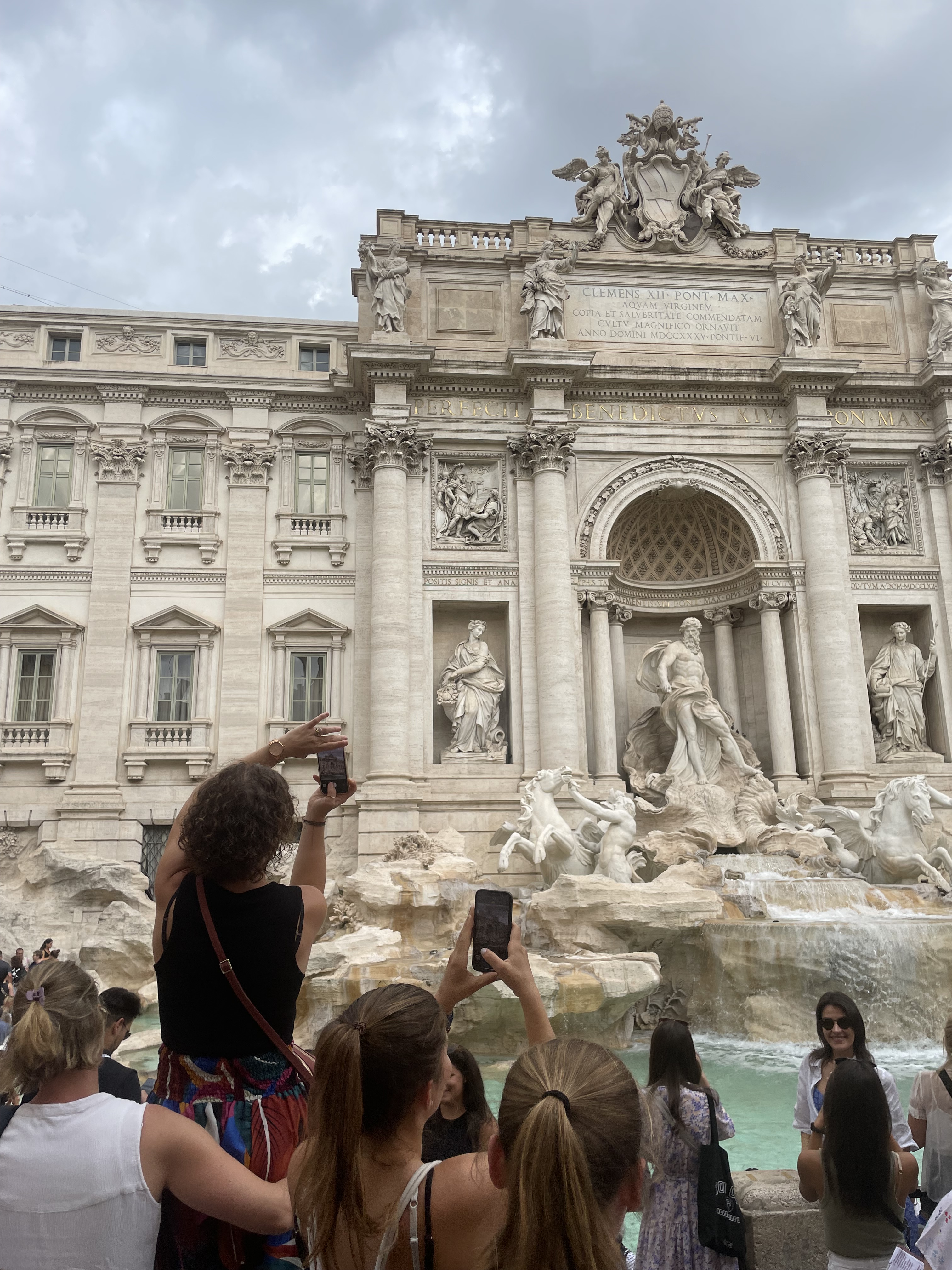
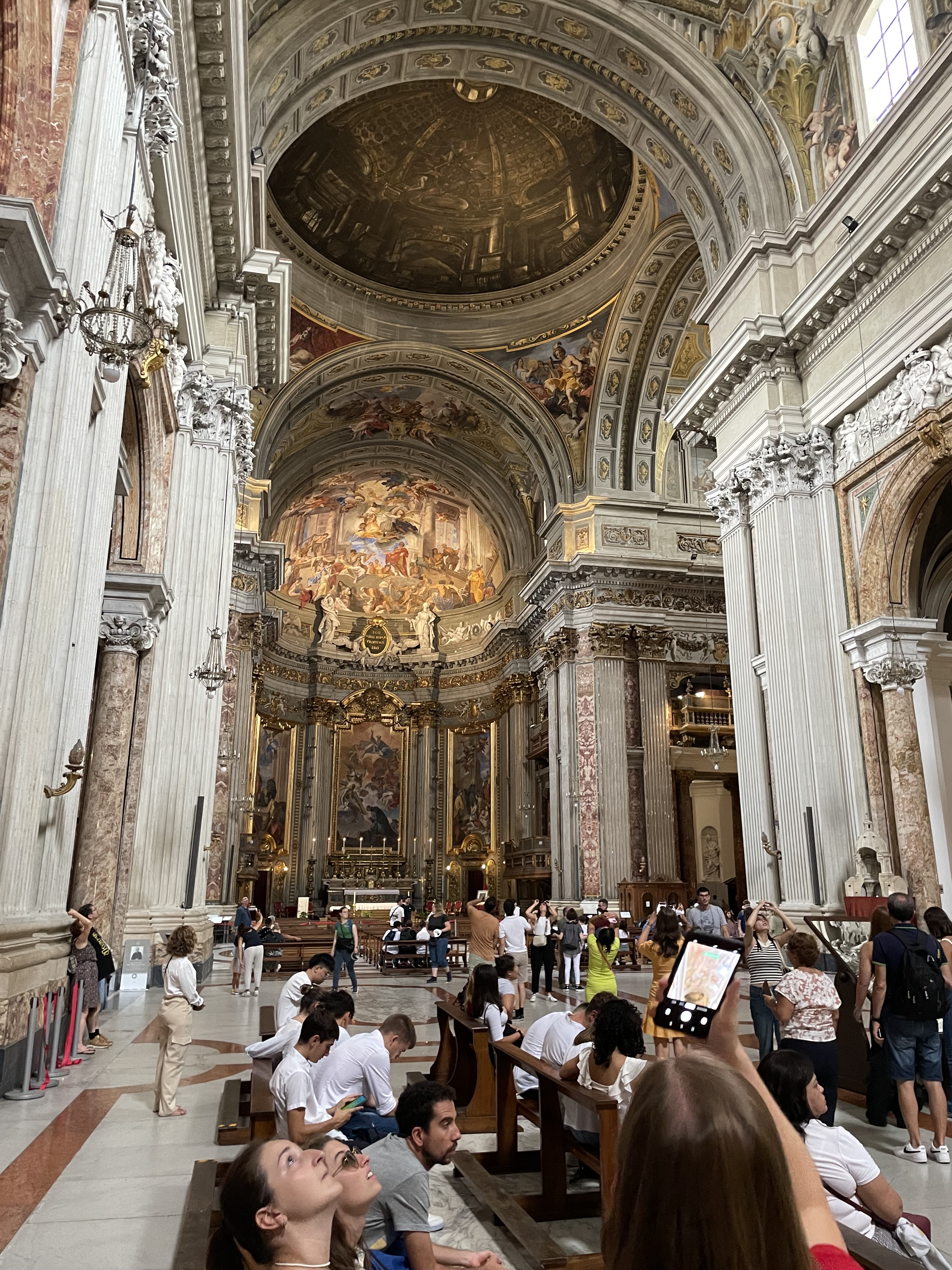

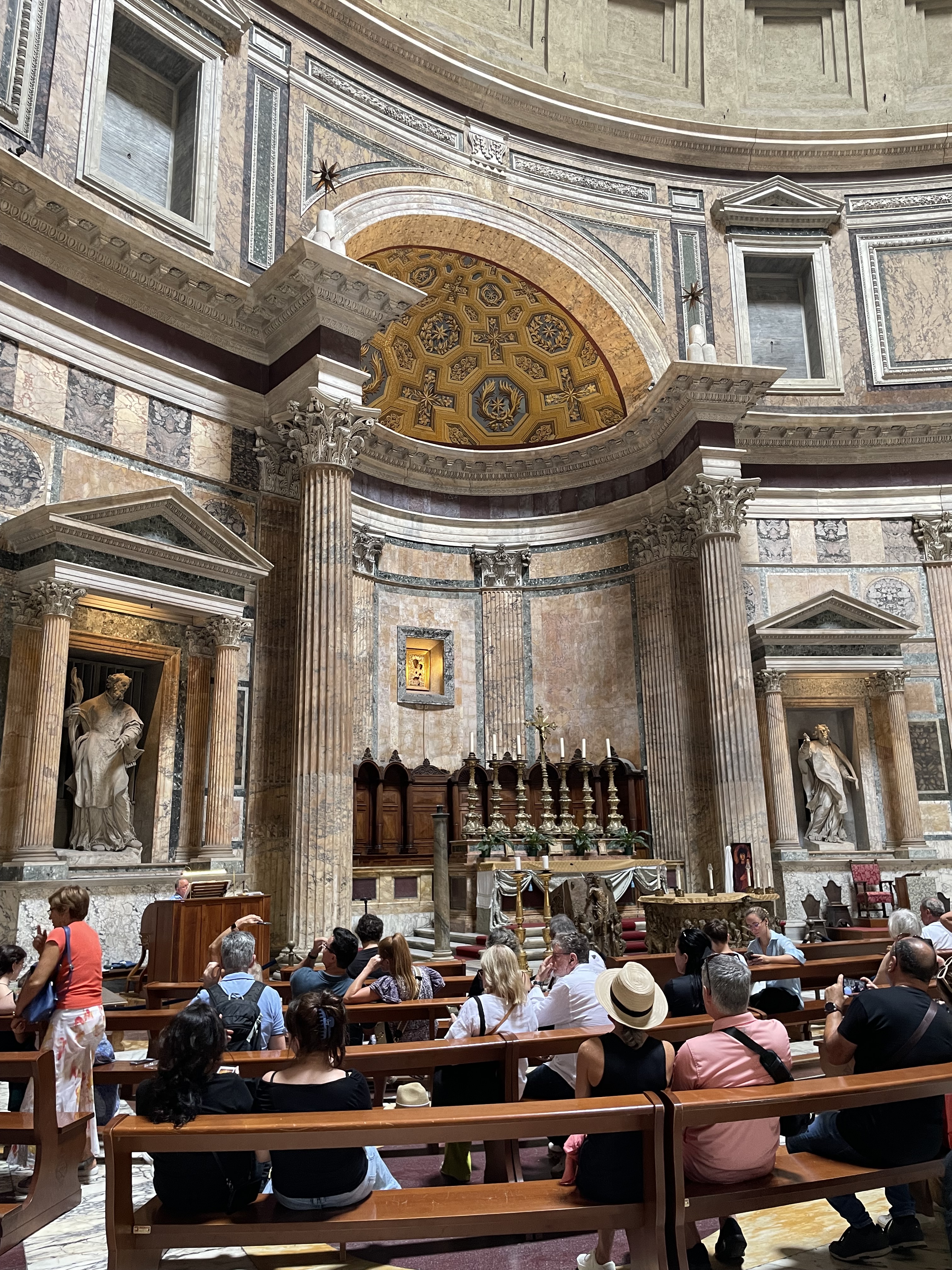
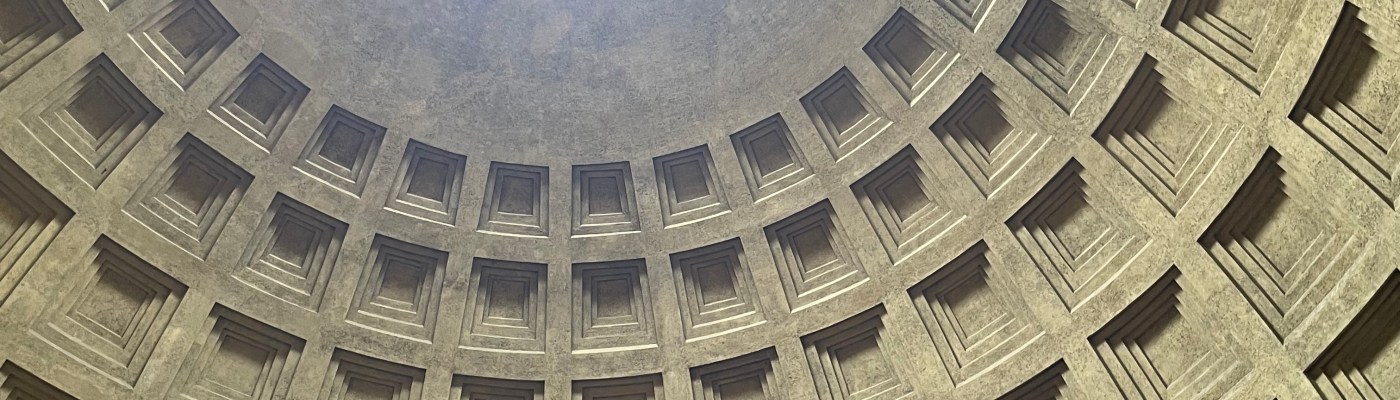
We passed our non-wedding days working through the major sights and doing our best to eat well. Our first untethered day was spent connecting a constellation of sights – Trevi Fountain, the Pantheon, and Campo de’ Fiori – before a lunchtime break across the Tiber in Trastevere. My recollection of the Trevi Fountain, an absolutely over-the-top means of commemorating the point where three aqueducts met, was a swarm of tourists and I could not wait to move on. The Pantheon, while similarly crowded, remains one of the most perfect buildings of ancient Rome and here I could not care less about every other person in the space. Simply looking up at the vaulted dome, with a 30-ft oculus, is enough to inspire respect for the sheer skill and confidence it must’ve taken to erect it two millennia ago.
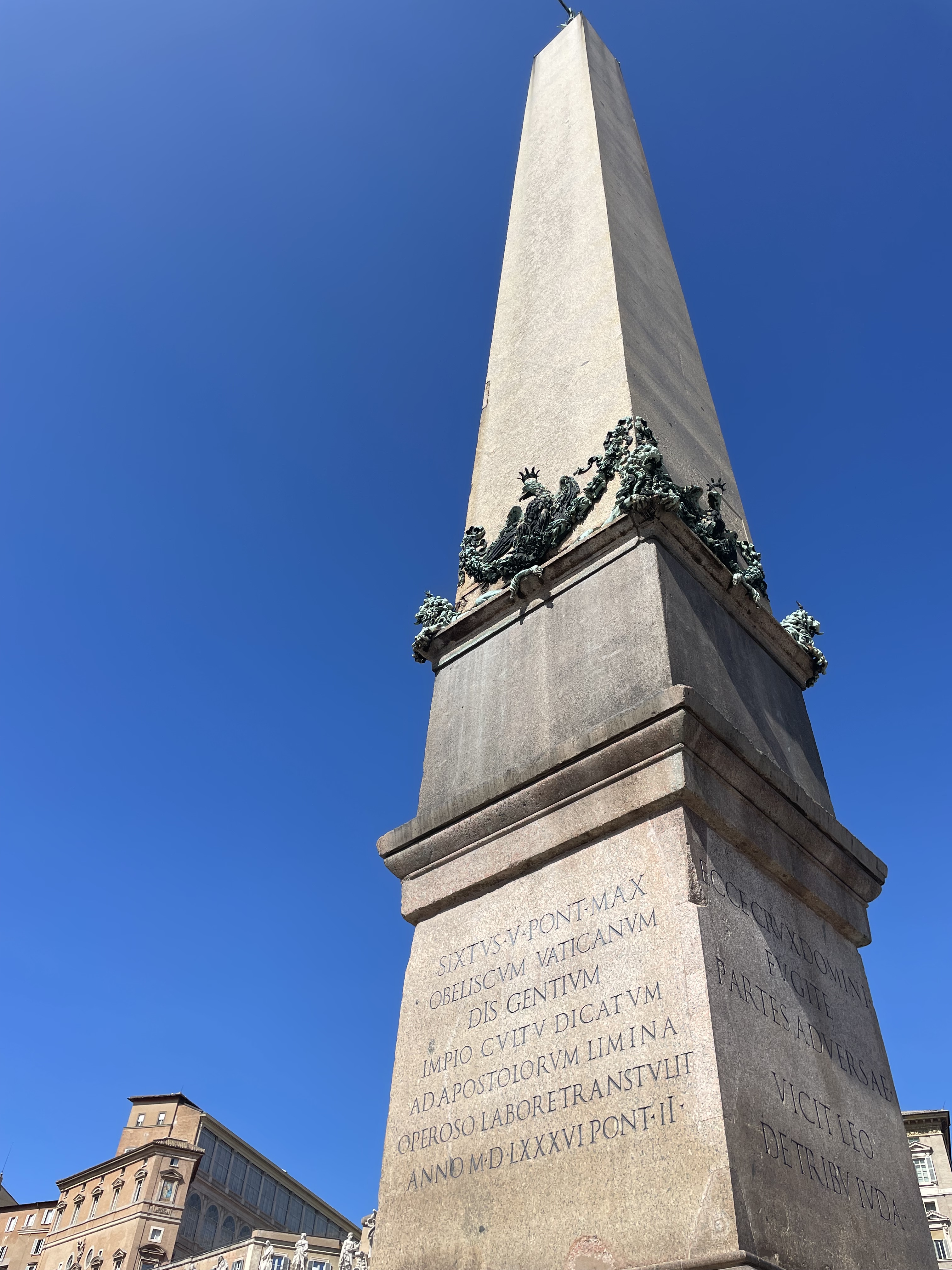

The continuing surge of visitors, which Hannah will remind me that I am a part of, also means long lines or the need to book tickets to some of the headliner places months in advance. Neither of us was patient, devout or smart enough to book St Peter’s Basilica in advance, and in lieu of waiting out the line wrapping the massive square leading up to the heart of the Holy See, we decided that the exterior was sufficiently impressive. There is a small ‘post office’ set up in a sad and incongruous portable where one can get their passport stamp – Vatican City having the distinction of being the smallest sovereign country. Doubtless this was overlooked by Bernini in his design for the square. Ultimately this was not a stamp I needed and we headed off to deal with more important priorities, namely lunch.

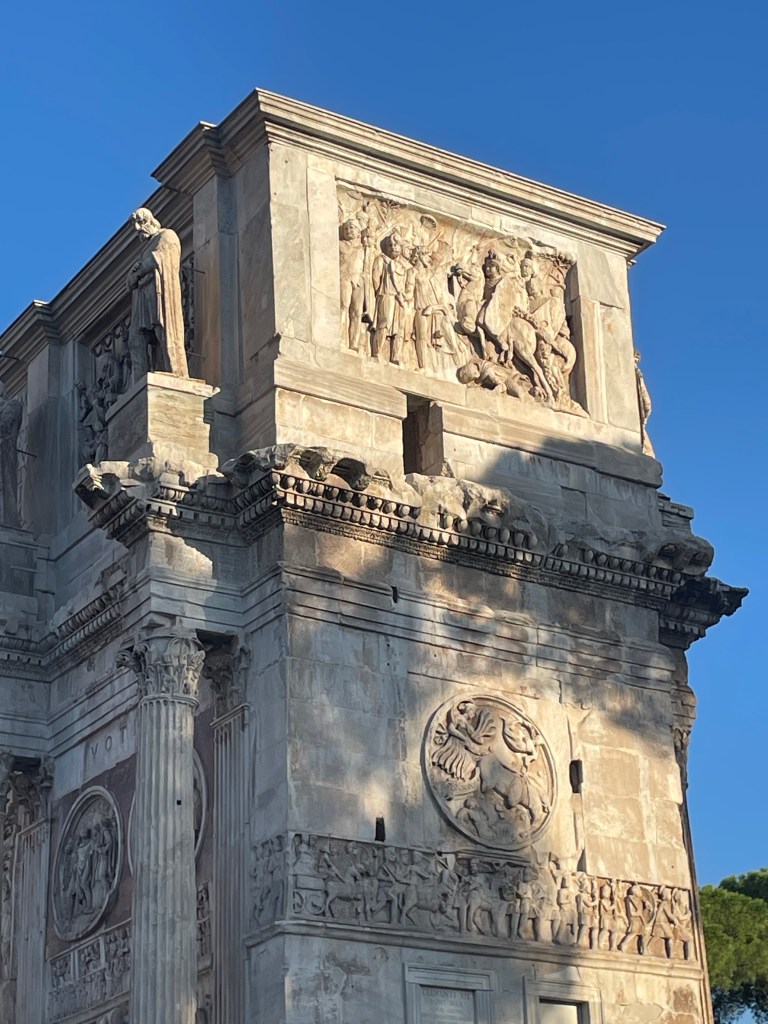
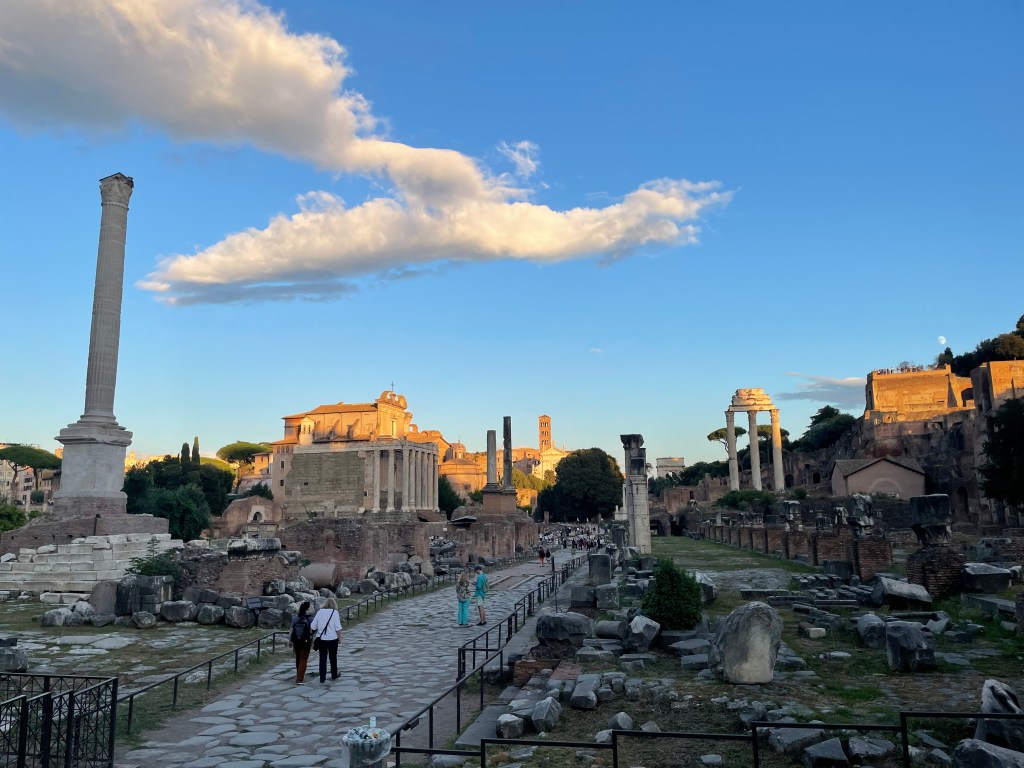

Our biggest tourist day was a guided combo ticket tour of the Colosseum and the ruins around the ancient Roman Forum. Generally I loathe tours, though have been pleasantly surprised over the years, and this one was an expedient to get in and jump the lines. Before setting out the guide distributed a headset for our listening pleasure and he spent the tour with his head on a pivot, a wandering stream of consciousness playing out in my left ear with the occasional crackle of static telling me to look for the blue flag in his hand. A bit of a disappoint on that front, and I was happy to hand back our audio pieces early and slink off into the grounds on our own. The experience become far better from this point and I felt rewarded for my pre-trip reading and, to Hannah’s amusement, proceeded to do a lot of pointing-and-talking about various ruins. Personal favourites for me were the various triumphal arches and Trajan’s Column; for Hannah I’m sure it was when my rambling on was done.

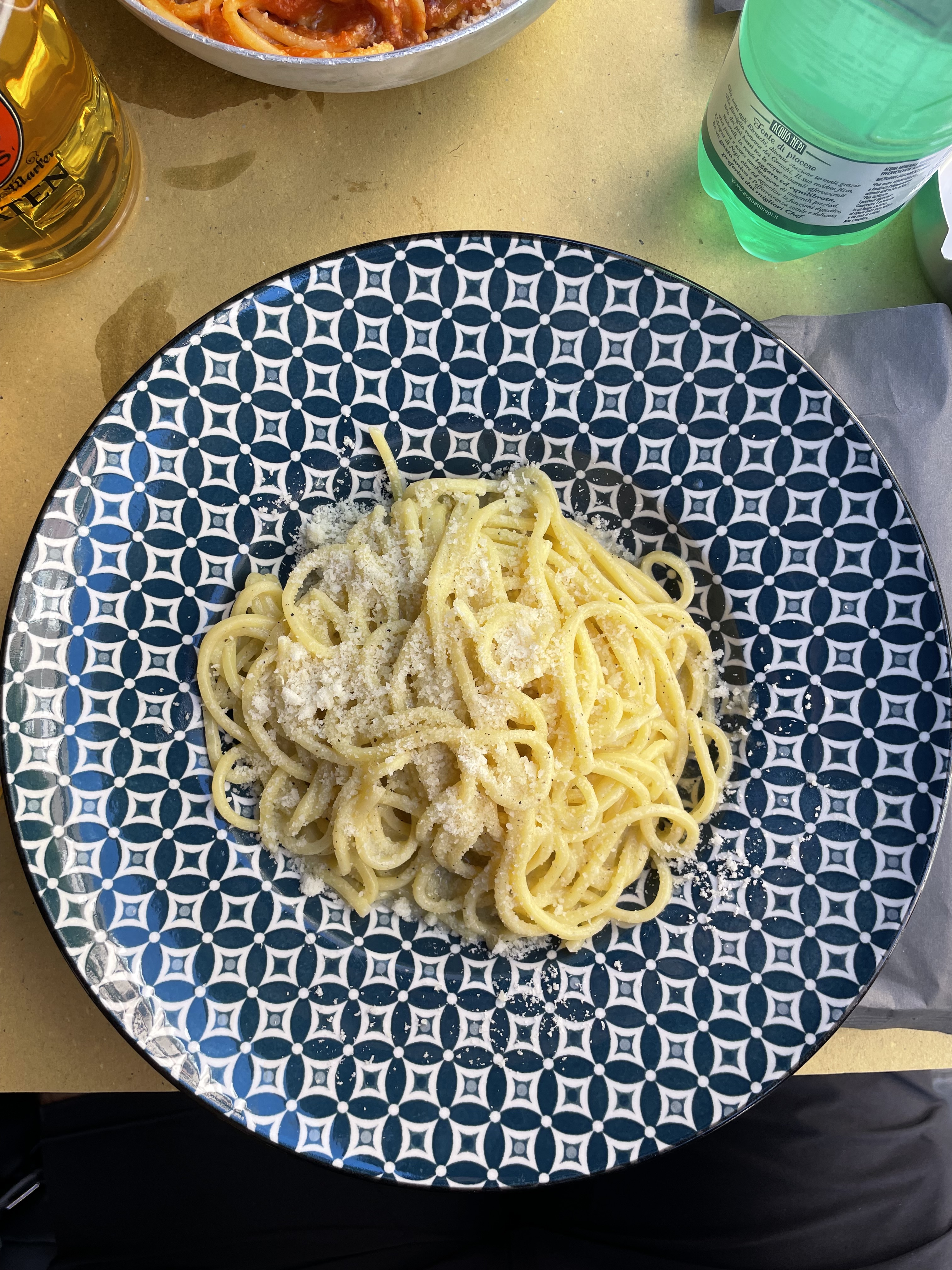
Mealtimes in Rome can be a challenge. There is a lot of pure tourist schlock of poor quality and the sheer volume, often paired with hunger, can wear down a discerning diner. We worked out a system, simple but solid, to ignore the restaurants calling out in English to sit down, prioritizing places that ignored or perhaps tolerated us. Using this method, we enjoyed a rotating cast of Roman dishes – chiefly cacio e pepe, carbonera, pasta a la gricia – along with one instantly regrettable salad. Dining out with a couple from Portland near the end of the time in Rome, they remarked that the city’s restaurants are almost all Roman, or at least Italian. With a few exceptions here and there, this theory seems to hold up. It is inexplicably one-note on the cuisine, though generally done extremely well.
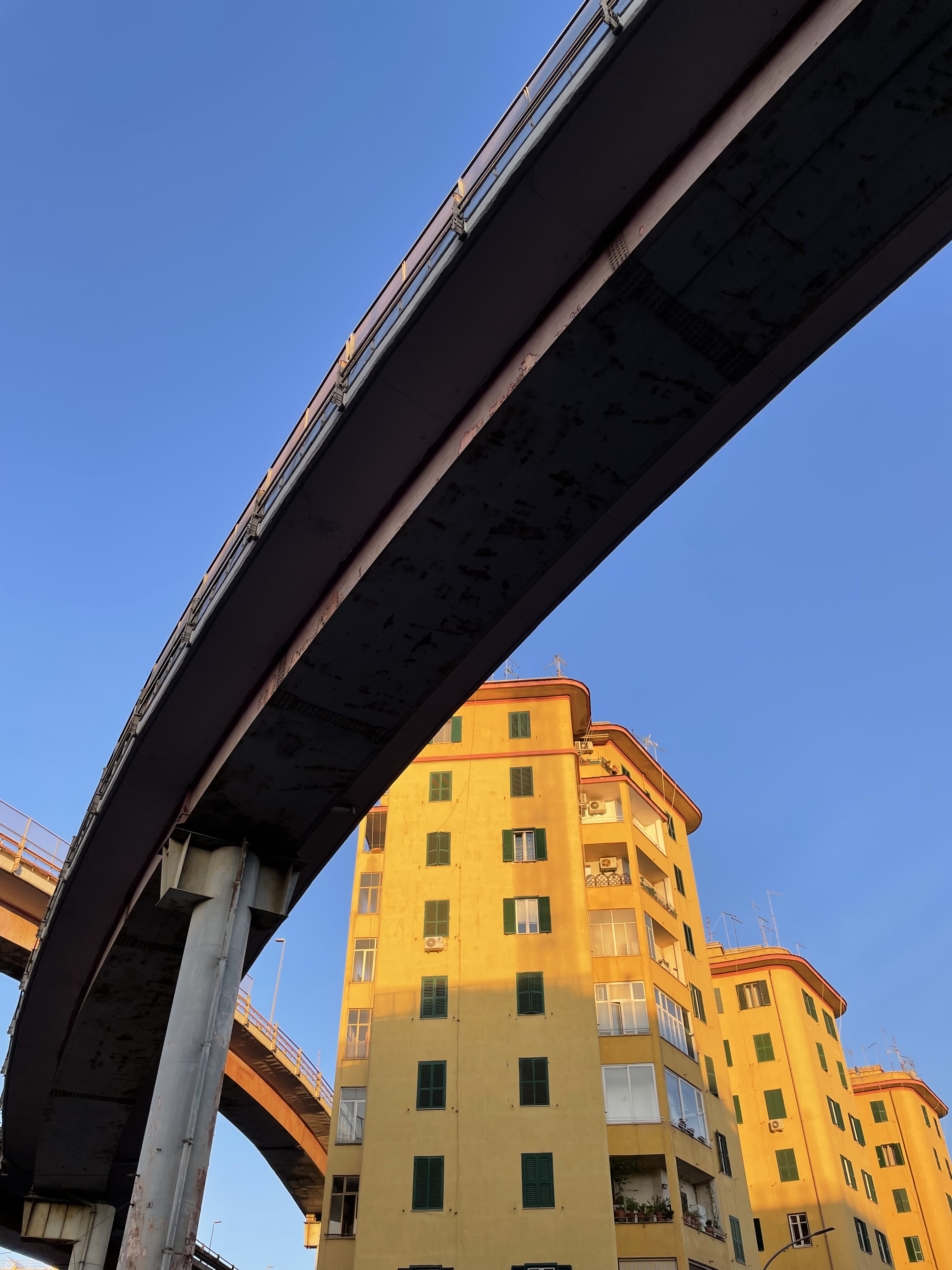
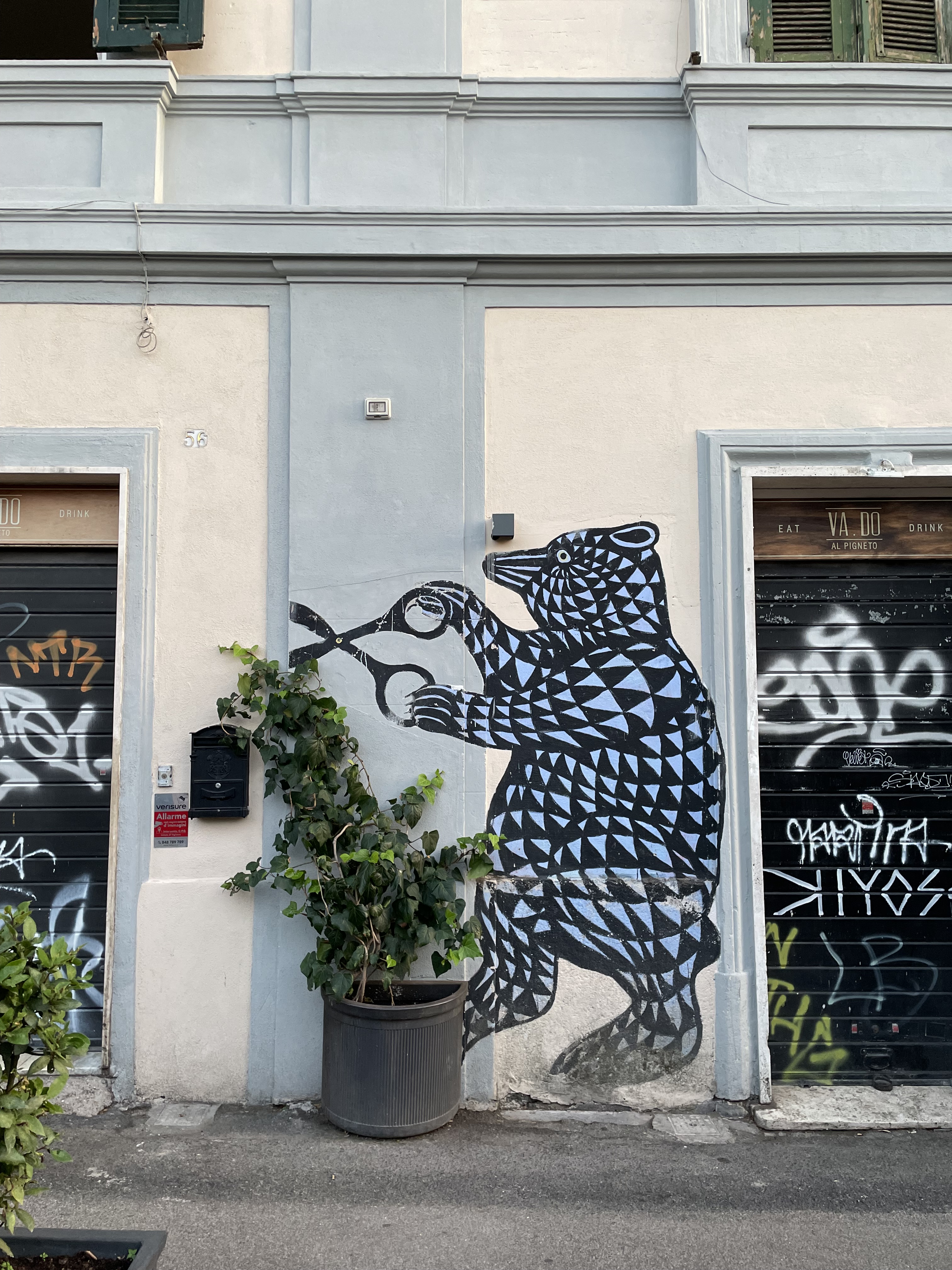

Shifting locations to an apartment for our last few days (laundry time!), we enjoyed the less polished Pigneto, a hip area cut through with highway overpasses, tram sheds, and the mindless graffiti tags that cover too much of Rome. Trees are few and far between, peppering city parks but sacrificed on the whole to the built environment: buildings, pavements, sidewalks. It is no surprise then that the scattered parks are well-used. There were no catcalls outside the restaurants here either and we relaxed our food rules and get what felt like a glimpse of more typical Roman life. Pigneto seemed to be the place that Romans went after the workday, escaping (mostly) tourists like us and diving headfirst into dinner, wine, conversation and for some, tango in the streets. It was a new angle on the city, at least for me, and both welcome and enjoyed.

Those little moments make all the difference too. For all the tourists, for all the noise and the frustrations, Rome charms, sometimes seemingly in spite of itself. I love the late nights, the expansive and packed sidewalk tables, the warren-like bookstores smelling of yellowed pages, the bitter espressos and (especially) the pistachio croissants. The city is helplessly rooted in its past, seemingly oblivious of any particular future, and incredibly alive in the moment. More than any ruin, museum or church, that is what makes it worth coming back to.
 Zak Abroad