
Belgrade gradually disappeared from behind the windows as the train headed north, first from the depths of Prokop station, then over the Sava River, finally emerging, after a short series of suburban stations, into the Pannonian Plain. Periodically we would stop at small towns with red tile roofs to exchange passengers. I was mostly grateful that the train was newer, on-time, and most importantly, air conditioned. Wheat fields, golden and parched, filled the spaces between stops as we made our way towards the middle of the Pannonian Plain, a large basin which feeds into the Danube on its way to the Black Sea. Today the region is the Serbian province of Vojvodina and after an hour, the train arrived in the regional capital of Novi Sad.

My only knowledge of Novi Sad before planning this trip was the 1999 NATO bombing of a bridge. The city was otherwise a blank spot in my mental map, albeit easy to reach from Belgrade and carrying a hearty recommendation from a friend. The train is well used and the station is situated at the head of a long processional boulevard leading to the old town and the river. The boulevard design is a typical marriage of Modernism and Socialism, but with an added vibrancy of trees and people elevating it into a pleasant enough space. I was surprised but glad to see proper protected bike lanes and even more so to see them used. With a bit of time before check-in, I sat down at a shaded table for lunch. Serbian food is all about the meat – it is present in virtually every dish to greater or lesser degrees. Several days straight of eating heavy, rich food was taking its toll and happily the salad delivered to my table matched the picture in the menu.

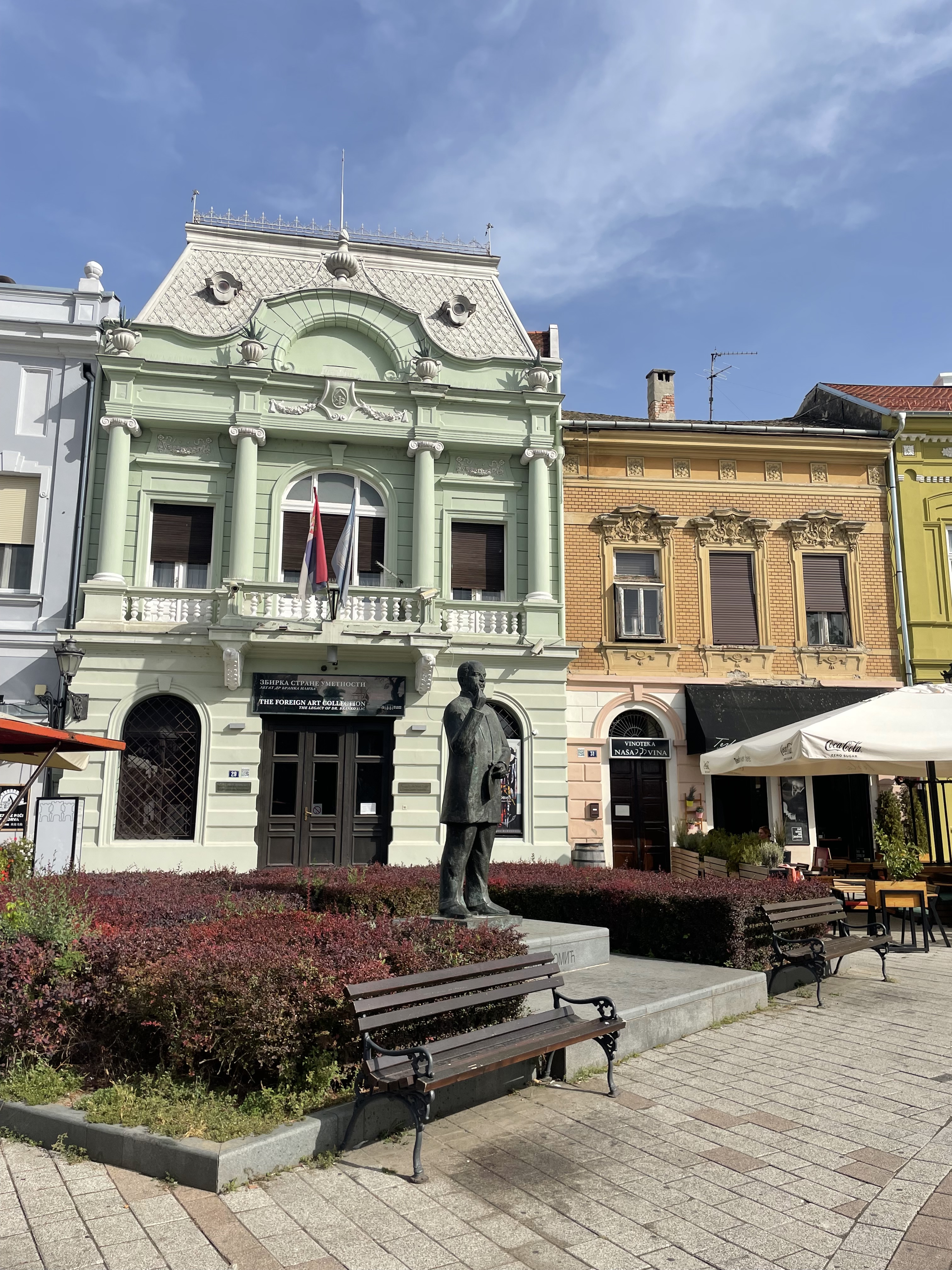
Tourist destinations in Novi Sad are thin on the ground. The Museum of Vojvodina provides an extensive walk through of the region’s history, from its earliest human habitation to its accession as the Roman Province of Pannonia, to later life under various empires that waxed and waned over the area: Hungarians, Ottomans, and Austrians, and before the present Serbian incarnation. The feature exhibit was on wheat and was well done. Apparently the scythe is one of the oldest agricultural tools, five types of grains predominated in the region historically, and there are a number of folk customs and superstitions revolving around wheat and the harvest. I had plenty of time and space to consider these facts as I only saw one other lone museum visitor while there.

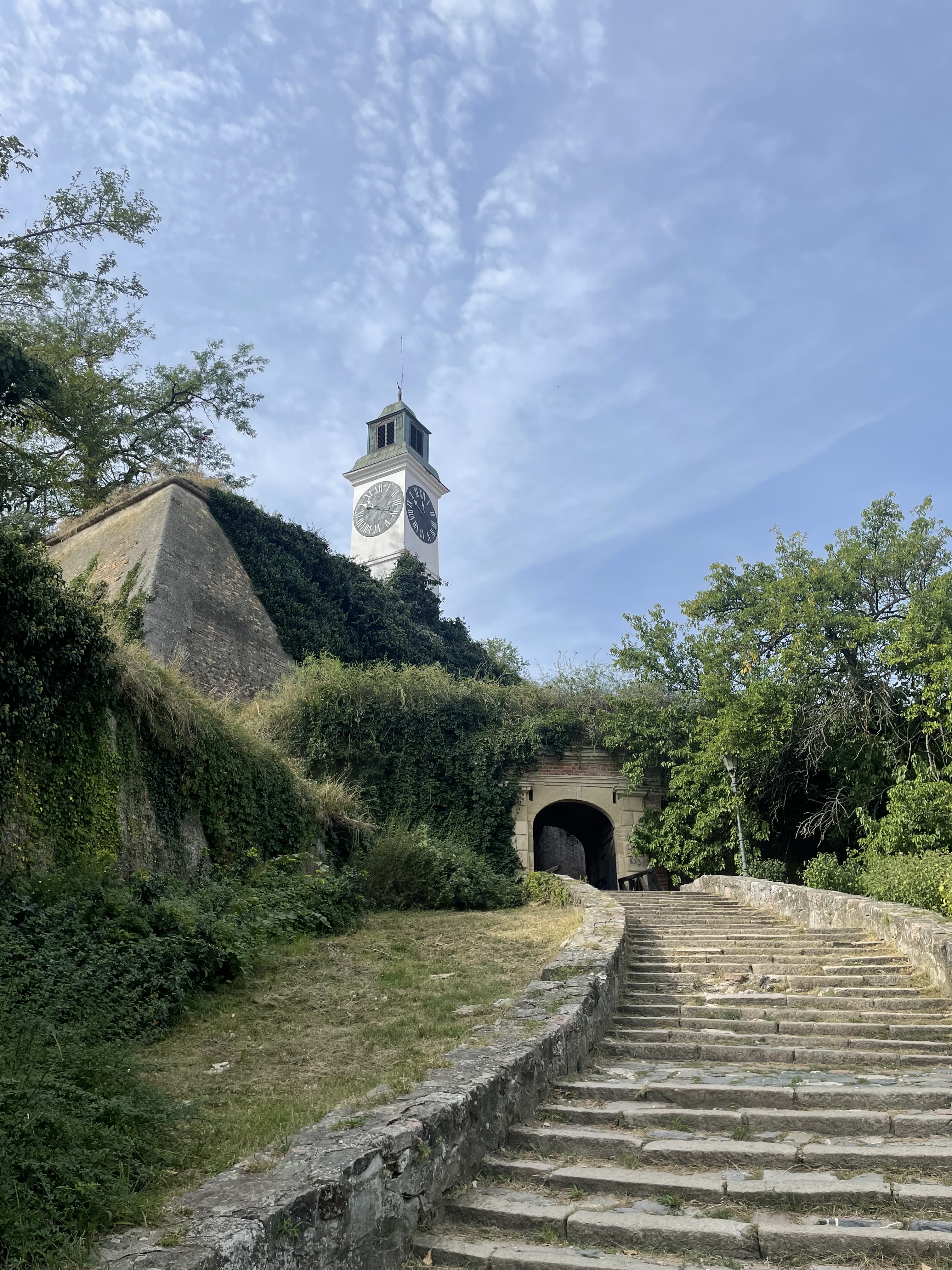


The main draw is not actually in Novi Sad at all, but instead a short walk across the river and a short hike up a steep hill. Petrovaradin Fortress sits atop a small cliff overlooking a bend in the Danube, a recurring theme for placing Balkan fortresses. Exposition, where the museum excelled, is almost totally absent here but the basic visual cues of gates, ditches, walls and ramparts are consistent enough to follow while walking the site. Alcoves at the base of some of the castle buildings sell art and tchotchkes, but it is a soft sell and one man preferred to prioritize feeding a pigeon flock over pitching any of his work. The heat was coming on strong towards midday, the worse for lack of trees and shade, and when a horde of field trip teenagers (the boys almost universally sporting a Nikola Jokic haircut) loudly made their way up through the fortress gate, I took the opportunity for a strategic retreat back across the river.
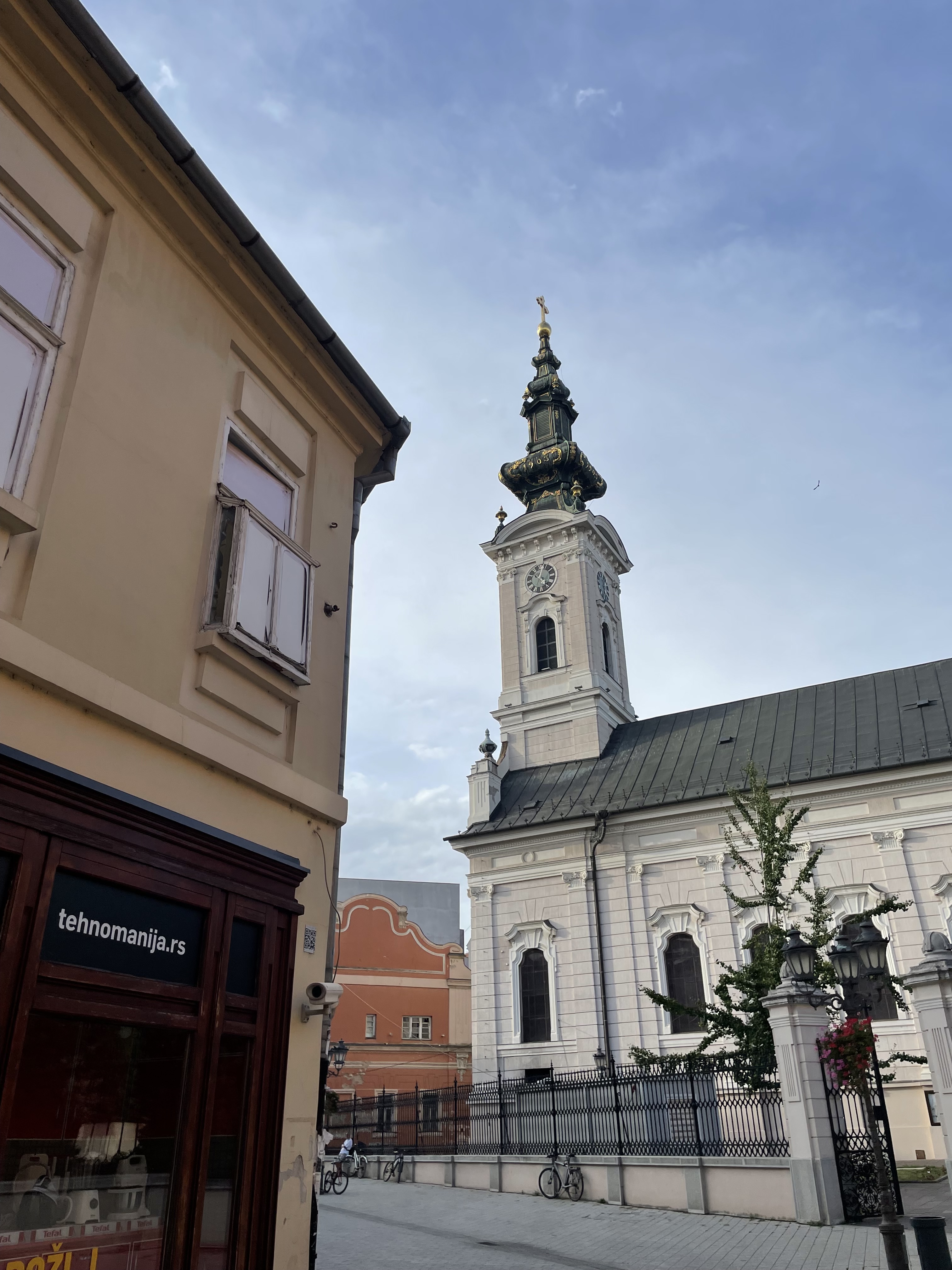
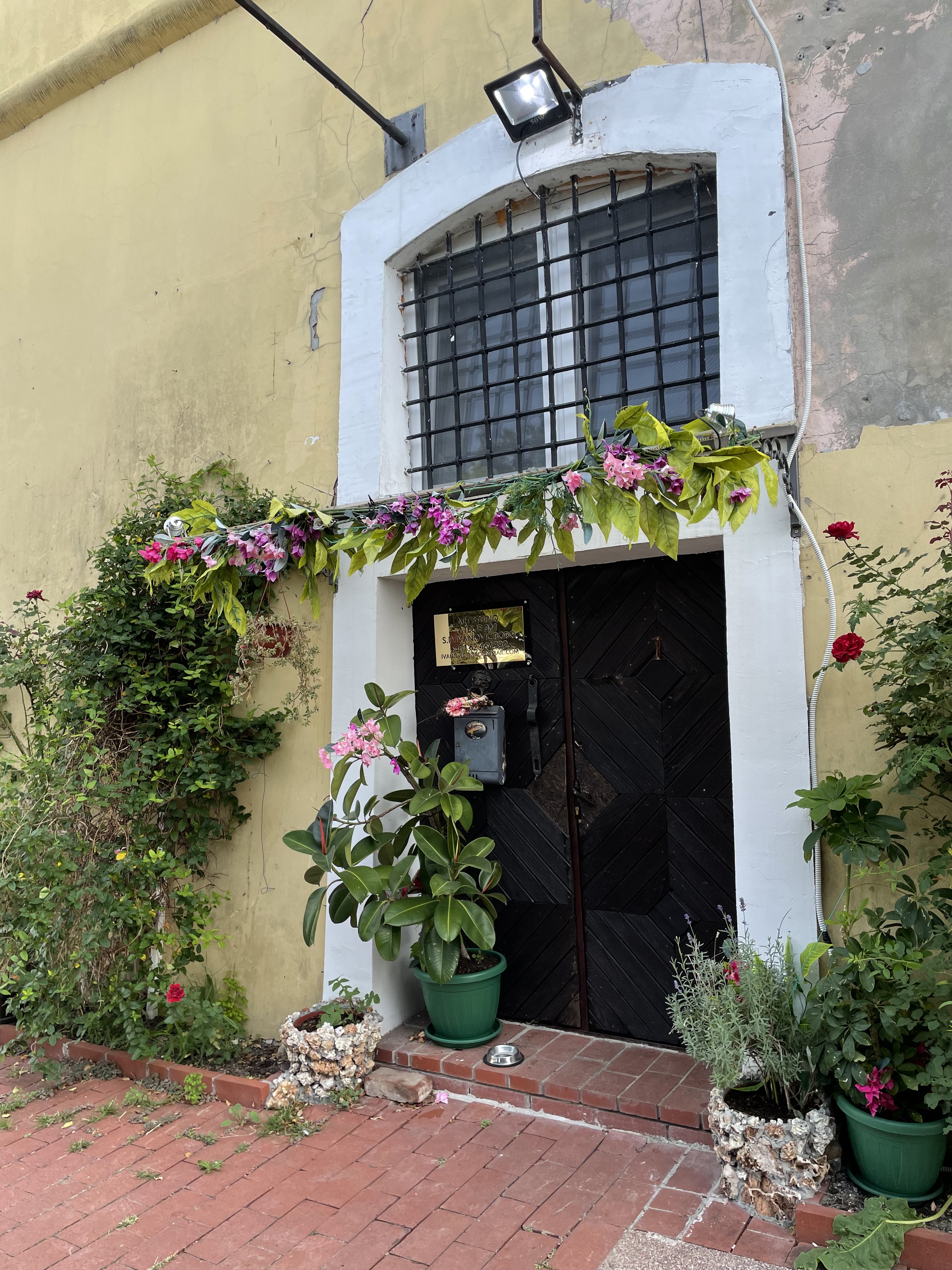
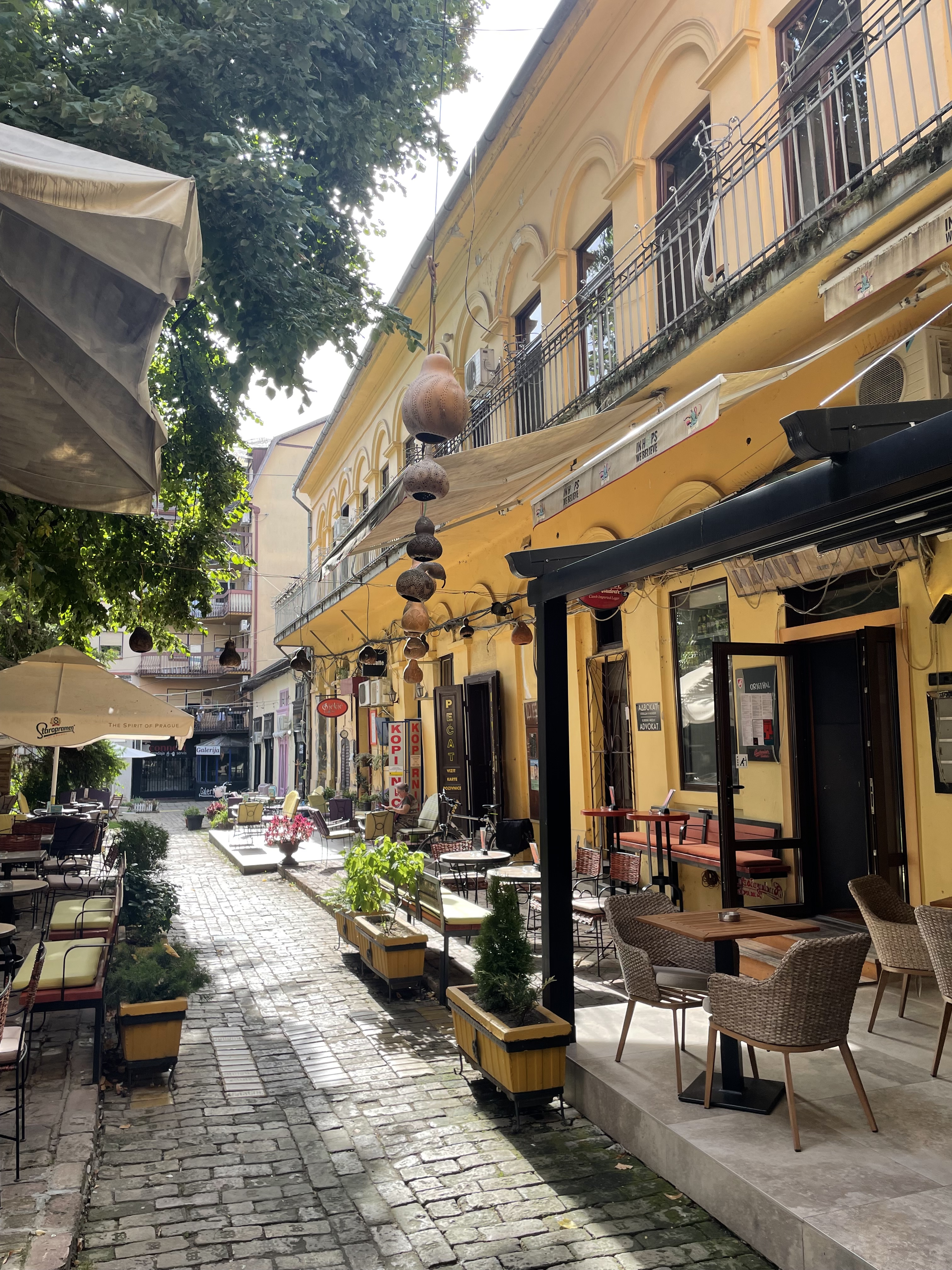
Sightseeing aside, the pleasure of Novi Sad is its old town street life, a compact set of streets, plazas and alleys cut through with courtyards and passages. It hums throughout the day, first with early morning deliveries and coffee crowds, line-ups outside small Serbian bakeries, pekaras, where my days truly began. Tables remain full throughout the day and into evening, umbrellas shielding people from the worst of the heat before the blissful, welcome cool air after the sun drops. The only group tourism I saw at any point in Novi Sad was a pack of German pensioners with walking poles in hand, listening attentively to their guide through discreet headsets – no bullhorns or flags to be seen. It is wonderfully relaxing to have the only major decision of the day be when to leave a café table for the top floor balcony where I was staying.
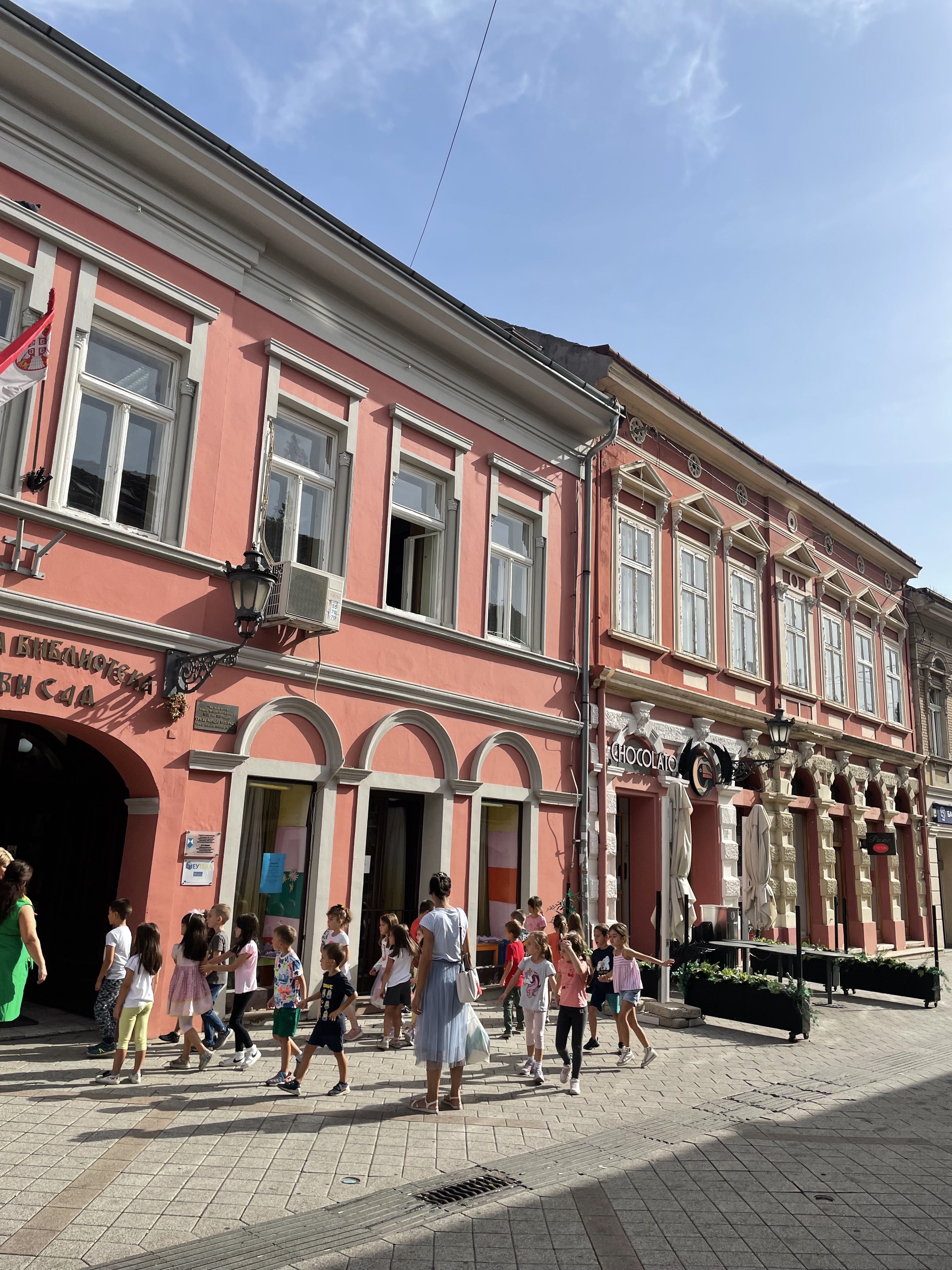
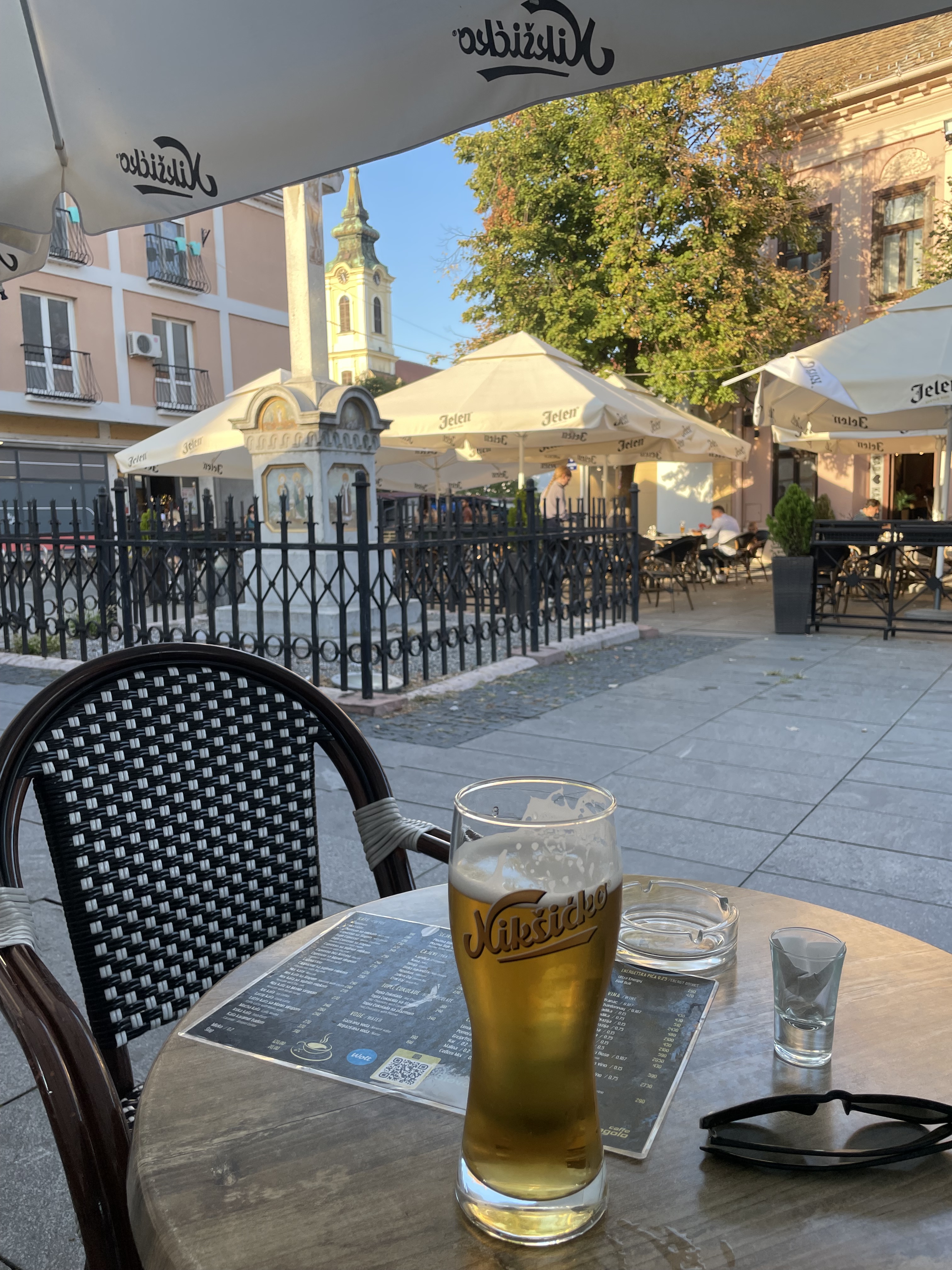
I was sad to leave Novi Sad, all the more so as my next stop didn’t work out the way I’d hoped. Today Zemun is a neighbourhood of Belgrade, close to the airport and formerly a southerly outpost of the Austro-Hungarian empire, a counterweight to Ottoman Belgrade across the river. During the Yugoslav years, with a burgeoning population, the lines between the cities blurred as the marshy land between them was filled in by Novi Beograd, another Modernist/Socialist construction of towers-in-the-park with too much space and not enough activity. Zemun is thankfully charming at least, small streets and plazas, but coming from the buzz of Novi Sad it could not help but disappoint slightly. I made the best of it with my default holiday activity: a café table, a beer, and a book in hand.
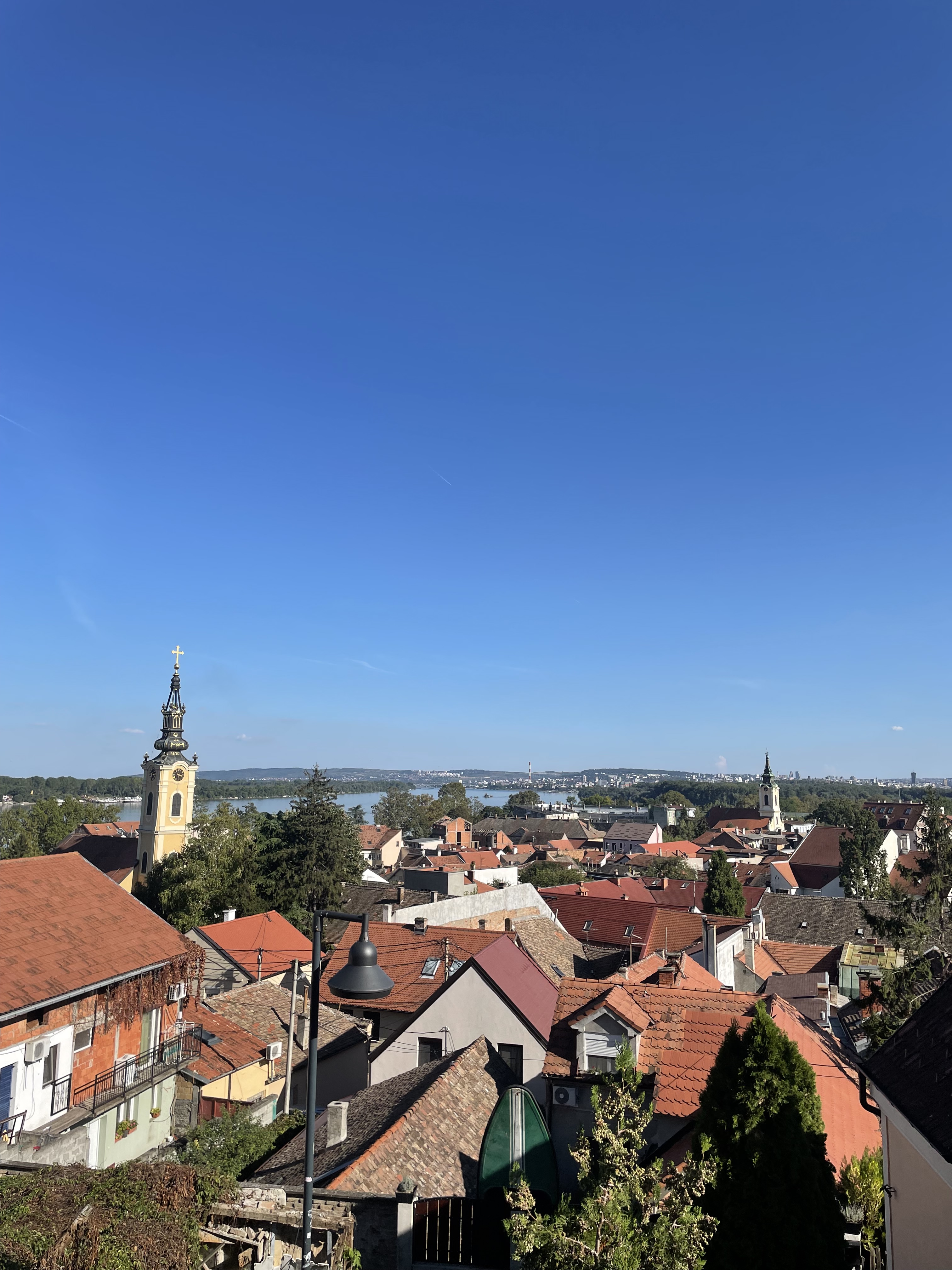
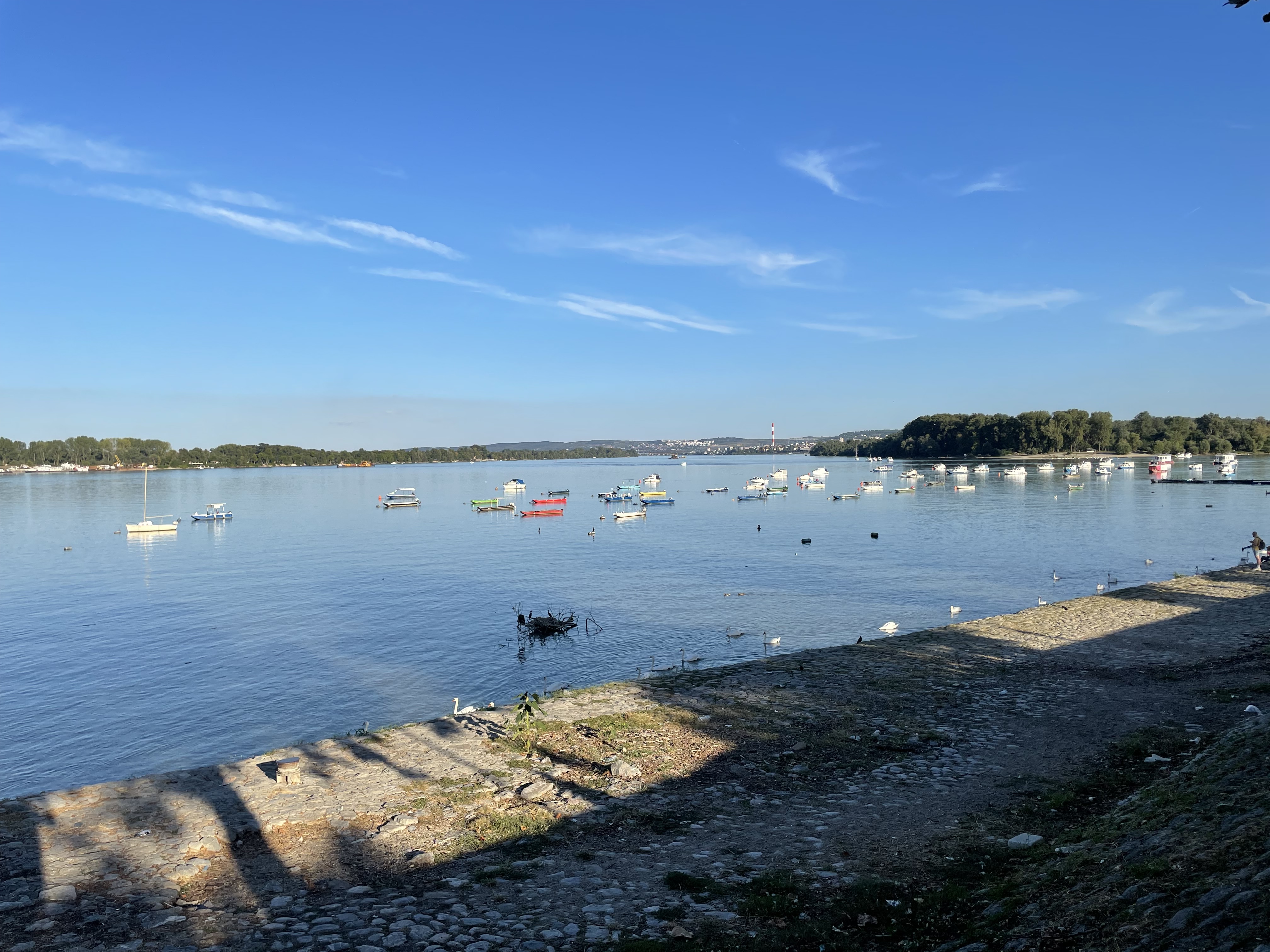
The most enjoyable part of Zemun was the shoreline along the Danube, a shaded allee of trees on an embankment filled with people out for a stroll and kiosks offering ice cream or popcorn, the latter a inexplicably popular option on a hot day. Clusters of swans worked their way up the river’s edge, patiently waiting from scraps from families while others watched, perched on benches facing the water. I’ve had worse last days in a place and Serbia on the whole was lovely – interesting, safe, affordable, and dynamic. Twenty years ago during my backpacking youth this was a corner of Europe I’d been curious about but ultimately neglected for various reasons. Now I wish I’d thought to come here far, far sooner.
 Zak Abroad