Kutaisi was previously Georgia’s second city and an ancient capital, but has been declining since independence and has now been eclipsed in size by Batumi, the flashy, new-money Black Sea resort city. It was not on my list, but Kutaisi’s new life as a budget airline hub brought me here and I was happily surprised for it. Akhaltsikhe, for the charms of its sights and my eternally endearing guesthouse hosts, is no great measure of a small town. I was greeted at my guesthouse here by the family running it, where I immediately disappointed the matron of the house with my total lack of French. There are a few things that Canada is associated with, at least in the Caucasus: Toronto, the French language, and that it is cold. PooPoo, the resident guesthouse dog, a tiny brown ball of eager nerves, did not mind my ignorance as long as I paid attention to him when our paths crossed.
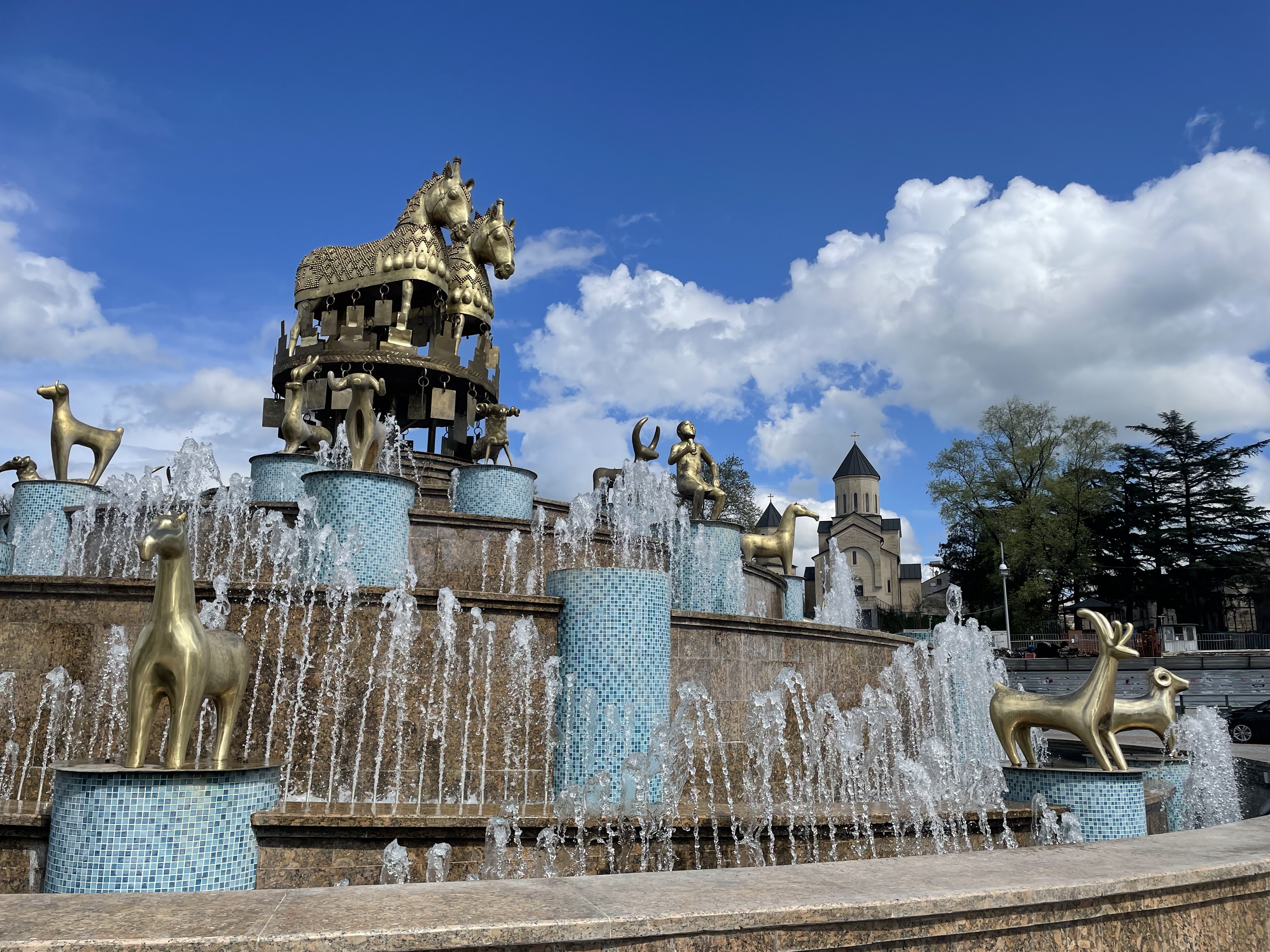
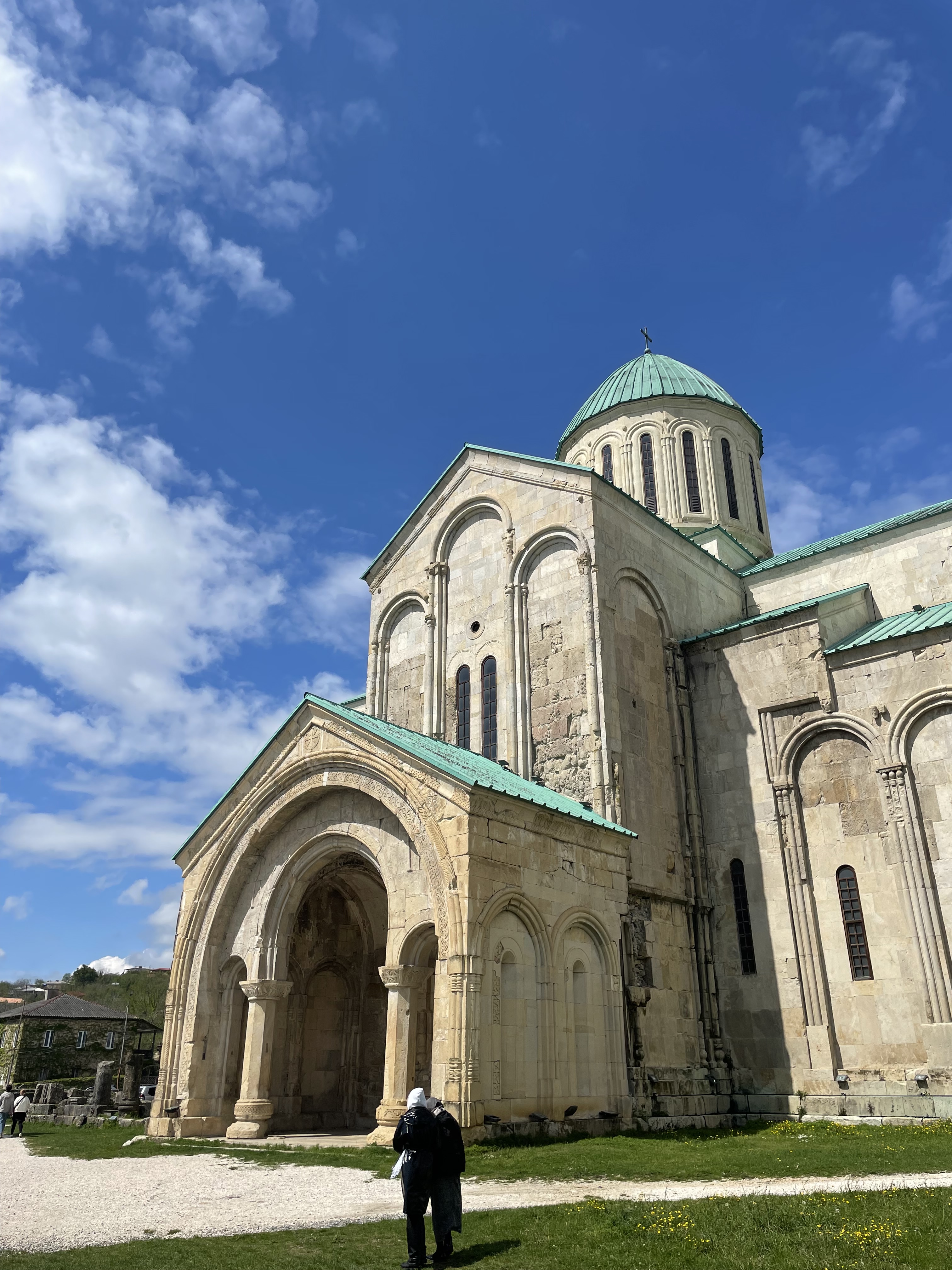
The town itself has a charming enough core, typical in the classic European way of formal streets and stone-face buildings with high ceilings, cluttered with cafes and restaurants. A big park sits in the middle of it all, with towering trees offering a nice respite and offsetting the remarkable modernist fountain sitting in the middle of the traffic circle. This may be the only working fountain I saw in my two weeks in the region. Above the city, past the bazaar and on the opposite bank of the river, Bagrati Cathedral marks another holy site for the Georgian church. Bagrati is sadly cold inside after a characterless renovation in recent decades, leaving blank walls rising up into the domed ceiling. The walk up from the centre of Kutaisi is, at least, pleasant.
Over breakfast and conversation with a visiting Kazakh couple, the head of the guesthouse family asked, in unpolished but eager English, if I would like some chacha, Georgian moonshine, or wine to go with my meal. I demurred before finally accepting some homemade wine out of a repurposed Coke bottle. Meanwhile his wife bustled in the background cooking and cleaning, and PooPoo hunted for sympathy and table scraps. In this setting, we arranged for the dad to take me out to two nearby monasteries, Motsameta and Gelati. Hopping in his Japanese SUV, a bottle of Coke sat in between the front seats, looking suspiciously like the one I’d had wine from an hour before. I didn’t ask and he didn’t take any drinks from it, all the better as he was an eccentric enough man as it was, and his driving reflected that.
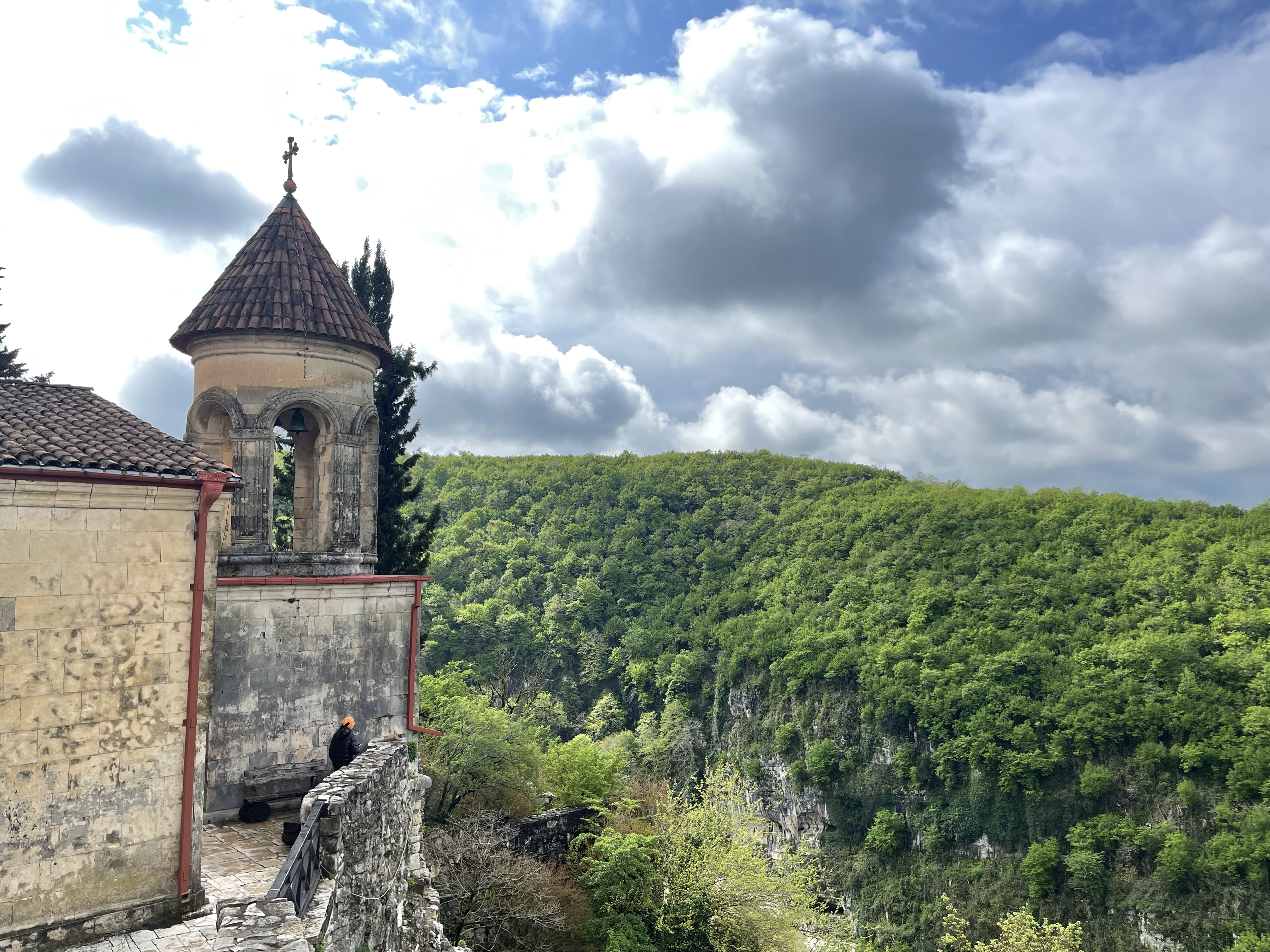
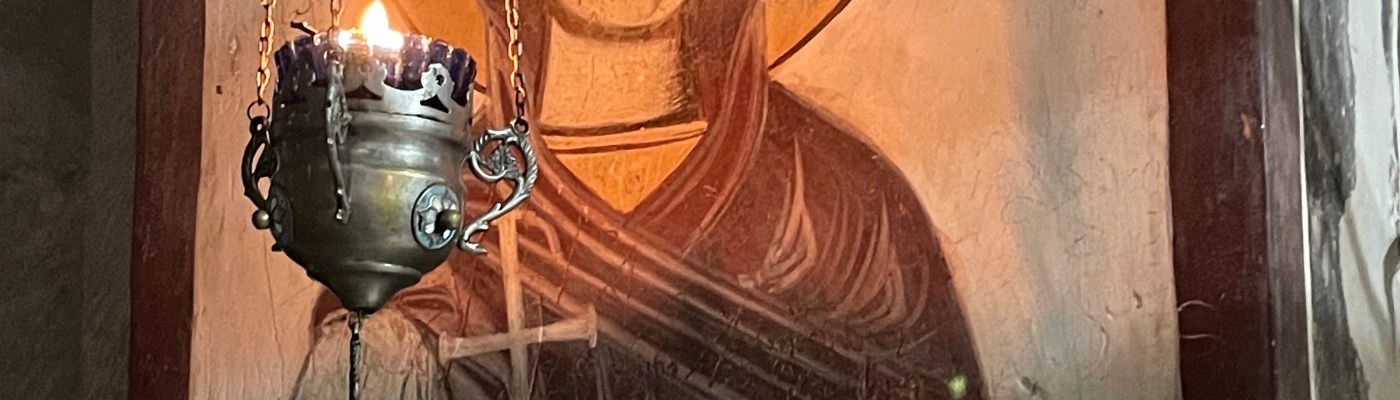
Motsameta is pretty, dark aged stone (again) atop an outcropping and (again) at a dramatic bend in a river. It is all done to lovely effect, and inside the main church building the monks, dark robed with flowing beards, chanted and shook incense in their censers. The scent mixed with the candles, always the churches have lit candles, filling the space with smoke. Frescoes adorned every surface, and I was grateful here to have a local guide. It is always awkward to walk into these sacred spaces – even when they don’t mean anything to me personally, I do want to be respectful. My guide takes this a step further, and as we walk back up to the parking lot, he shakes his head at the many cars that drove down the path to the church. This is apparently a local faux pas, and he tsks to me about the ‘fake religious’ sorts who do this, going so far as to take some time on our way out to close up the gate at the parking lot against further transgressors. How the cars already past the gate will get out, I am not sure.
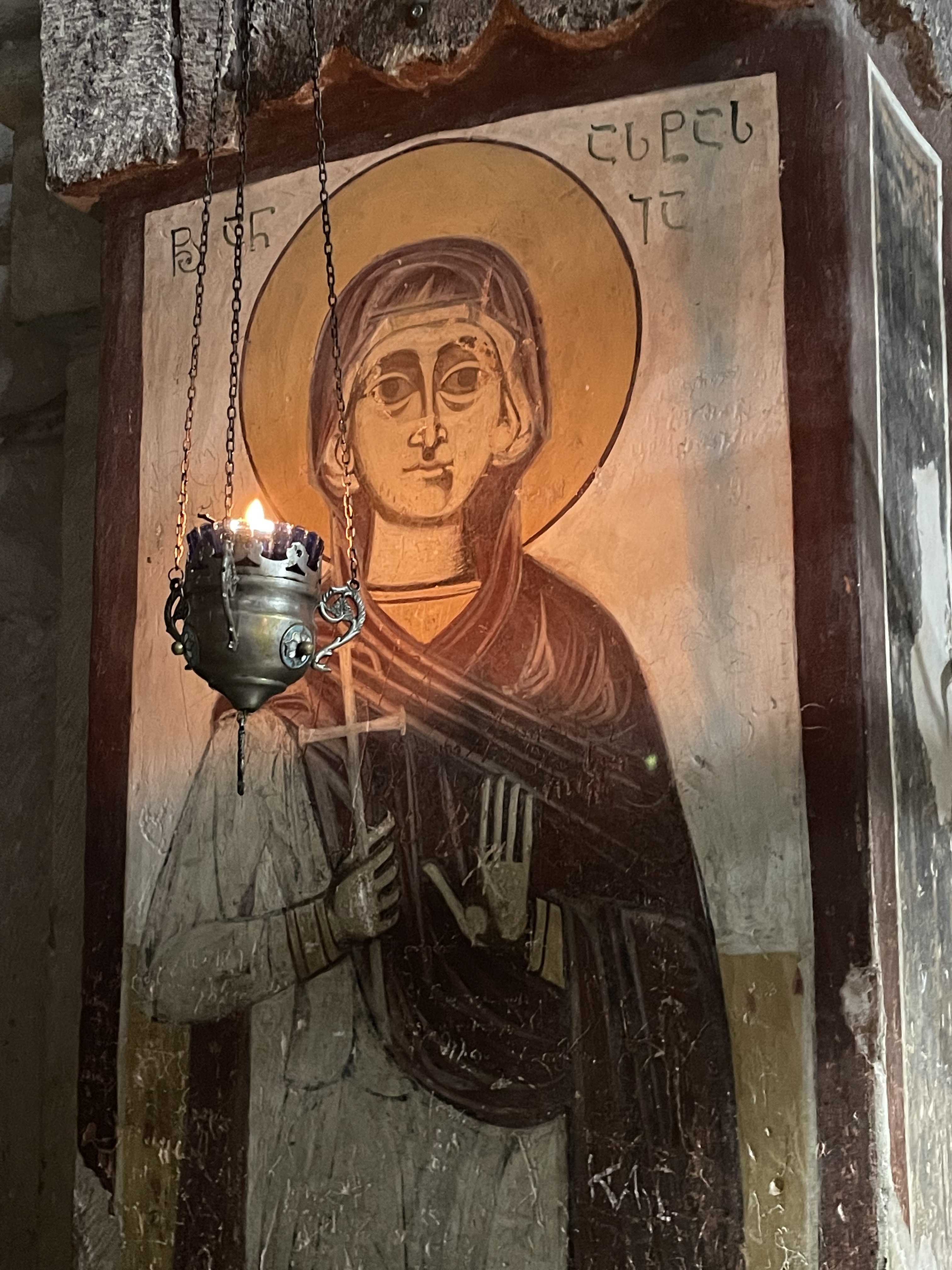
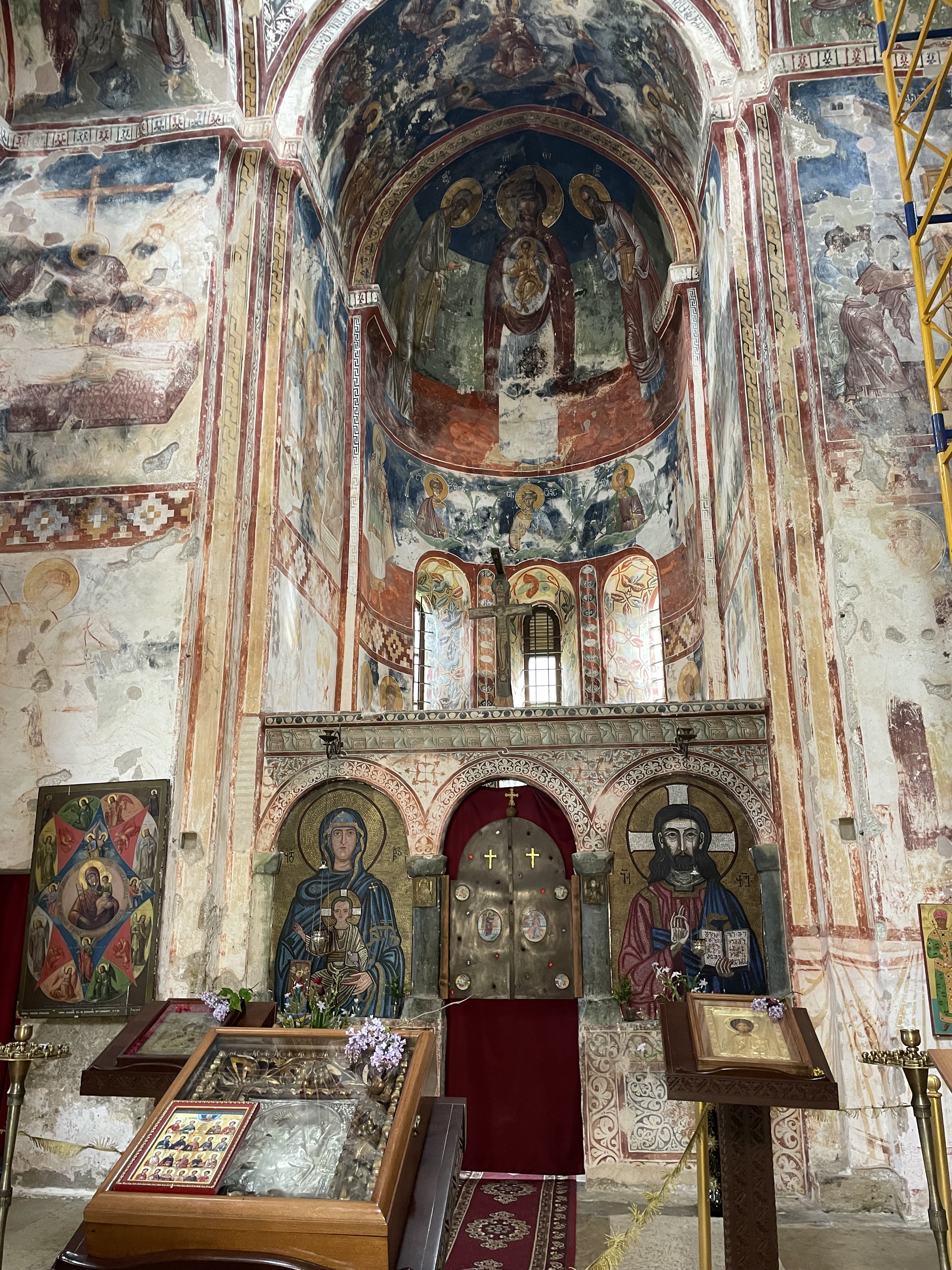
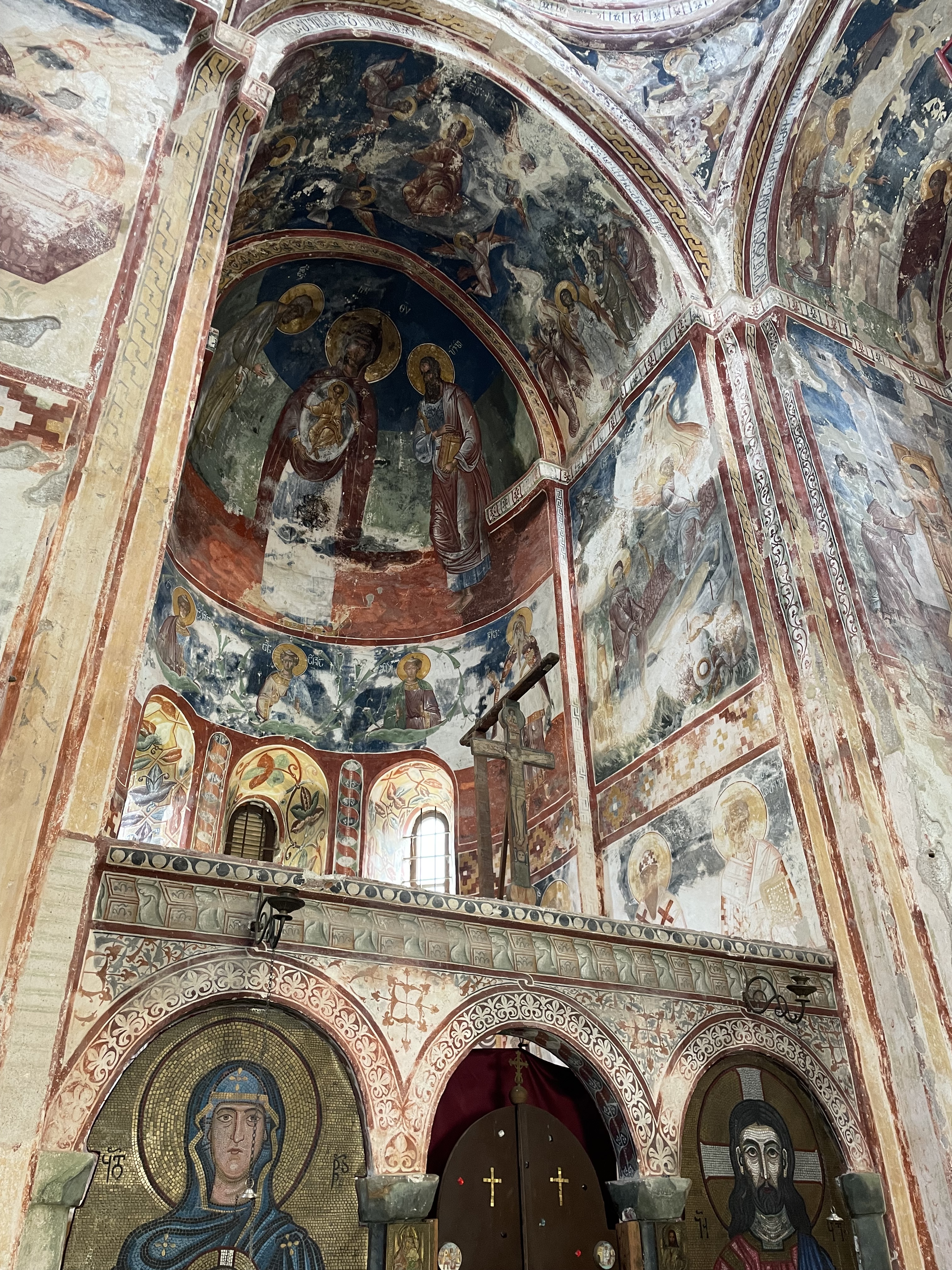
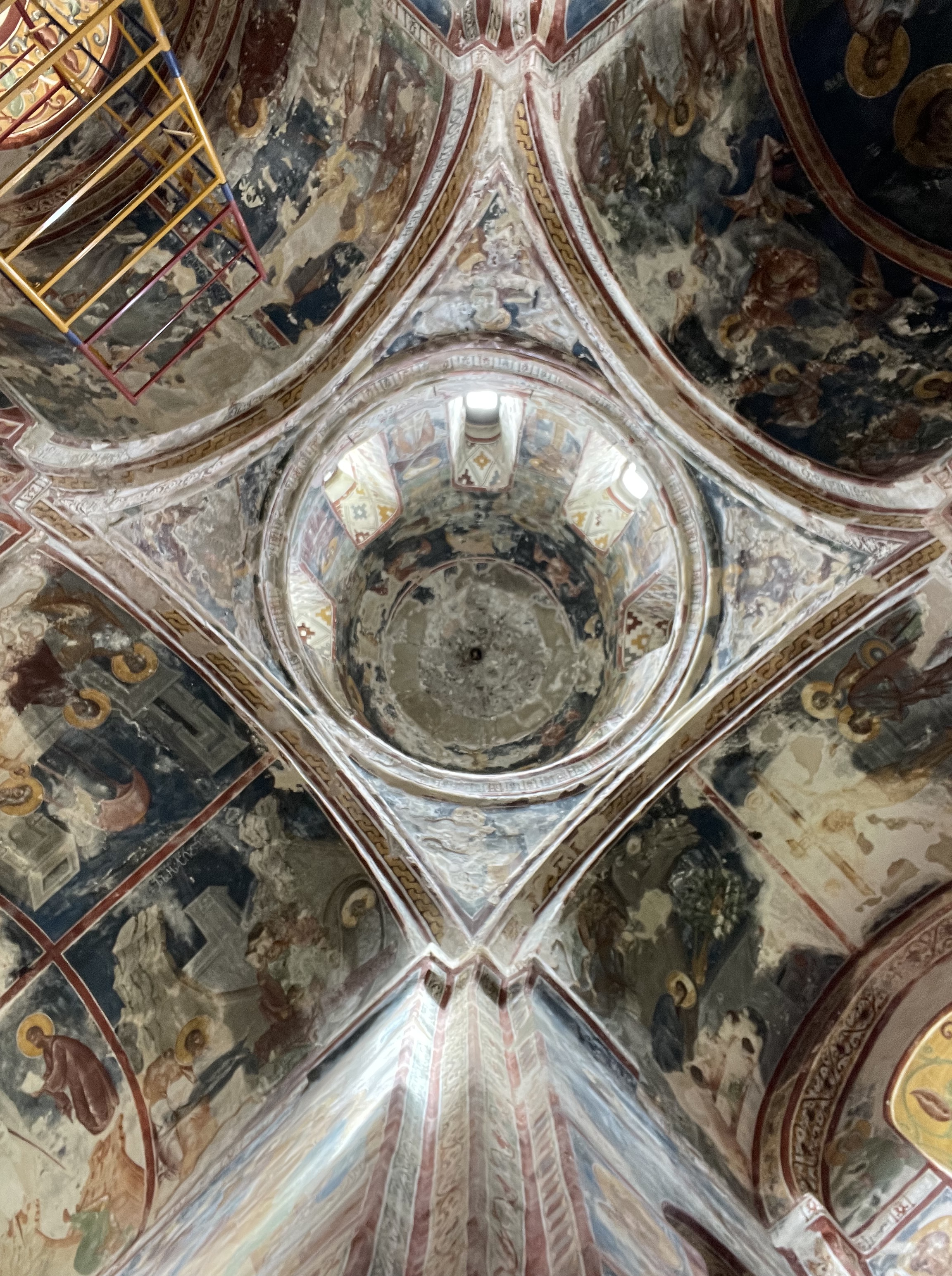
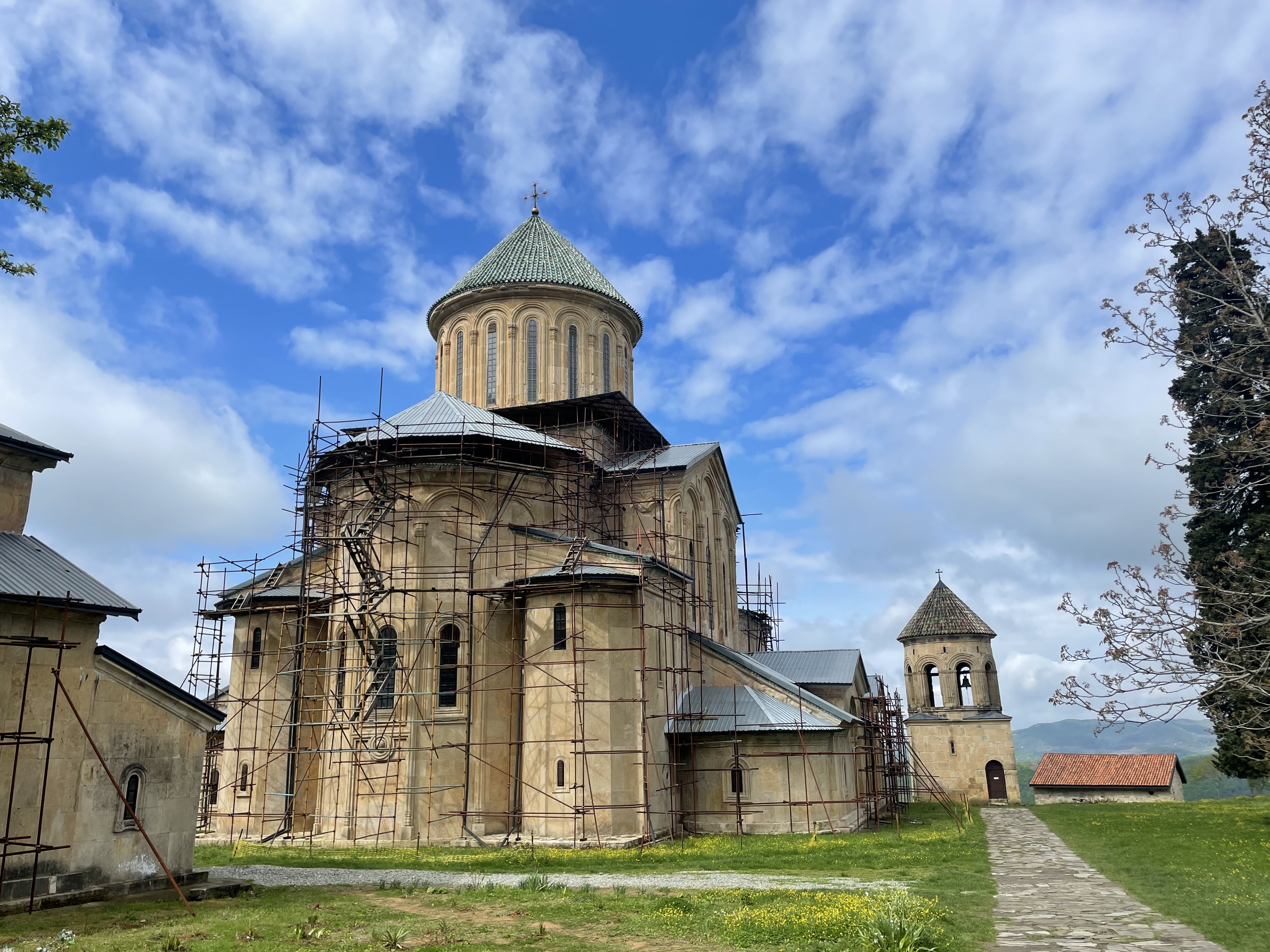
Farther down the road, and as always situated in a commanding location, the larger and more renowned Gelati Monastery complex awaited. Gelati is a big one, and again here the main church was filled with chanting monks, burning incense and candles, and…scaffolding. The central nave was a web of metal, encasing every wall. The goal, apparently, was a wholesale restoration of the fading frescoes, though the contrast between the new and old ones made me wish they’d just leave it alone. At a smaller church on the site, so far untouched by this impulse, there was no scaffolding, just centuries-old faded frescoes. Nearby, at the former main gate to the monastery, was the massive funereal stone and marker for King David, the Builder. He is the father of the aforementioned Golden Age of the country, and it seemed a fitting cap to my time in this land to see his resting place.
The last morning was another breakfast spread, another boiled egg and more wedges of khachapuri and lobiani, a better-than-it-sounds kidney bean pastry. Pink plastic-wrapped hot dogs, boiled, are a breakfast staple but I never tried this particular delicacy. At the table with me was Alexander, aka Sasha, from Saint Petersburg, another young émigré from Russia working in tech, a recurring theme across the region. We were both airport-bound this morning, headed to Hungary, and our host continued his gesticulating on the drive out to the airport, pointing out defunct furniture factories and the new Georgian Parliament building, a pristine bubble of steel and glass set in a field. Since it opened, the Parliament has again taken its business to Tbilisi, leaving the future of the building up in the air. Did I want to stop and take a picture, came the question. No, thank you. Same for the factory, same for the liquor store, same for the old German building. It was time to bid the Caucasus goodbye.

 Zak Abroad