Georgia-bound, Gyumri slowly receded behind us as the driver picked his way through the potholes. He was an older gentlemen, nattily dressed for our day of driving in slacks and a cardigan. I never got his name, but he reminded me of one of my grandfathers, the same deep-set, slightly sweet scent of tobacco around him. As we got underway, he put forward some phrases of broken English, basic questions as we felt each other out. He had spent 9 years in Glendale, working as a taxi driver, before coming back to Armenia to be with his family here. Conversation came in bouts as we passed up and down the various low passes, making our way to the border within an hour or so. From there, the road to Akhaltsikhe unfolded in a series of small towns. Migratory storks had taken up nesting sites atop electricity poles, the massive birds enlivening the drive until we entered a meandering valley and left them behind.

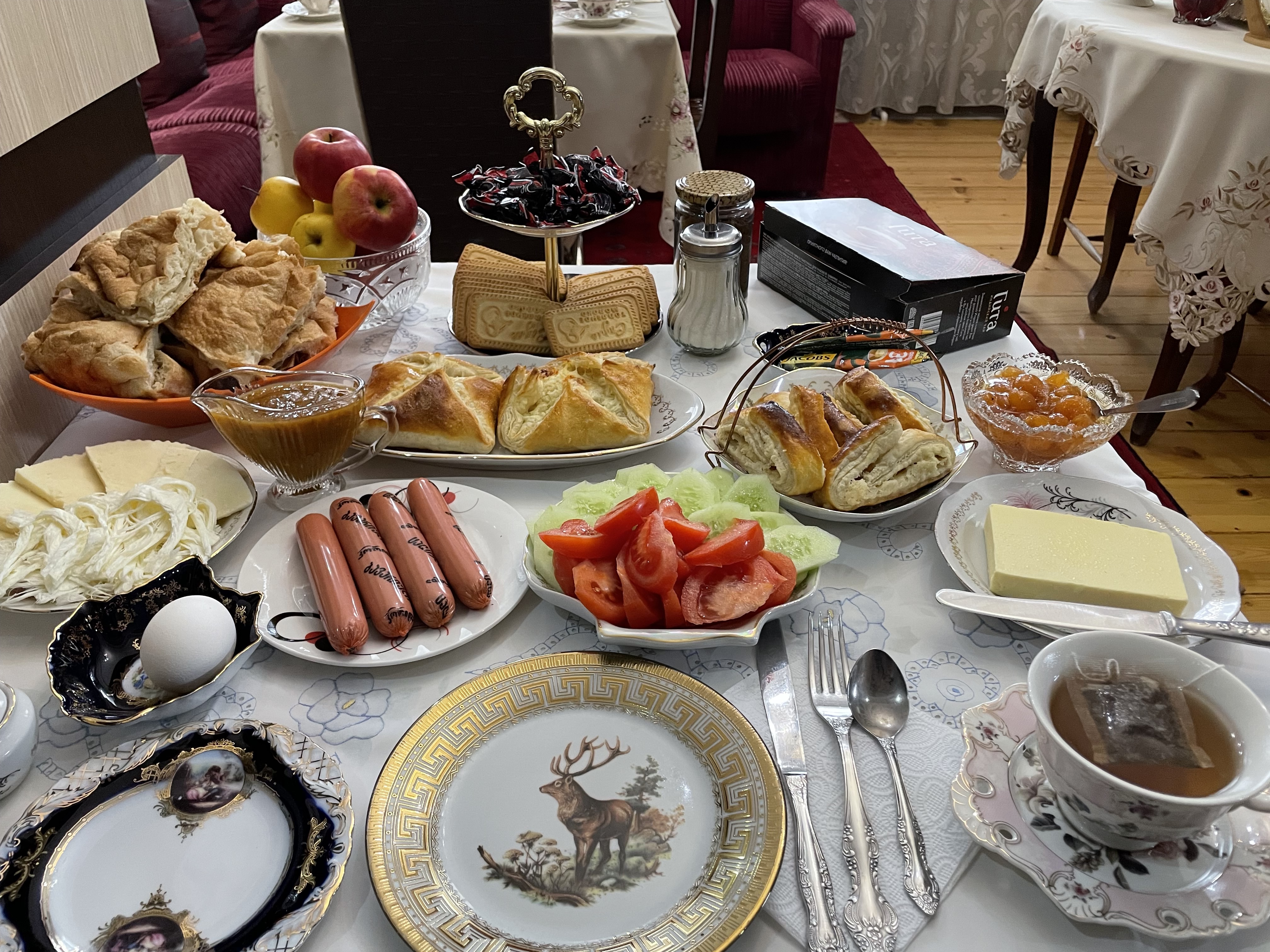
It was clear we were nearing Akhaltsikhe when the driver pulled his phone out to check directions to my guesthouse. It stayed there, in his palm, until we pulled up to the guesthouse. Thankfully Akhaltsikhe is small and the traffic mild. He drove so slowly that he got pulled over for a spot breathalyzer test. We were both warmly greeted by the couple who run the guesthouse and, to the delight of my driver, also speak Armenian. Over a platter and cup of coffee, he even booked a future visit to the guesthouse with his wife. I did not get a finder’s fee for my part in this, but I was treated with a lavish breakfast spread every morning, an almost embarrassing amount of food heaped in front of me. This was the legendary Georgian hospitality in full flower.
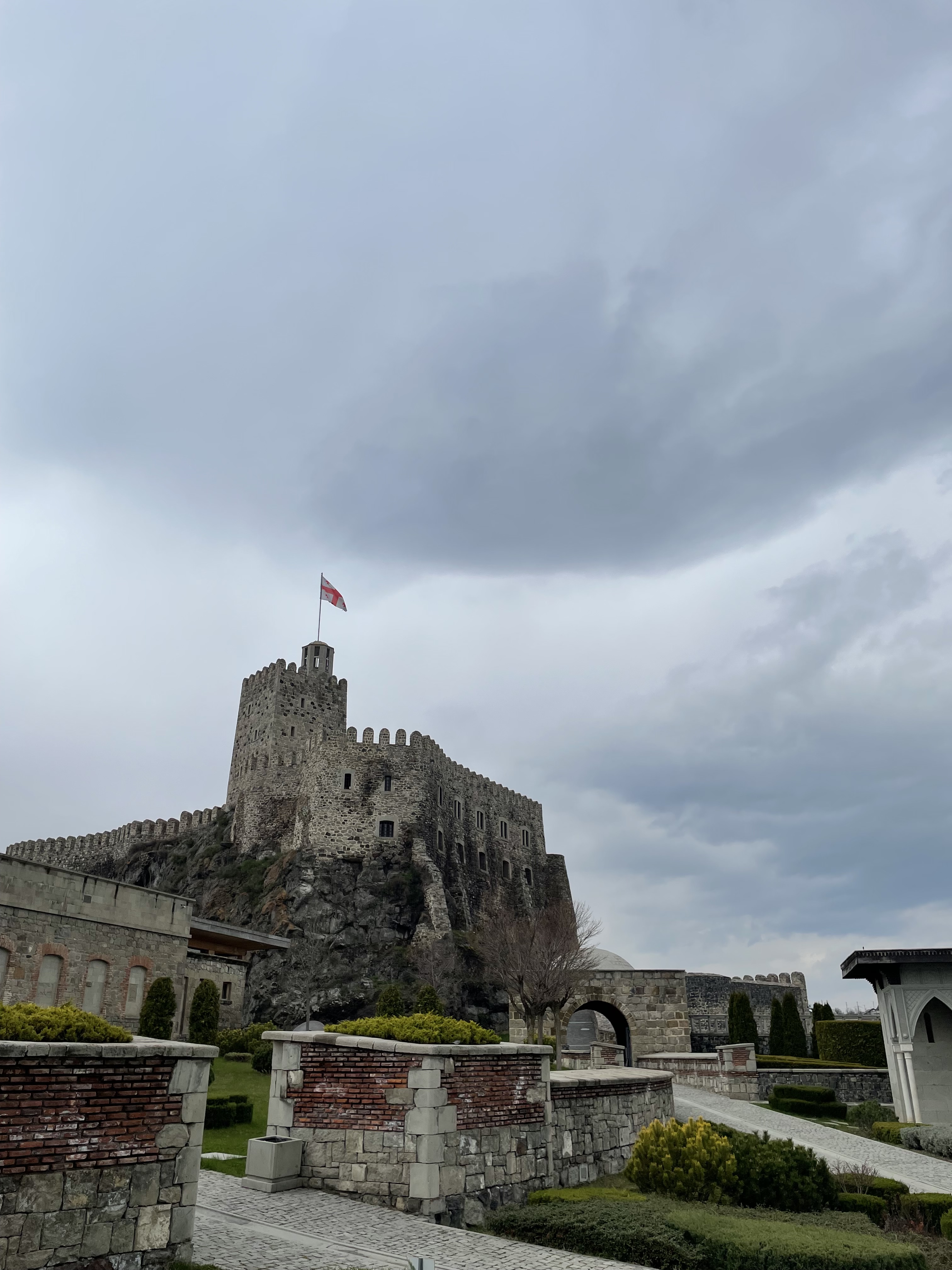
The guesthouse was on a winding street of guesthouses and attached restaurants, the equivalent of a backpacker district for this small town. For me this meant easy access to my first stop, Akhaltsikhe Castle, across the street. The castle is a sprawling complex of buildings, churches, gardens and even a mosque safely tucked away behind stone fortifications. As a beneficiary of government funding, the castle was restored in the last decade and, for once, done so tastefully. The restored buildings and grounds give you a clear sense as a visitor of what the space was like over the past thousand years it has existed. The selection of this particular location, a hilltop at a bend in the river, faced with a steep drop on most sides, seems quite sensible when looking down from the upper tower of the keep. View aside, I had managed to see as much of the castle as I could before my hunger caught up with me.
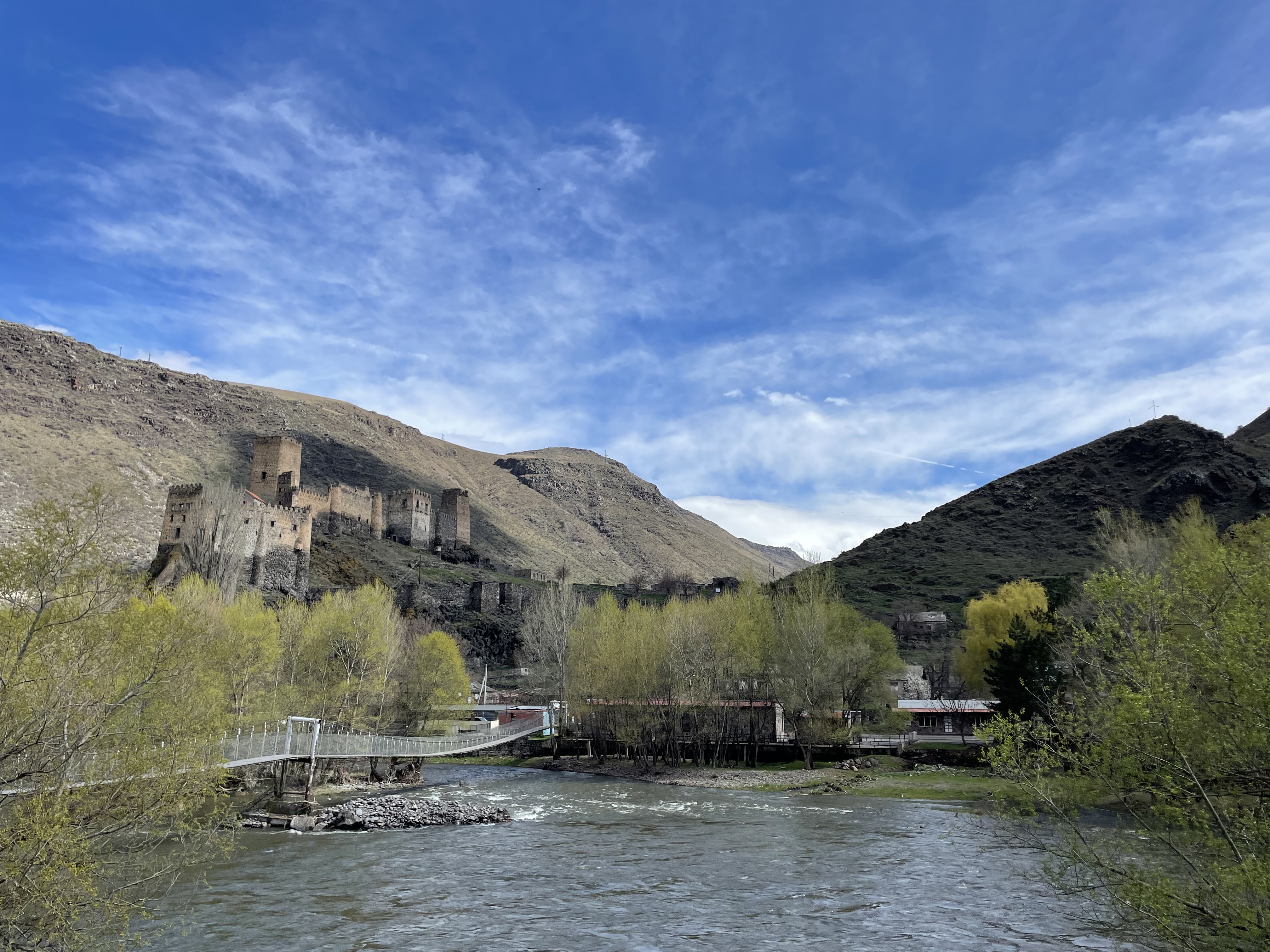
I had arranged with Seiran, the husband in the husband/wife duo running the show at my guesthouse, to drive me out to Vardzia the next day. We set out for the thousand-year old monastery after breakfast, backtracking the previous day’s drive as far Khertvisi Fortress, yet another dramatically crumbling ruin in a breathtaking spot, before turning down into a canyon. As we went along, Seiran asked me about Canada and why I came to visit Georgia. In turn, I asked him about his family and their guesthouse, and we developed an easy rapport. He was in no hurry, he told me, so anywhere I wanted to stop, just say the word. We pulled over a few more times at various viewpoints on the way to Vardzia, the sunny weather prevailing over a landscape riven by a low river and almost comically flush with ruins while cows meandered from pasture to pasture. All of this was just an opening act.
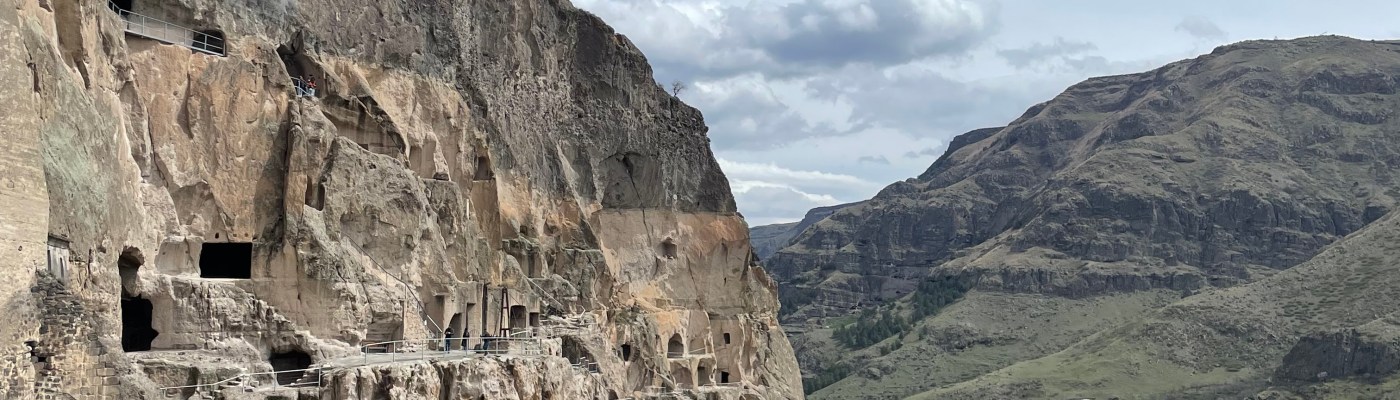
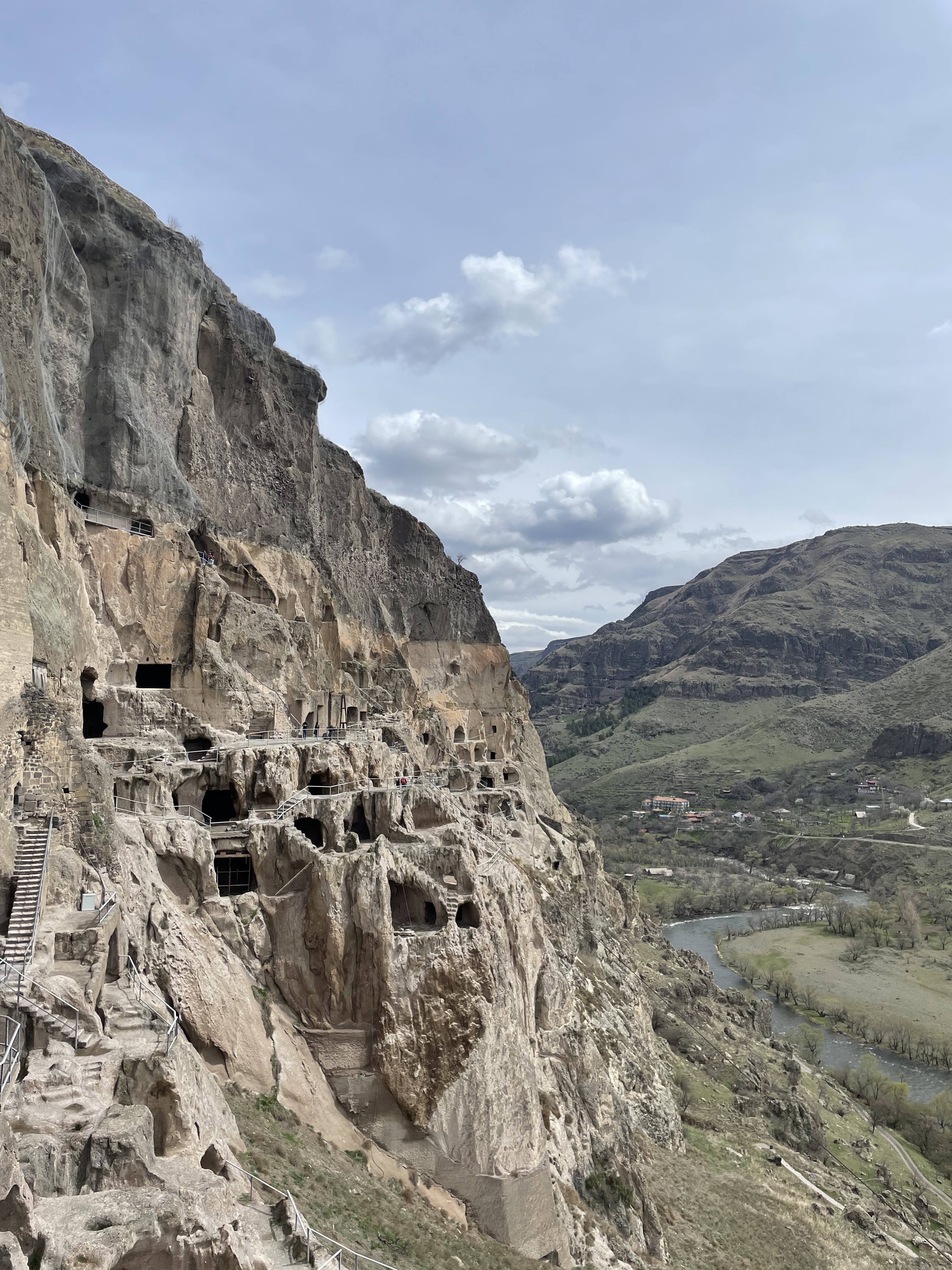
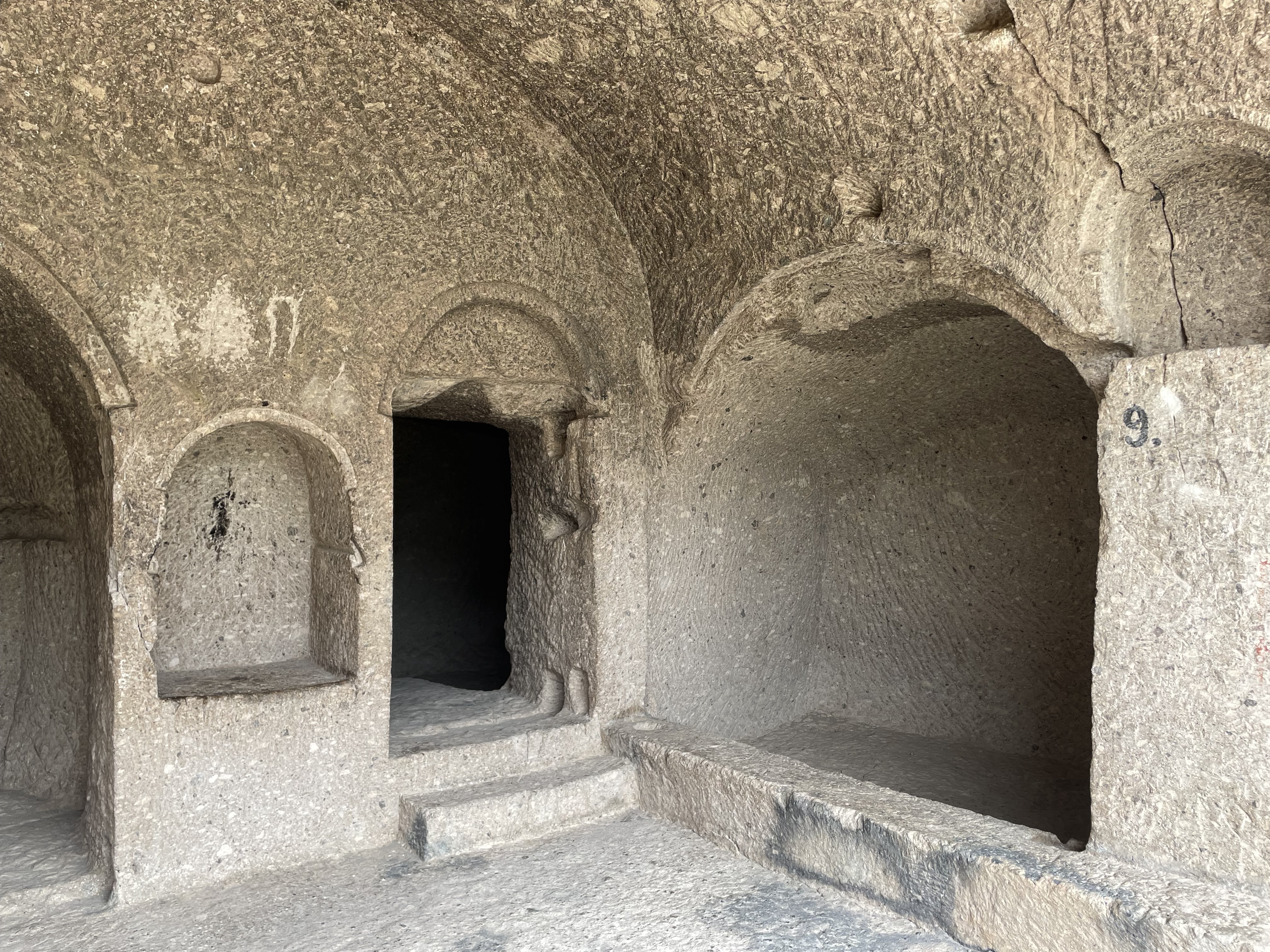
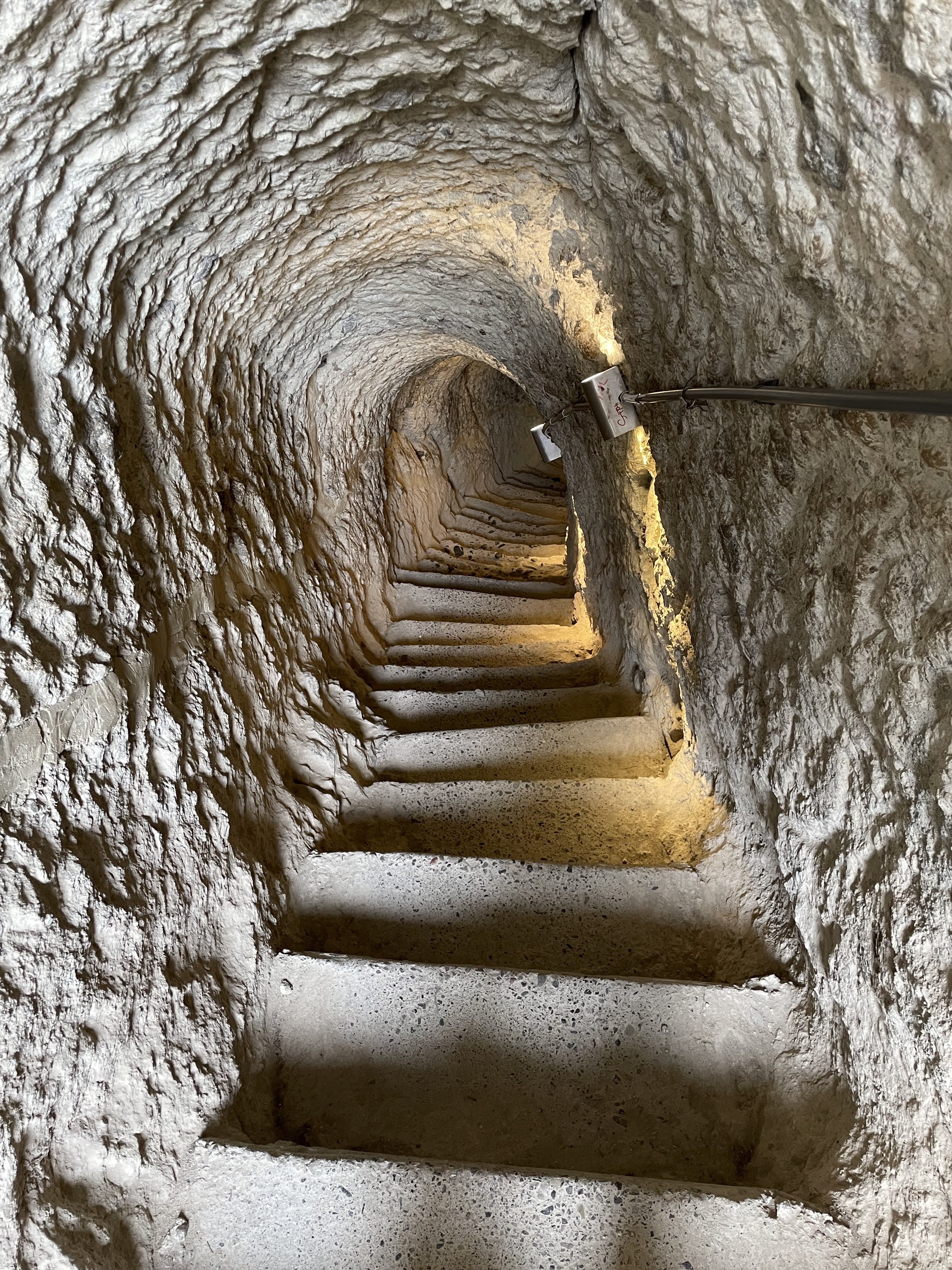
Vardzia is a 900-year old cave complex carved directly into a steep cliff face. It was built during Georgia’s Golden Age under the direction of Queen Tamar, and the visitor gets to walk through not only her personal chambers but through a sprawling warren of caves that feel like a human-scaled ant colony in dissection. One of the highlights is the Church of Domition, the religious epicentre of Vardzia and adorned with delicate frescoes inside and out. Behind the nave is a series of tunnels climbing up higher into the earth itself, a dizzying array of steps twisting through solid rock leading to secret viewing locations and escape routes. Security was a high priority, and a similarly steep staircase/ladder, once built as a secret escape tunnel, today is the endpoint of a walk through Vardzia. The ingenuity on display here is amazing – many thousands of chisel marks scarring walls in every chamber, water (and wine) storage, food stores, and cells for monks, attendants, and others. It was a real highlight for me of the trip as a whole, and as a midday visitor in the spring I had the site almost to myself, which only enhanced the solemnity of the place.
Unlike my last location change, this time there was a local marshrutka, a well-traveled Sprinter van that patiently bore the comings and goings of passengers on the four-hour ride between Akhaltsikhe and Kutaisi, my last stop in Georgia. We joined the country’s main east-west highway shortly after departing the Soviet spa hotspot of Borjomi, where an unceasing line of tunnel and bridge projects made it clear that the Georgian government means business about improving its road network. While shorter trip times are appealing, witnessing the drivers in this region the past couple weeks made me question whether giving them room to drive faster was a good idea. These thoughts stayed with me as the van pushed down into the valley and on to Kutaisi, reinforced every few minutes by bearing witness to new acts of driver bravery and recklessness.

 Zak Abroad