
A few hours and one transfer later, Trenitalia deposited us at the station in Bolzano, a small city and the seat of the Alto Adige, a province that climbs up the south face of the Alps and is marked by steep mountains and long, vineyard-covered valleys. The region also straddles different cultures, a mix of Italian and German, a history reflected in the erstwhile Victory Monument, a 1920s era triumphal arch marking the transfer of the region from the defunct Austria-Hungary to Mussolini’s rising Fascist Italy. The era was included a harsh campaign to Italianize the one-time Sudtirol, with immigration of Italians and banning of all things German, going so far as to mandate families to change names. Today, a quieter and more introspective tone is set at the monument, which hosts a museum in its basement confronting the tumultuous recent past. On the streets of the old town, the Germanic influence remains strong, and people seem to be equally comfortable in either language. As a result, and for these obvious reasons, Bolzano feels very different from other parts of Italy.
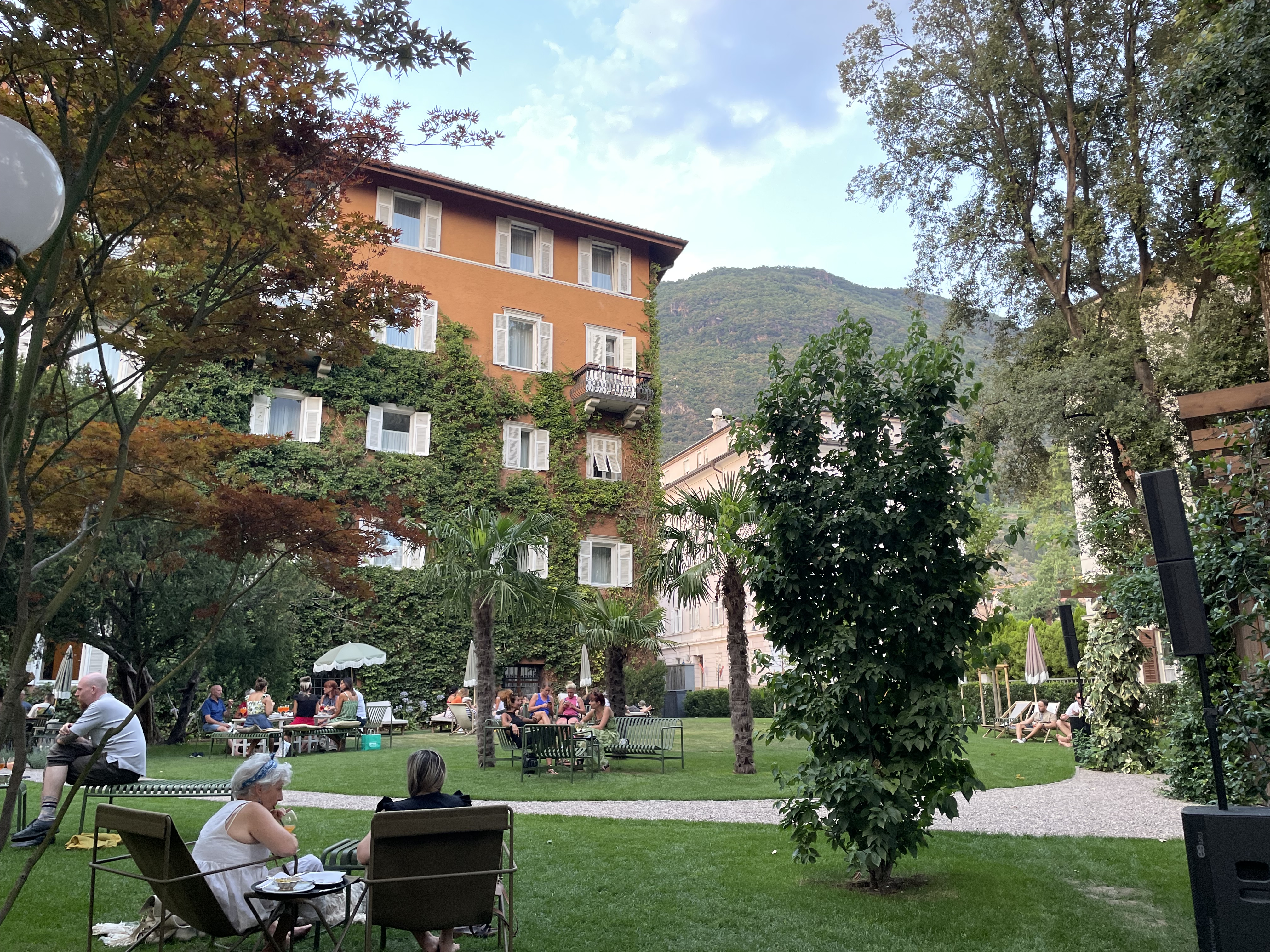
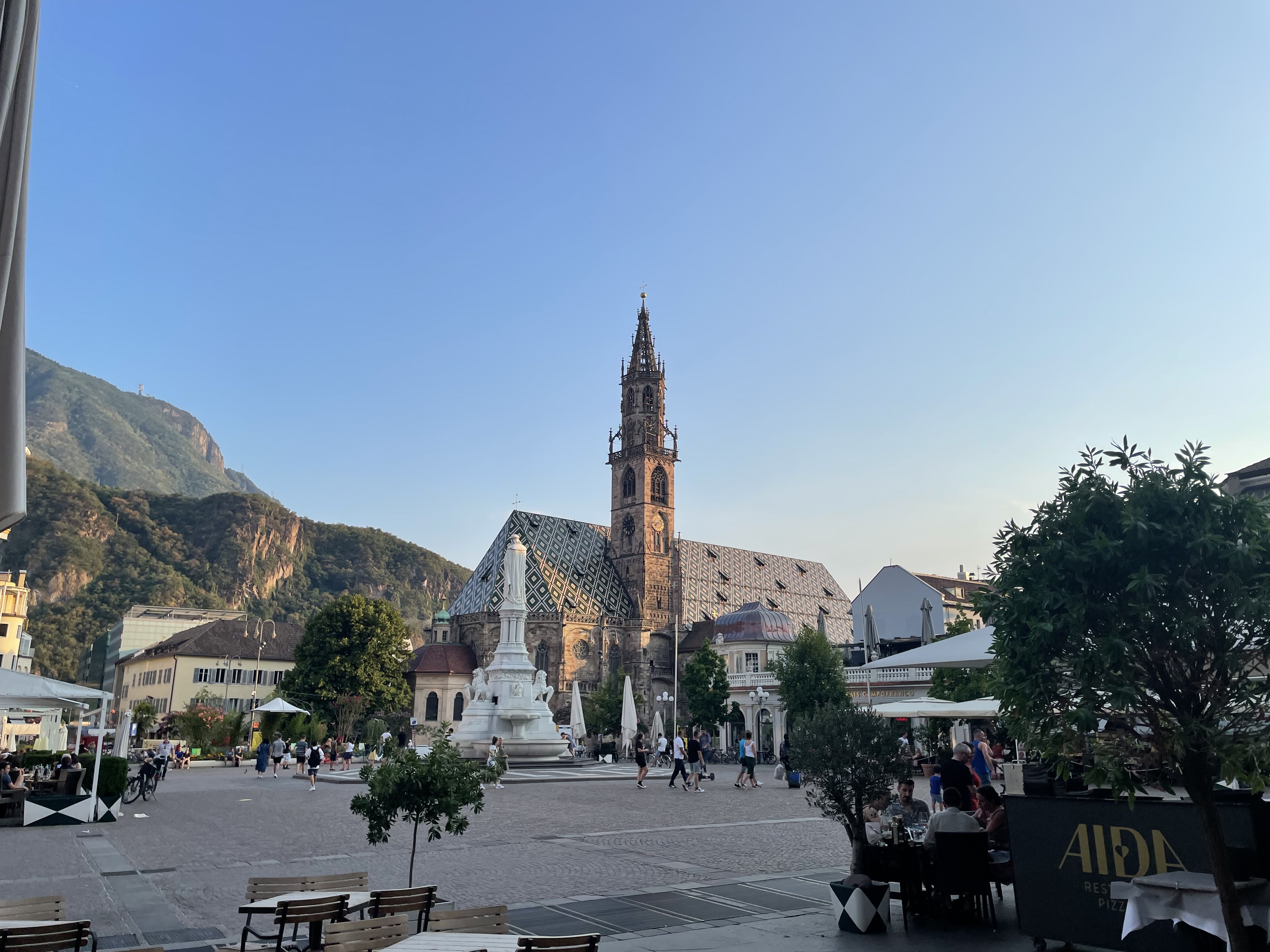
Our ivy-covered hotel was fronted by a grassy yard with scattered tables, benches and lounge chairs. Roaming servers take drink orders and are readily flagged down to provide the weary traveller with an aperol spritz, negroni, or other concoction. The sharp pastels of the building would make Wes Anderson proud. The good living theme filters through the entirety of the old town, a typical affair of winding cobblestoned street, shuttered windows, church-fronted squares and a profusion of bakeries, bars and cafes. Outdoor gear shops litter the old town, the sharply rising mountains in the background ever present, like a Whistler with history but no chain restaurants. It is an easy stroll, small enough to get familiar with and big enough to continue making new discoveries. Outside the old town is the 20th century city, heavy arcaded facades and on the Saturday we were there, a massive outdoor market with an enormous quantity and variety of things for sale, enough to make a mid-sized American mall blush and worth a slow morning walkthrough.

The premier cultural site is the Archaeological Museum, which in reality is a space dedicated to Otzi, an Alpine mummy who lived over 5,000 years ago before taking a arrow in the shoulder and meeting his demise in a mountain pass. Discovered by hikers thanks to receding glaciers in the early 1990s, he apparently set scientists into a tizzy, single-handedly remaking the timeline of the region’s Copper Age. Like any of us, he too had a bunch of stuff (leggings, shoes, axe, tools, clothing, bearskin hat) which survived the centuries with varying success. It is genuinely impressive to see the plethora of research to come from this find, and though I am a liberal arts major, can only imagine how exciting it must be for researchers to work with Otzi and his stuff. Quite the inadvertent legacy for one person to leave behind.
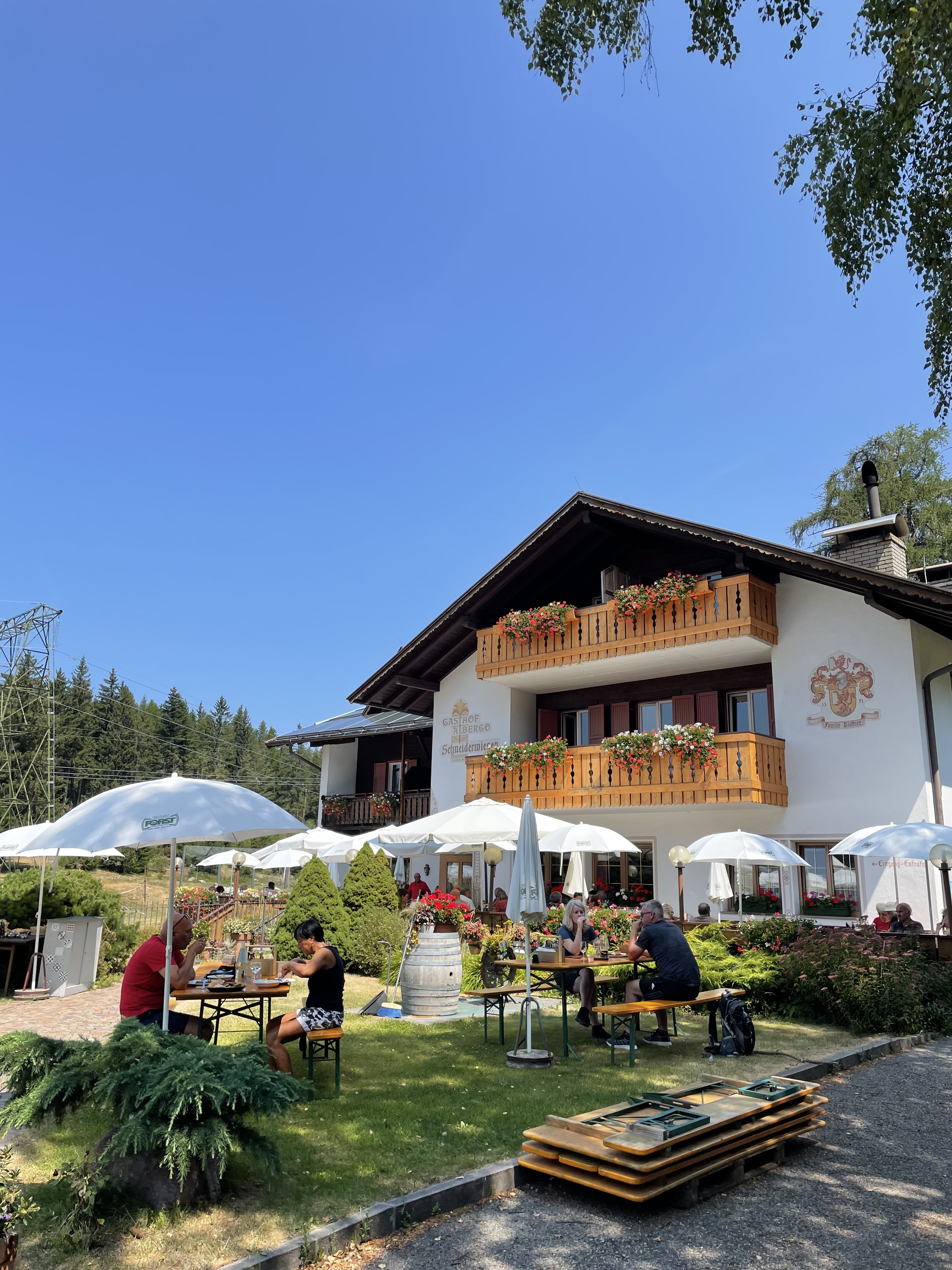
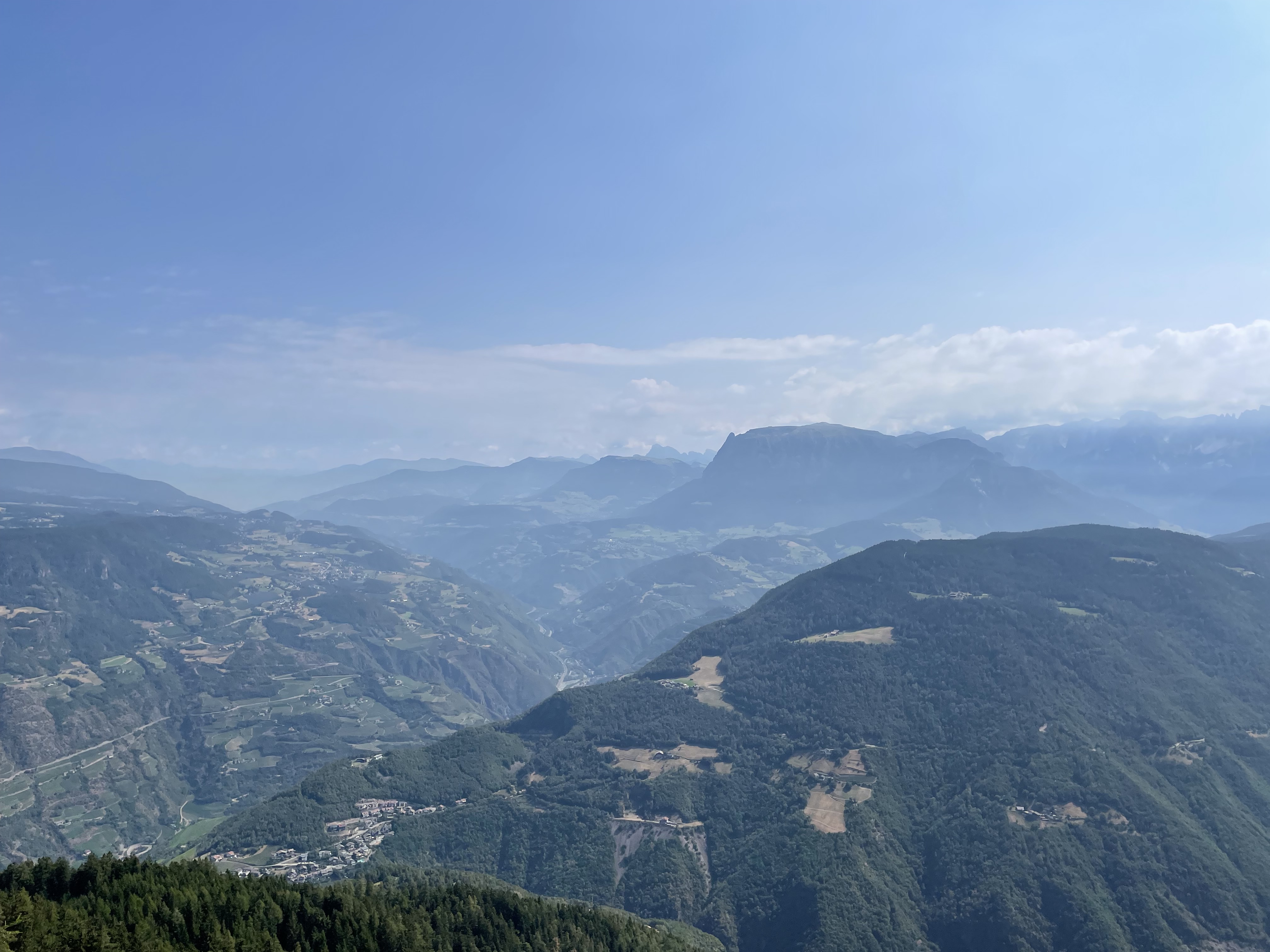
One reason Bolzano made the destination list is that the city features not one, not two, but three cable cars connecting the valley to the peaks above. We opted for the one to Kohlern, a small village listtle more than a cluster of houses with a few B&Bs and a church. Having the cable car assist for the steepest part of the ascent, we completed a three hour hike which took us in a loop around one of the lower peaks, a land of dense trees and a few persistent flies. The views, from the start, are spectacular, with Bolzano below and small villages dotting the rolling hills across the other sides of the valley. In the distance, the sharp and jagged outlines of the higher mountains stood in sharp contrast to the blue sky. We took this in from the Titschenwarte, a stop over viewpoint with a long picnic table where European hikers lunched on homemade sandwiches with a glass of wine. The loop down passed small farms and wandering chickens, and we took a break in a small guesthouse offering up cold radlers on tap. Everything felt Swiss or Austrian, and only Julie Andrews leading children in song was missing to complete the scene.
A recurring theme in Bolzano, and apparently as we have continued this trip, in Italian cities generally, is the presence of bookstores. I regard this universally as a positive thing, and even though my Italian is essentially nonexistent, I still enjoy poking into each store and skimming the shelves, taking cues from cognates and covers. It actually makes me want to learn Italian, something I never thought would be true. Staff in every shop size up a customer when they walk in, trying to guess whether to lead with Italian or German. Perhaps unsurprisingly, German (or English) is directed at us almost every time. I loved the easy bilingualism of Bolzano, and it was a real joy for me to get to interact and converse in German, however rusty it may be, in stores and at restaurants. It felt like spending time with an old friend and was a big part of what makes Bolzano both a unique and lovely place.
Refreshed from our days in this local paradise, it was a hard shock to depart. Our first train was delayed on its way from Austria south, pulling twenty minutes late and fully loaded, a standing room-only nightmare. Thankfully we had booked seats and gave some students the boot, instead parking ourselves, bags at our feet, to look out the window. This must have been the most crowded non-Chinese train of my life, but we made our connection in Verona with ten minutes to spare, speeding away on a blissfully calm and uncrowded Frecciarossa, the bullet train brand that ties the country together and would have us to Venice in just a bit over an hour.
 Zak Abroad