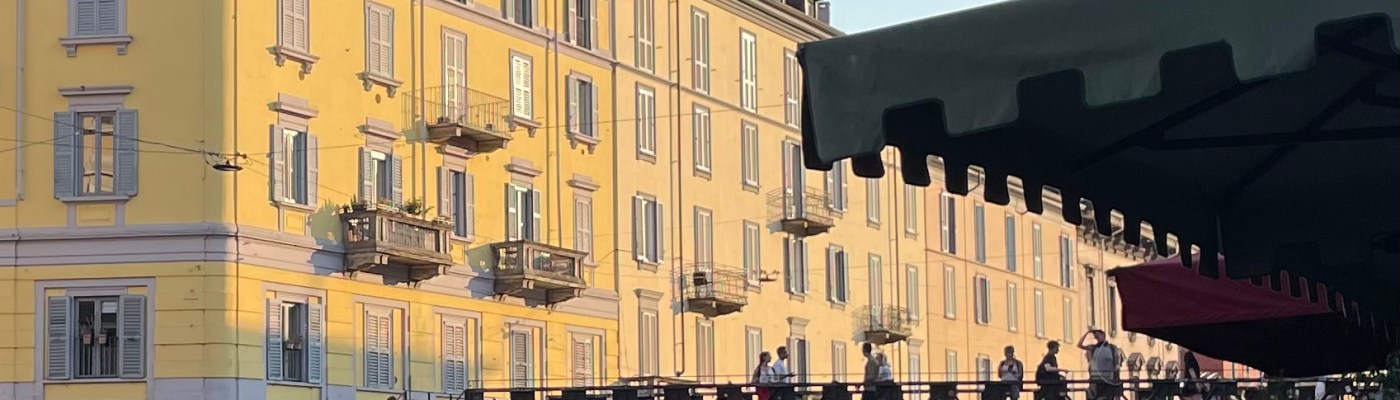
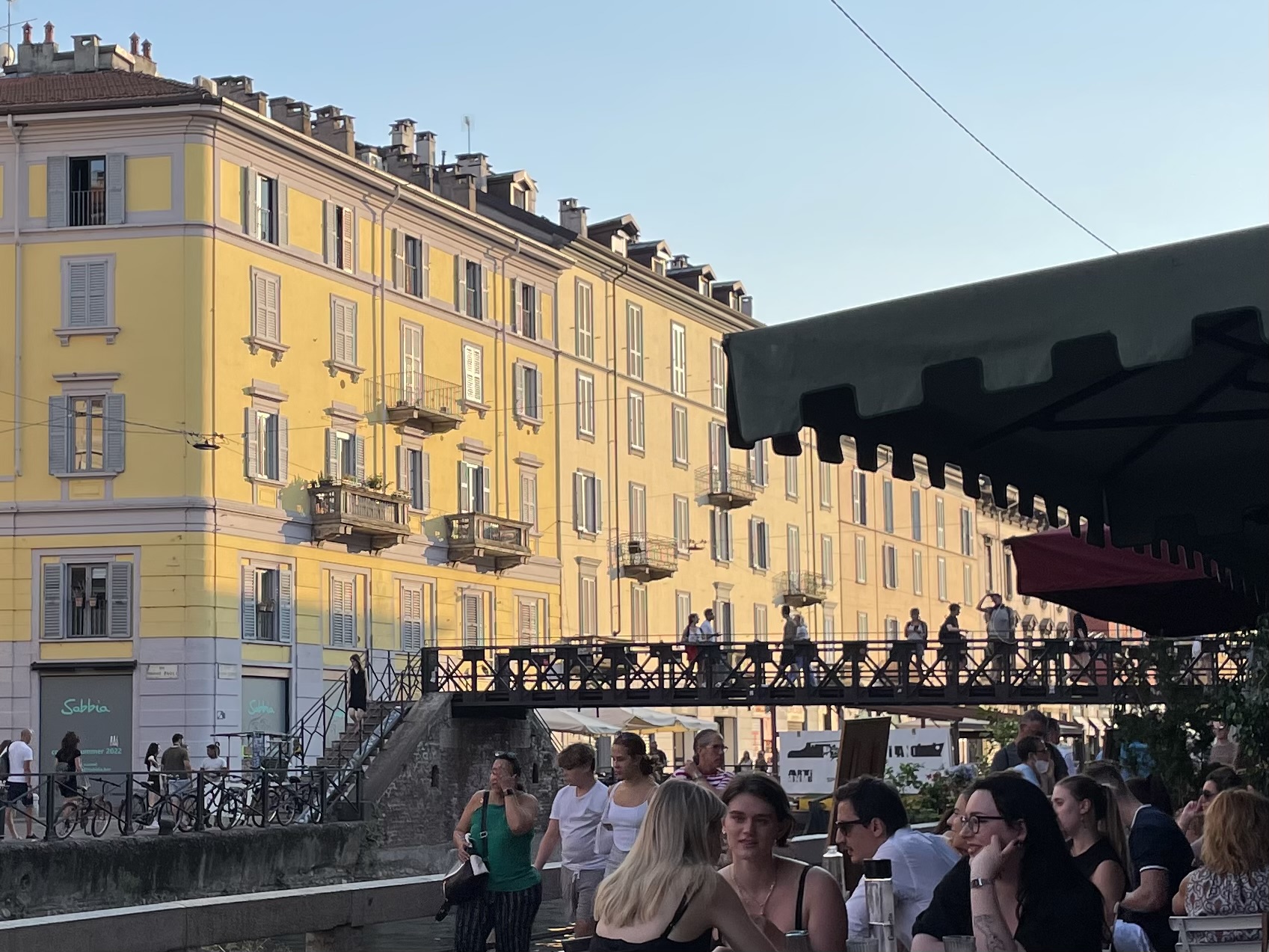
My first and only RyanAir flight came and went quickly, a series of light naps interspersed with views over the wing of the winding course of the Danube, a peek at the Istrian peninsula, and the blue expanse of the Adriatic shimmering in the late morning sun before touching down in Milan. This marked the last solo portion of the trip, as Hannah arrived from Vancouver a few hours later to our hotel near Porta Genova, a scant few hundreds to the navigli, a series of canals dating back to the middle ages. The reason for the canals has shifted over the passing centuries, and industry has been supplanted by tourism, marked out in repeating patterns of chairs, tables and umbrellas arranged in tight squares, a phalanx of hospitality on your way to the restaurant’s door. It makes for a bit of a show in the evening, but the effect is such that the excesses can be excused by the general atmosphere that prevails. For our part, the first night followed the set menu for transcontinental arrivals: settle in, wash up, get a bite, have a drink, stay up past nine and then collapse into the mattress for a long sleep.
More or less caught up, we opted to walk the half hour or so to the Duomo, the magnificent centerpiece of historic Catholic life of Milan. Mornings generally were a good time to walk, the closest we were to get to cool weather, before the heatwave gripping the region ratchets up during the day and makes a walk down the street an endurance test. Milan is unsurprisingly littered with small caffes offering up brioches and espresso, and taking advantage of this en route to our first destination became the daily ritual. The Duomo itself is enormous, a cavernous and ornate structure littered with intricate stonework and stained glass. It is a truly impressive building to explore, especially on the rooftop where the visitor has far too much space to roam while absorbing city views. It was a bit ironic amidst all the opulence (and after paying an entry fee) to see small spaces to offer donations to the poor within the church. Clearly there is money to be had, it may be more a matter of where it is spent.

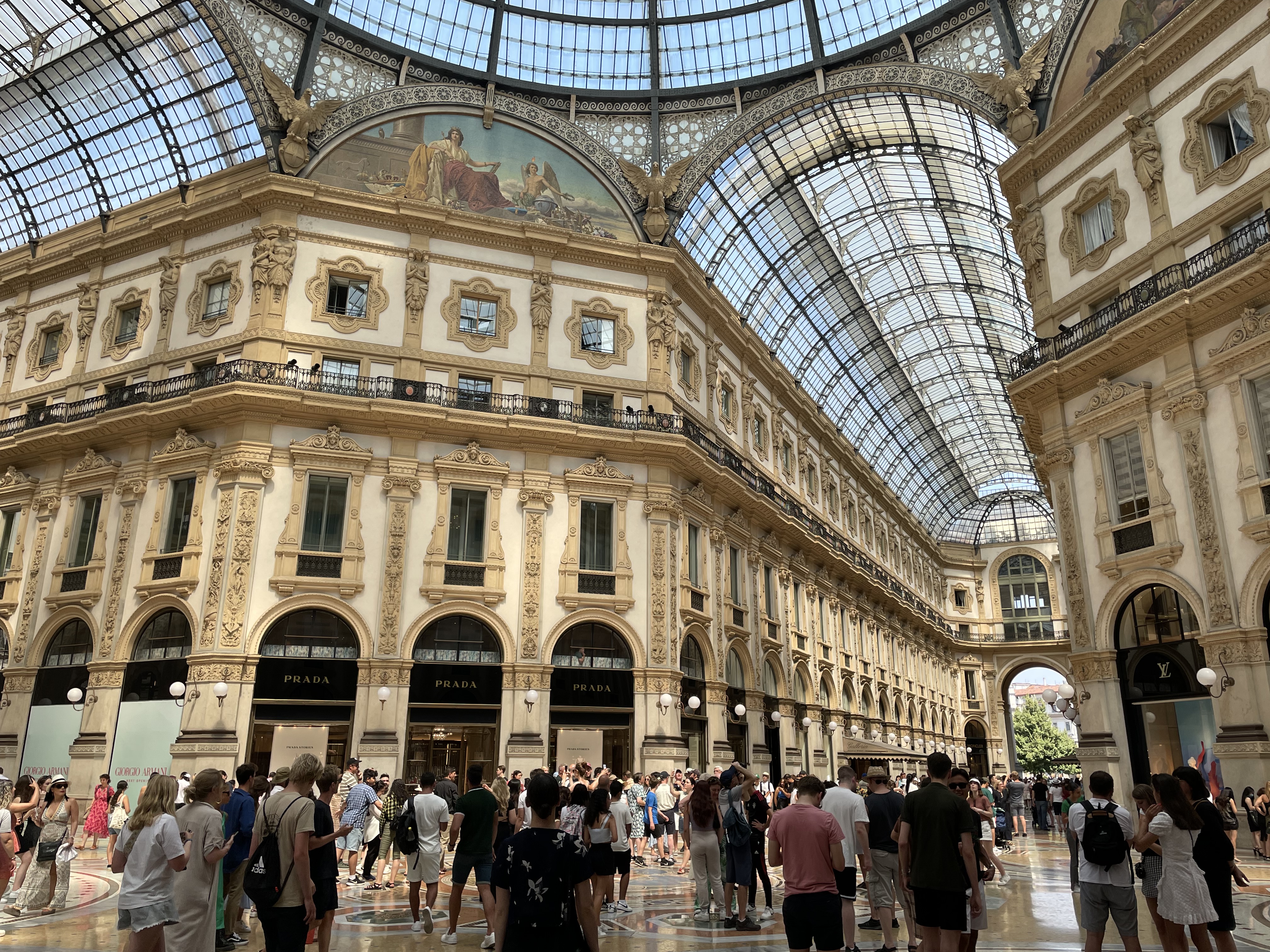
Clamoring around through the Duomo, and with the heat playing a bigger role with noon nearing, we explored the nearby Galleria Vittorio Emanuel II, an immaculate open air shopping centre with brands beyond both my financial reach or personal interest. Nearer my price point were the small bakeries all over with small pannini and pizza for a quick takeaway lunch, another element of ritual while here. The last big site of the day was the Museo Novecento, a mostly 20th century collection of art in a building designed with the collection in mind. The works spoke to the potency and creative foment of the years leading to, between, and after the world wars that ravaged Europe. Some favourites of mine were the works of Umberto Boccioni and Giorgio de Chirico, but in general the nature of the work on display was captivating, with themes of industrialization, urbanization, mechanization and the disintegration of tradition, the search for stability and identity prominent in so many of the pieces.
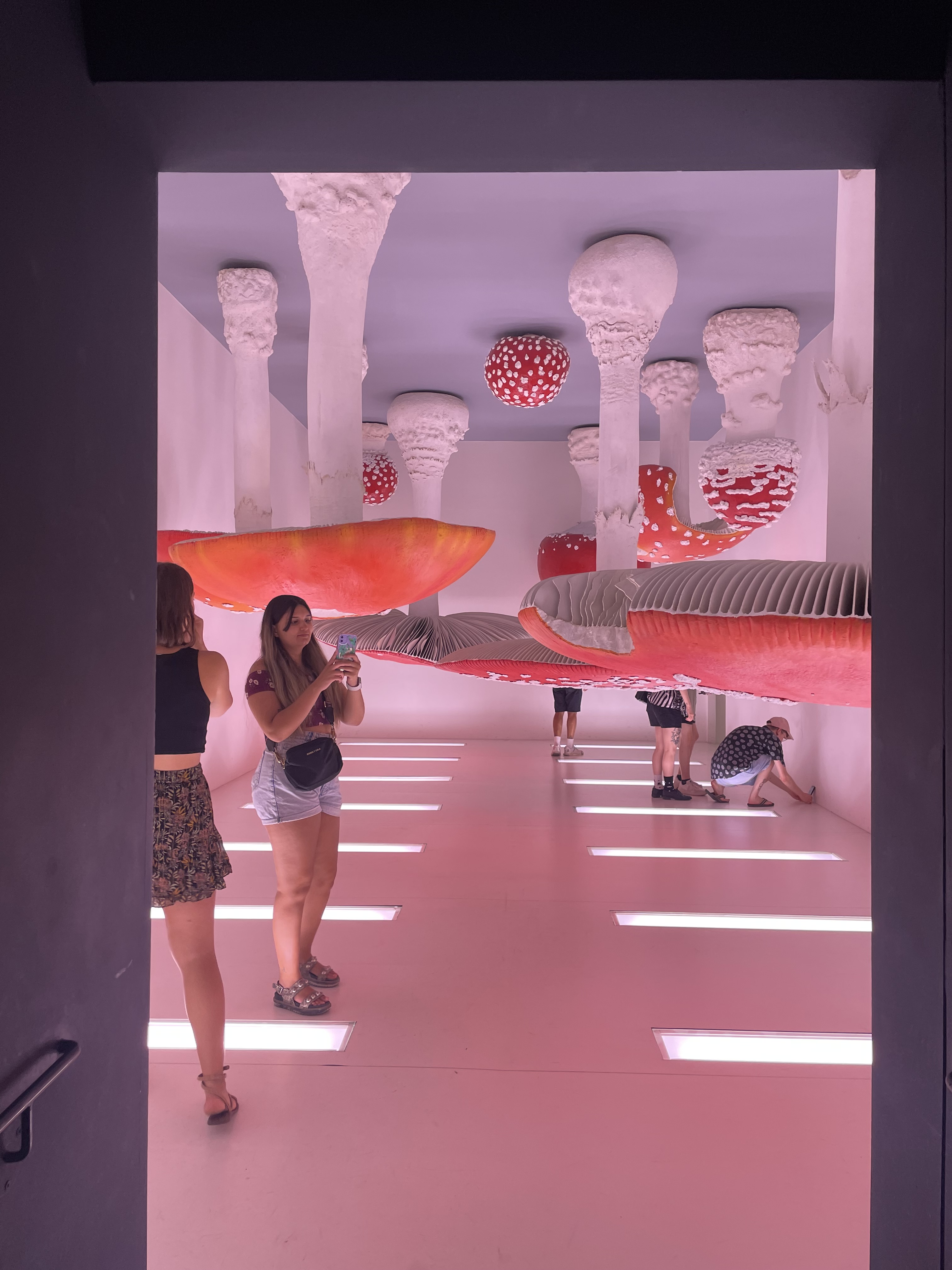
While not the most creative start, we recreated the morning walk, espresso and brioche stop on our way to another art space on day two. Sometimes you find a system that works and it makes little sense to change it, though this particular walk was (for me) enlivened by walking past a trolley depot, with a tantalizing display of the various yellow trolleys poised like forbidden toys beyond the ‘do not enter’ sign. Thus fortified, we arrived at Fondazione Prada, a former distillery converted to contemporary art campus by Rem Koolhas (see also Seattle Central Library for a more local example of his firm’s work). We waited far too long to get tickets, with the group in front of us needing well over five minutes alone, per my phone’s stopwatch function. Once inside, the rotating collection of works span a whole variety of concepts, the main consistency being the use of the excess scale within the oversized brick buildings. One work that resonated to me was an empty cubicle farm, each desktop marked with small personal items, speaking to connection and the disconnects of aspects of modern work, especially through the course of the pandemic. Much of the work is spectacle, well suited for an age of selfies and influencers, a minefield of politely pausing while others frame up their exquisite takes for social media. I was ready for a break after a few dozen rounds of this.
From contemporary art, we wheeled hard in the other direction to Renaissance art with a post-lunch stop at the Pinacoteca di Brera. Renaissance art has not typically been to my taste, I find it somehow both ornate and repetitive, and within ten minutes every Madonna and child starts to look the same, right down to the odd face of baby Jesus that always leave me wondering if the painter has seen a baby. It was a real pleasure then to enjoy the Pinacoteca. A big part of that is the curation, laid out in chronological order that allows a viewer to take in the changes over time and explains them well. They even have child-friendly notes that I got far more out of than my pride would have hoped.
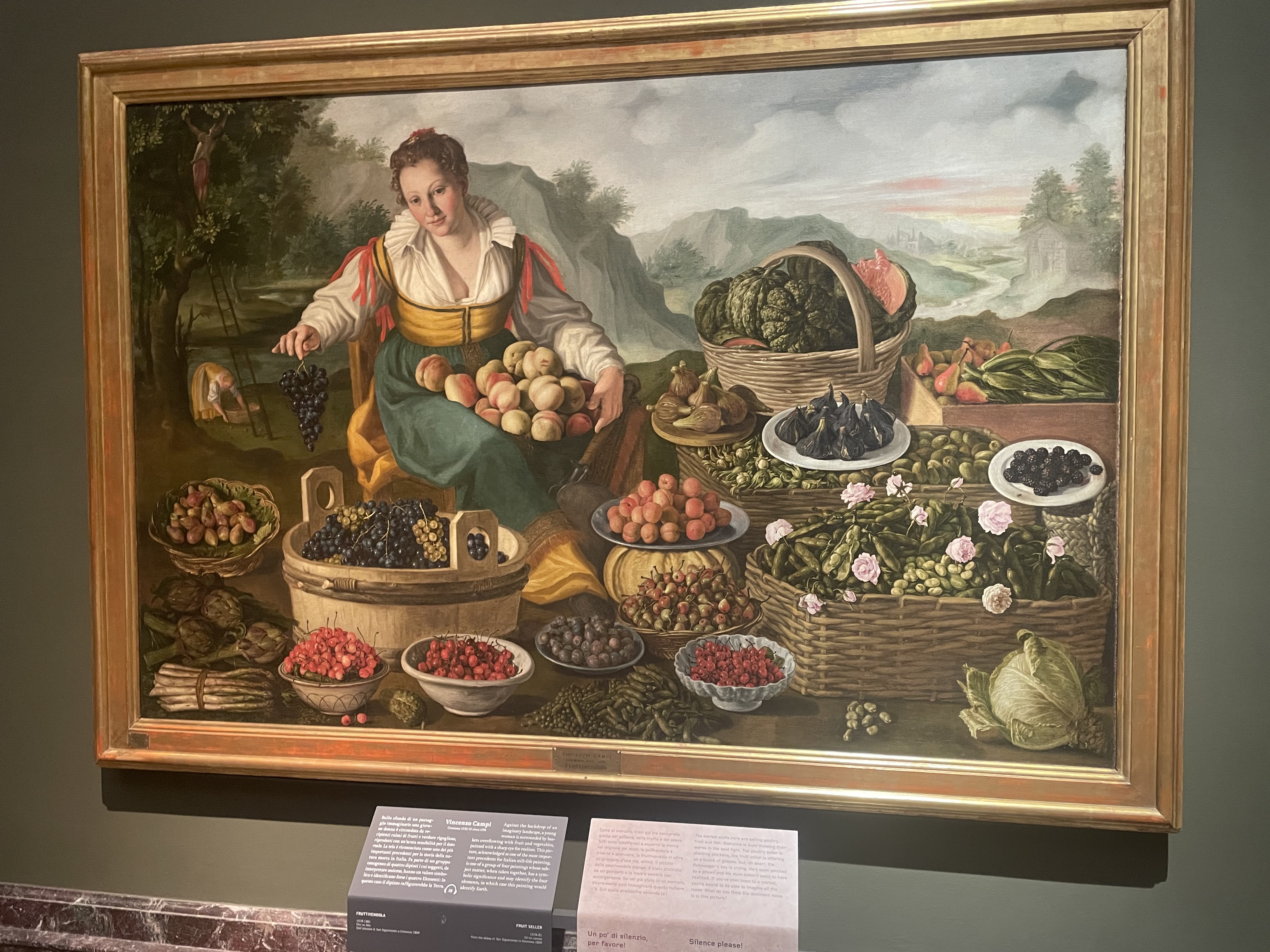
There is also a behind the scenes element to the Pinacoteca di Brera, where some intermediate rooms explain issues of storage and display for museums with large permanent collections. In a few of these are active restoration and conservation of works underway, the type of activity that museums don’t usually put forward and even more so live. A particularly interesting room had a series of four still lifes by Vincenzo Campi, an early iteration of the still life ‘craze’ that seemed to sweep European painting thereafter. Genuinely the best experience I’ve had of Renaissance art in my life and I had to sit down for a negroni after the Pinacoteca at a nearby patio just to calm down from this excitement. A delightful practice is for free bar snacks, peanuts or chips usually, to appear shortly after your drink arrives. This is something more places in Canada should do.

Juxtaposed with Renaissance art was our visit to Bosco Verticale, a pair of towering residential high-rises featuring cantilevered balconies overspilling with trees, bushes and plants. It is a mesmerizing effect, a bright subversion of expectations and a refutation to the idea that a city as old as Milan is static. Clusters of new development are all across the city, and from a few floors up, one can see the yellow and red cranes dotting the skyline. The ground level reflects this mix, dynamic and contemporary, at once seemingly comfortable with both its history, its present, and its future. We wound through streets to the small but growing Chinatown for a patio cocktail and some shade before making our way home.

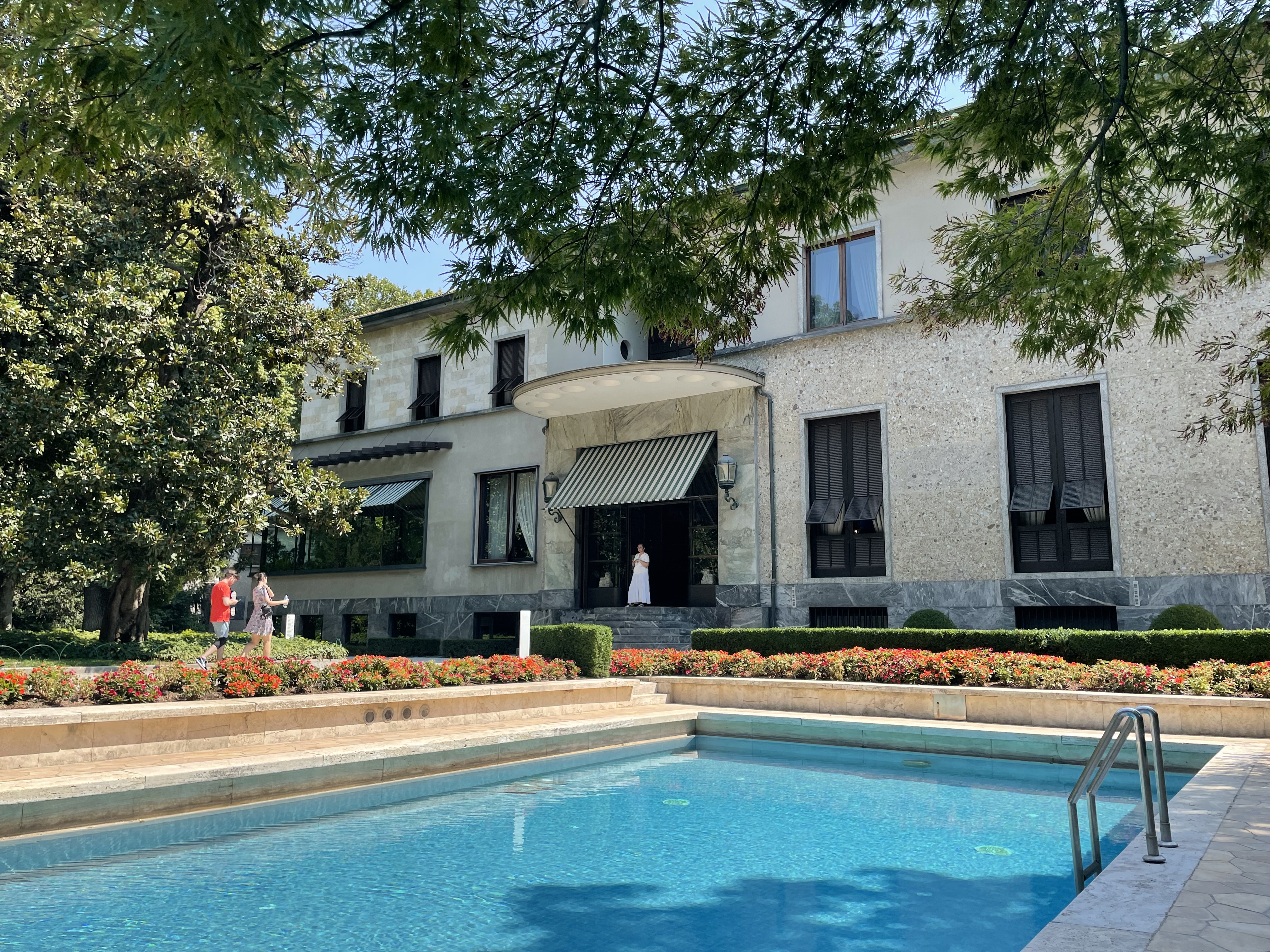
Our last destinations leaned into modern Milan, starting with the Villa Necchi Campiglio. While a public museum today, it was built in the 1930s in a thoroughly modern style by the Necchi family, who had a number of industrial interests including sewing machines. The home today is maintained as it was and was one of the few places with an included audio guide, a big plus. Like any good home, the servant room off the kitchen has a intercom panel for the entire house (bathrooms included) and easy dumbwaiter access for that late night post-bath meal. A really stunning place, and one that we followed with a visit to the ADI Design Museum, a cavernous and recently opened museum following the history and winners of the Compass d’Oro design awards from the mid 1950s to today. The range of winners seemed to indicate a loose criteria – Lombardy’s new flag, table clocks, sewing machines (including a Necchi), the Milan Metro, Campari’s 130 years of branding, and the Fiat Panda. Again showing my biases, but I was a fan of the Metro.
I arrived to Milan unsure of what to expect. Our collective braintrust of friends and acquaintances were, with a few exceptions, unenthusiastic about this stop, musing that it was just another big city. I rationalized that worst case scenario, it would make a good orientation point for Italy before moving on. Milan is big, energetic, and on the move. There is a kinetic frenzy between the white cabs speeding up to stop signs, bikes and delivery scooters swinging between traffic and the people passing one another on the sidewalks, giving way to the hulking and aged yellow trams criss-crossing the streets. The metro churns beneath it all, connecting neighbourhoods that burst with life and human interest. Milan may just be another big city, but in the end, I loved it.
 Zak Abroad