
The train ride to Sinaia was unremarkable, which was entirely welcome after the last agonizing train trip. Sinaia itself is nestled into a tight valley in the Carpathian mountains, a town that has long served as a resort getaway from the nearby cities and one that, thanks to it’s higher elevation, is nearly 10 degrees cooler than Bucharest. It is a tourist town, flooded with families taking in the sights, sitting in the patios of the small centre, and paying for gelato from park vendors. After a few days of scorching heat, and with more ahead, it was a great relief to be somewhere almost cool. Or at least comfortable.
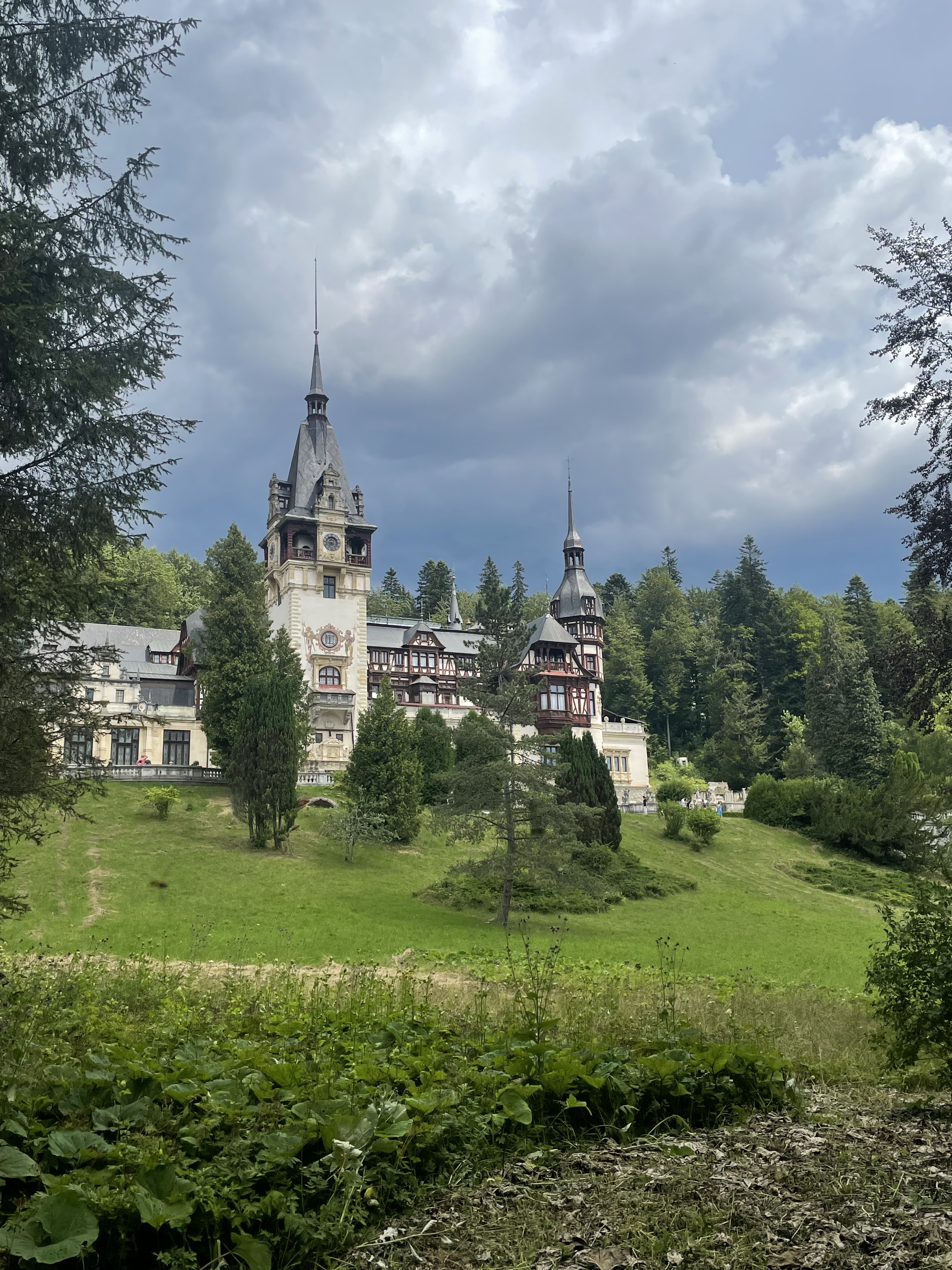
Sinaia’s highlight is a royal castle built in stages at the time that the 19th century became the 20th for the Carol I, the first king of a united Romania. It is found atop a winding forest path, blissfully shaded and crowded with fellow daytrippers and opportunistic merchants peddling roasted corn, berries, and whatever vaguely Romanian cultural items that can be grasped. There are no moats at the castle, no turreted towers or gruesome torture chamber or basement cells, as the building dates from a far more secure time and functioned more as a summer home. The interior leans heavily on fine stone, meticulously carved wood, and decor all calculated to produce an effect on visitors. It works, even in spite of the crowds. I was less lucky on my train home, rushing through a lunch so I could wait for a delayed train, but aside from that unavoidable irony, Sinaia was a good break from Bucharest.

Back in Bucharest, I came up with a plan for my last full day, taking the metro north to Aviatorilor. The station is a short walk from the shaded lanes of Herastrau Park, a large green lung for Bucharest and home to the National Villages Museum. Daytrip aside, all my impressions of Romania were formed in Bucharest, for better or worse. The museum was a hoped-for antidote, an open-air collection of salvaged buildings, mostly homes, churches, and various outbuildings, from across the country. The restored abodes all have brief descriptions, including where they hail from originally and how they ended up in this museum. The effect was well done, with many steep-roofed wooden houses marking a sharp counterpoint from the multi-story concrete of the capital.
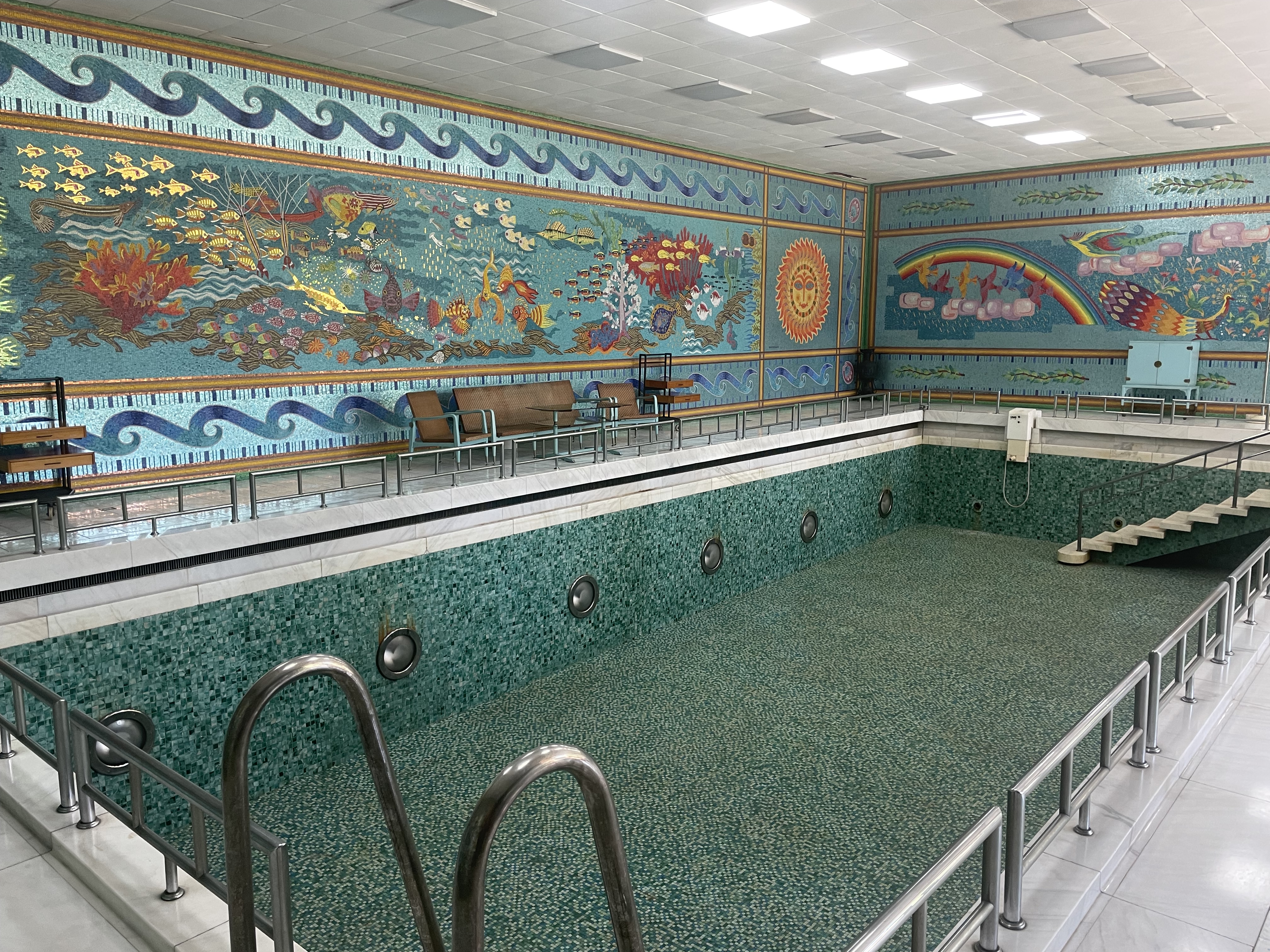
The other nearby stop was a contrast in comparison, the Casa Ceausescu is the former summer home of Nicolae Ceausescu and family. Here he enjoyed a sumptuous lifestyle with his wife and family, hidden from the day-to-day struggles of the average Romanian under his quarter century at the helm of a Communist dictatorship. The decadence of the house is absolute – gold-decorated bathrooms, gifted vases from Mao Zedong, closets bigger than a Vancouver studio. The most impressive space to me was the pool, with its exuberant mosaic walls dating from the late 1960s. For all this grandeur, Nicolae and his wife paid a high price, hastily tried on charges by a provisional government before a summary execution of both by firing squad on Christmas Day, 1989.

With my major tourism goals for the day taken care of, I took a slow route back to the centre. I wanted to walk the meandering streets, away from the old town, to see if my earlier impressions of the city had been too harsh. After a lunch stop in a shaded courtyard, complete with misting fans (a highly recommended coping mechanism for extreme heat), I set a general path southward. Each block varies in slight ways, with sidewalk hugging buildings offering a sense of enclosure and definition to the neighbourhoods, churches peering out from behind blind corners. Houses and apartment blocks exist in varying states of repair or decay, depending on their fortunes, and a charming deco building may sit next to a heavily tagged hulk with missing window panes. The lumbering trams are left to fend for themselves against aggressive drivers, who seem to play by different rules, though some major streets are closed to cars on the weekends, a pandemic legacy that is all for the better here and I hope a precursor to more permanent changes. My walk didn’t change my take on Bucharest, but at least it was a pleasant enough meander back to my apartment.
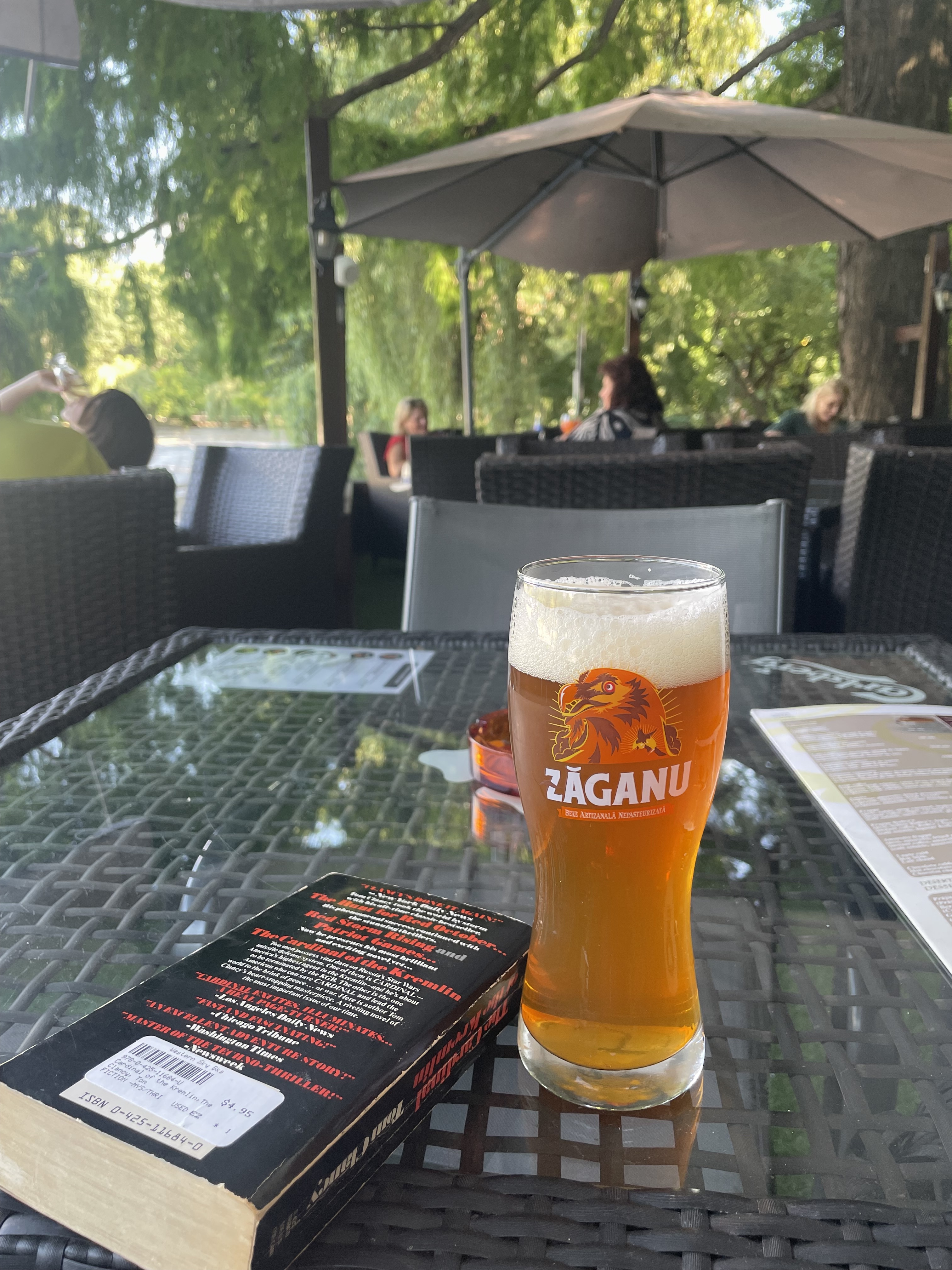
I took a couple hours to literally cool off at home before heading back out with a Tom Clancy paperback in hand, bound for close by Cismigiu Park. It is a classic European park, formal allees, kiosks peppered around a dry concrete lakebed, and benches where city dwellers pop down for conversation and a cigarette while families burn off steam, chasing down energetic children who stray too far from mom and dad. I spent most of my time at a small outdoor restaurant, turning pages and sipping cold beer. At the nearby tables were a dad and daughter, beer and ice cream, respectively, who were later supplanted by a group of boisterous French students. I pulled my chair in to let a pair of families, one stroller apiece, get by. It was a great choice for my last afternoon, and a reminder that when in doubt on what to do in a summer city, head to the park.
 Zak Abroad