Arriving hours late to Bucharest’s Gara de Nord wasn’t my idea. But it was out of my hands, so all I could do after the train pulled in was move forward. This plan was foiled quickly by ATMs which refused to dispense any Romanian lei. This felt ominous enough, and it was a cruel tease to see people buying and then eating food. The ongoing frustration with my debit card was an ongoing stress point through the evening and the next day, trying and failing well over a dozen times and with a few calls back to my bank. In the meantime, I was able to change over some euros and head underground, riding a handful of stops to the apartment I was renting for the next few days. There, at least, everything went smoothly and the room, while not spectacular, was a comfortable home base for my time in the Romanian capital.

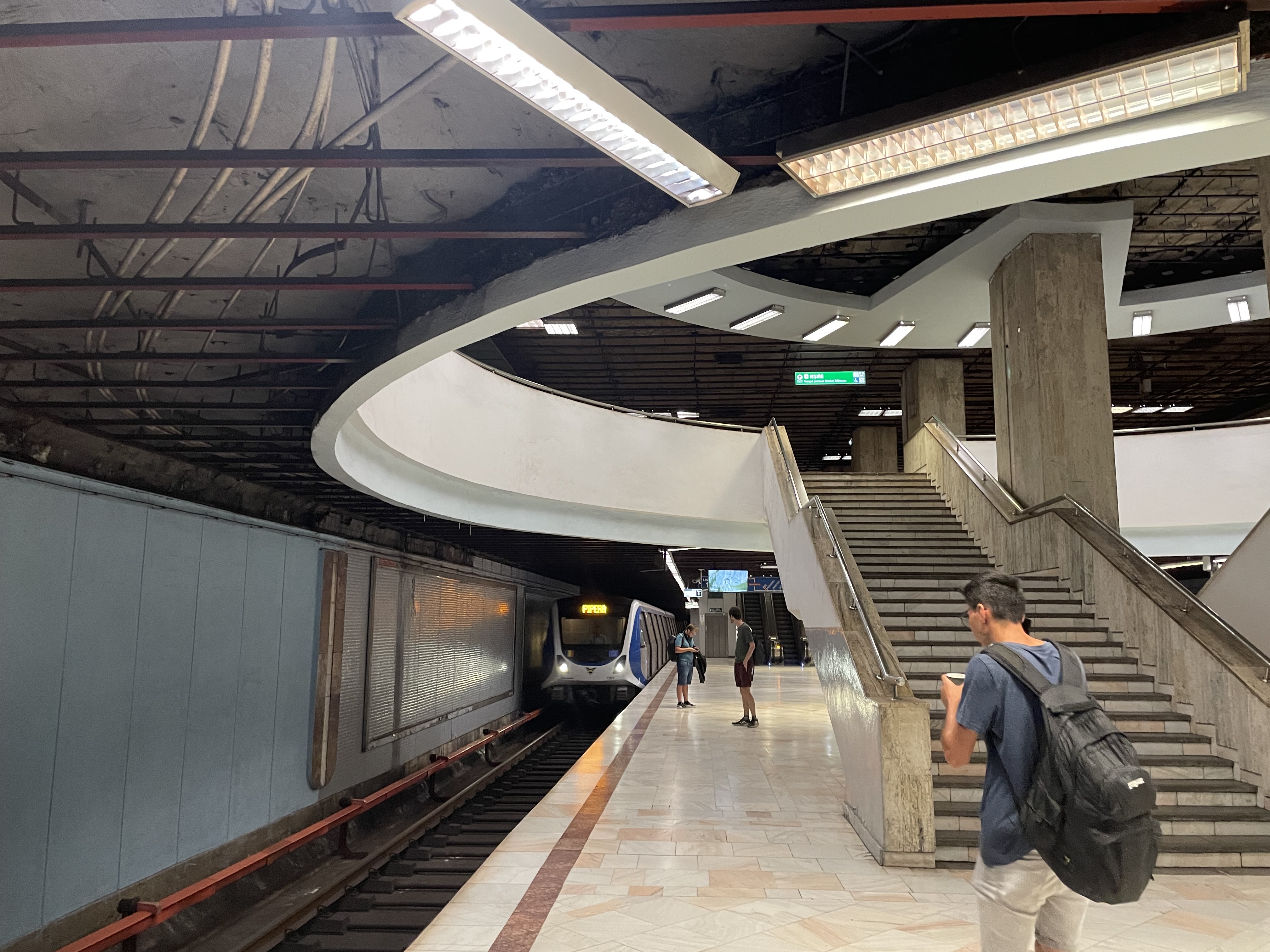
If I’m being honest, I didn’t like Bucharest all that much. It is a big enough city, with a lot going on, but it also feels cold and forlorn at times. The inner city is a maze of winding streets fronted by austere concrete buildings, where the gray has slowly turned to black over decades without a deep clean. Slicing through the winding streets are big roads, traffic arteries where no car is interested in providing a pedestrian safe passage unless absolutely required to. It feels like the same treatment Paris got in the 19th century from Haussmann, but not executed as well (or perhaps merely not as well-resourced). The result though is a bit drab, with soft, inviting spaces few and far between. Even the metro fits this, cavernous concrete shells with unfinished ceilings. It was ironically what my stereotype of Moscow had been like, before our visit to that city that put it to rest.
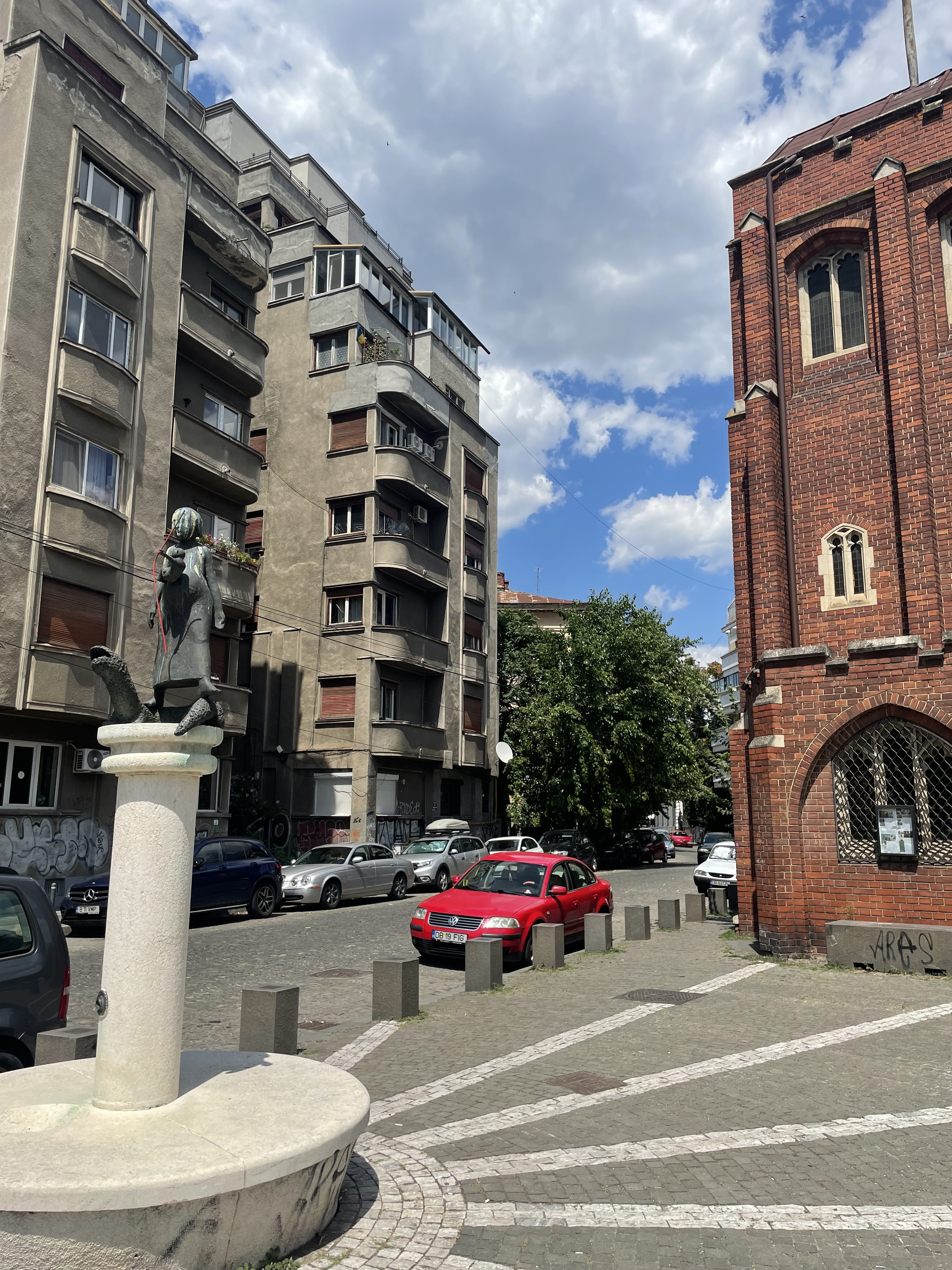
My apartment was a few minutes on foot from the old town, an entirely intentional choice on my part. The old buildings (yes, surprise!) set it apart from the rest of the city, along with the generally pedestrian-only environment that is an extremely welcome departure from the rest of Bucharest, where cars litter every surface they can fit on. The lunch hour was perhaps not the best time to see it though – it is a night time centre, I learned – and the daytime version is much more relaxed, with only half-hearted call outs from the servers standing at the edge of their respective dining patios, a low-energy turf war for my tourist dollar. For this trip, I gave myself a food rule: no burgers, no pizza. That eliminated most restaurants in the old town, where those global specialties were featured. In the end I limited my time in this part of the city, it wasn’t my scene.
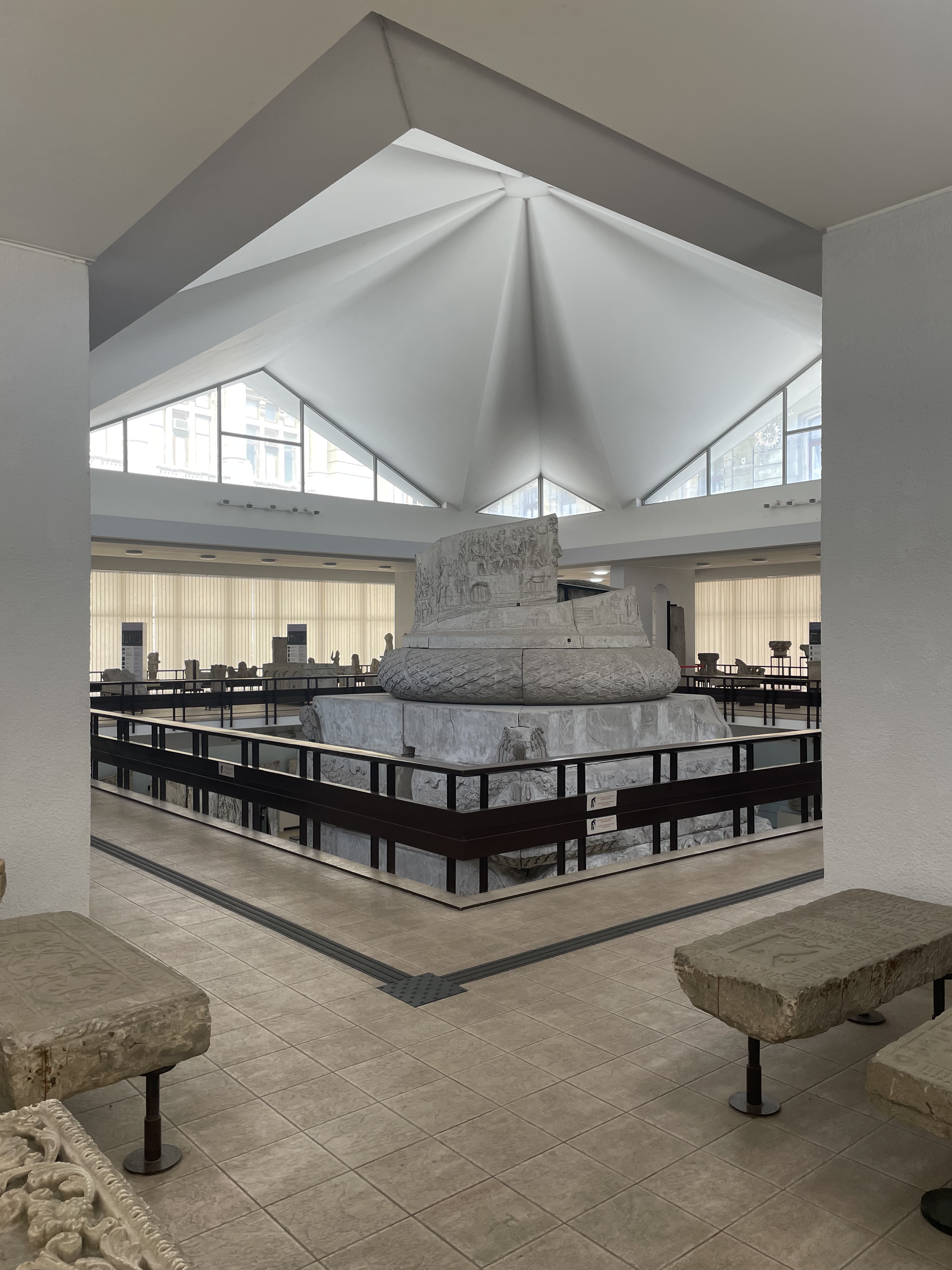
Well what is then? The National History Museum got my attention initially with a current exhibition on Romania in World War II, where the nation both lost by first siding with the Germans and later won by switching to the Allies in time. It is easy to be cynical about this, though the Romanians occupy the unenviable location between the two countries, with a first row seat to Poland’s fate. The other centerpiece is a complete casting of Rome’s Hadrian Column, with the entirety of the conquest of Dacia laid out for the visitor. Those with a gift for languages may notice the common history in the names of Rome and Romania, and this orphaned Latin language, nearly encircled by Slavs, sets its origin story to the glory days of Western antiquity.
Where the big avenues have been imposed on Bucharest is where some of the most monumental scars of Communism exist, blocks-long apartment blocks in a uniform style. One such avenue leads up to the Palace of the Parliament, a massive Social Realist building clad in stone, one of the largest administrative buildings on Earth and supposedly the heaviest. I had the agonizing pleasure of walking 3/4 of the way around this monstrosity on a pitiful sidewalk lacking trees. Presumably they would distract from the imposing view of governmental power. Eventually, after a hot and sweaty 20 minutes of walking, I found the entrance to the Museum of Contemporary Art, the highlight of which was an entire floor dedicated to Ion Grigorescu, a conceptual painter. Black and white photo slides were blown up and circling the space, dozens of pictures for each year since the early 1970s providing a glimpse of life in Communist Romania. I was glad to see all this, as I don’t know if the walk would have otherwise been worth it.
Ready for a break, I decided to figure out a day trip and after some consulting with my sister, who was in Romania some years back, opted to try my luck on the train to Sinaia, where I could visit the Peles Castle. I had a plan, but unfortunately no ticket and the 8am departure was, according to the ticket machine, sold out, leaving me to settle for one two hours later. The silver lining to this was the opportunity to visit Obor Market, a sprawling complex a few stops away on the train set amidst the Communist splendour of block buildings and oversized public spaces. The marketplace itself has apparently received a facelift in recent years, and even before 9am was bustling with shoppers filling their fridges and pantries. It is a classic working market, sections for seafood, meat, bread, and produce.

This time of year seemed abundant for produce, and orderly tents were set up in grids around the edge of the market building, practically overflowing with berries, cherries, peppers, and the other assorted bounty of the land. I spent a bit over a dollar for large bag of cherries, my between-meals snack and what became a lunch substitute. Money well spent on the cherries and time well spent at Obor market before heading back to Gara de Nord for my departure.
 Zak Abroad