
After a few enjoyable days, it was time to bid so long to Sofia. I hopped a quick tram to the train station, an updated and manageable space built originally in the style of Bulgarian Communism. Think sharp angles, forceful concrete gestures, and many, many straight lines. The train hauled out to the north, myself and four strangers sharing a small compartment, watching the scenery roll past as we made our way from the valley up into the Balkan Mountains (it’s more than just a peninsula!). The railroad tracks wind up the slopes here, tracing a parallel course to a river bed while passing many small villages, whitewashed and red tiled. There was a definite charm to the landscape, pine-covered hills and occasional steep cliffs. This turned into a bit of a preview for my next stop, Veliko Tarnovo, some five hours away.
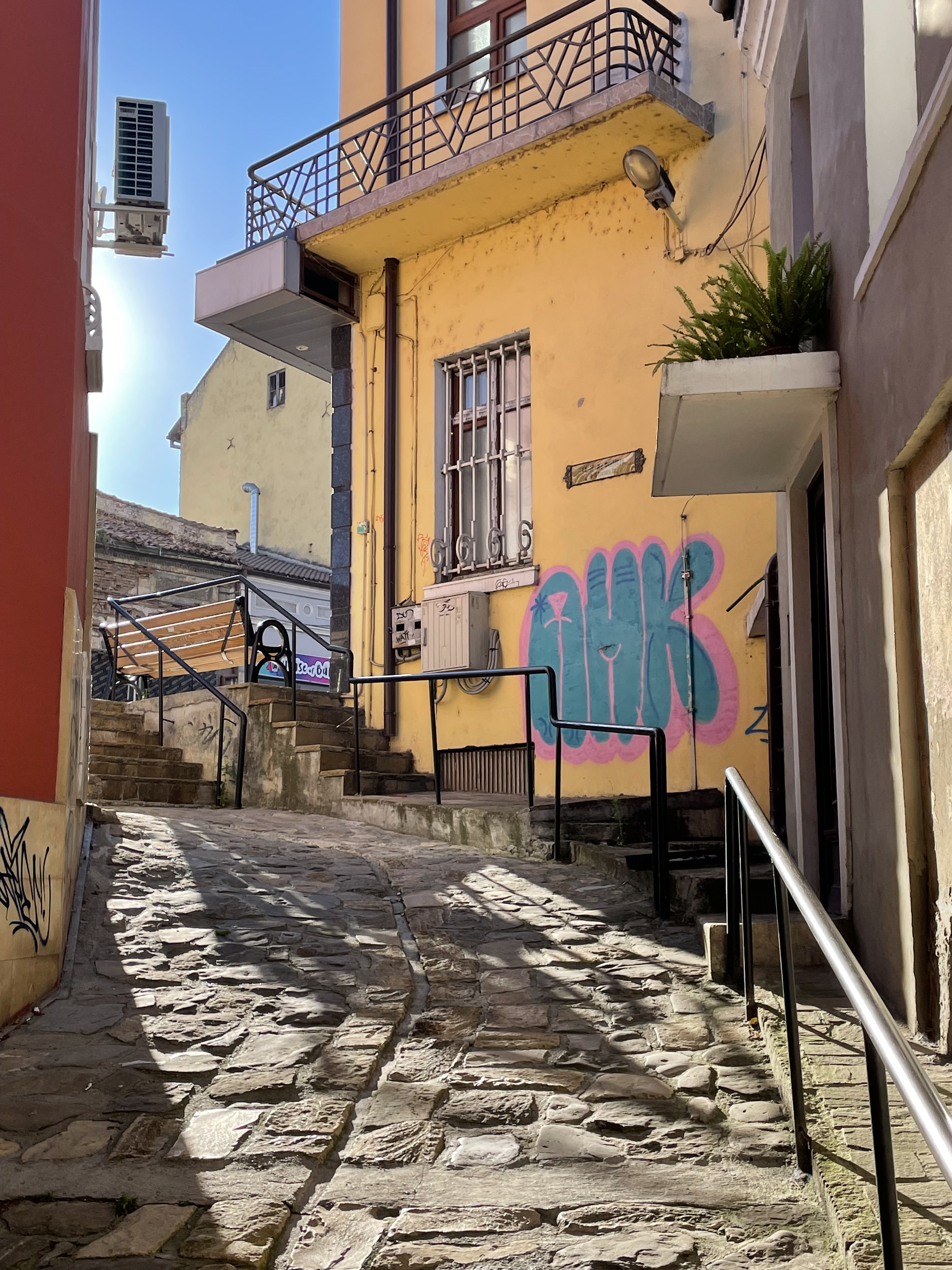
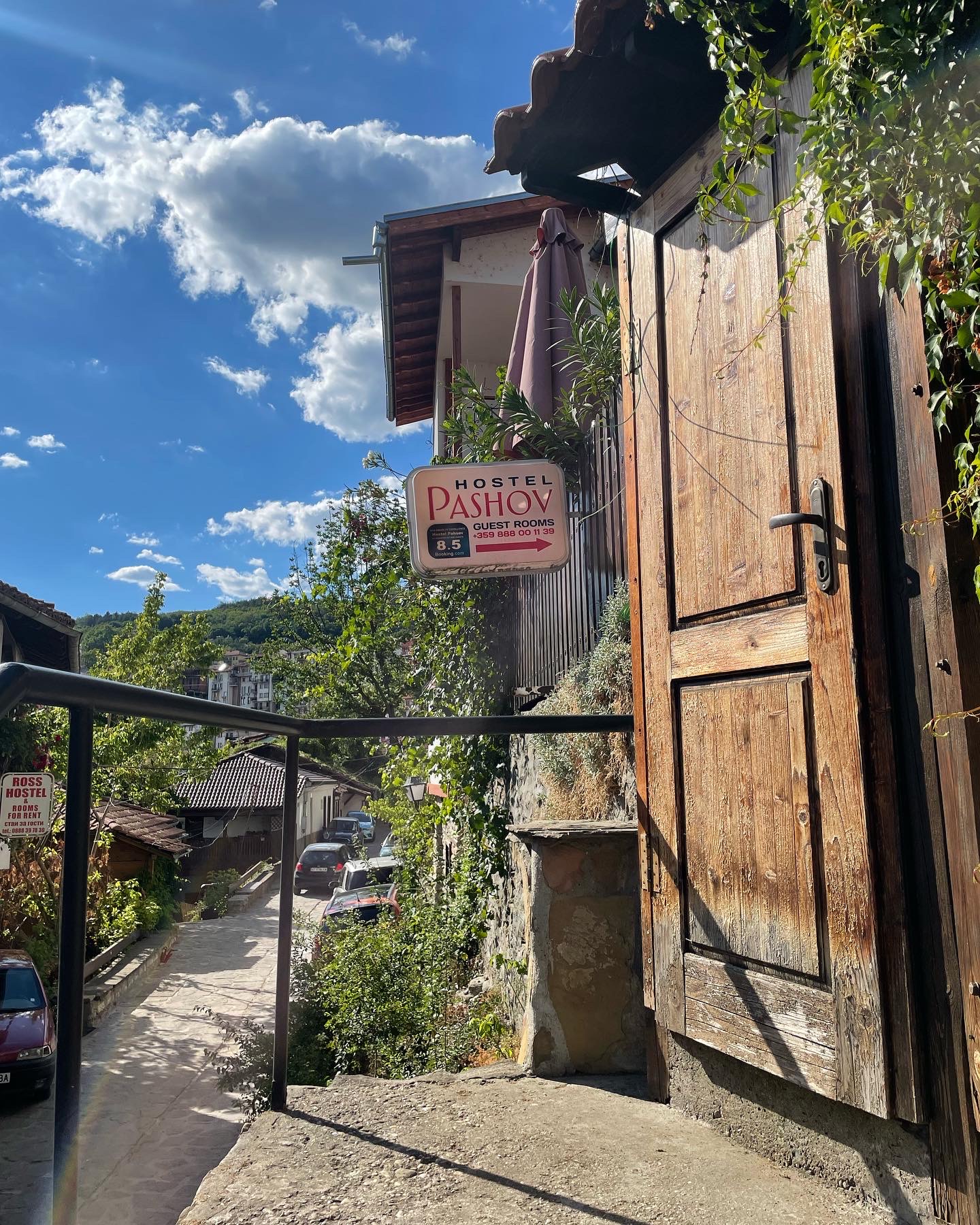
Veliko Tarnovo is a small city and the one-time seat of the Second Bulgarian Empire. Yes, the second empire. I didn’t know any of this either, but then that is often the case with smaller countries. This empire lasted about 200 years, between 1200-1400, before the Ottomans re-established rule, something of an ongoing thread in the histories of this corner of Europe. What that means for the visitor today is a charming small burg set atop steep hills above a deep and snaking river valley, a setting that is truly lovely. Thanks to the internet, I set myself up in the home of Mr. Pashov, who rents out extra rooms to travelers. Mine came with three beds total, more than I needed but also with a small desk and a window view out overlooking the river valley and the mountains. Not a bad spot to sit.
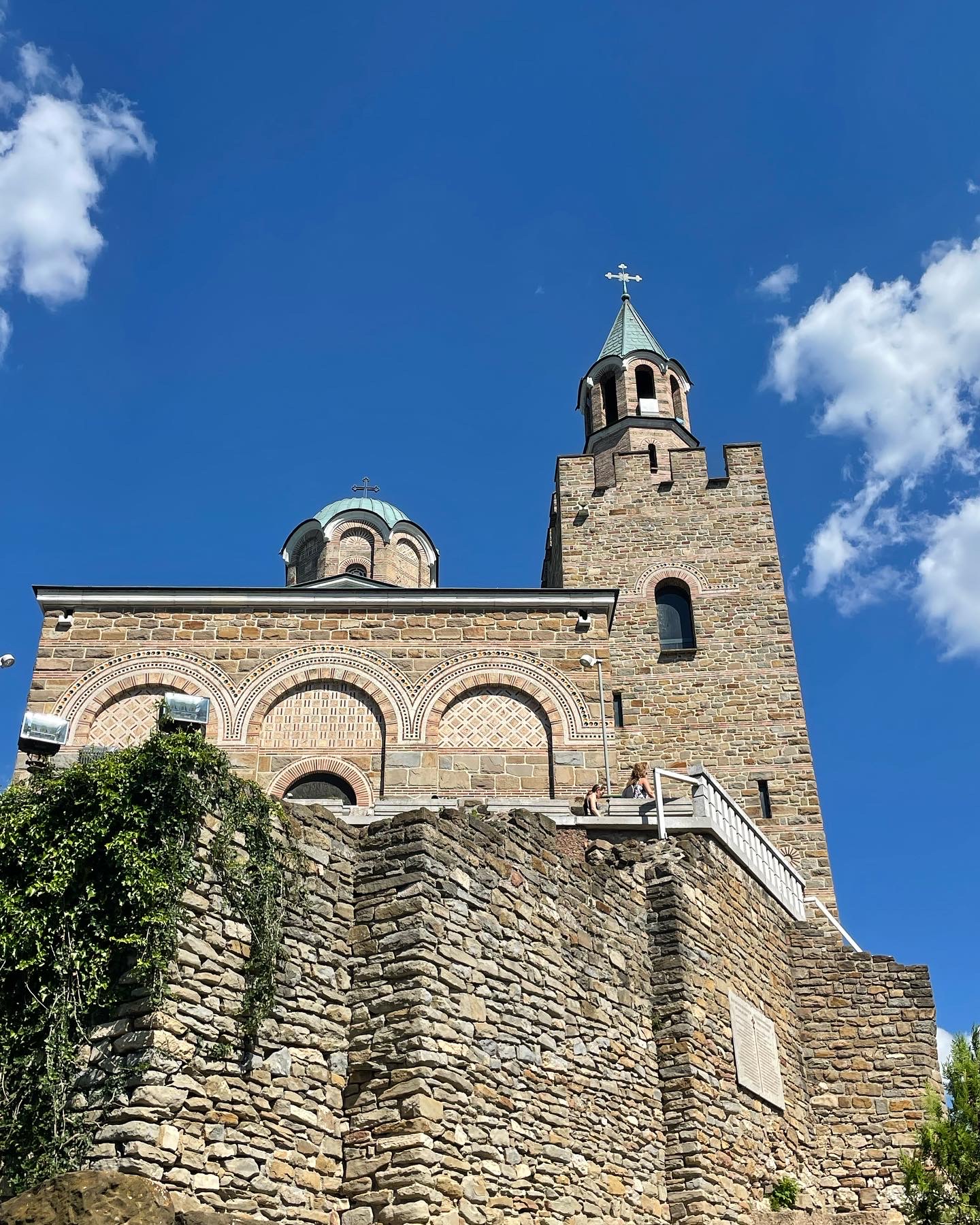
The big highlight in town is the Tsarevets, the sprawling old castle stronghold occupying a key bend in the Yantra River below. Some of the castle walls remain in various states of decay, while others have been reconstructed over the years along with guard towers and gates. From the town, it is accessed via a long walkway where you imagine the degree of intimidation any would-be invaders may have felt once. The entire site is crowned by a church, and I probably spent more time looking at the frescoes here than normal as it was a steep climb in direct sunlight on a hot day. The cool stone interior seemed a lot more welcoming with that in mind.
Back in Tarnovo, the streets of the old town teem with mostly domestic tourists as this is a centrally located site and popular for summer visits. The effect of tourism is somewhat muted though, and the crassest elements of the industry have yet to crop up. No ziplines, no Irish pubs, no package tours that I saw. Maybe in time, but it still seemed to be in enough of a balance to feel like a place. The streets are narrow, medieval era lanes, with pastel-coloured houses with tall windows and high ceilings clinging tenaciously to the hillsides, nearly all possessed of some type of view and more often than not an arbor heavy with grapevines. More than the castle, the city was the thing to see, one of those places that is neatly of itself and rewarding to spend time in in that light.

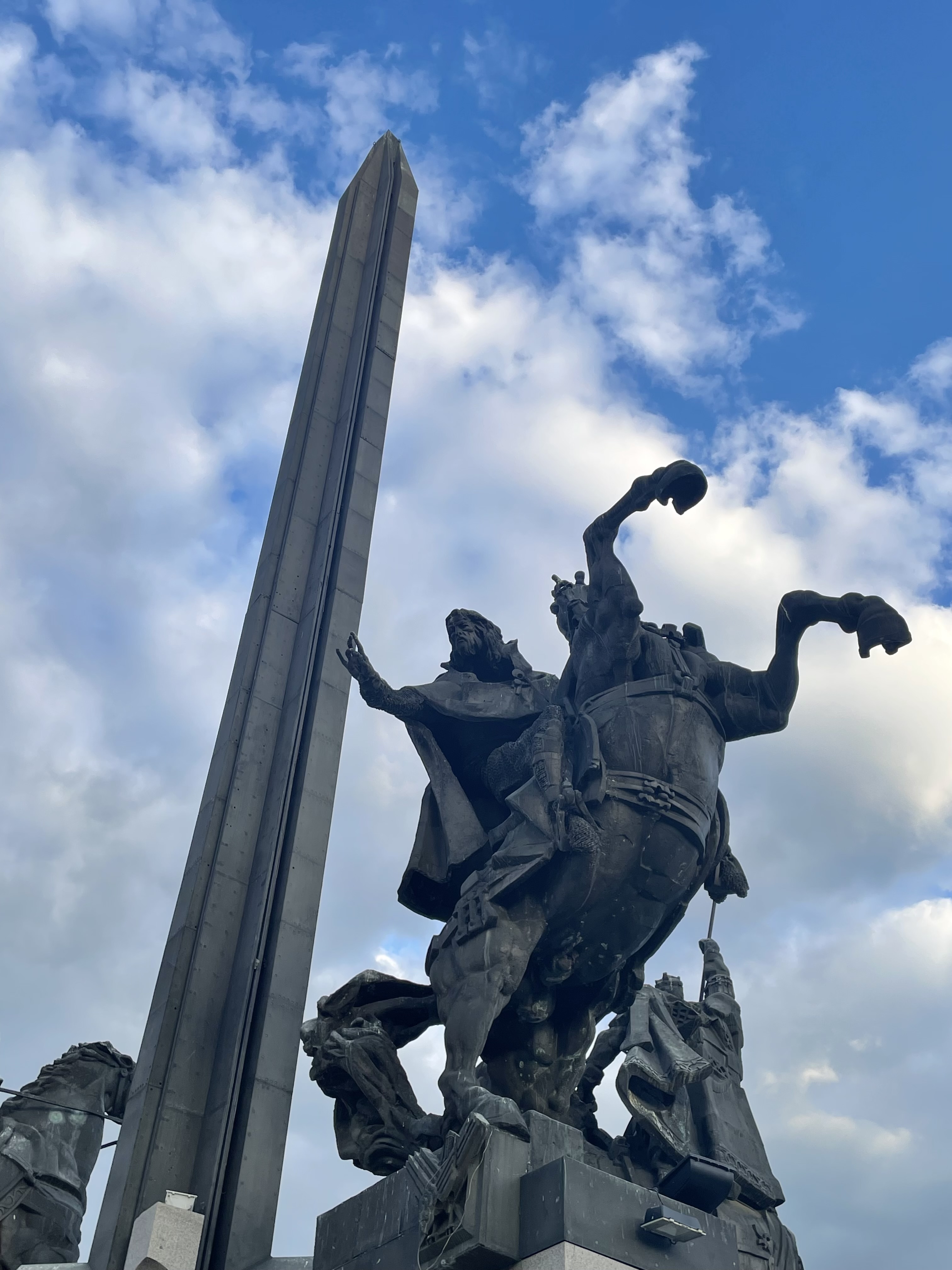
For the evening, I took in a memorial of more recent vintage, heading to a different bend in the Yantra where a massive monument was dedicated sometime during the Communist period. It too, I think, is commemorating the role of Veliko Tarnovo as an imperial seat, expressed with a heaps of concrete shape into a sinister obelisk (or perhaps a sword), thrusting up through the sky. Surrounding it are four men, presumably kinds, each on a steed, overly muscled and set with dramatic angles. Whether or not this Socialist Gothic style suits one’s own taste is subjective, but the designer behind this work definitely approached it with a coherent design philosophy. It was also just generally cool for me to see one of these big Communist monuments in the flesh, even if it hasn’t stirred me to tear down capitalism entirely.
My one and only evening meal was at a mehana, or tavern, attached to a hotel down the road. Small tables littered the street out front of the restaurant, and an English menu was offered within a few minutes of sitting down. Here again, the view was stunning, and it was good people watching as this particular street is a popular one for folks on their evening walks, families stopping to greet other diners they knew, tossing scraps to the cats slinking around, all wary eyes set in triangular faces. Across the lane, two old men chatted and another kicked off his shoes, sitting on the bench reading a book.

My reverie was broken the next morning with a full-day immersion in the counterpoint experience. Ahead of me was 5-6 hours to make it to Bucharest; one short train then a longer haul over the Danube. After a short cab ride to the first station, I was told…well something…in Bulgarian by the ticket attendant. She picked up my confusion and wrote 120 on a piece of paper and said ‘late’. Got it now. So I grabbed the same taxi and went to the main town. The driver got on the phone and eventually handed it to me, where I spoke with the ticketing agent in German to make sure tickets were still available. Another 20 minutes later and I was in a far less pleasant Communist-era train station, waiting out a train now two hours delayed, the kind of place where the young people have left and the remaining people wear faded patterns and the restaurants around the station are little more than beer halls. It was a sharp contrast to Tarnovo.
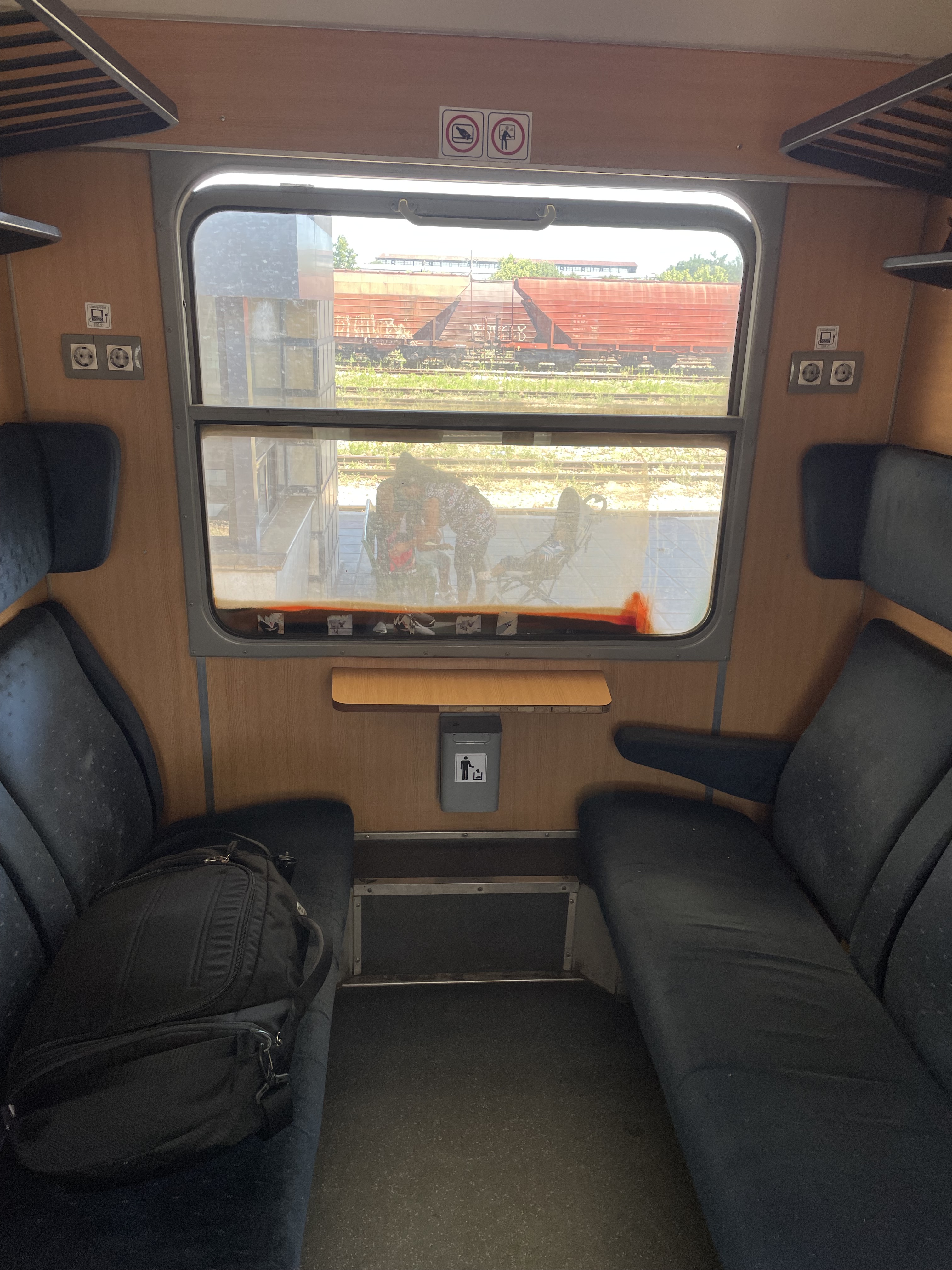
When the train left that town, I had a small compartment mostly to myself. I shut the door and managed to sleep a bit, but eventually the complete and utter lack of air conditioning did me in and I passed most of the trip uncomfortably, doing my best to rig open the window to get some – any – air flow. A few compartments up, a group of British students were discussing whether opening their bottle of rakia was a good idea. Outside flashed fields, seemingly alternating between corn stalks and bright, coordinated sunflowers. Once this simple pleasure wore off, my time was spent thinking about the total lack of food and drink on the train, which conspired to make for a grumpy arrival into Bucharest far later in the evening than planned. All that hassle to go 180 kilometres. In spite of the poor state of affairs on the rails, I still deeply enjoyed Bulgaria, surprisingly so. It is on the list for return visits, someday.
 Zak Abroad