We left Moscow on the Sapsan, peregrine falcon in Russian, a bullet train whisking between the countryside connecting the two major Russian cities. I am a great fan of these trains, but in this case I was a little disappointed not to have pushed for the overnight train. Bullet trains are certainly faster and almost always cleaner, but too often they end up sanitizing away the experience of rail travel and the glimpse it can provide of the surroundings, a more local take on a place than its major cities allow. Arrival to St. Petersburg went smoothly, and we were only a few short stops away on the metro from our apartment, a lovely riverside studio with soaring ceilings and enormous picture windows facing out to the Fontanka and the low-slung skyline of the city beyond. A few blocks away was Rubinstein Street, a hipster paradise of global food served to an indie soundtrack. We were ticking all our boxes as we settled in for a lunch of Israeli streetfood.

The two great Russian cities differ sharply. Moscow is ancient, messy, bracing. St. Petersburg, while no small town, is clearly smaller and feels more intentional. It was founded during the reign of Peter the Great and is younger than a number of East Coast American cities, with an official founding date of ‘only’ 1703. The city takes lessons from Amsterdam, concentric canals circling out from the core with generations worth of 19th century flats filling in the space. For me, it is the setting of so much Dostoevsky, a city of that era and remains evocative of the books, cell phones and wifi notwithstanding. It also feels a heaver weight of tourism, with greater concentrations of folks tramping around the core and idling coach buses ferrying weekenders between cruise ships and the Hermitage.

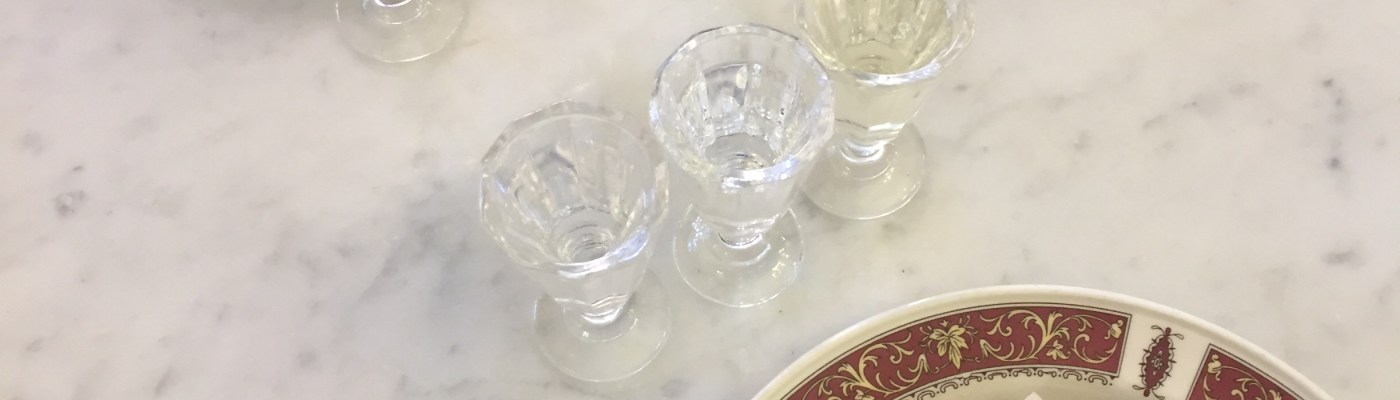
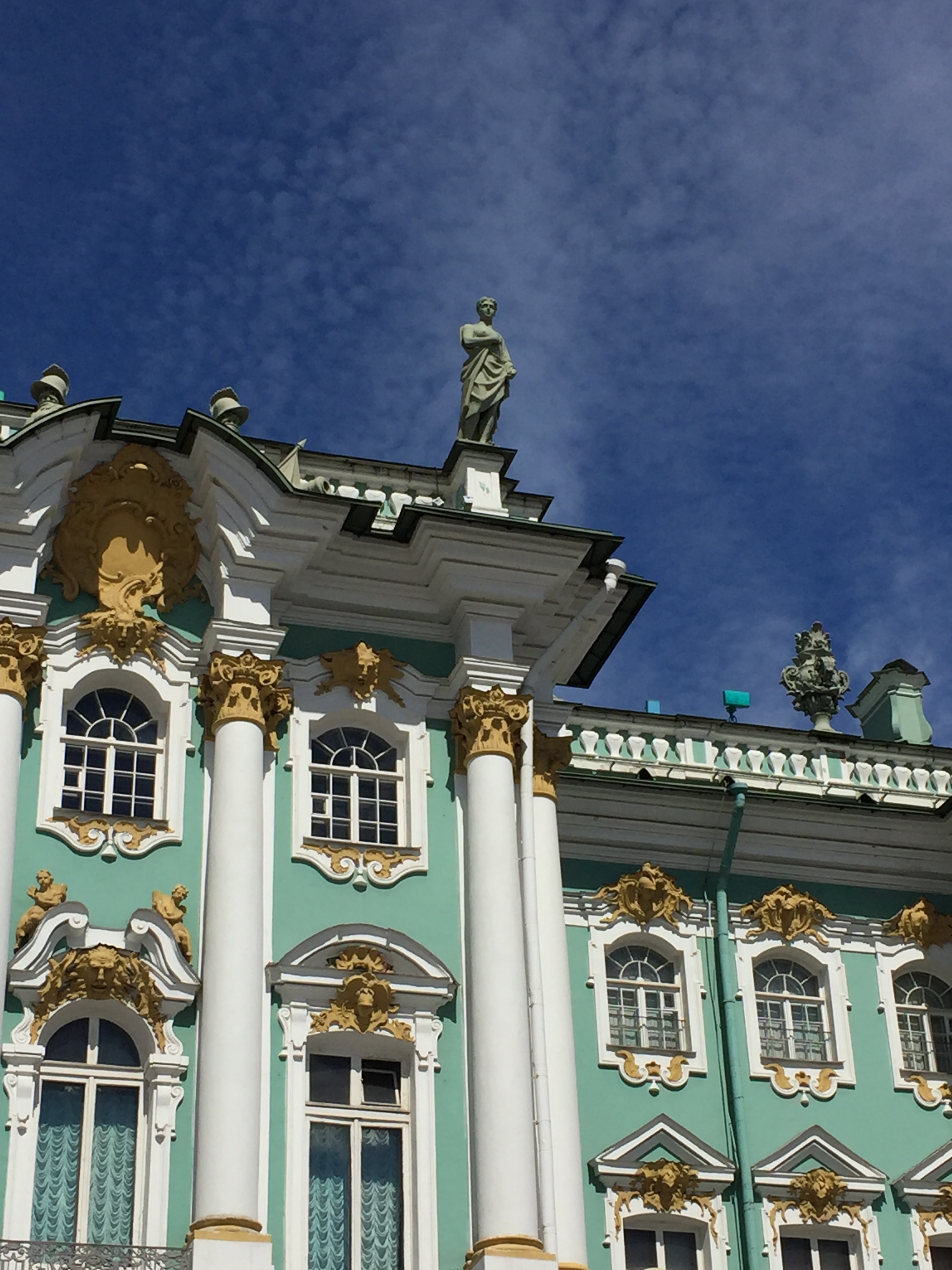
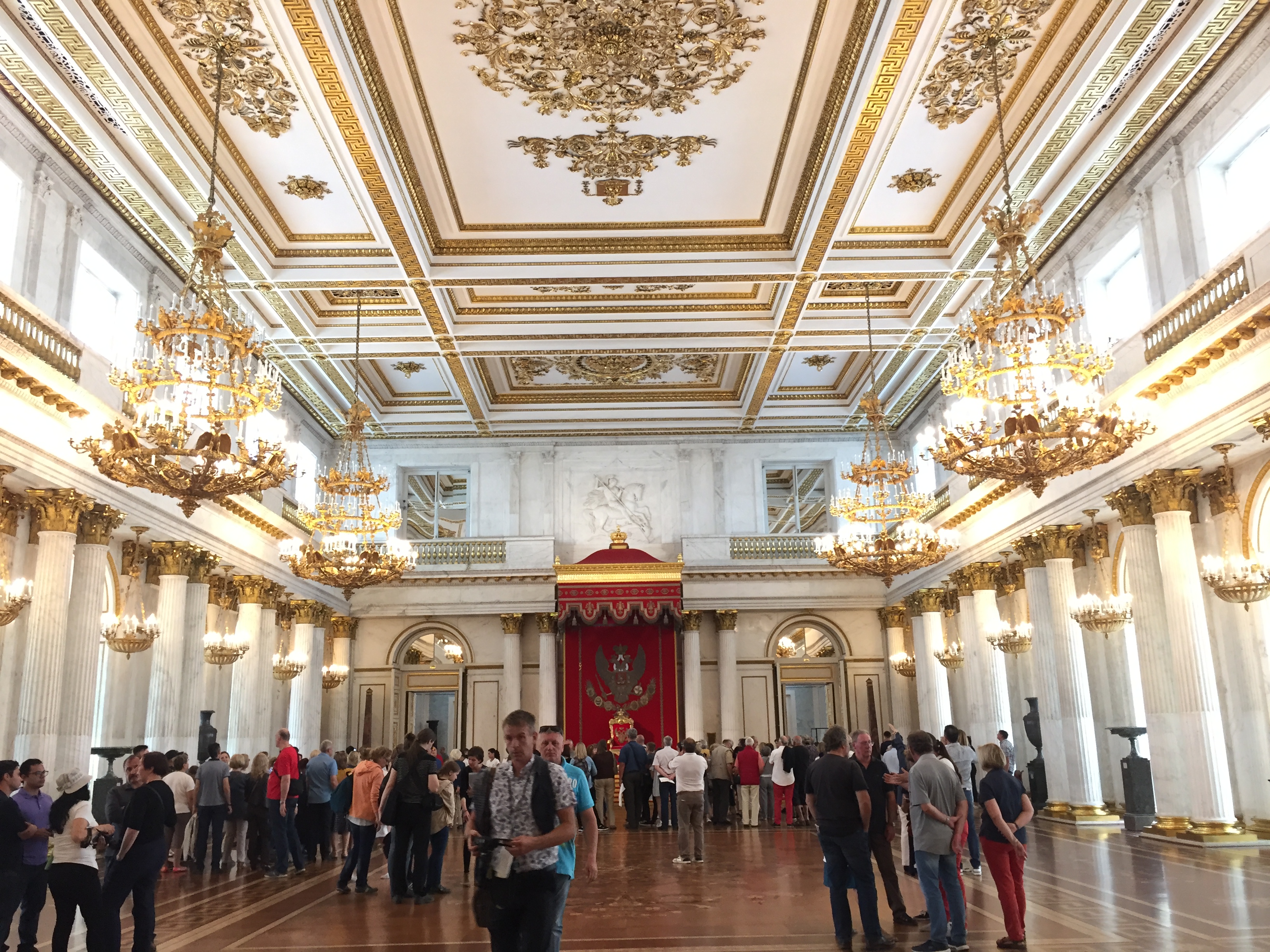
The Hermitage really is the centerpiece of the city, its white and green, heavily decorated facade a clear icon. The bustle inside matched the to-do outside, with mobs of crowds meandering from room to room, evoking a rush hour metro station with the slow, mindless shuffle from masterpiece to masterpiece, the snap of a phone camera (still managing to sound dull somehow) before moving on to snap another picture that will never be looked at. In such a setting, one simply has to either embrace the slow-motion chaos or get angry; I mostly chose the former. The better day was visiting the Hermitage Annex across the square, with a peerless collection of 19th and 20th century works more in line with my own tastes in a far more sedate environment. After, for lunch, we took a chance on a Georgian restaurant with pictures and English on the menu. This is usually a death knell for a good meal, but it turned out that we were lucky this time, perhaps cosmic compensation for the lackluster Georgian lunch we had in Moscow. We washed it down with a visit to the vodka museum, which basically functions as a preamble to a bar, but an effective enough one to be pleasant. I don’t know if I learned much though.
One of the more interesting museums we visited, while no less touristy, was the Kunstkamera, which has a strong focus on ethnology and global cultures. It is a classical Old World museum housed in rambling buildings along the Neva filled with items from all corners of the globe, souvenirs of the glory days of exploration and empire. This includes Tahltan and Nisga’a pieces, likely dating back to the pre-Seward’s Folly days of Russian Alaska. Another absolute highlight was a journey out of tourist St. Petersburg to Udel’naya, a sprawling weekend flea market near the eponymous metro stop. Unlike the tourist trap flea market we ended up at in Moscow, here English was in short supply amongst all manner of wares for sale – cooking implements, Soviet-era kitsch, clothes, watches, and toys. It was expansive and consuming, a fascinating glimpse at the closest we probably got to whatever normal life may be there. Hannah successfully haggled for a Soviet perpetual desk calendar that now graces our home office, by scribbling offers and counteroffers on a piece of paper with the vendor, no English needed.

English was, in general, in short supply, though there was just enough to make do. My crowning linguistic moment was asking for our lunch check in Russian, which earned me a smirk from the waitress which I have chosen to interpret positively. Our timing overlapped with the white nights, where this northern metropolis sees the sun dip below the horizon for only a few early morning hours and makes for bright days that stretch deep into evening. It’s ideal as a traveler to explore, but even so, it felt like we were leaving St. Petersburg, and even Russia, too soon. Just never enough time.
In the end, ten days was enough because it had to be enough. Like any large, populous country, seeing the major cities is only a start, especially when the other end of it is multiple time zones and thousands of kilometres away on the Pacific. I’m very glad we went when we did, as it seems an impossibility now. Russia gave us a glimpse into a culture that was largely unknown to us and it is a shame – for many reasons – that the leaders there have opted for such a needlessly destructive turn of events. We all benefit from cross-cultural engagement, and the first-hand experience of meeting people and learning to see them as more than an other. I hope for the return of more peaceful times.
 Zak Abroad