Has it really been three years? Unsurprisingly it has felt like far more, and the choice of main destination for our 2019 trip takes on added weight in retrospect – Russia. In the simpler pre-pandemic and pre-war days our criteria were to go somewhere new and different. Russia fit that bill, and after fulfilling some seemingly superfluous and complex visa requirements, we had our passports prepped for touchdown in early summer Moscow. With impressions formed on a childhood diet of Rocky and Bullwinkle stereotypes and more ominous Communist bloc pessimism, we were prepared to be confronted with a drab cityscape surrounding the onion domes of St. Basil’s cathedral and a diet of cabbage, potatoes and vodka. We were wrong.

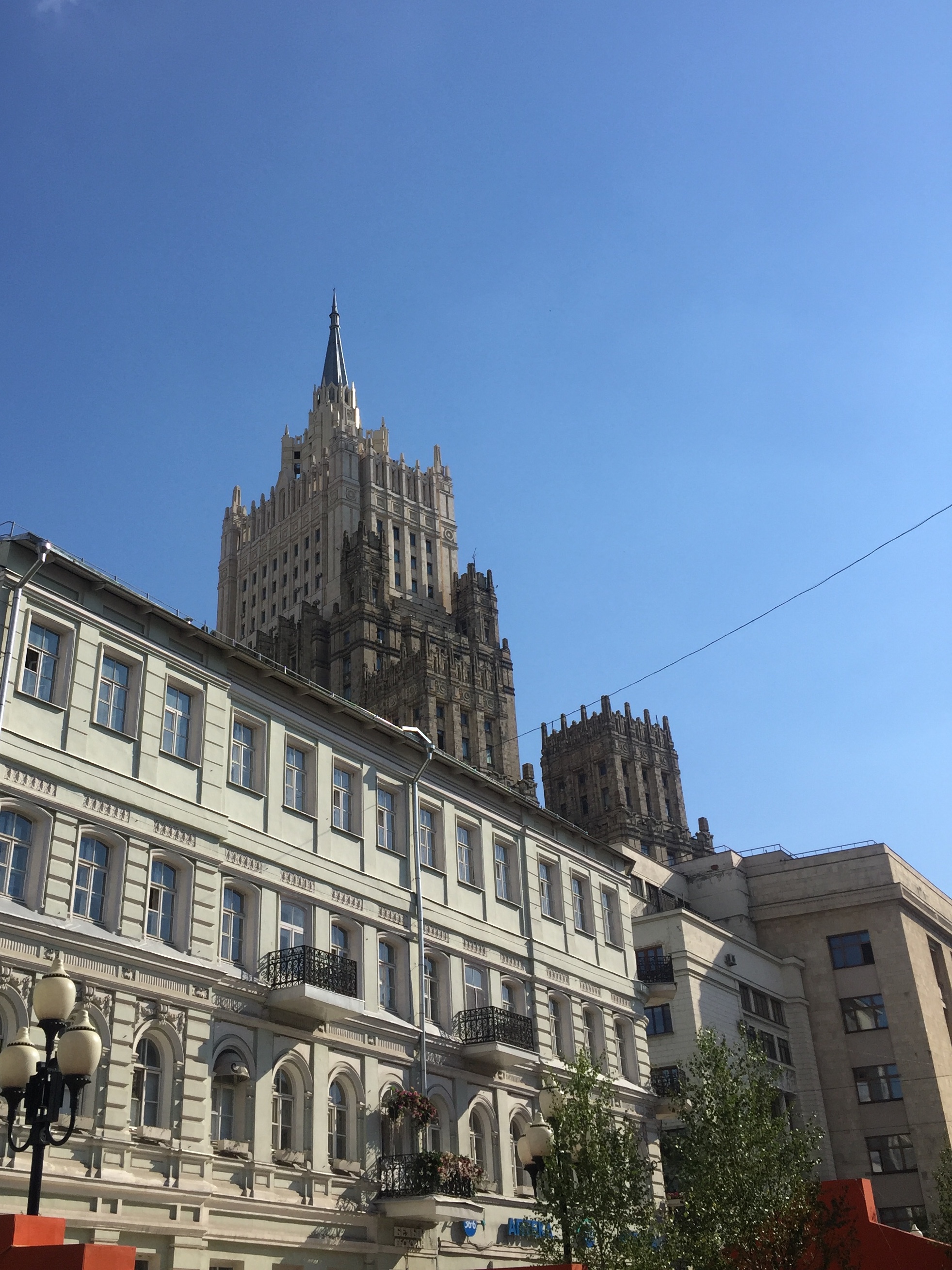
In truth, Moscow could scarcely be further from these Westernized ideas. From our hotel room’s 15th floor, the layers of the city reveal themselves in the buildings radiating out from the Kremlin, a mishmash of old walkups to be found in any European capital, gold-leafed Orthodox domes catching the evening light, Stalin’s overwrought and unmistakable ‘Seven Sisters’, Communist-era slab buildings, and the curtain glass walls of the 21st century skyscrapers. This birds-eye dynamism was a promise: of excitement, of far more than a staid black and white culture, but one that has continuously adapted and changed. It was bracing, it was foreign. It is the most out of my element I’ve felt since first landing in China in 2007, and hinted at a larger sphere of the world existing separate from my own. It was great.
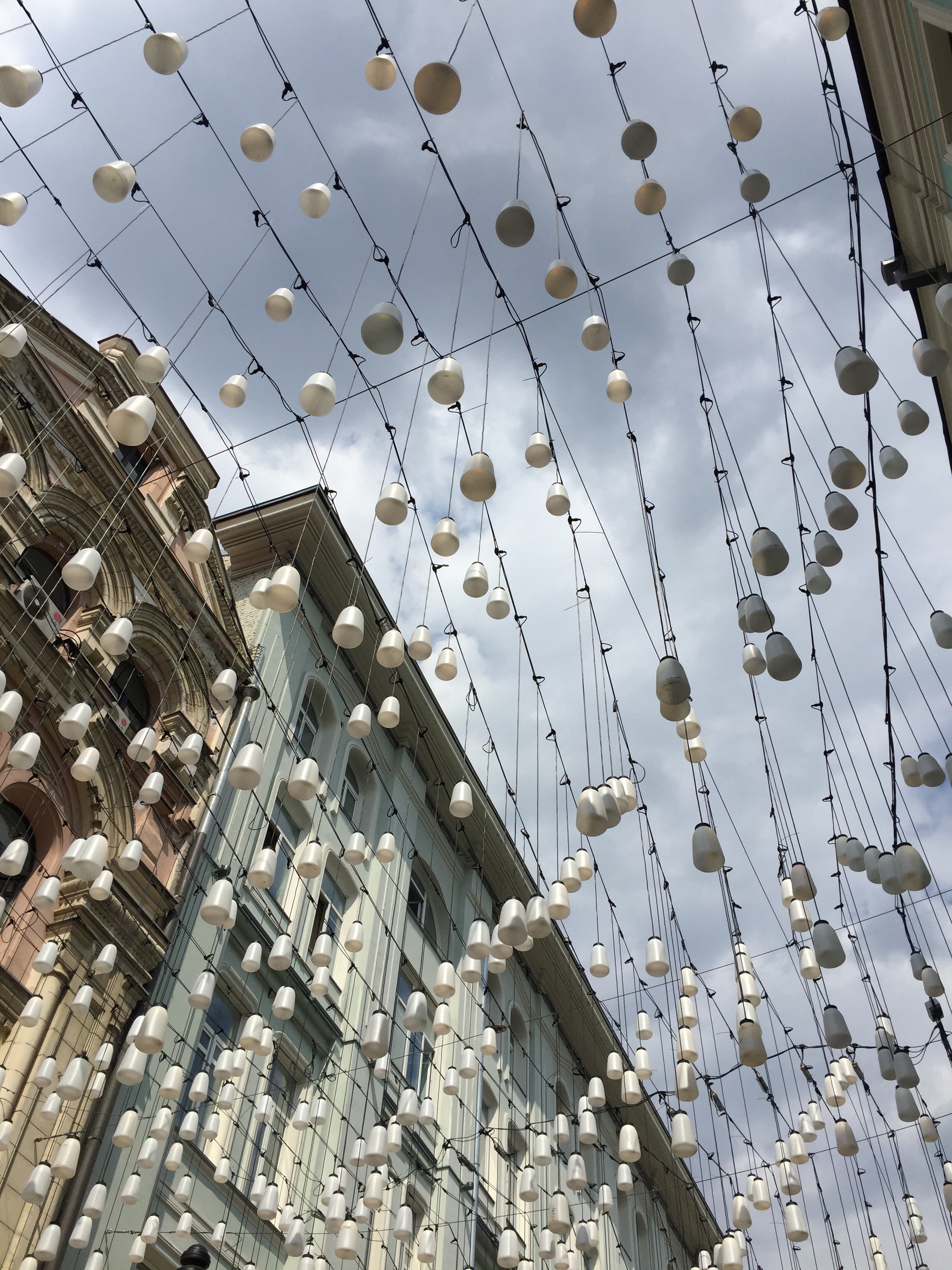
Our hotel was near the western edge of the core, more or less a straight shot down the Arbat, a long-standing pedestrian thoroughfare towards the Kremlin, jammed with all manner of restaurants, bars and shops with the usual schlock designed to part a tourist from their rubles: matryoshka dolls, fur hats, chess sets, garish t-shirts, postcards, souvenir spoons and tea towels, interspersed with any number of photo ops. The commercial silliness of the Arbat gives way at the Kremlin to a more stoic energy, with numerous small churches reminding me how astonishingly little I know about the Orthodox church. Red Square runs along the outer edge, a hub for the intrepid tourist and perhaps the only part of the city with full-scale tour groups visible, right down to the colour-coordinated hats and megaphone-toting guides unconscientiously wearing flags as a fashion accessory. My highlights were seeing the wall of heroes – namely the first man in space, Yuri Gagarin, and a visit to see Vladimir Lenin, another in the line of embalmed 20th century Communist revolutionaries that spend their days under low light with waxen skin. Red Square and surroundings are worth the visit, but they are also staid, and have a feel of the obligatory.

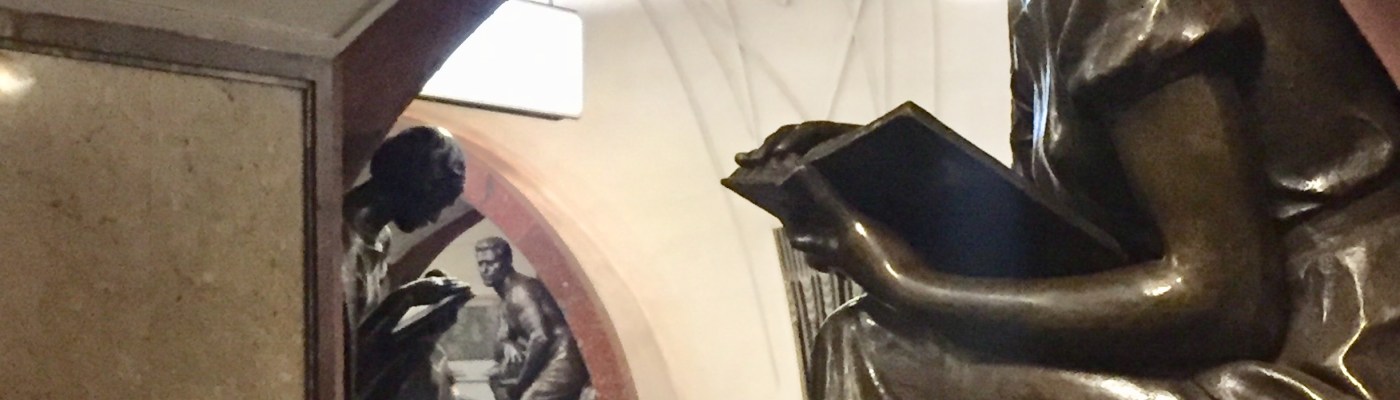
Soviet-era kitsch and nostalgia pervades elements of the city. Video game museums are often advertised, though our experience was something of an opportunistic collection of 70s/80s era arcade games missing various parts and in some cases with busted buttons or glitched tech. I’m not honestly sure if this is a sign of wear and tear or if some of these issues were present from day one. Either way, the arcade game eating your quarter/ruble seems to be a bridge connecting west and east. More functional, more enduring, and to anyone who knows me, more endearing, was the Moscow Metro. This enormous masterpiece is still used by millions every day, where trains rumble through evocative stations built deep enough to double as nuclear shelters. The skill and artistry in the execution of Socialist Realist art in the system is remarkable, and beyond the aesthetic overload is a system that is fit for purpose as well. It makes for a dignified public transit experience, a far cry from the warehouse basement, “well, what did you expect?” vibe of American subways.
Amid the many, many museums, large and small dotting what feels like every other street in Moscow, the standout was the New Tretyakov Gallery, near the south banks of the Moskva River. A much lauded show of Ilya Repin, a renowned 19th-20th century painter whom I knew nothing of until hastily reading a Wikipedia article after being blown entirely away by what was on display. Beyond Repin, the entire gallery collection again deepened the impression of an entirely separate world from mine, parallel but untethered. For dinner, we had reservations at White Rabbit, a rooftop restaurant focused on new and innovative takes on traditional Russian fare and ingredients. It was incredible to treat ourselves to a meal in this lush setting while watching the sun descend around us in the atrium. In truth, we ate well across Moscow, recipients of good meals and good luck at random spots ranging from cafes and bakeries to streetside bistros and sit-down affairs. This was an enduring and pleasant surprise – Russian food is great.

The centralized economy of the Soviet Union left a great number of legacies including a plethora of heavy industrial buildings suddenly needing reinvention in a post-industrial era. Across Moscow, these have been transformed into a range of artist colonies and creative spaces with varying degrees of hotly grafted capitalism infused into them. Again, a dynamic, contrasting intellectual froth speaking to a bigger conversation around place and future that was frustratingly obscured behind language barriers for us. In all, Moscow was an intoxicating distillation of elements of Russia, perhaps in vein with a Shanghai or New York – hardly representative of a huge and diverse country, but so incredibly vibrant as to warrant return visits. Perhaps someday.
 Zak Abroad