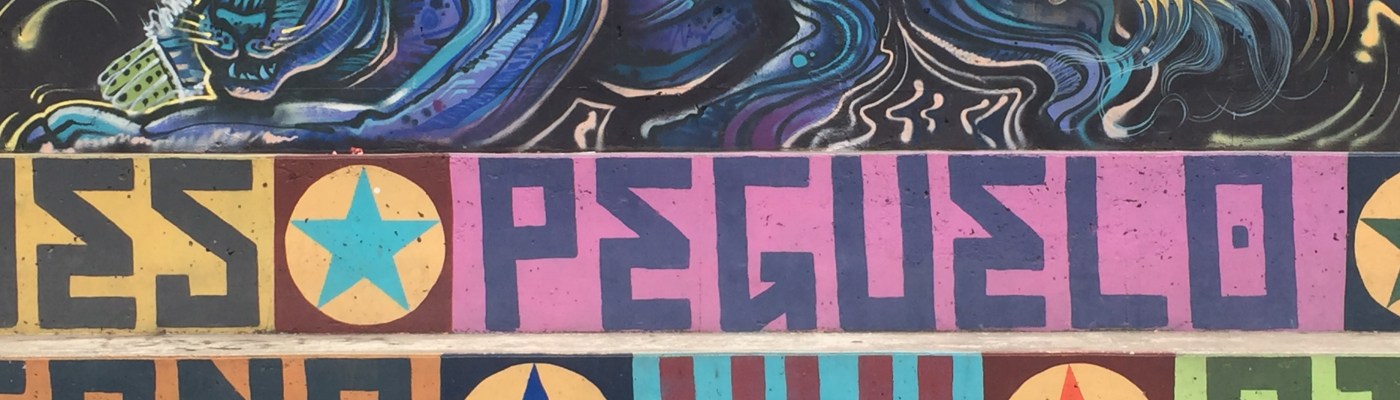
We landed in Bogota early Sunday morning, finally passed off from the last leg of our relay via Denver and Panama City before alighting. The taxi into the heart of the city was uneventful, save for the periodic cursing our driver shared with himself as he faced closed roads and barricaded streets. Sunday is Ciclovia day, when hordes of Bogotanos take to the streets on two wheels, dominating the cityscape for a few hours every week. While I felt some planner guilt to see this from a cab window, it was all the same exciting to see just how alive and active the entire city seemed to be. As we neared our destination, our driver finally gave up, arriving at another short-term cul-de-sac and asking us if this was good enough. Sure, we said, and hit the pavement, navigating our way through the crowds and up the hill to get a bite at an early morning empanada shop until check-in.
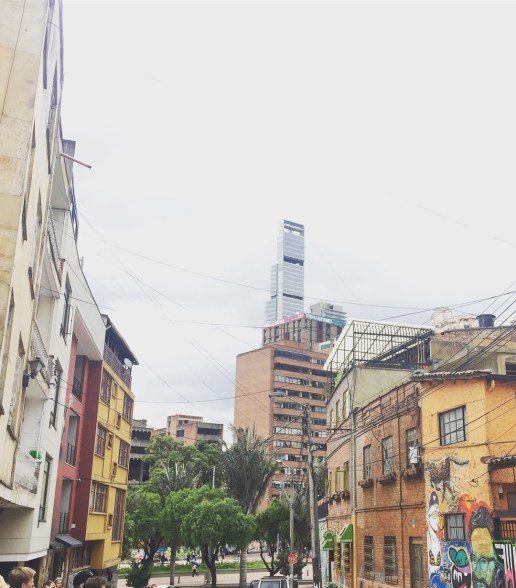
We were staying at an AirBnB in La Candelaria, an up-and-coming trendy neighbourhood just north of the city centre. After a morning power nap, we emerged to explore our neighbourhood, the heart of which is a north-south street known simply by its number, Calle 27. The street is slopes gently with the undulations of the nearby hills, a reminder of the stark mountain ridge that Bogota presses up against along its eastern flank, defining the scope of geographic sprawl for the expansive capitol. The area is a hodgepodge of low buildings, typically South American with 3-4 levels and a hunkered down feeling, small windows and roll-down doors or locking gates. Overall our neighbourhood was nice…we could go out at night and not worry about our safety. This was a relatively new phenomenon in a country that has grown significantly safer in the last decade. A welcome change for tourist and resident alike.
One stop on our tour was El Centro, the downtown of Bogota. The walk from our neighbourhood was, generally, a straight shot and the lunchtime crowds spilled out from the office towers, the middle class ducking into small restaurants and cafeterias off the small sidewalks. The central area has a rundown feel, a shoddy charm that is evident at first glance with the mixture of cheap shops and tattoo parlours, the occasional adult store in the mix, along with other more upscale and upstanding enterprises. We came for the graffiti tour, joining a large gathering at Parque de los Periodistas to take in street art.
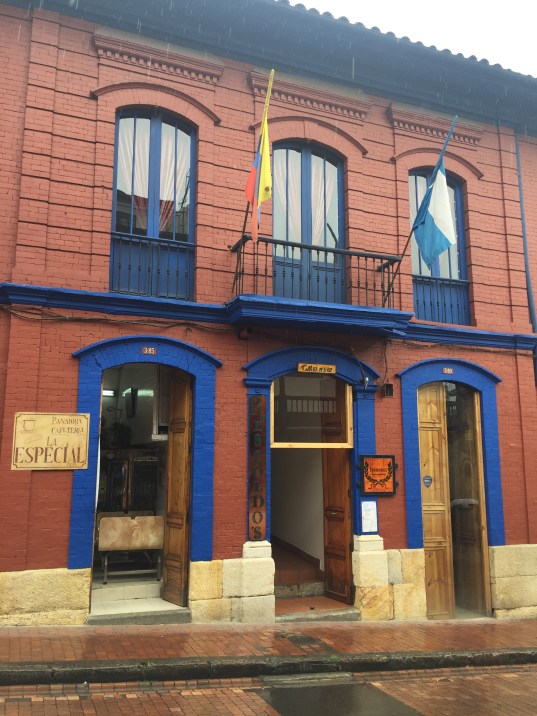
Our guides, Bogota locals, give a good tour explaining the tension between art as protest and the commercialization of graffiti in the city. The scale of the group opened up parts of town that would’ve been uncomfortable as a duo; as a group of 50, they were rendered secure. That said, the sheer volume made it slow going and the needless selfies further gummed the works. Hannah and I split off after a point, taking in the Miguel Urrutia Art Museum before stumbling into a wonderful Spanish bookshop. We topped the afternoon with our own lunch at Bao, a Colombian take on Chinese dumplings set in one of the great, heavy plaster structures that dominate the colonial heart of Bogota.

For me, one of the best tools for exploring Bogota (and a not so secret interest to me in general) was the Transmilenio bus systems. Per the name, Bogota officials set out to tackle congestion in the city by implementing a criss-crossing network of dedicated bus lines, set out separate from the spewing traffic. We used the stations a number of times while navigating, finding a service that is somewhat worn but effective and, where it does reach, preferable to sitting in the car. The city continues to intimate at building a subway system, but so far no dirt seems to be turning. The downside to Transmilenio is the ticketing…at one point, our cards requiring recharge, we embarked on a 20 minute scavenger hunt for a charging locale before finally able to top up our fares. It seemed unnecessarily complex and I was glad that we weren’t in a race against the clock.

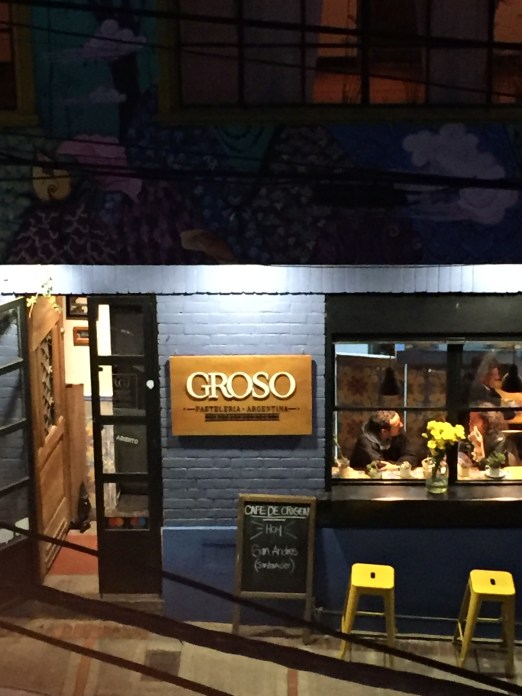
Ultimately, it was our neighbourhood that was the charming end. Within a few blocks of our front door were Colombian takes on a bevy of world cuisine, an interesting lens to experience the city from and a window into the increasingly global culture of Colombia as it emerges from the darker recent history. The highlight to me was Sandwich Taller, a small 10-seat bar with a single man tending both stovetop and drinks. For a low price, he would craft enormous, delicious sandwiches, chatting with other customers (why bother with our shoddy Spanish?) while playing hits of Colombian radio, to judge from the disparate groups singing softly to themselves while sipping at their beers.
Onward from Bogota, we took a long bus ride into the hills near Medellin, arriving at our destination far later than we had hoped…a 5 hour trip that had easily stretched closer to 8. Rio Claro is a small “resort” set at the edge of the jungle, and the sun had long gone down when our bus driver called back to us that we’d arrived. The curve in the road was quiet, the diesel grind of the bus disappearing and leaving us with nothing but the singing noises of the jungle. The Jurassic Park-style gate, next to a low-slung set of open restaurants closed for the day, was manned by two teenage boys and a litter of kittens. They offered us our room key and gave us directions to our cabin. Straight ahead for 15 minutes. Sheer blackness. There was nowhere to turn back to.
 Zak Abroad