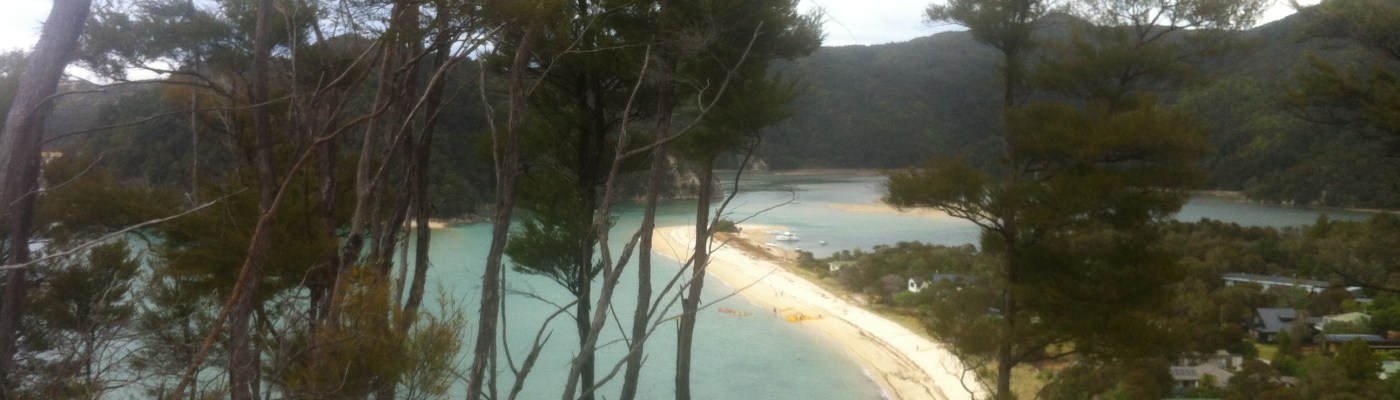
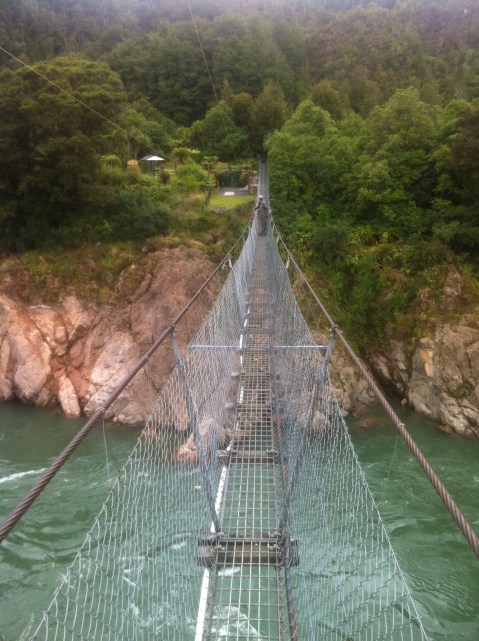
Greymouth is quite aptly named. The little town, one of the larger outposts on the more rugged west coast of the island, is situated at the mouth of a river and is largely overcast and, indeed, grey. It served as a launching point for our explorations of the western coast, including an old gold mine claim and a suspension bridge walk across one of the milky glacial-fed rivers. One of the more curious locales was the National Kiwi Centre in Hokitika. Don’t let the name fool you, it is more an overgrown pet store, though the highlights included some eels as old as grandparents and, yes, the namesake national animal. The kiwi itself is nocturnal, a chicken-sized animal in the shape of a bowling ball, flightless and skittish. It is not surprising, after watching them, that they’re endangered.
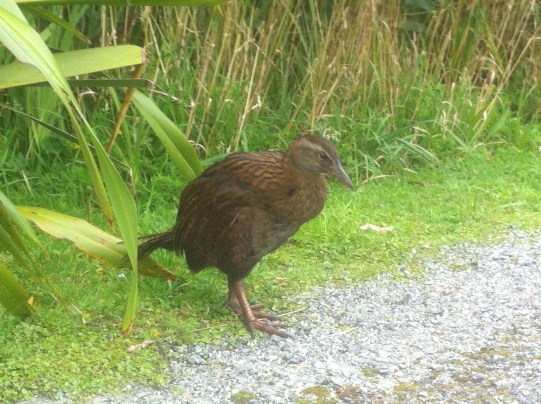
Driving up the coast towards Nelson, we also took a pause to stop at Pancake Rocks, a natural stone formation where the waves crash up against the sharp volcanic coastal rocks. Over time, holes have been worn through and the successive waves land with a thundering crash, sending the brine meters high into the air. Impressive and a nice break from the car. Plus the parking lot was afforded the exciting opportunity to see some local fauna, the weka, a small flightless bird around the size of a duck. Needless to add but I was excited to see a new bird in addition to the many large parrots that are visible in the skies.
Our last stop was Nelson, one of the bigger cities at the northern end of the island and a starting point to many of the nearby national parks and wine country. We set up shop in a camping ground, pushed away from the old town by a severely botched reservation at a guesthouse that, despite the protestations of the apologetic proprietor, did not win our business. Instead we settled for a cabin beneath the flyway of airport, complete with a minigolf course. Nelson, like most towns on the South Island, is low slung buildings and verandas. One of the more interesting cultural spots in town was the Queen’s Garden, filled with plant and tree varieties from around the island (and imported) offering a different lens to see the country from.
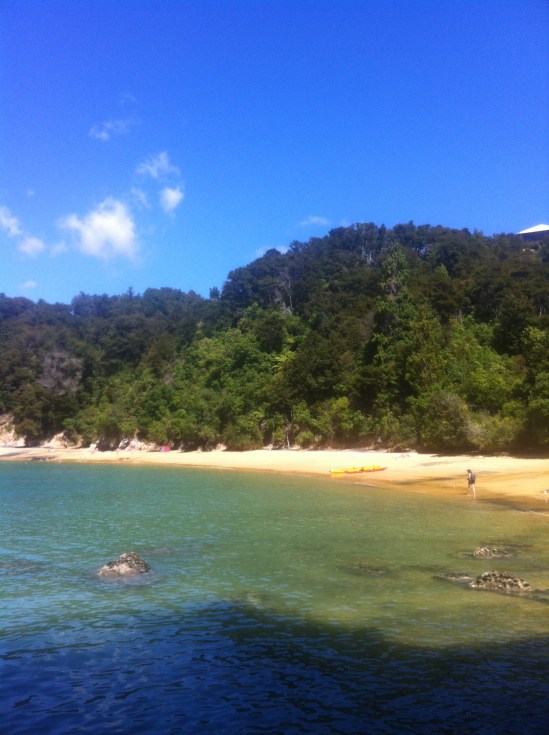
The tourism industry is the primary generator of activity in the area, and sticks to the script of the great outdoors. Nearby Abel Tasman Park is well-set up, with regular boats departing at regular intervals, depositing the traveler at various beach fronts in the park from where one can walk off into the woods. Nick, Tori and I took a day to hike some of these trails, generally hugging the coastline and the brilliantly azure waters. We also ticked off some sea kayaking, beginning with a demonstration from the jaunty youth at the rental stand of how I should slip out, flip and continue on the open sea if I should flip my boat on the waves. Not excited about that part but fortunately I stayed right and we made our way to Split Apple Rock before looping back.

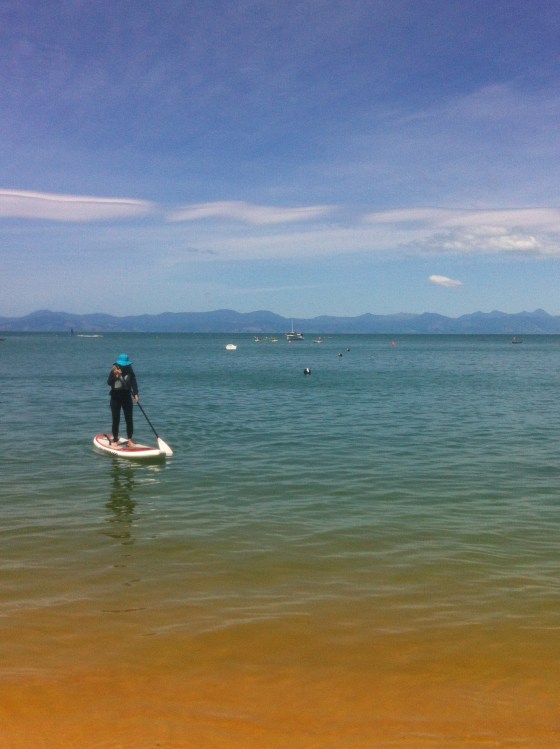
One of the highlights for me was closer to shore, where we took turns trying out some stand-up paddle boards. Harder than it looks at first, but also a fairly relaxing and lowkey way to putter around the sheltered inlet the beach sat on. Headed out to the one of the arms of land encircling us, I saw myself pass over what appeared to, at first glance, be a rock. It appeared odd then when the rock began to move and I slowed myself over top. Shaking off sand, a good-sized stingray, perhaps 1.5 m across, glided beneath me and made its way off into deeper water. A fun send-off to the beach at Kaiteriteri before heading back into Nelson.
Having heard the arriving and departing flights during the past few days, we knew our trip to the airport would be brief. Nick and Tori dropped us of, their trip diverging from ours here. Mom and I were bound for the last leg, Melbourne, via a transfer in Auckland. The Nelson airport was a total throwback, and I had a hard time recalling the last airport I went to without any security check and with people picking up relatives and friends directly at one of the handful of gates. Small songbirds popped around in the interior, looking for dropped crumbs. It made for a much smoother departure than our arrival a couple weeks earlier.
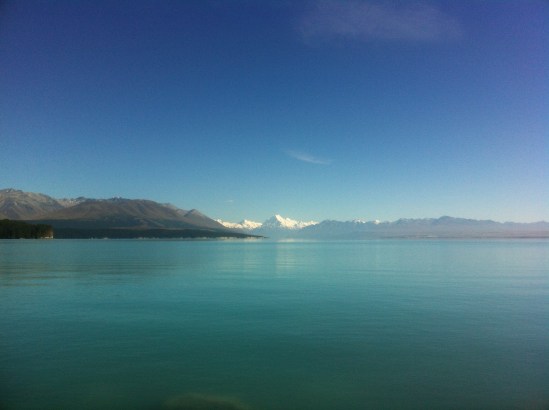
One thing that was clear to me after spending time in New Zealand is that it is very different from Australia. Though the colonial history has parallels, the landscape is lush, green, and dramatic, marked with soaring peaks and dense forests. Australia by contrast is the oldest continent, with an enormous red centre of little rain and vegetation. The animals differ completely, evolving in isolation. Even the indigenous peoples are vastly different, with the relatively recently arrived Maori in New Zealand contrasting with the Australian Aboriginals, one of the oldest cultures in the world. A fascinating counterpoint in many ways to one another.
 Zak Abroad