
The past couple days we’ve set up shop in the opportunistically-renamed town of Machu Picchu Pueblo, nee Aguas Calientes, the final launching point for tourists headed up to the ruins of Machu Picchu. We’d booked two days at the namesake ruins, something I wasn’t sure would be necessary but I find now that I am quite glad we took the time to explore the site. The isolated geographic nature does however mean that there are not peddlers offering bottled water and other knick knacks. While I could do without the latter, I have made a bad habit of traveling and hiking with little water. Now let us set the scene…a queue of tourists milling about the sidewalk, waiting to shell out $10 a person for a one-way trip on a dusky morning in the Sacred Valley…
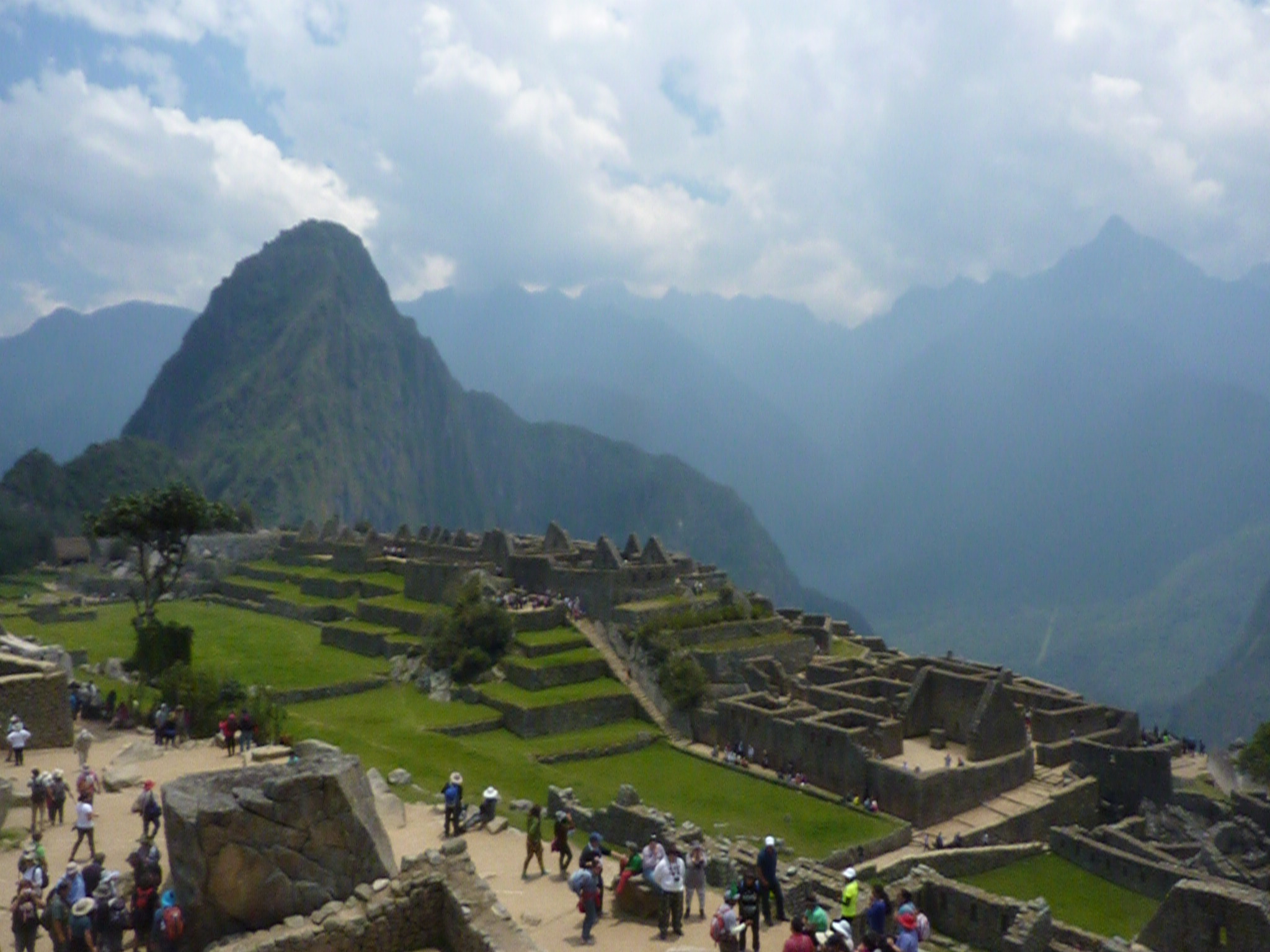
The buses wind along a dusty road mirroring the turgid Urubamba River before taking a quick cross over said waterway and then wending up the turnback-hashed hillside until reaching the site of the ruins. Past the gate keepers (who ARE faster than the passport folks…) one walks down a short path before grand reveal: Machu Picchu stretching forth up to the sheer flanks of Huayna Picchu, the mountain peak so often seen behind it in postcards and pictures. The scale of the site, particularly given its high-altitude locale, serves as an impressive testimony to the engineering and architectural skills of the Inca and their ability to marshall labour. The site is estimated to have been used for perhaps a century as an escape, initially built for the Inca Pachakuti, and estimated at its peak to contain up to 500 people.
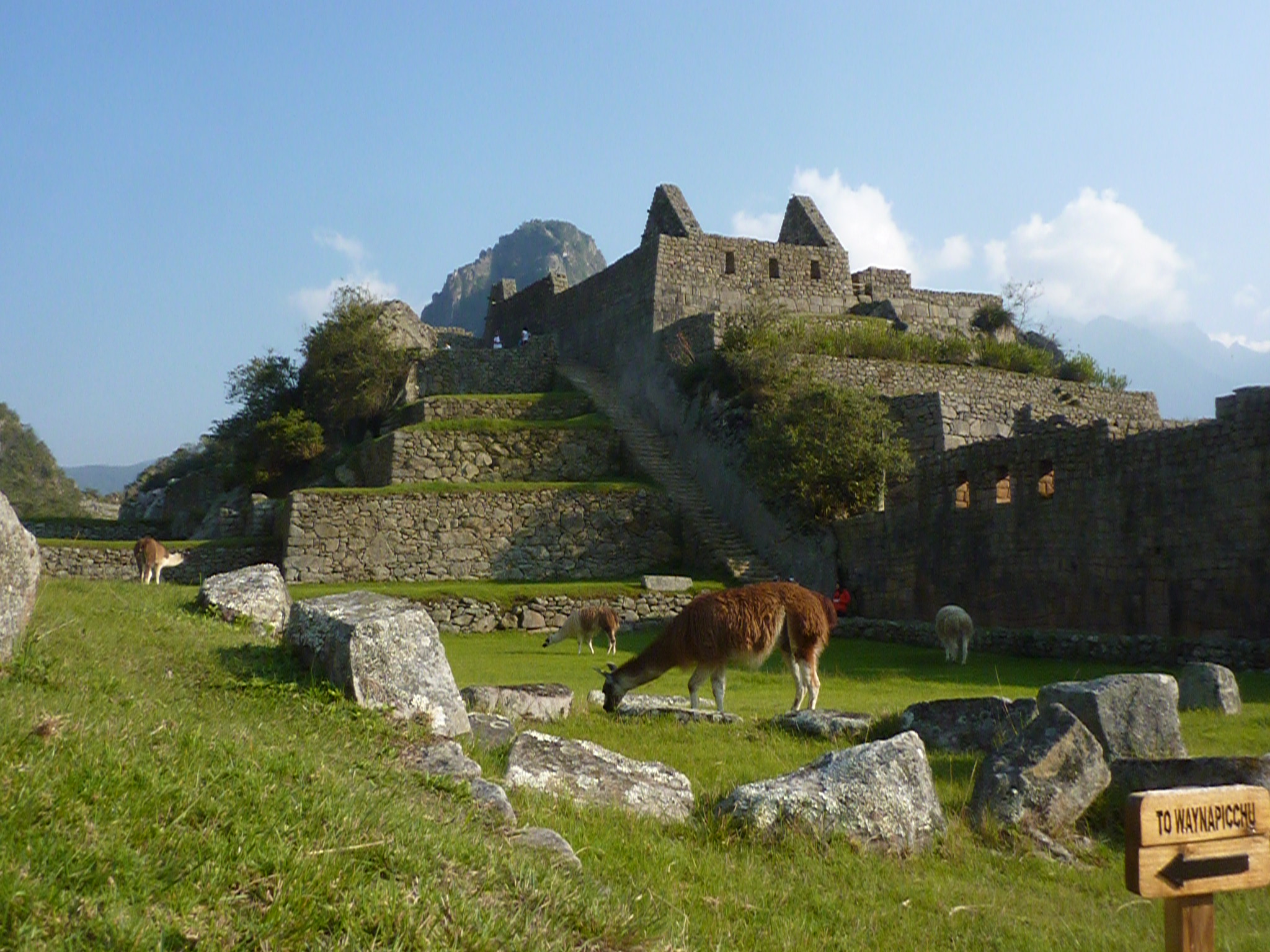
Within the site the compound is broken into numerous sub-areas. The guardian house, perched high above at the south end, is thought to have been a site of mummification rituals. That tradition continues today with tourists (myself included) snapping pictures furiously to preserve the experience of being there. We could not have ordered better weather; high scattered clouds and a lot of sun, allowing for leisurely exploration. The pace was often deliberate as well, forced into pace behind whomever ahead of you is going slowest through the various chokepoints that the routes create. For better or for worse, and I would imagine for better when the crowds are seen in full force, tourists are not allowed on the central lawn area that is situated between the Inka Room, the religious sector, and the living quarters areas. The only exception to said rule is for the llamas, who can seemingly do whatever they want and are not especially keen to pose for photos. I learned as well that I can’t make the right sound to attract their attention. That or they’re just too damn cool for it.
Through the first day we perambulated through the ruins, posing for pictures and trying our best to get far from the maddening crowd. The sheer scale of the site allows for exploration and the chance to find quiet corners for a breather and to take in the grandeur uninterrupted by tour guides, as admittedly helpful as they can be. Naturally I’m too cheap to spring for one, but did my best to listen in and walk slower anytime I was in earshot of a language I know. Some of the most impressive aspects continue to be the stonework – mortar-free and utilising massive pieces of granite and other local stone fitted to one another with incredible precision. Another major sight on site is the intihuatana, a carved stone used in Incan astrology. These stones, thought by the Spaniards to be a problem and encouraging of the blasphemous local religions, were destroyed whenever encountered. The long-term isolation of Machu Picchu has meant that its remains intact.

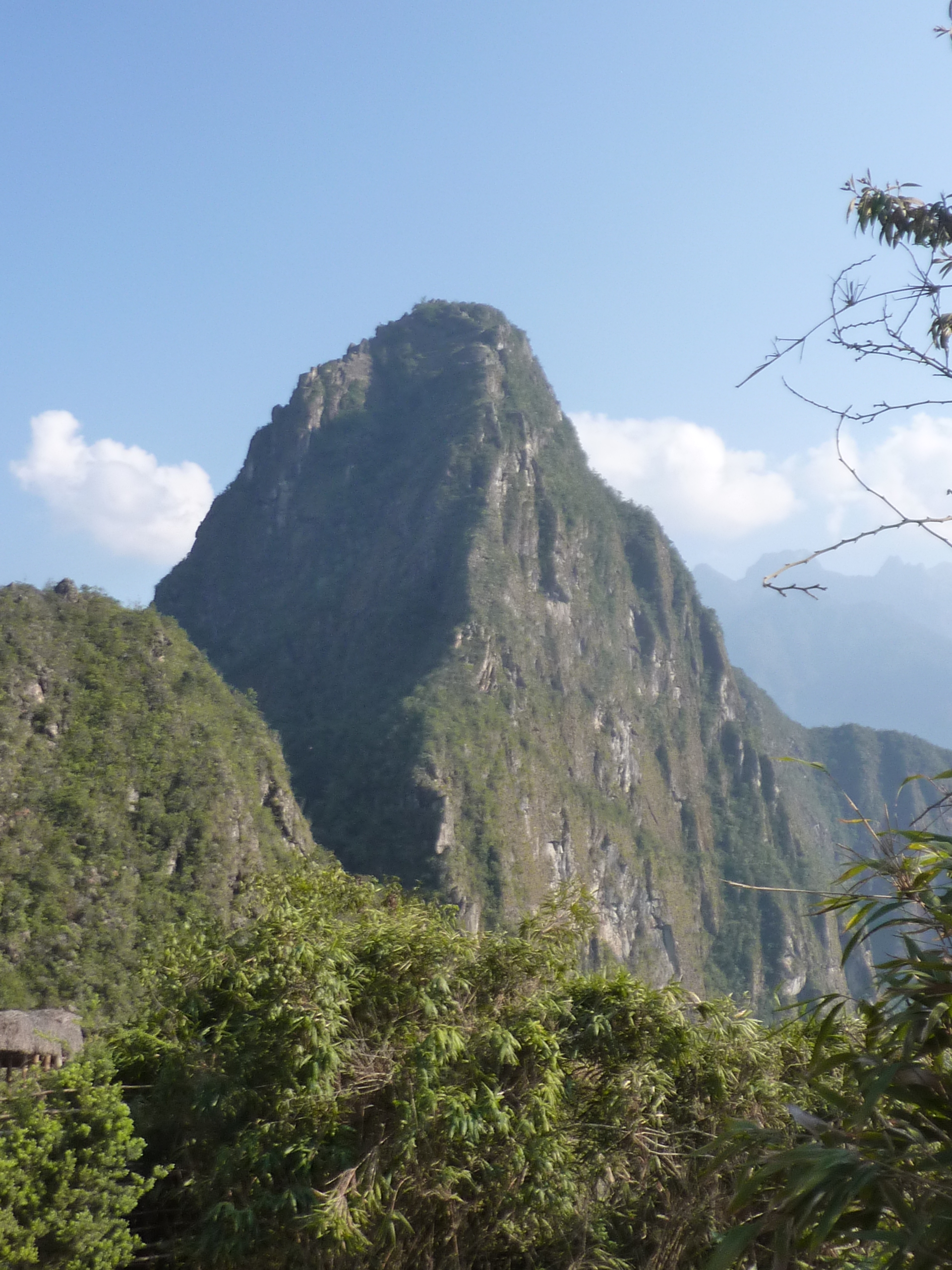
Day two was an altogether different beast. After a tidy breakfast on the fourth floor of our walk up hotel building, prepared by a friendly old woman who seems to man the kitchen in the breakdown of the family duties at the hotel, we were ruin-bound by 6.30am. Today, though, we were setting our sights on Huayna Picchu, the aforementioned green monolith (remember?), part of the elite 400 to have purchased tickets far enough in advance to be allowed up. The line was, inevitably, slow, for some reason. In order to compensate for lost time, I parted ways with Mom after we passed through the gate, determined to charge up as fast as I could. This was, of course, with her blessing.

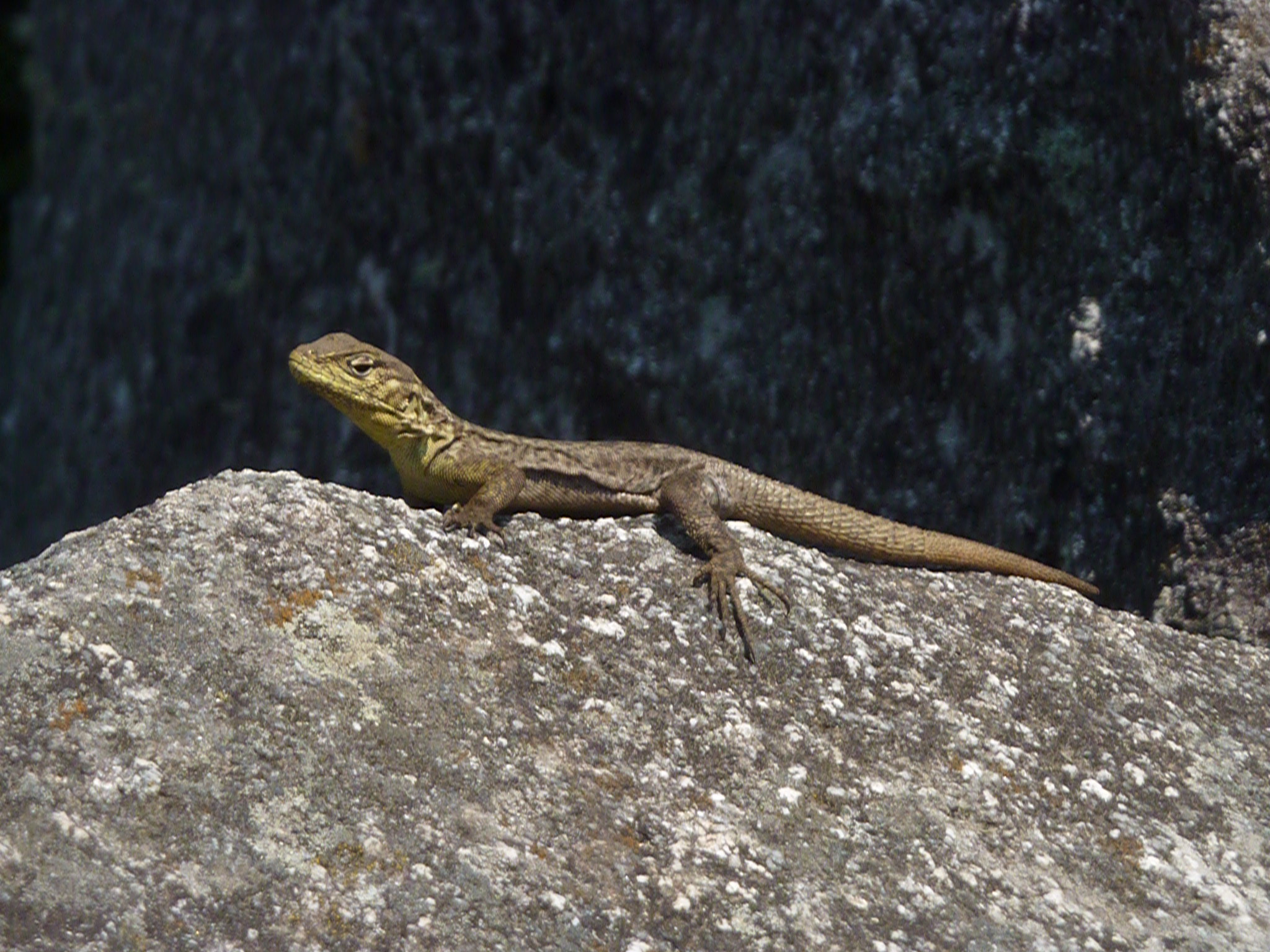
The peak, as pictures show, is quite steep, with numerous steps, stairways, and switchbacks until, near the top, a set of Incan agricultural terraces make an appearance. Speculation is that these would feed the inhabitants on top of the mountain, some sort of priest and a bevy of virgins, who would then march down during the daytime. Or something like that. I was more concerned with getting to the top, rewarded, after a short climb through a tunnel and up a pair of ladders, with a grand view of not only Machu Picchu itself, far below, but the surrounding mountains and rivers. I lounged up here for a time as it filled with more hikers, took some pictures, and saw a small rock lizard who also felt that the rocky outcropping crowning the peak made a good place to pass the time.
Heading down, I decided that, having made good time, I would take the path less travelled to visit the Gran Caverna and another small ruin on a lower, opposite flank of Huayna Picchu. The sites themselves were nothing spectacular, at least when compared with the main show, but the walk itself was worthwhile. Descending down carved stone steps hundreds of years old, into a sloped rain forest with the song of birds and insects (including an odd, chainsaw-like bug), and watching the fluttering of colourful butterflies made the trek great. That same sense of being far from home, of being small, and appreciation for the good fortune to be in that place, at that time.
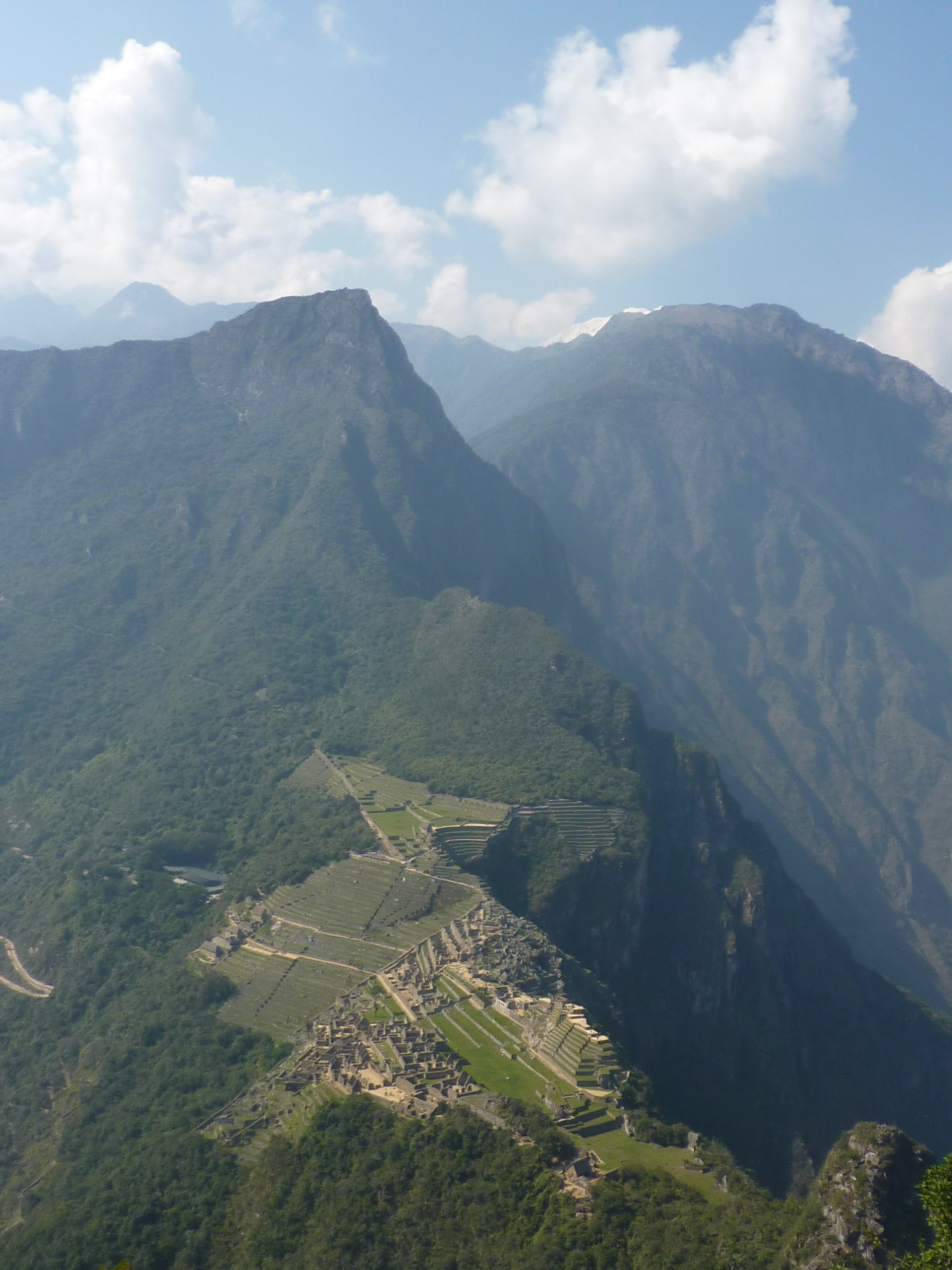
The return to the main site was punishing. Uphill, again, and probably 2,000+ feet of gain for me, as well as the same in descent, meant tired, heavy legs. We tacked on one more quick hike, a jaunt out to the back door of Machu Picchu, the so-called Inca Bridge, consisting of wooden slats over a gap in the cliff face, welcoming the unsteady with a plunge greater in height than the Sears Tower. It was a cool one to see and, thankfully, a relatively flat walk. Tonight we head back to Cusco, to pass a few more days in the heart of the old Incan capital before setting off in separate directions for vacation, part two.
 Zak Abroad
Fantastic. What more can I say?
Love, Dad