First stop after leaving La Paz was a solo jaunt…Mom flew ahead to Cusco to spare herself arduous overland treks. About an hour into the bus ride outside of La Paz, as we chugged slowly through the traffic-choked suburb of El Alto, I thought she had made the better choice. The bus was cheaper, but it definitely lacked the style of a simple plane flight over the Andes. My spirit was somewhat assauged as the bus broke free from the sprawling capital and made its way to the low hills surrounding the supernatural blue of Lake Titicaca. At about 12,000 feet, Titicaca, despite its giggle-inducing name, is the world´s highest navigable lake. After several hours, I was left out in the original Copacabana, from which Rio stole the name, a small beachside town wholly in thrall at the altar of the tourist trade.
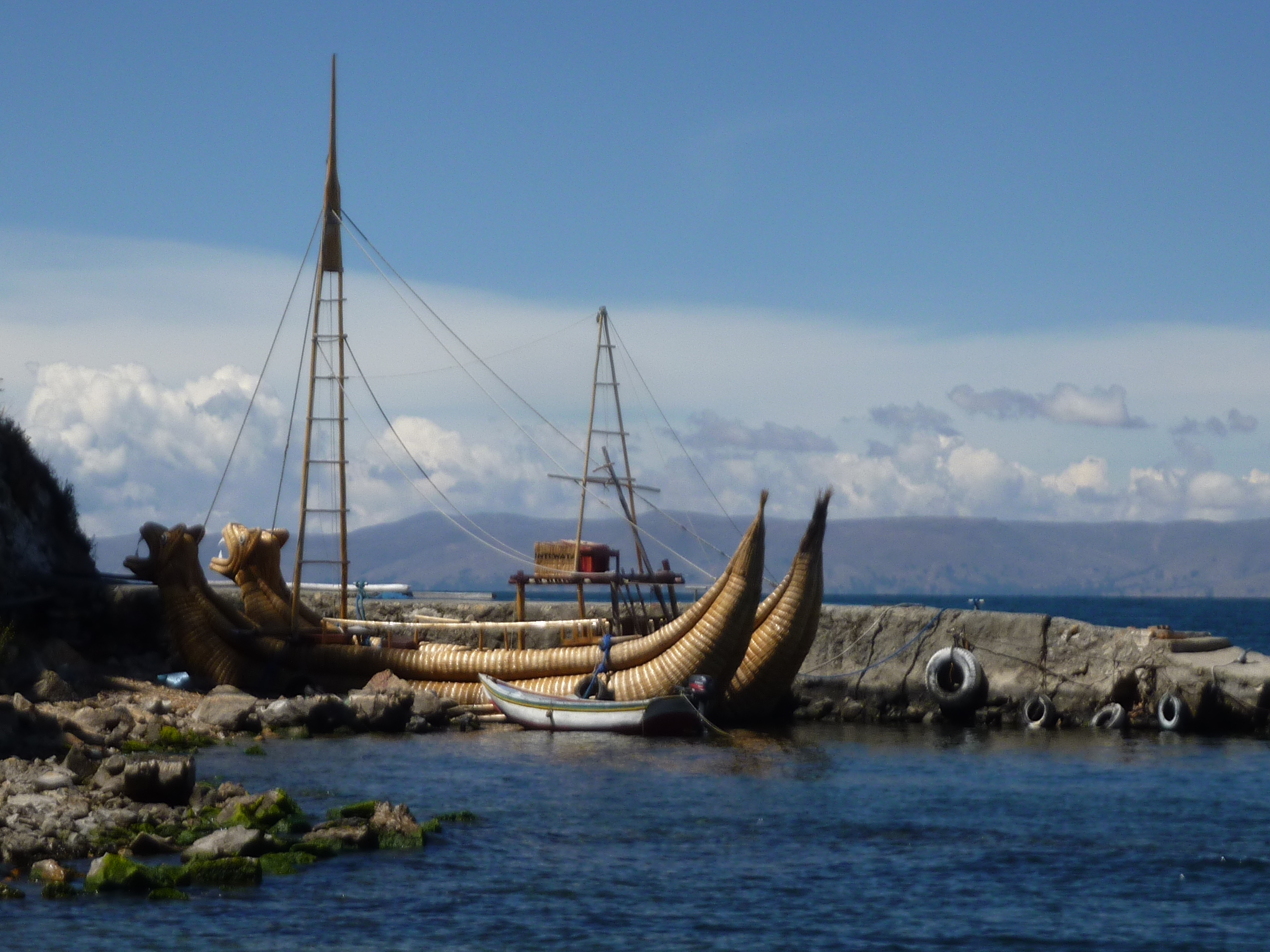
Unlike La Paz, people in Copa (or at least the ones I interacted with) are dependent on tourism, for better or worse. Here, it seems that manifested itself in a general surliness and an impressive poker face regarding their high prices for basic goods. At least rooms were cheap. My second day I was one of the many, perhaps too many, tourists on the heavily laden boat bound for Isla del Sol, an inviting respite in the midst of the lake a few hours from Copa. The island is a welcome change of pace…away from the docks, the smell of exhaust fades as the entire island is a carfree zone. Even stray dogs were few and unthreatening, a lovely development.

Isla del Sol is one of the sacred sites of the Incan (and perhaps other) people, and some ruins on the island attest to this importance with Incan tables and ruins at the north and south ends. Connecting these is an 8 km Incan road that the intrepid tourist can journey along. The crowds, though seemingly plentiful on the boat, fade quickly stretched over this expanse. For myself, this meant a quiet, contemplative walk up and down the rolling hills of the island, through small villages and past roaming donkeys and sheep, accompanied by the slowly changing backdrop of the dusky browns of the land, the sharp blue of the lake, and the far off white-capped Andes. A worthwhile day, to say the least.

And good that it was, for the next leg of the trip was much less pleasant. I was told that my bus ticket was direct to Cusco from Copa, something seen by most of the guidebooks as too good to be true. What can you do though? When I got there and signed the registry for the bus, all destinations showing Puno, my spider sense tingled. Bereft of options, I joined for the short jaunt to the Bolivan-Peruvian border, where I waited as the guards checking my passport on each side stopped, post-stamp, to think about the higher purposes of life for several minutes before sliding the passport back and moving on to the new supplicant. The bus dropped me off in Puno, where I had the luxury of a 2 hour wait for a combi (minivan) to Juliaca and then another transfer there to my Cusco-bound transport, filled with Quechua women smuggling clothes. It would´ve been fun if I wasn´t so angry with humanity at that stage. All told, the 9 to 12 hour trip cost me 15 hours and left me with a 4am bedtime in Cusco.

And Cusco…lovely, one-time capital city of Tahuantinsuyu, the empire of the Incas. Mostly today it bears the legacy or scars of its Spanish heritage as a colonial centre, which make for a lovely town if one doesn´t dwell on what was lost in the ransacking of the short-lived Incas. Cusco, though, was primarly staging for the next few days in the Sacred Valley. Today we set up shop, after a gorgeous, winding and mountain-lined drive, in the old Incan village of Ollantaytambo. For me, it is a thrill to see what is considered the most complete example of an Incan city, with still functioning water gutters rolling down the cobbled alleys and the thick fitted stone forming the base of the buildings.
.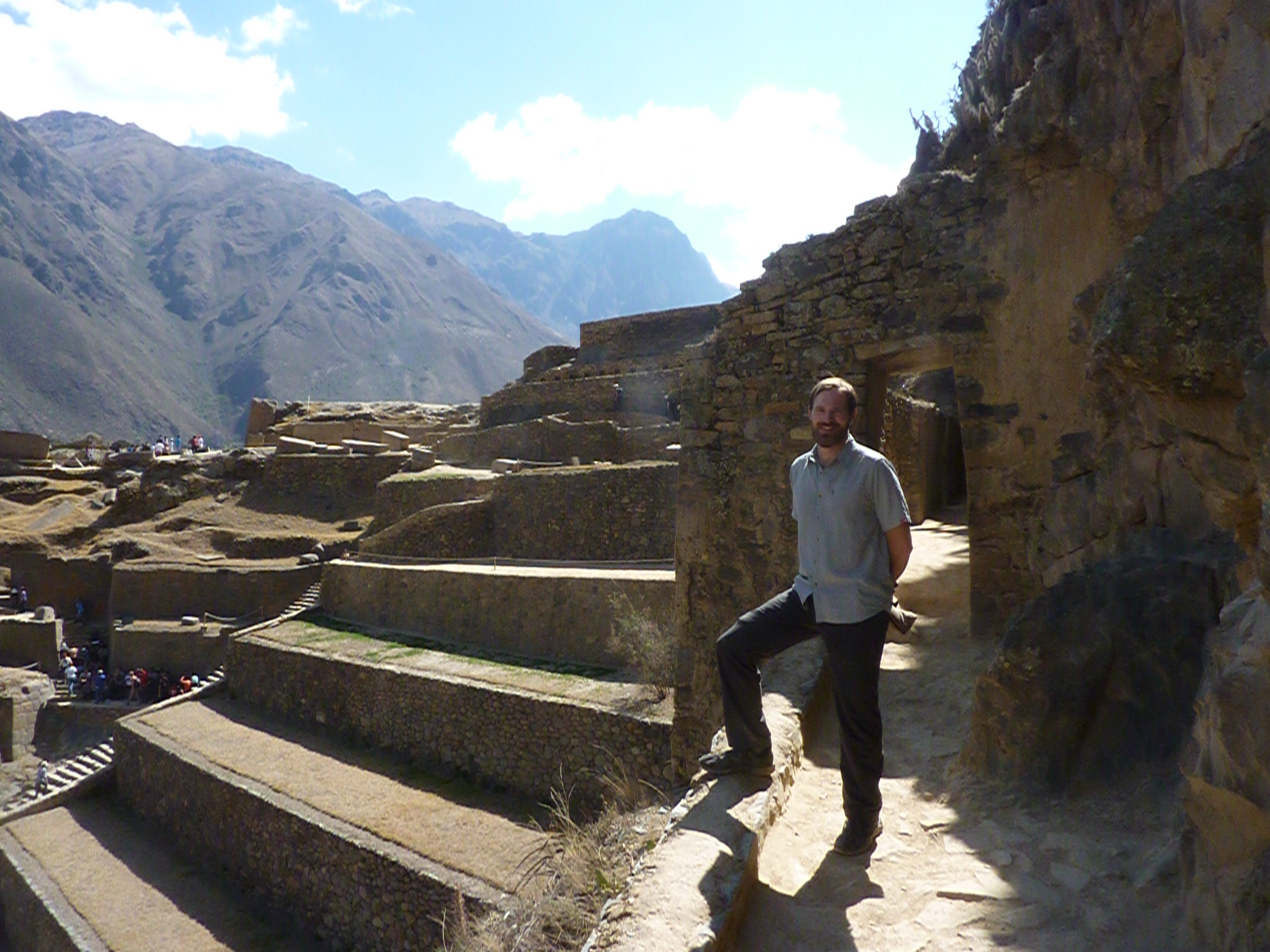
Another particular thrill are the ruins at the site, shaped in an abstract of a llama with a temple dedicated to the Sun at the head of said creature. The views up on the site are stunning, looking down over Ollantaytambo and the surrounding heartland of the former empire, corn only starting to break through the soil in the October spring of Peru. Farther down the “spine” of the llama one can see storehouses for grains and seeds, located cleverly in the approximate locales of the male and female bits (yes, scientific term) of a llama. Even better, to me, is the control of the water coming down the hillside through the ruin, matching with the urinary tract of the llama. Clever design work, yes, but the llama is based on the Incan llama constellation, charged with bringing water to points across Tahuantinsuyu. The latter part of the afternoon consisted of climbing an opposite hill, looking at storehouses and some other structures on that side. Tonight calls for sleep though; an early wake-up call for our train ride to Machu Picchu beckons.
 Zak Abroad
Great narrative, son. Keep it coming!
Love,
Dad