
Ten days! That is all the time remaining. An American friend, Eric, and myself ventured south from Beijing this weekend to Luoyang, one of the cities of Henan province. It is situated on the central plain of China, a repository of ancient Chinese history and centuries of farming in the land fed by the mighty Yellow River, the once lifeblood of the north that as has been steadily worn down by overuse for agriculture, dams, and pollution. I’d previously traveled Henan Province back in 2008, and it seemed fitting to make a bookend of that by going back. Luoyang, though unknown to most Westerners, is one of the ancient capitals of China and was a seat of government for successive dynasties over the course of 1000 years.
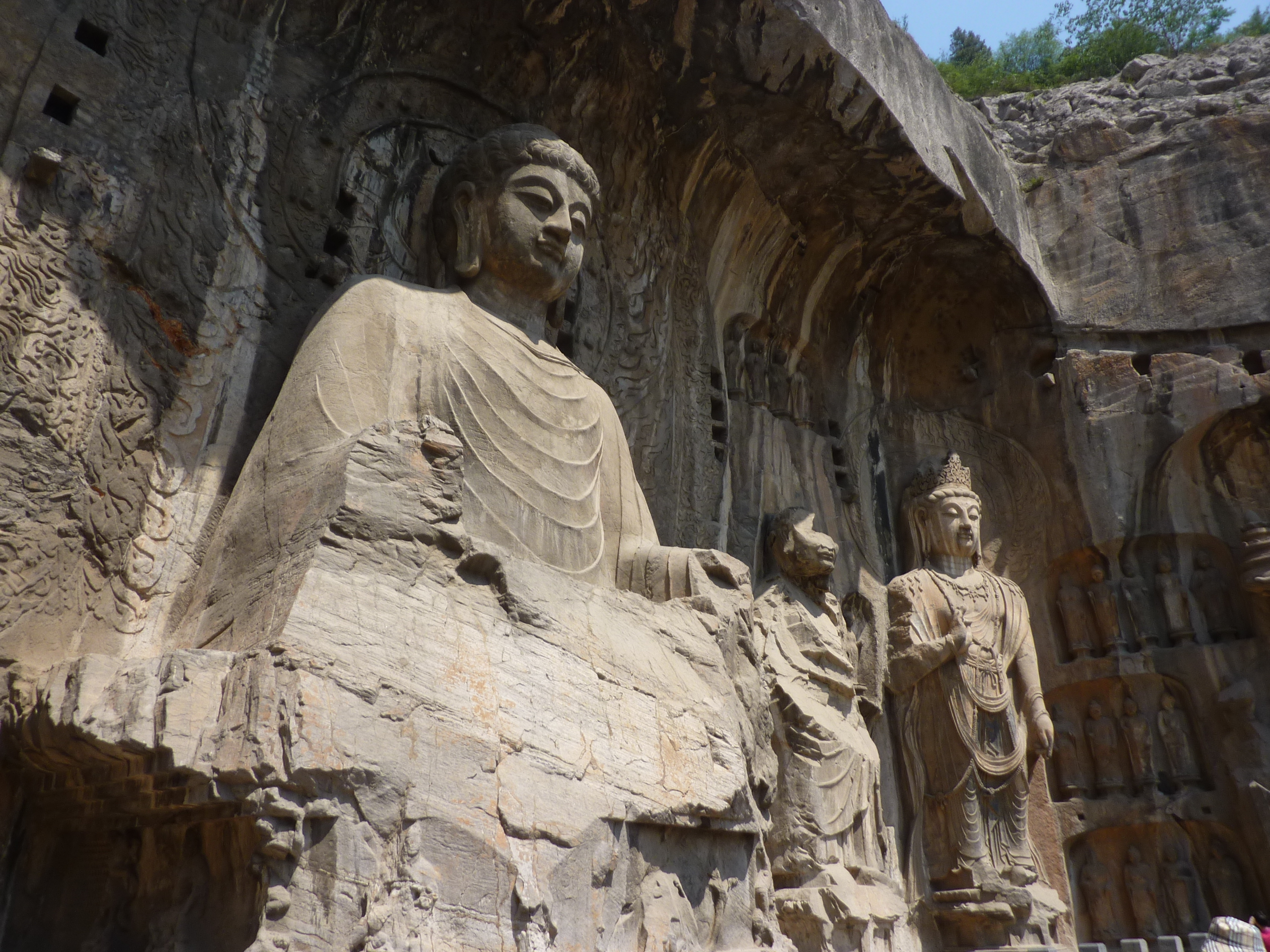
The best known site of the area, at least to tourists, are the Longmen Grottoes, situated some 13 kilometers south of the city along a tree covered bank of the Yi River. Here, carved into the imposing cliffs are a myriad of small caves and niches that over the past 1,500 years have been packed to the brim with Buddhist statues, including several fairly large and imposing ones. In some of the darker recesses and along ceilings, it is possible to discern the traces of the paint that once covered these landmarks. Like so many other things it China, the grottoes too suffered at the hands of the Communist Party’s Cultural Revolution, when zealous Red Guards chopped faces off of a number of the statues. Today, the government appears to be trying to make amends by charging overly high ticket prices. Fortunately the area is worth it.
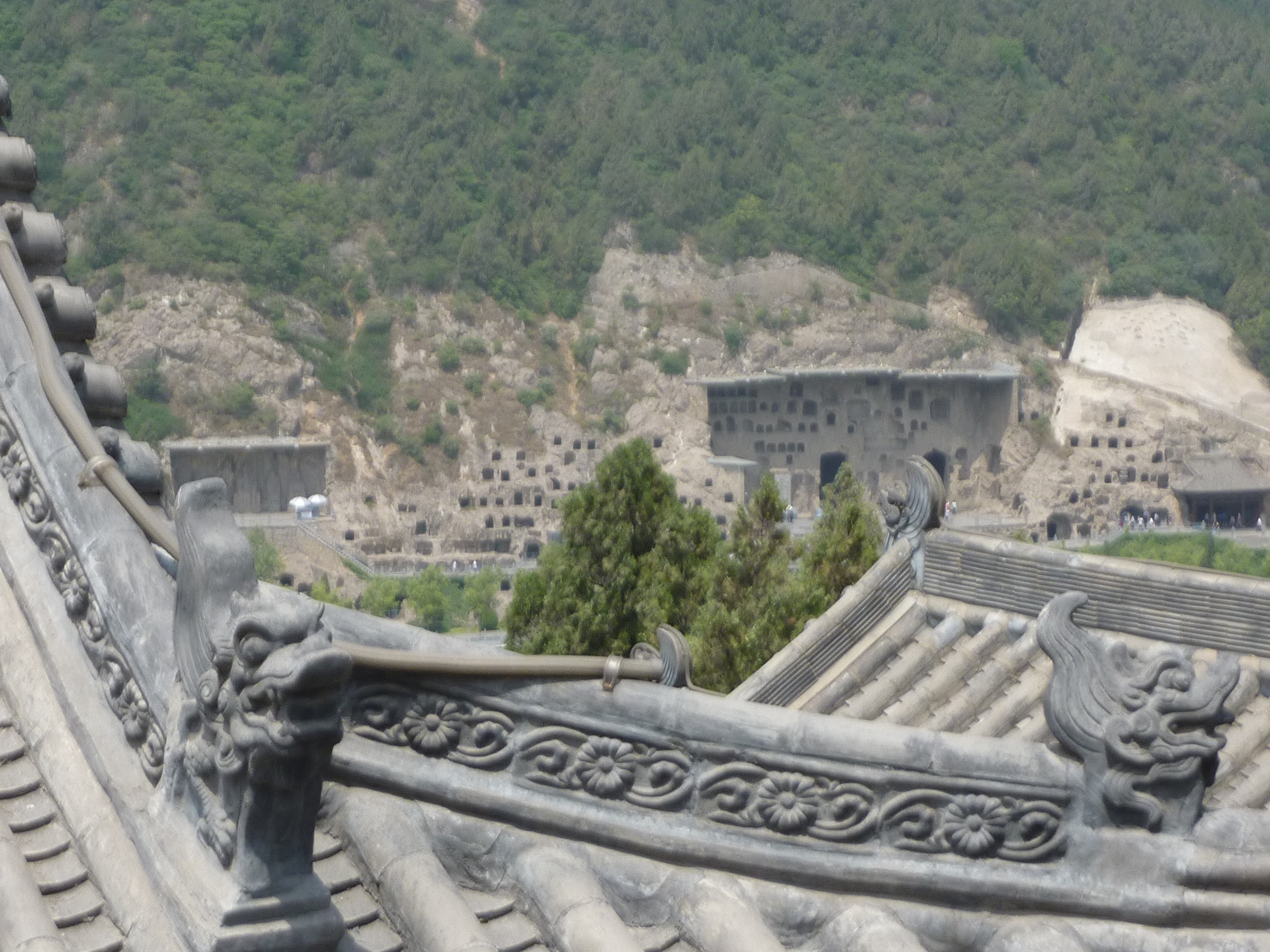
On the bank opposite the grottoes are several smaller caves, a Buddhist temple stepped onto the hill, and the poet Bai Juyi, an administrator of the Tang Dynasty, which is generally thought to be China’s greatest dynastic period. Here Eric and I were shadowed by a pair of university students until they found the nerve to talk to us in broken English, thus initiating our response in Mandarin. Eric’s level is similar to mine, if not farther along, and the laughter that this astonishing discovery caused mimicked a Japanese anime’s giggle. I was sure it couldn’t be a natural laugh, but I didn’t feel like delving into it as the heat was beginning to wear on me and the water was an absurd 5 kuai for a bottle that sells for 1 kuai nearly everywhere else.
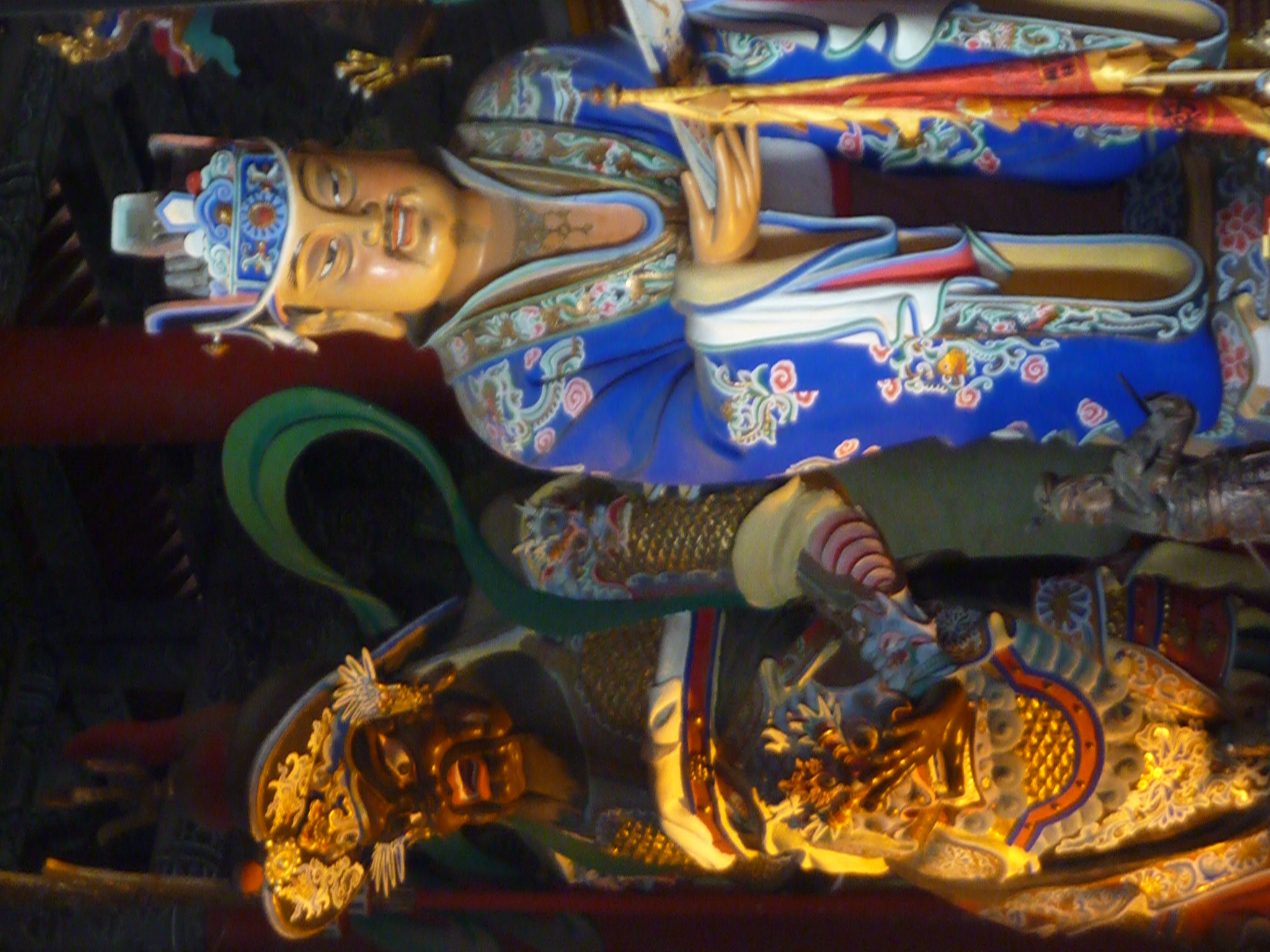
On the route back the city bus let us off along the side of the highway, in the midst of what appeared to be a home accessories wholesale district. In the lazy midday heat people watched us walk by, fans whirring in the dark shops. After a few inquiries on directions, we found our way to the Guanlin Temple, dedicated to the hero Guan Yu of Three Kingdoms lore. I feel now that I’m bordering on overwhelming with inane details, a trait of most Chinese historic texts, so I’ll bite my tongue to merely say that the temple was quite lovely and well kept and there was no crowding to speak of, a wonderful, wonderful departure from most tourist sites. That also marked the last activity of the day, and Eric and I both were a bit letdown by the shaokao or street barbecue. We had been honed on the spicier fare of the south and northerners unfortunately maintain an aversion to such food. The wonton soup throughout town were fantastic though.
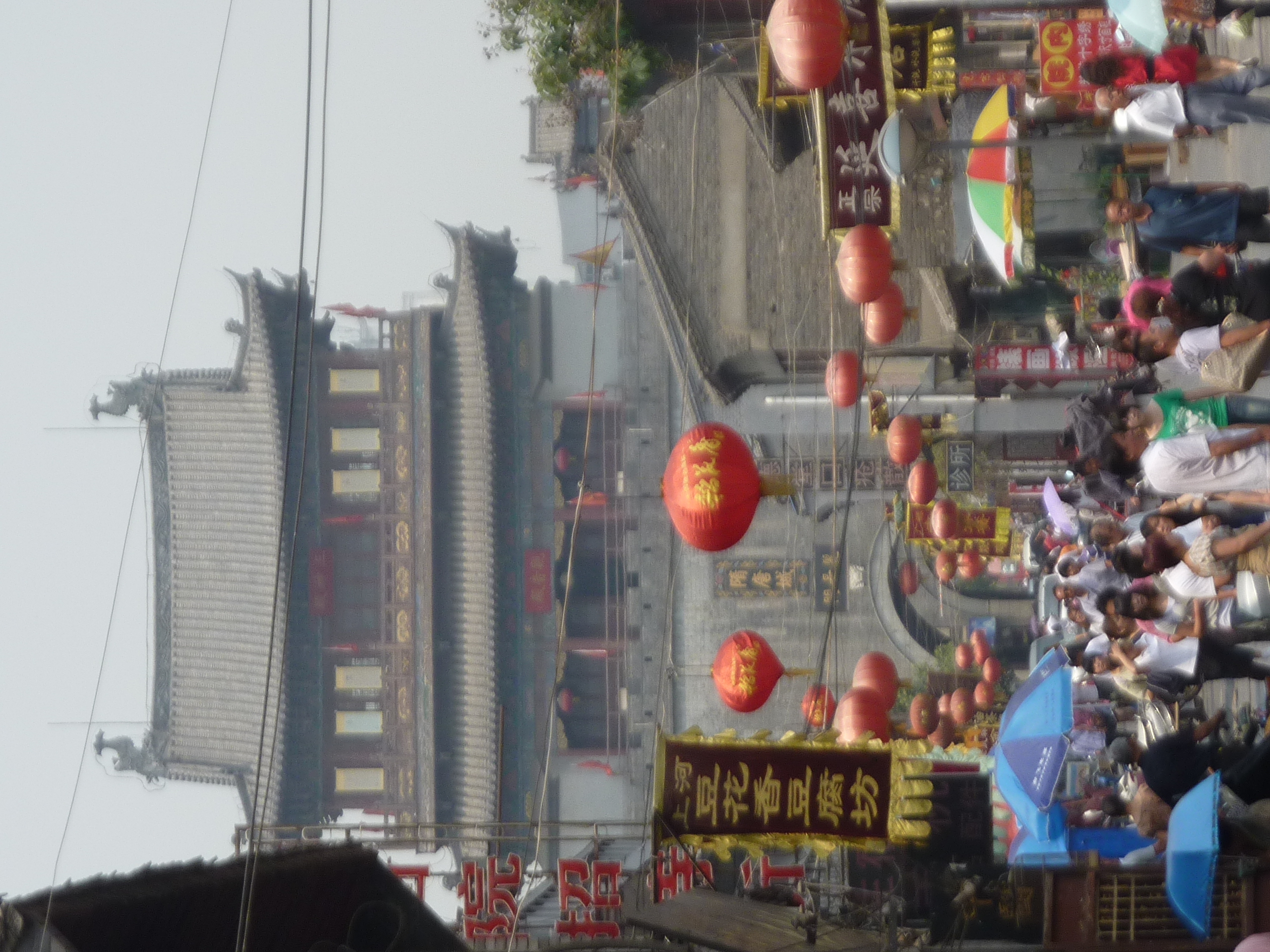
The next day was spent in the old town, a sprawling area of low brick buildings, centered around the long main street running east/west through it. The city walls are gone but the moat is still largely intact and the main gate, known as the Longjing Gate, stood watch at the far end of the strip, a guardian keeping the old and new apart. Bluffing our way into half-priced student tickets, we scaled the main tower, beat the drum, hit the bell, and waved around a flag, doing our best to fit the stereotype of noisy Americans. The view was cast across the city, with the skeletons of skyscrapers ringing the edges of the old town, signaling the impending progress that was soon to transform Luoyang and other interior cities much as the coasts had seen before. At the other end of the street was a smaller bell tower, a common feature of Chinese cities, though this was closed off and we had to settle for a wonderful Chinese meal cooked in a restaurant that deserved more business than it had that day.
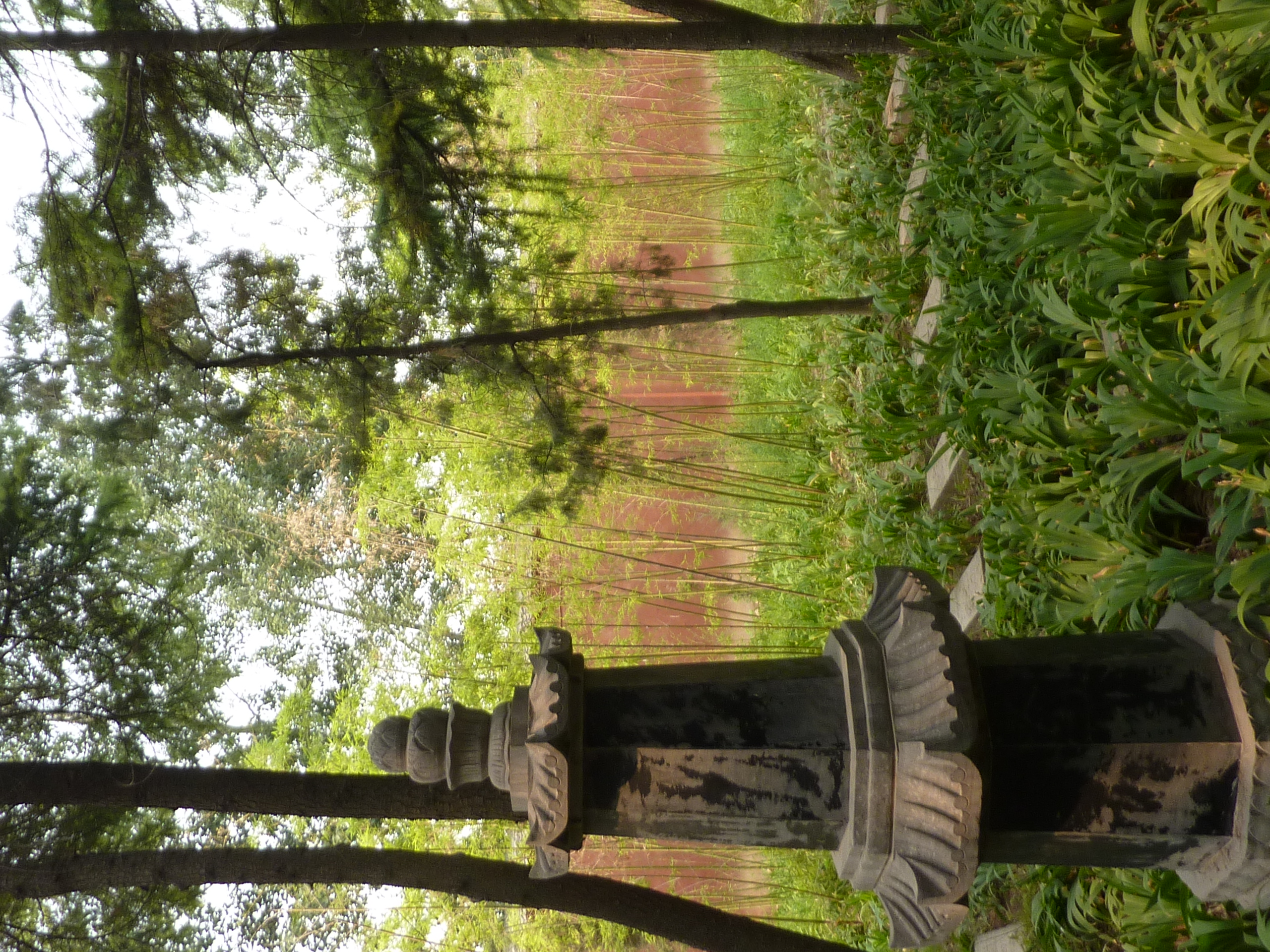
Last stop was the White Horse Temple, on the eastern outskirts of Luoyang. The highway was built next to it and freight trucks rumble past, inches from you as you cross the road. Like so many other places, the environment has borne the brunt of the headlong rush into capitalism. Within the White Horse Temple though tranquility reigned, provided you kept the tour groups at a distance. The temple is the first Buddhist temple founded in the mainland, nearly 2000 years prior, though most of the buildings today are a piddling 400 or so years old. The grounds are beautifully kept and on the edge are two ‘friendship temples’, a completed Indian one and another under construction in the style that dominates Buddhist monasteries in Southeast Asia, an odd juxtaposition of the architectures.

In the evening we found a restaurant near the rail station, a simple place advertising Hunanese fare with the typically overstaffed, disinterested dining staff that is emblematic of such places. Free from any pomp or circumstance we ate and then wandered around the city. Luoyang’s newer sections wouldn’t exactly be considered charming but for a mid-sized city, it actually seems to be quite well off with some truly well-used street areas and a lively commercial trade passing back and forth with all the people milling about in the evening as it cools off. My train left earlier than Eric’s and I boarded bound for Beijing. I was a bit sad to leave Luoyang. The city and its sites were a great distraction from the stresses of wrapping up the school year, moving, and shifting to a new phase of life. It was only when I got home and saw the date did it really click that these 10 days were all that was left.
 Zak Abroad
Great post, Zak. Wish we could have somehow managed this trip in addition to Qingdao. Hard to believe this is one of your last posts from China. Will look forward to reading your ruminations on your transitions to Vancouver, BC and college. But will miss your living in Asia blog. I know it will be hard to say goodbye but I am happy to have you on the North American continent, at least for awhile.
Love
Mom