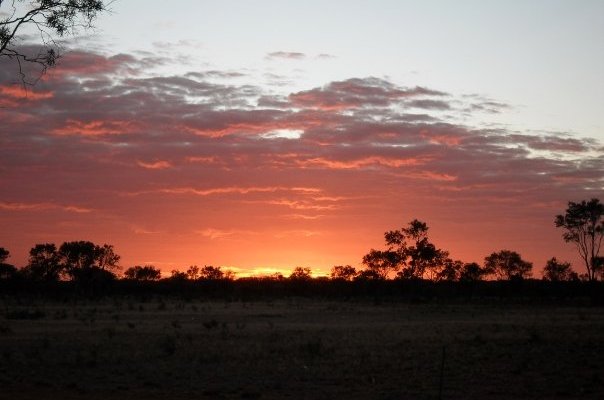
For the past week I have been whiling away my time in Alice Springs, a small city that is unremarkable in nearly everyway, save its location. Alice is set in the near-center of the continent, a lone outpost of civility (though it is a term used lightly) amidst the massive backdrop of the Outback. In many ways, it is exactly what I wanted, the antithesis of Shenzhen. It is also maddeningly expensive, doubtless another byproduct of its wayward position and the cost of transport conspiring together. At most, a week is too much time here and I am happy to move on.
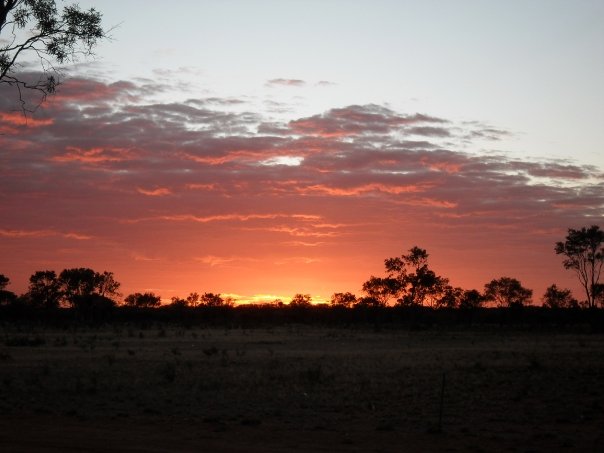
You’ll note perhaps that Alice is close to Uluru, or Ayers Rock. Close is a relative term, as the vast distances here make the round trip to and from into an 800 kilometer journey. Add that with the sheer costs of the tours and the fact that it is one of the few places in a thousand mile radius that has a crowd and I decided to take a pass. A rock is a rock, and this is a country big enough to warrant a second trip someday, ideally a well-funded second trip with a rental car. So don’t expect pictures of the rock.
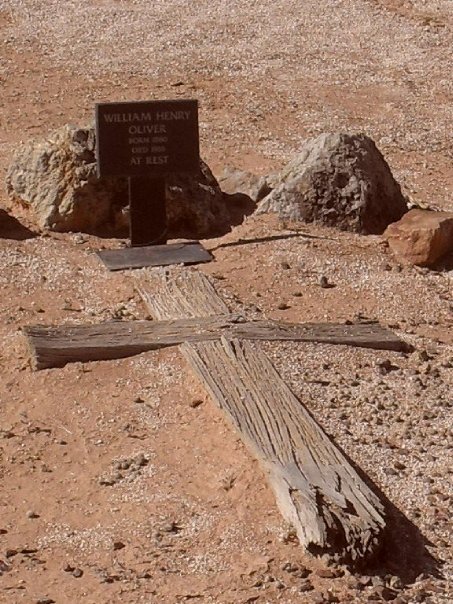
Instead, I did the free hiking and bushwalking available to me. This meant a trek up the bone-dry and sandy Todd River shoreline north to the old telegraph station, a site thick with Australian history and of interest, at the least, to me. There was a small (think 5 graves) pioneer cemetery as well as a little hill to hike which offered a great view. The view got me thinking that from a larger hill perhaps the view would be even better.

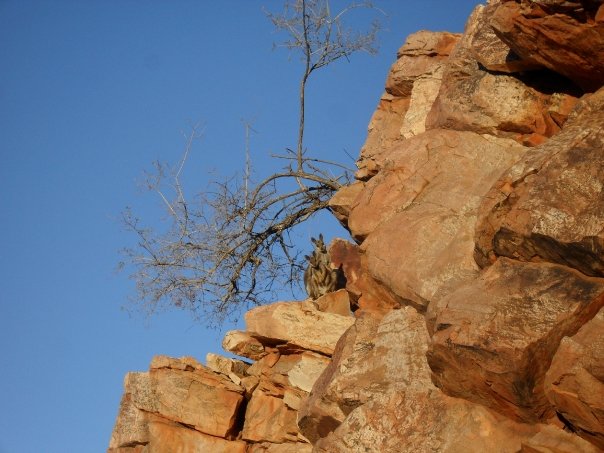
Armed with my radical new theory, I set out the next day for a pair of ridges south of Alice that loom up sharply from the valley floor. The first I summited in an evening, a simple matter of negotiating rocks and making sure I could get back down. Along the way I spotted (and was spotted by) a number of curious wallabies who would make easy targets for an armed man. They simply stand and look at you until you get within a few meters, then hop a little ways away and repeat. Not terribly smart little buggers.
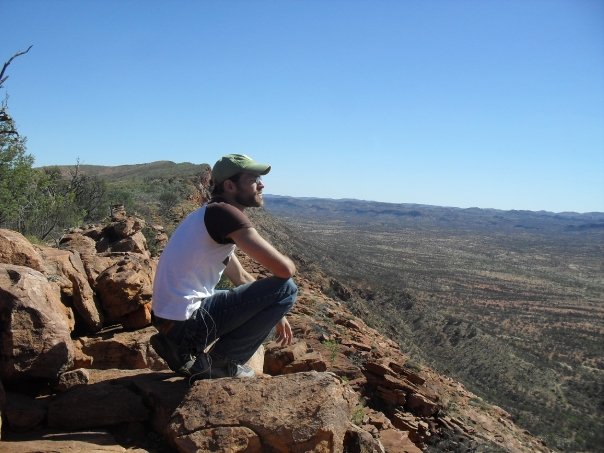
The next day involved a climb up the larger ridge, with Mount Gillen as my goal. It is a 950m high point at the end of one of the ridges. Again, reaching the ridgeline was a relatively quick operation. Atop, the area is like a mesa, flat and covered in vegetation and plant life that one would never suspect when gazing up from the barren rocky slopes. Amidst this backdrop I spotted a full-size kangaroo on two occasions but unlike the wallabies they have some sense and bounded off while I vainly shot for pictures.
Working my way down ‘the Track’, the singular highway spanning the length of central Australia, the next stop was the opal mining centre of Coober Pedy. Despite its small size, and maybe because of its curious name, Coober Pedy is actually pretty interesting for a town of 3,500. It is the largest settlement for a span of about 500km in either direction, and exists purely for the opal mining, as the land is desolate, barren, and windstruck, with harsh weather half the year. I rather enjoyed it.
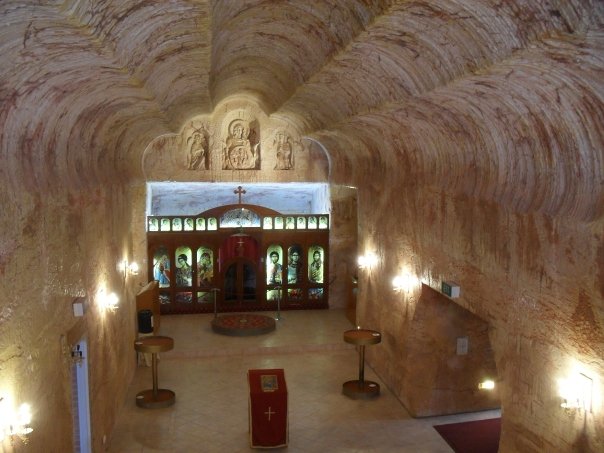
Half the homes in Coober Pedy are ‘dugouts’, built into the sandstone hills around town and it is dusty and brown throughout. If you’ve seen Mad Max or the Road Warrior, it was quite evocative. For all this the town is quirky and interesting to explore, particularly to me. Everyone seems to know everyone here, a very genuine, perhaps unavoidable small town feel. After a day (which is plenty of time), I left on a night bus for Adelaide and my first trek into Australian cities. As a quick preview, its rather different from the outback.
 Zak Abroad
Sounds fun, let me know how the beer is when you get some.