
My position was between the family occupying the sink and the young lady in the pink sweater, my back to the one of the bathrooms. This would later prove a poor decision, as it is a high-traffic area on an oversold night train with a growing odor with each passing hour. The Qing Ming Festival, Tomb-Sweeping Day, had liberated us from work, as well as numerous Chinese who it seemed were all crowded onto the train to Fujian Province with me, my roommate Nick, and Darragh and Brian, two of the other teachers in our program. We managed to pass several hours with shots of baijiu followed by consumption of sour oranges, a bracing but not-charmless combination. Near 2am we found seats in the dining car and promptly attempted sleep.

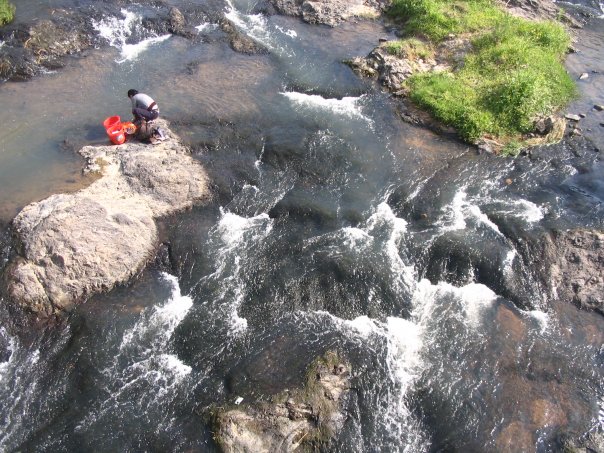
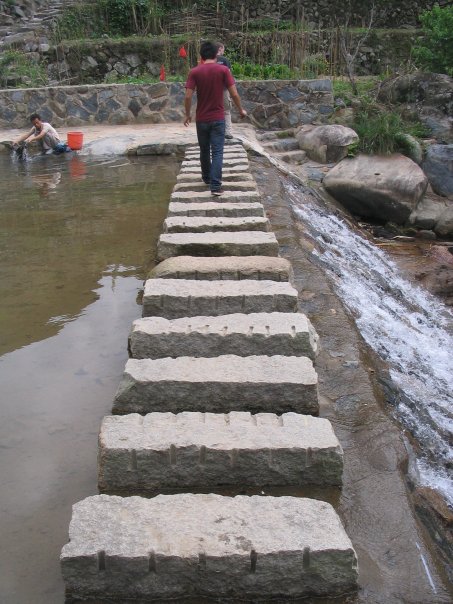
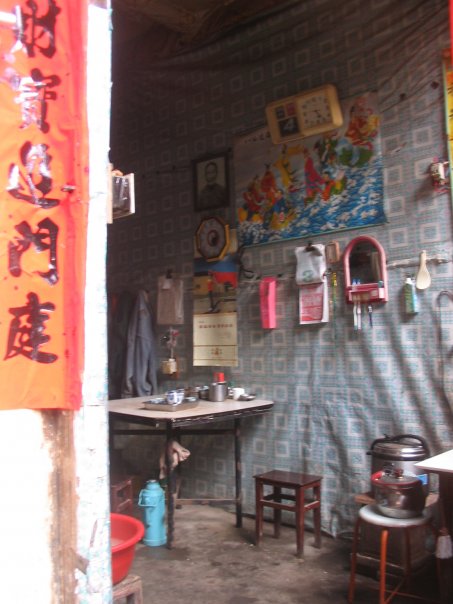
The next morning we arrived in Yongding county. The region is spotted with various tulou, or earth house, structures of varying sizes, built by the Hakka people when they came down from the north of China to escape violence. In a new land, their xenophobia got the best of them and they constructed these fortresses, the largest of which holds over 2000 people, from thick earth walls. Within they are charming, full of life and a very centralized community, reflected both in observation and the construction and design of the structures themselves. The tulou are in beautiful rolling country, surrounded by farming paddies and the basics of rural China. We spent the day touring them, going from one to the next, catching up on sleep in the travel time between in the bumping minivan.
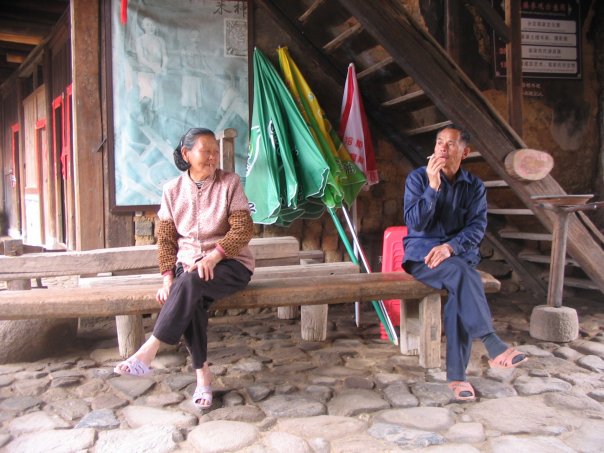
With nightfall, our little group circled the countryside around the village on foot, looking desperately for a restaurant. As of yet, Yongding county hasn’t felt the full weight of tourist popularity yet, and services are just beginning to develop. It is still very difficult without Chinese language to experience the place. At night we played cards in the hotel courtyard, part of a mid-sized rectangular tulou in the village of Hongkeng. Splitting a bottle of mijiu and consuming what food we could scrap together, I finally learned to play euchre, living up to my proud Midwestern heritage. The next day held a bouncing bus ride to Xiamen.

Xiamen is a port city, one of the larger in Fujian Province, originally known to the West as Amoy in the days of colonialism. At the Hualishan Fortress, overlooking the sea, we were treated to a 4-D film extravaganza showing an anachronistic, low-budget short of the fort’s troops fighting off some British invasion. Questions were raised amongst our group of the historical accuracy, the choice of plot when the same fort cleanly defeated a Japanese warship in the 1930s, and criticism of the video/audio playback being about a second apart. A unique viewing experience all the same, followed by a bus ride through a downpour of rain and a lunch inside a small restaurant.
From here, we crossed to the old foreign concession by ferry, known as Gulongyu. It is a tiny island south of the city, evocative of Macau, with narrow roads and beautiful streetscapes. Blissfully, it is free of all but emergency vehicles and electric golf carts, offering a quiet and picturesque reprieve from the typical Chinese city. Seafood, fruit, and veggie markets abounded, and I was entreated to calls of “Hello, buy watch, have a look” on the busier tourist streets. And it is a tourist spot, full of Chinese on weekend holiday as well as entry tickets to any of the noteworthy sights, such as the well-placed statue of Zhang Changgong, the man who liberated Taiwan from the Dutch some centuries back.
Later we wandered the back lanes, lined in brick walls behind which were the old colonial villas, many well-kept. I wondered how it would be to teach on this idyllic little spot of land, full of charm and history, though lacking the zest of Shenzhen. A few kids wanted to pose for pictures with us waiguoren and we obliged them. At night the island goes quiet, with much of the tourist traffic of the day gone, and it just oozes atmosphere. Later it was time for dinner on a back lane restaurant before heading back to Xiamen proper and getting to the bus station.
Buying tickets in the day, I had my hopes pinned on the sleeper bus back to Shenzhen to catch up on my sleep. Instead, it was simply reclining seats. A disappointment. To boot, Brian and I were in the back row, where the seats do not recline. The man in front of Brian had no qualms using his options though, leaving very little space and effectively pinning us in for the ride. I made certain not to drink my water at this point. Arriving in Shenzhen was simple and it is nice to be home again. In about a month, there will be another gap in the calendar for May 1 holiday. I’m not yet decided on the where, but I am ready again to be out there.
 Zak Abroad