Hours later we arrived into Siem Reap, which is in essence a large boomtown perched on the northern shores of the Tonle Sap. It is a tourism center of Cambodia and this is evident in the many, many, many Western faces crowding the city center’s pleasant streets and the global assortment of restaurants. Not to mention the children hawkers and disabled vets peddling books, all of course at inflated prices. It’s the price of a place’s popularity in Asia, or so it seems. We settled into our guesthouse for the night and awaited our early morning tuk-tuk to the ruins.
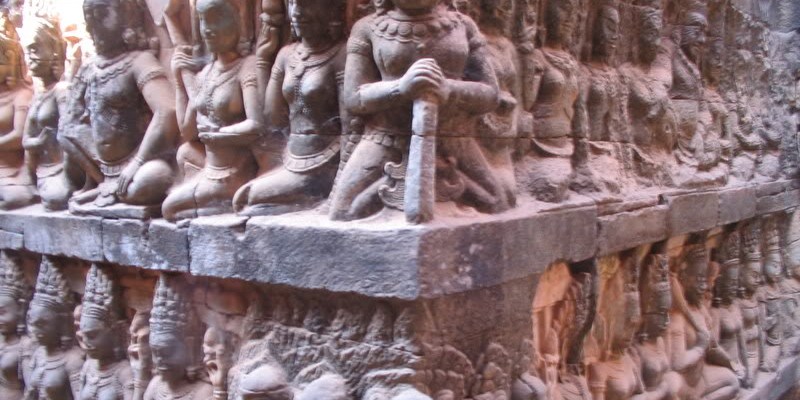
Our first full day was met with a pre-dawn trip to Angkor Wat, the world’s largest religious complex and the crown jewel of the dozens of Angkor ruins that litter the area. Opting to get away from the mosquitos and the large, noisy crowd gathering to watch the sunrise, we headed into the temple and found it mostly to ourselves, allowing some pleasant perusal of the architecture and relief galleries as we walked about. We also paid a visit to a few other temples, including one in the interior of Angkor Thom, the walled imperial city.

We were treated by tuk-tuk the first day, but the next two we took advantage of cheap bike rentals to guide our own paths around the ruins. Being able to carve our own path out and move at whatever pace we wanted was blissful, and the distances between the sites felt isolated and rural, a wonderful counterpoint to the majority of our time on the road. We were also excellent targets for the ruthless vendors offering ‘good price’ on their food, water, and souvenirs outside very ruin. After a point, you just stop noticing it.
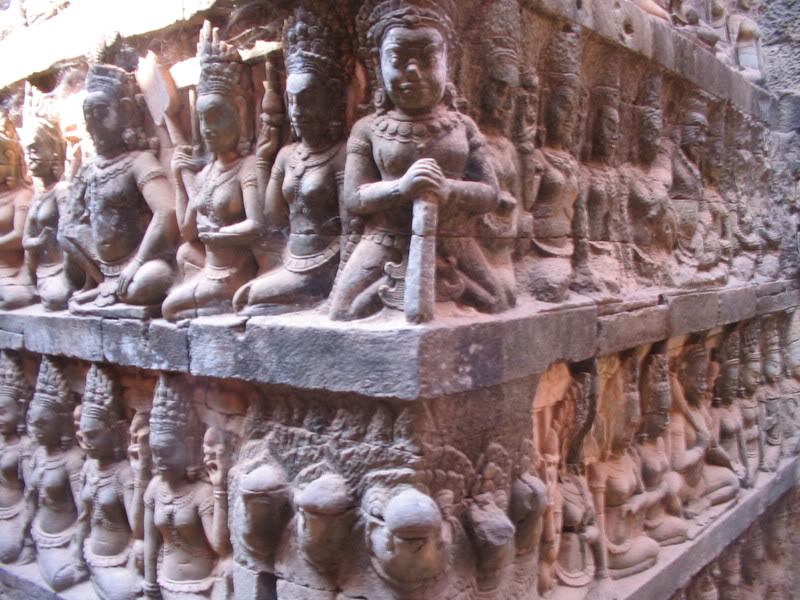
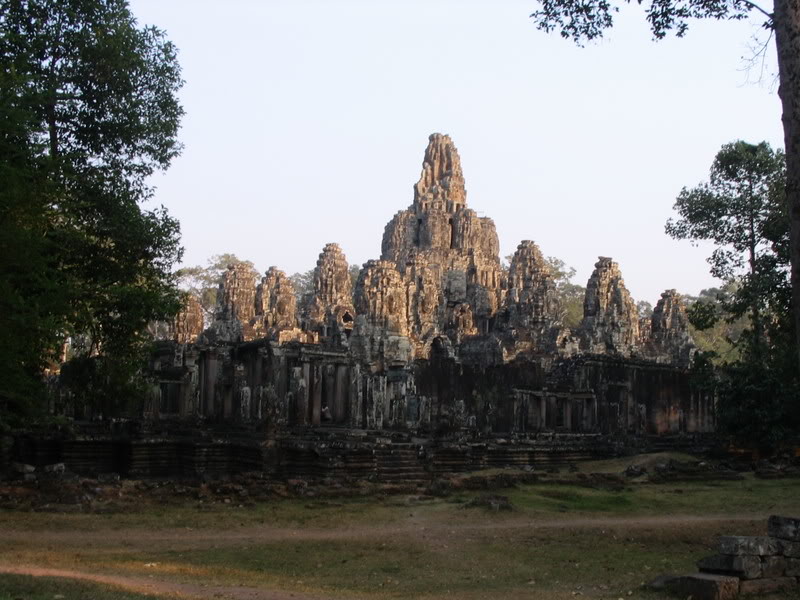
Established over a thousand years ago as the seat of the Khmer Empire, the Angkor ruins cover a massive plain and once contained a city of near a million people in sum. The ruins are fairly well preserved and the sheer number of sites ensures that it is indeed possible to escape the tourist masses whisked around by minibus. Access to the sites is incredible, allowing tourists to run around and climb up large stone pyramids, granting beautiful views of the countryside. The sense of history and awe is only accentuated by the level of detail and the quality of the architecture that remains.
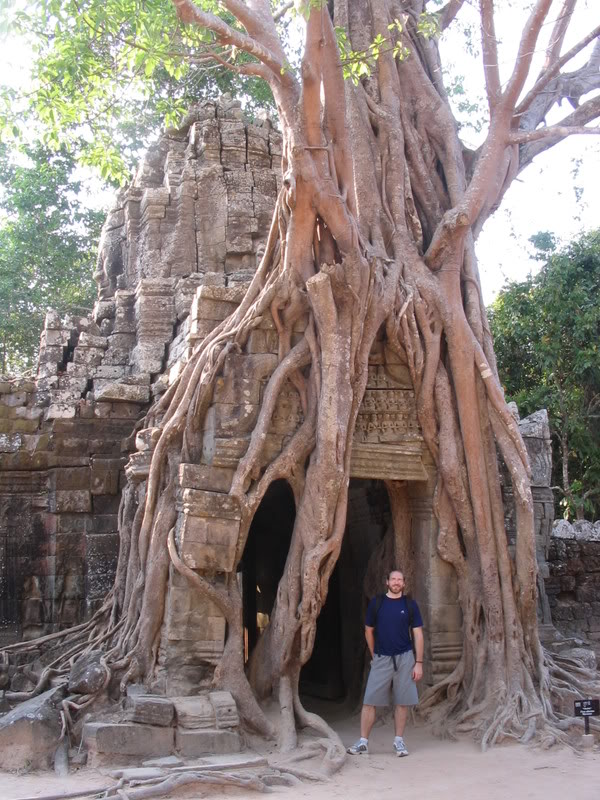
Personal favorites of mine were Pre Rup and Ta Keo, two of the early era state temples. Both are large pyramids with wonderful views after a steep climb up a near vertical flight of steps. Also quite enjoyable was the crowded Bayon temple, the central one of the Khmer Empire, which features several hundred large faces on towers, and Preah Khan, a massive, abandoned complex with seemingly endless hallways and hidden rooms which allowed for fantastic exploration. On hand were troops of monkeys along the roadside, which at this point are unconcerned by the presence of man and are content to scratch themselves on signposts, as well as the elephants for hire, allowing one to enjoy an elevated view and a bit of a bumpy ride into the main gate of Angkor Thom, the complex that holds several other temples.
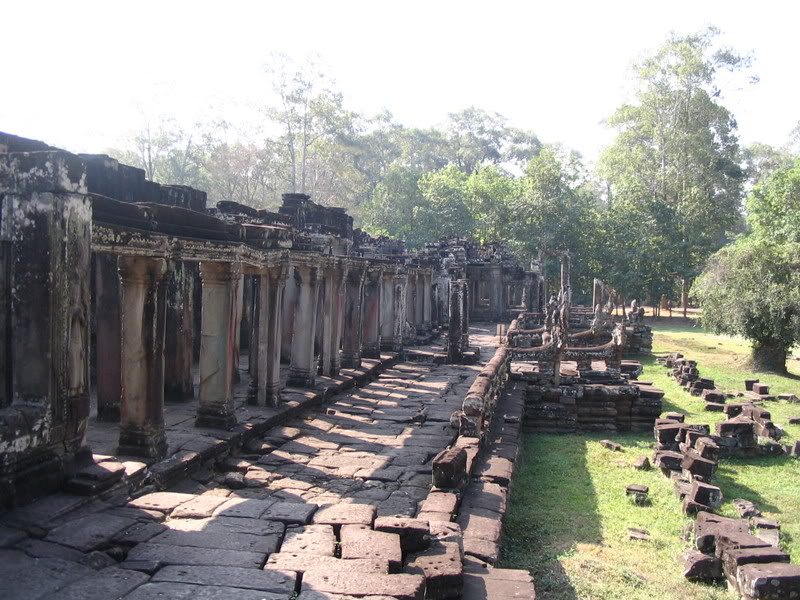
In sum, I feel that my words are poor descriptors for this part of the trip, and that if I were to write in full on the days we spent in Siem Reap and visiting Angkor, I could easily fill many, many pages. I would also need a map and a picture book (both of which I purchased there). Simply put, it the ruins at Angkor are the most spectacular sites I have seen in the world thus far, and anyone with a chance to come see them should. Awe-inspiring.
 Zak Abroad
i need more. gonna get my visa stuff all set and just leave it here before i leave so it’ll be all ready when the time comes. i got the COOLEST backpack for the trip. the dog fit very comfortably in it with his shaggy head sticking out the top. plenty of room to spare too. i’d bring him along but you’d probably just end up eating him.
You’ve got me convinced that this is one place I have gotta see.