We boarded an early morning bus headed out of Saigon to Cambodia’s largest city, Phnom Penh. The drive was nice and slow, moving along through the countryside and across smoothly paved roads making for a pleasant enough ride fueled by pistachios and choco-pies while watching the water buffalo outside. Near the end of the ride we entered the outskirts of Phnom Penh which stretches out along the banks of the Mekong. The city is relatively small and lacks the skyscrapers dominating Chinese cities, lending it a small scale and manageable atmosphere.
Phnom Penh is a city generally lacking in typical tourist sites, and the major ones are grim remembrances on the Khmer Rouge, a Communist dictatorship which ruled the country with an iron grip for nearly half a decade. Despite the short reign, Cambodia still bears many scars from the Khmer Rouge, which was responsible for a genocide that by most accounts wiped out a quarter of the population of this small country. Suffice it to say, the sites are informative but definitely not uplifting.
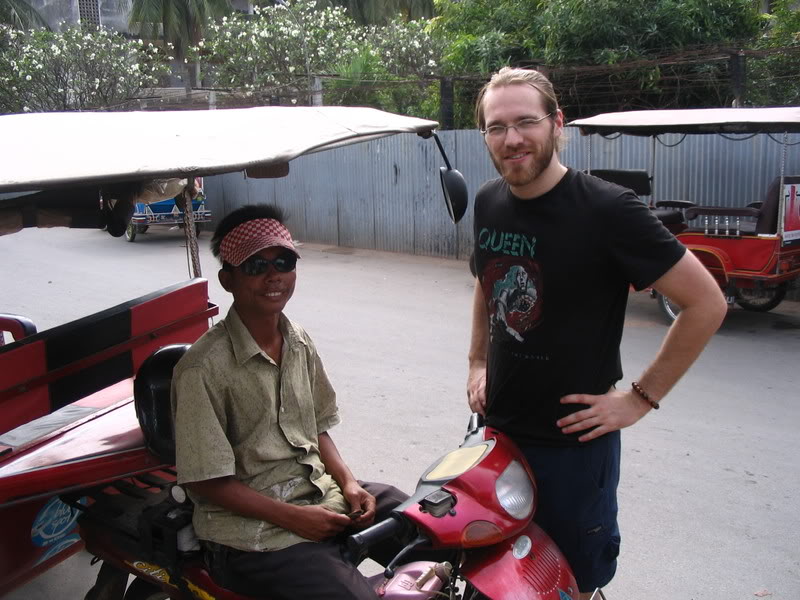
Upon arrival we were stampeded by hotel and tuk-tuk touts competing for our business, swarming about us like mosquitos with mouths. We ultimately settled on a driver who was willing to drop his price from $8 to $2, thus winning our business on the way to our guesthouse. Guesthouse here is used in a very loose sense, as the rambling building had just a catacomb of rooms split by paper-thin walls. One night we were treated to a massive display of indoor moths, neccessitating a room change.

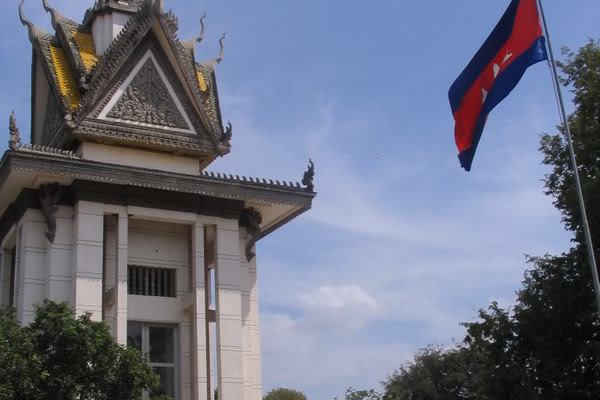
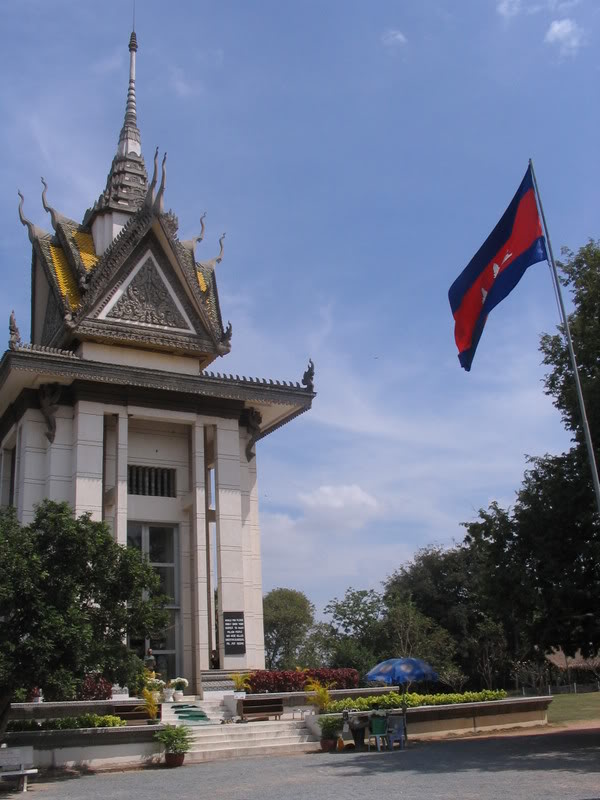
Within the city is a confined former high school-cum-prison that served as the primary detention center for political prisoners during the late 1970s. Brutal conditions, torture, and executions left the camp with only a handful of survivors. The tour through the site offers a bare though sobering look into that period. Prisoners here often ended up at the fields of Cheong Ek, better known as the ‘Killing Fields’. They are set outside of the city in an idyllic green landscape that is pockmarked with mass graves, both excavated and untouched. Serving as the centerpiece is a large Buddhist stupa filled with bones unearthed at the site. The peaceful scenery serves as a severe contrast to the atrocities committed.
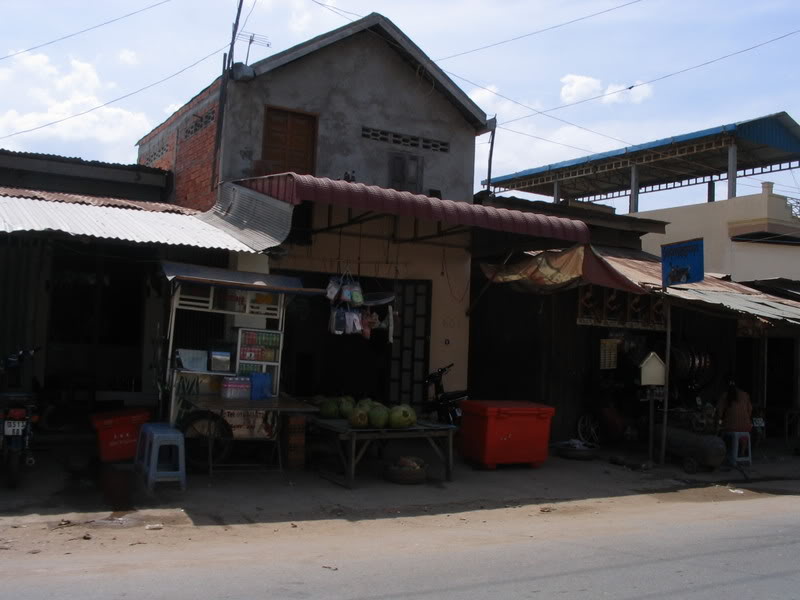
After a few days in Phnom Penh, we left by bus for Siem Reap in the northwest of Cambodia to see the ruins of Angkor. Overall the experience in the city was a bit of a depressing event, framed largely by the dark history and the modern poverty. Some of the more enjoyable aspects however were the people, who are friendly and welcoming, as well as the two dollar pitchers of Cambodian beer available at cafes tucked away on the sidestreets of the city. After leaving the city we set out on the highway for Siem Reap, our six hour trip interrupted only by the occasional hiatus for lunch, where we were assaulted with offers for pineapple, beetles, and fried tarantulas. Next stop: Siem Reap!
 Zak Abroad
where did you get that Queen tshirt?
lets go there
Couldn’t resist using the Dead Kennedy’s song, huh?
Nice.